
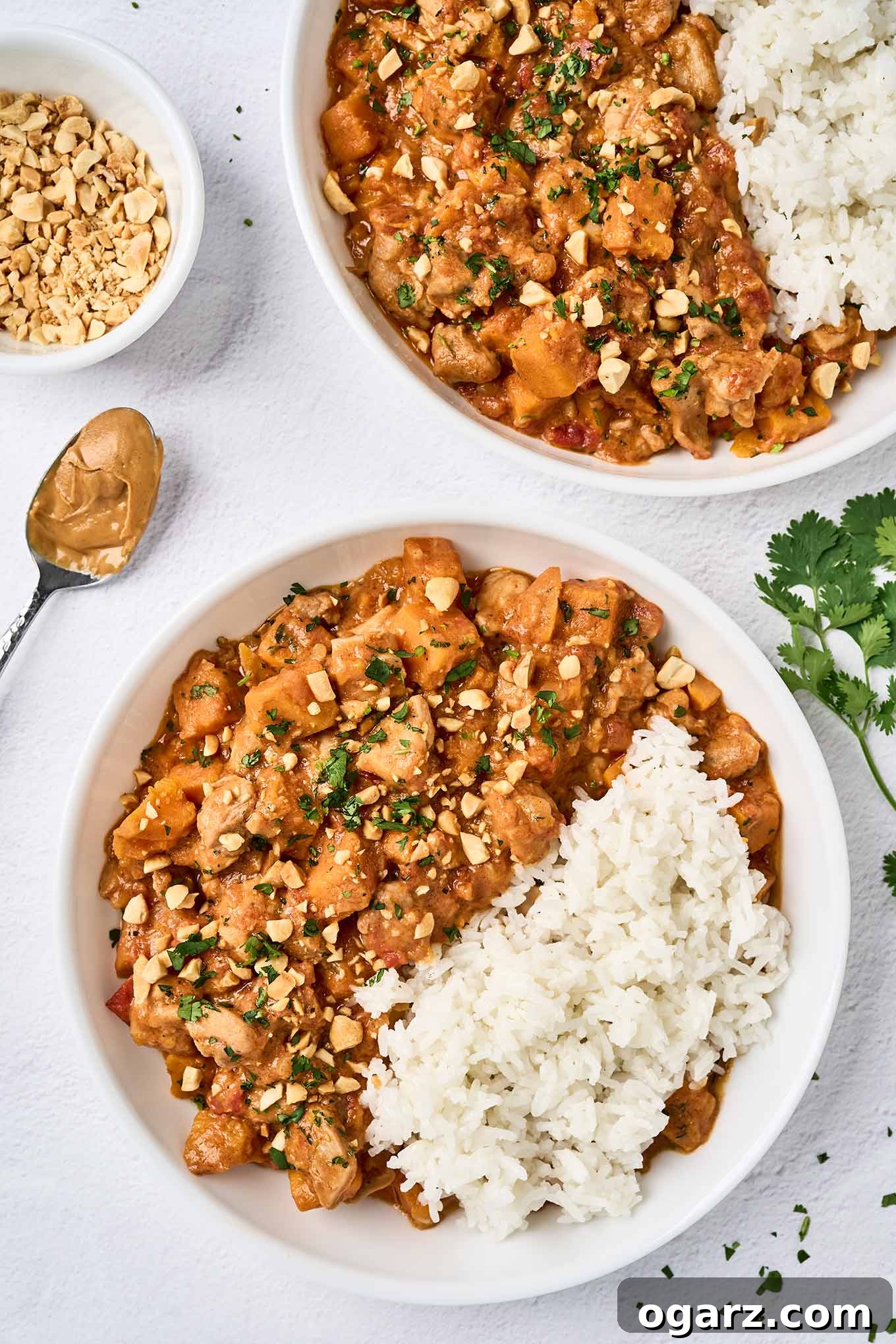
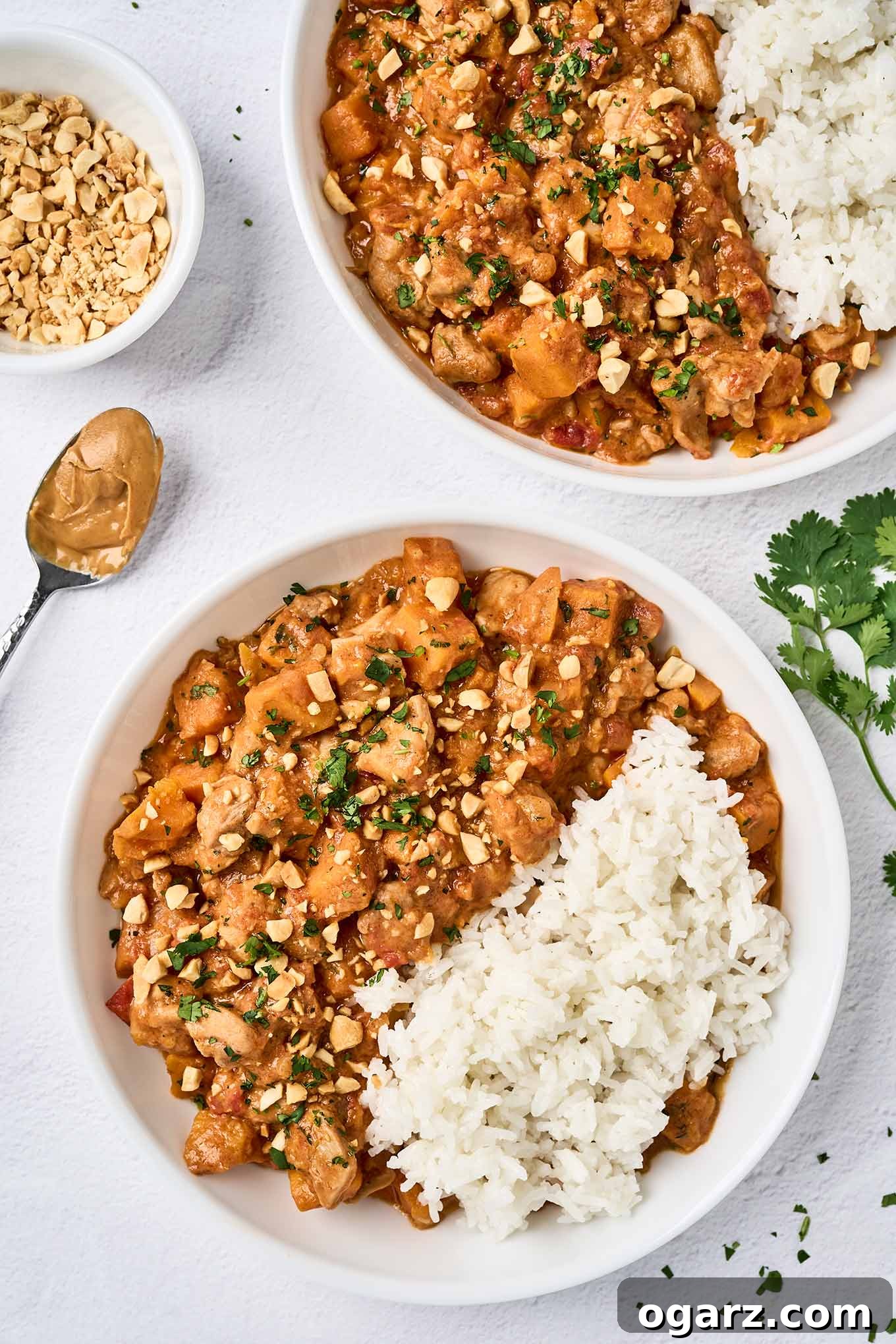
Heartwarming West African Chicken Peanut Stew: A Journey into Maafe
Discover the profound culinary heritage of West Africa with African Chicken Peanut Stew, affectionately known as Maafe. This iconic dish is a testament to the region’s rich flavors and comforting traditions, offering a deeply satisfying experience with every spoonful. Originating from the Mandinka and Bambara people of Mali and Senegal, Maafe has traveled across continents, becoming a beloved staple celebrated for its distinctive taste and nourishing qualities.
At its core, Maafe is a vibrant, stew that beautifully marries the creamy richness of peanuts with the bright tang of tomatoes, the gentle sweetness of sweet potatoes, and tender chicken. Infused with aromatic fresh ginger, garlic, and coriander, this one-pot wonder builds layers of flavor that are both exotic and familiar. It’s a culinary embrace, perfect for a cozy family dinner or an impressive meal for guests, promising a memorable gastronomic adventure that’s surprisingly simple to prepare.
Whether you are embarking on your first exploration of West African cuisine or seeking to enrich your weekly meal rotation with a dish that truly stands out, this chicken and peanut stew delivers exceptional flavor without complicated steps or elusive ingredients. Its effortless preparation culminates in a complex, robust, and utterly satisfying meal. Traditionally served with fluffy steamed rice, couscous, or even fufu, it invites you to savor every drop of its luscious, savory sauce.
Beyond its incredible taste, Maafe tells a story of community and culinary ingenuity, transforming humble pantry staples into a dish of profound comfort and vibrant character. Join us as we delve deeper into the art of making this authentic West African masterpiece.
The Soul of Maafe: Essential Ingredients Explored
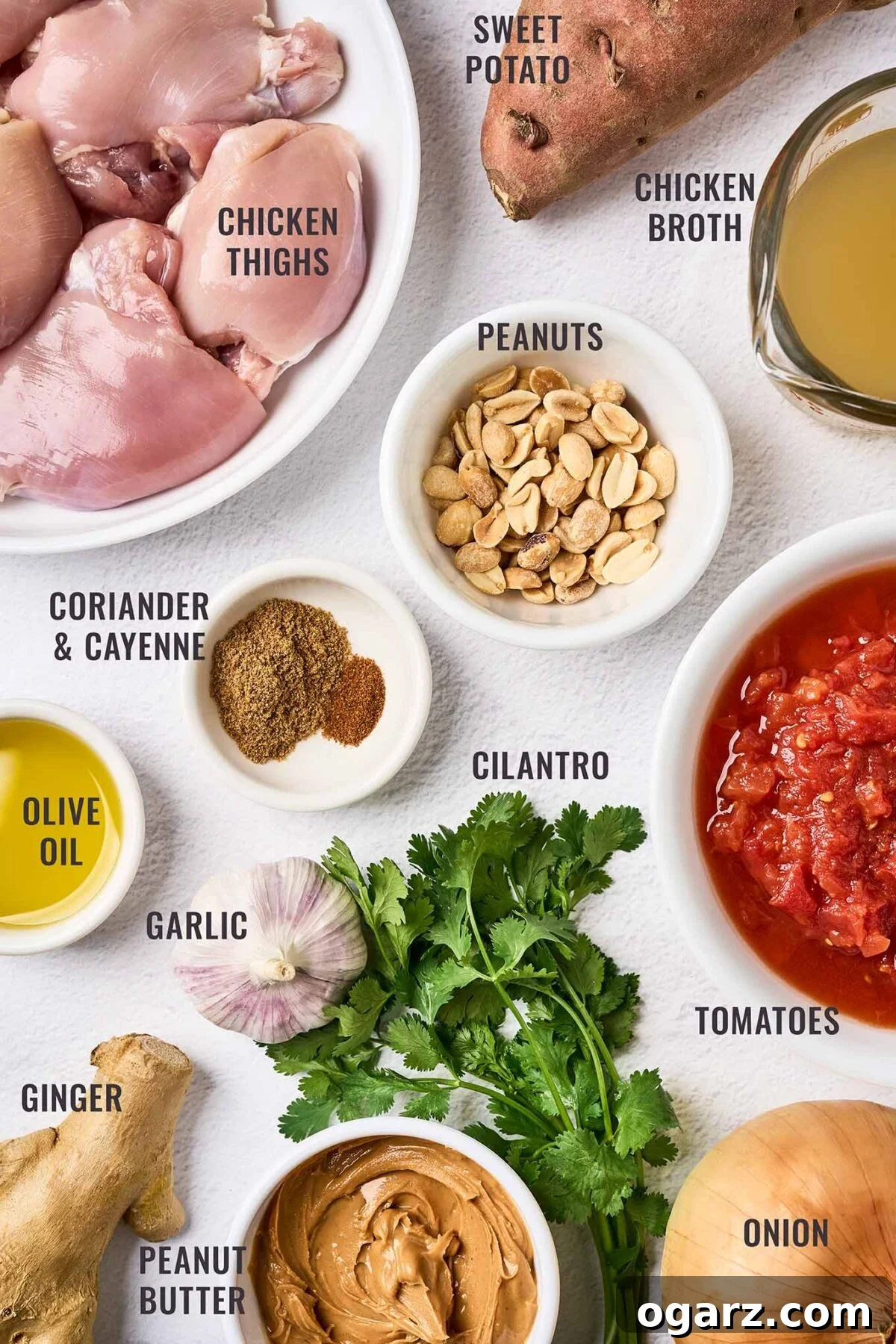
Crafting an authentic African Chicken Peanut Stew relies on a selection of key ingredients that, while simple, contribute significantly to its signature depth and richness. Understanding each component’s role is crucial to achieving that perfect balance of flavors. Here’s a closer look at what you’ll need to bring this West African classic to life. The complete, precise list of quantities can be found in the detailed recipe card below.
Natural Peanut Butter: The Heart of the Stew
The star ingredient, peanut butter, is what gives Maafe its characteristic creamy texture and nutty depth. For the most authentic flavor and ideal consistency, it’s imperative to choose an **all-natural, unsweetened peanut butter**. Look for brands that contain only peanuts, or peanuts and salt, avoiding those with added sugars, hydrogenated oils, or excessive preservatives. These additives can alter the stew’s flavor profile and make the sauce overly sweet or greasy. Smooth peanut butter is generally preferred for a silky sauce, but a crunchy variety can add a pleasant textural contrast if you enjoy it.
Boneless, Skinless Chicken Thighs: For Unbeatable Tenderness and Flavor
We highly recommend using **boneless, skinless chicken thighs** for this Maafe recipe. Thighs are inherently more flavorful and retain moisture much better than chicken breasts, ensuring your stew is succulent and tender even after simmering. Their slightly higher fat content also enriches the sauce, contributing to a more luxurious mouthfeel. While chicken breast can be used in a pinch, be mindful that it tends to dry out quicker and won’t impart the same depth of flavor. If using breast meat, consider cutting it into larger chunks and adding it a bit later in the cooking process to prevent overcooking.
Sweet Potato: Natural Sweetness and Body
A staple in many African stews, **sweet potato** is indispensable in Maafe. It contributes a wonderful natural sweetness that balances the savory peanut butter and acidic tomatoes, while also adding body and thickness to the stew as it breaks down slightly. Peel and cut your sweet potato into 1-inch cubes for even cooking. Should sweet potatoes be unavailable, frozen butternut squash can serve as a decent substitute. However, butternut squash typically has a less intense sweetness, so you might consider adding a small pinch of brown sugar or a drizzle of maple syrup to achieve a similar earthy sweetness.
Fresh Ginger: A Pungent and Warming Kick
The vibrant, warming spice of **fresh ginger** is non-negotiable for an authentic Maafe. It provides a bright, pungent note that ground ginger simply cannot replicate. Grate or finely mince fresh ginger to unlock its full aromatic potential. If you’re truly short on time, a high-quality ginger paste can be used, but fresh is always superior for that essential zing and depth of flavor.
Diced Tomatoes: Tangy Counterpoint and Color
**Canned diced tomatoes** are a convenient and essential ingredient. There’s absolutely no need to drain them; the juices are vital for the stew’s consistency and contribute a crucial acidity that beautifully counterbalances the richness of the peanut butter and the sweetness of the sweet potato. They also add a lovely color and a hint of umami, deepening the overall flavor profile of the stew.
Fresh Cilantro: A Bright, Aromatic Finish
A generous sprinkle of **fresh cilantro** at the end adds a burst of brightness and a distinctive herby aroma that elevates the stew’s finish. It’s a classic garnish that ties all the flavors together. If cilantro isn’t to your taste, flat-leaf parsley offers a milder, fresher alternative. Alternatively, you can omit it entirely, though the final dish might lack a bit of its vibrant, fresh edge.
Additional Aromatics and Spices
- Onion & Garlic: These foundational aromatics are sautéed to create a fragrant base, building the initial flavor layers that define the stew.
- Ground Coriander: A warm, citrusy spice that complements the ginger and peanut, adding an earthy complexity.
- Cayenne Pepper: Provides a gentle heat, adjustable to your preference. It’s essential for that subtle kick, but can be scaled up or down.
- Salt & Freshly Ground Black Pepper: Essential for seasoning and enhancing all other flavors.
- Low-Sodium Chicken Broth: Used to thin the peanut butter into a smooth sauce and contribute to the stew’s liquid base, controlling sodium is key for optimal flavor balance.
Prep Overview
Mastering Maafe: A Step-by-Step Guide to African Chicken Peanut Stew
Creating this flavorful West African Chicken Peanut Stew is a straightforward and rewarding process. Here’s a quick overview to guide you through the journey, ensuring a delicious outcome with minimal effort. Detailed, step-by-step instructions with exact measurements are provided in the comprehensive recipe section below.
Getting Started: Building the Flavor Base
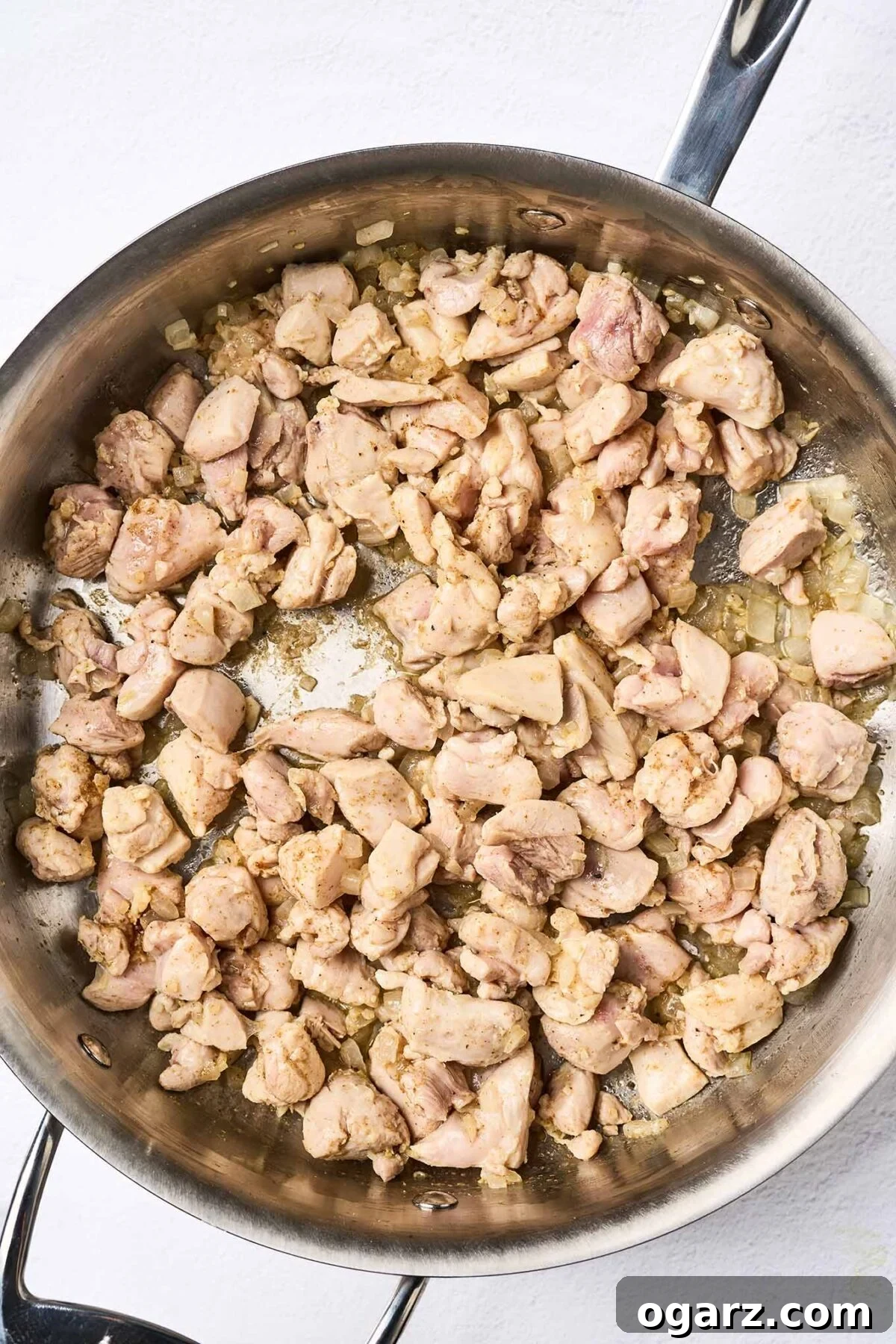
The foundation of any great stew begins with a robust flavor base. You’ll start by sautéing chopped onion until it becomes soft and translucent, releasing its sweet aroma. Next, fresh minced ginger and garlic are added to the pan, cooking briefly until intensely fragrant. This aromatic trio sets the stage for the rich flavors to come. Following this, the bite-sized pieces of boneless, skinless chicken thighs are introduced, browning lightly to seal in their juices and develop a savory crust. At this point, ground coriander and a touch of cayenne pepper are stirred in, infusing the chicken with warm, earthy spices and a hint of heat.
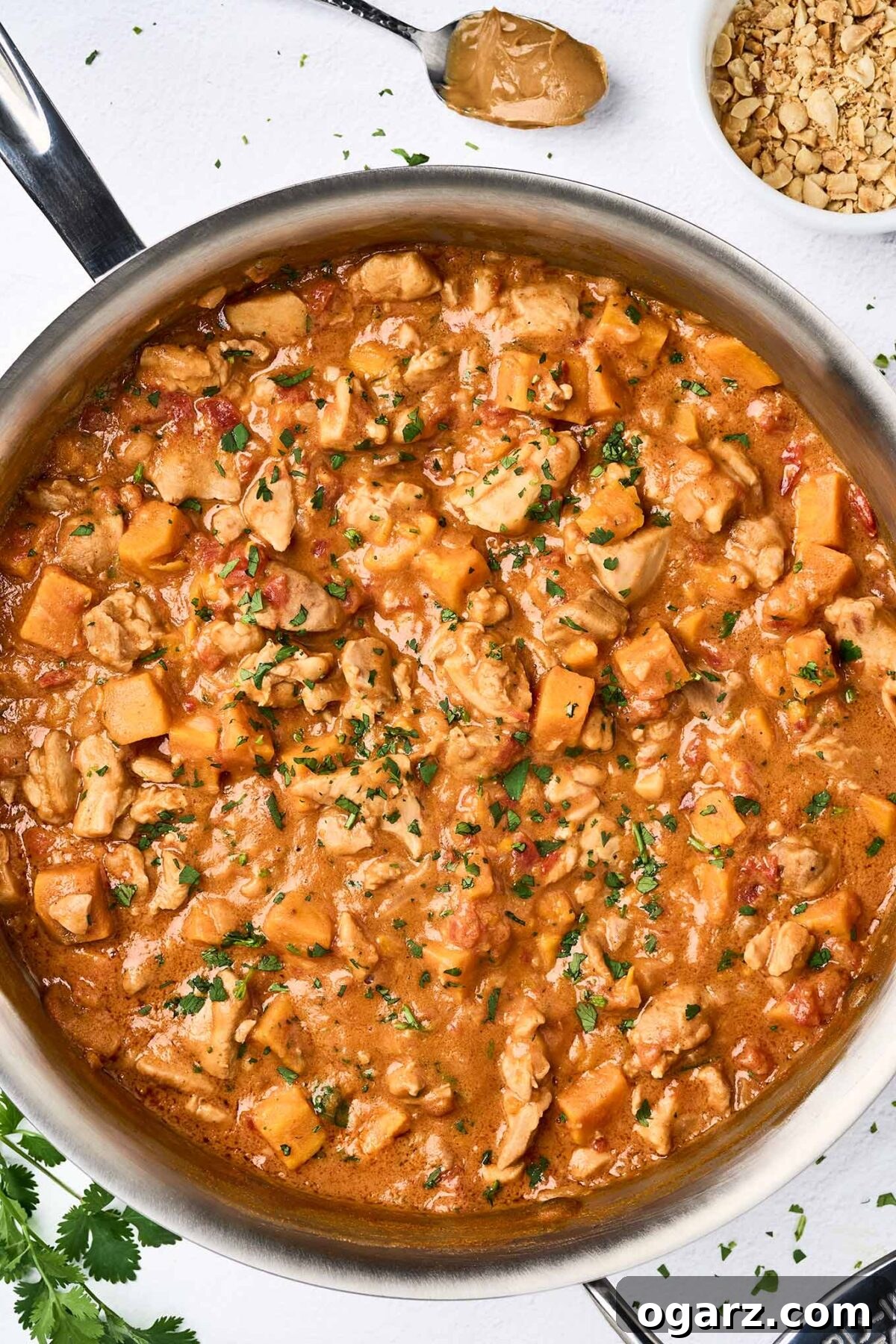
Simmering to Perfection: Developing the Rich Sauce
Once the chicken is beautifully browned and seasoned, undrained diced tomatoes and cubed sweet potatoes are added to the pan. These ingredients are stirred thoroughly to combine with the aromatic chicken mixture, creating a colorful and robust base for the stew. As this simmers gently, turn your attention to the creamy peanut butter. In a separate small bowl, whisk the natural peanut butter with low-sodium chicken broth until it forms a smooth, lump-free mixture. This crucial step ensures the peanut butter integrates seamlessly into the stew, preventing it from clumping.
The smooth peanut butter mixture is then poured into the pan, stirring it into the chicken, tomatoes, and sweet potatoes. The stew is brought to a gentle simmer and then covered, allowing all the flavors to meld beautifully. It continues to cook until the sweet potatoes are fork-tender, absorbing the rich, savory sauce. This simmering process usually takes about 12-15 minutes, transforming the separate ingredients into a harmonious and deeply comforting stew. Towards the end, a handful of freshly chopped cilantro is stirred in, adding a burst of fresh, herbaceous brightness that perfectly complements the rich flavors.
Finishing Touches and Serving
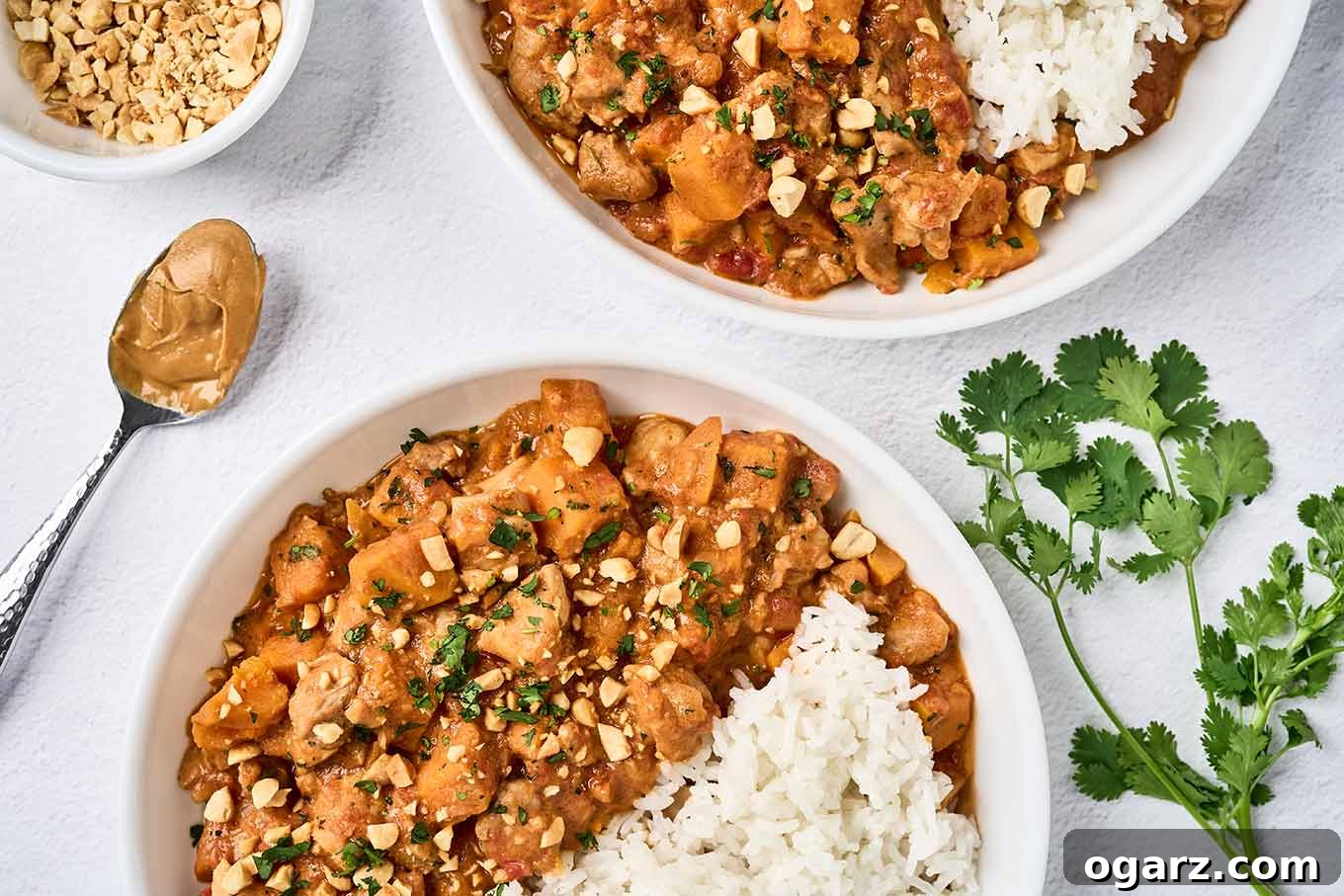
Before serving, a final taste test and adjustment of seasonings, such as salt and pepper, ensures the stew is perfectly balanced. Once seasoned to perfection, the pan is removed from the heat. Ladle the heartwarming African Chicken Peanut Stew over a bed of fluffy steamed rice or light, airy couscous. For an extra layer of texture and visual appeal, sprinkle generously with roughly chopped unsalted peanuts and additional fresh cilantro. This delightful garnish adds a pleasant crunch and a final flourish of freshness, making each bite an unforgettable experience.
Beyond Maafe: Explore Global Dishes Featuring Peanuts
If the rich, nutty depth of West African Chicken Peanut Stew has captivated your palate, you’re in for a treat! Peanuts are incredibly versatile, forming the base for countless delicious dishes across various cuisines. Expand your culinary horizons with these globally inspired recipes that beautifully showcase the diverse potential of peanuts:
- For a taste of Southeast Asia, try our Thai Peanut Curry Chicken. This dish blends creamy coconut milk, aromatic curry spices, and luscious peanut butter for a truly rich and savory experience that’s both comforting and exotic.
- Looking for a quick, vibrant, and incredibly flavorful bite? Our Thai Chicken Flatbread offers an exciting fusion of spicy peanut sauce, grilled chicken, and crisp, fresh vegetables, perfect as an appetizer or a light meal.
- If fresh and light is what you crave, delve into the delicate flavors of Vietnamese Summer Rolls with Shrimp. These refreshing rolls are served with a quintessential, creamy peanut dipping sauce that adds a satisfying nutty counterpoint to the fresh herbs and shrimp.
Each of these dishes highlights how peanuts can transform a meal, adding incredible texture, flavor, and nutritional value. Embrace the versatility of peanuts and let your taste buds travel the world!

Authentic West African Chicken Peanut Stew (Maafe)
By
Lynne Webb
This comforting African chicken peanut stew, inspired by the classic West African dish Maafe, combines tender chicken thighs with sweet potatoes, tomatoes, fresh ginger, garlic, and creamy, all-natural peanut butter to create a rich, deeply flavorful, and incredibly satisfying one-pot meal.
15 mins
30 mins
45 mins
4 servings
Love this recipe? Consider sharing it with friends or bookmarking it for later!
Ingredients
- 1 lb boneless, skinless chicken thighs, cut into bite-sized pieces
- 2 tablespoons olive oil
- 1 cup chopped onion (about 1 medium)
- 1 tablespoon minced fresh ginger
- 2 cloves garlic, minced
- 1-1/2 teaspoons ground coriander
- 1/4 teaspoon cayenne pepper (adjust to taste)
- Salt and freshly ground black pepper, to taste
- 1 can (15.5 ounces) diced tomatoes, undrained
- 1 medium sweet potato, peeled and cut into 1-inch cubes
- 1/2 cup creamy, all-natural peanut butter (no added sugar)
- 3/4 cup low-sodium chicken broth
- 1/4 cup chopped fresh cilantro, plus extra for garnish
- 2 tablespoons unsalted peanuts, roughly chopped, for garnish
Instructions
- Begin by trimming any excess fat from the chicken thighs, then cut them into uniform bite-sized pieces. Set the prepared chicken aside.
- Heat the olive oil in a large, heavy skillet or Dutch oven over medium heat. Add the chopped onion and sauté gently until it becomes soft and translucent, which should take approximately 4 to 5 minutes.
- Stir in the minced fresh ginger and continue to sauté for an additional minute until fragrant. Then, add the minced garlic and cook for about 30 seconds more, being careful not to let it burn.
- Increase the heat to medium-high. Add the prepared chicken pieces to the skillet. Cook, stirring frequently, until the chicken is lightly browned on the outside and no longer pink, typically 2 to 2-1/2 minutes.
- Stir in the ground coriander and cayenne pepper. Season the mixture lightly with salt and a few grinds of fresh black pepper. Stir well to coat the chicken with the spices.
- Reduce the heat back to medium. Add the undrained diced tomatoes and the cubed sweet potato to the skillet. Stir thoroughly to combine all the ingredients.
- In a small bowl, whisk together the creamy peanut butter and the low-sodium chicken broth until the mixture is completely smooth and free of lumps. This ensures a silky, well-incorporated sauce.
- Pour the peanut butter mixture into the chicken and vegetable mixture in the skillet. Stir everything together until well blended. Bring the stew to a gentle simmer, then reduce the heat slightly to maintain a low simmer. Cover the skillet.
- Continue cooking, stirring occasionally, for 12 to 15 minutes, or until the sweet potatoes are tender when easily pierced with the tip of a knife. The stew should thicken beautifully.
- Taste the stew and adjust the seasonings as needed, adding more salt, pepper, or cayenne to suit your preference. Remove the pan from the heat and stir in the 1/4 cup of chopped fresh cilantro.
- Transfer the finished African Chicken Peanut Stew to a large serving dish or individual bowls. Garnish generously with the roughly chopped peanuts and extra fresh cilantro. Serve immediately with steamed rice or couscous to soak up the delicious sauce.
Notes & Tips
Adjusting the Heat: The amount of cayenne pepper can be customized to your heat preference. For a milder stew, use less or omit it entirely. If you enjoy a spicier kick, feel free to add a bit more. Crushed red pepper flakes are also a good alternative. For a truly authentic and fiery touch, you could simmer a halved and seeded Scotch bonnet, habanero, or serrano chili in the sauce, removing it before serving to control the heat without overpowering the dish.
Serving Suggestions: While steamed white rice and couscous are popular accompaniments, Maafe is also excellent with brown rice, quinoa, fonio, or even traditional West African fufu. For a more complete meal, consider serving it alongside a simple green salad or lightly sautéed collard greens.
Make Ahead & Storage: This stew tastes even better the next day as the flavors deepen. Store any leftovers in an airtight container in the refrigerator for up to 3-4 days. To reheat, gently warm on the stovetop over low heat, adding a splash of chicken broth or water if the stew has thickened too much.
Freezing: African Chicken Peanut Stew freezes beautifully. Allow it to cool completely, then transfer to freezer-safe containers. It can be stored in the freezer for up to 3 months. Thaw overnight in the refrigerator before reheating.
Vegetarian/Vegan Adaptation: To make this recipe vegetarian or vegan, simply substitute the chicken thighs with hearty vegetables like chickpeas, lentils, firm tofu, or even more sweet potato and other root vegetables. Use vegetable broth instead of chicken broth.
Nutritional Highlights (Per Serving)
Calories: 528, Total Fat: 32g, Cholesterol: 108mg, Sodium: 584mg, Carbohydrates: 30g, Fiber: 6g, Sugar: 10g, Protein: 34g
Nutrition information is automatically calculated and should be considered an approximation. Actual values may vary based on specific ingredients and preparation methods.
We hope you thoroughly enjoyed preparing and tasting this authentic West African Chicken Peanut Stew. Your feedback is invaluable to us, so if you loved this recipe, please consider leaving a rating and comment below. Happy cooking!