
Table of Contents
- Introduction to Roasted Boneless Leg of Lamb
- Why You’ll Love This Roasted Boneless Leg of Lamb Recipe
- Shopping for Boneless Leg of Lamb: Essential Tips
- Mastering the Garlic-Herb Rub
- Step-by-Step Roasting Guide: Crafting Your Perfect Lamb Roast
- Achieving Perfect Doneness: Internal Temperatures for Roasted Lamb
- Make-Ahead for Stress-Free Entertaining
- Serving Suggestions and Wine Pairings for Your Lamb Roast
- Roasted Boneless Leg of Lamb (Printable Recipe Card)
Introduction to Roasted Boneless Leg of Lamb
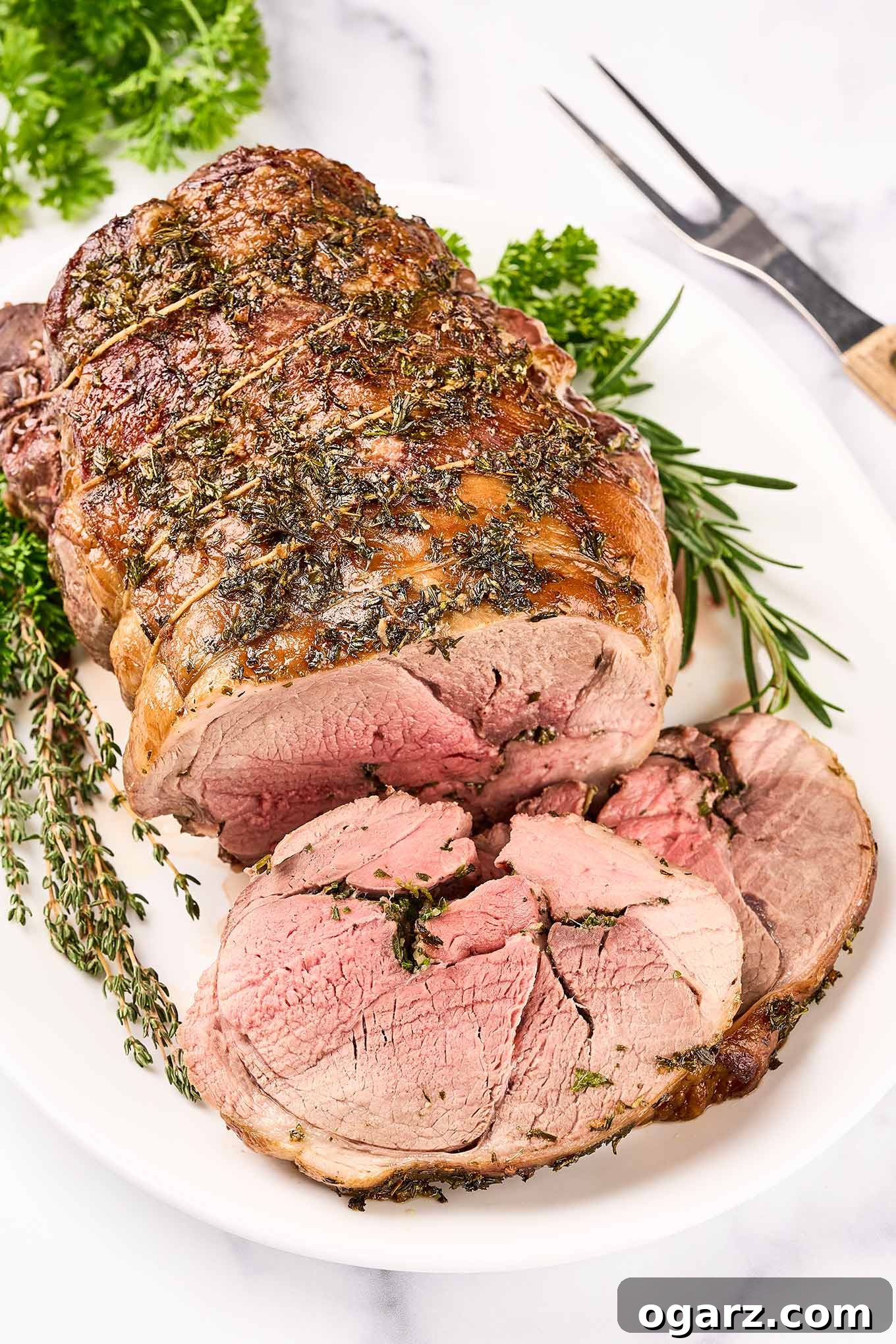
Elevate your culinary repertoire with this surprisingly easy yet incredibly elegant roasted boneless leg of lamb. Whether you’re orchestrating a grand holiday feast, a festive Easter dinner, or a sophisticated casual gathering, this recipe offers a centerpiece that is sure to impress your guests with minimal last-minute effort. Seasoned generously with a vibrant six-ingredient garlic and herb rub, this lamb roast can be prepped up to a full day in advance, allowing you to focus on other preparations and enjoy a relaxed hosting experience. Its bold flavors and succulent texture make it a versatile entrée, perfect for any special occasion throughout the year.
Why You’ll Love This Roasted Boneless Leg of Lamb Recipe
This roasted boneless leg of lamb is more than just a meal; it’s an experience. Here’s why it’s destined to become a staple in your recipe collection:
- Unforgettable Flavor: Infused with a simple yet potent rub of olive oil, fresh garlic, rosemary, thyme, and parsley, the lamb boasts a rich, aromatic flavor profile that is both traditional and universally appealing.
- Remarkably Easy: Despite its impressive appearance, the preparation is straightforward. With smart prep-ahead options, you can significantly reduce your workload on the day of your event, making it ideal for entertaining.
- Tender and Juicy: The careful trimming of fat, precise tying, and specific roasting technique ensure a consistently tender and juicy roast every time, with a perfectly seared exterior.
- Versatile for Any Occasion: While inspired by classic Italian Easter traditions, this dish transcends seasonal boundaries. Its robust flavor pairs beautifully with a wide array of side dishes, making it suitable for autumn dinners, winter holidays, or a special summer celebration.
- Impressive Presentation: A beautifully carved, herb-crusted leg of lamb automatically elevates any dinner table, showcasing your culinary prowess with minimal fuss.
Shopping for Boneless Leg of Lamb: Essential Tips
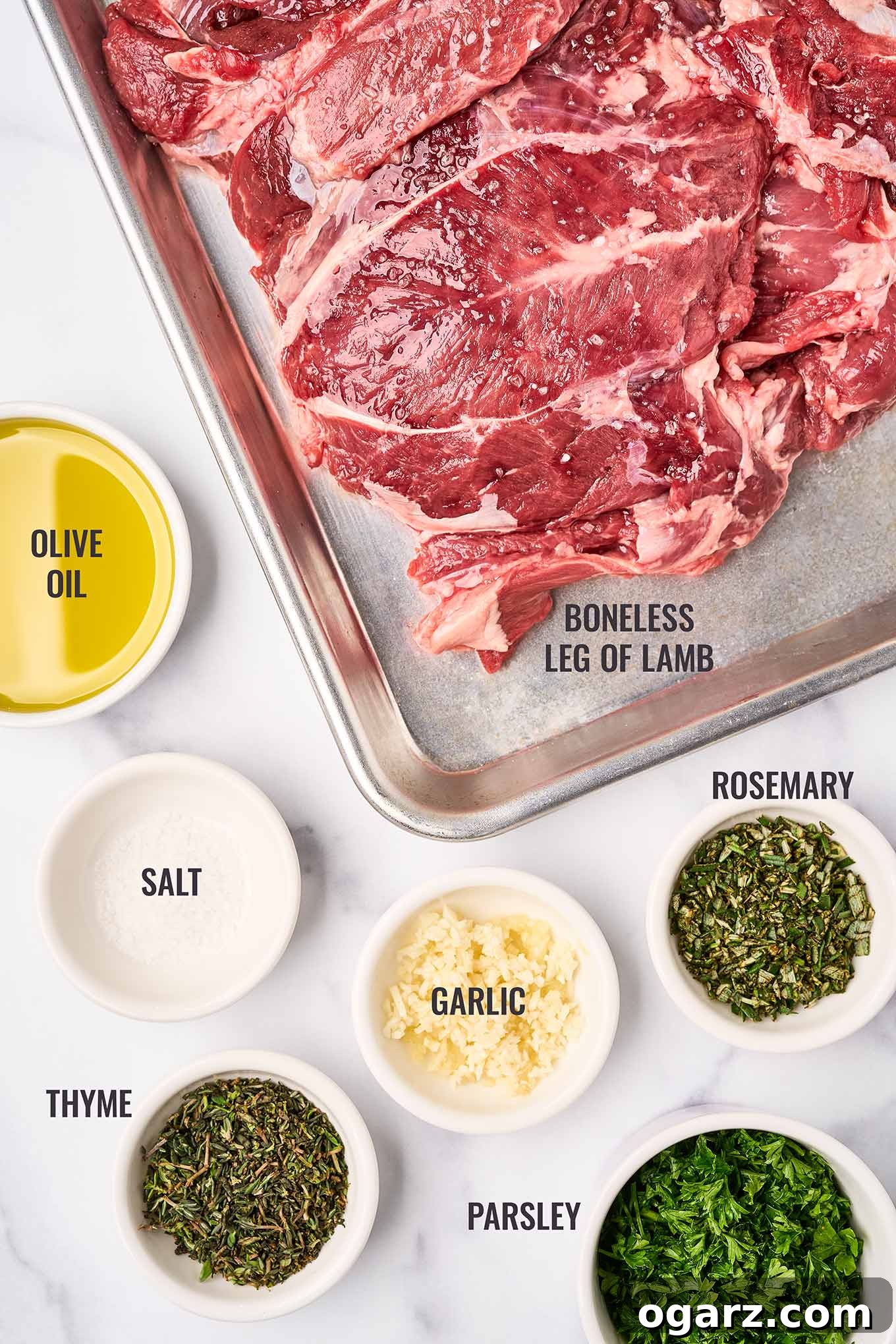
Selecting the right cut of lamb is fundamental to the success of your roast. Here’s what to keep in mind when you’re at the butcher or grocery store:
AMERICAN VS. AUSTRALIAN LAMB: The origin of your lamb significantly influences its flavor. If you prefer a very mild lamb flavor, seek out American lamb, often known for its delicate taste due to grain feeding. Australian (or New Zealand) lamb, on the other hand, is almost universally grass-fed. This diet imparts a slightly stronger, more distinctive “lamby” flavor – often described as earthy or herbaceous – but it should never be gamey. Both are excellent choices; your preference simply dictates which you should look for.
HOW MUCH LAMB TO BUY: A good rule of thumb for calculating portions is to allocate approximately 1/2 pound of boneless lamb per person. Most boneless legs of lamb typically weigh between 3-1/2 to 5 pounds before any trimming. When planning for your gathering, it’s often wise to buy a slightly larger roast than strictly necessary. Leftovers are a true culinary gift, perfect for creating delicious lamb sandwiches, salads, or even a quick lamb ragu.
WHAT TO LOOK FOR AND BUTCHER TIPS: When purchasing a pre-packaged boneless leg of lamb, it will frequently come encased in a netting. This netting is designed to hold the roast’s shape during cooking, but for this specific recipe, you’ll need to remove it to allow for proper seasoning and rolling. If you have the luxury of buying from a local butcher, don’t hesitate to ask them for assistance. Requesting that they trim the leg of lamb for you can save you time and effort at home, making the subsequent seasoning and rolling steps much simpler.
Prep Overview
Step-by-Step Roasting Guide: Crafting Your Perfect Lamb Roast
Planning to make this recipe? Here’s a quick overview of how it’s done. Detailed, step-by-step instructions are in the printable recipe card below.
BEFORE YOU BEGIN: Bring Lamb to Room Temperature
For optimal and even cooking, it’s crucial to remove the boneless leg of lamb from the refrigerator approximately 45 minutes before you plan to roast it. Allowing the meat to come closer to room temperature prevents the exterior from overcooking while the interior remains cold, ensuring a perfectly tender result from edge to center.
MAKE THE GARLIC-HERB RUB: Aromatic Flavor Foundation
While the lamb comes to temperature, prepare the robust garlic-herb rub. In a small bowl, combine extra-virgin olive oil with salt, finely minced garlic, fresh rosemary, thyme, and parsley. Mix these ingredients thoroughly to form a fragrant paste. This simple yet powerful blend will infuse your lamb with incredible flavor. Once prepared, set the rub aside. Also, preheat your oven to a high 425°F (220°C) and lightly coat a sturdy roasting pan and its accompanying rack with a nonstick cooking spray.


PREPARE THE LEG OF LAMB: Trimming and Shaping for Success
Lay the boneless lamb flat on a clean baking sheet, ensuring the fatty side is facing up. Examine the fat layers: if any are thicker than approximately 1/8 inch, use a sharp boning knife to carefully pare them down. It’s important not to remove all the fat, as a thin layer will render during cooking, contributing significantly to the lamb’s rich flavor and keeping it wonderfully tender and juicy. Next, turn the lamb over to expose the interior. With precision, trim away any large, distinct chunks of fat or tough, sinewy connective tissue that could detract from the final texture. To create a more uniform thickness for easier rolling and even cooking, cover the lamb loosely with plastic wrap and gently pound the thicker areas with the flat side of a meat mallet. Finally, season both sides of the lamb liberally with salt and freshly ground black pepper.
COAT THE LAMB WITH RUB: Infusing Flavor Deep Within
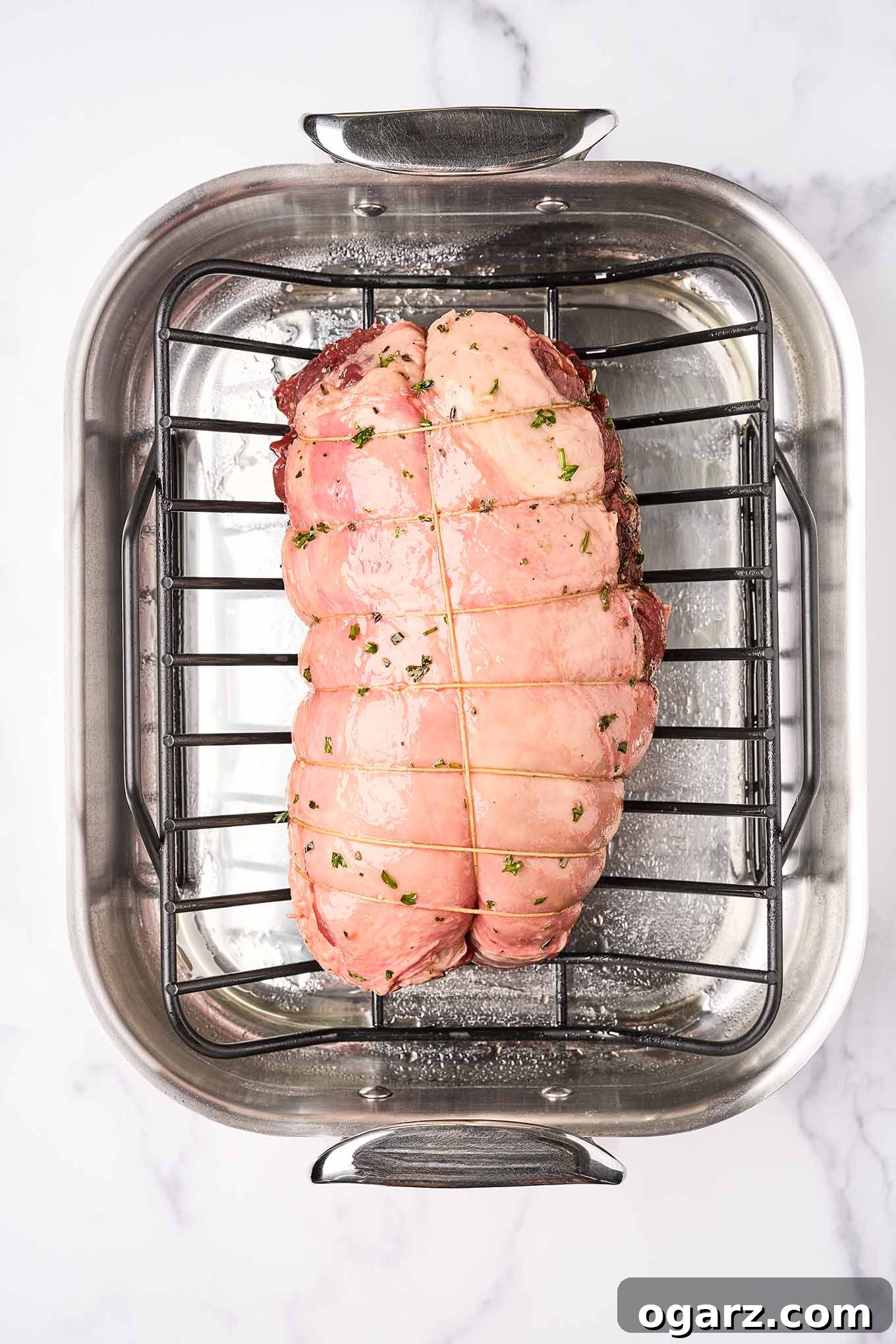
Now, take about two-thirds of your prepared garlic-herb rub and spread it evenly over the interior (cut side) of the lamb. This ensures the foundational flavors are absorbed deep into the meat. Once coated, carefully roll the lamb into a compact cylinder, ensuring the seasoned side is mostly enclosed. Turn the rolled lamb so the fatty side faces outwards and gently reshape it as needed to form a consistent, uniform roast. To maintain this elegant shape throughout roasting, secure the lamb with unbleached cotton kitchen twine, tying it crosswise at ¾ to 1-inch intervals. Aim for a snug tie that holds its form without squeezing the meat too tightly. For added security, tuck in the ends of the roast and run an additional piece of twine lengthwise, weaving it under each of the crosswise ties to hold everything perfectly in place.
ROAST THE LAMB: High Heat Start, Gentle Finish
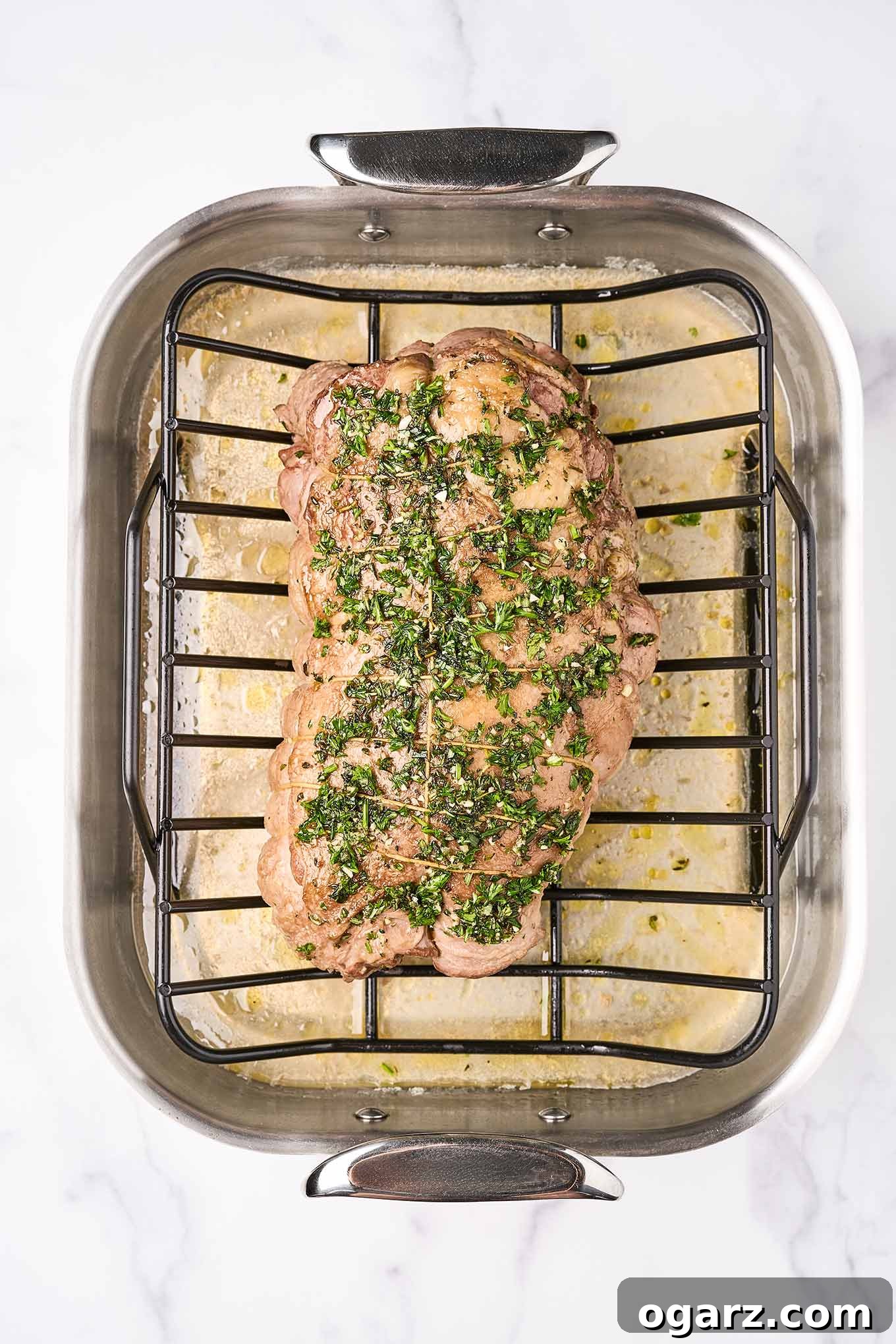
Pour about ½-inch of water into the bottom of your prepared roasting pan. This creates a moist environment, preventing pan drippings from burning and contributing to a flavorful pan sauce later. Carefully place the tied lamb roast onto the rack within the pan. Initiate the roasting process at a high temperature of 425°F (220°C) for the first 15 minutes. This initial burst of high heat is crucial for searing the exterior of the lamb, creating a beautiful crust and helping to lock in precious juices. After 15 minutes, remove the lamb from the oven and reduce the oven temperature to 375°F (190°C). Now, take the remaining garlic-herb rub and spread it evenly over the outside of the partially roasted lamb. Return the lamb to the oven to continue roasting. Begin checking the internal temperature after 40 to 45 minutes (total cooking time, including the initial 15 minutes), as roasting times can vary based on the exact size and thickness of your lamb. For rare lamb, aim for an internal temperature of 120°F (49°C) and for medium-rare, target 125°F (52°C). Remember, the internal temperature will continue to rise a few degrees as the roast rests outside the oven.
REST, SLICE, AND SERVE: The Crucial Final Step
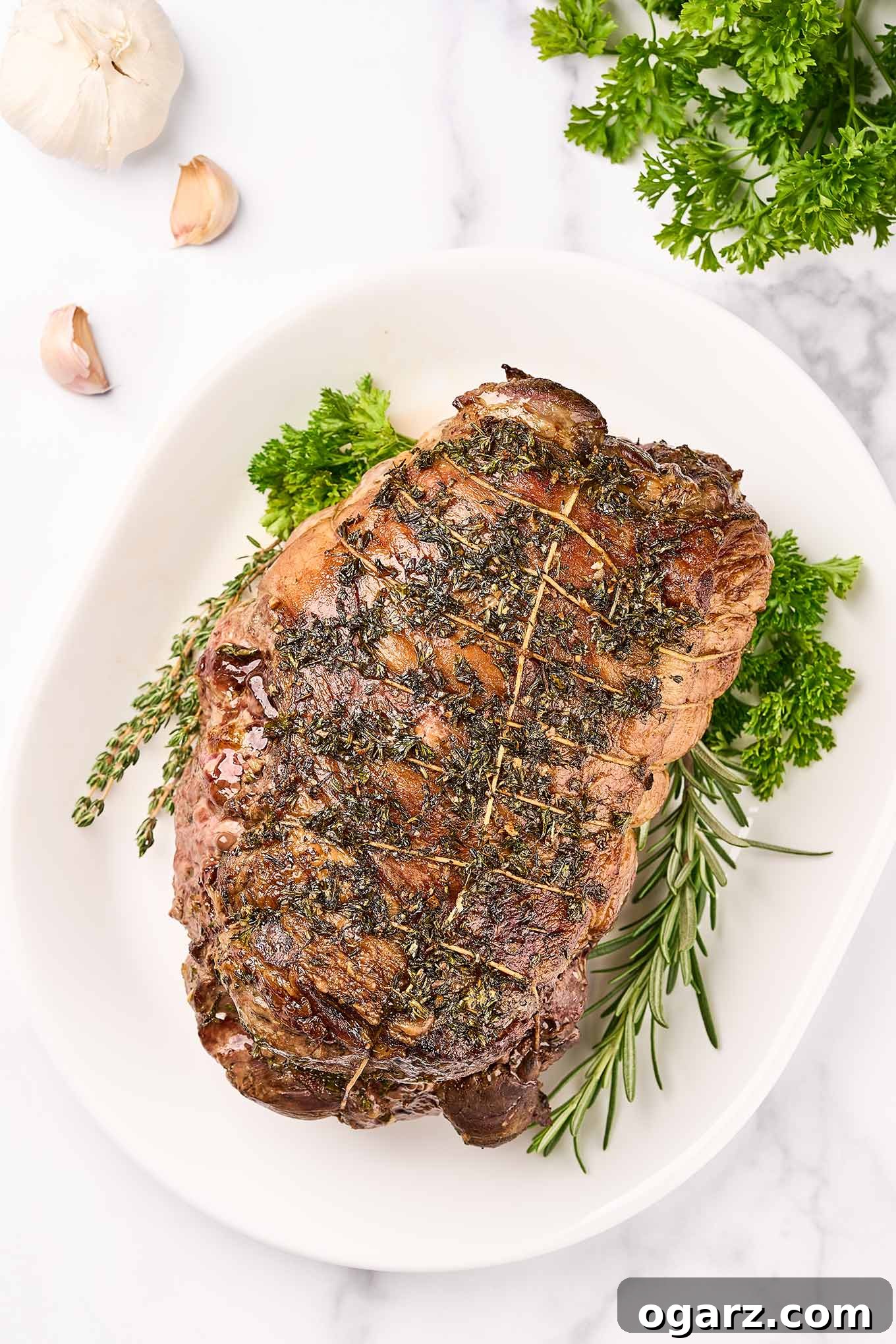
Once the lamb reaches your desired internal temperature, remove it from the oven and transfer it to a clean cutting board. It is absolutely vital to let the lamb rest for at least 15 minutes, tented loosely with foil. This resting period allows the muscle fibers to relax and the juices, which have been forced to the center of the roast during cooking, to redistribute throughout the entire piece of meat. Skipping this step will result in a dry, less flavorful roast. After resting, carefully remove all the kitchen twine. Using a sharp carving knife, slice the lamb into ½-inch thick pieces, cutting against the grain for maximum tenderness. Arrange the slices on a serving platter and present your magnificent roasted boneless leg of lamb to your eager guests.
Achieving Perfect Doneness: Internal Temperatures for Roasted Lamb
Precision is key to a perfectly cooked lamb roast. An accurate meat thermometer is your best friend in the kitchen, ensuring your lamb reaches your preferred level of doneness without being overcooked. For maximum juiciness and flavor, we highly recommend serving roasted leg of lamb medium-rare. Keep in mind that the internal temperature of the meat will continue to rise by 5-10 degrees Fahrenheit (3-5 degrees Celsius) after it is removed from the oven due to residual heat, known as “carryover cooking.”
- RARE: Remove from the oven when the internal temperature reaches 115-120°F (46-49°C). After resting, the temperature will rise to approximately 120-125°F (49-52°C).
- MEDIUM-RARE: Remove from the oven when the internal temperature reaches 120-125°F (49-52°C). After resting, the temperature will rise to approximately 125-130°F (52-54°C).
- MEDIUM: Remove from the oven when the internal temperature reaches 130-135°F (54-57°C). After resting, the temperature will rise to approximately 135-140°F (57-60°C).
- MEDIUM-WELL: Remove from the oven when the internal temperature reaches 140-145°F (60-63°C). After resting, the temperature will rise to approximately 145-150°F (63-66°C).
Always insert your meat thermometer into the thickest part of the roast, avoiding bone, for the most accurate reading.
Make-Ahead for Stress-Free Entertaining
One of the many benefits of this roasted boneless leg of lamb recipe is its adaptability for advance preparation, making it a fantastic choice for entertaining without the last-minute rush. You can complete the initial preparation steps the night before you plan to roast the lamb. This includes trimming, pounding, applying the internal garlic and herb rub, rolling the lamb into a cylinder, and securely tying it with kitchen twine.
Preparing it ahead of time allows the aromatic garlic and herb mixture more time to penetrate deep into the meat, resulting in an even richer and more profound flavor. After seasoning and tying the roast, simply place it on a rimmed tray or plate, cover it loosely with plastic wrap to allow for some air circulation, and refrigerate it overnight. On the day of your event, remember to remove the lamb from the refrigerator at least one hour before roasting. This crucial step allows the meat to gradually come to room temperature, which promotes even cooking and prevents the exterior from cooking too quickly while the interior remains cold. Just before roasting, you’ll apply the remaining rub to the exterior, then follow the roasting instructions as normal. This thoughtful planning ensures a stress-free cooking experience and a show-stopping meal.
Serving Suggestions and Wine Pairings for Your Lamb Roast
To complete your elegant lamb dinner, thoughtfully selected side dishes and wine pairings can truly elevate the experience. Here are some ideas to inspire your menu:
Classic Side Dishes:
This garlic-herb roasted boneless leg of lamb pairs beautifully with a variety of accompaniments. Consider these delicious options:
- Mushroom Puffs – A delicate and savory puff pastry appetizer with a rich, cheesy mushroom filling, perfect for starting your meal.
- Risotto Primavera – A creamy, vibrant springtime risotto crafted with tender pancetta, fresh peas, and a hint of white wine, offering a luxurious texture and fresh flavors.
- Lemon Roasted Asparagus – An incredibly easy and bright side dish featuring crisp spring asparagus roasted to perfection with a zesty lemon butter sauce.
- Italian Ricotta Pie – A silky-smooth, traditional ricotta cheesecake, subtly flavored with invigorating notes of orange and lemon, making for a light and refreshing dessert.
- Roasted Root Vegetables: Carrots, parsnips, and potatoes roasted with herbs complement the lamb’s richness.
- Creamy Mashed Potatoes: A timeless classic that always delights.
Wine Pairing Recommendations:
Lamb’s rich flavor stands up well to robust red wines. Consider these excellent choices:
- Cabernet Sauvignon: Its firm tannins and notes of blackcurrant and cedar provide a classic pairing.
- Merlot: A softer red with plum and cherry notes, offering a smoother contrast.
- Pinot Noir: For a lighter, more aromatic option, a good Pinot Noir with its earthy and red fruit characteristics can be delightful, especially with a herb-focused rub.
- Chianti Classico: An Italian choice that would echo the inspiration for this dish, with its savory notes and bright acidity cutting through the richness of the lamb.
Roasted Boneless Leg of Lamb
Our roasted boneless leg of lamb is seasoned inside and out with a garlic and herb rub for maximum flavor and juiciness. It’s an easy, elegant recipe perfect for Easter or any time of year.
Ingredients
- 1 boneless leg of lamb, 4 to 6 lbs
- Salt and freshly ground black pepper, to taste
- 6 tablespoons extra-virgin olive oil
- 1/2 teaspoon salt
- 3 cloves garlic, finely minced
- 2 tablespoons fresh rosemary, finely chopped
- 2 tablespoons fresh thyme leaves, finely chopped
- 1/4 cup parsley, finely chopped
Instructions
- Remove the lamb from the refrigerator and set aside for 45 minutes to allow it to come to room temperature. This promotes even cooking.
- Prepare the rub by combining the olive oil, salt, minced garlic, finely chopped rosemary, thyme, and parsley in a small bowl. Mix thoroughly and set aside.
- Preheat your oven to 425°F (220°C). Lightly coat a roasting pan and its rack with a nonstick cooking spray to prevent sticking.
- Lay the boneless lamb flat on a clean baking sheet, with the fatty side facing up. Carefully trim any excessive layers of fat that are thicker than 1/8-inch, but ensure you leave a thin layer, as this fat renders during cooking, adding flavor and keeping the lamb moist.
- Flip the lamb over. Using the tip of a boning knife, remove any remaining large, tough chunks of fat or sinewy connective tissue that might make the lamb less tender.
- Cover the lamb with plastic wrap and gently pound the thickest portions with the flat side of a meat mallet. This helps to create a more uniform thickness across the roast, making it easier to roll and ensuring more even cooking. Season both sides liberally with salt and freshly ground black pepper.
- Spread approximately two-thirds of the prepared garlic-herb rub evenly over the cut (inside) surface of the lamb. Carefully roll the lamb into a compact cylinder, ensuring the seasoned side is mostly enclosed. Turn it fat side up and gently reshape as needed to form a consistent roast.
- Using unbleached cotton kitchen twine, securely tie the rolled lamb crosswise at ¾ to 1-inch intervals. Aim for a snug tie, but avoid constricting the meat so tightly that it creates significant bulges, which can affect cooking evenness.
- To further secure the shape, tuck in the ends of the roast. Then, run an additional piece of twine lengthwise along the roast, weaving it over and under each of the crosswise ties to hold the ends firmly in place.
- Pour ½-inch of water into the bottom of the roasting pan. Place the tied lamb roast onto the rack within the pan. Begin by roasting for 15 minutes at the initial high temperature of 425°F (220°C). This high heat helps to sear the exterior and lock in juices. After 15 minutes, remove the lamb from the oven and reduce the oven temperature to 375°F (190°C).
- Spread the remaining garlic-herb mixture evenly over the outside of the partially roasted lamb. Return the lamb to the oven and continue roasting. Start checking the internal temperature after 40 to 45 minutes of roasting (total time, including the initial 15 minutes), as cooking times vary depending on the exact size and thickness of your roast. For rare lamb, aim for an internal temperature of 120°F (49°C) and for medium-rare, target 125-130°F (52-54°C). Remember, the temperature will continue to rise a few degrees as the roast rests.
- Once your desired internal temperature is reached, remove the lamb from the oven. Transfer it to a cutting board, tent loosely with foil, and allow it to rest for at least 15 minutes. This resting period is crucial as it allows the juices to redistribute throughout the meat, resulting in a more tender and flavorful roast. After resting, carefully remove all the kitchen twine and carve the lamb into ½-inch thick slices against the grain. Serve immediately and enjoy!
Chef’s Notes & Tips
Internal Temperatures for Roasted Lamb
For maximum juiciness and flavor, we highly recommend serving roasted leg of lamb medium-rare. Use a reliable meat thermometer for best results.
- RARE: Remove from oven at 115-120°F (46-49°C); will rise to 120-125°F (49-52°C) after resting.
- MEDIUM-RARE: Remove from oven at 120-125°F (49-52°C); will rise to 125-130°F (52-54°C) after resting.
- MEDIUM: Remove from oven at 130-135°F (54-57°C); will rise to 135-140°F (57-60°C) after resting.
- MEDIUM-WELL: Remove from oven at 140-145°F (60-63°C); will rise to 145-150°F (63-66°C) after resting.
Make-Ahead Instructions for Convenience
As mentioned in the make-ahead section, you can prepare, roll, and tie the lamb the night before. This allows the internal garlic and herb flavors to meld deeply with the meat. Remember to hold off on the exterior rub until just before the second roasting phase.
After seasoning and tying, place the roast on a rimmed tray, cover loosely with plastic wrap, and refrigerate. Be sure to remove it from the refrigerator at least an hour before roasting to allow it to reach room temperature for even cooking.
Storage and Leftovers:
Store any leftover roasted lamb in an airtight container in the refrigerator for up to 3-4 days. Leftovers are fantastic in sandwiches, salads, or warmed gently for another meal. For best reheating, slice thin and warm gently in a pan with a little broth to prevent drying out.
Nutrition Information
Calories: 497, Total Fat: 44g, Cholesterol: 103mg, Sodium: 303mg, Carbohydrates: 1g, Fiber: 0.4g, Protein: 24g
Nutrition information is automatically calculated and should be used as an approximation.
Enjoyed this recipe? Share your thoughts and leave a comment below!