
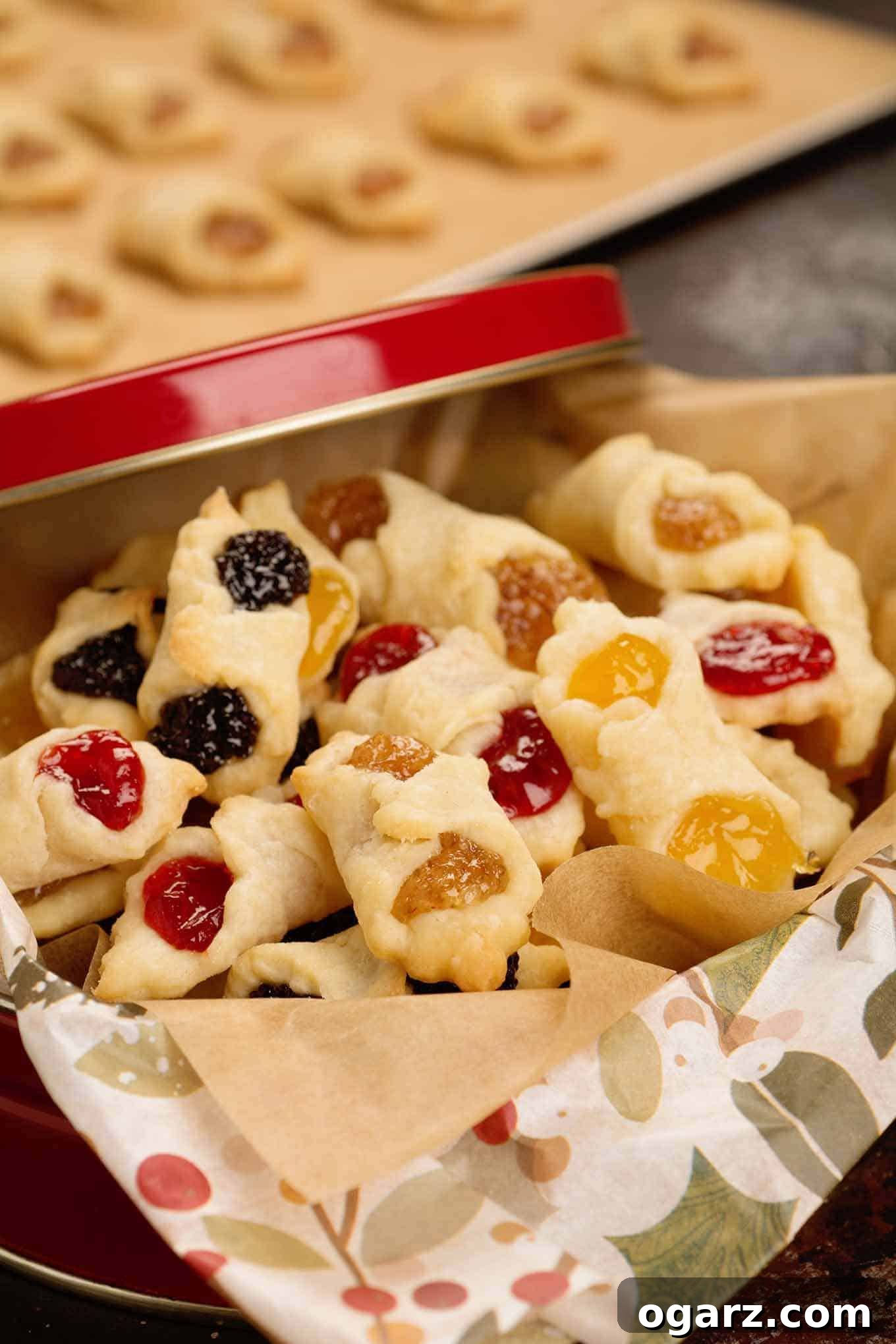
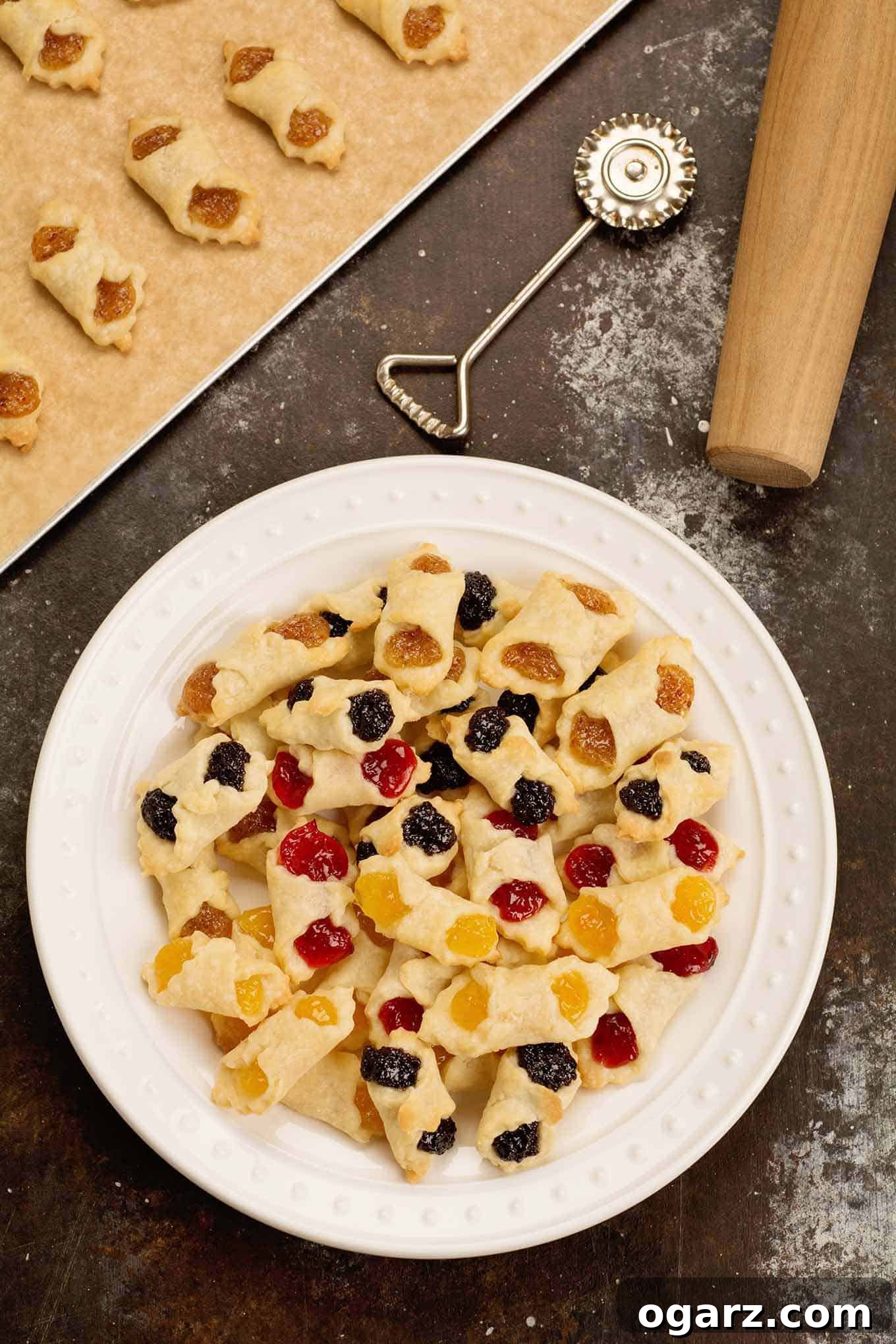
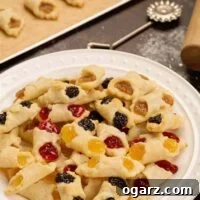
Delicate, flaky, and bursting with flavor, Hungarian Kiffles (also known as Kiflis) are more than just cookies; they are a cherished tradition, a testament to culinary heritage, and an exquisite addition to any celebration. While preparing these delightful pastries requires a modest investment of time and care, the reward—a tray of tender, melt-in-your-mouth cream cheese cookies filled with an array of sweet and nutty fillings—is truly incomparable. We are confident that every bite will prove these festive treats are well worth every moment spent in the kitchen.
Hungarian Kiffles: A Treasured Holiday Tradition
For many of Hungarian descent, Kiffles are synonymous with holiday gatherings and special occasions. Passed down through generations, these crescent-shaped pastries embody the spirit of family, warmth, and tradition. Originating from Central Europe, particularly Hungary, Kiflis have been a staple in celebratory feasts for centuries. Their delicate nature, combined with rich, flavorful fillings, makes them an anticipated treat during Christmas, Easter, and other significant family events.
What makes Hungarian Kiffles truly exceptional is their unique cream cheese dough. This special dough yields a pastry that is incredibly tender and flaky, almost melting in your mouth with each bite. Unlike typical sugar cookies or shortbreads, kiffles possess a distinct richness and lightness, making them utterly addictive. They are versatile too, capable of holding a variety of delectable fillings, allowing for a diverse and visually stunning cookie platter.
The History and Cultural Significance of Kiflis
The history of kiffles, or “kifli” in Hungarian, is deeply intertwined with the culinary landscape of Central Europe. The word “kifli” itself means “crescent” in Hungarian, referring to their characteristic shape. While other cultures have similar crescent-shaped pastries, Hungarian Kiflis stand out due to their distinct cream cheese dough and traditional fillings. Historically, these pastries were often prepared in large batches by families, becoming a central part of holiday baking rituals. They symbolize abundance, togetherness, and the sweet anticipation of festive times. The act of making kiffles often transforms into a cherished family activity, where recipes and techniques are lovingly shared from one generation to the next, reinforcing cultural identity and family bonds.
Choosing the Perfect Kiffle (Kifli) Fillings
The heart of a Hungarian Kiffle lies in its filling, and selecting the right one is crucial for success. It is paramount to use fillings specifically formulated for pastries. Regular fruit pie fillings, for instance, tend to be too loose and watery, which can cause them to seep out during baking, leading to messy, unappealing results. Similarly, standard jams and preserves, while delicious, can have unpredictable textures and moisture levels that may not hold up well under heat.
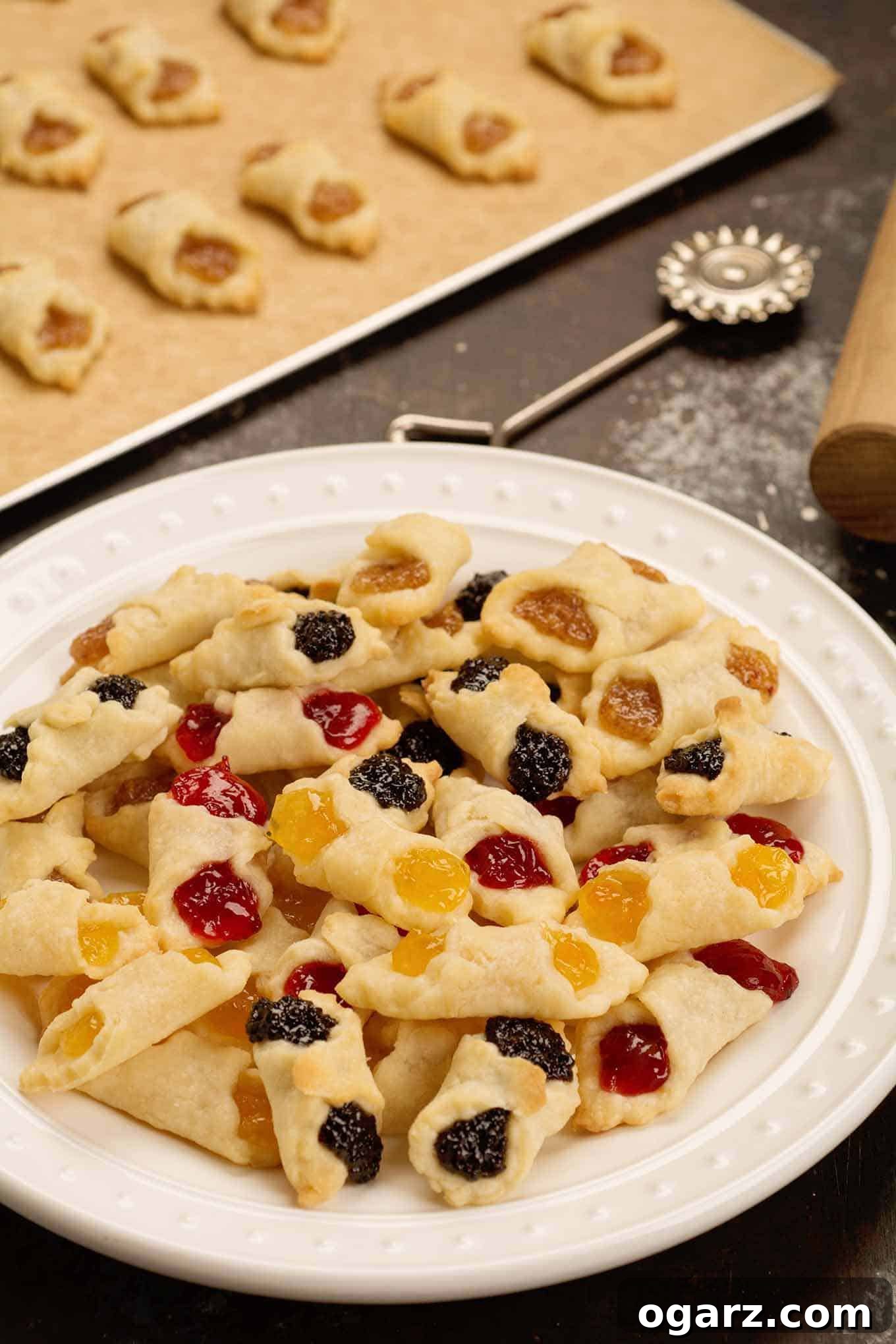
For consistent and delicious results, we have always relied on high-quality cake and pastry fillings, such as the Solo Brand. Their products offer a range of traditional and popular flavors, typically available in convenient 12-ounce cans, ensuring the perfect consistency for kiffles. Commonly featured flavors include vibrant poppy seed, sweet cherry, nutty almond, and tart apricot, each contributing a unique profile to your cookie assortment.
Beyond these popular choices, some of the most traditional Hungarian Kiffle fillings include prune (known as lekvar in Hungarian), rich walnut, and the distinctive poppy seed. For those who enjoy a true taste of tradition and prefer homemade options, many passionate bakers develop these fillings from scratch. You’ll find that a homemade lekvar, with its deep, fruity notes, or a freshly ground walnut filling offers an unparalleled depth of flavor that truly elevates the Kiffle experience. Explore the comments section below for instructions shared by fellow enthusiasts on preparing these classic fillings from scratch.
Exploring Kiffle Filling Varieties
While the classic prune, walnut, and poppy seed fillings hold a special place in Hungarian tradition, the beauty of kiffles lies in their adaptability. You can experiment with various flavors to suit your personal preferences or seasonal availability. Beyond the popular apricot, almond, cherry, and raspberry, consider these delightful options:
- Lekvar (Prune Butter): A staple in Hungarian baking, lekvar offers a rich, deep fruit flavor that perfectly complements the delicate dough. It’s often slow-cooked to a thick, spreadable consistency.
- Walnut Filling: Finely ground walnuts, often sweetened with sugar and sometimes enhanced with a touch of rum or vanilla, create a robust and aromatic filling that is incredibly satisfying.
- Poppy Seed Filling: A unique and traditional choice, poppy seed filling typically involves ground poppy seeds cooked with milk, sugar, and sometimes citrus zest or honey, offering a subtly crunchy texture and distinct flavor.
- Apricot: Sweet and tangy, apricot filling is a bright and beloved classic, offering a sunny contrast to the rich dough.
- Almond: Often made from almond paste, this filling provides a sweet, nutty, and slightly marzipan-like flavor that is wonderfully aromatic.
- Raspberry: For a burst of fruity sweetness, raspberry filling adds a lovely tang and vibrant color.
- Nutella or Chocolate: For a modern twist, a small dollop of Nutella or a rich chocolate ganache can transform kiffles into a decadent treat.
- Cream Cheese Filling: While the dough is cream cheese based, a sweetened cream cheese filling can create a wonderfully creamy and tangy interior.
Remember, regardless of the flavor you choose, ensure the filling is thick and not excessively moist to prevent it from leaking during baking. A thicker filling also ensures a more concentrated burst of flavor in every bite.
Pro Tip: Achieving Perfectly Uniform Kiffles
Achieving uniformity in the size of your kiffles is not merely about aesthetic presentation; it is fundamental for ensuring even baking. Cookies of similar size will bake at the same rate, preventing some from being undercooked while others are overbaked. The secret to consistently sized kiffles lies in rolling your dough into a precise 9-inch square. Here’s a detailed guide to master this technique using parchment paper:
- Begin by cutting a sheet of parchment paper that is approximately 15 inches wide and 18 inches long.
- Fold 4-1/2 inches of each of the shorter sides inwards, towards the center of the paper. Press firmly to create sharp, defined creases, then unfold the paper.
- Next, fold 3 inches of each of the longer sides inwards, again towards the center. Make sure to create sharp creases. When you unfold the paper, you should now have a clearly defined 9-inch square in the very center of your parchment sheet. This square will serve as your perfect guide.
- With the flaps of the parchment paper still facing upwards, lightly dust the entire parchment surface, especially the central square, with flour. Place one portion of your prepared dough directly in the center of the marked square.
- Dust the top of the dough with a small amount of flour. Carefully fold the parchment paper along your pre-made creases, essentially creating an “envelope” around your dough.
- Turn the parchment “envelope” over so that the flap sides are facing down. Place it on your clean rolling surface.
- Now, using a rolling pin, roll the dough from the center outwards towards the corners. The parchment paper acts as a guide, preventing the dough from spreading beyond the 9-inch square and ensuring a uniform thickness.
- Once the dough is evenly rolled to the edges of the 9-inch square and approximately 1/8-inch thick, carefully remove the parchment paper to avoid tearing the delicate dough.
Once you have successfully rolled your dough into a perfect 9-inch square, portioning your kiffles becomes remarkably simple. Use the tip of a sharp knife to lightly mark off even 1-1/2-inch intervals along all four sides of the dough square. Then, using a pastry wheel or a sharp knife, make precise cuts along these marks, both lengthwise and crosswise. This method will yield 36 perfectly sized kiffles (kiflis) from each square of dough, ensuring beautiful presentation and consistent baking results for your entire batch.
Rated 4.47 out of 5 stars from 104 votes.
Classic Hungarian Kiffles Recipe
Pin Recipe
Rate Recipe
Print Recipe
Ingredients
- 2-1/4 cups all-purpose flour, plus more for rolling
- 1/2 teaspoon salt
- 8 ounces cream cheese, softened
- 1 cup (1/2 lb) unsalted butter, softened
- 2 to 2-1/2 cups cake and pastry filling, about two 12-ounce cans
Instructions
Prepare the Dough:
-
Whisk the flour and salt together in a medium bowl and set aside.
-
Beat the cream cheese and butter with an electric mixer on medium speed until very smooth and creamy, 2 to 3 minutes.
-
Reduce the mixer speed to low and add the flour mixture, 1/4 cup at a time, mixing just until combined. The dough will be quite moist, but not sticky.
-
Turn the dough out onto a lightly floured surface and flatten into a square approximately 1/2-inch thick. Cut into 4 equal pieces and wrap each separately in plastic wrap. Refrigerate until firm, a minimum of 2 hours.
Roll and Cut the Dough:
-
Preheat the oven to 375°F and position a rack in the center of the oven. Line a large cookie sheet with parchment paper.
-
Remove one portion of the dough from the refrigerator and place it on a liberally floured surface.
-
Dust the top of the dough with flour and cover with a sheet of wax or parchment paper. Working from the center toward the corners, roll the dough out to a 1/8-inch-thick square. It should measure about 9 inches.
-
For best results, see our recipe notes below to learn how to roll your dough into a perfect square.
-
Using a pastry wheel or a sharp knife, cut your dough both lengthwise and crosswise into small squares.
-
Your total yield will depend on how large you make them. We recommend 1-1/2-inches which will give you 36 kiffles per square of dough or about 12 dozen total.
-
The best way to keep the size even is to use a ruler and mark all 4 sides of the dough square at intervals with the tip of a knife. You can use the handle of a spatula to guide you as you cut to keep your lines straight as well (similar to drawing straight lines on a sheet of paper).
Fill and Seal the Kiffles:
-
Working as quickly as possible, place a small mound of filling (about 1/2 to 3/4 teaspoon) in the center of each square. If the filling flavor you’re using is relatively smooth you can spoon it into a small freezer bag, snip off a tiny bottom corner and squeeze the filling onto the squares. This works particularly well with the poppy and almond flavors.
-
Lift two opposite corners of the dough over the filling and gently pinch them together. Fold that “point” over to one side, moisten the tip of your finger with a bit of water and smooth it down gently on one side of the kiffle. This prevents the kiffles from popping open as they bake.
-
Important Note: The various filling flavors spread a bit differently during baking so you may want to fill a few “test” kiffles and bake them to gauge the right amount of filling for each type.
Bake the Kiffles:
-
Arrange the kiffles 1 inch apart on the parchment-lined cookie sheet. Bake until barely golden, 12 to 14 minutes. Cool on the baking sheet for 1 minute, then carefully transfer the kiffles to cooling racks.
-
Repeat the process with the remaining 3 portions of dough, using different filling flavors if desired.
How to Store Kiffles:
-
Store kiffles between layers of waxed paper in a tightly closed container and refrigerate. Bring them to room temperature (30 minutes out of the fridge), arrange on a plate and dust lightly with powdered sugar just before serving. It’s not advisable to top them with powdered sugar before storing.
-
Makes 8 to 12 dozen.
Notes
How To Roll Your Dough Into a Perfect 9-Inch Square:
- Cut a sheet of parchment paper 15 inches wide by 18 inches long. Fold 4-1/2 inches of each short side toward the middle. Make sharp creases and unfold.
- Fold 3 inches of each long side toward the center. Make sharp creases there as well and you should have a well-defined 9-inch square in the center of your parchment paper.
- With the flaps facing up, dust the parchment liberally with flour and place a portion of dough in the center of the square. Dust the top of the dough with flour as well, then fold the parchment along your creases to make an “envelope” around your dough.
- Place it on your rolling surface, flap sides down and roll the dough from the center toward the corners as directed above. Remove the dough carefully to avoid tearing.
Note: Because of its high fat content, this dough requires a fair amount of flour on your rolling surface.
Tips for Baking and Storing Your Hungarian Kiffles
Baking Hungarian Kiffles is an art that comes with practice, but a few key tips can help ensure your success. First, always work with chilled dough. The cream cheese dough is high in fat, which makes it tender but also prone to becoming sticky when warm. Keeping it cold will make it much easier to handle and roll. If the dough starts to soften during the rolling or filling process, simply place it back in the refrigerator for 10-15 minutes to firm up.
When sealing the kiffles, ensure the corners are pinched together firmly but gently. A small dab of water on your fingertip can help create a strong seal, preventing the delicious fillings from oozing out during baking. This step is critical for maintaining the kiffle’s signature shape and keeping the filling encapsulated.
Baking time is relatively short, typically 12 to 14 minutes. Keep a close eye on your kiffles as they bake; you want them to be just barely golden. Overbaking can lead to a dry, crumbly texture, diminishing their delicate quality. They will continue to set slightly as they cool on the baking sheet for a minute before being transferred to wire racks.
Storage and Serving Suggestions
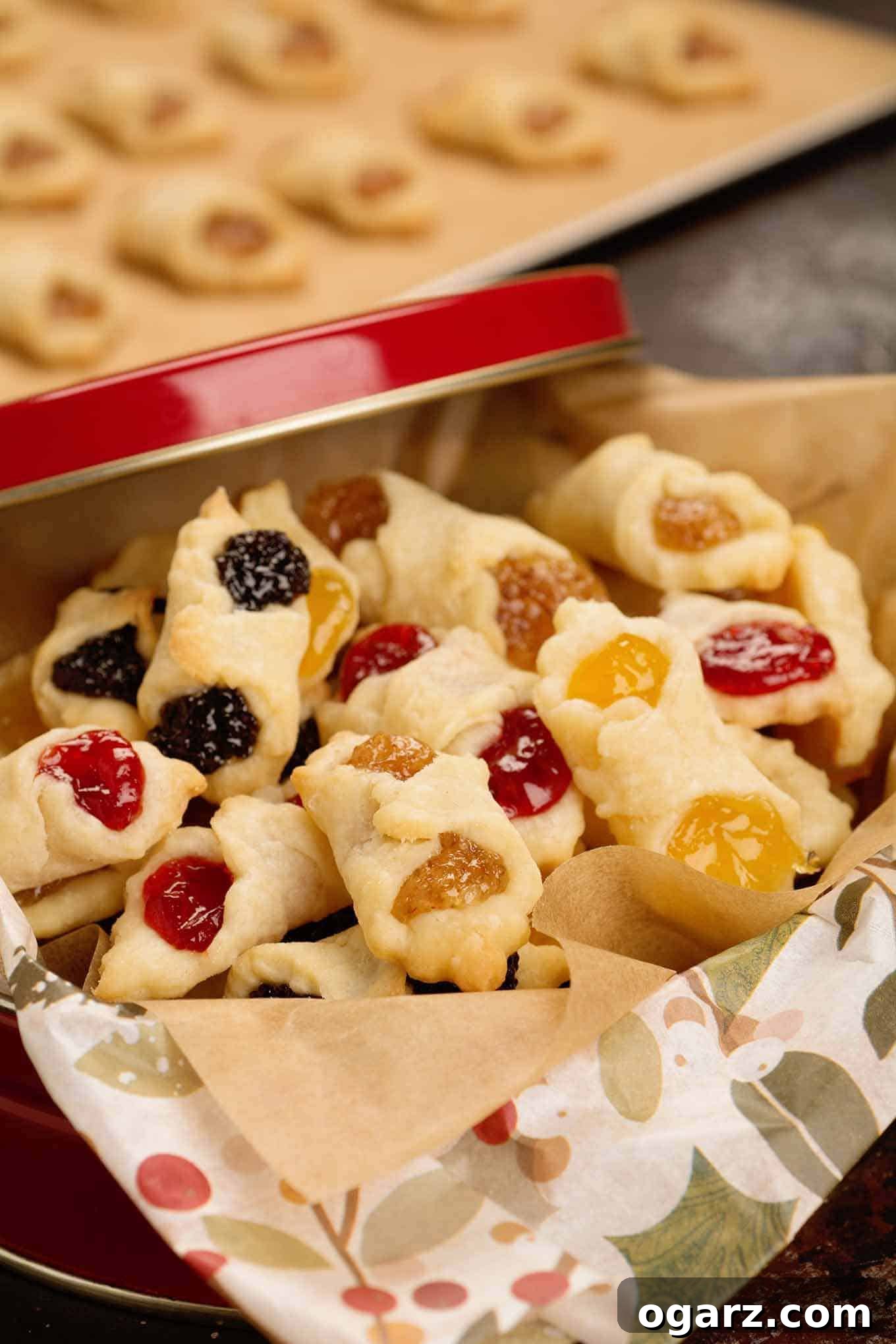
Once cooled, kiffles should be stored properly to maintain their freshness. Arrange them in an airtight container with layers of waxed paper between them to prevent sticking. Since the dough contains cream cheese, refrigeration is recommended to preserve their quality. When you’re ready to serve, simply remove them from the refrigerator about 30 minutes beforehand to allow them to come to room temperature. This enhances their texture and flavor.
For a beautiful presentation, dust your kiffles lightly with powdered sugar just before serving. This adds a touch of elegance and a subtle sweetness that complements the fillings. Avoid dusting with powdered sugar before storing, as it tends to absorb moisture and disappear into the pastry, leaving a less appealing finish.
Why Kiffles Are More Than Just a Cookie
Hungarian Kiffles are more than just a sweet treat; they are a delightful culmination of tradition, exquisite flavor, and careful craftsmanship. Each kiffle tells a story, often whispered through generations, of festive family gatherings and the joy of sharing homemade goodness. Their delicate texture and diverse fillings make them a versatile pastry, suitable for any occasion, from a simple coffee break to an elaborate holiday spread.
Embracing the process of making kiffles allows you to connect with a rich culinary heritage and create something truly special. The effort invested in mixing the dough, preparing the fillings, and carefully rolling and shaping each cookie is repaid tenfold by the admiring smiles of those who enjoy them. Whether you are continuing a family tradition or starting a new one, Hungarian Kiffles are sure to become a cherished part of your culinary repertoire.