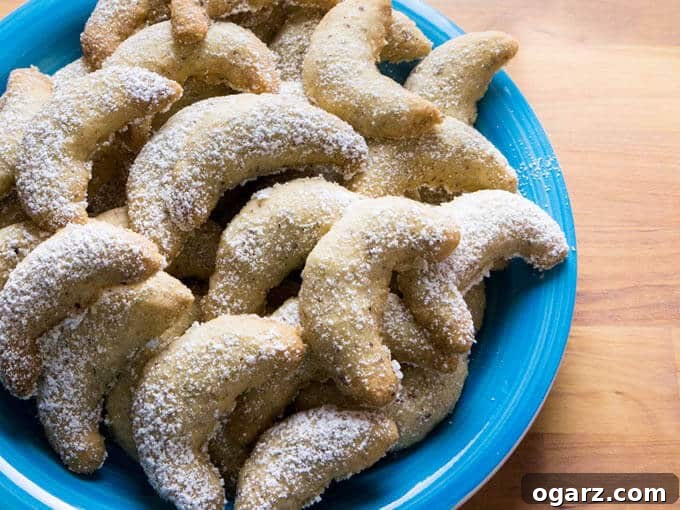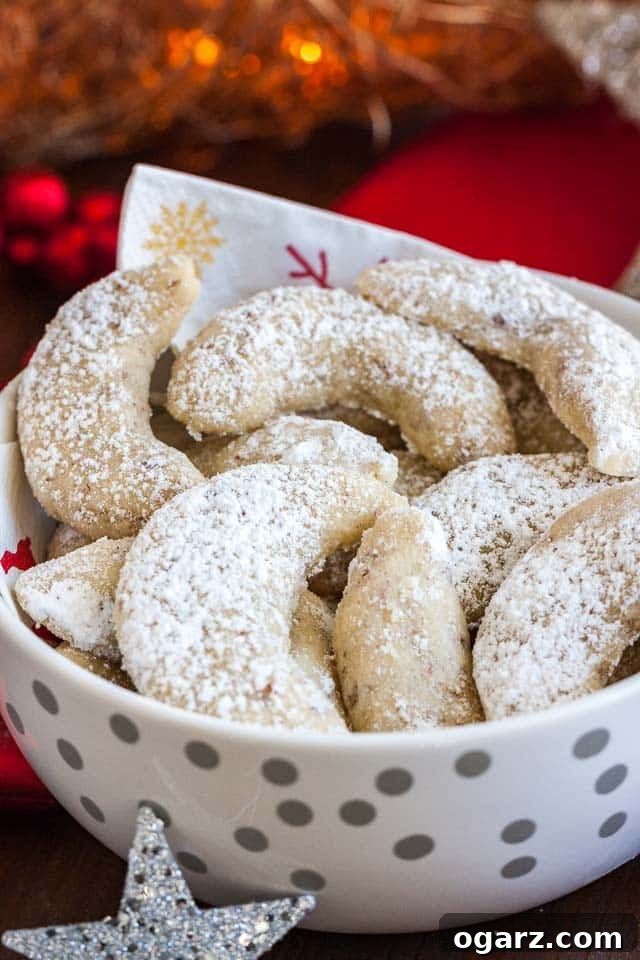
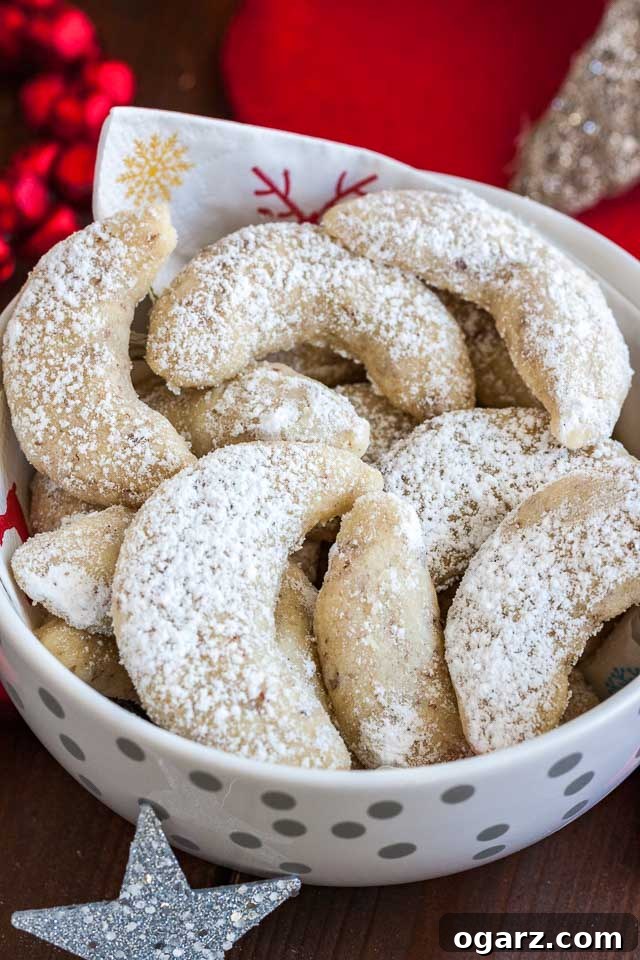
Vanillekipferl, also known as German Vanilla Crescent Cookies, are a cherished hallmark of German Christmas baking. These delicate, crescent-shaped cookies are renowned for their tender, melt-in-your-mouth texture, rich nutty flavor, and a generous dusting of aromatic vanilla sugar. Far more than just a sweet treat, Vanillekipferl embody the warmth and tradition of the holiday season, making them a perfect cookie to prepare in advance and a guaranteed crowd-pleaser for any festive gathering.
Discovering the Magic of Vanillekipferl: A German Christmas Classic
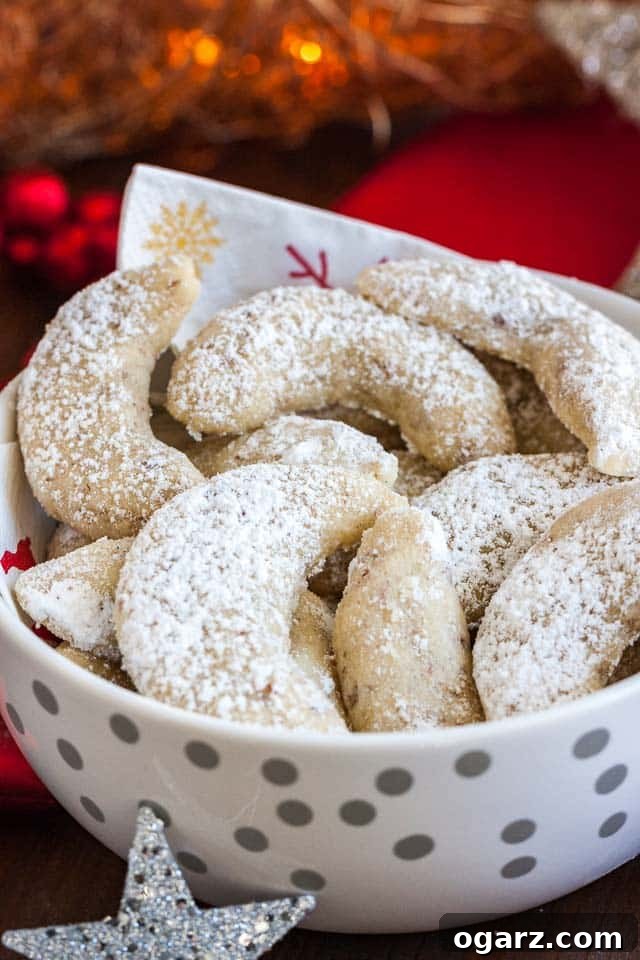
The allure of Vanillekipferl lies in their simplicity and the exquisite balance of flavors. These small, elegantly curved cookies are typically made with finely ground nuts—most commonly almonds or hazelnuts—and generously coated in vanilla sugar, which imparts their distinctive and beloved aroma. A true staple in German, Austrian, and Central European households, Vanillekipferl are synonymous with the festive period, yet their irresistible taste makes them a delightful indulgence year-round. What’s more, these cookies are incredibly practical: they require just a few basic ingredients and, much like German Gingerbread (Elisenlebkuchen) and Traditional German Stollen, their flavor actually deepens and improves after a few days of resting, allowing ample time for preparation ahead of holiday celebrations.
A Taste of Childhood: Baking Memories with Oma
For many, Vanillekipferl evoke fond memories of childhood and family traditions. One of my most cherished Christmas recollections involves baking these very cookies with my Oma (the German word for Grandmother). I’d always strategically ensure there were plenty of delicious cookie dough scraps for my Grandfather and me to enjoy. Both of my grandmothers were legendary for their Christmas baking prowess, each creating an astonishing variety of cookies – one even boasted a repertoire of about 20 different kinds! I still marvel at how she managed such an impressive feat. My favorite part was always sifting through the array of cookie tins, carefully selecting my favorite Plätzchen (German for cookies) to fill my plate. Without fail, Vanillekipferl were always high on that list, their delicate vanilla scent and tender crumb a truly unforgettable part of the holiday magic.
Unlocking the Secret to Perfect Vanillekipferl: Essential Tips and Tricks
Crafting these exquisite German Vanilla Crescent Cookies is a rewarding experience, and with a few key techniques, you can achieve that authentic melt-in-your-mouth texture. Here are some essential tips to guide you through the process:
- No Eggs or Baking Powder: The Traditional Way. Authentic Vanillekipferl recipes famously omit eggs and baking powder. This is crucial for achieving their signature delicate, crumbly texture that truly melts away on your tongue. Incorporating eggs or leavening agents would fundamentally alter the cookie’s structure, resulting in a different, less traditional result.
- Keep the Dough Cold. The butter-rich dough is sensitive to warmth. To prevent it from becoming too soft and difficult to handle, always work with a chilled dough. When shaping your crescents, take out only about a quarter of the dough from the fridge at a time, leaving the rest to stay cold. This ensures easier shaping and prevents spreading during baking.
- Consistency is Key for Even Baking. Strive to make your crescents as uniform in size as possible. This ensures that they bake evenly, preventing some from burning while others remain undercooked. While shaping may take a little practice, especially if it’s your first time, the effort pays off.
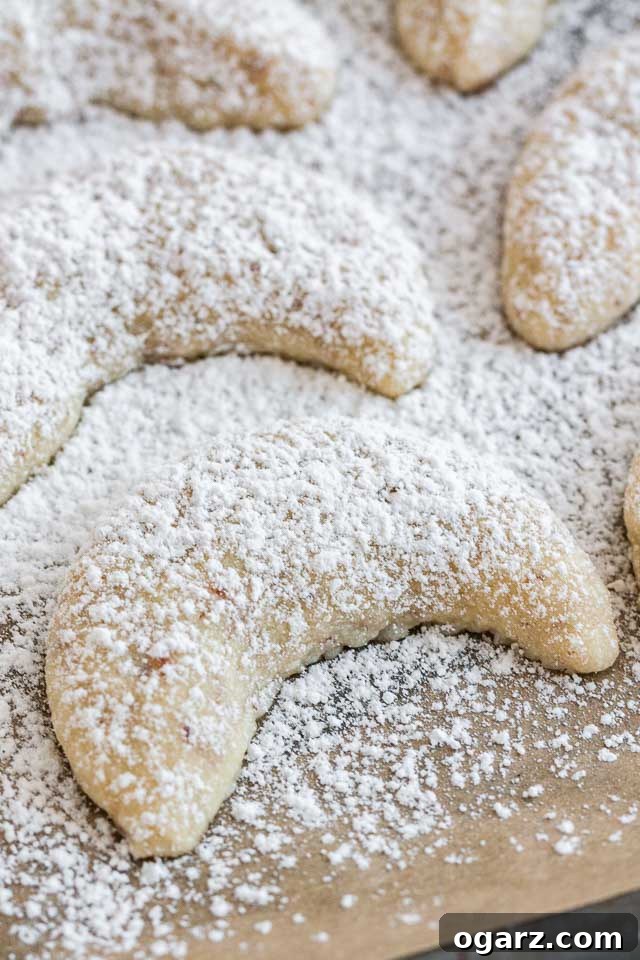
- Don’t Overbake! Vanillekipferl are meant to be pale. They should not brown significantly. Look for just a hint of golden color around the edges; the main body of the cookie should remain light. Overbaking will make them dry and hard, losing their delicate tenderness.
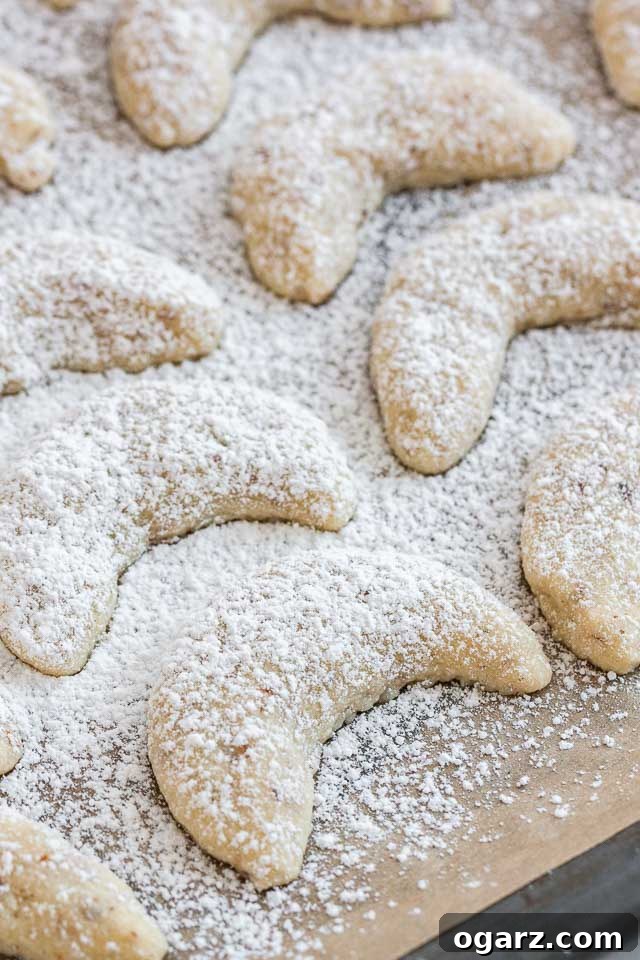
- The Art of Dusting with Vanilla Sugar. While some recipes suggest dipping, dusting the warm cookies with vanilla sugar is generally easier and safer. Dipping hot, fragile cookies can lead to breakage. Instead, immediately after removing the baking sheet from the oven, sprinkle the cookies generously with half of your vanilla sugar mixture. Allow them to cool completely on the sheet before repeating the dusting process. This two-stage dusting ensures a beautiful, even coating and maximizes vanilla flavor.
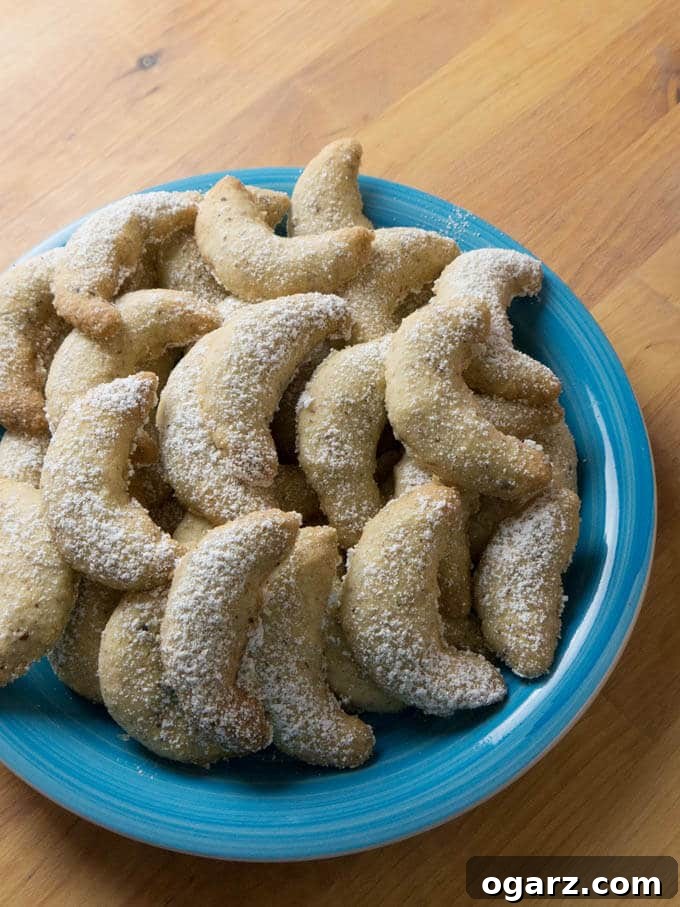
- Proper Storage for Lasting Freshness. In Germany, it’s customary to store Christmas cookies in special cookie tins. This isn’t just for nostalgia; an airtight cookie tin, kept in a cool, dry place, will keep your Vanillekipferl fresh and flavorful for weeks, allowing their flavors to meld and deepen over time.
Crafting Vanillekipferl: A Step-by-Step Guide to Baking Perfection
Making traditional Vanillekipferl might seem daunting at first, especially when you encounter the unique texture of the dough. However, the process is straightforward and yields incredibly rewarding results. As mentioned, these cookies rely on butter and ground nuts as their primary binding agents, eschewing eggs or baking powder.
When you first combine the ingredients, don’t be alarmed if the mixture appears very dry and crumbly. This is perfectly normal for a traditional Vanillekipferl dough. Continue mixing, and after about a minute or so, the butter will start to bind the ingredients, and the mixture will gradually come together. Once it looks like coarse crumbs, use your hands to gently press the dough together to form a cohesive ball. The key here is to handle the dough as little as possible to prevent the butter from warming up too much, which can make the cookies spread during baking. After forming the ball, wrap the dough in plastic wrap and chill it in the refrigerator for at least an hour. This crucial step firms up the butter, making the dough much easier to work with and helping the cookies maintain their shape.
Once chilled, roll out small portions of the dough into thin logs, then cut them into segments and taper the ends to create the classic crescent shape. Place these delicate crescents on a parchment-lined baking sheet, spaced about an inch apart. Bake the German Vanilla Crescent Cookies for approximately 12 to 15 minutes at a moderate temperature. Remember, the goal is not to brown them; you’re looking for lightly golden edges and a pale overall color. Overbaking will result in a hard, dry cookie that lacks the signature melt-in-your-mouth quality.
Immediately after removing the pan from the oven, while the cookies are still warm and delicate, dust them generously with the vanilla sugar mixture. Many traditional recipes suggest dipping, but I find dusting to be a much gentler and more effective method, as the warm cookies are very fragile and prone to breaking. Let the cookies cool completely on the baking sheet before giving them a second dusting of vanilla sugar. This two-stage process ensures a beautiful, even coating and infuses every bite with intense vanilla flavor. Once cooled, store your Vanillekipferl in an airtight container, and they will remain fresh for up to 3-4 weeks – though, in most homes, they’re devoured long before then!
The Essential Ingredient: Crafting Your Own Vanilla Sugar for Vanillekipferl
Vanilla sugar (German: Vanillezucker) is an indispensable ingredient for these German Vanilla Crescent Cookies. The final dusting, a crucial step for achieving their characteristic flavor and appearance, is made with a fragrant blend of vanilla sugar and powdered sugar. While you can readily purchase vanilla sugar in many stores, especially those specializing in international ingredients, making your own is surprisingly easy and allows you to control the quality of the vanilla.
Homemade vanilla sugar is not only perfect for Vanillekipferl but can also elevate your morning coffee, tea, or any recipe that calls for a touch of vanilla. In traditional German baking, vanilla sugar is often preferred over vanilla extract, which historically was more difficult to obtain in Germany. To make your own, you’ll need just two ingredients: 1 cup of granulated sugar and 1 vanilla bean. Simply place the sugar into the bowl of a food processor. Carefully scrape out the aromatic seeds from the vanilla bean using the back of a knife and add them to the sugar. Pulse the sugar and vanilla seeds together until they are well combined and the sugar takes on a finer, powdered consistency, almost like powdered sugar itself. This process ensures the vanilla flavor is thoroughly infused throughout the sugar.
For storage, transfer your freshly made vanilla sugar to an airtight container or a mason jar. To further enhance the vanilla flavor, I always add the scraped-out vanilla pod to the jar, allowing it to continue infusing the sugar over time. Store it in a cool, dry place, and you’ll have a supply of fragrant vanilla sugar ready for all your baking adventures.
Explore More Traditional German Christmas Recipes
If you’ve enjoyed baking Vanillekipferl and are keen to delve deeper into the rich world of German Christmas treats, here are some other classic recipes that are sure to bring festive cheer to your home:
- German Lebkuchen Recipe {Elisenlebkuchen}
- German Gingerbread Spice Mix
- Traditional German Stollen for Christmas
- German Christmas Punch (Kinderpunsch)
- Easy Cinnamon Candied Almonds
Each of these recipes offers a unique taste of German holiday traditions, perfect for sharing with family and friends.
Tools and Ingredients for Success
To ensure your Vanillekipferl turn out perfectly, consider these essential tools and ingredients:
- Vanilla Sugar: Opt for vanilla sugar made with real vanilla beans for authentic flavor. Making your own is the most cost-effective and flavorful option.
- Ground Almonds or Hazelnuts: Finely ground almonds or hazelnuts are key. You can use almond meal with or without skins, or substitute with an equal amount of ground walnuts for a different flavor profile.
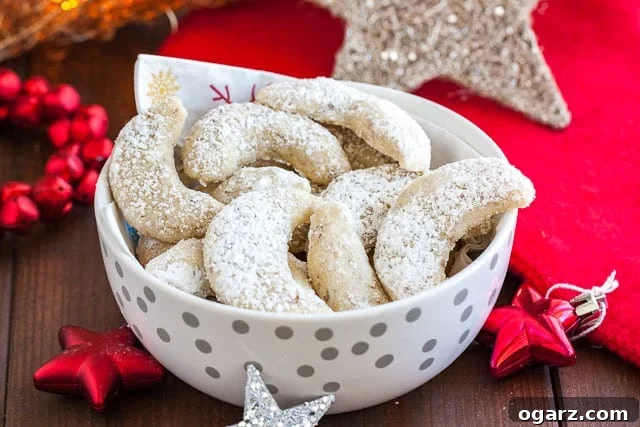
- Cookie Tins: A German tradition for a reason! Storing your cookies in airtight cookie tins, just like my grandmother did, keeps them fresh for weeks and allows their flavors to mature beautifully.
Vanillekipferl (German Vanilla Crescent Cookies)
By: Julia Foerster
Vanillekipferl (German Vanilla Crescent Cookies) are traditional German Christmas Cookies made with ground nuts and dusted with vanilla sugar! These cookies are delicate and require careful handling, but the effort is truly worth it for their exquisite taste and texture. For best results, consider using metric measurements if you have a kitchen scale.
Prep Time: 1 hour 10 minutes
Cook Time: 15 minutes
Total Time: 1 hour 25 minutes
Servings: 40 cookies
Ingredients
For the cookie dough:
- 2 cups all-purpose flour (spoon and level)
- 1 pinch of salt
- 1 cup unsalted butter, cold, cut into small cubes
- ¾ cup powdered sugar
- ¾ cup finely ground almonds (or hazelnuts or walnuts)
- ½ vanilla pod, seeds scraped out (or 2 tsp vanilla extract)
For the sugar mixture:
- ¾ cup powdered sugar
- ½ vanilla pod (scraped seeds or the pod itself if making homemade vanilla sugar)
Instructions
- In the bowl of a stand mixer fitted with the paddle attachment, combine flour, salt, cubed cold butter, powdered sugar, ground nuts, and scraped vanilla seeds. Mix at medium speed until a crumbly dough forms, which typically takes about 1-2 minutes. If the dough appears too dry and crumbly to come together, add 1-2 tablespoons of milk, one at a time, until it just barely forms a dough.
- Use your hands to gently press the crumbly dough together to form a cohesive ball. Avoid overworking the dough to keep the butter cold. Wrap the dough tightly in plastic wrap and chill it in the refrigerator for at least one hour. This step is crucial for the dough to firm up and become manageable for shaping.
- Preheat your oven to 350°F (177°C). Line one or two baking sheets with parchment paper.
- Remove a quarter of the chilled dough from the fridge (keeping the rest cold). Roll the dough into a thin log, approximately ½ inch thick. Cut the log into 1½-inch pieces. Take each piece and gently roll it into a small cylinder, tapering the ends to a dull point. Carefully bend each piece into the classic crescent shape. Place the formed Vanillekipferl on the prepared baking sheet, ensuring they are about 1 inch apart to allow for minimal spreading.
- Bake the Vanillekipferl one cookie sheet at a time for 12 to 15 minutes. Baking time will vary slightly depending on the size of your cookies and your oven. The cookies should be very lightly golden around the edges but should not brown significantly. They will still be delicate when warm.
- While the cookies are baking, prepare your vanilla sugar mixture for dusting. If using a fresh vanilla pod, scrape out the seeds and combine them thoroughly with the ¾ cup of powdered sugar. A small food processor or a mortar and pestle works wonderfully for this to ensure even distribution. Alternatively, use your homemade vanilla sugar if you have it ready.
- Immediately after taking the warm Vanillekipferl out of the oven, generously sift half of the vanilla sugar mixture over them. Allow the cookies to cool completely on the baking sheet before gently transferring them. Once fully cooled, give them a second dusting of the remaining vanilla sugar mixture. This ensures a thick, fragrant coating.
- These delicate cookies keep fresh for about 3 weeks when stored in an airtight container in a cool, dry place. The flavor often improves after a few days!
Notes
For precise measurements, you can often switch to metric units in recipe cards found online. Always use high-quality butter and fresh nuts for the best flavor.
Nutrition
Calories: 94kcal | Carbohydrates: 10g | Protein: 1g | Fat: 5g | Saturated Fat: 2g | Cholesterol: 12mg | Potassium: 8mg | Sugar: 4g | Vitamin A: 140IU | Calcium: 7mg | Iron: 0.4mg
Watch how to make them!
We originally published this recipe several years ago. Today, we’ve refreshed the photos, refined the recipe for optimal results, and added a helpful video tutorial to demonstrate just how effortlessly these delightful cookies can be made.