
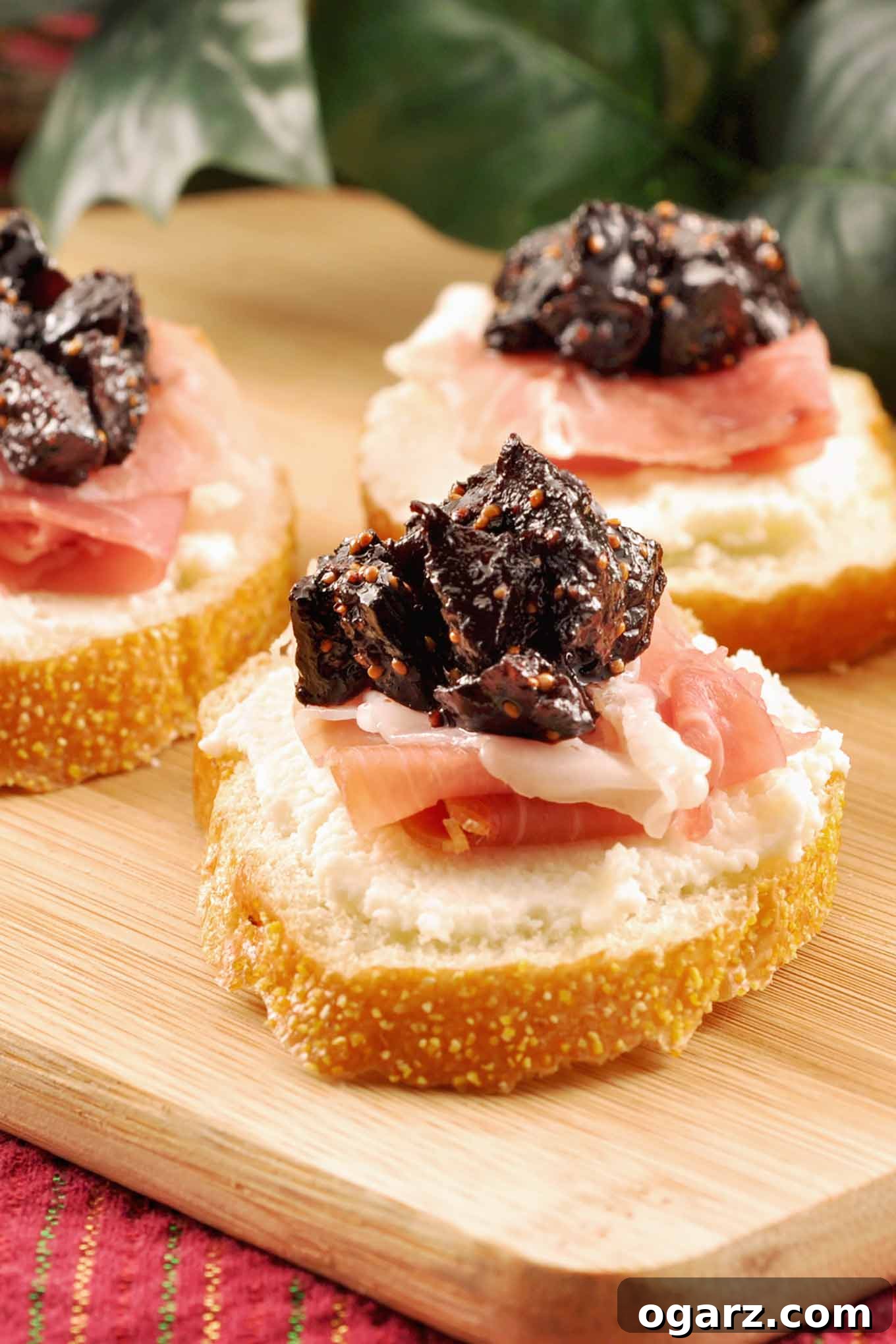
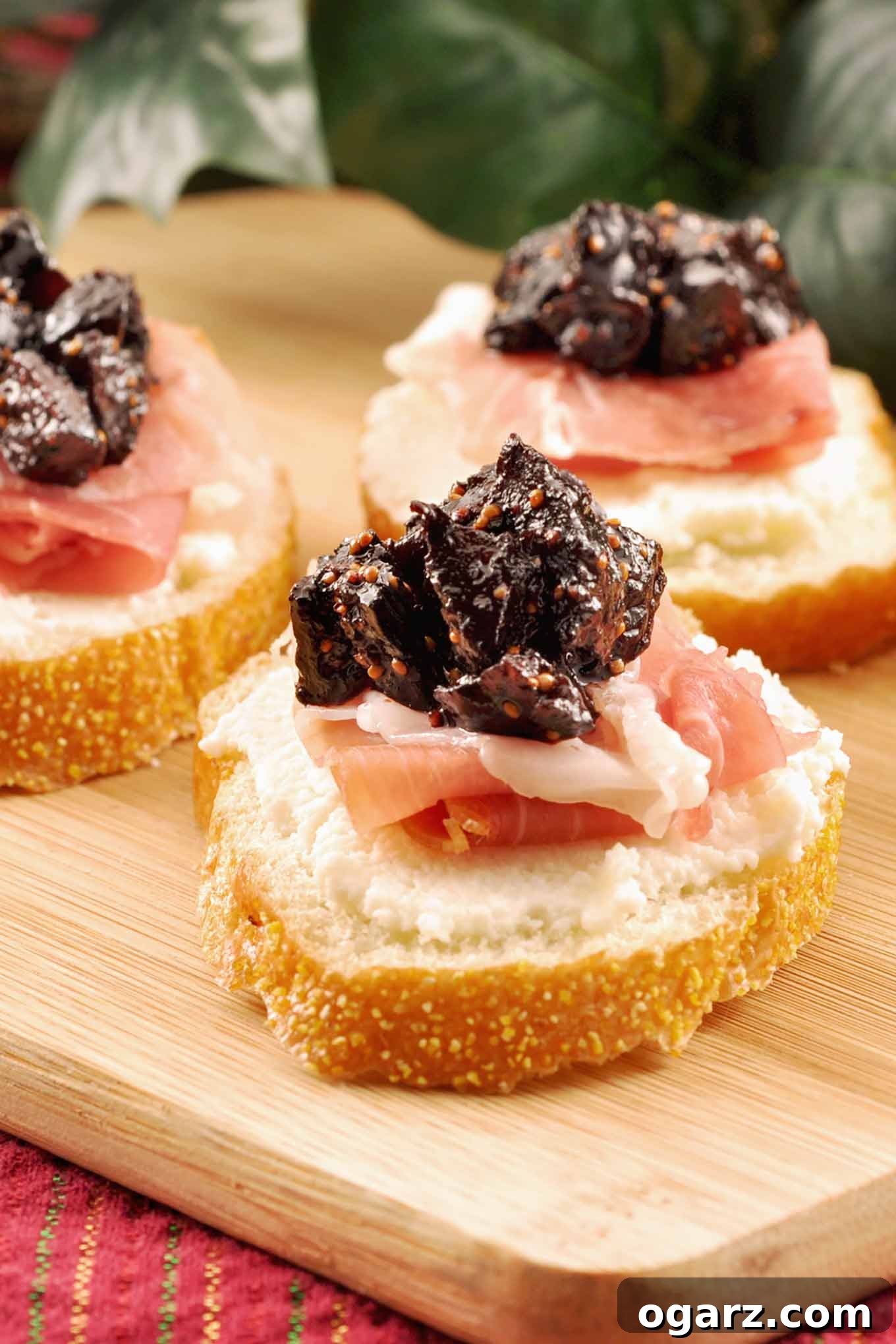
Gourmet Fig Crostini with Prosciutto, Whipped Ricotta & Port Wine Compote: An Elegant Appetizer
Elevate your entertaining with an exquisite appetizer that promises a symphony of flavors in every bite: our Fig Crostini featuring layered toppings of creamy whipped ricotta, savory prosciutto, and a luxurious port wine and fig compote. This unique crostini recipe is a testament to the art of combining contrasting tastes and textures to create a truly memorable culinary experience. The rich sweetness of figs, deepened by the complex notes of port wine, finds its perfect match in the delicate saltiness of prosciutto and the velvety smoothness of ricotta cheese. It’s an ideal starter for dinner parties, holiday gatherings, or any occasion where you want to impress your guests with minimal fuss and maximum impact.
Originating from Italy, the word “crostini” literally translates to “little toasts,” a humble description for what has evolved into one of the most versatile and beloved appetizers worldwide. These small, toasted bread slices serve as the perfect canvas for an endless array of toppings, ranging from simple bruschetta variations to more elaborate gourmet creations. While the concept is simple, the execution of a truly exceptional crostini lies in the quality of its components and the thoughtful pairing of flavors. Beyond this delightful fig and prosciutto rendition, the world of crostini offers boundless possibilities. For more inspiration, explore our other delicious crostini recipes, such as the Mascarpone and Blue Cheese Crostini (available in two delightful variations) and our refreshing Shrimp Crostini with Avocado Puree.
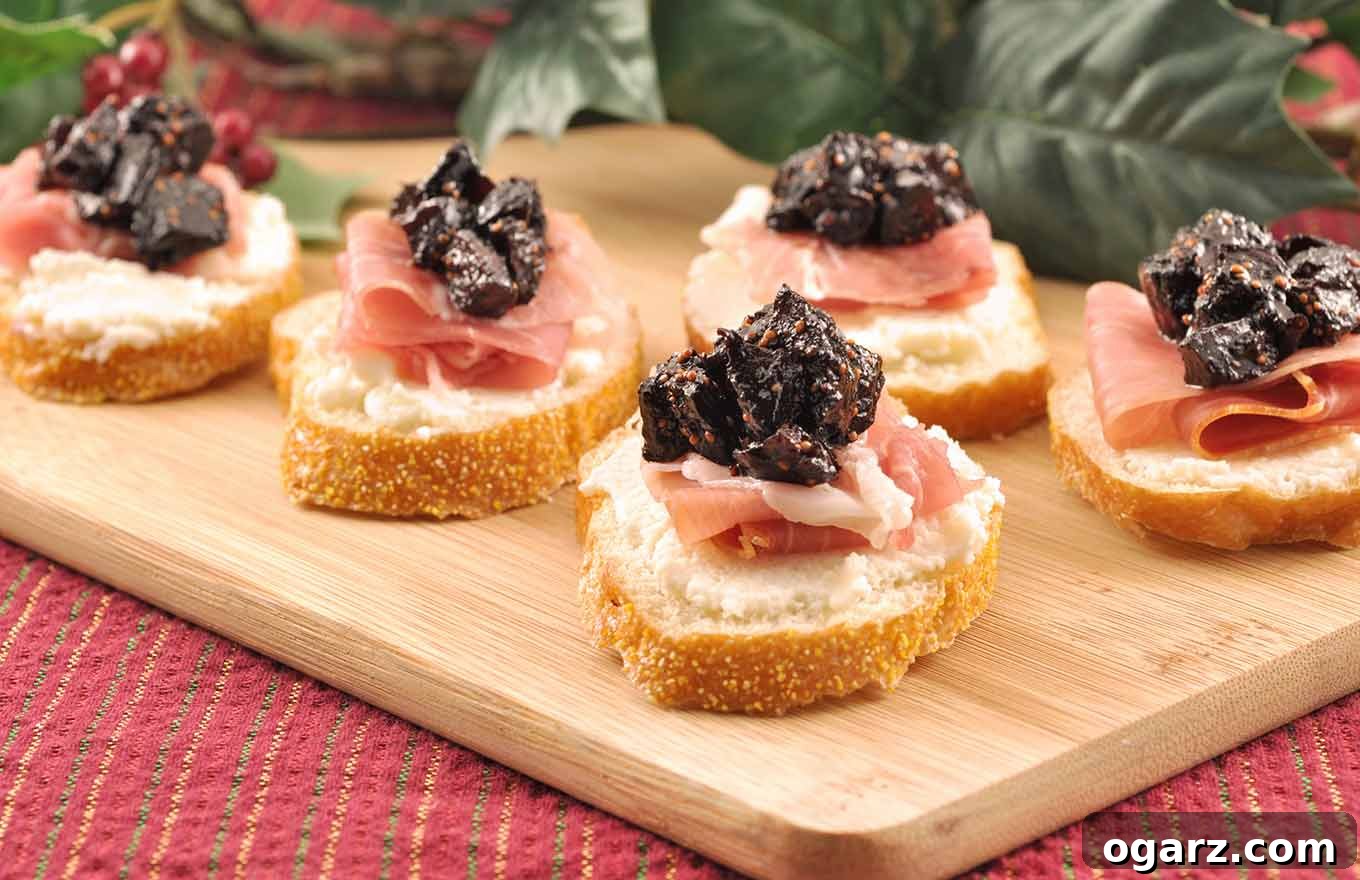
The beauty of this particular crostini lies in its sophisticated balance. The figs, simmered gently in port wine, transform into a glossy, tender compote that bursts with natural sweetness and a hint of fruity warmth. This luscious sweetness is beautifully cut by the salty, melt-in-your-mouth quality of thinly sliced prosciutto. To bring it all together, a generous dollop of whipped ricotta provides a cool, dairy richness and a pillowy texture that harmonizes the bolder flavors. The crispness of the toasted baguette base adds the essential textural contrast, making each bite an adventure of sweet, savory, creamy, and crunchy. Prepare to delight your palate and impress your guests with this effortlessly elegant appetizer.
Unlocking Flavor: Essential Ingredients for Perfect Crostini
Crafting exceptional crostini begins with selecting the finest ingredients. Each component in this recipe plays a crucial role in building the layered flavors and textures that make this appetizer truly special. Understanding these key elements will help you achieve the best possible results and appreciate the harmony within this gourmet bite, ensuring every element contributes to the overall exquisite experience.
- Dried Figs: The Sweet Heart of the Compote: We highly recommend using dried black mission figs for this recipe because they are naturally sweeter, smaller, and possess a more tender texture compared to other fig varieties, which can sometimes be tougher or less flavorful. When purchasing, gently squeeze the package to feel for figs that yield slightly to pressure, indicating they are fresh and pliable. Avoid any that feel excessively hard or overly mushy. Once opened, it’s essential to store dried figs in an airtight container in the refrigerator to preserve their quality, prevent them from drying out further, and extend their shelf life. These figs contribute a deep, molasses-like sweetness that is both comforting and sophisticated, forming the foundational flavor of our luscious compote.
- Port Wine: The Compote’s Companion: For the fig compote, ruby port is our varietal of choice. This type of port wine is generally more accessible and budget-friendly compared to vintage or tawny ports, yet it delivers a vibrant, sweet, and fruity flavor profile with pleasantly mild tannins. Its rich, berry-like notes beautifully complement and enhance the natural sweetness of the figs, creating a compote that is both luxurious and complex. During the simmering process, the alcohol cooks off, leaving behind a concentrated essence that significantly elevates the fruit’s natural taste and aroma.
- Baguette: The Crisp Foundation: The success of any crostini hinges critically on its base. For this recipe, opt for a high-quality, fresh French-style baguette. Look for one with a relatively small diameter, which ensures manageable, bite-sized pieces perfect for an appetizer. The ideal baguette will feature a thin, wonderfully crisp crust that provides a satisfying crunch with every bite, coupled with a tender, airy inner texture that toasts beautifully without becoming overly hard or dense. These specific qualities make it an excellent choice for finger food that is easy to eat and doesn’t overwhelm the delicate toppings. Slicing the baguette on the bias (diagonally) further increases the surface area, allowing for a more generous amount of topping and a more elegant, elongated presentation.
- Ricotta Cheese: The Creamy Canvas: Ricotta cheese provides a subtle yet essential dairy richness that acts as a perfect counterpoint to the intense sweetness of the fig compote and the savory saltiness of the prosciutto. For the best flavor and texture, we strongly recommend using whole milk ricotta. Its higher fat content results in a naturally creamier, more luxurious mouthfeel that truly elevates the dish. While part-skim ricotta can be used, it may not achieve the same decadent, velvety texture. To further enhance its light and airy quality, we whip the ricotta with a touch of heavy cream, transforming it into a smooth, pillowy spread that melts delicately in your mouth.
- Prosciutto: The Savory Counterbalance: Thinly sliced prosciutto is more than just a topping; it’s a critical flavor component that brings balance and depth to the crostini. Its mild, nuanced saltiness beautifully cuts through the intense sweetness of the fig compote, preventing the appetizer from being overly sugary and creating a delightful contrast. The delicate, almost melt-in-your-mouth texture of high-quality prosciutto also offers a wonderful textural contrast to the crisp crostini and the creamy ricotta. Opt for freshly sliced prosciutto from a reputable deli counter if possible, as it tends to be more tender and flavorful than pre-packaged varieties, ensuring a superior culinary experience.
Crafting Your Gourmet Appetizer: A Step-by-Step Guide to Fig, Prosciutto & Ricotta Crostini
Creating these elegant crostini is a straightforward process, broken down into manageable steps. Follow these detailed instructions to ensure each component is prepared to perfection, culminating in an appetizer that is as delightful to make as it is to eat, impressing both your palate and your guests.
Step 1: Make the Port Wine and Fig Compote – The Sweet Foundation
The fig compote is the heart of this crostini, infusing it with rich, fruity sweetness and a sophisticated depth of flavor. To begin, place your finely chopped dried figs and the ruby port wine into a small saucepan. Bring the mixture to a gentle simmer over medium-low heat. The key to a perfect compote is patience; allow the figs to slowly absorb the port, softening and plumping up beautifully. This process typically takes about 15 to 20 minutes, during which the figs will transform into a tender, luscious consistency. Stir occasionally to prevent sticking and ensure even absorption of the wine. You’ll know the compote is ready when the figs are thoroughly tender and most of the liquid has been absorbed, resulting in a thick, glossy, and wonderfully fragrant mixture. Once achieved, remove the saucepan from the heat and set it aside to cool completely. Cooling is important as it allows the flavors to meld further and the compote to thicken slightly, reaching its ideal consistency for topping.
Step 2: Prepare the Crostini – The Crispy Base
A perfect crostini needs a perfectly toasted base that provides a satisfying crunch without being overly hard. Start by preheating your oven to 375°F (190°C) and line a baking sheet with parchment paper; this simplifies cleanup and prevents the bread from sticking. Next, take your French baguette and carefully trim off the ends. Slice the baguette on the bias (diagonally) into oval pieces, aiming for a consistent thickness of approximately 1/4 to 3/8 inch. This diagonal cut not only creates a larger, more accommodating surface area for your delicious toppings but also lends the crostini a more refined and elegant appearance. For this recipe, you’ll need approximately 24 individual pieces. Arrange the baguette slices in a single layer on your prepared baking sheet, ensuring they don’t overlap, which could lead to uneven toasting. Lightly brush each slice with a good quality olive oil. This step is crucial for achieving that irresistible golden crispness and a subtle savory note. Bake for about 4 to 6 minutes, or until the edges are lightly toasted and the bread is crisp and golden brown. Keep a close eye on them, as crostini can burn quickly due to their thinness. Once toasted to perfection, remove them from the oven and allow them to cool completely on the baking sheet. A cooled crostini ensures the toppings won’t make the base soggy, maintaining that delightful crunch.
Step 3: Whip the Ricotta – The Creamy Cloud
The whipped ricotta adds a layer of luxurious creaminess that beautifully balances the other robust and contrasting flavors. In a clean mixing bowl, combine the whole milk ricotta cheese and the heavy cream. Using a hand-held mixer (or a stand mixer fitted with a whisk attachment), whip the mixture until it becomes smooth, light, and airy. You’re aiming for a texture that is easily spreadable, slightly fluffy, and akin to a delicate cloud. This whipping process not only significantly enhances the texture, making it more palatable and luxurious, but also brightens the ricotta’s subtle dairy flavor, allowing it to act as a perfect neutralizer between the sweet and savory elements. If you don’t have an electric mixer, you can achieve a similar texture with a sturdy whisk and a bit of vigorous elbow grease, though it will naturally take a little longer to reach the desired consistency.
Step 4: Assemble and Serve – The Grand Finale
With all your components meticulously prepared and cooled, it’s time for the exciting part – assembly! This is where your crostini truly comes to life, transitioning from individual ingredients to a cohesive, gourmet appetizer. Take each cooled, perfectly crisp crostini and spread about two teaspoons of the whipped ricotta evenly over its surface, creating a smooth, inviting layer. Next, take a piece of thinly sliced prosciutto. Since prosciutto often comes in larger slices, you may need to halve them lengthwise for easier placement and better portion control, then gently fold or scrunch a piece artfully onto the ricotta. The goal is to create a pleasing visual effect while ensuring every bite gets that essential savory kick. Finally, top each crostini with a small spoonful of the cooled port wine and fig compote. Gently press down on the compote to secure it and ensure it adheres nicely to the prosciutto and ricotta. Arrange your beautifully assembled crostini on a elegant serving platter. For an extra touch of sophistication and fresh aroma, consider garnishing with a tiny sprig of fresh rosemary or a delicate sprinkle of freshly cracked black pepper just before serving. Serve immediately to allow your guests to enjoy the perfect contrast of warm, sweet, salty, creamy, and crispy textures in every delightful bite.
Smart Preparation: Make-Ahead Tips for Stress-Free Entertaining
One of the many advantages of this crostini recipe is its remarkable flexibility for advance preparation, a key benefit that allows you to minimize last-minute stress when entertaining. By preparing several components ahead of time, you can significantly streamline your workflow, enabling you to focus on the enjoyable aspects of hosting and mingling with your guests rather than being tied to the kitchen.
- Compote Perfection: The rich port wine and fig compote can be prepared up to two full days in advance. Once it has cooled completely, transfer it into an airtight container and store it securely in the refrigerator. When you’re ready to use it, remember to remove it from the fridge at least an hour before assembling the crostini to allow it to gradually come to room temperature. The compote will naturally solidify somewhat when chilled, so a quick stir with a spoon will restore its smooth, spreadable consistency.
- Crisp Crostini: The toasted baguette slices, or crostini bases, are ideal for preparing ahead of time to ensure they achieve and maintain their perfect crispness. After baking, it is absolutely crucial to allow the crostini to cool completely to room temperature. This step prevents any condensation from forming inside the storage container, which could otherwise make them soggy. Once thoroughly cooled, store them in a tightly sealed container at room temperature in a cool, dry place. They will remain wonderfully crisp for up to two days. Alternatively, if your kitchen runs warm, they can also be refrigerated.
- Whipped Ricotta Readiness: The luxurious whipped ricotta can also be prepared up to two days in advance. Store it in an airtight container in the refrigerator to keep it fresh. Before you plan to assemble your appetizers, remove the ricotta from the fridge and let it sit at room temperature for approximately 30 minutes. A quick whisk or gentle stir will effectively restore its creamy, airy texture, ensuring it’s light and perfectly spreadable for your crostini.
- Prosciutto Prep: Prosciutto can be conveniently sliced ahead of time and kept refrigerated. For best results and to prevent the delicate slices from sticking together, arrange them gently between layers of parchment paper within an airtight container. This keeps them fresh and easy to separate when it’s time for assembly.
- Temperature Matters for Flavor: For the most harmonious flavor profile and optimal texture, it is highly recommended that all prepared ingredients – including the fig compote, whipped ricotta, and prosciutto – are brought to room temperature before you begin assembling the finished appetizer. This crucial step allows their individual flavors to fully develop and blend seamlessly, avoiding any harsh temperature contrasts that can detract from the overall exquisite experience of this gourmet crostini.
By thoughtfully following these make-ahead tips, you can significantly streamline your preparation process, making your event more enjoyable and less about last-minute kitchen rushes. When it’s time to serve, simply assemble the crostini, present them beautifully, and watch your guests delight in every perfectly crafted bite, appreciating both the flavors and your effortless hosting.

Crostini with Prosciutto, Ricotta, and Figs
Impress your guests with this unique crostini recipe featuring prosciutto, whipped ricotta, and a port wine & fig compote.
Print Recipe
Ingredients
- 8 ounces dried figs, chopped into 1/4 inch pieces
- 1 cup ruby port
- 1 French baguette, (about 22″ long, 3-1/2″ diameter)
- Olive oil, for brushing
- 1 cup whole milk ricotta cheese, (about 8 ounces)
- 1 tablespoon heavy cream
- 6 ounces prosciutto (thinly sliced), 12 slices, halved lengthwise (24 pieces)
Instructions
Make the port wine and fig compote
- Place the figs and port in a small saucepan and bring to a simmer over medium-low heat. Cook until the figs have absorbed the port and are plump and tender, 15 to 20 minutes. Remove from the heat and allow to cool.
Prepare the crostini
- Preheat oven to 375° F and line a baking sheet with parchment.
- Trim the ends from the baguette and slice it on the bias into oval slices about 1/4 to 3/8″ thick. You’ll need 24 pieces for this recipe.
- Arrange the slices in a single layer on the baking sheet. Brush each slice of bread with a little olive oil and bake until lightly toasted and crisp around the edges, about 4 to 6 minutes. Set aside to cool.
Whip the ricotta
- Place the ricotta cheese and heavy cream in a mixing bowl, and using a hand-held mixer, whip until smooth and creamy.
Add the toppings
- Spread about 2 teaspoons of ricotta on each crostini, then fold a piece of prosciutto on top.
- Top with a small spoonful of the figs and press down lightly. Arrange on a serving platter and serve.
Notes
Make-Ahead Tips
The crostini, whipped ricotta, and fig-port compote can be made up to two days in advance. The prosciutto can be sliced ahead as well. For the best flavor, all the ingredients should be brought to room temperature before assembling the finished crostini.
- Before storing the crostini, be sure the slices are fully cooled. Place them in a tightly sealed container in a cool dry place. They can also be refrigerated.
- The whipped ricotta can benefit from a little whisking once it comes to room temperature.
- The fig-port compote will solidify somewhat in the refrigerator. Stir it before topping the crostini.
Nutrition
Serving: 3 pieces
Calories: 297, Total Fat: 14g, Cholesterol: 32mg, Sodium: 299mg, Carbohydrates: 31g, Fiber: 3g, Sugar: 16g, Protein: 9g
Nutrition information is automatically calculated, so should only be used as an approximation.