
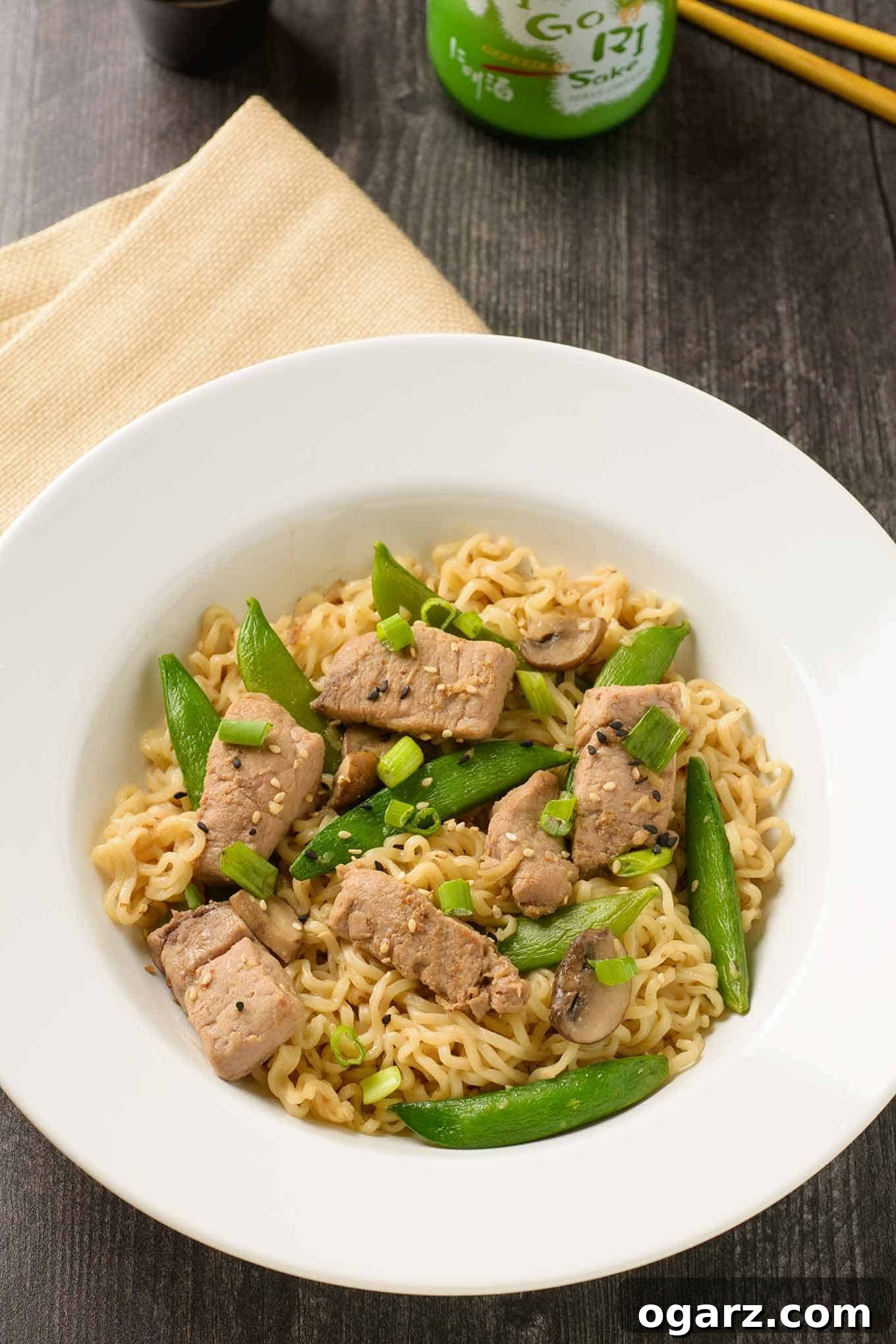
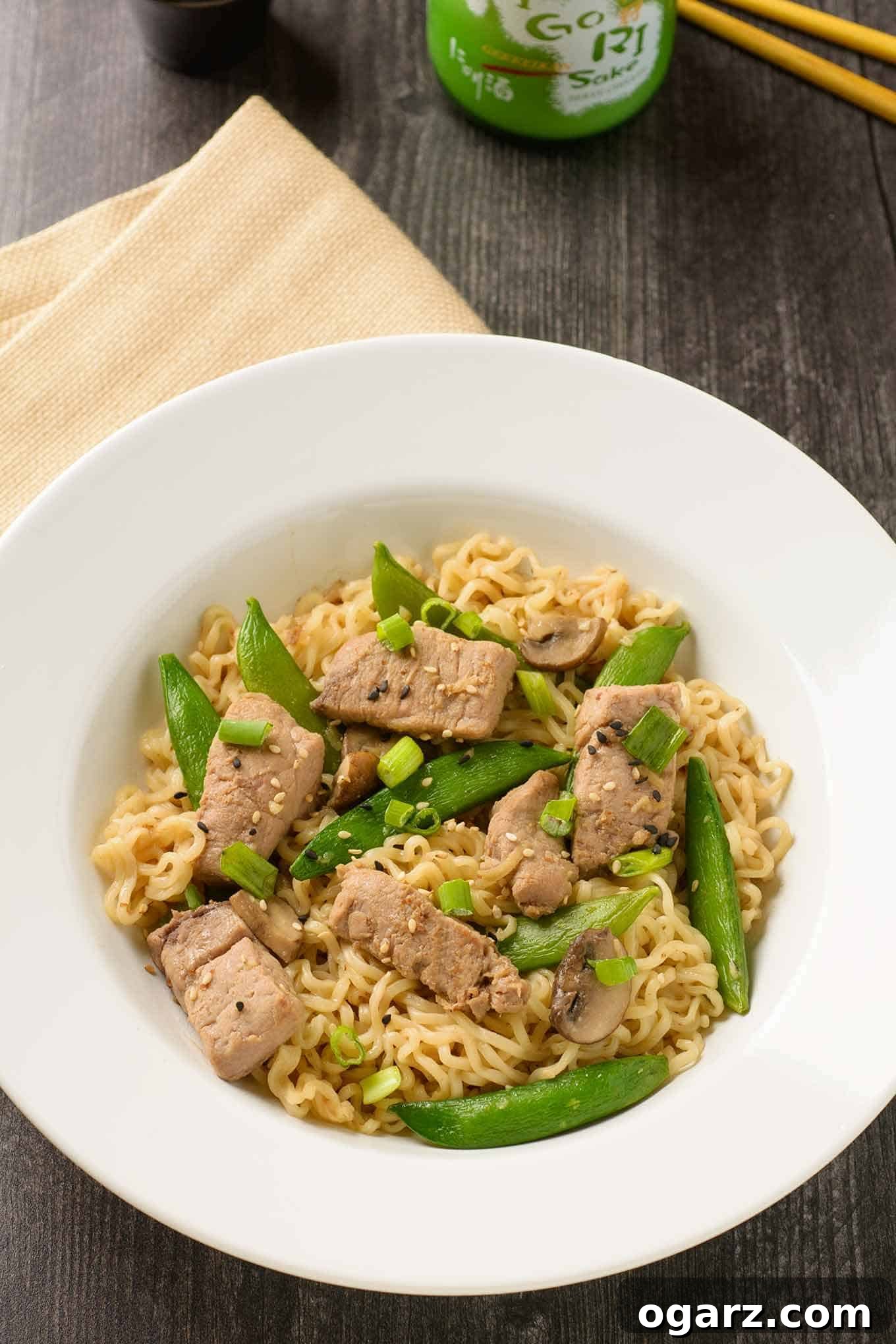
Effortless One-Pan Pork and Ramen Noodles: Your Ultimate Weeknight Stir-Fry
Tired of complicated recipes that leave you with a pile of dirty dishes? Discover the sheer joy and convenience of our One-Pan Pork and Ramen Noodles, a dish meticulously crafted to bring vibrant Asian-inspired flavors to your table with minimal fuss. Originally, this recipe involved multiple steps – cooking ramen separately, stir-frying ingredients in another pan, and then whisking together a sauce. While delicious, we knew there was a simpler, more efficient path to culinary bliss. Through careful refinement, we’ve developed an ingenious one-pan technique that not only streamlines the cooking process but also deeply infuses the ramen noodles with rich, savory flavors as they cook, saving you precious time and a mountain of cleanup.
This reinvented stir-fry is more than just a meal; it’s a testament to smart cooking. Imagine tender, thinly sliced pork tenderloin, earthy mushrooms, and crisp-tender sugar snap peas, all tossed with perfectly cooked ramen noodles in a fragrant soy-ginger sauce. The beauty of this recipe lies in its simplicity and the depth of flavor it achieves within a single pan. It’s an ideal solution for busy weeknights when you crave something wholesome, satisfying, and bursting with fresh ingredients, without the usual kitchen chaos. Get ready to transform your dinner routine with this quick, flavorful, and incredibly easy one-pan wonder.
Mastering the One-Pan Technique: Crafting Your Pork and Ramen Noodles
The secret to this exceptional dish lies in its streamlined technique, designed for maximum flavor and minimum effort. Let’s walk through the steps that make this a true game-changer in your kitchen.
Step 1: Preparing the Pork
Begin by preparing your pork tenderloin. Slice it thinly across the grain into uniform pieces. This ensures quick and even cooking. The pork then gets a quick marinade in a blend of soy sauce, mirin, sesame oil, and a touch of cornstarch. This marinade is crucial: the soy sauce and mirin infuse the pork with savory and slightly sweet notes, while the cornstarch works wonders, tenderizing the meat and creating a silky texture that helps the sauce cling beautifully. Set this aside to let the flavors meld while you prepare the vegetables.
Step 2: Building the Flavor Base
The foundation of any great stir-fry is its aromatic base. In a large sauté pan or wok, over medium heat, you’ll start by stir-frying fresh ginger and garlic until their intoxicating aromas fill your kitchen. These pungent roots provide a warm, zesty kick that is essential to Asian cuisine. Shortly after, add sliced mushrooms. These mushrooms will brown nicely, developing a deeper, umami-rich flavor that adds complexity to the dish. As the mushrooms cook, they release moisture, which then evaporates, concentrating their natural sweetness and earthiness.
Step 3: Deglazing and Creating the Broth
Once the mushrooms are lightly browned and fragrant, it’s time to deglaze the pan. This step is a flavor powerhouse. Pour in a combination of soy sauce and mirin. As these liquids hit the hot pan, they instantly lift any delicious browned bits (fond) from the bottom, incorporating them back into the sauce. Mirin, a sweet Japanese cooking wine, adds a subtle sweetness and glossiness that balances the savory soy sauce. Following this, pour in the chicken broth. This broth will be the liquid in which your ramen noodles cook, absorbing all the wonderful flavors you’ve built.
Step 4: Cooking the Ramen Noodles
Bring the broth mixture to a boil. This is where the “one-pan” magic truly shines. Discard the seasoning packets that often come with instant ramen, as our scratch-made sauce will provide superior flavor. Carefully arrange the blocks of ramen noodles side-by-side in the simmering broth. Reduce the heat to medium-high, cover the pan, and allow the noodles to simmer for a few minutes. The goal here is to get them soft and pliable, absorbing about two-thirds of the broth, but not fully cooked through yet. They will finish cooking with the other ingredients, ensuring they don’t become mushy.
Step 5: Incorporating the Sugar Snap Peas
At this point, the noodles will be soft enough to separate with tongs. Gently spread them around the pan. Now, add the fresh sugar snap peas, arranging them on top of the noodles. Re-cover the pan and let them cook for just about three minutes. This brief steaming period is perfect for the snap peas, allowing them to become crisp-tender – retaining their vibrant color and satisfying crunch without overcooking. Finally, toss in chopped scallions, adding a fresh, oniony bite and a beautiful green garnish.
Step 6: Finishing the Pork
To ensure the pork stays tender and perfectly stir-fried, it’s cooked separately at the very end. Plate the noodles and veggies onto individual serving bowls. Quickly wipe out the pan to remove any residue, then return it to medium-high heat. Add the remaining vegetable oil and swirl it to coat the pan. Add the marinated pork and stir-fry it rapidly for 2 to 3 minutes, until it’s lightly browned and cooked through to your preference. The cornstarch in the marinade will help create a beautiful, slightly caramelized exterior.
Step 7: Assemble and Serve
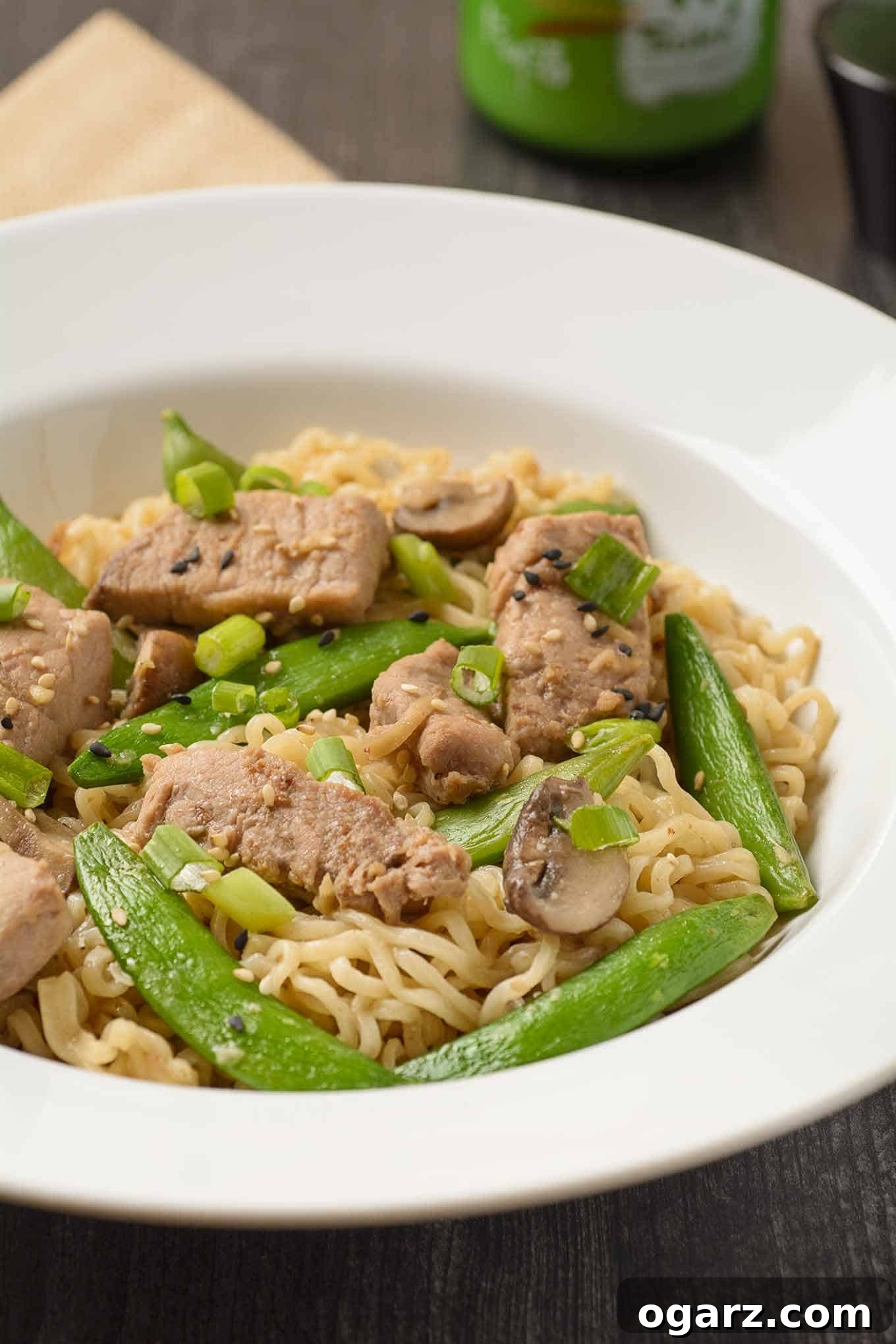
Top each generous serving of noodles and vegetables with a portion of the freshly stir-fried pork. Garnish with a sprinkle of extra scallions or sesame seeds for an added touch of elegance and flavor. Serve immediately and savor the delightful harmony of flavors and textures in every bite.
Unleash Your Inner Chef: Customize Your One-Pan Ramen
One of the most delightful aspects of this one-pan ramen recipe is its incredible versatility. The core technique can be easily adapted to suit your taste, dietary preferences, or whatever ingredients you have on hand. Think of it as a flavorful canvas ready for your culinary artistry.
Protein Power-Ups:
While pork tenderloin shines in this recipe, feel free to experiment with other quick-cooking proteins. Thinly sliced beef sirloin or flank steak makes for a richer, heartier stir-fry. Chicken breast, cut into bite-sized pieces or thin strips, offers a leaner alternative. For seafood lovers, shrimp or scallops cook incredibly fast and add a delicate sweetness that pairs beautifully with the soy-ginger sauce. If you’re aiming for a vegetarian or vegan option, firm or extra-firm tofu, pressed and cubed, or even tempeh, can be stir-fried to a golden crisp before adding to the dish, soaking up the delicious sauce.
Vibrant Vegetable Additions:
The beauty of this dish is how effortlessly it incorporates a variety of vegetables. Beyond sugar snap peas and mushrooms, consider adding:
- Bell Peppers: Sliced red, yellow, or orange bell peppers add a sweet crunch and a burst of color. Add them alongside the mushrooms for a similar cooking time.
- Broccoli Florets: Small broccoli florets, added with the snap peas, will become perfectly crisp-tender.
- Carrots: Julienne-cut or thinly sliced carrots add sweetness and a slight crunch. Add them early with the ginger and garlic if you prefer them softer.
- Bok Choy or Spinach: These leafy greens wilt quickly. Stir them in during the last minute of cooking, just after the snap peas, for a fresh, vibrant addition.
- Zucchini: Small cubes or half-moon slices of zucchini are a great way to add more green goodness. Add them when the snap peas go in.
- Edamame: Shelled edamame (fresh or frozen) can be added with the snap peas for extra protein and a chewy texture.
- Water Chestnuts or Bamboo Shoots: For an authentic Asian texture, add canned, sliced water chestnuts or bamboo shoots during the last few minutes.
Remember to adjust cooking times based on the density of the vegetables. Harder vegetables like carrots or broccoli might need a slightly longer cooking time, while softer ones like spinach or bell peppers require less.
Sauce Sensations:
The soy-ginger base is fantastic, but don’t hesitate to customize it. For an extra kick, a dash of sriracha or a pinch of red chili flakes can elevate the spice level. A tablespoon of brown sugar or a drizzle of honey can enhance the sweetness, while a splash of rice vinegar can add a delightful tangy brightness. A spoonful of peanut butter (creamy or crunchy) stirred into the sauce can transform it into a rich, nutty satay-style flavor profile.
Garnish Game-Changers:
Finishing touches make a difference. Toasted sesame seeds add a lovely nutty aroma and crunch. Fresh cilantro or Thai basil leaves can provide a burst of fresh herbaceousness. A squeeze of fresh lime juice just before serving brightens all the flavors. For an extra layer of flavor, a drizzle of chili oil or a sprinkle of furikake (Japanese seasoning) can be incredibly satisfying.
By understanding the core technique and having fun with ingredients, you can turn this one-pan wonder into a weekly staple that never gets boring.
Explore More Delicious Ramen Recipes to Try
If you’ve fallen in love with the convenience and flavor of our One-Pan Pork and Ramen Noodles, you’re in for a treat! The world of ramen extends far beyond simple packaged noodles, offering incredible versatility for countless culinary adventures. We encourage you to delve deeper into our collection of creative ramen dishes. For a light, refreshing option perfect for lunch or a vibrant side, try our fresh and flavorful Asian Noodle Salad with Peanut Dressing. If you’re seeking a quick, bold, and incredibly satisfying weeknight meal, our buttery Ramen Cabbage Noodles with Sriracha Garlic Butter offers an exciting twist. And for those moments when you crave warmth, comfort, and a hearty embrace, our nourishing Spicy Shrimp Ramen Soup is the ultimate soul-soothing bowl. Each recipe showcases the adaptability of ramen, proving it’s an ingredient capable of creating diverse and delectable dishes for any occasion.
One-Pan Pork and Ramen Noodles
Rate Recipe
Print Recipe
Ingredients
- 1 pork tenderloin, approximately 1 lb
- 4 tablespoons soy sauce, divided
- 4 tablespoons mirin, divided
- 3 teaspoons toasted sesame oil, divided
- 2 teaspoons cornstarch
- 3 tablespoons vegetable oil, divided
- 8 ounces mushrooms, sliced
- 1 tablespoon finely minced fresh ginger
- 4 cloves garlic, minced
- 2 cups low-sodium chicken broth, plus more if needed
- 6 ounces ramen noodles
- 6 ounces fresh sugar snap peas
- 4 to 5 scallions, chopped
Instructions
-
Trim any silver skin from the pork tenderloin. Slice the tenderloin in half lengthwise, then cut each half crosswise into 1/4-inch thick slices.
-
In a mixing bowl, combine 1 tablespoon of soy sauce, 1 tablespoon of mirin, and 1 teaspoon of sesame oil. Sprinkle in the cornstarch and whisk until well blended. Add the sliced pork and stir to coat thoroughly. Set aside to marinate.
-
Place a large sauté pan or wok over medium heat. Add the remaining 2 teaspoons of sesame oil and 2 tablespoons of vegetable oil. Add the sliced mushrooms and sauté until they are lightly browned, about 3 to 4 minutes.
-
Stir in the finely minced ginger and garlic. Continue cooking for another 1 to 1-1/2 minutes until fragrant.
-
Deglaze the pan with the remaining 3 tablespoons of soy sauce and 3 tablespoons of mirin, scraping up any browned bits that may have accumulated on the bottom of the pan to incorporate all the flavors.
-
Stir in the 2 cups of low-sodium chicken broth. Raise the heat to high and bring the mixture to a boil.
-
Discard or reserve the ramen seasoning packets for another use. Add the ramen noodles in a single layer to the boiling broth. Reduce the heat to medium-high.
-
Cover the pan and cook for 2 to 3 minutes, until the noodles have softened enough to separate and about two-thirds of the broth has been absorbed. (Note: Different ramen noodles absorb liquid at varying rates. If the pan seems dry, you may need to add a splash more broth at this point.)
-
Using tongs, gently spread the noodles around the pan. Layer the fresh sugar snap peas evenly on top of the noodles.
-
Cover the pan again and continue cooking for approximately 2 minutes, or until the snap peas are crisp-tender and the noodles are fully cooked through. Stir in the chopped scallions to combine.
-
Plate individual servings of the ramen and vegetable mixture. Wipe out the sauté pan and return it to the stove over medium-high heat. Add the remaining 1 tablespoon of vegetable oil and swirl to coat the pan. Add the marinated pork.
-
Increase the heat to high and stir-fry the pork rapidly for 2 to 3 minutes, or until it is lightly browned and cooked to your desired doneness. Top each serving of noodles with a portion of the stir-fried pork and serve immediately.
Notes
Nutrition
Nutrition information is automatically calculated, so should only be used as an approximation.