
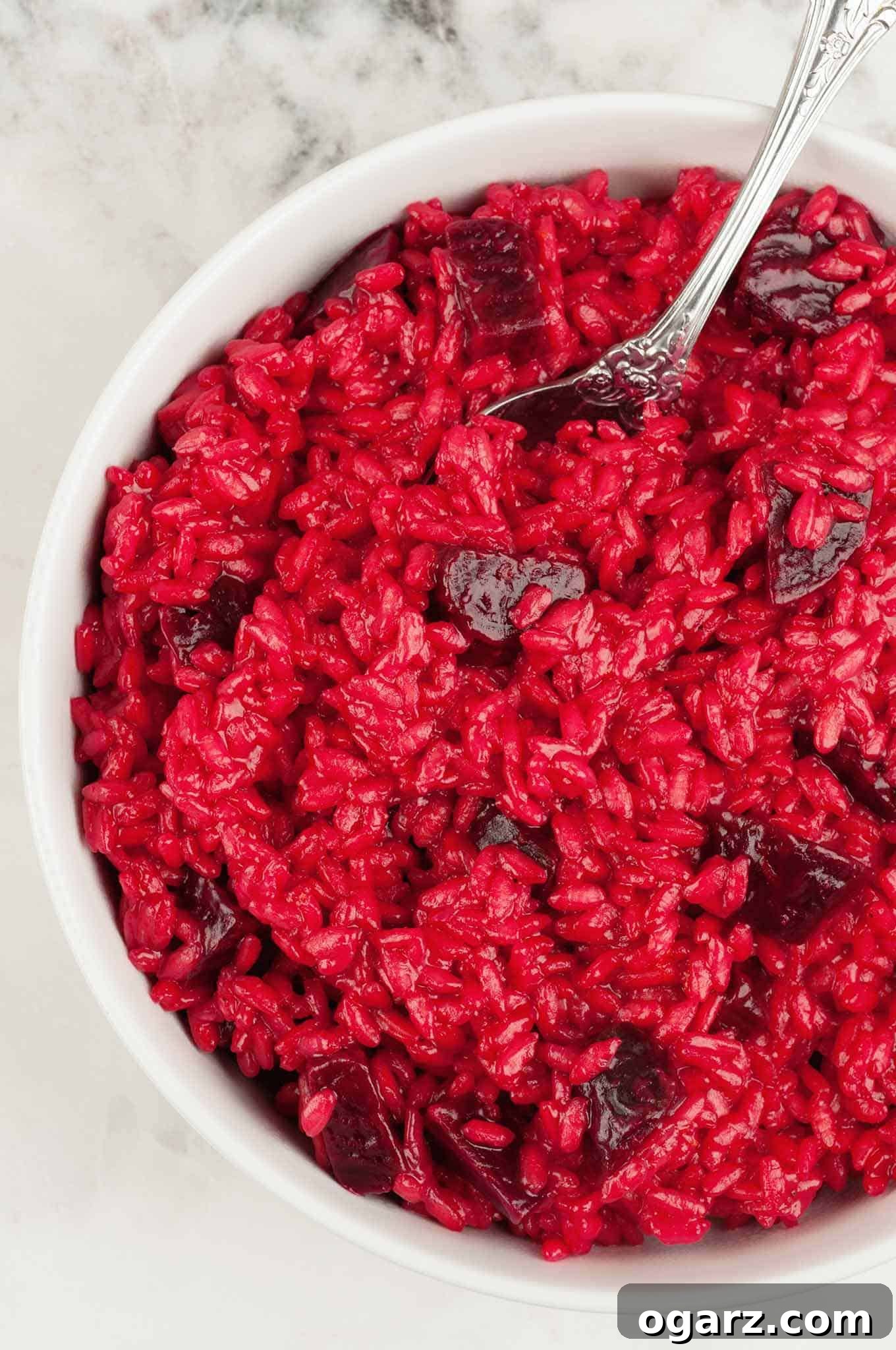

Roasted Beet Risotto: A Vibrant and Earthy Culinary Masterpiece
Indulge in the exquisite fusion of rustic charm and sophisticated flavor with our Roasted Beet Risotto. This traditionally crafted Italian dish takes on a spectacular transformation with the addition of earthy roasted beets, whose natural sweetness is beautifully amplified by a delicate splash of tangy balsamic vinegar and the bright, aromatic zest of fresh orange. The result is a risotto that is not only a feast for the eyes but also a symphony of harmonious flavors, making it far more than just a simple side dish.
While this versatile risotto stands proudly as a magnificent accompaniment to a myriad of entrées, its inception in our kitchen was specifically tailored to complement the rich and nuanced flavors of Duck a l’Orange. This classic pairing remains an enduring favorite, showcasing how the deep, earthy notes and vibrant color of the beet risotto perfectly enhance the succulent duck, creating an unforgettable dining experience. Whether you’re planning a special occasion or simply seeking a comforting yet elegant meal, this Roasted Beet Risotto promises to elevate your culinary journey.
Why This Roasted Beet Risotto Will Dazzle Your Taste Buds
This recipe for Roasted Beet Risotto is more than just a set of instructions; it’s an invitation to create a dish that embodies both rustic comfort and gourmet elegance. Here are compelling reasons why this risotto deserves a prime spot in your recipe collection:
- Stunning Visual Appeal: The natural pigments of the roasted red beets gracefully infuse the Arborio rice, transforming it into a mesmerizing, deep crimson hue. This vibrant color makes it an incredibly attractive dish, ideal for impressing guests at any dinner party or gathering.
- Complex Flavor Profile: Roasting the beets caramelizes their sugars and deepens their inherent earthiness. This robust foundation is then brightened by the zesty notes of orange and given a sophisticated edge with the subtle tang of balsamic vinegar, creating a truly layered and delightful taste experience.
- Luxuriously Creamy Texture: The meticulous, slow cooking process of traditional risotto, combined with constant stirring, encourages the Arborio rice to release its starches. This technique results in a wonderfully creamy texture that coats each grain, while still retaining a satisfying al dente bite at its core.
- Exceptional Versatility: While specifically designed to pair with duck, this risotto is incredibly flexible. It harmonizes beautifully with a wide array of proteins, including grilled chicken, roasted lamb, or pan-seared scallops. It can also stand alone as a remarkably satisfying and hearty vegetarian main course.
- Approachably Elegant: Despite its sophisticated presentation and gourmet taste, the preparation steps are clear and manageable, making this an accessible recipe for home cooks of all skill levels who aspire to create something truly special.
- Nutrient-Rich Ingredients: Beyond its delicious taste, this risotto incorporates healthy beets, known for their abundant vitamins, minerals, and antioxidants, adding a nutritious boost to your meal.
Roasted Beet Risotto
Lynne Webb
This classic creamy risotto is invigorated by the earthy sweetness of roasted red beets, a sophisticated hint of balsamic vinegar, and the bright, aromatic touch of fresh orange zest. An unforgettable dish that brings vibrant color and profound flavor to your table.
15 mins
2 hrs
2 hrs 15 mins
6 servings
Print Recipe
Ingredients
- 2 medium red beets, approximately 1/2 lb, fresh and firm
- 3 tablespoons olive oil, divided
- 3 to 3-1/2 cups low-sodium chicken broth, warmed to a gentle simmer
- 1/2 lb Arborio rice, the preferred choice for its high starch content
- 1 medium shallot, finely chopped
- 1/4 cup dry white wine, such as Pinot Grigio or Sauvignon Blanc
- Salt and freshly ground black pepper, to taste
- 1 tablespoon balsamic vinegar
- 2 teaspoons fresh orange zest, for brightness
- 1 tablespoon unsalted butter, for richness
For more delicious recipes and cooking inspiration, we invite you to explore the rest of our culinary collection!
Instructions
Part 1: Roasting the Beets for Optimal Flavor
-
Step 1: Preheat Oven. Begin by preheating your oven to 400°F (200°C). This high temperature is ideal for roasting, ensuring the beets become tender and their natural sugars caramelize.
-
Step 2: Prepare and Roast Beets. Rinse the red beets thoroughly under cold running water. Trim off the leafy tops and the tough root ends. You can reserve the beet greens for another use, such as sautéing, as they are packed with nutrients. Place the whole, trimmed beetroots on a sturdy sheet of aluminum foil. Drizzle them with 1 tablespoon of olive oil, ensuring each beet is lightly coated. Seal the foil tightly around the beets to create a secure packet; this traps steam and helps them cook evenly.
-
Step 3: Cool, Peel, and Dice. Roast the foil-wrapped beets in the preheated oven for approximately 1 to 1-1/4 hours. The exact roasting time will depend on the size of your beets; larger beets will require a longer cooking period. Test for doneness by piercing a beet with a knife – it should slide in easily. Once tender, carefully remove them from the oven and allow them to cool slightly within their foil packet until they are cool enough to comfortably handle. The skin should then slip off easily with a paring knife or even your fingers. Once peeled, cut the roasted beets into uniform 1/2-inch cubes and set them aside.
Part 2: Crafting the Creamy Risotto
-
Step 4: Warm the Broth. Pour the low-sodium chicken broth into a separate medium saucepan. Bring the broth to a gentle simmer over medium-high heat, then reduce the heat to low. It is crucial to keep the broth warm throughout the entire risotto cooking process; adding cold broth to hot rice will cool down the pan and disrupt the continuous cooking of the rice, affecting the final texture.
-
Step 5: Sauté Shallots and Toast Rice. In a large, heavy-bottomed saucepan or a Dutch oven, heat the remaining 2 tablespoons of olive oil over medium heat. Add the finely chopped shallot and sauté, stirring frequently, until it softens and becomes translucent, which usually takes about 3 to 4 minutes. Be careful not to let the shallots brown. Next, add the Arborio rice to the pan and stir continuously for about 1 minute. This crucial “toasting” step, known as tostatura, helps to seal the exterior of the rice grains, allowing them to absorb liquid more gradually and maintain their structure, preventing them from becoming mushy. Pour in the dry white wine and let it come to a gentle simmer, stirring until the wine is almost completely absorbed by the rice.
-
Step 6: Gradual Broth Addition. Begin adding the warm chicken broth to the rice, approximately 1/2 cup at a time. After each addition, stir constantly and gently, ensuring you scrape the bottom of the pan to prevent the rice from sticking. Allow the broth to be almost entirely absorbed by the rice before adding the next 1/2 cup. This gradual addition and continuous stirring are the hallmarks of authentic risotto preparation, as they encourage the rice to release its starches, creating its signature creamy, velvety texture. As you go along, season the risotto with salt and freshly ground black pepper to taste, adjusting as needed.
-
Step 7: Incorporate Beets. Roughly halfway through the risotto cooking process (typically after 8-10 minutes of adding broth), stir in the reserved cubed roasted beets along with the next addition of warm broth. As the risotto continues to cook, the beautiful natural pigments from the beets will gradually infuse the rice, transforming it into a stunning, vibrant shade of red. This also allows the beet flavor to meld seamlessly with the rice.
-
Step 8: Achieve Perfect Risotto Texture. Continue adding broth in 1/2 cup increments, stirring diligently, until the risotto reaches your desired consistency. The total cooking time for the risotto, from the first broth addition, is typically around 18 to 20 minutes. However, it is essential to start tasting the rice after about 15 minutes. The rice should be al dente – meaning it is firm to the bite but creamy and tender around the edges. Unlike other rice varieties, Arborio will always retain a slight chewiness at its core, which is highly desirable for risotto.
-
Step 9: Finish and Serve. Once the risotto has reached its perfect al dente texture, remove the saucepan from the heat. Stir in the balsamic vinegar, fresh orange zest, and the unsalted butter. Continue stirring for just 1 minute longer, allowing the butter to melt and the flavors to fully meld together, creating a luxurious finish. Serve the Roasted Beet Risotto immediately, while it’s still warm and gloriously creamy.
Chef’s Notes & Expert Tips for Perfect Risotto
Mastering Broth Absorption: A Key Risotto Technique
One of the most frequently asked questions when preparing risotto is how to accurately determine when the previously added broth has been fully absorbed by the rice before incorporating the next ladle. As the risotto cooks and releases its starches, the liquid in the pan can become quite thick, making it visually challenging to judge.
A reliable and time-tested technique to check for absorption is to gently drag a wooden spoon across the bottom of the pan. This action will create a clear path through the rice. If you can see the bottom of the pan for a second or two before the remaining liquid slowly seeps back in, then the broth has been sufficiently absorbed, and it’s time to add the next increment. If, however, the path fills in immediately behind your spoon, the rice needs a little more time to cook and absorb the liquid before the next addition.
Essential Additional Tips for Risotto Success:
- Always Use Warm Broth: This cannot be stressed enough. Adding cold broth to hot rice will drastically drop the temperature of the pan, shocking the rice grains. This interruption in the cooking process can lead to unevenly cooked rice and a less creamy final texture. Always keep your broth at a gentle simmer on a separate burner.
- Don’t Overcook the Rice: Risotto is meant to be creamy but still retain a slight chewiness in the center of each grain – this is known as al dente. Overcooked risotto can become unpleasantly mushy and glue-like. Begin tasting the rice around the 15-minute mark of broth addition to ensure it reaches your preferred texture.
- Consistent Gentle Stirring: While continuous stirring is essential, it should be gentle. Vigorous stirring can break up the rice grains. Gentle stirring ensures that the starches are gradually released from the Arborio rice, which is crucial for achieving the characteristic creamy consistency of risotto.
- Taste and Season Throughout: Broths vary in their sodium content. Therefore, it’s vital to taste and adjust the salt and freshly ground black pepper frequently throughout the cooking process. Be cautious with initial salt additions, especially if using a regular (not low-sodium) broth.
- Embrace Fresh Ingredients: The quality of your ingredients directly impacts the flavor of your risotto. Use fresh, firm beets, good quality olive oil, and a dry white wine you would enjoy drinking. Freshly grated orange zest offers a much brighter and more aromatic flavor than dried zest.
- Consider a Cheese Finish (Optional): While this recipe focuses on the beet and orange flavors, many risottos benefit from a final flourish of cheese. If desired, you can stir in 1/4 cup of freshly grated Parmesan or Pecorino Romano cheese along with the butter and balsamic vinegar for an extra layer of savory depth and umami.
The Wonderful Health Benefits of Beets
Beyond their captivating color and distinct earthy flavor, beets are nutritional powerhouses that offer a remarkable array of health benefits. Incorporating them into your diet, especially in a delightful dish like this Roasted Beet Risotto, is an excellent way to boost your overall well-being:
- Rich in Essential Nutrients: Beets are an abundant source of vital vitamins and minerals. They are particularly high in folate (Vitamin B9), which is crucial for cell growth and function, manganese (important for bone health and metabolism), potassium (beneficial for blood pressure control), iron (essential for oxygen transport), and Vitamin C (a powerful antioxidant that supports immune function).
- Excellent Source of Fiber: Dietary fiber is fundamental for maintaining a healthy digestive system. The fiber in beets aids in preventing constipation, promoting regular bowel movements, and supporting a healthy gut microbiome.
- Potent Antioxidant Properties: The vibrant, deep red and purple hues of beets come from unique pigments called betalains. These compounds are powerful antioxidants that help combat cellular damage caused by free radicals in the body. This antioxidant activity may contribute to reducing the risk of chronic diseases and inflammation.
- May Support Lower Blood Pressure: Beets are naturally rich in nitrates. When consumed, these nitrates are converted by the body into nitric oxide, a compound that plays a key role in relaxing and dilating blood vessels. This vasodilation can lead to improved blood flow and a potential reduction in blood pressure.
- Boosts Exercise Performance: The nitrates found in beets have also been linked to enhanced athletic performance. By improving oxygen utilization and increasing stamina, beets can help athletes and active individuals perform better and recover more efficiently during physical activity.
- Anti-Inflammatory Effects: The betalains in beets possess anti-inflammatory properties, which can help soothe inflammation throughout the body and may offer protective effects against various inflammatory conditions.
Versatile Serving Suggestions and Creative Variations
Our Roasted Beet Risotto is celebrated for its versatility, making it a star player in various meal configurations. Here are some inspiring ideas to serve this dish and delightful variations to customize it to your preference:
Perfect Pairings:
- With Poultry: This risotto is an outstanding companion to roasted chicken, pan-seared duck breast (as originally intended), or even grilled turkey cutlets. The richness of the poultry is beautifully cut by the earthy sweetness of the beets.
- Alongside Red Meats: For a more robust meal, consider pairing the risotto with grilled steak, succulent lamb chops, or a slow-roasted beef tenderloin. The vibrant color and complex flavor provide a sophisticated contrast.
- With Seafood: For a lighter but equally flavorful option, serve the beet risotto alongside perfectly seared scallops, flaky grilled salmon, or baked cod. The bright notes of orange zest in the risotto complement fresh seafood wonderfully.
- As a Vegetarian Main Course: The risotto is hearty and flavorful enough to be served as a satisfying main dish on its own. Pair it with a crisp, simple green salad dressed with a lemon vinaigrette or some crusty artisanal bread for a complete meal.
- With Goat Cheese: A final crumble of soft goat cheese over each serving adds a tangy, creamy element that beautifully complements the earthy beets.
Creative Variations:
- Enhanced Cheesiness: For those who love cheese, stir in 1/4 cup of freshly grated Parmesan, Pecorino Romano, or even a creamy mascarpone at the very end with the butter for an extra layer of savory richness and depth.
- Aromatic Herb Infusion: Add fresh herbs like a sprig of thyme or a small amount of finely chopped rosemary during the shallot sautéing phase to infuse the risotto with additional aromatic complexity. A sprinkle of fresh parsley, chives, or dill before serving also adds a delightful fresh finish.
- Vegan Adaptation: To make this a delicious vegan-friendly dish, simply substitute the chicken broth with a high-quality vegetable broth, use a plant-based butter alternative, or omit the butter entirely. Ensure no cheese is added at the end.
- Nutty Crunch: For added texture and a subtle nutty flavor, garnish individual servings with a sprinkle of lightly toasted walnuts, pine nuts, or even pistachios.
- A Hint of Heat: If you appreciate a little spice, a pinch of red pepper flakes can be added to the pan along with the shallots, providing a gentle warmth that balances the sweetness of the beets.
- Citrus Boost: For an even more pronounced citrus note, consider adding a squeeze of fresh orange juice along with the zest at the final stage of cooking.
Storage and Reheating Recommendations
Risotto is undoubtedly at its best when served immediately after preparation, allowing you to fully appreciate its ideal creamy texture and the perfect al dente bite of the rice. However, if you find yourself with leftovers, they can be stored and reheated with a few considerations:
- Storage: Ensure the leftover risotto cools down completely to room temperature before transferring it to an airtight container. Once sealed, refrigerate it promptly for up to 3 days to maintain freshness and safety.
- Reheating: To reheat, gently warm the risotto in a saucepan over low to medium-low heat. As risotto tends to thicken upon cooling, it’s essential to add a splash of warm broth, water, or even a little milk or cream during reheating. This helps to restore some of its original creamy consistency. Stir frequently and gently until the risotto is warmed through. Be cautious not to overcook it during reheating, as this can lead to a mushy texture. While it may not regain the exact perfection of freshly made risotto, these steps will ensure a satisfying leftover meal.
Nutrition Information (Approximate Per Serving)
Calories: 162
Total Fat: 9g
Cholesterol: 5mg
Sodium: 103mg
Carbohydrates: 16g
Fiber: 1g
Sugar: 2g
Protein: 3g
This nutrition information is automatically calculated based on the ingredients listed and should be used as an approximation. Actual values may vary depending on specific product brands, preparation methods, and any optional additions.
We sincerely hope you cherish every spoonful of this exquisite Roasted Beet Risotto. We would love to hear about your experience, any creative variations you tried, or how you chose to pair this dish. Please share your thoughts and comments below – your feedback inspires us!