
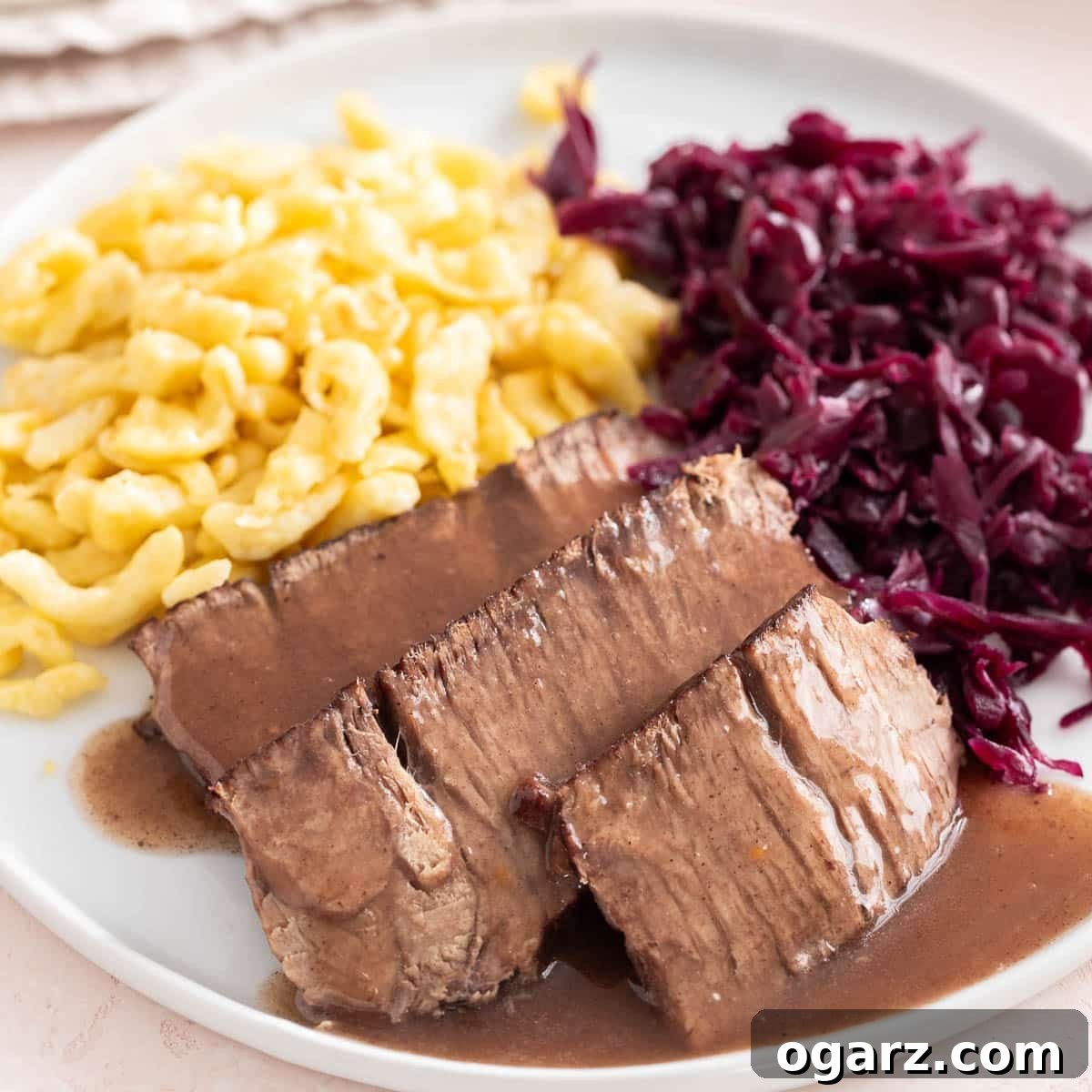
Traditional German Sauerbraten is the epitome of heartwarming comfort food. This iconic dish features succulent, melt-in-your-mouth beef, marinated for days in a tangy mixture, then slowly braised to perfection. The result is a rich, velvety gravy with a harmonious balance of savory, sweet, and tangy notes. Whether you’re celebrating Oktoberfest or gathering for a cozy Sunday family dinner, this authentic recipe brings the true taste of Germany right to your table.
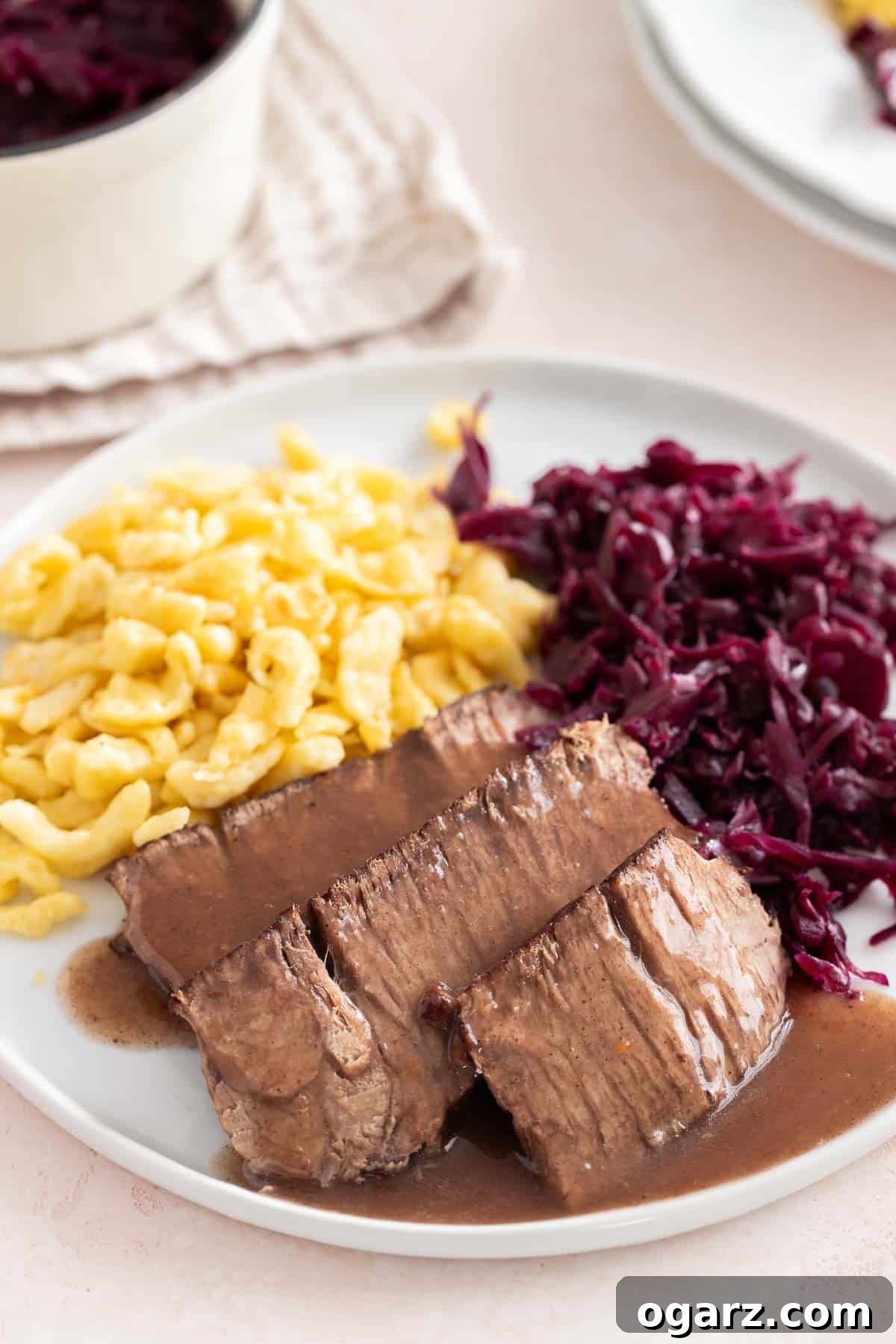
If you cherish the exquisite flavor of tender, slow-cooked beef enveloped in a luxurious, aromatic sauce, then this authentic German Sauerbraten recipe is an absolute culinary adventure you must embark upon. Growing up in Germany, Sauerbraten was a staple at countless family gatherings, holiday celebrations, and Sunday lunches, firmly establishing itself as one of the most cherished and iconic German dishes. As a German living abroad, this particular rendition is etched in my memory and consistently transports me back home with every savory bite.
Like many deeply rooted traditional German dishes, Sauerbraten boasts charming regional variations, each with its unique character. For instance, the renowned Rheinischer Sauerbraten often incorporates raisins and beet syrup, lending it a distinctly sweeter profile. However, my roots lie in Franconia, a picturesque region nestled within Bavaria. Our Franconian version is notably less sweet, and it traditionally achieves its luscious thickness with Soßenlebkuchen, a specialized German gingerbread crafted specifically for enhancing savory sauces. While Soßenlebkuchen can be a treasure to find outside Germany, rest assured, I’ve perfected an easy and authentic substitute that I rely on all the time! This is the precise style of Sauerbraten you’ll savor in traditional Bavarian restaurants, affectionately known as Wirtshäuser.
Why This Authentic Sauerbraten Recipe is a Must-Try
Diving into the world of German cuisine can sometimes feel daunting, but this Sauerbraten recipe simplifies the process while maintaining utmost authenticity. Here’s why this particular recipe will become a cherished part of your culinary repertoire:
- Truly Authentic & Time-Honored (No Gingersnaps, Ever!): As a German native, I guarantee that this is the traditional German recipe that has been lovingly passed down through generations in my family. Both my Oma (grandmother) and mother-in-law have used this exact method for decades, ensuring a taste that is genuinely German and free from modern shortcuts that compromise flavor.
- Optimized Marinating Time for Maximum Flavor: Forget the notion of needing to marinate beef for 7 days or even longer. Through extensive personal experience and family tradition, I’ve discovered that 3 to 5 days is the sweet spot. This duration perfectly infuses the beef with flavor and tenderizes it without making it overly sour. Even a 2-day marinade, particularly with a well-chosen cut of meat, can yield a wonderfully delicious roast, making this recipe flexible for your schedule.
- The Ultimate Make-Ahead Meal: This Sauerbraten recipe is incredibly versatile and ideal for meal prepping. It can be prepared days in advance, allowing the flavors to meld and deepen even further, and reheats beautifully without losing its exquisite taste or texture. My mother-in-law frequently freezes her Sauerbraten, and it remains absolutely delicious upon thawing and reheating. This makes it a perfect choice for stress-free holiday entertaining, elegant dinner parties, or simply ensuring a comforting Sunday dinner is ready when you are.
The Essential Ingredients for Perfect German Sauerbraten
Crafting a truly exceptional Sauerbraten begins with selecting the right ingredients. Each component plays a vital role in developing the complex, signature flavors of this beloved German classic. Below is a comprehensive overview of the key ingredients you’ll need. Specific quantities are detailed in the full recipe card at the bottom of this page.
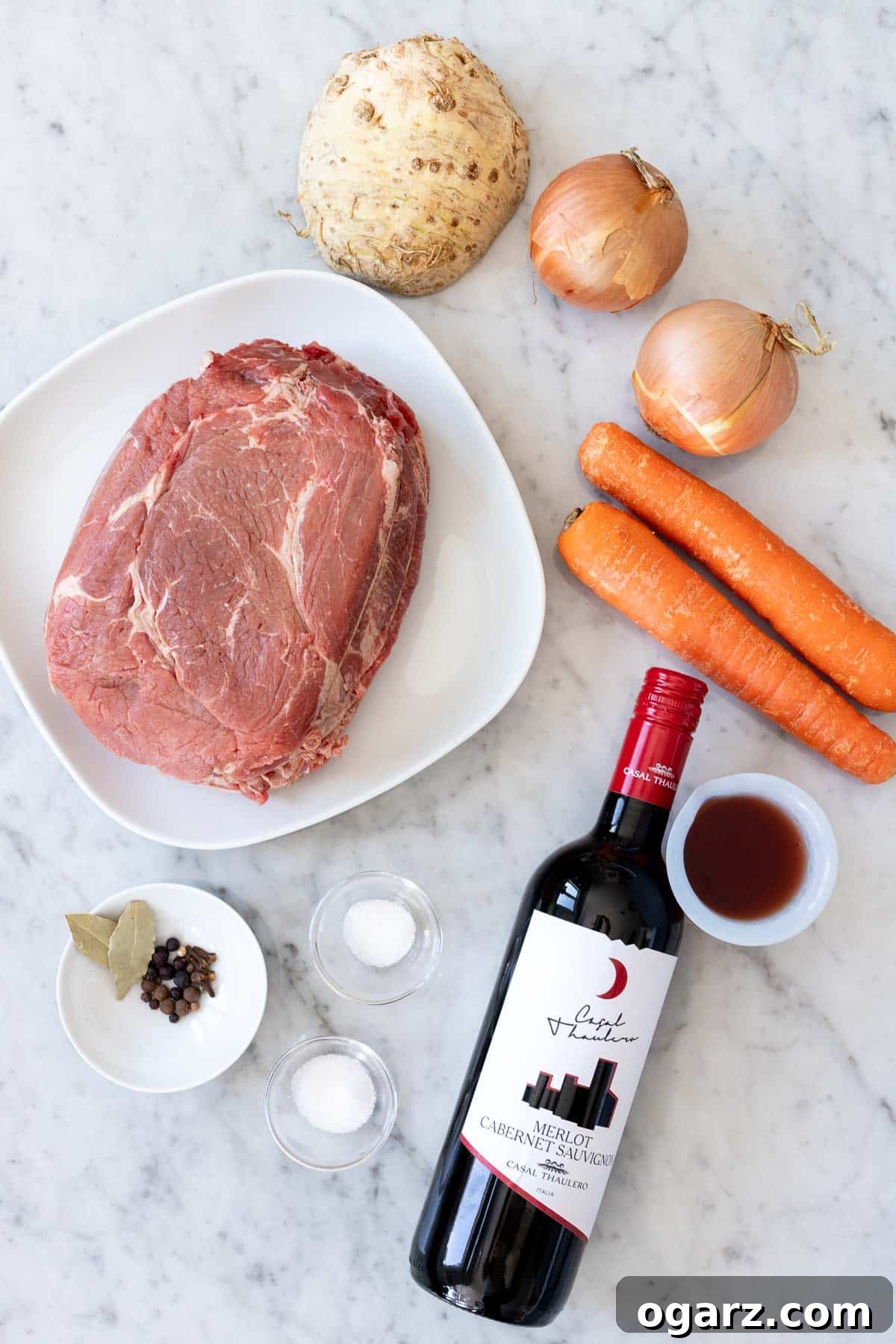
- Red Wine: The foundation of the marinade, red wine contributes depth and a fruity complexity. I highly recommend using a dry and fruit-forward wine, such as a Merlot. Other robust, full-bodied red wines like Pinot Noir, Dornfelder, or Cabernet Sauvignon also work beautifully. If you’re keen on maximizing authenticity, seek out a German Dornfelder or Lemberger, but remember, an expensive bottle isn’t necessary for a fantastic result.
- Vinegar: A critical component for that characteristic tangy profile, the right vinegar is key. My preference is always a mild red wine vinegar, though white wine vinegar can also be used effectively. I strongly advise against balsamic vinegar, as its inherent sweetness and syrupy texture are too overpowering and will disrupt the delicate balance of the marinade.
- Root Vegetables for Flavor Infusion: A trio of humble vegetables forms the aromatic base for the gravy, enriching it with earthy notes as the roast slowly braises. I typically use a blend of onions, carrots, and celeriac (celery root). Celeriac can be substituted with parsley root, which offers a similar flavor profile, or omitted if it’s difficult to find in your local grocery store.
- Aromatic Spices: These whole spices are the soul of Sauerbraten, imparting its distinct, authentic German flavor. You will need juniper berries, allspice berries, bay leaves, black peppercorns, and whole cloves. These spices are carefully selected to create a warm, fragrant, and slightly piquant undertone that complements the richness of the beef.
- The Perfect Beef Roast: The best meat for Sauerbraten is a tougher, well-marbled cut of beef, as the long marinating and braising process breaks down connective tissues, resulting in incredible tenderness. I highly recommend a beef chuck roast due to its excellent marbling and widespread availability; it consistently yields a tender and flavorful outcome. More traditional cuts often include bottom round, rump roast, or eye of round, which are also excellent but might require slightly longer braising times to reach that desired fork-tender consistency.
- German Bread for Authentic Thickening: In Bavaria, the traditional thickener for Sauerbraten gravy is Soßenlebkuchen (sauce gingerbread). Since this specialized ingredient can be challenging to procure outside of Germany, I utilize a perfect and authentic substitute: a crumbled slice of stale German rye or sourdough bread. This method naturally thickens the gravy, adding a rustic, savory depth without any unwanted sweetness. Seriously, please avoid gingersnaps – they are not traditional and alter the flavor profile significantly!
- Lebkuchen Gewürz (German Gingerbread Spice): To achieve that quintessential spiced warmth synonymous with traditional Sauerbraten, I incorporate a touch of German gingerbread spice. You might have some leftover from making my German Lebkuchen recipe. If not, I’ve included the measurements for a simple homemade blend in the notes section of the recipe card, ensuring you capture that authentic flavor.
- Honey (or other sweetener): A touch of honey is often used to delicately balance the acidity of the sauce, should it become too tart. You can also use a small amount of sugar or agave syrup to achieve the same effect, adjusting to your personal taste preference.
Mastering the Authentic Sauerbraten Gravy (Say NO to Gingersnaps!)
One of the most frequently asked questions about Sauerbraten, particularly for those encountering the dish through non-German sources, revolves around thickening the gravy. You may have come across Americanized recipes that suggest using gingersnap cookies to thicken the sauce. While this method has gained a certain popularity in the U.S., it is emphatically not a traditional German practice, and as an authentic German recipe, I strongly advise against it.
Gingersnaps, by their very nature, introduce an overpowering sweetness and an aggressive, sharp ginger kick that completely masks the nuanced and delicate balance of the wine and vinegar that defines authentic Sauerbraten. Out of curiosity, I’ve tested this method myself, and for my family, the resulting flavor was simply incorrect and unbalanced. Traditional German Sauerbraten should embody a savory and tangy profile, with subtle spice notes, not an overtly sweet and intensely ginger-flavored sauce.
In Bavaria, where my family’s culinary traditions hail from, the sauce is traditionally thickened with Soßenlebkuchen. This special type of gingerbread is distinctly different from dessert gingerbread; it’s much less sweet and possesses a unique spice blend that complements savory dishes beautifully. Its flavor profile is miles apart from that of a conventional gingersnap.
Since Soßenlebkuchen are indeed challenging to source outside of Germany, I employ a reliable and authentic method that perfectly replicates the desired flavor and texture without resorting to compromises:
- Traditional German Bread: During the final hour of braising, I crumble a slice of stale German rye or sourdough bread directly into the pot. As the bread dissolves into the simmering sauce, it naturally adds body and a wonderful rustic, savory depth, contributing to the gravy’s authentic texture.
- Signature Spice Blend: To ensure that characteristic warmth and aromatic complexity, I incorporate a teaspoon of German gingerbread spice (Lebkuchen Gewürz). This carefully balanced spice blend is the key to capturing the signature Sauerbraten flavor.
- A Touch of Cornstarch (If Needed): While the bread and spices contribute significantly, sometimes a little extra body is desired. If the gravy still requires further thickening after straining and reduction, a small amount of cornstarch (mixed with cold water to form a slurry) works perfectly well, achieving a silky-smooth consistency without affecting the flavor. This combination ensures the gravy comes out perfect every single time!
Pro Tips for Sauerbraten Success: My Top Advice Before You Begin
Sauerbraten is a labor of love, but with these expert tips, you can ensure your culinary journey is smooth and the outcome is nothing short of spectacular. Pay attention to these details for a truly unforgettable dish:
- Prioritize Food Safety with Marinades: Since the beef will be marinating for several days, adhering to proper food safety practices is paramount. Always use clean utensils and containers, ensuring the meat remains fully submerged in the marinade. Most importantly, keep the marinating beef consistently refrigerated at a safe temperature. For an extra layer of safety and to further enhance flavor, I highly recommend bringing the marinade to a boil for at least 5 minutes before pouring it over the raw meat, and then allowing it to cool completely to room temperature before adding the beef. This step helps to sanitize the marinade and deepen its aromatic profile.
- The “Golden Ratio” for a Balanced Marinade: Achieving the perfect balance of savory and tangy is crucial. My family’s preferred “golden ratio” for the marinade is 4 parts red wine to 1 part vinegar. This specific combination ensures that the finished roast is incredibly tender and richly flavorful, without the acidity becoming overpowering or harsh. It’s a ratio that has been perfected over generations.
- Opt for a Freezer Bag for Optimal Marination: The choice of container for marinating is more important than you might think. It’s essential to use a non-reactive container; never use a metal bowl or pot, as the acid in the marinade can react with the metal. I highly recommend using a large, heavy-duty freezer bag. A freezer bag ensures the meat is completely submerged in the marinade with minimal liquid, and it eliminates the need to turn the roast daily, as the liquid will surround it evenly. Alternatively, a plastic or glass bowl with a tight-fitting lid can be used, but you will need to remember to turn the meat daily to ensure even marination.
- Respect the Marinating Time – Don’t Overdo It: While marination is key to tenderness and flavor, there’s a point of diminishing returns. After numerous tests of this recipe, I’ve found that 3 days of marinating is typically sufficient to fully infuse the roast with its characteristic flavors. You can extend the marination time, but I generally advise against going beyond 5 days. Marinating for too long can result in the roast becoming overly sour, and there’s an increased risk of the meat spoiling, compromising both safety and taste.
- Strategic Use of Vegetables: Traditionally, the vegetables in the marinade are primarily used to infuse flavor into the sauce as the roast cooks. They are not always blended back into the gravy in many authentic preparations. Personally, I prefer a smooth, velvety gravy, so I do not incorporate the strained vegetables back into the sauce. Instead, I gently press down on them while straining to extract every last drop of flavorful liquid. However, if you enjoy a thicker, more rustic sauce, you can certainly puree some of the cooked vegetables into the gravy after straining – just be sure to meticulously fish out all the whole spices (juniper berries, peppercorns, cloves, bay leaves) before blending.
A Step-by-Step Guide to Crafting Your Own Authentic German Sauerbraten
Creating this magnificent German Sauerbraten is a rewarding process. While the marinating takes patience, the hands-on cooking is straightforward and yields spectacular results. Here is a visual guide to walk you through each step of this recipe. Please note that these images are intended to provide a helpful visual overview; full measurements and comprehensive detailed instructions are conveniently located in the printable recipe card at the bottom of this post.
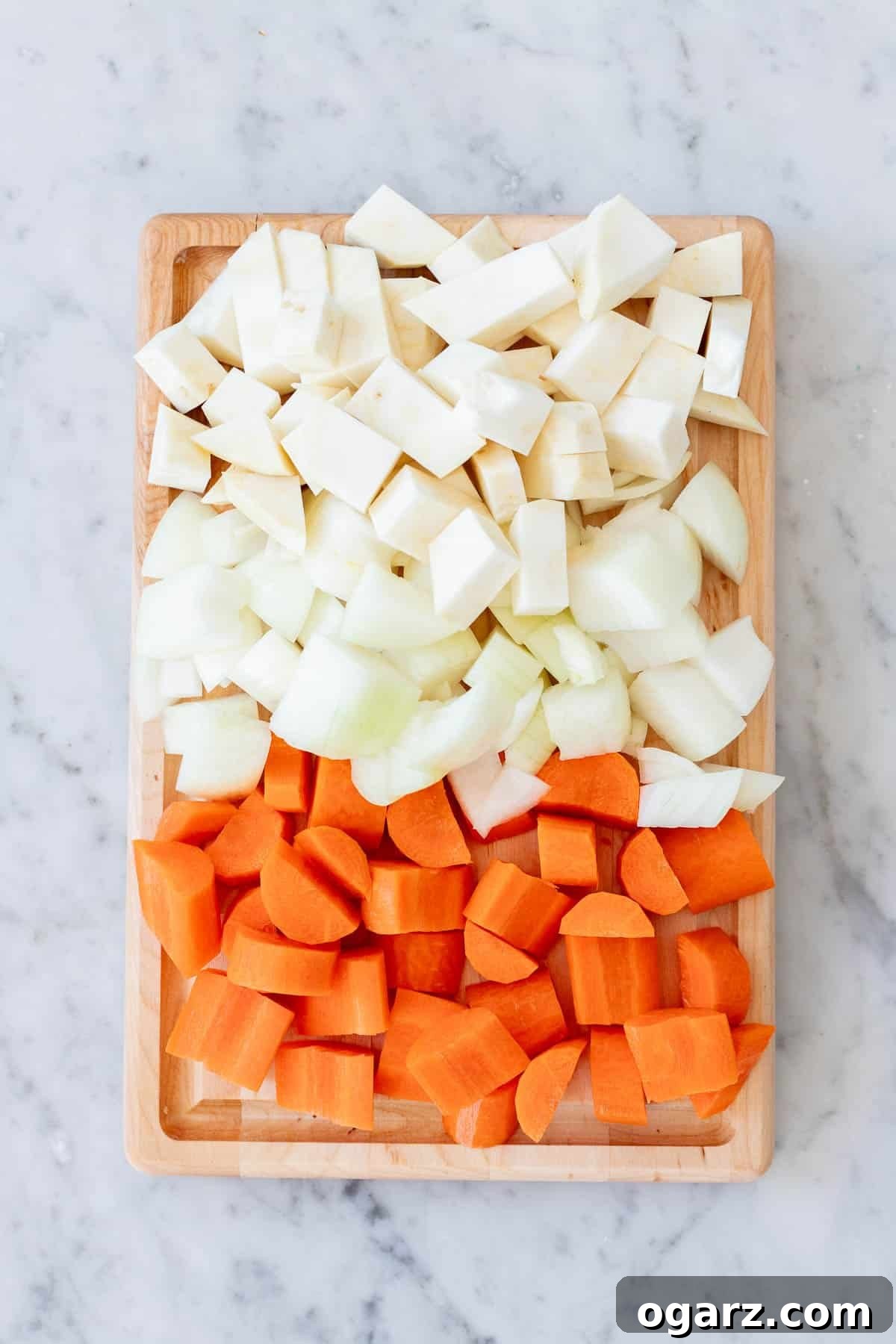
STEP 1: Prepare the Marinade Vegetables. Begin by peeling your chosen root vegetables – onions, carrots, and celeriac (or parsley root). Once peeled, chop them into generously sized, rough 1-inch chunks. These larger pieces will infuse flavor into the marinade without becoming mushy during the initial boil.
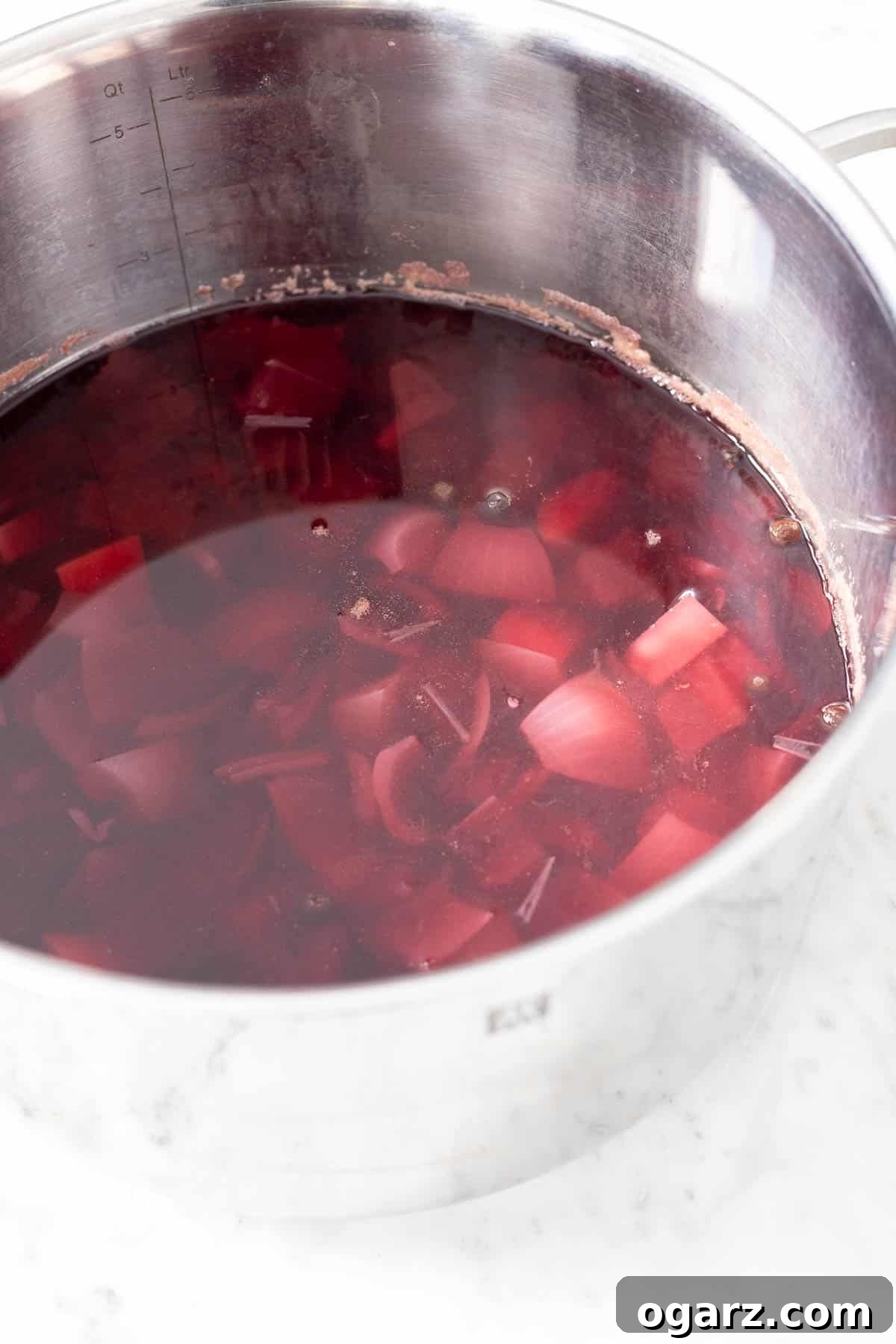
STEP 2: Create the Flavorful Marinade. In a sizable pot, combine the red wine, vinegar, and water. Add the chopped vegetables along with the whole spices (juniper berries, allspice, bay leaves, peppercorns, cloves), salt, and sugar. Bring this mixture to a rolling boil and let it cook vigorously for 5 minutes. After boiling, it is crucial to let the entire marinade cool completely to room temperature before proceeding to the next step, ensuring food safety and optimal flavor infusion.
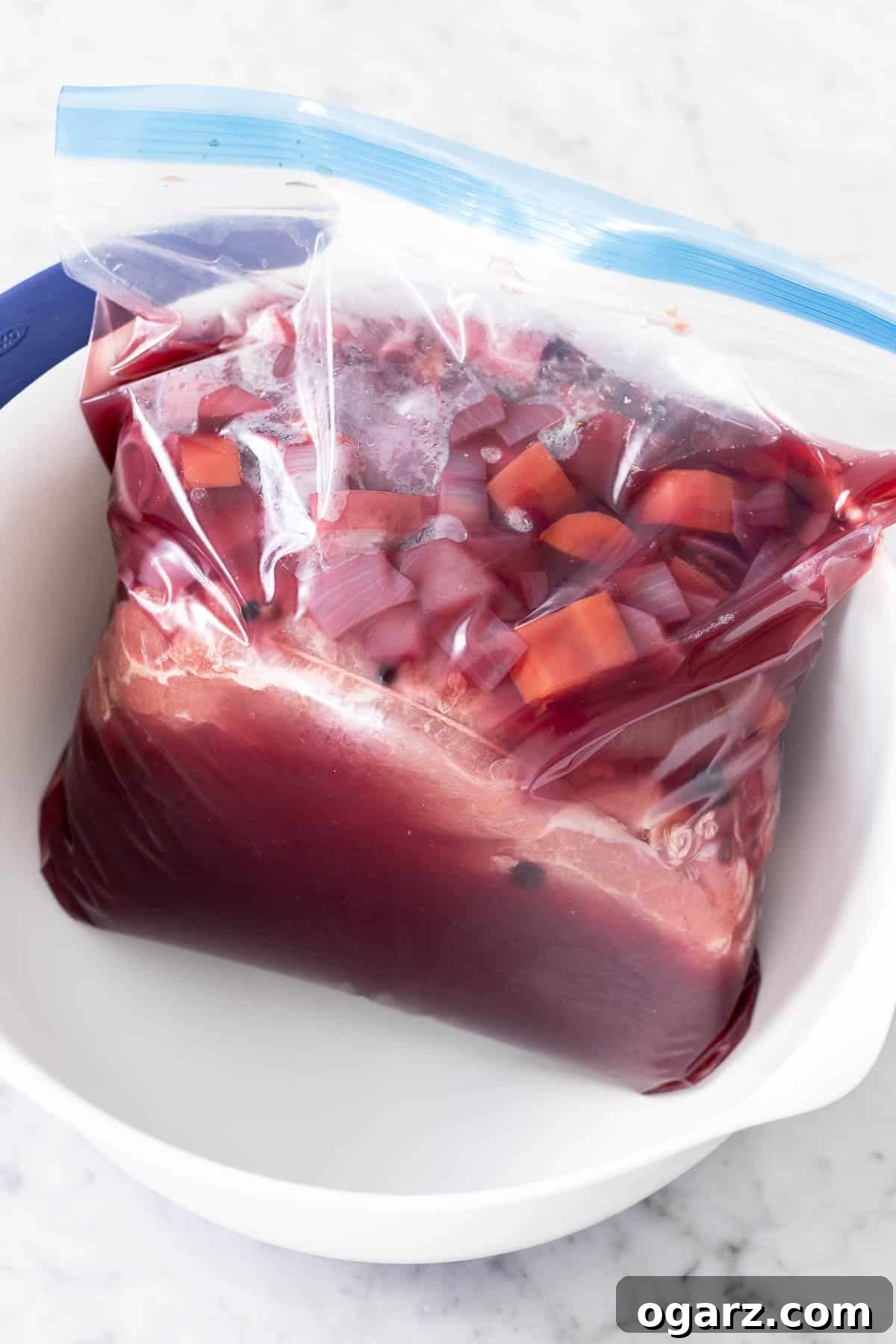
STEP 3: Marinate the Beef for Days. Wash the beef roast thoroughly and pat it completely dry with paper towels. Carefully place the dried roast inside a large, sturdy freezer bag (or a non-reactive container with a lid). Pour the completely cooled marinade, including all the vegetables and spices, over the beef, ensuring it is fully submerged. Seal the bag or container tightly and refrigerate for 3 to 5 days. If using a container, remember to turn the meat daily to ensure even marination.
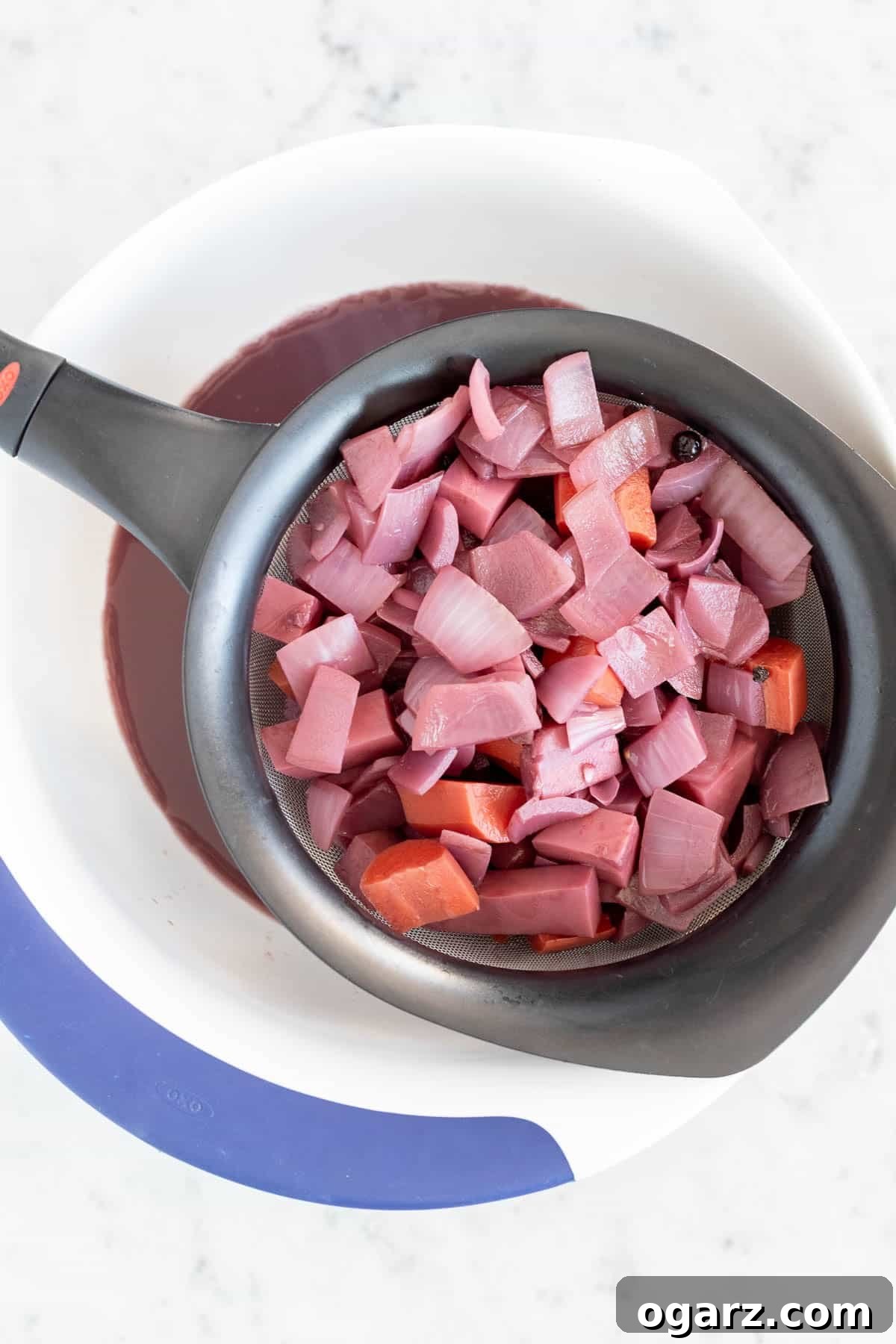
STEP 4: Prepare for Braising. When your marinating time is complete, remove the beef from the fridge about 30 minutes before you plan to cook it, allowing it to come closer to room temperature. Carefully remove the roast from the marinade. Pour the entire marinade mixture through a fine-mesh sieve into a clean bowl. Reserve both the flavorful liquid and the strained vegetables and spices separately. Crucially, discard the bay leaves at this stage, as their flavor can become too intense after cooking.
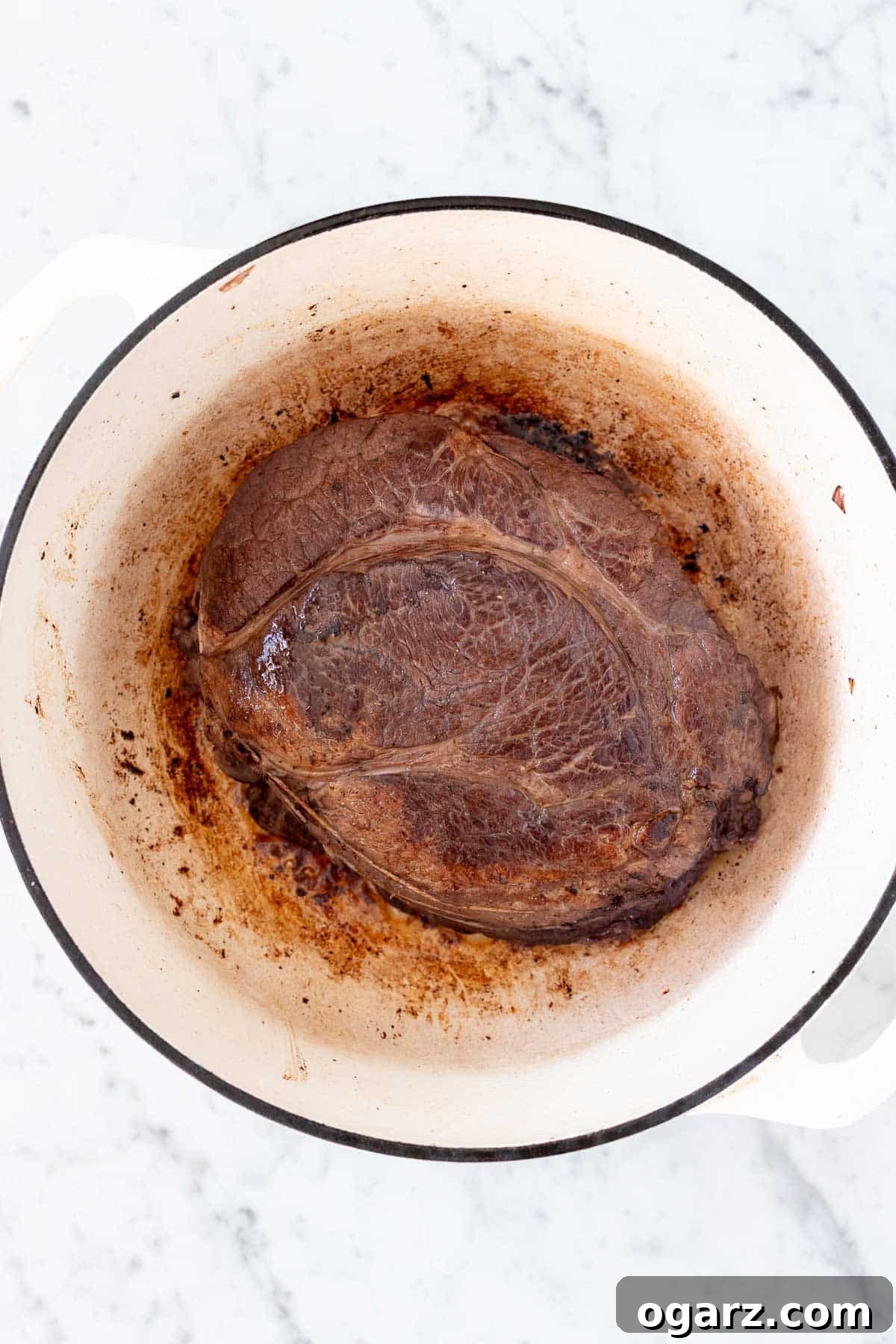
STEP 5: Sear the Beef to Perfection. Preheat your oven to a steady 320°F (160°C). Pat the marinated beef roast very dry with paper towels once more; this step is critical for achieving a beautiful sear. Season the roast generously all over with ground black pepper. In a heavy-bottomed Dutch oven (ideally 6-quart), heat the vegetable oil over medium-high heat until shimmering. Carefully place the beef into the hot oil and sear it on all sides until it develops a rich, golden-brown crust. This searing locks in flavor and creates depth.
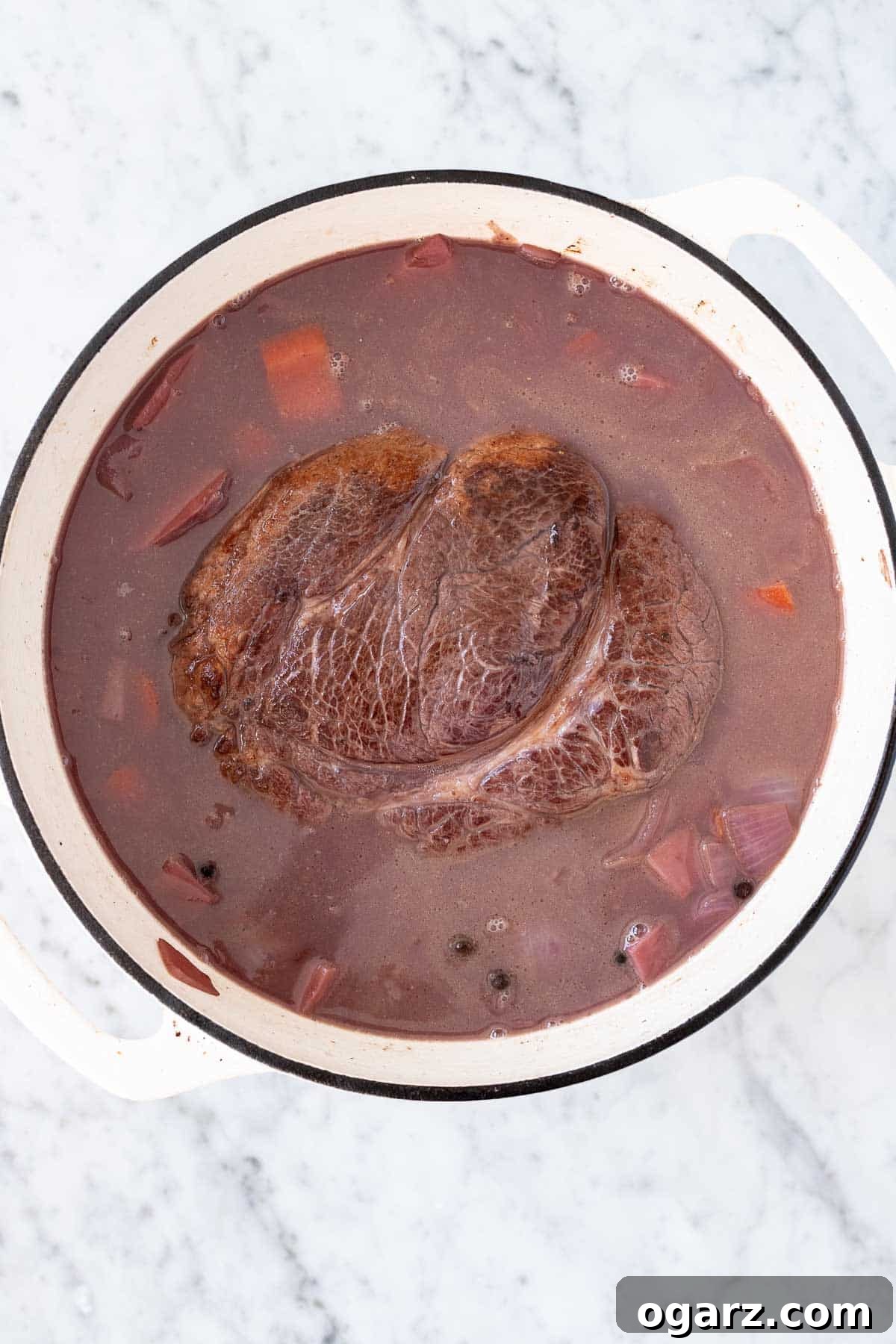
STEP 6: Begin the Slow Braise. After searing, add the reserved strained vegetables and spices back into the Dutch oven with the browned meat. Sauté them for approximately 1 minute, allowing their flavors to gently release. Then, pour in the reserved marinade liquid; the meat should be mostly submerged. Bring the liquid to a boil on the stovetop. Once boiling, cover the Dutch oven with its lid and carefully transfer it to the middle rack of your preheated oven. Allow the Sauerbraten to braise slowly for an initial 2 hours.

STEP 7: Complete the Gravy Preparation. After the total braising time, the roast should be incredibly fork-tender. Carefully remove the pot from the oven and transfer the cooked roast to a cutting board, allowing it to rest for a few minutes. Next, pour the entire remaining liquid and solids from the Dutch oven through a fine-mesh sieve into a clean bowl. Using the back of a spoon, firmly press down on the cooked vegetables and spices in the sieve to extract every last bit of their rich, infused flavor, then discard the solids. This ensures maximum flavor in your gravy.
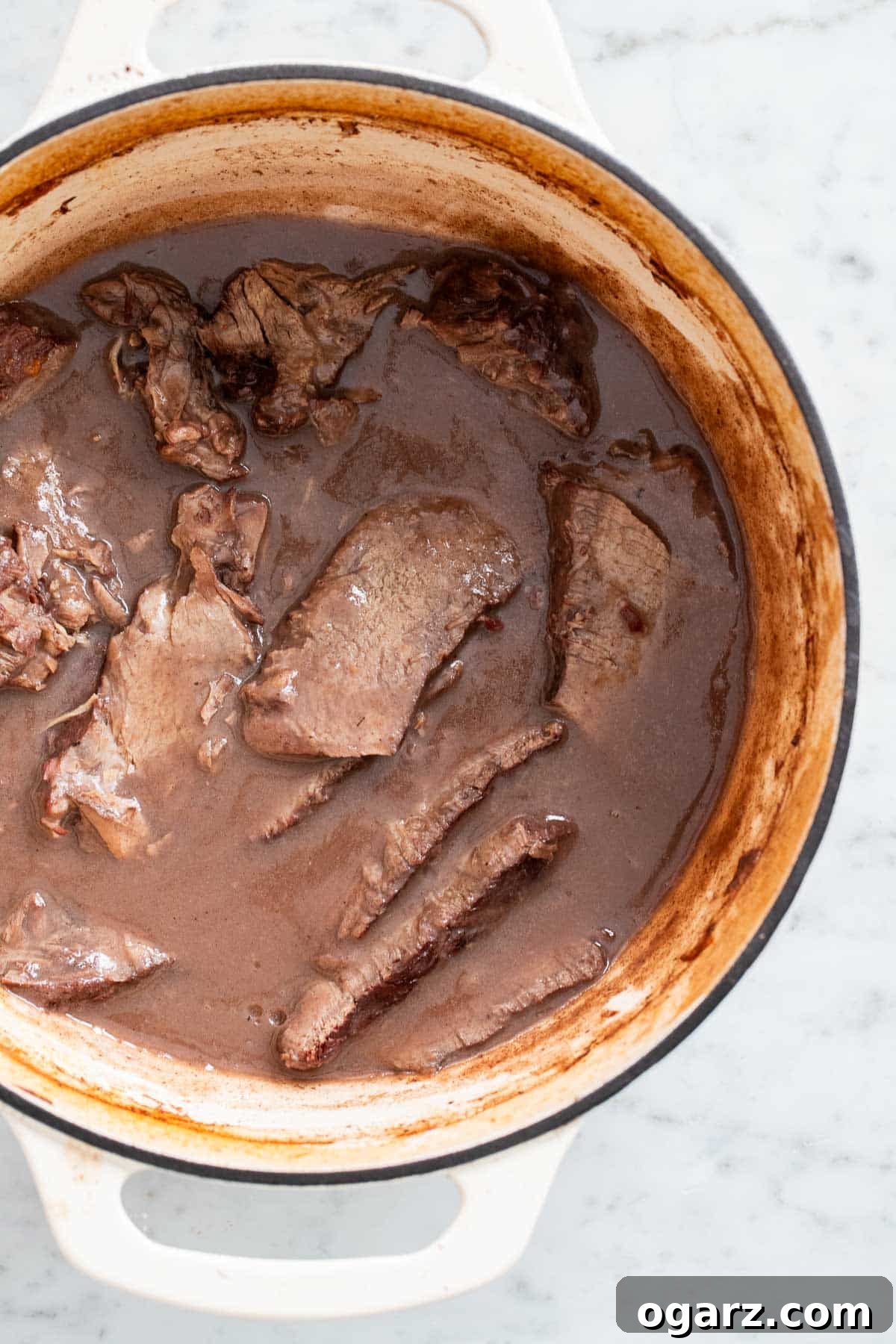
STEP 8: Thicken, Season, and Serve. Pour the strained liquid back into the Dutch oven. Bring the sauce to a gentle boil on the stovetop and let it simmer for about 5 minutes to reduce and concentrate its flavors. If the gravy still needs additional thickening, create a cornstarch slurry by mixing a small amount of cornstarch with cold water, then whisk it into the simmering sauce until it reaches your desired consistency. Taste the gravy and, if it’s too sour, balance the flavors with a little bit of honey (or sugar/agave). Finally, slice the rested beef roast into elegant 1/2-inch thick slices, return them to the hot gravy, and serve immediately.
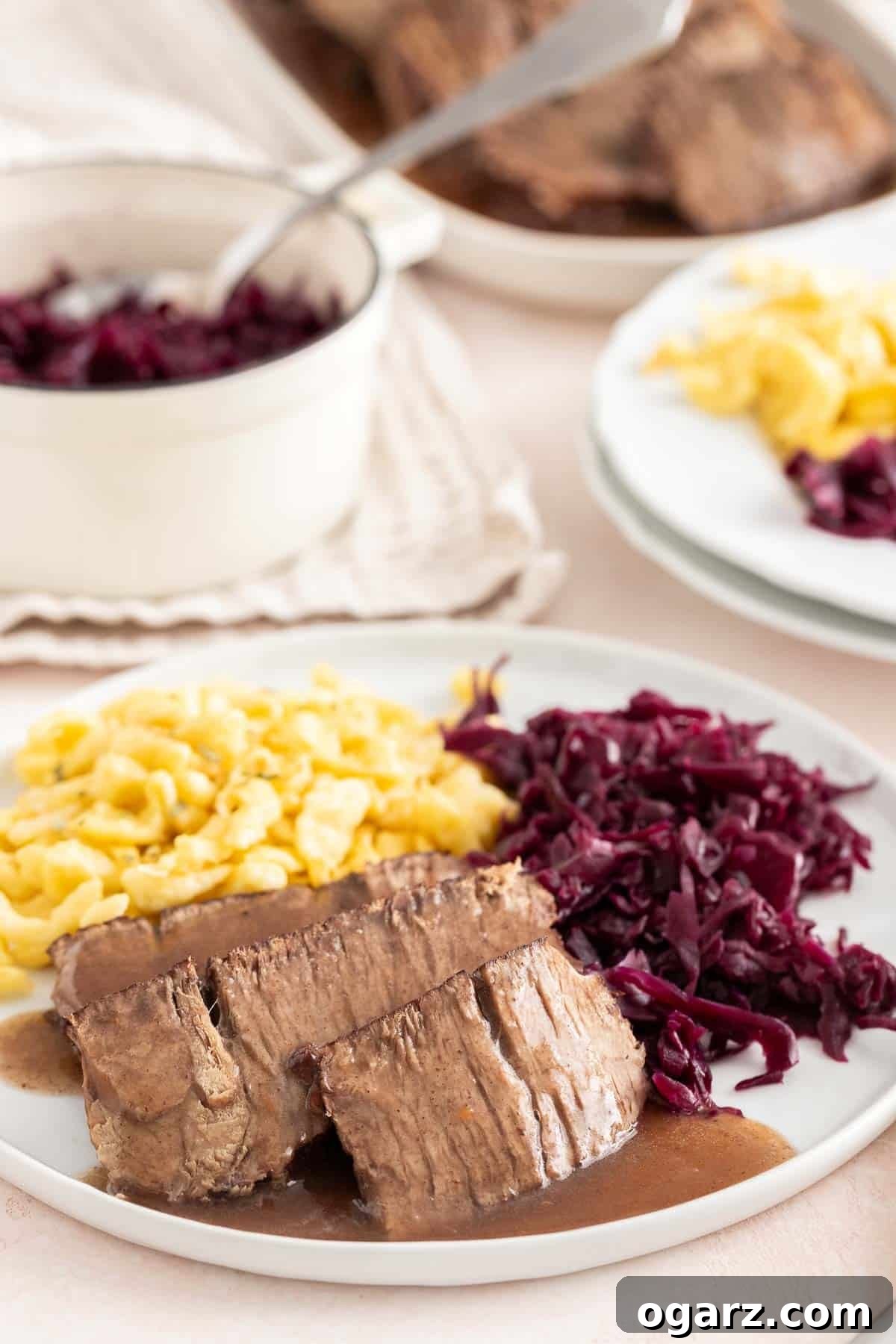
Serving Suggestions: Completing Your German Feast
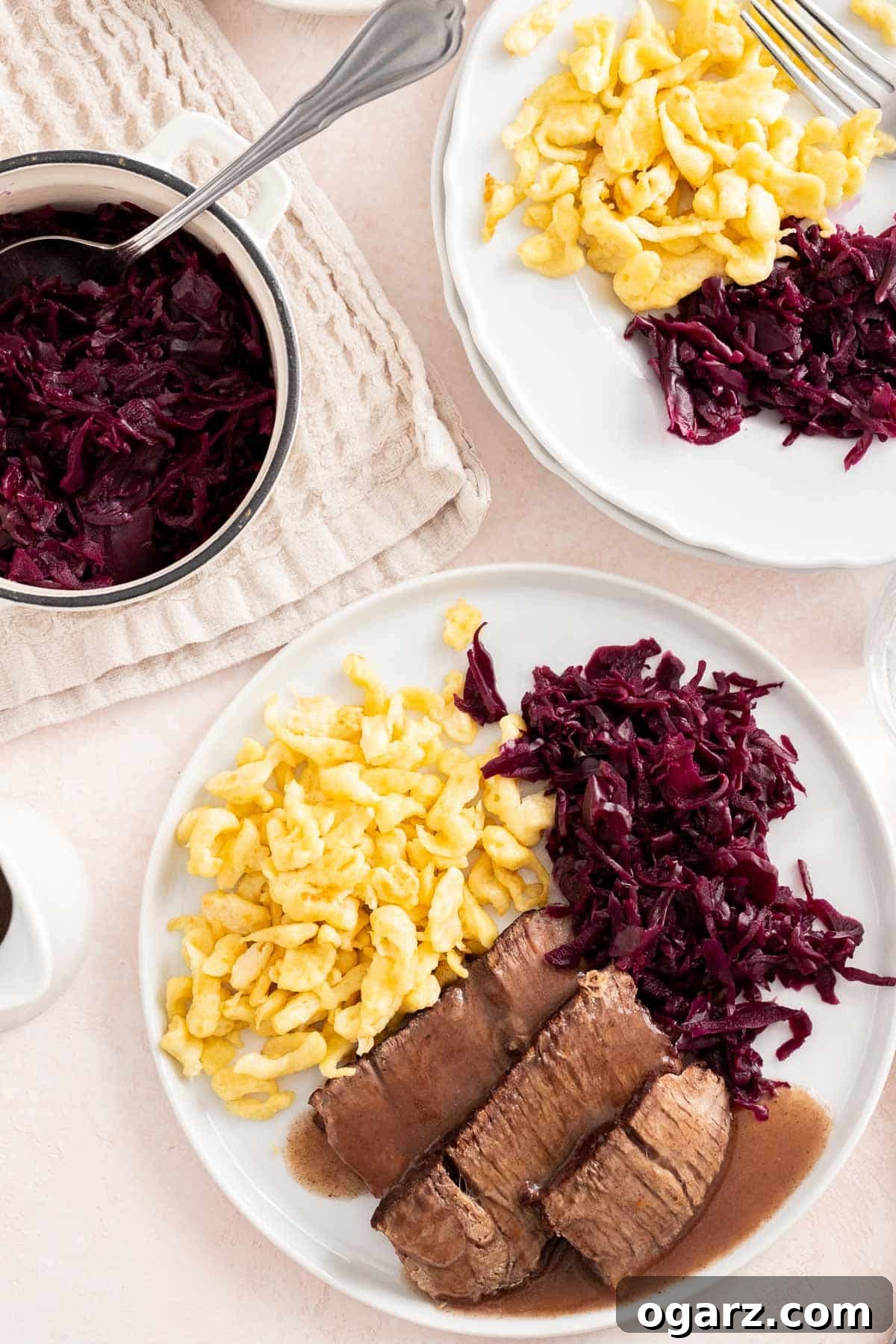
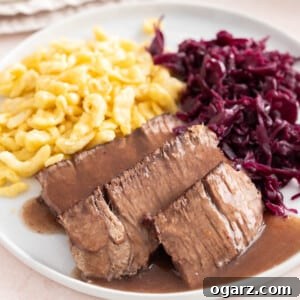
The magnificence of Sauerbraten is truly highlighted when served alongside traditional German accompaniments. My absolute favorite way to present this hearty dish is with fluffy homemade potato dumplings (recipe coming soon!) or delicate homemade German spaetzle, paired with my super traditional yet wonderfully easy-to-make German red cabbage recipe (known as Blaukraut in German).
For convenience and to reduce stress on the day of serving, I often prepare the spaetzle a day in advance. Before dinner, I simply toss them into a pan with a knob of butter, sautéing them until they are golden brown and slightly crispy. It’s an incredibly easy step that elevates their texture, and my entire family absolutely adores them!
And if you’re seeking the perfect sweet finale to your traditional German meal, I highly recommend trying my light and flaky Apple Strudel Recipe. Its warm, comforting flavors provide an ideal complement to the rich and tangy Sauerbraten.
Storage & Freezing: Enjoying Sauerbraten Later
One of the many benefits of a slow-cooked dish like Sauerbraten is how wonderfully it stores, often tasting even better the next day as the flavors continue to meld. It’s also an excellent candidate for freezing, ensuring you can enjoy this comforting meal whenever the craving strikes.
- Storing in the Refrigerator: Cooked Sauerbraten can be safely stored in the refrigerator for 2 to 3 days. For optimal flavor and to prevent the meat from drying out, always store the sliced meat fully submerged in its rich gravy. Transfer both the meat and gravy to an airtight container and refrigerate. When reheating, gently warm the meat directly in the gravy on the stovetop over low heat or in the oven.
- Freezing for Longer Enjoyment: You can also conveniently freeze the cooked roast for 2 to 3 months. The best practice is to freeze the sliced meat within its gravy. This method ensures the meat remains exceptionally tender and moist upon reheating. To reheat, simply thaw the frozen Sauerbraten overnight in the refrigerator, then gently warm it in the oven or on the stovetop over low heat until thoroughly heated through. This makes it perfect for future stress-free meals.
More Authentic German Recipes to Explore
Main Dishes
German Pork Hock (Schweinshaxe Recipe)
Sides & Salads
German Cucumber Salad Recipe
Main Dishes
German Schnitzel
German Recipes
German Potato Salad
Print Recipe
Authentic German Sauerbraten Recipe
Equipment
- 1 Dutch Oven 6-quart
Ingredients
For the marinade
- 2 cups red wine, e.g., Merlot
- ½ cup red wine vinegar
- 3 cups water
- 2 medium onions
- 2 carrots
- ½ celery root, or parsley root
- 8 juniper berries
- 5 allspice berries
- 2 bay leaves
- 10 peppercorns
- 4 cloves
- 1 teaspoon salt
- ½ teaspoon sugar
For the roast
- 3 pound beef roast, chuck, rump, or bottom roast
- 1 teaspoon ground pepper, to season the meat
- 1 tablespoon vegetable oil, e.g., avocado oil
- 1 slice German bread, optional (stale rye or sourdough)
- 1 teaspoon German gingerbread spice, see notes
For the gravy
- cornstarch, as needed
- honey, to taste
Instructions
- Prepare the marinade: In a large enough pot, combine red wine, vinegar, and water. Peel the vegetables and cut them into rough, 1-inch chunks. Add them to the pot along with the spices, salt, and sugar. Bring to a boil and cook for 5 minutes. Then let the marinade cool completely to room temperature.
- Marinate the beef: Wash the meat and pat it dry with paper towels. Place the roast inside a large freezer bag (or non-reactive container with a lid) and pour the cooled marinade over it. Seal and refrigerate it for 3-5 days, turning the bag occasionally if not fully submerged.
- Prep for roasting: Remove the meat from the fridge and take it out of the marinade 30 minutes before cooking. Pat it dry with paper towels. Pour the marinade through a sieve into a bowl, reserving both the liquid and the vegetables/spices mixture separately, but discard the bay leaves.
- Sear: Preheat your oven to 320°F (160°C). Season the roast all over with pepper. In a Dutch oven, heat oil over medium-high heat. Sear the meat on all sides until nicely browned.
- Braise: Add the reserved vegetables to the pot and sauté for 1 more minute. Pour in the reserved marinade; the meat should be mostly submerged. Bring to a boil on the stovetop. Once boiling, cover with the lid and transfer it to the middle rack of your preheated oven. Cook for 2 hours.
- Add flavorings: After 2 hours, crumble the German bread (if using stale rye or sourdough) into the pot and add the gingerbread spice. Cover and cook for 1 more hour.
- Finish the gravy: Remove the pot from the oven and transfer the roast to a cutting board to rest. Pour the sauce through a fine-mesh sieve into a bowl. Press down on the vegetables with a spoon to extract all the flavor, then discard the solids.
- Thicken and serve: Pour the liquid back into the Dutch oven and bring the sauce to a gentle boil on the stovetop for about 5 minutes to reduce. Mix a little cornstarch with cold water to create a slurry and whisk into the sauce, as needed, until desired consistency is reached. Taste and add a little bit of honey if the sauce is too sour. Slice the meat, return it to the hot gravy, and serve with traditional sides like spaetzle or potato dumplings and Blaukraut.
Notes
You can make a batch of my German Gingerbread Spice recipe if you want to use it in multiple recipes or make a simplified version if you only need it for this recipe:
- 1/2 teaspoon ground cinnamon
- 1/8 teaspoon ground cloves
- 1/8 teaspoon ground ginger
- 1/8 teaspoon ground allspice
- 1 pinch nutmeg
- 1 pinch ground coriander