
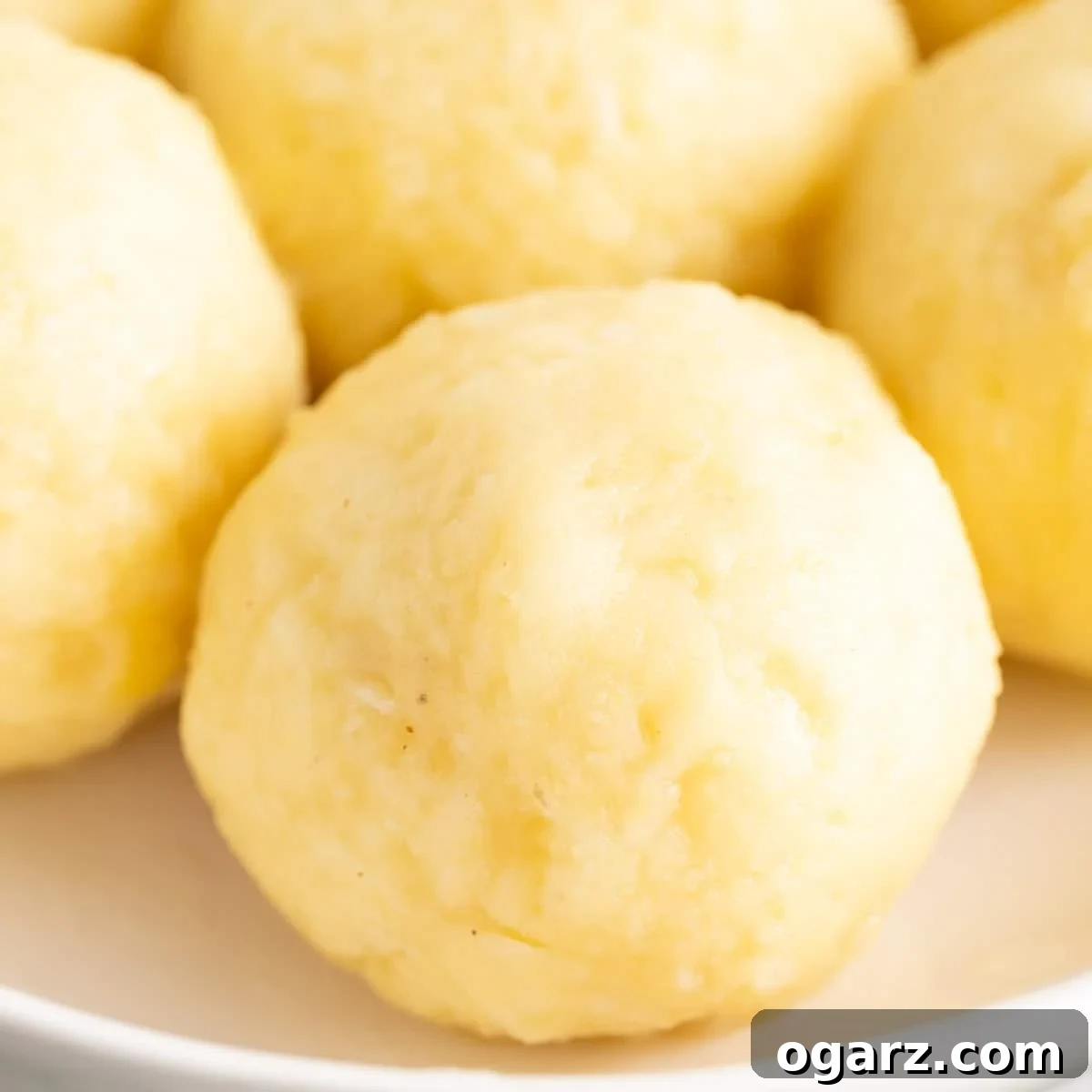
Kartoffelkloesse: The Ultimate Guide to Perfect German Potato Dumplings (Bavarian Style)
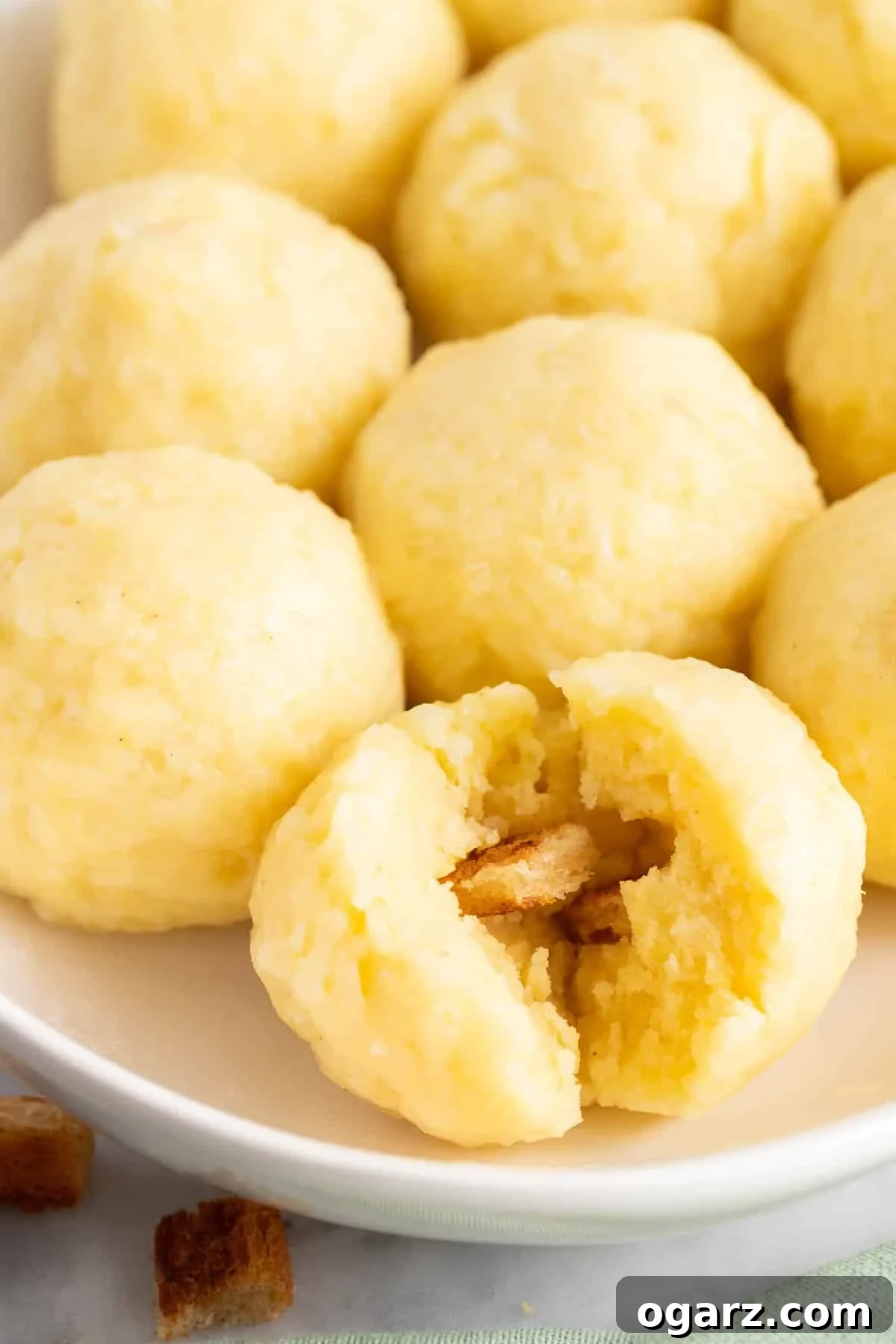
There’s nothing quite like a plate of authentic German comfort food, and for many, that means soft, pillowy potato dumplings known as Kartoffelkloesse. With their incredibly silky texture, these delightful potato spheres are the perfect canvas for soaking up rich, flavorful gravy. This comprehensive guide shares a foolproof recipe using simple, everyday ingredients, ensuring perfect results every time – whether you’re preparing them for a festive holiday feast or a cozy Sunday roast.
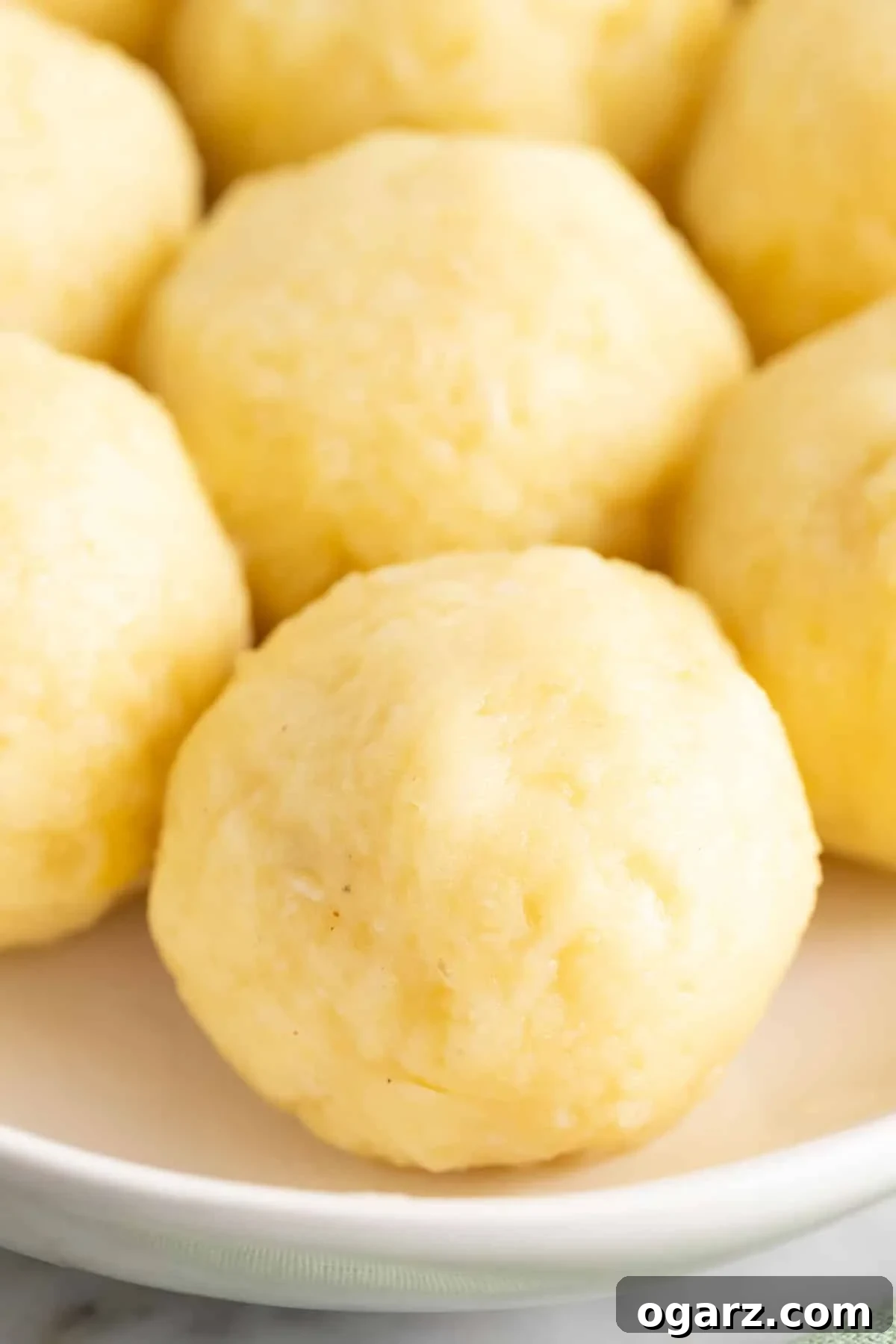
Growing up in Franconia, a picturesque region in northern Bavaria, Kloß mit Soß (potato dumplings with generous lashings of gravy) wasn’t just a meal; it was every child’s favorite culinary delight, and certainly mine. Almost every Sunday, the comforting aroma of a big pot of dumplings simmering on the stove filled our home, promising to be smothered in exquisite homemade Sauerbraten gravy – a true taste of childhood bliss.
When I later moved to Canada, I quickly encountered a common challenge for German food enthusiasts abroad. Back in Germany, many home cooks nowadays rely on convenient ready-made refrigerated Kloßteig (dumpling dough) from the supermarket, simply shaping them at home. However, my search in Canada yielded mostly powdered versions, which, to my disappointment, simply couldn’t replicate the authentic taste and texture I cherished.
My initial attempts at making Kartoffelkloesse from scratch were met with frustration; the dumplings often disintegrated in the pot. This setback only fueled my determination. Over the past few years, I’ve meticulously tweaked and rigorously tested my recipe, experimenting with different potato varieties, starch ratios, and cooking techniques. My goal was to develop a version that not only comes as close to the real thing as possible but is also consistently reliable, ensuring they turn out perfectly every single time. This refined recipe embodies the culmination of that effort, bringing the genuine taste of Bavarian potato dumplings to your kitchen, no matter where you are.
Why You’ll Love This Kartoffelkloesse Recipe
- An Authentic Bavarian Home Cook’s Recipe: This isn’t just any potato dumpling recipe; it’s steeped in genuine Bavarian culinary tradition. My family hails from Bavaria, where Klöße are a staple, deeply ingrained in our culture and Sunday dinners. I’ve ensured this recipe captures the true essence of what these dumplings should taste like, delivering that perfect, beloved texture that evokes cherished memories.
- Foolproof Method for Guaranteed Success: I understand the apprehension that can come with making dumplings from scratch. That’s why I dedicated countless hours to testing and refining this method, making it incredibly easy and forgiving for home cooks of all skill levels. From selecting the ideal potato variety to incorporating a crucial “test-before-you-cook” trick, every step is designed to prevent common pitfalls and safeguard your entire batch from falling apart.
- Simple, Accessible Ingredients: Forget specialty trips to a German grocery store for elusive instant mixes. This recipe champions simplicity, utilizing ingredients readily available at most well-stocked supermarkets. You’ll find everything you need to create these delicious dumplings without any hassle, making authentic German cooking accessible to everyone.
Key Ingredients & Smart Swaps for German Potato Dumplings
Crafting perfect Kartoffelkloesse begins with understanding the role of each ingredient. Here’s a detailed overview of what you’ll need for this recipe, along with useful insights and potential swaps. For exact quantities, please refer to the comprehensive recipe card at the bottom of this post.
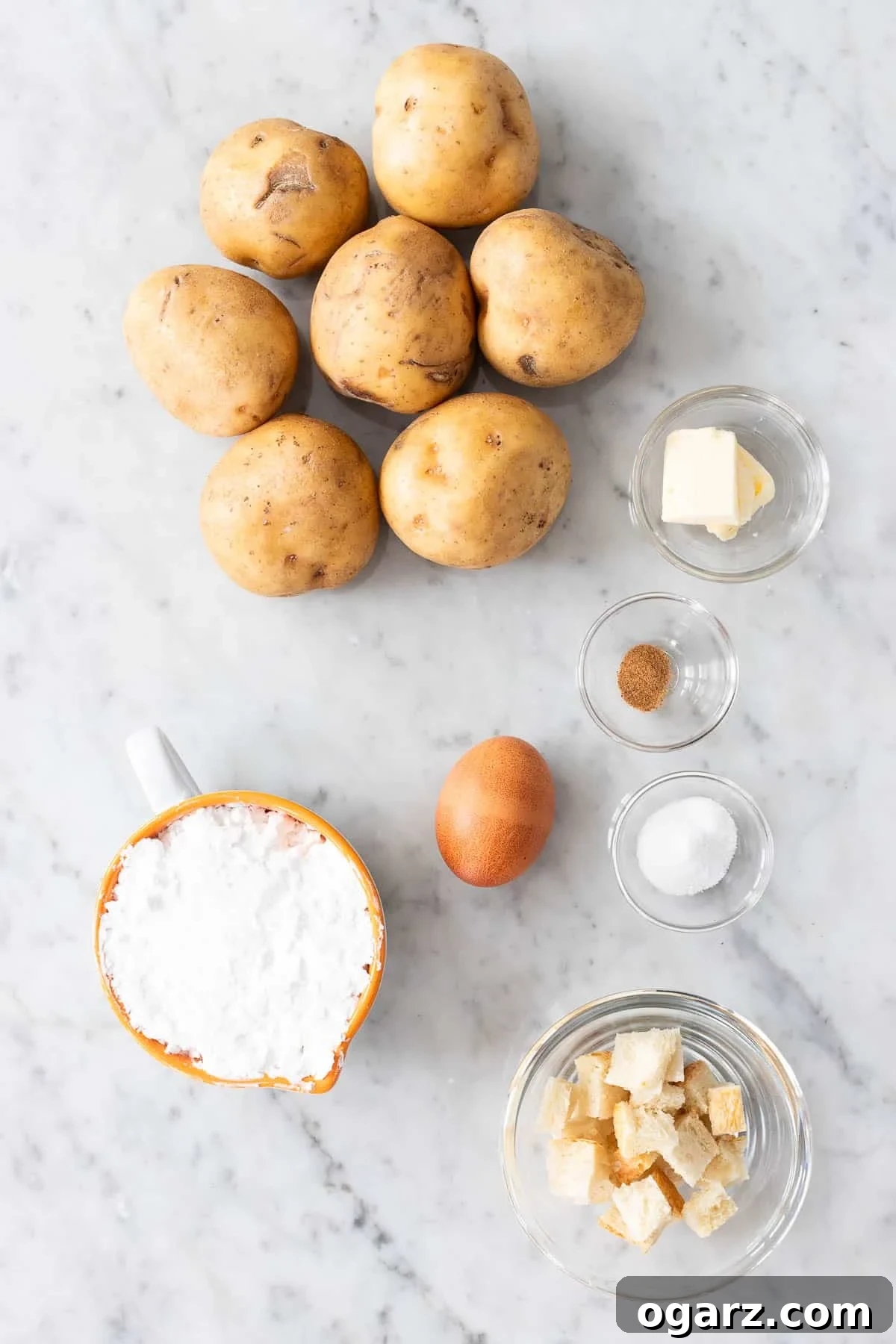
- Potatoes: The foundation of any great potato dumpling. For this recipe, I strongly recommend using yellow potatoes, such as Yukon Golds, over starchy russets. Yellow potatoes have a naturally buttery flavor and a lower starch content, which results in a softer, more tender, and less dense dumpling. Russets, with their high starch, can sometimes yield a drier, heavier texture, especially when combined with added potato starch for binding.
- Potato Starch: This is the secret weapon and absolutely crucial for ensuring your dumplings hold their shape beautifully without falling apart during cooking. It provides the necessary binding and contributes to the characteristic silky texture. Do not be tempted to substitute cornstarch (Speisestärke in German); while it’s a starch, its chemical composition and behavior are different, leading to a drastically altered and often undesirable texture. You can usually find potato starch (Kartoffelstärke in German) in the gluten-free baking section of most well-stocked supermarkets; Bob’s Red Mill is a widely available and reliable brand.
- Egg: Just one medium-sized egg acts as an additional binding agent, further reinforcing the dumpling dough’s structure. You won’t taste the egg in the final product, but its inclusion significantly enhances the foolproof nature of this recipe, providing an extra layer of security against crumbling.
- Nutmeg: A pinch of freshly grated or ground nutmeg is a classic and indispensable addition to German potato dumplings. It imparts a subtle, warm, and aromatic note that elevates the overall flavor profile, adding a touch of traditional authenticity without being overpowering.
- Bröckele (Bread Cube Filling): This optional, yet highly traditional, Bavarian addition involves a small cube of white bread, often lightly toasted in butter, tucked into the center of each dumpling. Beyond adding a delightful textural contrast and a hint of richness, the Bröckele serves a practical purpose: it helps ensure the dumpling cooks thoroughly and evenly from the inside out. If you don’t have day-old bread on hand, simply toasting a fresh slice of sandwich bread works perfectly.
What Exactly are Kartoffelkloesse? Unpacking This German Delight
At their heart, Kartoffelkloesse are traditional German potato dumplings. You might encounter them spelled as Kartoffelkloesse (without the umlauts, which is common in English contexts) or referred to as Kartoffelknödel; both terms generally describe the same beloved dish. These terms are often used interchangeably, though regional nuances exist.
While potato dumplings grace tables across various European cultures – from Italy’s delicate gnocchi to Poland’s hearty Kluski Śląskie – the German version stands out. German Kartoffelkloesse are typically larger, remarkably softer, and specifically designed to absorb and celebrate rich gravies. Unlike their smaller counterparts that might be eaten whole, these substantial dumplings are meant to be gently torn apart with a fork and knife, allowing every fiber to soak up the accompanying sauce, creating a truly comforting and satisfying bite.
The name for these potato marvels often shifts depending on the specific region within Germany. In my native Bavaria, we affectionately call them Klöße. Travel to other parts of Germany, and you’re more likely to hear Knödel. In Franconia, the region where I spent my childhood, it was simply unthinkable to serve Sauerbraten without a generous side of Klöße. They are not merely a side dish; they are a cherished fixture on the Sunday dinner table and an indispensable part of any Christmas or holiday roast spread, symbolizing warmth, family, and tradition.
Exploring the Diverse World of German Potato Dumplings
Germany boasts a rich tapestry of dumplings, each with its unique character and regional heritage. While Kartoffelkloesse are broadly categorized as potato dumplings, there are distinct variations in their preparation, texture, and regional popularity:
- Seidene Klöße (Cooked Potato Dumplings): “Seidene” translates to “silken,” perfectly describing the incredibly soft and smooth texture of these dumplings. They are made exclusively from riced cooked potatoes, blended with binders to create a tender, almost melt-in-your-mouth consistency. This is the variety I am sharing today, as it is considered the most beginner-friendly and forgiving to master, offering a reliably delicious result.
- Halbseidene Klöße (Half-and-Half Dumplings): Meaning “half-silken,” these dumplings strike a delightful balance. They are crafted from an equal blend of riced cooked potatoes and finely grated raw potatoes. This combination lends them a slightly firmer bite and a more pronounced potato flavor compared to the all-cooked version. This style is particularly popular in Franconia, my childhood home, and honestly, it’s often my personal choice for truly special occasions when I have more time to dedicate. However, for a dependable weeknight meal or a less stressful holiday dinner, the all-cooked Seidene Klöße remain my go-to choice for their consistent perfection.
- Thüringer Klösse: A proud specialty of the Thuringia region, these dumplings feature a robust character. They are predominantly made from two-thirds raw grated potatoes and one-third cooked potatoes. This higher proportion of raw potato results in a significantly firmer and denser dumpling, with a distinct texture that is quite different from their Bavarian counterparts, offering a more rustic and hearty experience.
- Semmelknödel (Bread Dumplings): While also a quintessential German dumpling, Semmelknödel represent an entirely different category. Instead of potatoes, they are made from day-old bread, typically stale white rolls or bread, combined with milk, eggs, and herbs. These light, airy dumplings are equally adept at soaking up gravy and are a popular accompaniment to many German dishes.
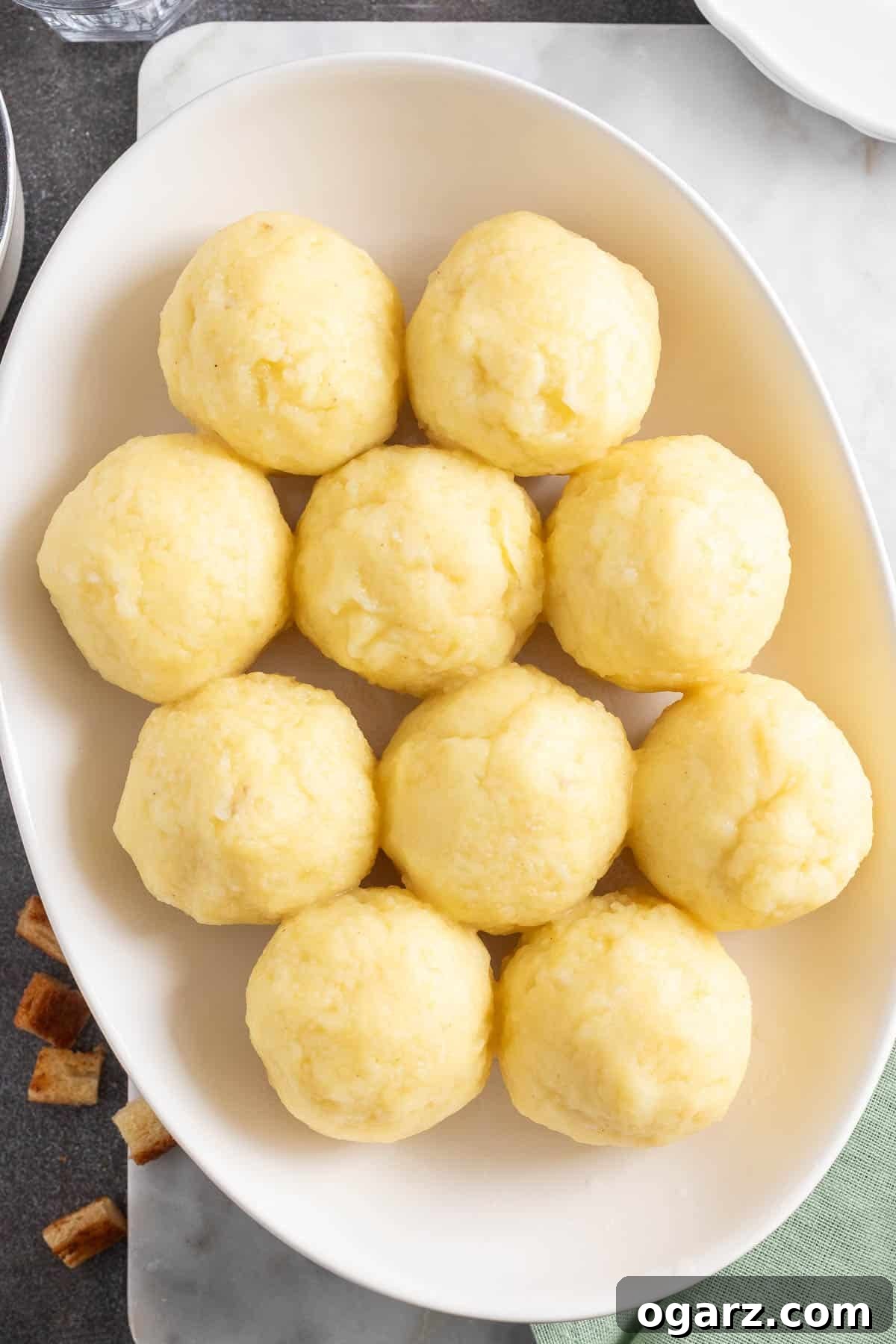
My Top Tips for Flawless Kartoffelkloesse Every Time
- Embrace the Potato Ricer: This isn’t just a kitchen gadget; it’s your best friend for making the lightest, fluffiest potato dumplings. A ricer extrudes the cooked potato into fine, airy strands, a texture simply unattainable with a conventional potato masher. Here’s a pro-tip: you can even put unpeeled cooked potatoes directly into the ricer; the skin neatly separates and stays behind, making prep quicker and cleaner. Just remember to remove the skin remnants before ricing the next potato.
- Allow the Potatoes to Cool: After ricing, it’s crucial to spread out the mashed potatoes and let them cool for approximately 15 minutes. If the potatoes are too hot when you add the egg, the heat will partially cook the egg, which can negatively affect the delicate texture and binding properties of the dough, leading to crumbly dumplings.
- Utilize a Kitchen Scale for Even Sizing: Consistency is key for uniform cooking. Using a kitchen scale to portion your dough ensures each dumpling is roughly the same size (I aim for about 100 grams per dumpling). This precision guarantees that all your dumplings cook at an even rate, preventing some from being undercooked while others are overdone. Alternatively, you can roll the entire dough into a long, even log and then divide it into 10 equal portions.
- Wet Hands for Smooth Shaping: The potato dough can be a little sticky, making it challenging to achieve perfectly smooth, round dumplings. To combat this, simply wet your hands with a little water before shaping each dumpling. This trick prevents the dough from sticking to your palms and makes it much easier to roll out beautifully smooth and evenly shaped balls.
- Opt for a Spacious Pot: Give your dumplings room to thrive! They need ample space to move freely and cook without touching each other in the pot. If the pot is too small and overcrowded, the dumplings are likely to stick together, deform, or cook unevenly. A wide, deep pot is ideal.
- Never Let the Water Boil Vigorously: This is arguably the most critical tip for preventing Kartoffelkloesse from disintegrating. Once you’ve brought the water to a rolling boil to heat the pot, immediately reduce the heat to a very gentle simmer. You should see no aggressive bubbling or movement in the water before you add the potato dumplings. The dumplings should poach gently, rather than boil rapidly, to maintain their integrity.
- The Essential “Test Dumpling” Trick: For a stress-free cooking experience, especially if it’s your first time making this recipe or if you’re using a new potato variety, always cook a single test dumpling first. If it holds its shape perfectly, proceed with the rest of the batch. If, however, it falls apart in the water, don’t despair! Simply knead a little more potato starch into the remaining dough, about a tablespoon at a time, until the dough feels more cohesive. This one simple step can genuinely save your entire dinner, transforming potential failure into guaranteed success.
How to Make Perfect Bavarian Kartoffelkloesse: A Step-by-Step Visual Guide
Here is a visual guide to walk you through the process of making these delicious Kartoffelkloesse, step by step. These images are designed to provide a helpful visual overview of the recipe. Please remember that full measurements, detailed instructions, and additional tips are provided in the printable recipe card located at the bottom of this post.
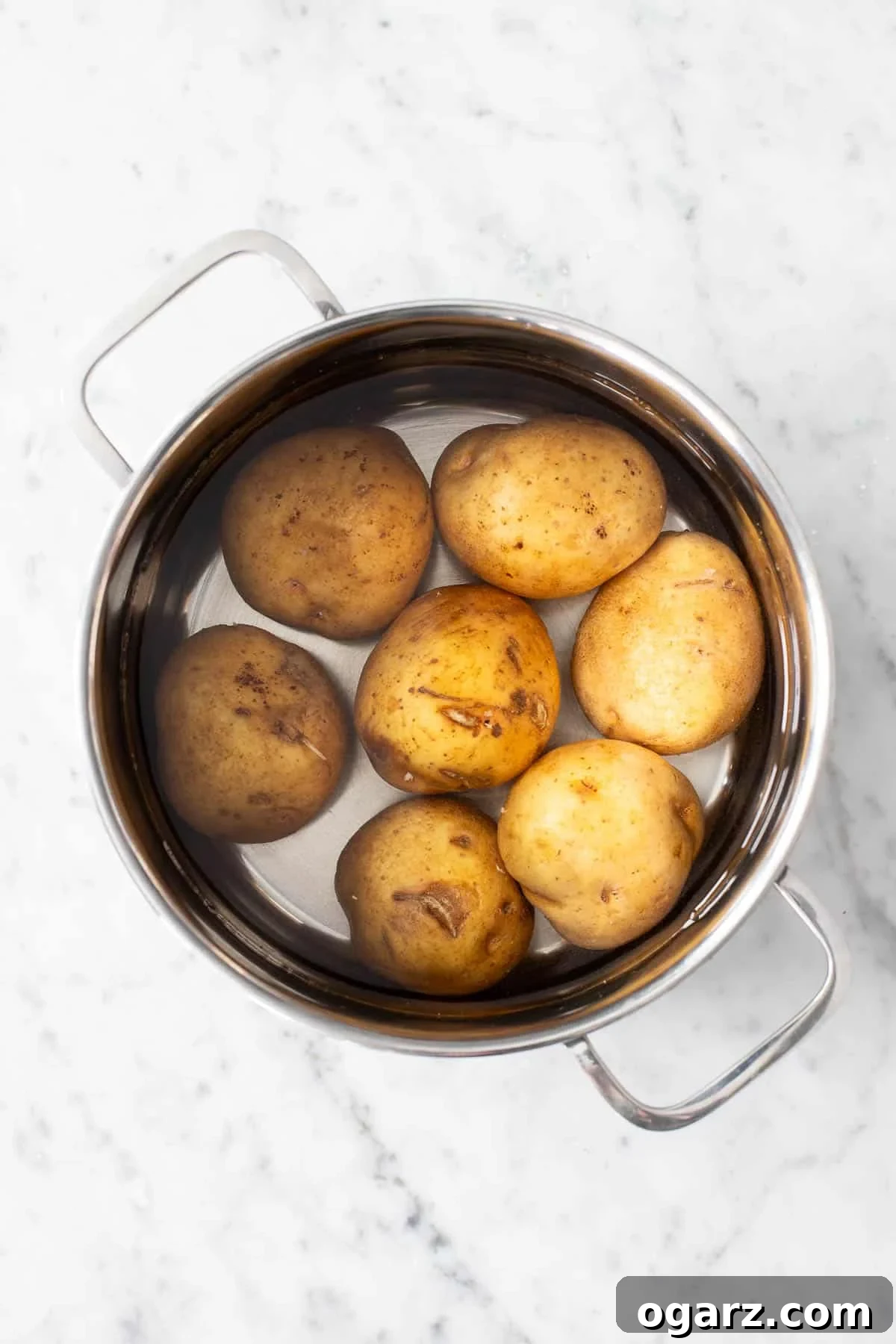
Step 1: Cook the potatoes. Place unpeeled yellow potatoes in a large pot, cover with cold water, add salt, and bring to a gentle boil until fork-tender. Drain well.
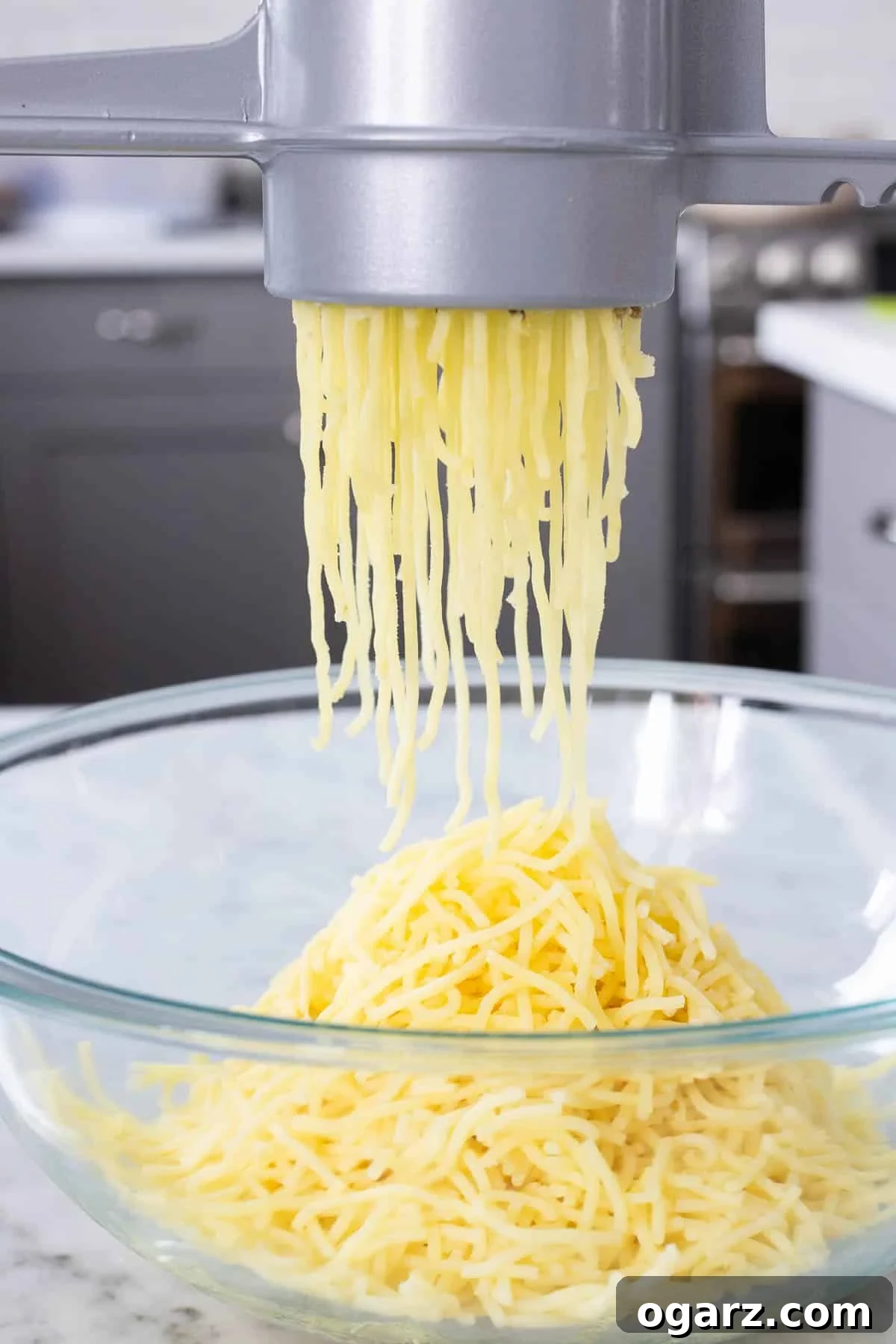
Step 2: Rice the potatoes. While still hot, push the cooked potatoes through a potato ricer into a large bowl. Ensure the peels are removed between each potato. Spread the riced potatoes and allow them to cool for 15 minutes.
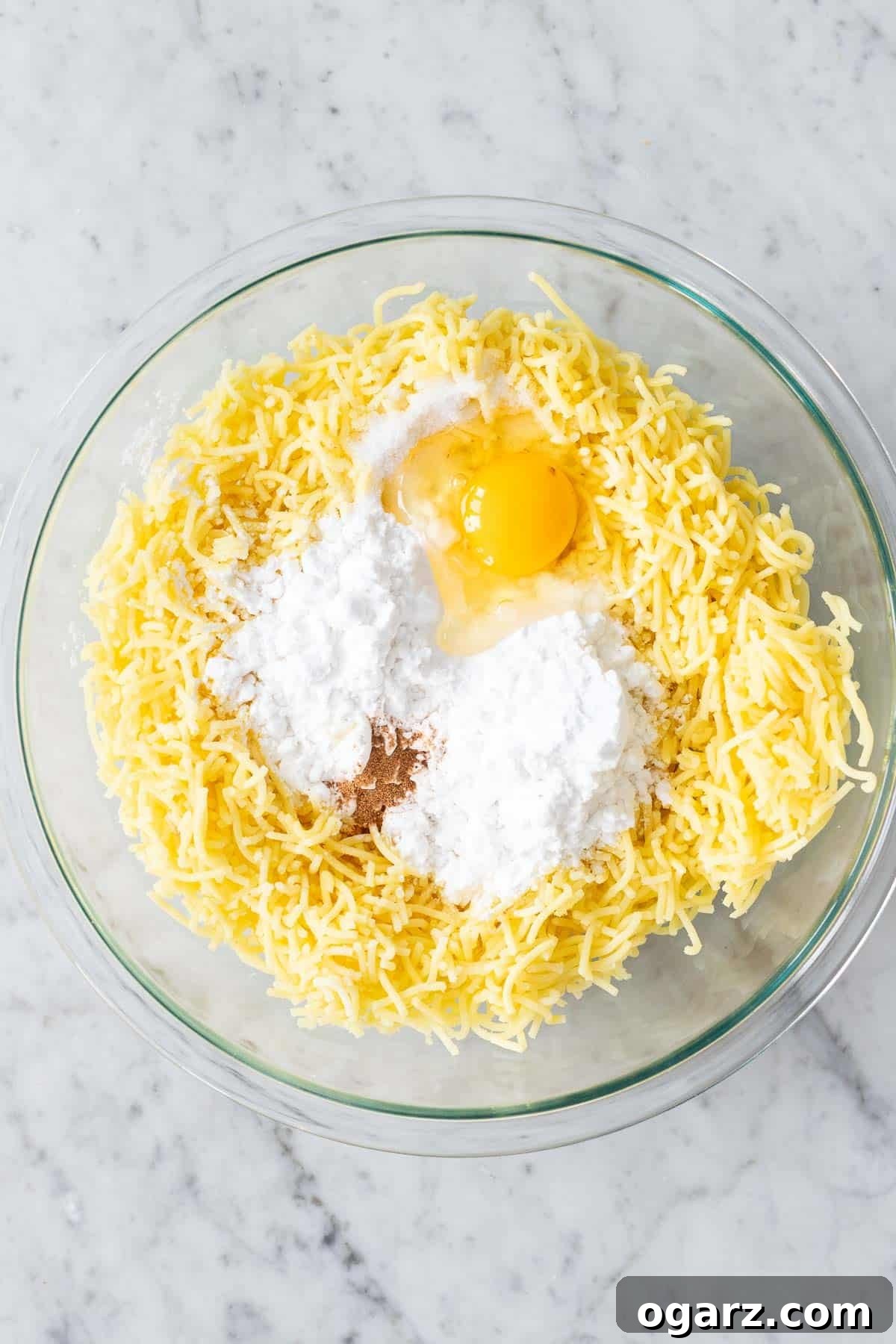
Step 3: Combine ingredients for the dough. Add the cooled riced potatoes, egg, potato starch, salt, and nutmeg into the large bowl.
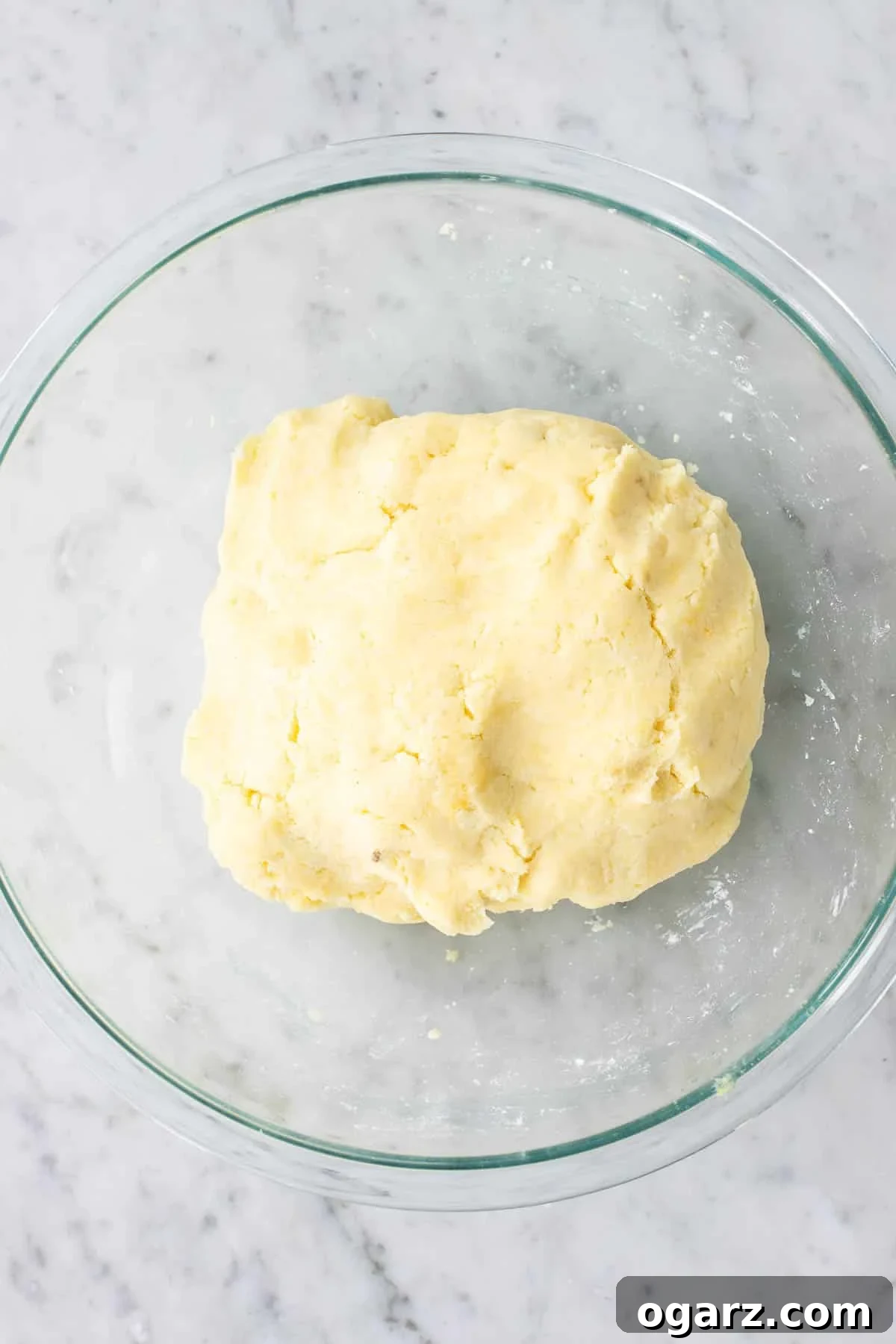
Step 4: Knead the dough. Gently knead the mixture with your hands until a soft, cohesive dough forms. Avoid overhandling, as this can make the dumplings tough. If the dough feels too sticky, incorporate a little more potato starch, one tablespoon at a time, until it reaches the right consistency.
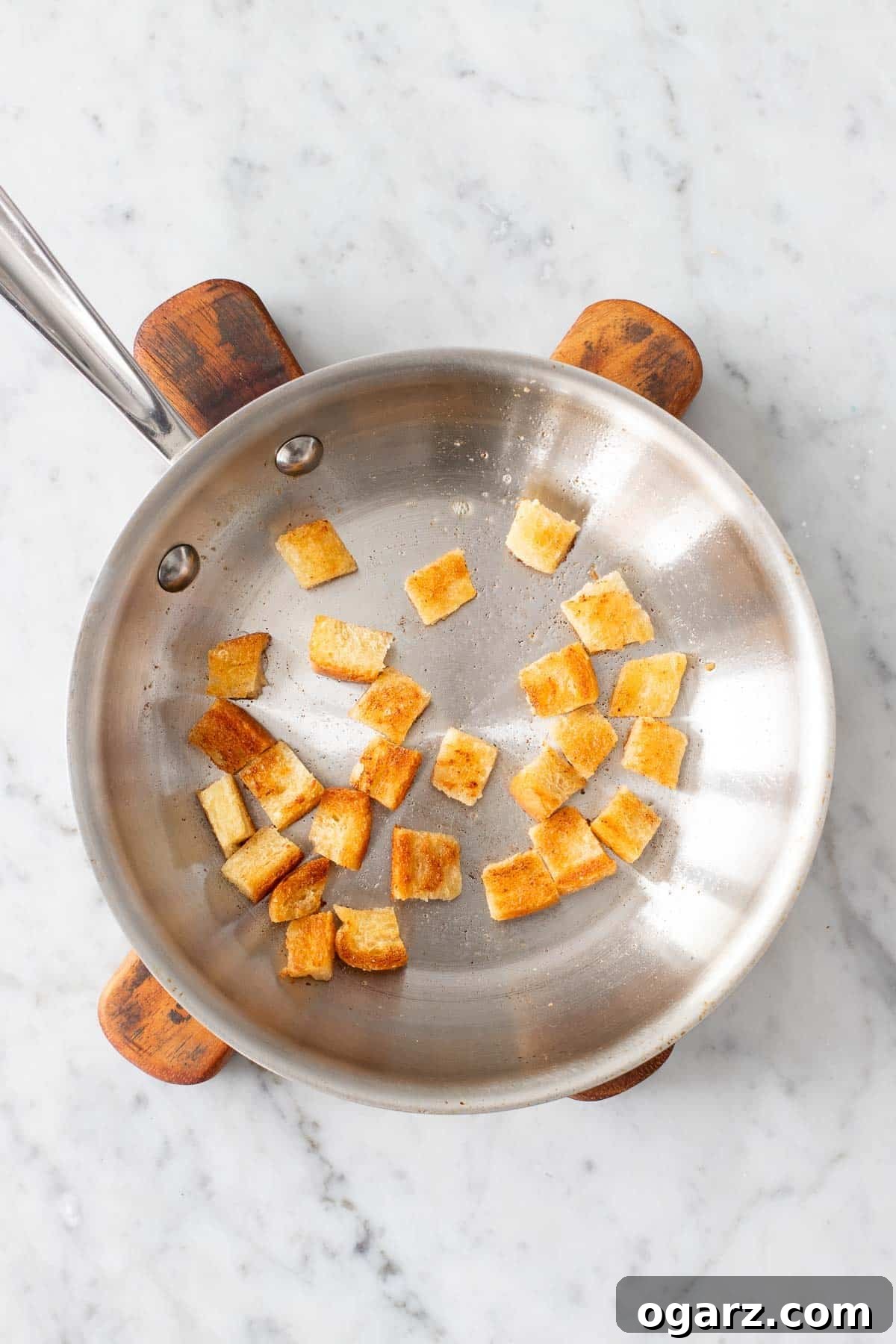
Step 5: Prepare the bread filling (Bröckele). Melt butter in a small pan, then sauté small, ½-inch cubes of white bread until golden and slightly crispy. Set aside to cool.
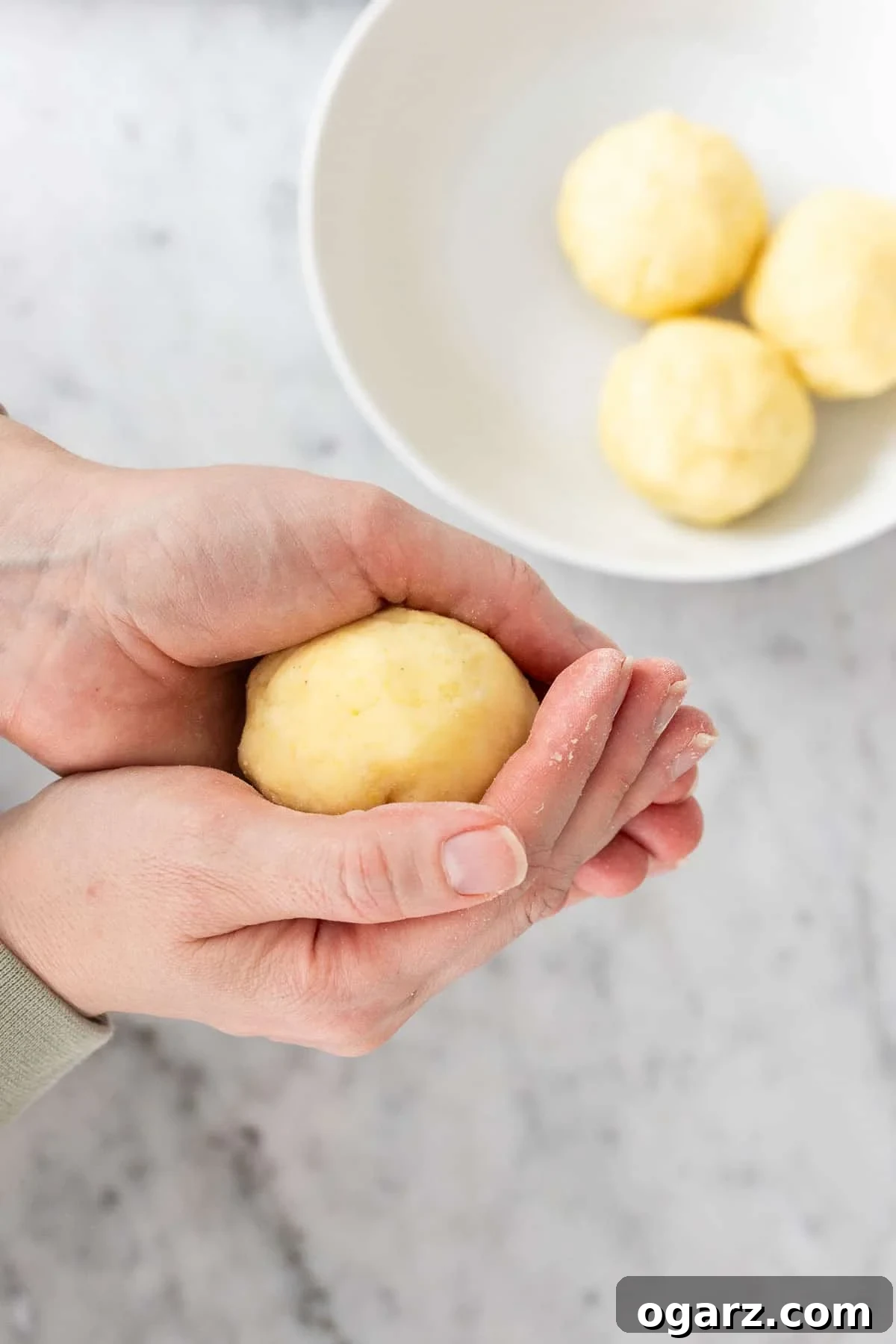
Step 6: Shape the dumplings. With wet hands, divide the dough into 10 equal portions (approximately 100g each). Roll each portion into a smooth, round ball.
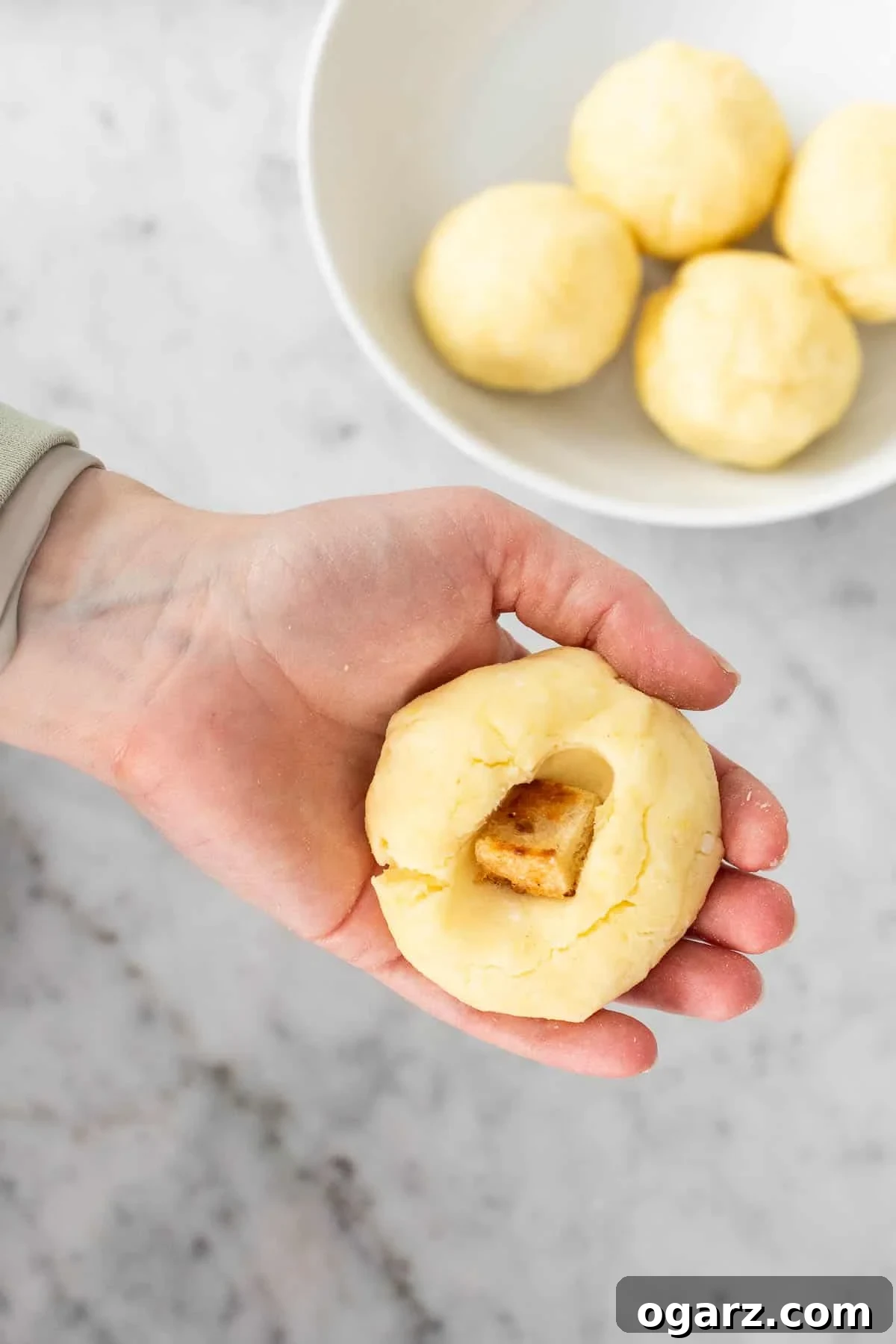
Step 7: Add the optional bread filling. If using, flatten each dough ball slightly in your palm, place a toasted bread cube in the center, and carefully reshape the dough around it into a smooth, round ball.
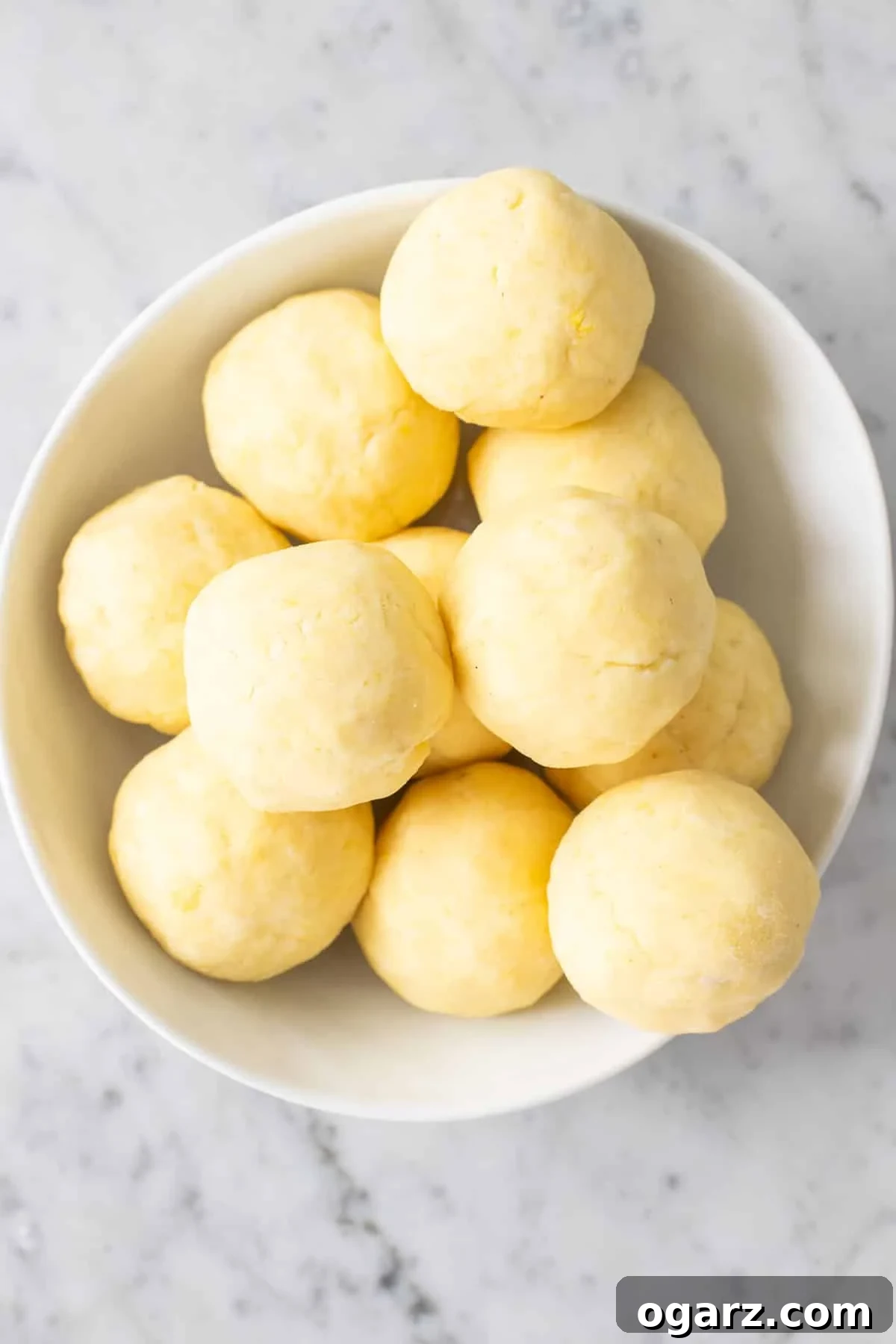
Step 8: Prepare the cooking water. You should now have ten beautifully formed Knödel. Bring a large pot of salted water to a boil, then immediately reduce the temperature to just below a simmer, so the water is still with no visible bubbles.
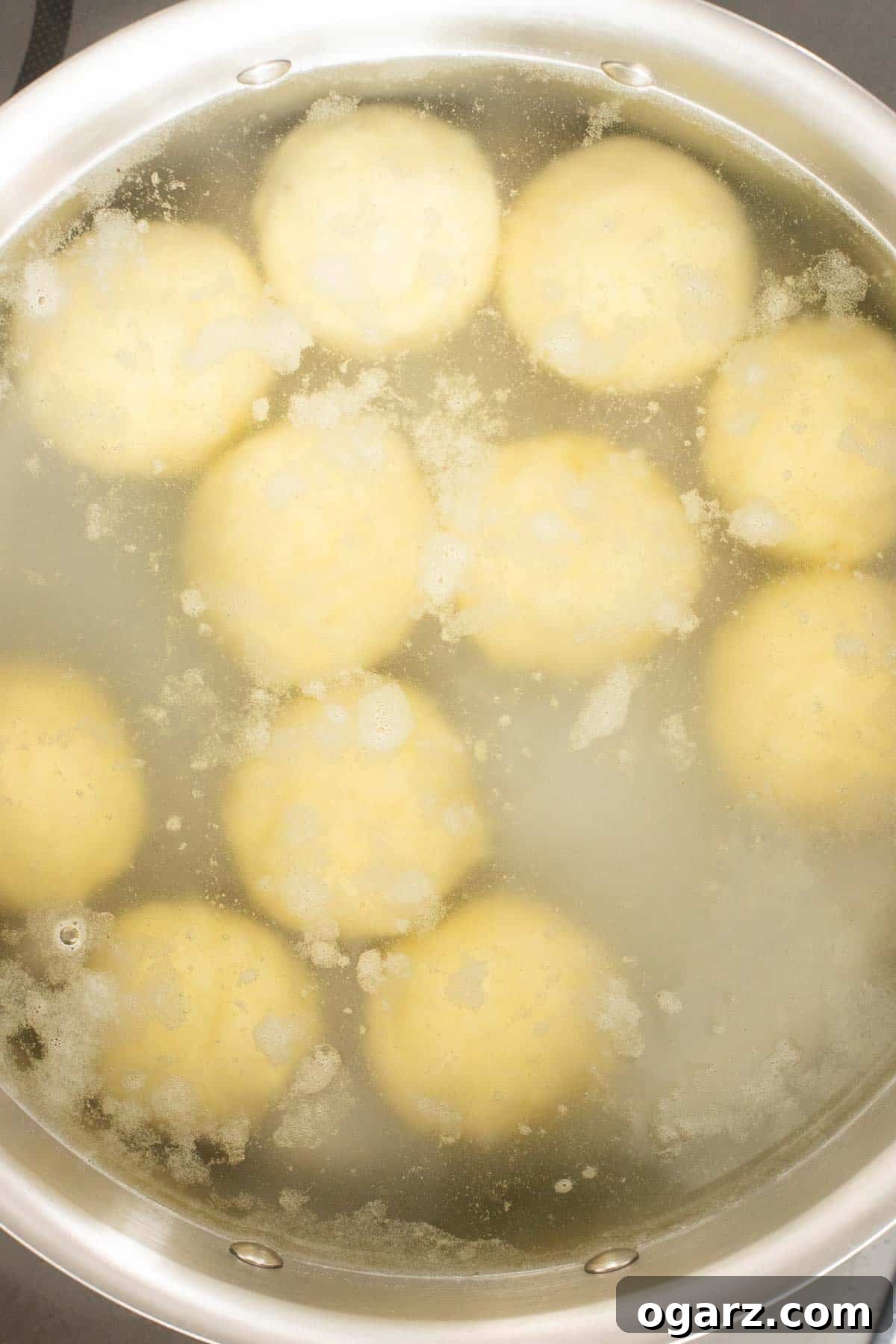
Step 9: Cook the dumplings. Gently lower the Klöße into the hot, non-boiling water. Cook uncovered for approximately 20 minutes, stirring very gently in the first few minutes to prevent sticking. Always perform a test dumpling first if this is your initial attempt.
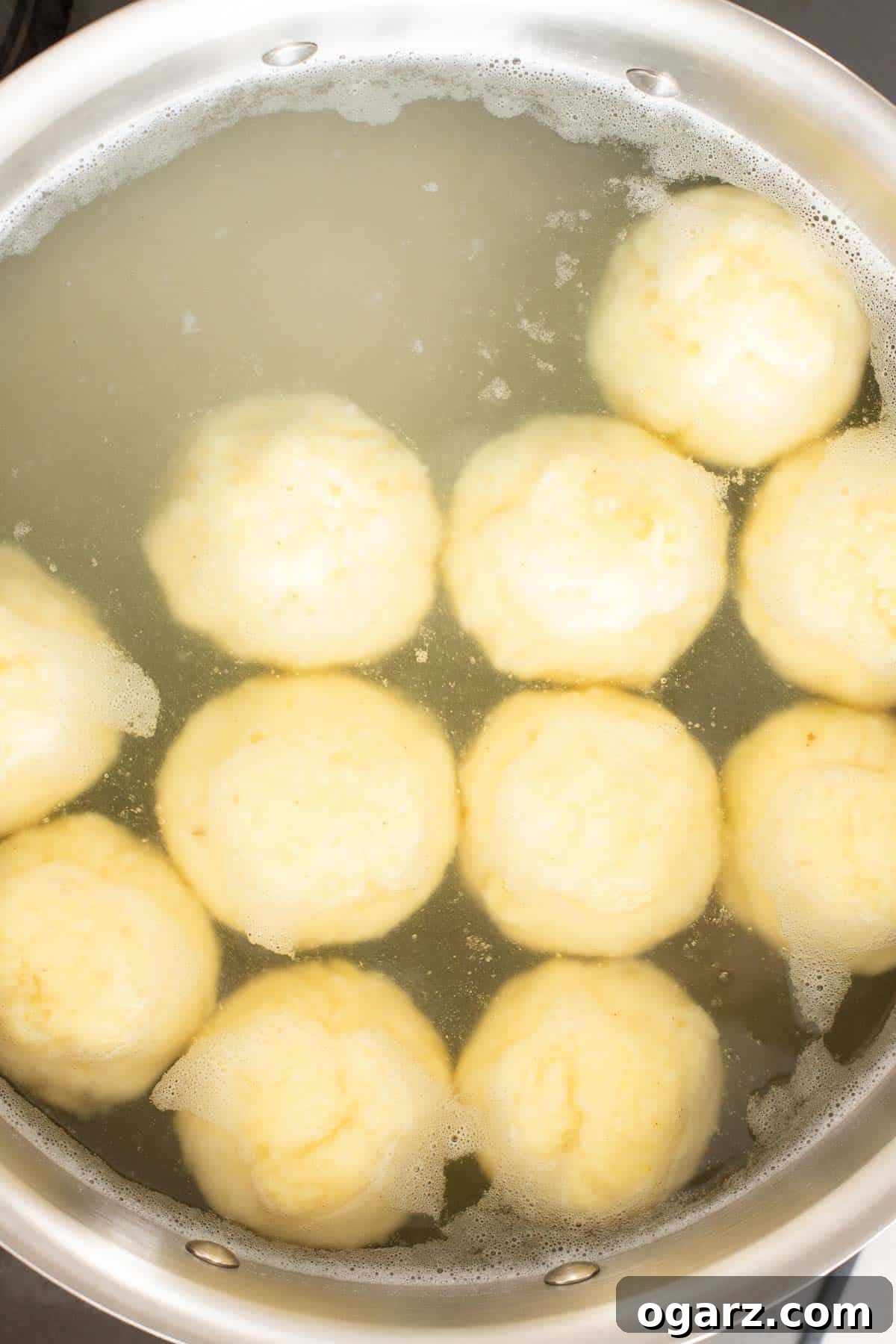
Step 10: Check for doneness and serve. The potato dumplings are fully cooked when they rise and float on the surface of the water, and spin easily when lightly nudged with a spoon. Remove them with a slotted spoon and serve immediately.
Serving Suggestions for Your Authentic Kartoffelkloesse
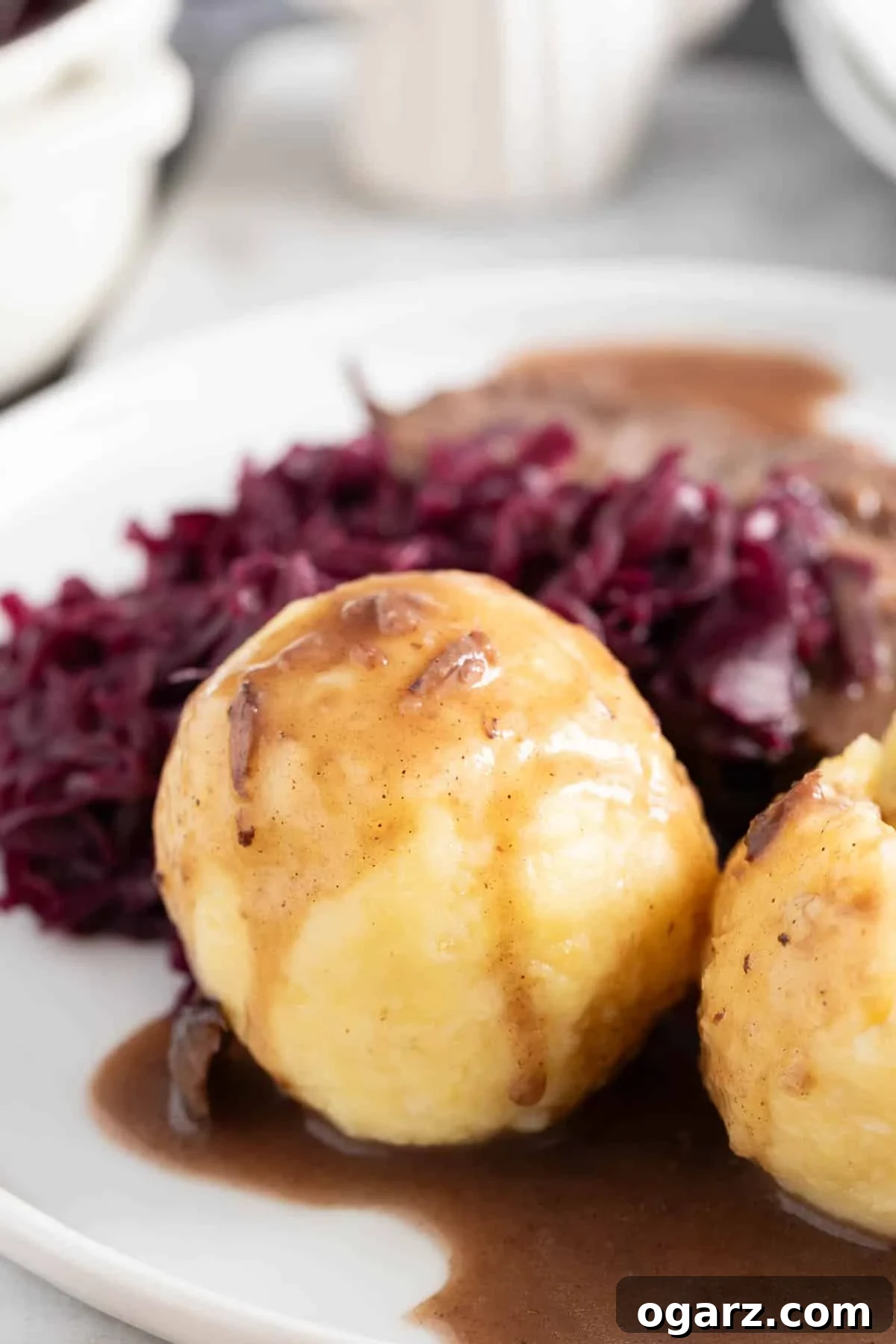
Kartoffelkloesse are best enjoyed fresh and piping hot, straight from the pot. Plan for a generous serving of two dumplings per person to satisfy appetites. They are the quintessential accompaniment for many beloved German main courses, forming a classic pairing with my German Sauerbraten, rich Rouladen (savory German beef rolls), or a traditional German Schweinebraten (roast pork). Truly, any main dish served with a delectable gravy will find its perfect partner in these tender potato dumplings.
To complete the traditional German dining experience, the classic vegetable side dish to serve with Kartoffelkloesse is German red cabbage (Blaukraut). You can easily make your own from scratch – it’s a relatively simple process, yields enough for several meals, and freezes beautifully for future enjoyment. Alternatively, many well-stocked supermarkets offer pre-prepared German red cabbage, typically found in the aisle alongside canned vegetables, making it a convenient option for busy cooks.
Storage & Freezing Tips for Kartoffelkloesse
Make-Ahead Options: To streamline your meal preparation, you can shape the potato dumplings up to a full day in advance. Once shaped, arrange them on a tray, cover tightly with plastic wrap, and store them in an airtight container in the refrigerator. When you’re ready to cook, simply proceed with the normal cooking instructions. Alternatively, you can boil and rice the potatoes ahead of time and store them in the fridge, mixing the dough and shaping the dumplings closer to serving time.
Storing Leftovers: Any leftover Kartoffelkloesse can be stored in an airtight container in the refrigerator for up to 2 days. I must confess, I actually adore them the day after! A popular German tradition for enjoying leftover dumplings is to slice them into thick rounds and sauté them in a pan with a generous amount of butter until they turn golden brown and slightly crispy. Sometimes, for an extra treat, we even pour a whisked egg over them in the last minute of cooking, creating a delicious and satisfying German lunch known as Gebratene Klöße (Fried Dumplings)! While you can also reheat them gently in hot (but never boiling!) water for about 10 minutes, be aware that the texture may not be quite as perfectly tender as when they are freshly made.
Freezing (Use with Caution): Freezing Kartoffelkloesse is generally not recommended due to the delicate nature of potato dumplings. If you choose to attempt it, you can freeze the shaped but uncooked dumplings in a single layer on a baking sheet until solid, then transfer them to a freezer-safe bag. Cook them directly from frozen in hot (again, not boiling) water for approximately 20-25 minutes. However, please be aware that freezing can be a bit risky; there’s a higher chance that the dumplings may sometimes fall apart during the cooking process after being frozen. For the best results, fresh is always preferred.
More Irresistible German Recipes to Try
Cakes
Black Forest Cake
German Recipes
Kaiserschmarrn
German Recipes
Pfannkuchen
Main Dishes
German Schnitzel

Print Recipe
Kartoffelkloesse (Authentic German Potato Dumplings)
Julia Foerster
20 minutes
50 minutes
15 minutes
1 hour
25 minutes
5
Equipment
-
Potato Ricer
Ingredients
For the Dumplings:
-
2
lbs
yellow potatoes -
1
egg -
1
cup
potato starch -
1½
teaspoons
salt,
plus more for the cooking water -
⅛
teaspoon
nutmeg
For the Filling (Optional Bröckele):
-
2
tablespoons
butter -
1
slice
white bread
Instructions
-
1. Cook the potatoes: Place the unpeeled potatoes in a large pot and cover them with cold water. Bring the water to a boil with the lid on. Once boiling, add about 1 tablespoon of salt. Reduce the heat to medium so the water is just gently simmering, and cook for about 30 minutes, or until a knife slides through the potatoes easily. Drain the potatoes thoroughly and let them steam for a few moments to remove excess moisture.2 lbs yellow potatoes
-
2. Rice the potatoes: Carefully push the hot, cooked potatoes through a potato ricer into a large mixing bowl. The peels will conveniently remain in the ricer; remember to remove them between each potato. Spread out the riced potatoes to allow them to cool down evenly for about 15 minutes. This cooling step is essential for proper dough texture.
-
3. Prepare the bread filling (optional): If you’re including the traditional Bröckele, melt butter in a small pan over medium heat. Cut the white bread into small cubes (approximately ½ inch) and sauté them in the melted butter until they are golden brown and slightly crisp. Set the bread cubes aside to cool.2 tablespoons butter,
1 slice white bread -
4. Make the dumpling dough: To the bowl of cooled riced potatoes, add the egg, approximately three-quarters of the potato starch, salt, and nutmeg. Knead the mixture with your hands until the dough comes together smoothly and is uniform in consistency. Be careful not to overknead, as this can lead to tough dumplings. If the dough feels overly sticky, gradually knead in more potato starch, a tablespoon at a time, until it reaches a manageable, non-sticky texture.1 egg,
1 cup potato starch,
1½ teaspoons salt,
⅛ teaspoon nutmeg -
5. Shape the dumplings: Bring a large pot of water to a boil, then immediately reduce the heat to just below simmering (there should be no active bubbles). Meanwhile, moisten your hands with water. Divide the potato dough into 10 equal portions (each should weigh about 100 grams). Roll each portion into a smooth, round ball. If using the bread filling, flatten each piece in your palm, place a bread cube in the center, and then carefully roll it back into a smooth, round ball, ensuring the bread is fully enclosed.
-
6. Cook the dumplings: If this is your first time making the recipe, I highly recommend cooking a single test dumpling first to ensure the dough consistency is perfect. Gently lower the dumplings into the hot (but not boiling) water. Cook them uncovered for about 20 minutes, stirring very gently during the first couple of minutes to prevent them from sticking to the bottom of the pot. The dumplings are done when they float to the surface and can be easily spun with a gentle nudge.
-
7. Serve immediately: Carefully remove the cooked dumplings from the water using a slotted spoon. Serve them immediately, ideally with plenty of your favorite German gravy.
Notes
Topping potato dumplings with golden, buttery breadcrumbs is a beloved tradition in Bavaria and offers a simple yet effective way to add a delightful texture and extra richness to your dish.
To prepare this delicious topping, melt 2 tablespoons of butter in a small pan over medium heat. Add ¼ cup of plain breadcrumbs and stir continuously for about 2–3 minutes until they achieve a beautiful golden brown color. Spoon this fragrant buttered breadcrumb mixture generously over the cooked dumplings just before serving.
Note 2: Potato Ricer Substitute (Note on Texture):
If you do not own a potato ricer, you can use a fine-mesh grater as an alternative. For this method, it is absolutely essential to allow the cooked potatoes to cool down completely before grating them. While a grater can work, please be aware that the resulting texture of the dumplings may not be as light and fluffy as those made with a potato ricer.
Note 3: Gluten-Free Option: These Kartoffelkloesse are naturally gluten-free if you omit the optional bread filling (Bröckele). Ensure all other ingredients, especially your potato starch, are certified gluten-free.
Nutrition Information (per serving)
Calories:
320
kcal
|
Carbohydrates:
61
g
|
Protein:
8
g
|
Fat:
6
g
|
Saturated Fat:
3
g
|
Polyunsaturated Fat:
1
g
|
Monounsaturated Fat:
2
g
|
Trans Fat:
0.2
g
|
Cholesterol:
45
mg
|
Sodium:
798
mg
|
Potassium:
1104
mg
|
Fiber:
6
g
|
Sugar:
3
g
|
Vitamin A:
191
IU
|
Vitamin C:
37
mg
|
Calcium:
60
mg
|
Iron:
2
mg
Enjoyed this recipe? Share your thoughts below!