
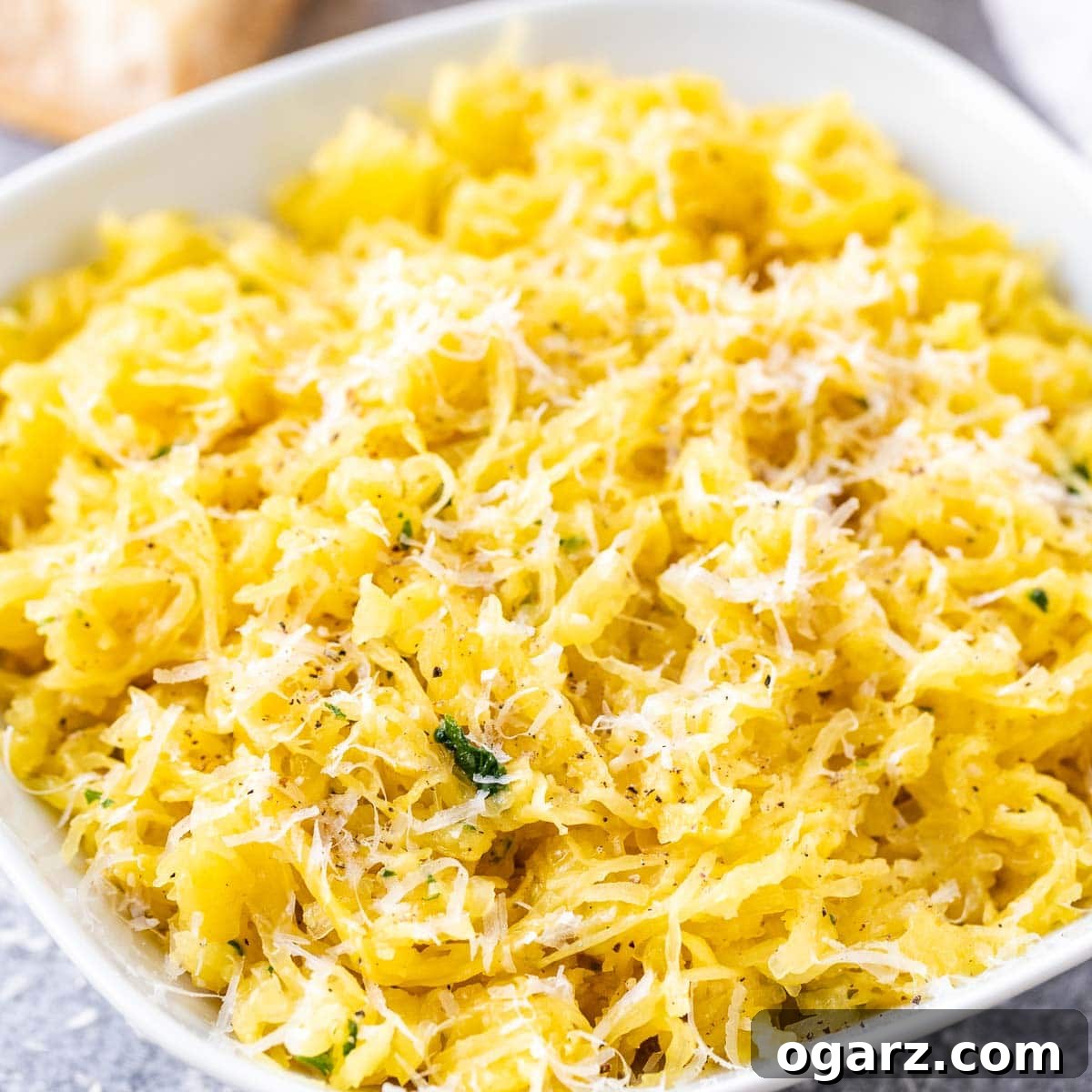
Discover the ultimate guide to making the best oven-roasted spaghetti squash with perfectly long, tender, and incredibly delicious strands. Say goodbye to mushy, watery squash! Our unique method ensures a dry and flavorful result that will transform your cooking and delight even the pickiest eaters.
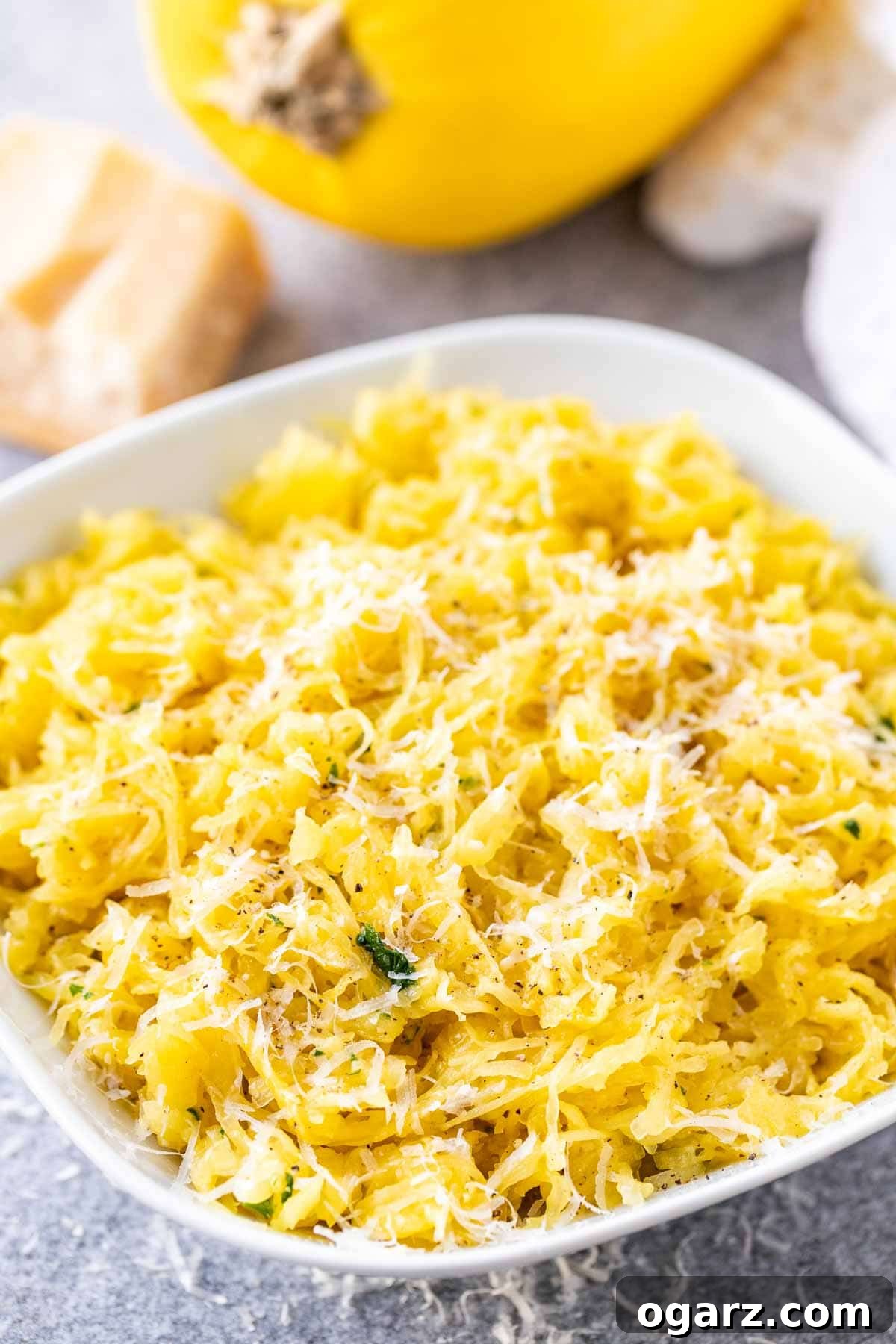
Oven-roasted spaghetti squash is a phenomenal and healthy alternative to traditional pasta, pairing exquisitely with your favorite sauces (don’t miss my easy fresh tomato sauce!). Beyond being a superb low-carb “noodle,” it also shines as a versatile and tasty side dish, especially when pan-fried with aromatic garlic and a generous sprinkle of Parmesan cheese.
Spaghetti squash is a staple in our household when it’s in season, cherished for its unique texture and mild flavor. After years of preparing it the conventional way – by cutting it in half – I stumbled upon a groundbreaking technique that yielded far superior results. This innovative method, which involves cutting the squash into rings instead of halves, is the secret to achieving those coveted long, firm strands that truly mimic pasta. This approach guarantees your spaghetti squash will be dry, delicious, and absolutely NOT mushy or soggy, making it an instant family favorite.
Why You’ll Love This Oven Roasted Spaghetti Squash Recipe
Spaghetti squash, a cherished winter vegetable, is not only delicious but also packed with essential vitamins, vital minerals, and powerful antioxidants. Incorporating this recipe into your culinary repertoire offers a myriad of benefits:
- Perfect Low-Carb Pasta Alternative: Craving pasta but watching your carb intake? Spaghetti squash offers a fantastic, guilt-free substitute that doesn’t compromise on satisfaction. It’s a game-changer for keto and low-carb diets.
- Versatile & Delicious Side Dish: Beyond pasta, it serves as an excellent, naturally sweet, and savory side that complements a wide array of main courses.
- Incredibly Easy to Prepare: This recipe simplifies the cooking process, making it accessible even for novice cooks. Minimal prep and hands-off roasting mean more time for you.
- Nutrient-Dense Powerhouse: Spaghetti squash is remarkably low in calories, yet boasts a high fiber content, supporting digestive health and promoting satiety. It’s also rich in vitamins A and C, and B vitamins, contributing to overall well-being.
- Achieve Perfect Texture Every Time: Our unique ring-cutting method is specifically designed to produce long, distinct strands that are dry and tender, never mushy or watery, ensuring a delightful eating experience.
Essential Ingredients for Perfect Spaghetti Squash
Crafting delicious oven-roasted spaghetti squash requires just a few simple ingredients. Here’s a closer look at what you’ll need and why each component is important:
- Spaghetti Squash: The star of our dish! For a main course pasta alternative, a 2-pound squash typically serves 2-3 people. If you’re preparing it as a side dish, the same size can comfortably serve 4-6. When selecting your squash, look for one that is firm to the touch, has a vibrant, uniform yellow color, and is free of any soft spots or blemishes. A heavier squash for its size often indicates higher moisture content.
- Olive Oil (or Avocado Oil): A good quality olive oil is essential for roasting. It helps the squash caramelize beautifully, enhancing its natural sweetness and creating a delicate crispiness on the edges. Olive oil also plays a crucial role in extracting fat-soluble vitamins (like Vitamin A) from the squash, making them more bioavailable for your body. If olive oil isn’t preferred, avocado oil is an excellent alternative due to its high smoke point and neutral flavor. Any neutral cooking oil can work in a pinch.
- Salt and Pepper: These fundamental seasonings are all you truly need to bring out the squash’s inherent flavors. A light hand is recommended, especially if you plan to serve the spaghetti squash with a heavily seasoned sauce, allowing the squash’s natural taste to shine through. For a little extra depth, consider a touch of garlic powder or a pinch of dried Italian herbs.
Step-by-Step Guide to Oven Roasted Spaghetti Squash
For precise measurements and detailed instructions, refer to the printable recipe card provided at the bottom of this page.
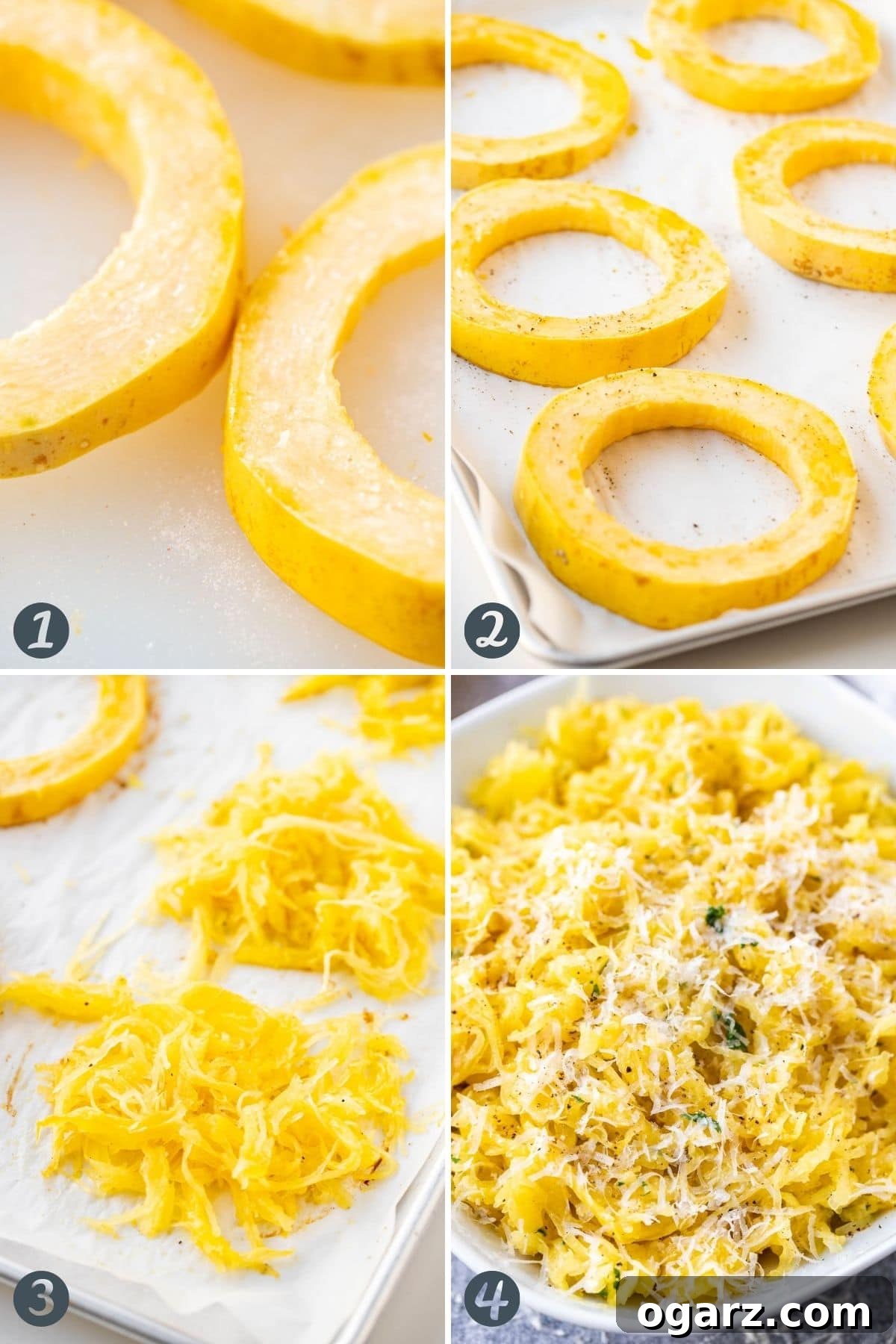
- Preheat the Oven and Prepare Baking Sheet: Begin by preheating your oven to 400°F (200°C). While the oven heats, line a large baking sheet with parchment paper. This crucial step prevents the spaghetti squash from sticking to the pan, ensuring easy cleanup and perfectly roasted results.
- Master the Ring Cut: Using a sturdy serrated knife, carefully slice the spaghetti squash into 1-inch thick rings. This “ring” method is the key to achieving long, spaghetti-like strands, as it cuts across the grain of the squash’s natural fibers. If the squash is particularly challenging to cut, you can microwave it for 4-5 minutes beforehand to soften the rind, making it much easier and safer to slice.
- Effortlessly Remove Seeds: Once your squash is sliced into rings, use a grapefruit spoon or a small, sharp knife to scoop out and remove the seeds and any stringy bits from the center of each ring. Aim for a clean interior.
- Season for Flavor: Arrange the spaghetti squash rings in a single layer on your prepared baking sheet. Drizzle them generously with olive oil, ensuring each side is lightly coated. Then, sprinkle with salt and freshly ground black pepper to taste. You can also add a pinch of garlic powder or dried herbs for extra flavor.
- Roast to Perfection: Place the baking sheet with the seasoned squash rings into the preheated oven. Bake for a total of 35 minutes. Halfway through the cooking time, after about 15 minutes, carefully flip each ring to ensure even roasting and beautiful caramelization on both sides. The squash should be tender when pierced with a fork.
- Create Pasta-Like Strands: Once roasted, remove the baking sheet from the oven and allow the squash rings to cool slightly on a wire rack for a few minutes. This makes them easier to handle. Next, gently remove the peel from each ring using your fingers. Then, using a fork, scrape the inside of the rings to release the long, delicate, pasta-like strands. Serve immediately as a healthy pasta substitute or a delicious side dish.
Expert Tips for the Best Oven Roasted Spaghetti Squash
While spaghetti squash is known for its lengthwise fibers, our ring-cutting method maximizes strand length and prevents mushiness. Here are some expert tips to ensure your spaghetti squash turns out perfectly every time:
- Achieve Extra Dry Strands: For an even drier, less watery squash (perfect for pasta dishes), salt the rings generously before baking. Let them sit for 10-15 minutes, which will draw out excess moisture. Then, pat the squash dry thoroughly with a kitchen towel and gently brush away any visible excess salt before drizzling with oil and roasting.
- The Ring-Cutting Advantage: Seriously, cutting the squash into rings is a game-changer. Unlike cutting it in half lengthwise, this method ensures you slice across all the fibers, resulting in genuinely long, beautiful strands that hold their shape and density, making them a true pasta alternative that won’t turn into mush.
- Choose the Right Knife: A sharp serrated knife or a boning knife will make the cutting process much safer and easier, especially when dealing with the tough skin of a raw spaghetti squash.
- Stabilize for Safe Cutting: To prevent the squash from rolling, take a thin slice off one side of the squash lengthwise before cutting it into rings. This creates a flat base, allowing the squash to lay stable on your cutting board.
- Pre-soften for Easier Cutting: If you’re struggling to cut through a particularly hard squash, prick it several times with a fork and microwave it for 4-5 minutes. This will soften the rind just enough to make slicing into rings effortless.
- Microwave-Free Softening: No microwave? No problem! You can achieve a similar pre-softening effect by carefully cutting the squash in half widthwise (as if you were going to cut rings, but only two halves) and baking it in the oven for about 20 minutes before allowing it to cool slightly and proceeding to cut it into rings.
Common Questions About Oven Roasted Spaghetti Squash
As you embark on making this delicious recipe, you might have a few questions. Here are answers to some of the most common inquiries:
While the exact size isn’t critical to the cooking method, it will impact your yield. A larger squash (e.g., 3-4 pounds) will require more baking sheets to ensure all rings fit in a single layer for even roasting. Naturally, if you have more people to feed, a larger squash is preferable. Just ensure all slices are roughly 1-inch thick for consistent cooking.
Spaghetti squash is incredibly versatile! It pairs beautifully with almost any sauce you’d use for traditional pasta. Classic options include a hearty spaghetti meat sauce, a vibrant tomato-basil marinara, a creamy Alfredo, or a simple yet elegant garlic and Parmesan sauce. For a lighter touch, a drizzle of olive oil, fresh garlic, and butter is always a winner. Experiment with your favorites!
Absolutely! Spaghetti squash is a fantastic, keto-friendly vegetable. One cup contains only about 5.5 net carbs, making it an ideal low-carb pasta alternative. When paired with other low-carb ingredients like a meat sauce, creamy sauce, or plenty of healthy fats, it forms a perfectly balanced and delicious keto meal. It’s a staple for those looking to enjoy a pasta-like experience without the carb load.
A ripe spaghetti squash will have a firm, smooth skin that is a deep, uniform yellow color. Avoid squash with soft spots, green patches (indicating it’s unripe), or any visible mold. It should also feel heavy for its size. The stem should be dry and hard.
While this recipe focuses on oven roasting for the best texture, spaghetti squash can be cooked using other methods. Air frying can also produce nice strands, often quicker. Microwaving is faster but typically yields a softer, sometimes more watery texture, and isn’t ideal for achieving those distinct, dry strands we aim for. However, microwaving whole or halved squash is a great way to soften it for easier cutting or for a quick, tender result if texture is less of a concern.
Creative Ways to Enjoy Your Baked Spaghetti Squash
Once you’ve mastered the art of creating perfectly roasted spaghetti squash strands, the culinary possibilities are endless! Here are some of our favorite ways to incorporate this versatile vegetable into your meals:
- Healthy & Delicious Pasta Alternative: This is where spaghetti squash truly shines. Serve the tender strands topped with your preferred pasta sauce for a satisfying, low-calorie, and low-carb meal. It’s fantastic with a rich meat sauce, a creamy pesto, or especially my homemade Fresh Tomato Sauce. You can also use it as the base for “spaghetti and meatballs,” in lasagna-style casseroles, or even in stir-fries for an extra vegetable boost.
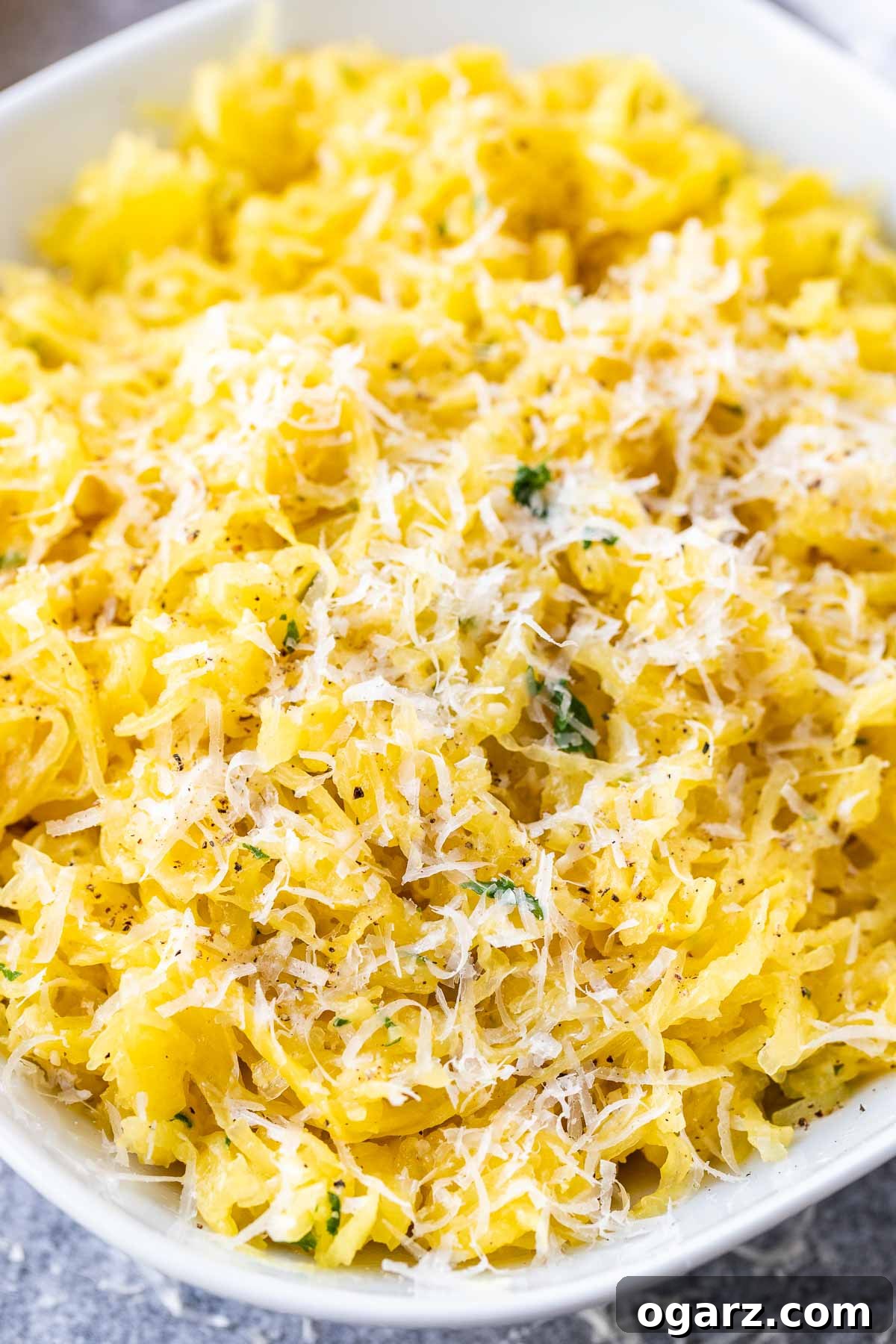
- Flavorful Side Dish: Roasted spaghetti squash makes an excellent accompaniment to a wide range of main dishes. The simplest preparation involves pan-frying the strands briefly with a tablespoon of olive oil, minced garlic, and a generous sprinkle of freshly grated Parmesan cheese, as detailed in the optional section of the recipe card below. For variations, try adding fresh herbs like thyme or rosemary, a squeeze of lemon juice, or a pinch of red pepper flakes for a touch of heat.
- Ingredient in Bowls & Salads: Add cooled spaghetti squash strands to grain bowls, power bowls, or hearty salads for added texture and nutrition. It pairs wonderfully with roasted vegetables, grilled chicken, or chickpeas.
- Baked into Casseroles: Just like traditional pasta, spaghetti squash can be baked into comforting casseroles. Think creamy chicken and squash bakes, or a vegetarian gratin with layers of cheese and herbs.
Storing and Reheating Leftover Spaghetti Squash
Proper storage is key to enjoying your delicious oven-roasted spaghetti squash for days to come. Cooked spaghetti squash will keep beautifully for approximately 5 days when stored in an airtight container in the refrigerator. To preserve its best noodle-like texture and prevent it from becoming watery or absorbing too much moisture, we highly recommend storing the spaghetti squash strands separately from any sauce you might have prepared.
When you’re ready to reheat, you have a few options: gently warm it in a skillet over medium heat with a tiny bit of oil or butter until heated through. This method helps maintain its texture. Alternatively, you can microwave it in short intervals, stirring occasionally, until warm. Be careful not to overheat, which can make it soft.
Freezing Cooked Spaghetti Squash
Yes, roasted spaghetti squash, once cooked and shredded into strands, freezes exceptionally well! This makes it perfect for meal prepping. To freeze, ensure the squash strands are completely cooled. Then, transfer them into an airtight freezer-safe container or freezer bags, removing as much air as possible to prevent freezer burn. It can be safely stored in the freezer for up to 3 months.
To use, thaw the frozen spaghetti squash overnight in the refrigerator or quickly defrost it in the microwave. Once thawed, you can reheat it in a pan with a little olive oil or butter until warm, ready to be tossed with your favorite sauce or served as a side.
Explore More Healthy Recipes
Soups
Creamy Butternut Squash Soup
Air Fryer
Air Fryer Cauliflower
Main Dishes
Healthy General Tso’s Chicken
Sides & Salads
Zucchini Salad
Never Miss A Recipe!
Subscribe to my newsletter and follow along on Facebook, Instagram, and Pinterest for more great recipes and all of the latest updates.

Saved
Pin
Oven Roasted Spaghetti Squash
Equipment
-
Baking Sheets
Ingredients
- 1 spaghetti squash, about 2-pounds
- 2 Tbsp olive oil, or more depending on squash size
- salt and pepper
For Garlic Parmesan Spaghetti Squash (optional)
- 1 Tbsp olive oil
- 2 garlic cloves, minced
- ½ cup freshly-grated Parmesan cheese, plus more for serving
- 2 Tbsp chopped fresh parsley
- ½ tsp salt
- 1/4 tsp freshly ground black pepper
Instructions
-
Preheat oven to 400 F (200C) and line a baking sheet with parchment paper.
-
Cut the squash into 1-inch rings using a serrated knife.
-
Remove the seed from the rings using a grapefruit spoon or a small knife. Place rings on the prepared baking sheet and drizzle with olive oil and sprinkle with salt and pepper.
-
Bake for 35 minutes, flipping once after 15 minutes, until tender.
-
Take the baking sheet out of the oven and let cool on a cooling rack for a few minutes, then remove the peel with your fingers and use a fork to form pasta-like strands.
To make Garlic Parmesan Spaghetti Squash
-
Heat the olive oil in a large skillet over medium heat.
-
Add the garlic and cook 30 seconds, stirring constantly. Add the oven-roasted squash and the Parmesan cheese. Cook for 2 to 3 minutes to heat through, stirring frequently.
-
Remove from the heat, stir in the parsley, and season to taste with salt and pepper. Serve sprinkled with Parmesan.
Notes
- Additional step for extra dry squash: Salt the rings generously before baking, let sit for 10–15 minutes, then pat the squash dry with a kitchen towel and brush away the excess salt.
- Cutting the squash into rings instead of halves makes the strands longer – so they are a real pasta alternative and don’t turn into mush
- A boning knife or serrated knife works best
- Take a thin slice off one side to make it lay flat to make cutting it into rings easier
- To make it easier to cut, you can prick the spaghetti squash a few times with a fork and microwave it for 4–5 minutes to make it easier to cut
- Or if you don’t have a microwave, cut in half like you would cut rings (NOT lengthwise) and bake like this for 20 minutes before cutting it into rings
Nutrition
Carbohydrates: 11g |
Protein: 1g |
Fat: 8g |
Saturated Fat: 1g |
Sodium: 28mg |
Potassium: 174mg |
Fiber: 2g |
Sugar: 4g |
Vitamin A: 193IU |
Vitamin C: 3mg |
Calcium: 37mg |
Iron: 1mg
Like this recipe? Rate and comment below!