
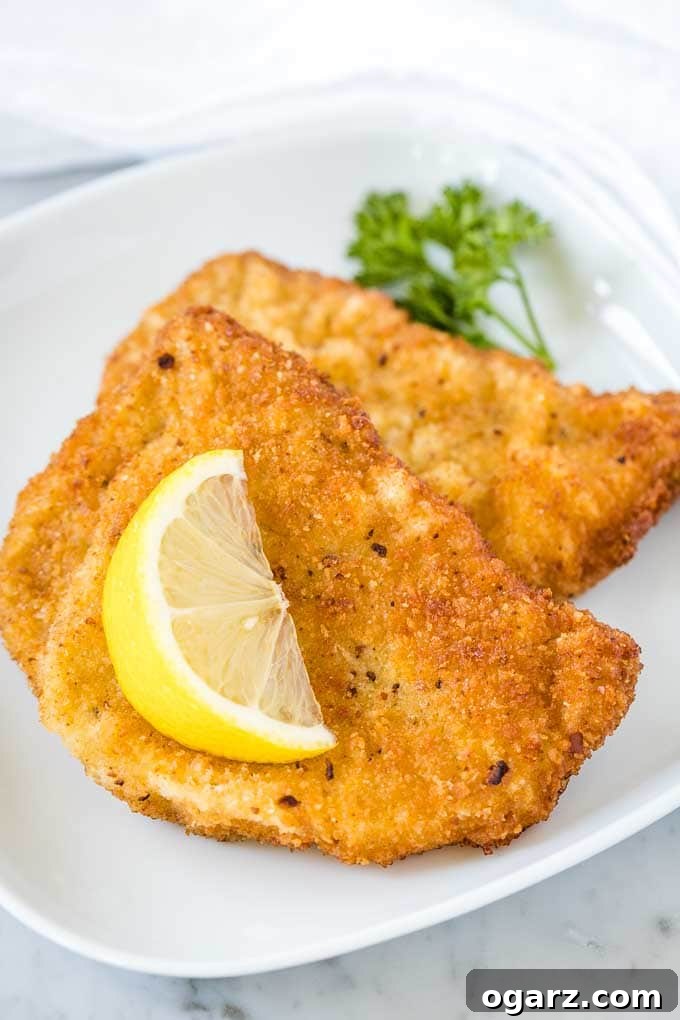
Step into the heart of German cuisine right from your own kitchen! This comprehensive guide will show you how to prepare authentic Schnitzel, pan-fried to golden perfection with a delightfully crispy, airy breading, just like you’d savor in your favorite German restaurant. Whether you’re a seasoned home cook or just starting your culinary journey, this easy-to-follow, step-by-step recipe provides all the tips and tricks to master the art of homemade Schnitzel, turning ordinary meals into extraordinary experiences.
For those of us with German roots, the love for classic German dishes runs deep. Beyond beloved desserts like our famous Black Forest Cake, a tender slice of German Apple Cake, or the delicate Vanillekipferl, savory delights like Schnitzel hold a special place. It’s a dish that evokes comfort, tradition, and the warmth of home-cooked meals.
Mastering Easy German Schnitzel at Home
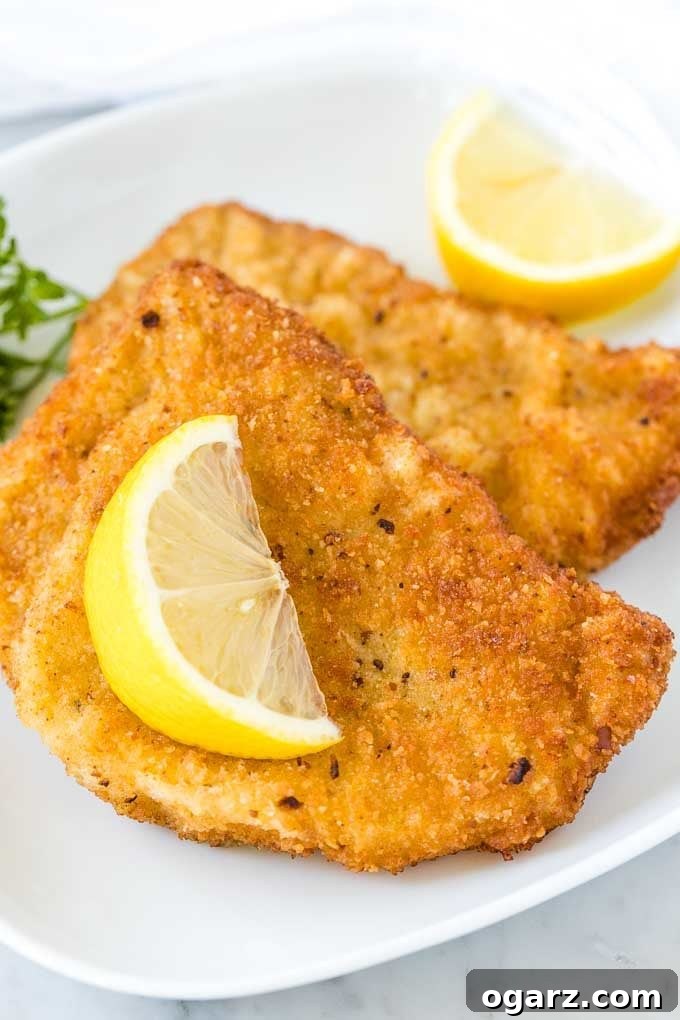
Recreating the magic of a classic German Schnitzel at home might seem daunting, but it’s surprisingly simple with the right techniques. Growing up in Germany, Schnitzel with a side of crispy fries was a cherished treat, a staple found in nearly every restaurant. However, no restaurant version ever quite matched the unparalleled flavor and texture of my grandmother’s pork Schnitzel. Her secret? A combination of precise pounding, perfect breading, and careful frying that resulted in an exquisitely tender cutlet with a golden, bubbly crust. Today, I am excited to share all those invaluable tips and tricks, ensuring your homemade Schnitzel achieves that authentic, restaurant-quality taste and texture.
The hallmark of a truly traditional German or Wiener Schnitzel is its signature appearance: a rich golden-brown hue and a light, crispy breading adorned with distinct air bubbles. Yes, those little air pockets are crucial! They indicate a perfectly fried Schnitzel where the breading has gently puffed away from the meat, creating an incredibly light and delicate crunch that is utterly irresistible.
Understanding Schnitzel: A Culinary Classic
At its core, a Schnitzel is a thin slice of meat, typically coated in breadcrumbs and pan-fried until golden and crispy. While the concept is simple, its execution allows for a delightful range of variations based on the type of meat used. The term “Schnitzel” itself is German for “cutlet,” emphasizing the thinly sliced nature of the meat. This popular dish has captivated palates across Central Europe and beyond, evolving into countless regional specialties.
The Renowned Wiener Schnitzel
Among the many Schnitzel variations, the Wiener Schnitzel stands as the most famous and legally protected. Originating from Austria, a genuine Wiener Schnitzel is exclusively made from tender veal cutlet, specifically from the leg, pounded thin. Its distinctive preparation involves a classic three-step breading process: flour, egg, and breadcrumbs, followed by shallow-frying in clarified butter or a neutral oil. The result is a uniquely delicate flavor and an exceptionally light, crisp coating that truly sets it apart. Any dish referred to as “Wiener Schnitzel” outside of Austria that is not made from veal must be explicitly labeled as “Schnitzel Viennese style” or similar, highlighting its protected designation of origin.
Selecting the Perfect Meat for Your Schnitzel
The foundation of an excellent Schnitzel lies in choosing the right cut of meat. You’ll always want a boneless cut that can be easily pounded thin. The versatility of Schnitzel allows for various meat options, each offering a slightly different flavor and texture profile:
- German Schnitzel (Pork Schnitzel): For this popular version, boneless pork chops are ideal. Loin cuts or tenderloin medallions work wonderfully, offering a rich flavor and tender texture once pounded thin. Many butchers offer “fast fry” pork cutlets that are already quite thin, requiring minimal pounding.
- Wiener Schnitzel (Veal Schnitzel): As discussed, authentic Wiener Schnitzel calls for boneless veal cutlets, typically from the leg (escalopes). Veal is prized for its lean, delicate flavor and incredibly tender texture, which becomes exquisitely buttery when fried correctly.
- Chicken Schnitzel: A lighter and increasingly popular alternative, chicken schnitzel is made from boneless, skinless chicken breasts. These are easy to pound and cook quickly, making them a great option for a weeknight meal or for those who prefer poultry.
When selecting your meat, aim for cuts that are relatively uniform in thickness. If starting with thicker pieces, you’ll need to dedicate more time to pounding them down evenly.
The Art of Making Schnitzel: Step-by-Step Perfection
Crafting delicious Schnitzel at home is an accessible culinary adventure. Follow these steps for an outstanding result:
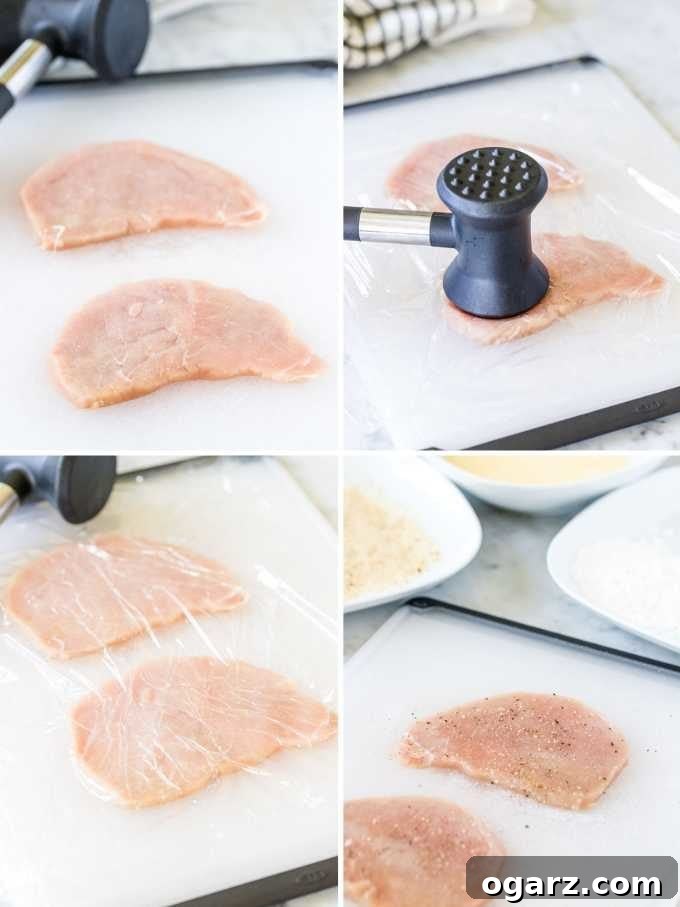
- Pound the Meat: Place each piece of meat between two sheets of cling film or parchment paper. Using a meat pounder, tenderizer, or even a small, heavy pan (flat side down!), pound the meat as thinly as possible – aiming for about 0.2 inches (0.5 cm) – without tearing any holes. Consistency is key here for even cooking.
- Season Generously: Lightly season both sides of the pounded meat with salt and freshly ground black pepper.
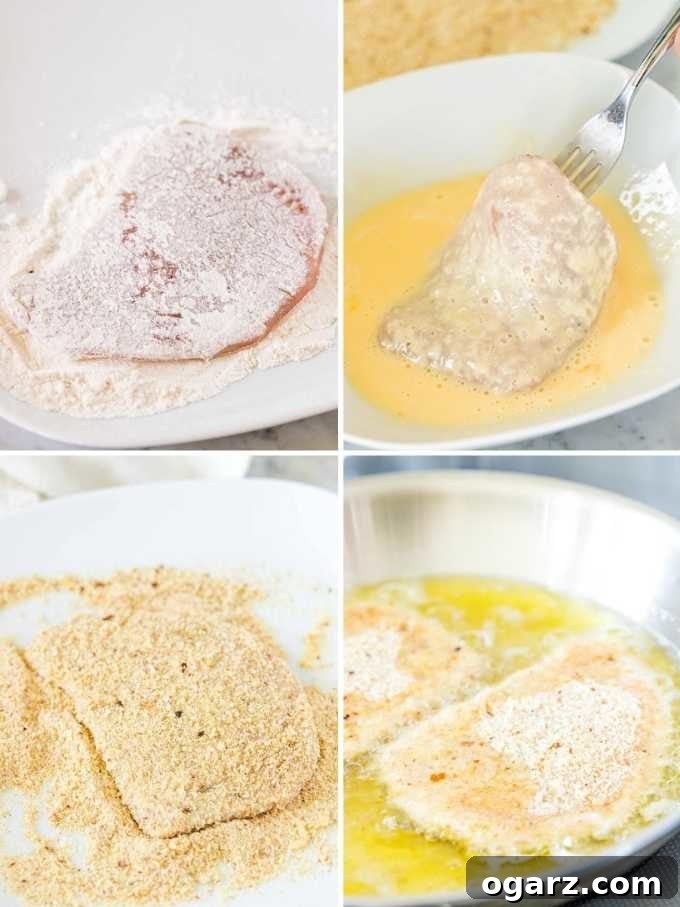
- Dredge in Flour: Lightly coat each schnitzel in all-purpose flour, ensuring an even layer. Shake off any excess. This step helps the egg wash adhere better.
- Dip in Egg Mixture: Whisk eggs with a splash of cream or milk in a shallow bowl. Dip the flour-coated schnitzel into the egg mixture, ensuring it’s fully coated. Let any excess drip off.
- Coat in Breadcrumbs: Transfer the egg-coated schnitzel to a plate of dried white breadcrumbs. Gently turn and pat the schnitzel into the breadcrumbs until it’s completely and evenly covered. Crucially, do not press the breadcrumbs firmly into the meat! This gentle coating is essential for achieving those signature air bubbles and a light, crispy texture during frying.
- Immediate Frying: Once breaded, proceed to fry the schnitzels immediately. Do not let them sit, as this can make the breading soggy.
- Enjoy! Fry until golden and crispy, then serve and savor your homemade masterpiece.
Pro Tip for Pounding: Always use the flat side of your meat pounder. The raised, textured side is designed to break down tough fibers, which can make your tender Schnitzel dry. The goal is to flatten, not tenderize.
The Art of Frying Schnitzel: Achieving Golden Crispness
The perfect Schnitzel isn’t deep-fried; it’s shallow-fried. This means the cutlets “swim” in about a finger’s depth (approximately 0.5 to 1.5 cm) of hot fat, rather than being fully submerged. This method ensures even cooking and promotes the development of that characteristic bubbly, golden crust.
Traditional Fat of Choice: Clarified Butter (Butterschmalz)
Traditionally, Schnitzels are fried in clarified butter, known as Butterschmalz in German. Clarified butter is butter with the milk solids and water removed, leaving behind pure butterfat. This gives you the incredible, rich flavor of butter coupled with a significantly higher smoke point, preventing it from burning at the necessary frying temperatures. Regular butter, with its low smoke point, will burn easily and impart an unpleasant taste, so it’s not suitable for frying Schnitzel on its own.
If clarified butter isn’t readily available, a neutral-flavored vegetable oil with a high smoke point (like canola, grapeseed, or sunflower oil) can be used. For an added layer of flavor reminiscent of traditional preparation, incorporate a tablespoon or two of regular butter into the oil once it’s hot. The butter will foam initially, but this will subside as its water content evaporates.
Key Frying Guidelines:
- Maintain Proper Fat Depth: You need about 1/2 inch (approximately 1.5 cm) of fat in the pan. This allows the schnitzel to “swim,” ensuring it cooks evenly and the breading has space to puff up and become crispy.
- Control the Temperature: The fat’s temperature is critical. The ideal range is 320-340°F (160-170°C). If the fat is too hot, the breadcrumbs will burn before the meat is cooked through. If it’s too cool, the schnitzel will absorb too much oil and become greasy instead of crispy. You can test the temperature by dropping a small breadcrumb into the pan; it should sizzle immediately and turn golden quickly.
- Avoid Overcrowding: Fry Schnitzels in batches. Overcrowding the pan will significantly drop the fat’s temperature, leading to greasy, less crispy results. Give each schnitzel ample space to cook properly.
- Turn Only Once: For the best results and to maintain the integrity of the breading, turn the Schnitzel only once during frying. Cook for 2-4 minutes per side, depending on thickness, until deeply golden brown and cooked through.
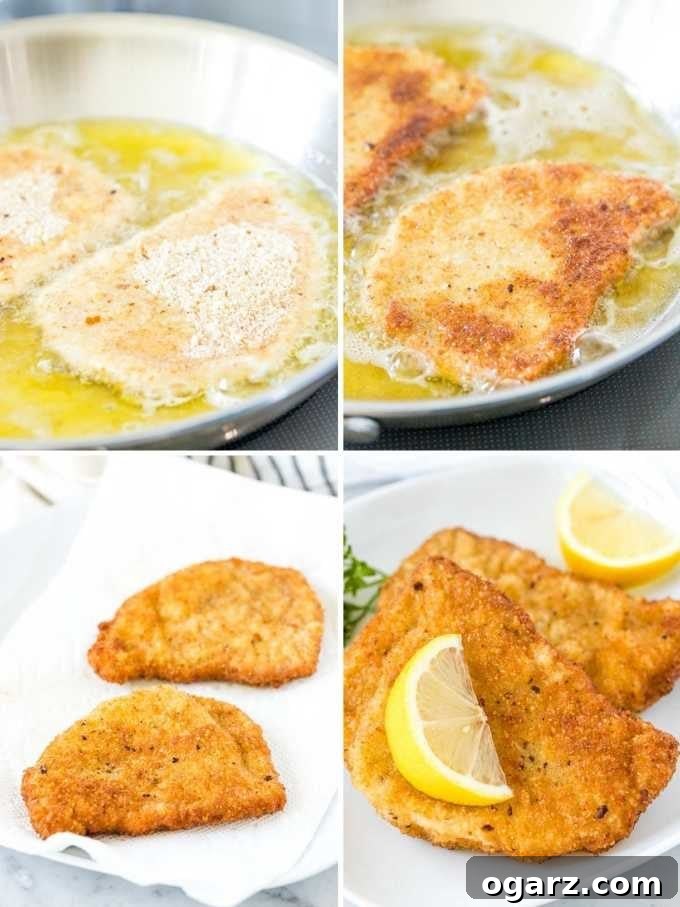
What to Serve with Pork Schnitzel: Perfect Pairings
The beauty of Schnitzel lies not only in its delicious simplicity but also in its versatility regarding side dishes. A squeeze of fresh lemon juice over the hot Schnitzel is non-negotiable – its bright acidity cuts through the richness of the fried meat, enhancing every bite. Ketchup is a common, though not strictly traditional, accompaniment, especially popular with children.
For truly authentic pairings, consider these traditional and complementary sides:
Classic Starchy Sides:
- Fries (Pommes Frites): A universally loved choice, crispy golden fries are a perfect textural and flavor contrast.
- Authentic German Potato Salad (Kartoffelsalat): Often served warm and dressed with a tangy vinegar-based dressing, this side is a hallmark of German comfort food.
- German Spaetzle: These soft egg noodles are a wonderful alternative to potatoes, especially when tossed in butter.
- Boiled Potatoes or Roasted Potatoes: Simple yet satisfying, providing a hearty base.
- Tater Tots: A fun, crispy option that appeals to all ages.
Fresh Vegetable Sides:
- Green Salad: A light, refreshing green salad with a simple vinaigrette provides a welcome counterpoint to the fried Schnitzel.
- German Cucumber Salad (Gurkensalat): Thinly sliced cucumbers in a creamy dill dressing or a light vinegar dressing offer a cool, tangy crunch.
- Coleslaw: A creamy or vinegar-based coleslaw adds a refreshing element.
- Steamed Green Beans or Asparagus: Simple, seasonal vegetables are always a good addition.
Sauces and Gravies:
While Schnitzel is often enjoyed plain with just lemon, it’s also delicious with various sauces. One of the most famous variations is Jägerschnitzel, which is Schnitzel served with a rich, savory mushroom gravy. Other options include a creamy paprika sauce or a simple onion gravy.
Handling Leftovers: Storage and Creative Ideas
While Schnitzel is undeniably best enjoyed fresh from the pan, leftovers can still be delicious with proper storage and reheating. Store any leftover schnitzels in an airtight container in the refrigerator for up to 2-3 days. The breading may lose some of its crispness, but the flavor remains. To regain some crispiness, reheat in a toaster oven or air fryer until warmed through.
One of my favorite ways to enjoy cold leftover Schnitzel is to make a delicious Schnitzel sandwich. Layer it on fresh bread with lettuce, tomato, and a dollop of mayonnaise or mustard for a delightful lunch.
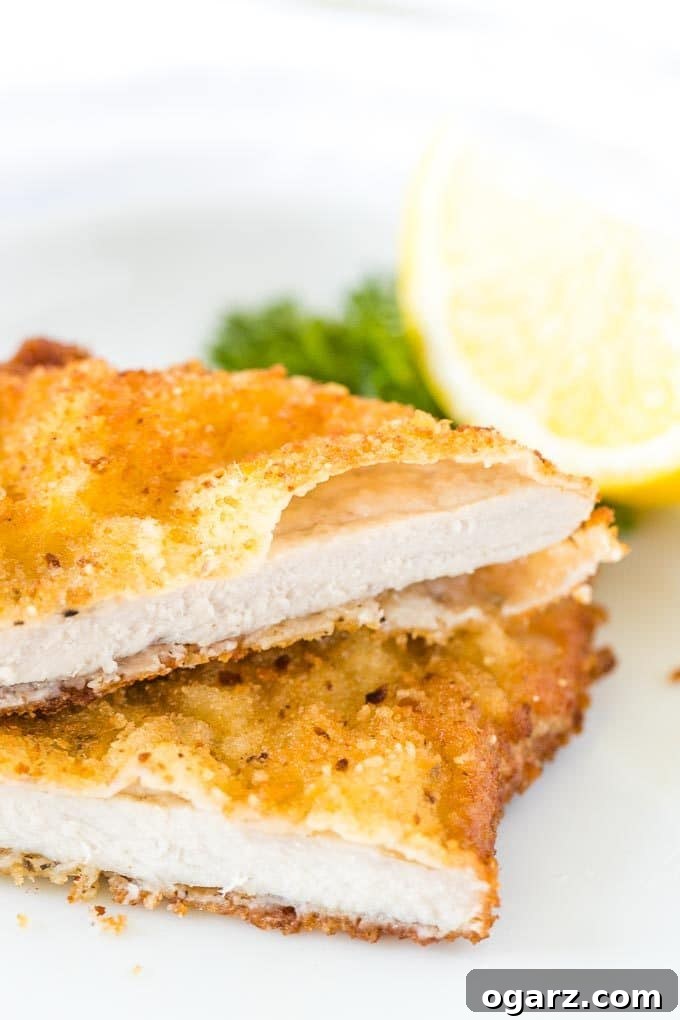
Essential Tips for Making the BEST Schnitzel Every Time
- Pound to Perfection: The thinner the meat, the better the Schnitzel! Aim for a uniform thickness of about 0.2 inches (0.5 cm). This ensures quick, even cooking and maximum tenderness.
- Don’t Press the Breading: When coating in breadcrumbs, resist the urge to press them firmly onto the meat. A light, gentle coating allows the breading to puff up and create those coveted air bubbles during frying, resulting in a lighter, crisper texture.
- Fry Immediately: Breaded Schnitzels should be fried right away. Letting them sit can cause the moisture from the meat to seep into the breading, making it soggy and preventing it from becoming truly crispy.
- Generous Fat is Key: Ensure you use enough fat or oil in the pan – about 0.5 to 0.6 inches (1.5 cm) deep. The schnitzel should “swim” in the fat, not just lie flat. This promotes even cooking and prevents the breading from sticking or burning in spots.
- Clarified Butter for Superior Flavor: While neutral vegetable oil can be used, clarified butter (Butterschmalz) provides an unparalleled depth of flavor. If using vegetable oil, adding 1-2 tablespoons of regular butter to the hot oil will infuse a lovely buttery taste without lowering the smoke point too much.
- Verify Fat Temperature: Always ensure the fat is hot before adding the Schnitzel. A simple test: drop a small breadcrumb into the pan; it should immediately sizzle vigorously and turn golden brown. For precision, aim for 320-340°F (160-170°C) with a thermometer.
- Avoid Overcrowding: Cook Schnitzels in batches. Adding too many to the pan at once will drastically lower the oil temperature, leading to greasy, poorly browned Schnitzel.
- Turn Only Once: Minimize handling the Schnitzel in the pan. Turning it only once ensures a beautifully golden crust on both sides and prevents the breading from falling off.
Tools That Will Elevate Your Schnitzel Making:
Having the right kitchen tools can make a significant difference in the ease and success of your Schnitzel preparation:
- Meat Pounder: An essential tool for achieving the perfectly thin and even cutlets required for authentic Schnitzel.
- High-Quality Frying Pan: A large, heavy-bottomed frying pan or skillet ensures even heat distribution, which is crucial for consistent frying results.
Classic German Schnitzel Recipe
Julia Foerster
20 minutes
10 minutes
30 minutes
4 servings
Ingredients
- 4 boneless pork chops (or veal/chicken cutlets), or more if small
- Salt, to season
- Pepper, to season
- 4 Tbsp all-purpose flour
- 1 cup dried white breadcrumbs
- 2 large eggs
- 2 Tbsp cream or milk
- Clarified butter, or vegetable oil (plus 2 Tbsp regular butter) for frying
- 1 lemon, cut into wedges for serving
Instructions
-
Place each pork chop (or chosen meat cut) on a cutting board. Cover with a large piece of cling film or parchment paper. Using a meat pounder or rolling pin, pound the meat evenly to about 0.2 inches (0.5 cm) thickness, being careful not to create any holes. Season both sides generously with salt and pepper. Repeat for all cutlets.
-
Set up your breading stations: In a shallow bowl, lightly beat the eggs with the cream or milk. Place the flour on one plate and the breadcrumbs on another separate plate.
-
Dredge each schnitzel: First, dip it in the flour on both sides, shaking off any excess. Next, drench it through the egg mixture, allowing excess to drip off. Finally, carefully turn it in the breadcrumbs until it’s evenly covered. Remember not to press the breadcrumbs firmly onto the schnitzel; a light coating is key for crispiness and air bubbles.
-
Prepare for frying: In a large frying pan, heat approximately 1/4 to 1/2 inch (about 0.5 to 1.5 cm) of clarified butter or vegetable oil over medium heat. If using vegetable oil, add 2 tablespoons of regular butter once the oil is hot; it will foam slightly. The fat is ready when a dropped breadcrumb sizzles vigorously and quickly browns. The ideal temperature is 320-340°F (160-170°C).
-
Fry the Schnitzel: Carefully place the breaded cutlets into the hot fat, ensuring not to overcrowd the pan (you may need to cook in batches). Cook for 2-4 minutes per side, depending on thickness, until deeply golden brown and cooked through. Turn only once to ensure maximum crispiness.
-
Once cooked, transfer the schnitzels to a plate lined with kitchen paper to quickly blot any excess oil. Serve immediately, garnished with a fresh lemon slice for squeezing.
Nutrition
Calories:
407
kcal
|
Carbohydrates:
28
g
|
Protein:
36
g
|
Fat:
16
g
|
Saturated Fat:
6
g
|
Cholesterol:
182
mg
|
Sodium:
297
mg
|
Potassium:
620
mg
|
Fiber:
2
g
|
Sugar:
2
g
|
Vitamin A:
229
IU
|
Vitamin C:
14
mg
|
Calcium:
83
mg
|
Iron:
3
mg
Enjoyed this recipe? Share your thoughts!
Leave a comment and rate the recipe below to let us know how your Schnitzel turned out!