
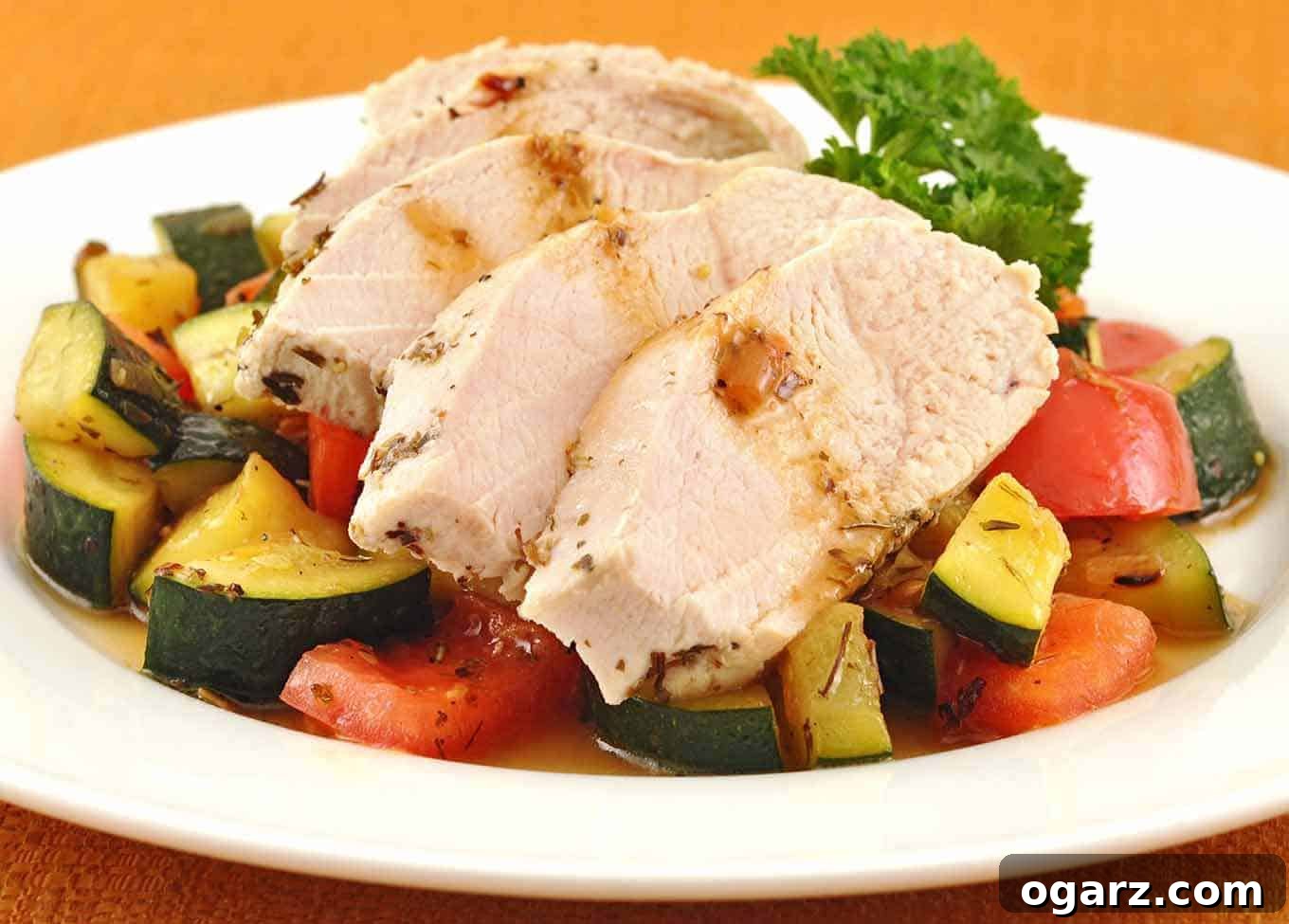
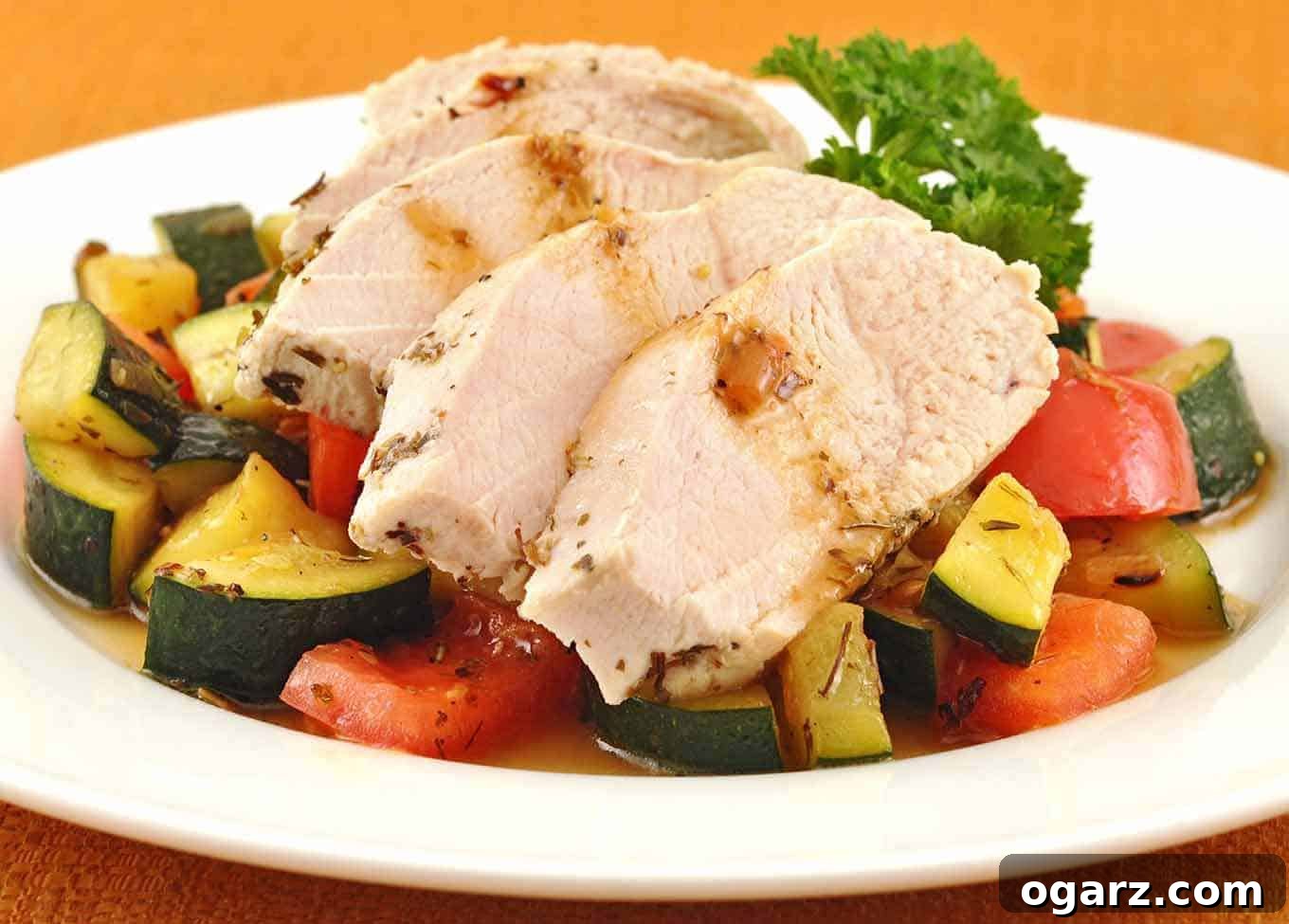
Discover the epitome of tender, juicy chicken with this exquisite butter-poached chicken breast recipe, enhanced with a fragrant blend of herbes de Provence and complemented by fresh, vibrant vegetables. Inspired by Julia Child’s renowned “Chicken Breasts Poached in Butter,” this method elevates a simple ingredient into a sophisticated, yet remarkably easy one-dish meal perfect for any weeknight or special occasion. Forget dry, overcooked chicken; this technique promises a consistently moist and flavorful result that will impress even the most discerning palates.
This recipe takes the classic poaching method a step further by incorporating fresh zucchini and ripe tomatoes, transforming it into a complete and balanced plate. The gentle cooking process ensures that the chicken remains incredibly succulent, while the aromatic herbs, shallots, and white wine infuse it with deep, complex flavors. The addition of sautéed vegetables creates a beautiful medley of colors and textures, making each bite a delightful experience. It’s a testament to simple ingredients coming together to create something truly extraordinary.
The Art of Butter Poaching: Achieving Unrivaled Tenderness
At the heart of this dish lies the elegant technique of butter poaching, a culinary secret championed by legendary chef Julia Child. Unlike traditional frying or baking, poaching chicken breasts in butter creates an environment where the meat gently cooks, preventing it from drying out while infusing it with rich, nuanced flavor. The low and slow heat allows the chicken to reach perfect doneness without sacrificing moisture, resulting in an unparalleled tenderness that makes every mouthful a delight. This method is especially ideal for boneless, skinless chicken breasts, which are prone to becoming dry when cooked conventionally.
The butter acts as a flavorful cooking medium, carrying the essence of the herbes de Provence and shallots directly into the chicken. As the chicken cooks, it absorbs these aromatic notes, developing a depth of flavor that is both subtle and satisfying. This process is not just about cooking; it’s about nurturing the ingredients to bring out their best. The result is chicken that practically melts in your mouth, enveloped in a delicate, savory sauce that perfectly complements the accompanying vegetables. It’s a technique that sounds fancy but is surprisingly straightforward, yielding consistently spectacular results.
A Complete Meal: Enhancing with Zucchini and Tomatoes
While Julia Child’s original recipe focuses solely on the exquisite chicken, we’ve expanded upon it to create a wholesome, one-dish meal. The addition of fresh zucchini and ripe plum tomatoes not only introduces a burst of color and nutrients but also rounds out the meal beautifully. These vegetables are sautéed in the flavorful pan juices left behind by the chicken, absorbing all the wonderful aromas of the butter, shallots, herbs, and wine. This means no flavor is wasted, and every component of the dish contributes to the overall deliciousness.
Zucchini, with its mild flavor and tender texture, provides a perfect counterpoint to the rich chicken. When sautéed, it develops a slight sweetness and retains a pleasant bite. Plum tomatoes, known for their firm flesh and intense flavor, break down slightly during cooking, releasing their natural juices and creating a light, vibrant sauce that mingles with the pan drippings. Together, these vegetables transform the butter-poached chicken from a single component into a harmonious medley, making it a truly satisfying and complete meal that’s both elegant and incredibly convenient.
Key Ingredients for a Memorable Dish
Crafting this remarkable dish relies on a few high-quality ingredients that each play a crucial role in its overall flavor profile and texture. Starting with the star of the show, four boneless, skinless chicken breast halves, weighing about 1-1/4 lbs, are essential. Opt for organic or free-range chicken if possible for the best flavor and texture. Ensure they are of similar thickness for even cooking; if they vary, a light pounding to equalize their size can be beneficial.
Next, four tablespoons of good quality butter are non-negotiable. Butter is not merely a cooking fat here; it’s an integral flavor enhancer and tenderizing agent. Two medium shallots, very finely chopped, provide a milder, sweeter, and more delicate onion flavor than regular onions, contributing aromatic depth without overpowering the dish. Two teaspoons of herbes de Provence, or more to taste, introduce a quintessential Mediterranean essence. This classic French blend typically includes thyme, rosemary, savory, marjoram, and sometimes lavender, imparting a wonderfully fragrant and earthy character. If you don’t have this specific blend, a mix of dried thyme and rosemary would be a good substitute, though the complexity will vary.
For a touch of acidity and further depth, two tablespoons of dry white wine are used. A Sauvignon Blanc or Pinot Grigio works beautifully, deglazing the pan and adding a subtle, bright note. If you prefer to cook without alcohol, a good quality chicken broth can be substituted. Finally, the fresh elements of two medium zucchini, quartered lengthwise and thickly sliced, along with three plum tomatoes, similarly quartered lengthwise and thickly sliced, bring freshness, color, and additional texture. Always season generously with salt and freshly ground black pepper throughout the cooking process to layer the flavors effectively and ensure every component is perfectly seasoned.
Step-by-Step Culinary Journey: Crafting Your Dish
Embark on your culinary adventure with these detailed instructions, designed to guide you to perfection:
Preparation is Key
- Begin by preheating your oven to 400°F (200°C). This ensures your oven is ready to go once the chicken is seared, minimizing cooking time variations.
- Generously season both sides of your boneless, skinless chicken breast halves with salt and freshly ground black pepper. Don’t be shy; proper seasoning at this stage is crucial for flavor development. If your chicken breasts are uneven in thickness, you might gently pound the thicker parts to create a more uniform profile, ensuring even cooking and preventing thinner sections from overcooking while thicker parts remain underdone.
Building the Flavor Base
- In an ovenproof skillet (cast iron or heavy-bottomed stainless steel works best), melt four tablespoons of butter over medium heat. Allow the butter to fully melt and just begin to foam, but do not let it brown excessively.
- Add the very finely chopped shallots to the melted butter. Sauté them gently, stirring frequently, until they become translucent and softened, which typically takes about 2 minutes. Avoid browning them, as this can lead to a bitter flavor.
- Stir in the two teaspoons of herbes de Provence, allowing the heat to release their aromatic oils for about 30 seconds. Then, pour in the two tablespoons of dry white wine. Let it simmer and reduce for about 1 minute, allowing the alcohol to cook off and the flavors to concentrate. This step deglazes the pan, lifting any flavorful browned bits from the bottom and incorporating them into the sauce.
Poaching the Chicken to Perfection
- Carefully place the seasoned chicken breasts into the skillet with the shallot-herb-wine mixture. Cook the chicken, turning it frequently to ensure even exposure to the butter and aromatic liquids, for approximately 3 minutes. This quick sear helps to lock in moisture and begin building a delicious crust.
- Cover the chicken completely with a piece of wax paper, pressing it directly onto the chicken’s surface. This helps create a steamy micro-environment, further preventing the chicken from drying out. Then, cover the entire pan tightly with a lid or aluminum foil, ensuring no steam escapes.
- Transfer the covered skillet to your preheated oven. Bake for 15 to 20 minutes, or until the chicken is no longer pink in the center and cooked through. Cooking time will vary significantly based on the thickness of your chicken breasts. To achieve perfectly cooked, tender chicken and avoid overcooking, use an instant-read thermometer. The internal temperature should register between 160°F and 165°F (71-74°C) at its thickest part. Once removed from the oven, the chicken will continue to cook slightly, reaching the ideal 165°F.
Finishing the Vegetables and Assembling the Dish
- Once cooked, transfer the chicken breasts to a clean plate and cover them loosely with foil to keep warm and allow them to rest. This resting period is crucial as it allows the juices to redistribute throughout the meat, ensuring maximum tenderness and flavor.
- Return the skillet, with all the flavorful pan juices, to the stove over medium-high heat. Add the thickly sliced zucchini to the pan. Season the zucchini with a pinch of salt and pepper, and sauté, stirring occasionally, until it becomes tender-crisp, typically 4 to 6 minutes. You want the zucchini to retain some bite but be cooked through.
- Finally, add the thickly sliced plum tomatoes to the pan. Season them again lightly with salt and pepper. Cook for an additional 2 minutes, or until the tomatoes are slightly softened but still hold their shape. The goal is to warm them through and allow their juices to meld with the existing pan sauce without turning them mushy.
Serving Your Masterpiece
- To serve this delightful one-dish meal, create a beautiful bed of the sautéed zucchini and tomatoes on each plate. Top the vegetables with a perfectly butter-poached chicken breast. Spoon a little of the rich, aromatic pan juices over the top of the chicken and vegetables to tie all the flavors together. Garnish with a sprinkle of fresh chopped parsley if desired for an extra touch of color and freshness.
Serving Suggestions and Perfect Pairings
This Butter-Poached Chicken with Vegetables is a complete meal in itself, but it truly shines when accompanied by the right sides. For a classic French-inspired experience, serve it with warm, crusty French bread. The bread is perfect for soaking up every last drop of the delectable pan juices, ensuring no flavor goes to waste. A side of creamy mashed potatoes or fluffy white rice would also be excellent choices, providing a comforting base that absorbs the savory sauce beautifully.
For a lighter option, consider a simple quinoa or couscous, which adds a nutty texture and complements the Mediterranean flavors. A fresh, crisp green salad with a light vinaigrette can provide a refreshing contrast, cutting through the richness of the butter. When it comes to wine pairings, a crisp, dry white wine like a Sauvignon Blanc or an unoaked Chardonnay would be an ideal match, echoing the wine used in the recipe and enhancing the overall dining experience. A light-bodied Pinot Noir could also work for red wine enthusiasts. Don’t forget a simple garnish of fresh parsley or chives to add a final flourish of color and herbaceous freshness.
Variations to Inspire Your Culinary Creativity
While this recipe is perfect as is, it’s also wonderfully adaptable to your tastes and what you have on hand. Here are a few ideas to spark your creativity:
- Vegetable Swaps: Feel free to experiment with other seasonal vegetables. Sautéed asparagus, bell peppers (which would add a lovely sweetness and color, as seen in the accompanying image), spinach, mushrooms, or green beans would all work beautifully. Add them to the pan with the zucchini, adjusting cooking times as needed.
- Herb Alternatives: If you don’t have herbes de Provence, or simply want to try a different flavor profile, consider fresh herbs like thyme, rosemary, or a blend of Italian herbs. A hint of fresh dill or tarragon could also add a unique twist.
- Citrus Brightness: A squeeze of fresh lemon juice over the finished dish can add a bright, zesty note that enhances all the flavors.
- Creamy Indulgence: For a richer sauce, whisk in a tablespoon or two of heavy cream or crème fraîche into the pan juices after the vegetables are cooked. Let it simmer gently for a minute to thicken slightly.
- Spicy Kick: If you enjoy a bit of heat, add a pinch of red pepper flakes with the shallots or a dash of hot sauce to the pan juices at the end.
- Different Proteins: While this recipe is designed for chicken breasts, the poaching method could be adapted for boneless pork tenderloin medallions or even firm white fish fillets, though cooking times would need to be significantly adjusted.
Frequently Asked Questions
Can I use bone-in chicken breasts for this recipe?
While boneless, skinless chicken breasts are recommended for their quick cooking time and ease of preparation, you can use bone-in, skin-on chicken breasts. However, you will need to increase the baking time significantly (likely to 30-40 minutes) and ensure the internal temperature reaches 165°F (74°C). The skin will also absorb much of the butter, and the fat content will be higher.
Can I prepare parts of this dish ahead of time?
The dish is best enjoyed fresh to appreciate the tender chicken and vibrant vegetables. However, you can chop the shallots, zucchini, and tomatoes ahead of time. The cooked chicken and vegetables can be stored separately in an airtight container in the refrigerator for up to 2-3 days, though the vegetables may lose some of their crispness upon reheating.
What type of dry white wine should I use?
A good quality dry white wine that you would enjoy drinking is best. Sauvignon Blanc, Pinot Grigio, or an unoaked Chardonnay are excellent choices as they provide acidity and subtle fruit notes without being overly sweet. Avoid cooking wines, which often contain added salt and preservatives.
What if I don’t want to use wine?
If you prefer to cook without alcohol, you can substitute the dry white wine with an equal amount of good quality chicken broth. The flavor profile will be slightly different, but it will still contribute moisture and a savory depth to the dish.
How can I ensure my chicken breasts are perfectly tender?
The key to tender chicken breasts is to avoid overcooking them. Using an instant-read thermometer is your best friend. Cook until the internal temperature reaches 160-165°F (71-74°C), then remove them from the heat and let them rest. The residual heat will continue to cook them slightly, bringing them to a safe and juicy 165°F. Also, ensure your chicken breasts are of a relatively uniform thickness for even cooking.
More popular chicken recipes:
- Chicken Breasts in Orange Pan Sauce
- Spice Breaded Chicken Tenders
- Sweet and Sour Chicken with Pineapple
- Instant Pot Chicken Paprikas
Butter-Poached Chicken with Vegetables
By Lynne Webb
Butter-poached chicken made with herbes de Provence and white wine, then combined with zucchini and tomatoes makes a delicious and elegant one-dish meal.
Cook: 35 mins
Total: 45 mins
Servings: 4 servings
Ingredients
- 4 boneless, skinless chicken breast halves (about 1-1/4 lbs)
- 4 tablespoons butter
- 2 medium shallots, very finely chopped
- 2 teaspoons herbes de Provence, or more to taste
- 2 tablespoons dry white wine
- 2 medium zucchini, quartered lengthwise and thickly sliced
- 3 plum tomatoes, quartered lengthwise and thickly sliced
- Salt and freshly ground black pepper
Instructions
- Preheat the oven to 400°F (200°C). Season both sides of the chicken breasts generously with salt and pepper.
- Heat the butter in an ovenproof skillet over medium heat. Add the shallots and cook until softened, about 2 minutes. Stir in the herbes de Provence, then add the wine and cook for 1 minute more, allowing it to reduce slightly.
- Add the seasoned chicken breasts to the skillet and cook, turning frequently, for 3 minutes to lightly sear them.
- Cover the chicken with a piece of wax paper, then cover the pan tightly with a lid or aluminum foil. Bake for 15 to 20 minutes, or until the chicken is no longer pink in the center and reaches an internal temperature of 160-165°F (71-74°C) with an instant-read thermometer. Cooking time will vary based on the thickness of your chicken.
- Transfer the cooked chicken to a plate and cover loosely to keep warm while it rests.
- Return the skillet with the pan juices to the stove over medium-high heat. Add the zucchini, season with salt and pepper, and sauté until tender-crisp, about 4 to 6 minutes.
- Add the tomatoes, season again with salt and pepper, and cook until they are slightly softened, about 2 minutes longer.
- To serve, arrange a bed of the sautéed vegetables on each plate, top with a chicken breast, and spoon a little of the delicious pan juices over the top.
Conclusion
This Butter-Poached Chicken with Vegetables offers an elegant and effortlessly delicious solution for any meal. By embracing Julia Child’s timeless technique and enhancing it with fresh, vibrant produce, you create a dish that is not only incredibly tender and flavorful but also beautifully presented. It’s a testament to how simple, quality ingredients, prepared with care, can yield extraordinary results. Whether for a quick weeknight dinner or a sophisticated gathering, this recipe promises to deliver a truly memorable culinary experience, leaving you with perfectly moist chicken and a symphony of Mediterranean-inspired flavors. Give it a try and transform your perception of chicken breasts forever.