
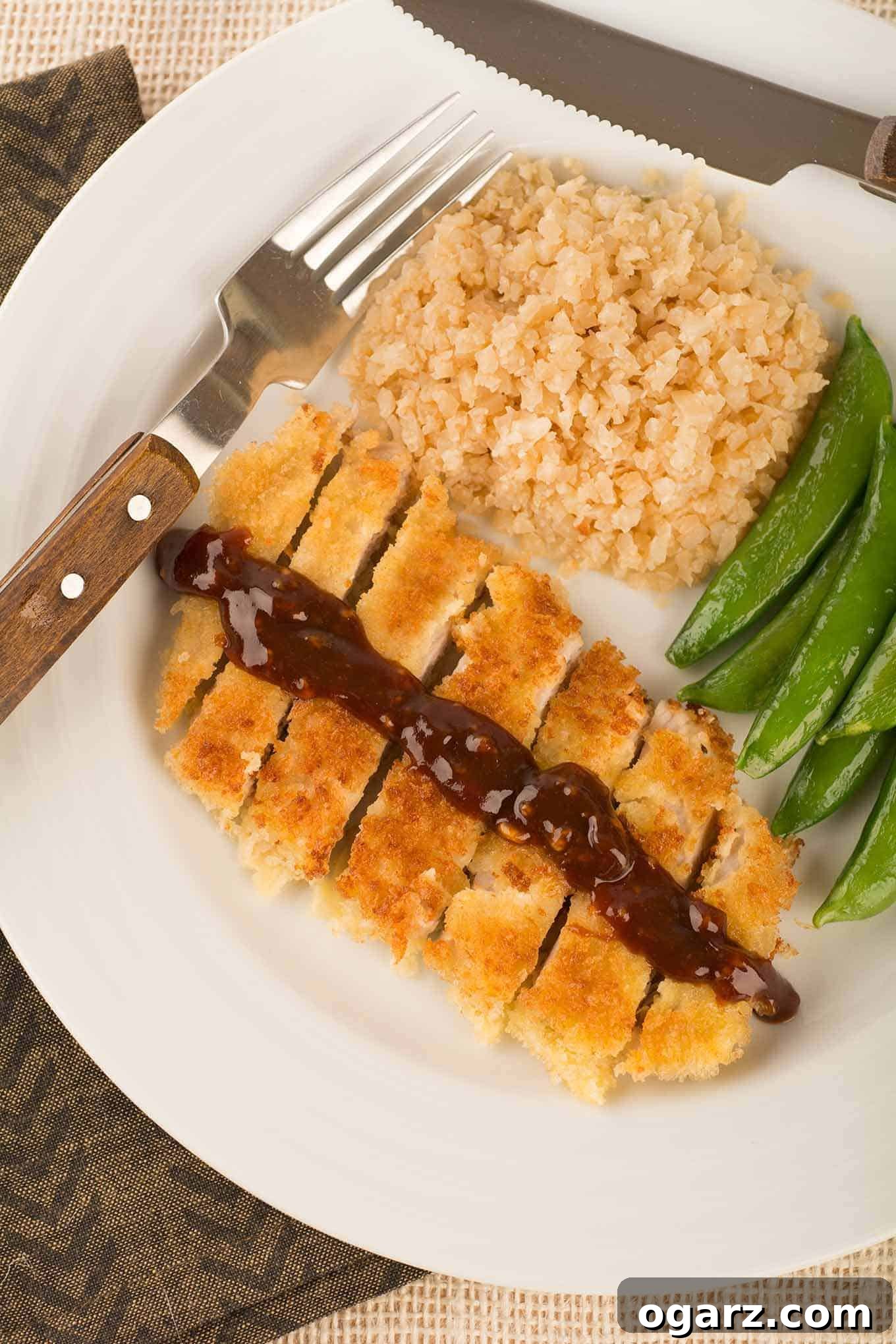
Crispy Tonkatsu: Your Guide to Perfect Japanese Pork Cutlets at Home
Embark on a culinary journey to Japan right from your kitchen with this incredible Tonkatsu recipe! Tonkatsu, a beloved Japanese classic, features tender, thin-sliced boneless pork cutlets coated in crisp panko breadcrumbs and shallow-fried to golden perfection. Served with its distinctive sweet and tangy katsu sauce, this dish is a symphony of textures and flavors that will delight your palate.
Often perceived as a complex Japanese dish, homemade Tonkatsu is surprisingly simple to prepare, making it an ideal choice for a quick yet impressive weeknight meal. In just under 30 minutes, you can have a restaurant-quality meal on your table, perfect for satisfying your cravings for authentic Japanese comfort food. Forget long hours in the kitchen; this recipe focuses on efficiency without compromising on taste or crispiness.
What is Tonkatsu? A Glimpse into Japanese Culinary Tradition
Tonkatsu, literally meaning “pork cutlet” (ton = pork, katsu = cutlet, derived from French “côtelette”), is a type of fried pork dish that originated in Japan in the late 19th century. It quickly became a staple in Japanese cuisine, beloved for its satisfying crunch and juicy interior. It’s often compared to European schnitzel due to its breaded and fried nature, but the use of panko breadcrumbs and the unique katsu sauce give it a distinctly Japanese character.
More than just a dish, Tonkatsu represents comfort and tradition. It’s commonly found in teishoku (set meals) at restaurants across Japan, served with shredded cabbage, miso soup, and a bowl of rice. Beyond its classic presentation, Tonkatsu is versatile, appearing in dishes like katsu-don (Tonkatsu over rice with egg), katsu curry, or even katsu sandwiches. Its enduring popularity is a testament to its delicious simplicity and universal appeal.
Why Make Tonkatsu at Home?
While many excellent Japanese restaurants serve Tonkatsu, preparing it yourself offers several distinct advantages:
- Freshness You Can Taste: Enjoy the freshest ingredients and the immediate satisfaction of a perfectly crispy cutlet straight from the pan.
- Customization is Key: Adjust seasonings, spice levels, and even the type of pork to suit your family’s preferences. Control the quality of oil and other ingredients for a healthier version.
- Cost-Effective Dining: Eating out can be expensive, especially for specialty dishes. Making Tonkatsu at home is a budget-friendly way to enjoy gourmet flavors.
- Quick & Easy: As this recipe demonstrates, Tonkatsu can be on your table in less than half an hour, making it faster than takeout!
- Master a Classic: Learning to prepare this iconic dish adds a valuable skill to your culinary repertoire and allows you to impress guests with your Japanese cooking prowess.
Tonkatsu (Crispy Japanese Pork Cutlet)
Lynne Webb
Tonkatsu, or Japanese pork cutlet, is a fast, easy dish of panko-coated pork cutlets, shallow-fried and served with a distinctive sweet and tangy sauce. Get ready for an irresistible crunch and juicy pork in every bite!
15 mins
10 mins
25 mins
4 servings
Print Recipe
Ingredients
- 4 to 6 thin-sliced boneless pork cutlets, 1 to 1-1/4 lbs
- 1 large egg
- 2 tablespoons milk
- 1 cup panko crumbs
- Salt and freshly ground black pepper
- Onion powder
- Vegetable oil (for frying)
For the Katsu Sauce:
- 1/4 cup ketchup
- 2 tablespoons hoisin sauce
- 1 tablespoon low-sodium soy sauce, or tamari
- 1-1/2 teaspoons lemon juice
- 1 to 2 cloves garlic, finely minced or pressed
Instructions
-
Begin by preparing the delicious katsu sauce. In a small bowl, combine the ketchup, hoisin sauce, soy sauce (or tamari), fresh lemon juice, and finely minced or pressed garlic. Whisk all ingredients together until well blended and smooth. Set this aside to allow the flavors to meld while you prepare the pork.
-
Next, prepare your dredging station. In a shallow dish or a pie plate, whisk together the large egg and milk until thoroughly combined. This mixture will act as the binder for your panko crumbs.
-
On a separate flat surface, such as a large dinner plate or baking sheet, spread out the panko crumbs. Season the panko generously with 1 teaspoon of salt, several grinds of fresh black pepper, and a pinch of onion powder. Use your fingers to combine these seasonings evenly throughout the panko.
-
Take each thin-sliced boneless pork cutlet and dip it first into the egg and milk mixture, ensuring it’s fully coated. Let any excess liquid drip off. Then, gently press the pork chop into the seasoned panko crumbs, making sure both sides are completely covered. Press firmly to ensure the panko adheres well. Set aside on a clean plate or wire rack while you coat the remaining cutlets.
-
Prepare for frying. Heat about 1/8-inch of vegetable oil in a large, heavy-bottomed frying pan or skillet over medium-high heat. The oil should be hot enough to sizzle when a small crumb of panko is dropped in, ideally around 350-375°F (175-190°C).
-
To prevent overcrowding and ensure even cooking, fry the pork chops in batches. Place half of the coated pork chops into the hot oil. Fry until they are beautifully crisp and golden brown on both sides, which typically takes about 2 to 2-1/2 minutes per side.
-
Once golden and cooked through, transfer the fried pork cutlets to a plate lined with paper towels to drain any excess oil. This helps keep them wonderfully crispy. Carefully wipe out the pan with a paper towel (use tongs or a heat-safe spatula) to remove any burnt crumbs, then repeat the frying process with the remaining pork chops.
-
To serve, slice each Tonkatsu into thick strips, making them easy to pick up with chopsticks or a fork. Arrange them on a platter and drizzle a generous amount of the prepared katsu sauce over the top. Serve immediately, passing the remaining sauce at the table for dipping.
Expert Tips for Perfect Tonkatsu
Shallow-Frying Mastery: When shallow-frying crumb-coated foods like these pork cutlets, don’t just let them sit. Gently shake the pan from time to time to splash the hot oil onto the sides of the meat. This simple trick ensures more even browning and a consistent crisp texture all around, preventing pale spots.
Tenderizing the Pork: For extra tender Tonkatsu, lightly pound the pork cutlets between two sheets of plastic wrap until they are uniformly thin, about 1/4 to 1/3 inch thick. This also helps them cook more quickly and evenly.
Seasoning the Pork Directly: Before dipping in egg, lightly season the pork cutlets directly with a pinch of salt and pepper. This adds an extra layer of flavor from the inside out.
Don’t Overcrowd the Pan: Frying in batches is crucial. Overcrowding lowers the oil temperature, leading to greasy, less crispy Tonkatsu. Patience is key for that perfect golden crust.
Resting After Frying: While not strictly necessary for such thin cuts, letting the cutlets rest for a minute or two on a wire rack (rather than directly on paper towels for too long) after frying can help maintain crispness and allow the juices to redistribute slightly.
Traditional and Modern Side Dishes for Tonkatsu
Tonkatsu is traditionally served with steamed white rice, a crisp mound of finely shredded cabbage, and sometimes a bowl of miso soup or pickled vegetables. The refreshing crunch of the cabbage provides a wonderful contrast to the rich, fried pork.
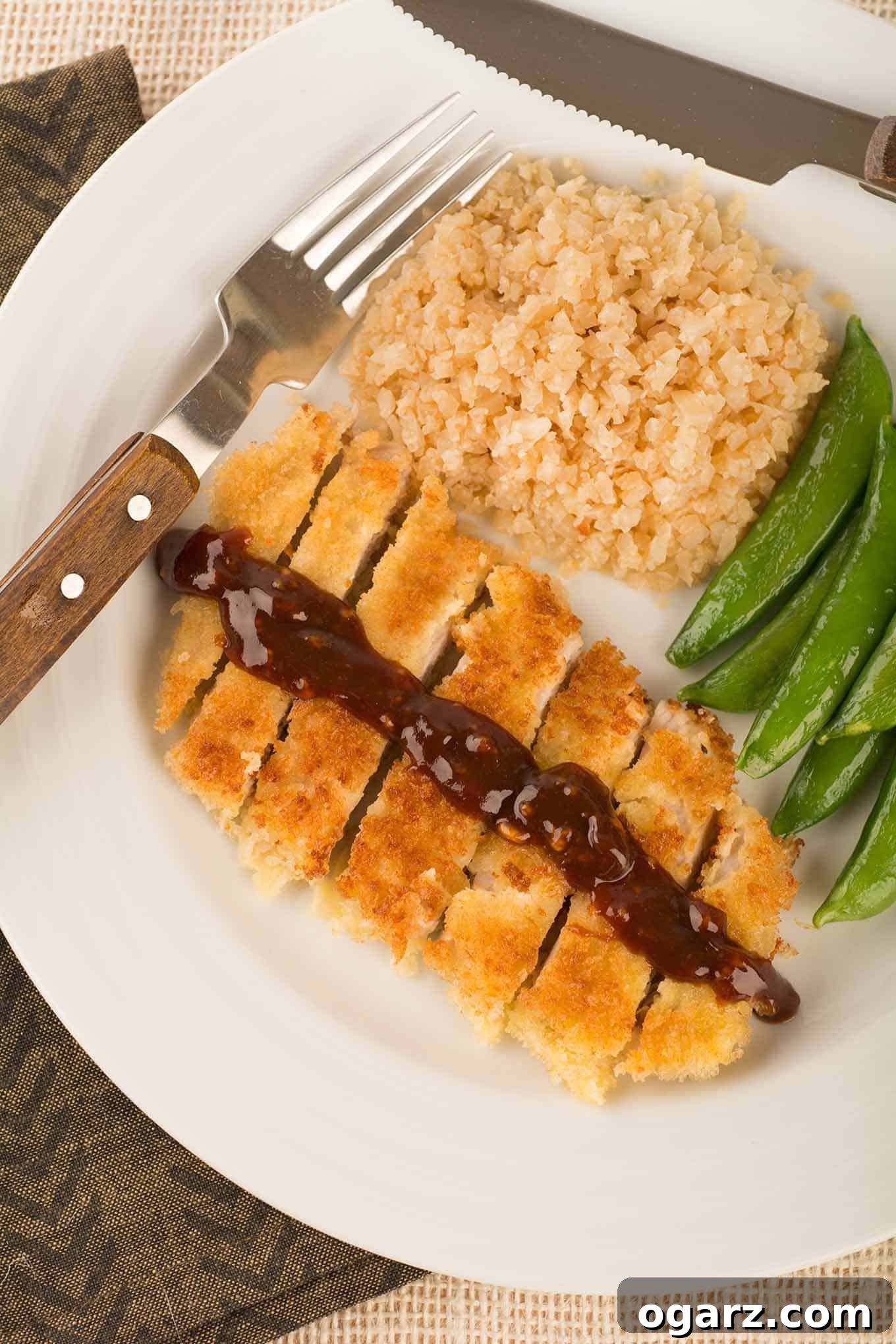
However, don’t hesitate to explore more contemporary pairings. Lately, we’ve fallen in love with serving Tonkatsu alongside sautéed snap peas and riced cauliflower. The riced cauliflower, seasoned lightly with a touch of soy sauce and sesame oil, offers a lighter, low-carb alternative to traditional rice, while the snap peas add a vibrant green and delicate sweetness. Other excellent modern side options include:
- Japanese Potato Salad: Creamy and slightly sweet, a delightful contrast.
- Edamame: A simple, nutritious, and quick addition.
- Green Salad with Ginger Dressing: Light and refreshing.
- Blanched Asparagus or Broccoli: Steamed or lightly sautéed for a healthy touch.
Variations and Customizations
While the classic Tonkatsu is a masterpiece, there’s always room to experiment:
- Chicken Katsu: Substitute pork with thin chicken breasts or thighs for a equally delicious poultry version.
- Flavorful Panko: Mix in finely grated Parmesan cheese, dried herbs (like thyme or oregano), or a dash of paprika into your panko for an added layer of flavor.
- Spicy Kick: Add a pinch of cayenne pepper or shichimi togarashi (Japanese seven-spice blend) to your panko or katsu sauce for those who enjoy a little heat.
- Baking or Air Frying: For a lighter version, Tonkatsu can be baked or air-fried. While the texture won’t be identical to shallow-frying, it can still achieve a satisfying crispness. Preheat your oven to 400°F (200°C) and bake for 15-20 minutes, flipping halfway. For an air fryer, cook at 375°F (190°C) for 12-15 minutes, flipping once.
Storing and Reheating Tonkatsu
Leftover Tonkatsu can be stored in an airtight container in the refrigerator for up to 3 days. Reheating can be tricky to retain crispness, but here are some tips:
- Oven: The best method for reheating. Preheat your oven or toaster oven to 350°F (175°C). Place the Tonkatsu on a wire rack over a baking sheet and heat for 10-15 minutes, or until warmed through and crispy again.
- Air Fryer: Reheat in an air fryer at 350°F (175°C) for 5-7 minutes, checking periodically.
- Skillet: Lightly oil a skillet and reheat over medium heat for a few minutes per side until crispy.
- Microwave: Not recommended if you want to preserve crispiness, but it will warm the pork through if texture isn’t a primary concern.
Store leftover katsu sauce separately in the refrigerator for up to a week.
Nutrition
Total Fat: 13g,
Cholesterol: 65mg,
Sodium: 756mg,
Carbohydrates: 34g,
Fiber: 2g,
Sugar: 7g,
Protein: 14g
Nutrition information is automatically calculated, so should only be used as an approximation.
Enjoyed this recipe? Share your thoughts and experiences below!
Frequently Asked Questions About Tonkatsu
What kind of pork is best for Tonkatsu?
Thin-sliced boneless pork cutlets, often labeled as “pork loin cutlets” or “center-cut pork chops,” are ideal. Look for pieces that are about 1/2-inch thick, as they cook quickly and remain tender. If your cutlets are thicker, gently pound them to an even 1/4 to 1/3-inch thickness for best results.
Can I deep-fry Tonkatsu instead of shallow-frying?
Yes, deep-frying is a common method for Tonkatsu. Heat about 2-3 inches of vegetable oil in a heavy pot to 350-375°F (175-190°C). Fry the cutlets for 3-4 minutes, flipping once, until golden brown and cooked through. Deep-frying often yields a slightly more uniform crispness, but shallow-frying is quicker and uses less oil.
What makes panko different from regular breadcrumbs?
Panko is a Japanese breadcrumb made from bread without crusts, resulting in a lighter, airier, and flakier texture compared to traditional breadcrumbs. This unique texture absorbs less oil during frying, leading to an incredibly crispier and less greasy crust, which is essential for authentic Tonkatsu.
Can I make the katsu sauce ahead of time?
Absolutely! The katsu sauce can be prepared several days in advance and stored in an airtight container in the refrigerator. In fact, making it ahead often allows the flavors to deepen and meld, resulting in an even more delicious sauce.
Is Tonkatsu traditionally served with anything else?
Beyond rice and shredded cabbage, Tonkatsu is often accompanied by Japanese mustard (karashi) for a pungent kick, and sometimes a wedge of lemon to squeeze over the pork, adding a touch of brightness. Miso soup and various pickled vegetables (tsukemono) are also common components of a Tonkatsu set meal.
Conclusion: Savor the Crunch of Homemade Tonkatsu
This Crispy Japanese Pork Cutlet, or Tonkatsu, is more than just a meal; it’s an experience. The delightful contrast between the succulent, tender pork and the impossibly crispy, golden panko crust, perfectly complemented by the sweet and tangy katsu sauce, creates a dish that is truly unforgettable. Whether you’re a seasoned chef or a home cook looking to expand your repertoire, this recipe offers a straightforward path to achieving authentic Japanese flavors in your own kitchen.
So, gather your ingredients, follow these simple steps, and get ready to impress yourself and your loved ones with a plate of homemade Tonkatsu that rivals any restaurant. It’s quick, it’s easy, and it’s utterly delicious – the perfect weeknight indulgence or a special treat for any occasion. Don’t forget to pair it with your favorite sides for a complete and satisfying Japanese meal. Enjoy!