
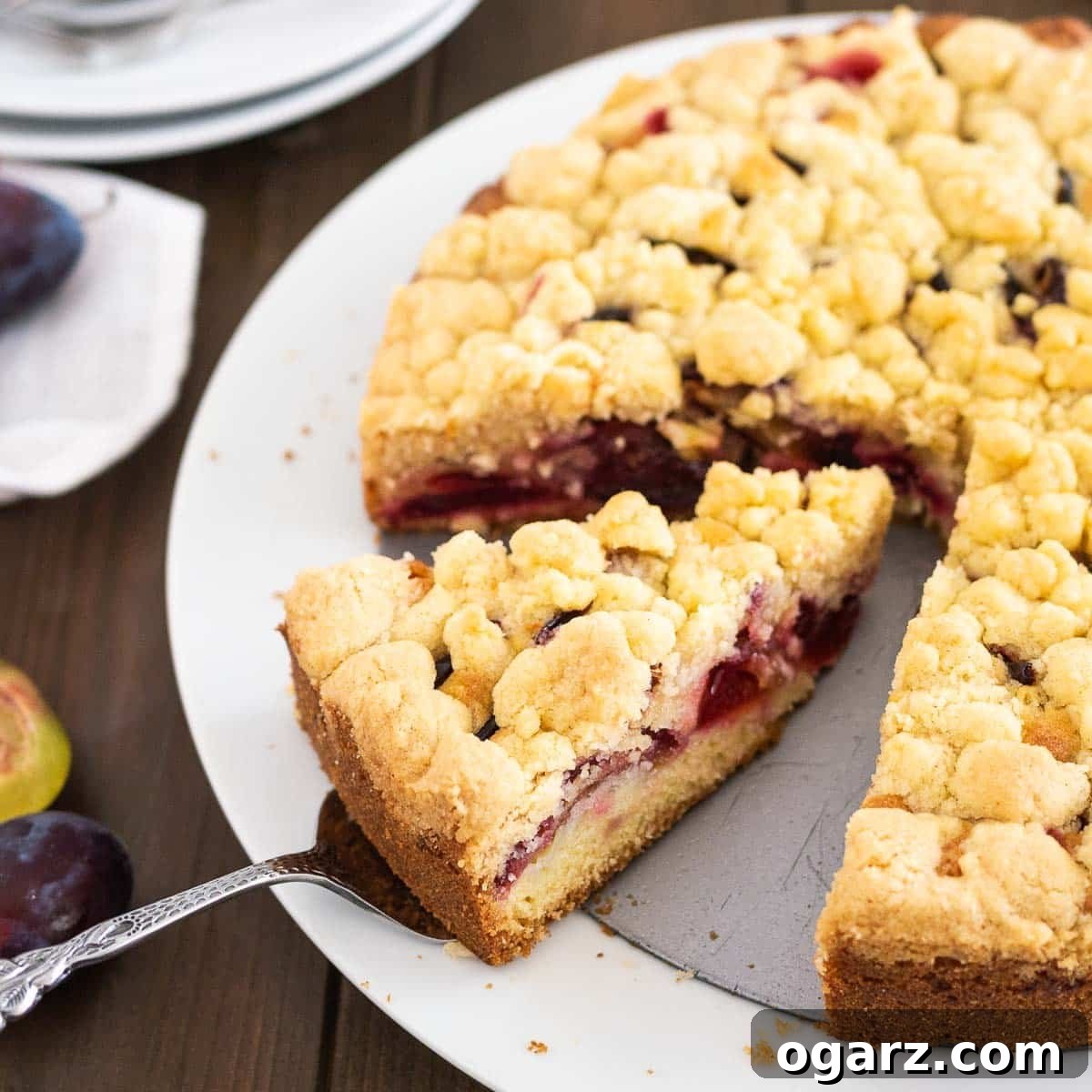
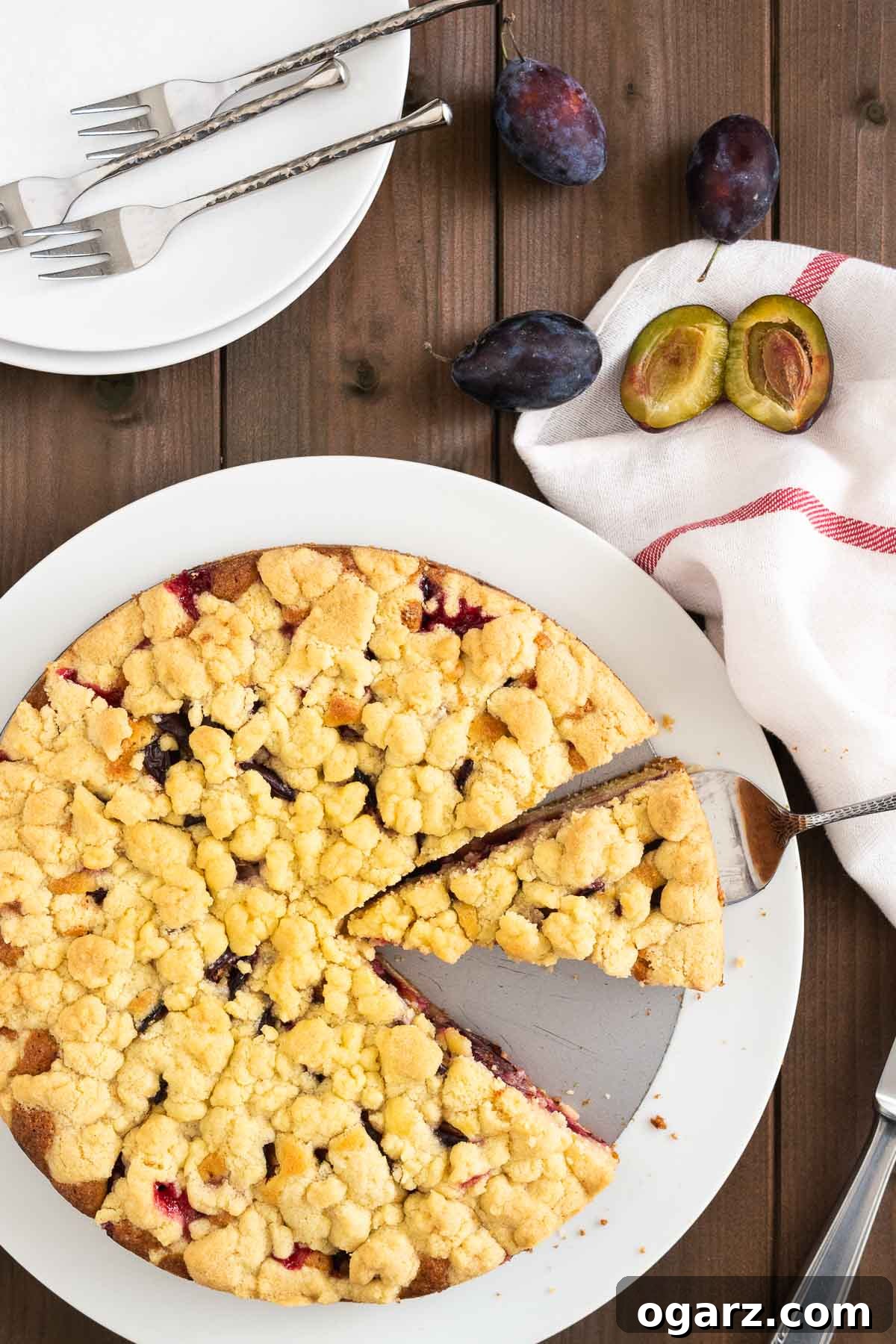
Indulge in the delightful taste of traditional German baking with a slice of **German Plum Cake**, known affectionately as Zwetschgenkuchen or Pflaumenkuchen. This juicy coffee cake features a tender, simple batter base, generously topped with fresh, seasonal plums, and crowned with a sweet, irresistibly crumbly streusel. It’s a remarkably easy cake to bake from scratch, bringing the comforting flavors of German bakeries right into your kitchen.
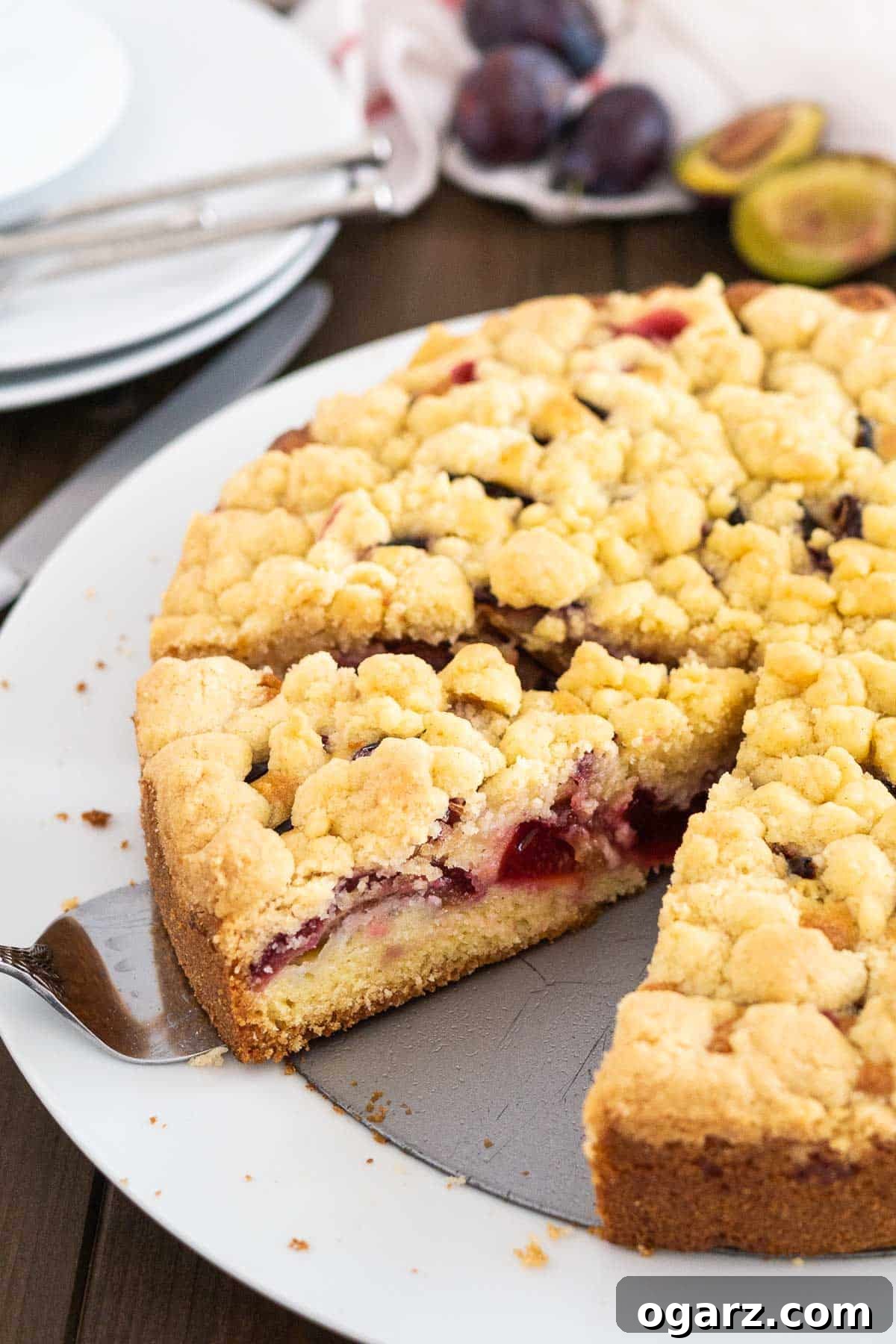
There’s something truly special about a homemade cake, and this traditional German Plum Cake perfectly embodies that charm. It’s surprisingly simple to prepare, much like our beloved German Apple Cake, yet it delivers a rich, juicy flavor that’s perfect for any occasion. Whether enjoyed as a comforting dessert after a meal or as a highlight of a leisurely brunch, a generous slice topped with homemade whipped cream or a scoop of creamy vanilla ice cream is pure bliss.
Germany boasts a rich culinary tradition, and plum cake is a prime example of its diversity. While many regional versions exist, including those made with a yeast dough base (often called Zwetschgendatschi) and baked on large sheets (Backblech) to feed a crowd, this particular recipe utilizes a simple “Rührteig” (stirred batter). This makes it a quicker and easier option, highly popular for everyday baking. In Germany, this type of fruit cake is a staple during the autumnal “Kaffee und Kuchen” (coffee and cake time) – a cherished afternoon tradition where friends and family gather to enjoy coffee and freshly baked treats.
Why You’ll Adore This German Plum Cake Recipe
This German Plum Streusel Cake isn’t just a dessert; it’s an experience. Here’s why it will quickly become a favorite in your recipe collection:
- Versatile Fruit Choice: While plums are traditional, this recipe beautifully accommodates other seasonal stone fruits like peaches, apricots, or nectarines, allowing you to enjoy this delightful cake throughout the fruit season.
- Celebrates Seasonal Produce: It’s the ultimate way to showcase the natural sweetness and tartness of fresh, ripe plums during their peak season, transforming them into a show-stopping dessert.
- Effortless from Scratch: Made with common pantry ingredients, this straightforward recipe is perfect for both seasoned bakers and beginners, proving that impressive results don’t require complex techniques.
- Perfect for Planning Ahead: This cake actually tastes even better on the second day as the flavors meld and the plums infuse the cake with their juices, making it an ideal make-ahead option for gatherings or a week of delightful treats.
- Crowd-Pleaser: Its comforting flavors and beautiful presentation ensure it’s always a hit, whether served at a family dinner, a casual brunch, or an elegant coffee break.
Essential Ingredients for Your Plum Cake
Creating the perfect German Plum Cake begins with understanding the role of each ingredient. Below is an overview of the key components; for precise quantities, please refer to the recipe card at the bottom of the page.
- Fresh Plums: The star of the show! While any fresh plum variety will work, traditional German recipes often call for European plums like Italian prune plums or Empress plums (known as Zwetschgen). These plums have a firmer flesh and a slightly tart flavor that holds up wonderfully during baking, creating a luscious, juicy layer in the cake. Choose plums that are ripe but still firm to prevent them from becoming too mushy.
- All-Purpose Flour: The foundation of our tender cake batter and the crumbly streusel. All-purpose flour provides the perfect structure. If you have it, cake flour can also be used for an even lighter texture.
- Baking Powder: Our leavening agent for the cake batter, ensuring a light and airy crumb that beautifully contrasts with the dense fruit layer.
- Granulated Sugar: Sweetens both the cake batter and the streusel topping, balancing the plums’ tartness. Adjust to your preference, especially if your plums are very sweet or very tart.
- Vanilla Extract or Vanilla Sugar: A touch of vanilla enhances the overall flavor profile. In Germany, vanilla sugar is a common ingredient, offering a subtle vanilla aroma. You can easily substitute one teaspoon of vanilla extract for a packet of vanilla sugar.
- Lemon Zest: Freshly grated lemon zest adds a bright, aromatic lift to the cake, cutting through the richness and complementing the fruit. While optional, it’s highly recommended for that authentic German taste.
- Unsalted Butter: Essential for both the rich cake batter and the irresistible streusel. It’s crucial that your butter is at room temperature for both components. This allows it to cream properly with sugar, creating a smooth batter and perfectly coarse streusel crumbs. (Fun fact: salted butter is less common in German baking!)
- Large Eggs: Provide structure and moisture to the cake batter. Like butter, eggs should be at room temperature. Cold eggs can cause the butter to seize up, affecting the batter’s consistency. A quick trick: place cold eggs in a bowl of warm (not hot) water for a few minutes to bring them to temperature.
- Cinnamon: A pinch of cinnamon in the streusel topping adds a warm, inviting spice that pairs wonderfully with the plums, elevating the flavor of the entire cake.
Baking Your Perfect German Plum Cake: A Step-by-Step Guide
Creating this traditional German Plum Cake is a rewarding experience, and with these clear steps, you’ll achieve delicious results every time. Detailed measurements and complete instructions can be found in the printable recipe card below.
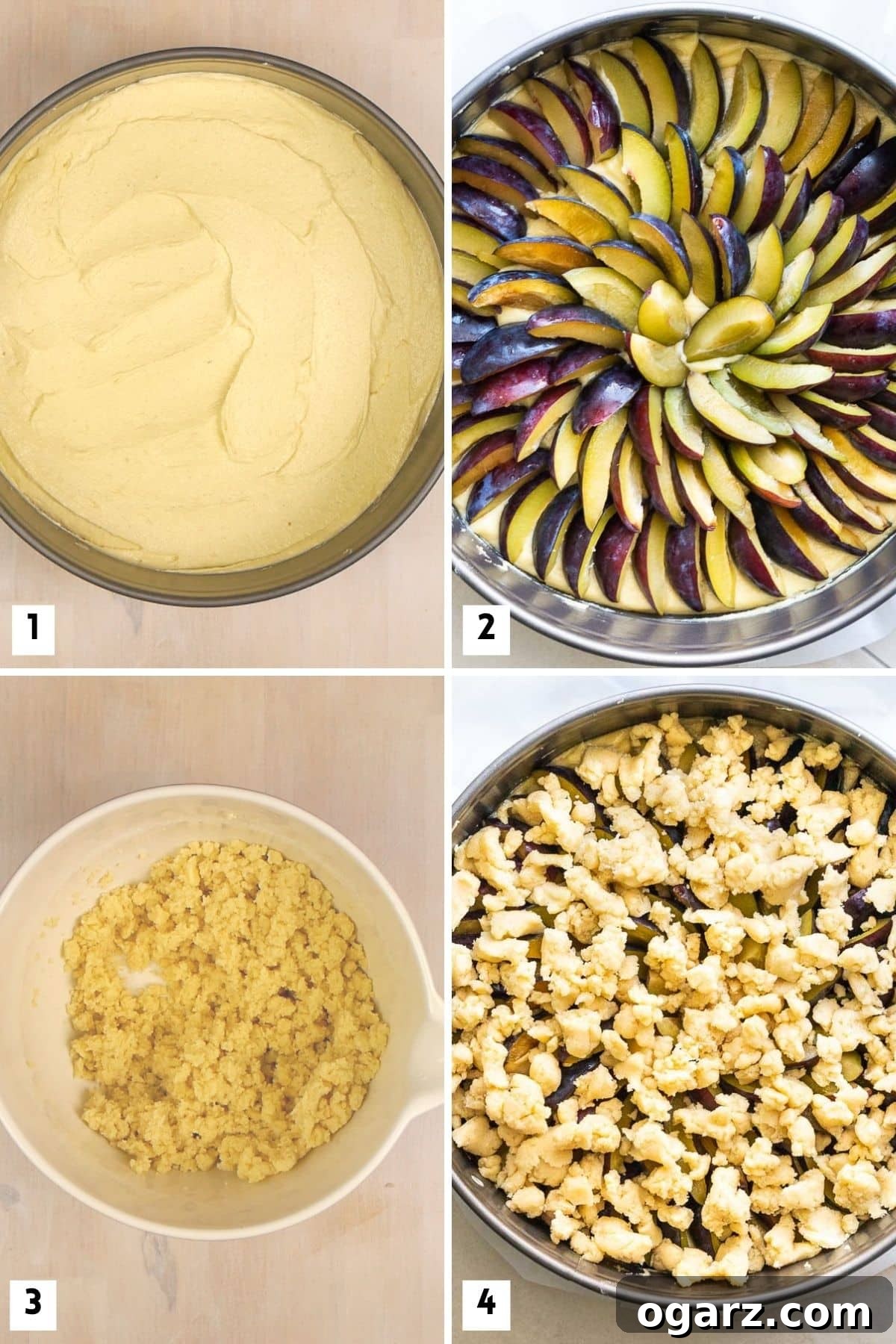
- Prepare Your Pan and Oven: Begin by preheating your oven to 350°F (180°C). Lightly grease and flour a 9-inch springform pan, or spray it with baking spray. This ensures your beautiful cake releases easily after baking.
- Craft the Cake Batter: In a large mixing bowl or the bowl of a stand mixer, whisk together the all-purpose flour and baking powder. Add the granulated sugar, vanilla extract (or vanilla sugar), lemon zest, softened unsalted butter, and room temperature eggs. Beat on low speed until the ingredients are just combined, then increase the speed to medium-high and continue beating for about 2 minutes until the batter is smooth, light, and fluffy. Spread this luxurious batter evenly into the prepared springform pan.
- Prepare and Arrange the Plums: Wash and dry your fresh plums. Carefully pit each plum, then quarter them. If you’re using larger plum varieties, slice them into eighths to ensure even baking and distribution. Gently arrange the plum pieces on top of the batter in a concentric pattern, slightly overlapping them. This creates a visually appealing and richly fruited layer.
- Assemble the Irresistible Streusel: In a separate bowl, or using the same mixer bowl (no need to clean it if you’re quick), combine the flour, sugar, and cinnamon for the streusel topping. Add the softened unsalted butter. Beat the mixture until everything is perfectly combined and coarse, crumbly textures form. You’re looking for pea-sized crumbs, not a smooth dough.
- Bake to Golden Perfection: Evenly sprinkle the streusel mixture over the arranged plums. Place the cake in the preheated oven and bake for approximately 50 minutes, or until the streusel topping is a beautiful golden brown and a skewer inserted into the cake batter (avoiding the plums) comes out clean. Once baked, let the cake cool in the pan for about 10-15 minutes before running a knife around the edge and removing the springform ring. Allow it to cool completely to room temperature on a wire rack before slicing and serving.
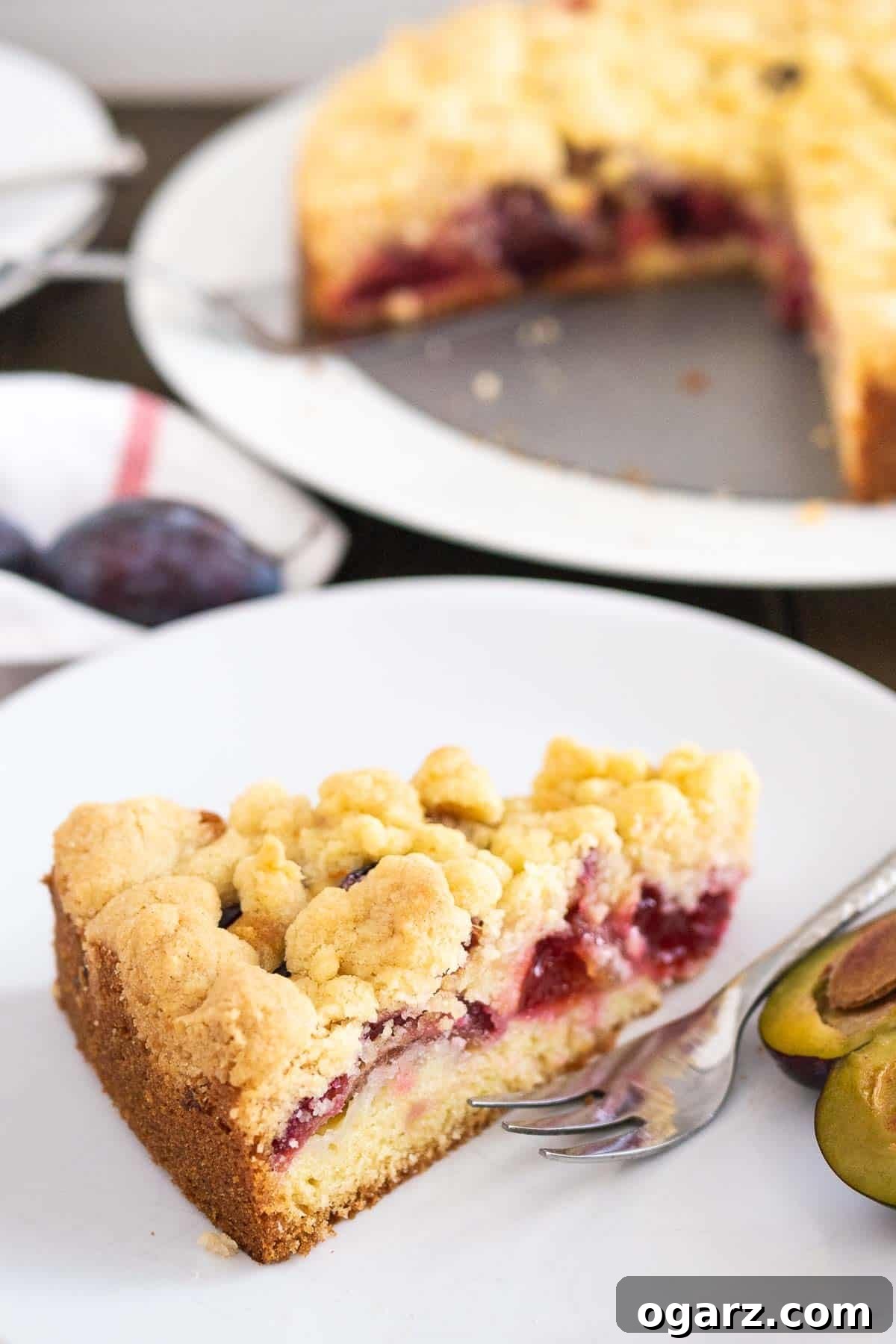
Expert Tips for a Flawless German Plum Cake
Achieving bakery-quality results at home is easier than you think with these expert insights:
- Choosing Your Plums: For the most authentic German Plum Cake, opt for Italian Prune Plums (also known as Empress plums, prune plums, or Zwetschgen). These smaller, oval-shaped plums have a naturally firmer flesh and a delightful tartness that complements the sweet cake and streusel perfectly. However, don’t hesitate to use any other firm, fresh plum variety available to you. Just ensure they’re not overly ripe to prevent the cake from becoming too soggy.
- Fruit Variations: This recipe is incredibly adaptable! Feel free to experiment with other stone fruits. Peaches, apricots, or nectarines make excellent substitutes, offering a different but equally delicious flavor profile. The key is to avoid overloading the cake with too much fruit, especially very juicy varieties, as this can affect the baking time and the cake’s ability to cook through evenly.
- The Right Baking Pan: A springform pan is your best friend for this recipe. Its removable sides make it incredibly easy to unmold the cake without disturbing the delicate fruit and streusel layers, ensuring a perfect presentation every time. It’s also convenient for storing the cake.
- Scaling Up the Recipe: If you’re baking for a larger gathering, this recipe is easily doubled! Simply use a 9×13-inch cake pan instead of a springform. Remember that a larger, thicker cake will require a few extra minutes in the oven. Always keep an eye on it and test for doneness with a skewer before removing it from the oven.
- Mastering the Streusel: The streusel topping is crucial for that classic texture. When making it, ensure you beat the ingredients only until coarse, pea-sized crumbs form and all the flour is incorporated. Overmixing will result in a pasty dough, not the delightful crumbly topping you desire. Aim for noticeable crumbs, not fine, floury bits.
- Oven Variations: Every oven is unique, and baking times can vary slightly. Factors like the ripeness and juiciness of your plums will also influence the cooking duration. Always use the suggested baking time as a guideline and rely on visual cues (golden streusel, cake pulling away from the sides) and the skewer test for perfect doneness.
Recipe FAQs
For an authentic German Plum Cake, Italian Prune Plums (also known as Damsons or Empress plums) are ideal due to their firm texture and perfect balance of sweetness and tartness. However, any fresh, firm plum variety will work well. Avoid overly ripe plums, as they can release too much moisture and make the cake soggy. Depending on their size, slice plums into quarters or eighths for even distribution and baking.
Italian Prune Plums, also called Empress Plums or European plums, are small, oval-shaped plums with deep blue or purple skin and golden-yellow flesh. They are known for their firm texture and for having pits that easily separate from the flesh, making them excellent for baking. These plums are typically in season towards the end of summer and early fall, hitting markets around August.
Removing the pit from a plum is straightforward. Simply cut the plum along its natural seam, which runs from top to bottom. Gently twist the two halves in opposite directions to open the plum. The pit should be exposed and can then be easily lifted out. Once pitted, you can slice the plum halves into quarters or eighths, depending on their size.
While fresh plums are always preferred for their superior texture and flavor, you can use frozen plums in a pinch. If using frozen plums, do not thaw them completely before baking. Instead, toss them with a tablespoon or two of flour or cornstarch before arranging them on the batter. This will help absorb excess moisture and prevent the cake from becoming too wet. Be aware that the cake may require a slightly longer baking time.
A soggy or “disappearing” streusel can often be attributed to plums releasing too much juice during baking, or if the streusel mixture was too fine. Ensure your plums are firm and not overly ripe. You can also lightly toss the plums with a teaspoon of flour before arranging them. For the streusel itself, ensure it’s made with cold butter and rubbed together until coarse, pea-sized crumbs form – this helps it retain its shape and crispness during baking. Baking at the correct temperature also helps the streusel crisp up.
Looking for More German Cake Recipes?
If you’ve fallen in love with the comforting flavors of German baking, explore more delightful cake recipes from our collection:
- German Apple Cake (Versunkener Apfelkuchen)
- German Apple Streusel Sheet Cake
- Covered German Apple Cake Recipe
- Black Forest Cake
Serving Suggestions for Your German Plum Cake
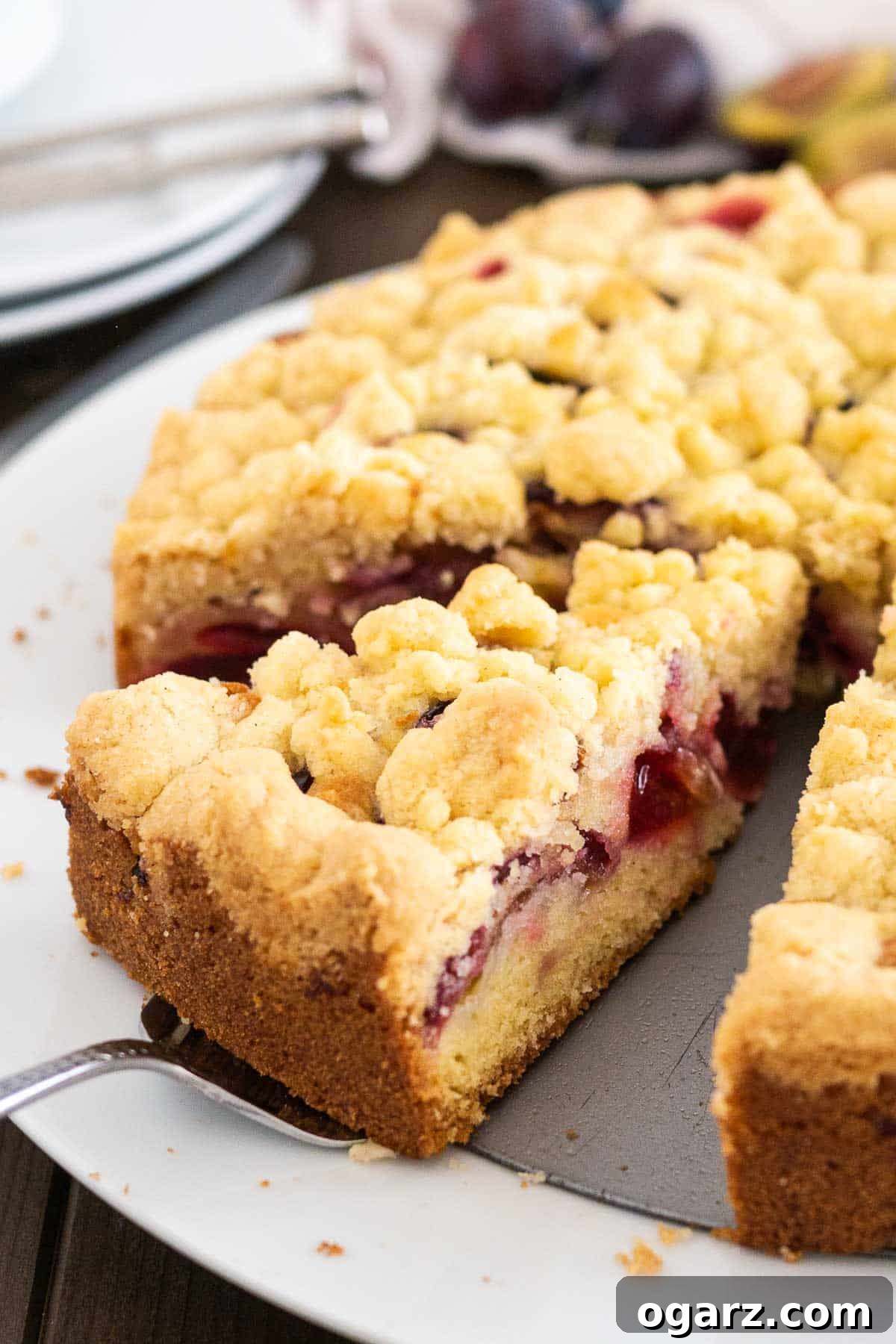
This German Plum Cake, like many fruit-filled cakes such as our German Apple Cake or German Strawberry Cake, is truly elevated with the right accompaniment. For an authentic experience, serve it slightly warm or at room temperature. A generous dollop of homemade whipped cream is absolutely divine, its light, airy texture and subtle sweetness perfectly complementing the juicy plums and crumbly streusel. Making whipped cream from scratch is surprisingly easy and far superior to anything from a can.
Alternatively, a scoop of premium vanilla ice cream is another fantastic pairing, especially if the cake is still a touch warm. The melting ice cream creates a luxurious sauce that envelops each bite, making for an unforgettable dessert experience. For a simple afternoon treat, a cup of freshly brewed coffee or tea is all you need to complete the “Kaffee und Kuchen” tradition.
Storing and Freezing German Plum Cake
One of the many wonderful qualities of this German Plum Cake is that it actually improves with age! The flavors have more time to meld, and the plums continue to release their juices, making the cake even moister and more flavorful on the second day. Store leftover cake, covered loosely with plastic wrap or in an airtight container, at room temperature for up to 3 days. If you prefer, it can also be stored in the refrigerator for up to 5 days.
Freezing
Yes, this plum cake can be frozen! To freeze, ensure the cake has cooled completely. Wrap individual slices or the entire cake (if fully cooled) tightly in plastic wrap, then an additional layer of aluminum foil. This double-layer protection helps prevent freezer burn. It can be stored in the freezer for up to 2-3 months. When you’re ready to enjoy, thaw the cake overnight in the refrigerator or at room temperature. While the flavor will remain excellent, be aware that the streusel topping might lose some of its original crispiness after defrosting, becoming a bit softer.
More German Recipes to Try
Discover More German Delights
German Recipes
German Onion Pie
Cakes
Black Forest Cake
Main Dishes
Flammkuchen
Sides & Salads
Wurstsalat
Never Miss A Recipe! Subscribe to my newsletter and follow along on Facebook, Instagram, and Pinterest for more great recipes and all of the latest updates.
German Plum Cake
By: Julia Foerster
German Plum Cake is a juicy coffee cake made with a simple batter, fresh plums, and a sweet, crumbly streusel topping! So easy to make from scratch.
Prep Time: 20 minutes
Cook Time: 50 minutes
Total Time: 1 hour 10 minutes
Servings: 12
Ingredients
- 1.5 lbs plums, pitted and quartered
For the cake batter:
- 1 cup all-purpose flour
- 1 teaspoon baking powder
- ¾ cup granulated sugar
- 1 teaspoon vanilla extract, or vanilla sugar
- ½ teaspoon lemon zest, freshly grated (optional)
- ½ cup unsalted butter, room temperature
- 2 large eggs, room temperature
For the streusel:
- 1 cup all-purpose flour
- ½ cup sugar
- ¼ teaspoon cinnamon
- ½ cup unsalted butter, room temperature
Instructions
- Preheat your oven to 350°F (180°C). Spray with cooking spray or lightly butter a 9-inch springform pan. Set aside.
- In the bowl of a stand mixer fitted with the paddle attachment, combine flour and baking powder. Add sugar, vanilla extract, lemon zest, butter, and eggs to the bowl and beat on low speed until combined, then increase speed to medium-high and beat until smooth, about 2 minutes.
- Spread the batter evenly into the cake pan. Gently place the plums in a concentric pattern on top of the batter, slightly overlapping each other (see picture).
- Make the streusel: In the bowl of a stand mixer fitted with the paddle attachment, combine flour, sugar, and cinnamon. Add soft butter and beat until everything is combined and your crumbs have a coarse and crumbly texture, about 30 seconds to 1 minute.
- Using your hands, sprinkle the streusel evenly on top of the plums.
- Bake for about 50 minutes or until the top of the cake is lightly golden. Test with a skewer for doneness. Let the cake sit in the pan for about 10 minutes, then run a knife around the edge of the pan and remove the outer ring of the springform. Let cool to room temperature before serving.
Notes
- Traditionally this cake is made with Italian Prune Plums. They are also often called Empress plums, prune plums, or “Zwetschgen” in German. But any other kind of plum works too!
- You could also use any other stone fruit for this recipe. Peaches, apricots, or nectarines are all a great choice, just make sure to not overload the cake with juicy fruit; otherwise, it might not bake all the way through.
- A springform works best for this recipe. It makes it easier to get the cake out of the pan and is also great for storing the cake.
- You can double this recipe and bake it in a 9×13-inch cake pan. The cake will need a few more minutes to bake, so keep an eye on it and test it with a skewer before taking it out of the oven.
- When making the streusel, make sure to beat until coarse crumbs form and all the flour has been incorporated. You don’t want tiny, floury crumbs but big crumbs!
- Every oven is different, so the baking time can vary by a few minutes! Extra juicy fruit will also influence the cooking time.
Nutrition
Calories: 330kcal | Carbohydrates: 43g | Protein: 3g | Fat: 16g | Saturated Fat: 9g | Cholesterol: 67mg | Sodium: 80mg | Potassium: 163mg | Fiber: 1g | Sugar: 26g | Vitamin A: 710IU | Vitamin C: 5.5mg | Calcium: 33mg | Iron: 1.2mg
This post was originally published in 2016.