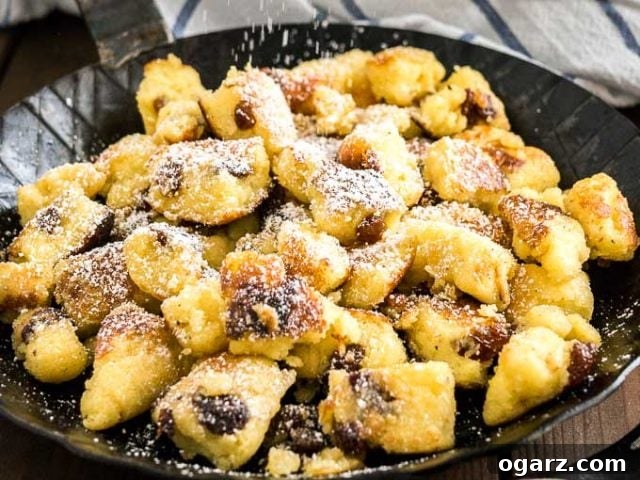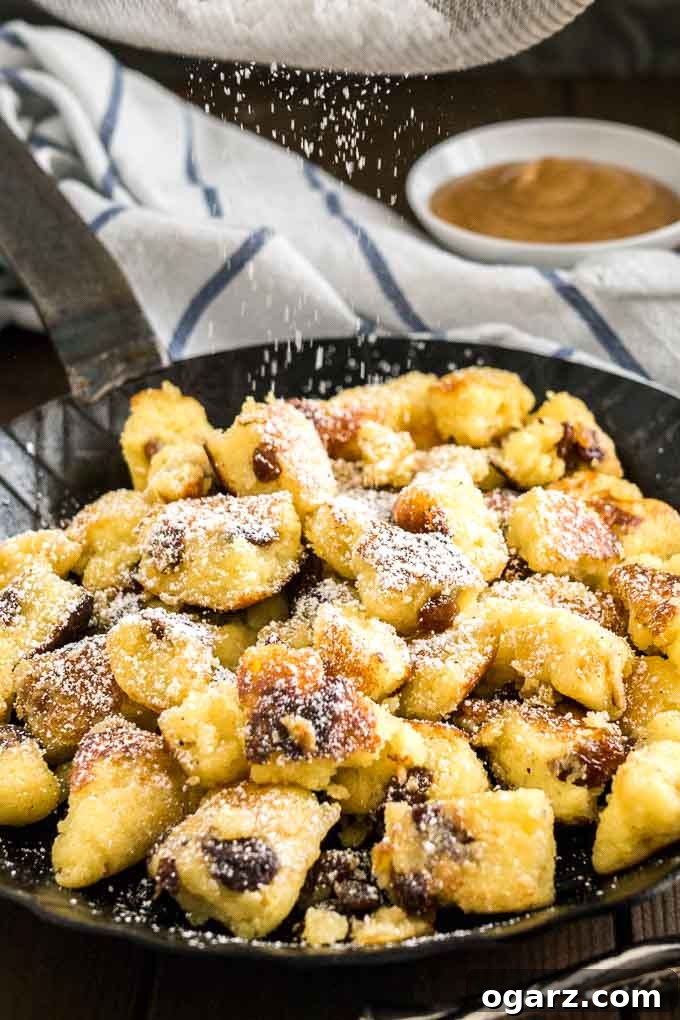
Welcome to the enchanting world of Austrian and Bavarian desserts, where a truly unique and utterly delicious treat reigns supreme: Kaiserschmarrn, often affectionately known as the Scrambled Pancake or Emperor’s Mess. This isn’t just any pancake; it’s a sweet, fluffy cloud of perfection, traditionally studded with rum-soaked raisins, torn into rustic bite-sized pieces, and then delicately caramelized to golden perfection. Served generously dusted with powdered sugar and accompanied by classic sides like tangy applesauce (Apfelmus) or luscious plum preserves (Zwetschgenröster), Kaiserschmarrn offers a culinary experience that transcends a simple meal. It’s a versatile dish, equally at home as a comforting dessert after a long day, a delightful brunch centerpiece, or a hearty snack, beloved by both children and adults for its irresistible flavor and satisfying texture. Prepare to embark on a journey that will not only tantalize your taste buds but also connect you to the rich culinary heritage of the Alps.
What Exactly is Kaiserschmarrn? The Emperor’s Mess Explained
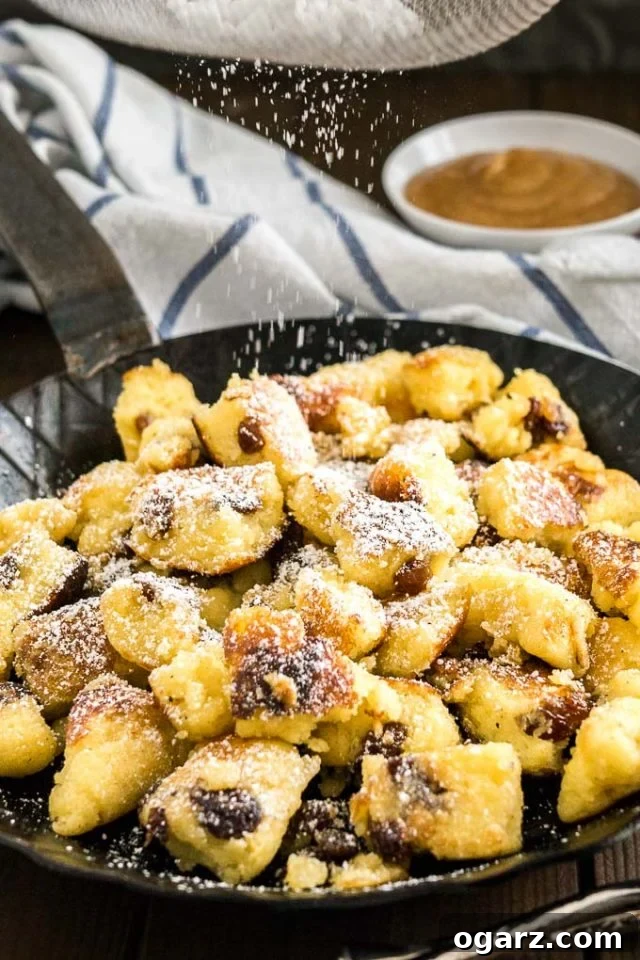
Kaiserschmarrn, also frequently spelled Kaiserschmarren, carries several endearing nicknames, including “Emperor’s Mess,” “scrambled pancake,” “shredded pancake,” “torn pancake,” or simply “Emperor’s Pancake.” At its heart, Kaiserschmarrn is a light, airy, and distinctly sweet pancake, but unlike its flat, round counterparts, it’s intentionally broken into irregular, fluffy pieces during cooking. The magic happens when these pieces are caramelized with butter and sugar, creating a delightful contrast of crispy edges and tender interiors.
The name itself provides a glimpse into its noble origins. “Kaiser” is the German word for “Emperor,” and “Schmarrn” roughly translates to “a scrambled dish” or “a mess,” although in culinary terms, it signifies a specific type of dish, often made from flour, milk, and eggs, that is shredded or scrambled. This combination perfectly encapsulates the dish: a luxurious, yet wonderfully rustic, “Emperor’s Scramble.”
If you’ve had the pleasure of traveling through the picturesque landscapes of Bavaria or Austria, you’ve likely encountered this beloved culinary masterpiece. It’s more than just a dessert; it’s an experience, a taste of Alpine tradition that leaves an unforgettable impression. Many describe their first bite as an instant addiction – and for good reason! The unique blend of textures, the subtle sweetness, and the rich caramelized flavor are truly captivating.
A Royal History: The Legend Behind Kaiserschmarrn
The fascinating history of Kaiserschmarrn traces back to the Austrian imperial court of Emperor Franz Joseph I (1830-1916), a monarch known for his simple tastes and love for traditional Austrian cuisine. While several charming legends surround its creation, the most popular story suggests that the dish was an accidental culinary triumph. One version claims that the Emperor’s chef was preparing a simple pancake for him, but it turned out imperfect or torn. To salvage the dish, the quick-thinking chef scrambled the pancake, caramelized it, and served it with fruit preserves, presenting it as a “Schmarrn” – a trifle or a mess. To his surprise, the Emperor adored it, declaring it a “Kaiserschmarrn” (Emperor’s Mess), and thus, a culinary legend was born.
Another tale suggests that Emperor Franz Joseph I was fond of a light pancake dessert for his hunting trips in the Alps, or that his wife, Empress Elisabeth (Sisi), found the pancake too heavy and refused to eat it, so the chef then tore it into pieces and served it to the Emperor, who consumed it with great delight. Regardless of the exact circumstances, Kaiserschmarrn quickly became a staple in the imperial household and subsequently spread throughout Austria and neighboring Bavaria, solidifying its status as a timeless classic.
More Than Just Dessert: Kaiserschmarrn’s Versatility
While often categorized as a dessert, particularly in Bavaria and Austria, Kaiserschmarrn’s substantial and satisfying nature makes it suitable for various meal times. It’s a popular choice for a hearty lunch after a morning on the ski slopes, a decadent brunch item on a leisurely weekend, or even a filling snack. Its rich flavors and comforting warmth make it the ultimate sweet comfort food, perfect for warding off the chill of an Alpine winter or simply indulging in a moment of pure bliss.
Imagine returning to a cozy ski lodge in the Alps after a exhilarating day of skiing; there’s nothing quite like a warm skillet of Kaiserschmarrn, glistening with powdered sugar and butter, to rejuvenate your spirits. This tradition of enjoying Kaiserschmarrn in mountain huts and ski resorts is deeply ingrained in the culture, and for many, it’s an essential part of the Alpine experience. But its appeal isn’t limited to mountain retreats; it’s a beloved feature at festive events too.
Even at world-renowned events like Oktoberfest (or “Wiesn” as it’s known to locals in Munich), Kaiserschmarrn holds a special place. It’s arguably the most sought-after dessert, and you’ll even find a tent named after this famous Bavarian pancake dessert, the “Café Kaiserschmarrn,” a testament to its widespread popularity. The good news is, you don’t need to travel all the way to Europe to savor this authentic treat. With this guide, you can easily recreate this culinary marvel in your own kitchen!
Crafting Authentic Kaiserschmarrn: A Step-by-Step Guide
The secret to a truly authentic and fluffy Kaiserschmarrn lies in its unique preparation method, particularly the way the eggs are handled. Unlike typical pancakes that rely on baking powder or soda for leavening, Kaiserschmarrn achieves its incredible lightness from stiffly beaten egg whites. This traditional technique results in an exceptionally airy and tender pancake base.
Ingredients: Quality Matters
While the ingredients for Kaiserschmarrn are relatively simple – eggs, flour, milk, sugar, butter, and raisins – the quality of each component plays a crucial role in the final flavor. Fresh, high-quality eggs and good butter will elevate your Kaiserschmarrn from good to extraordinary.
The Art of the Batter: Achieving Fluffiness
The process begins by carefully separating the egg whites from the yolks. The egg whites are then whipped to stiff peaks, creating a voluminous, stable foam. This foam is gently folded into a batter made from the egg yolks, melted butter, vanilla extract, sugar, a pinch of salt, flour, and milk. The key here is to fold gently to retain as much air as possible in the egg whites, ensuring a light and airy pancake. Overmixing will deflate the egg whites and result in a denser Kaiserschmarrn, so handle with care.
The Signature Rum-Soaked Raisins
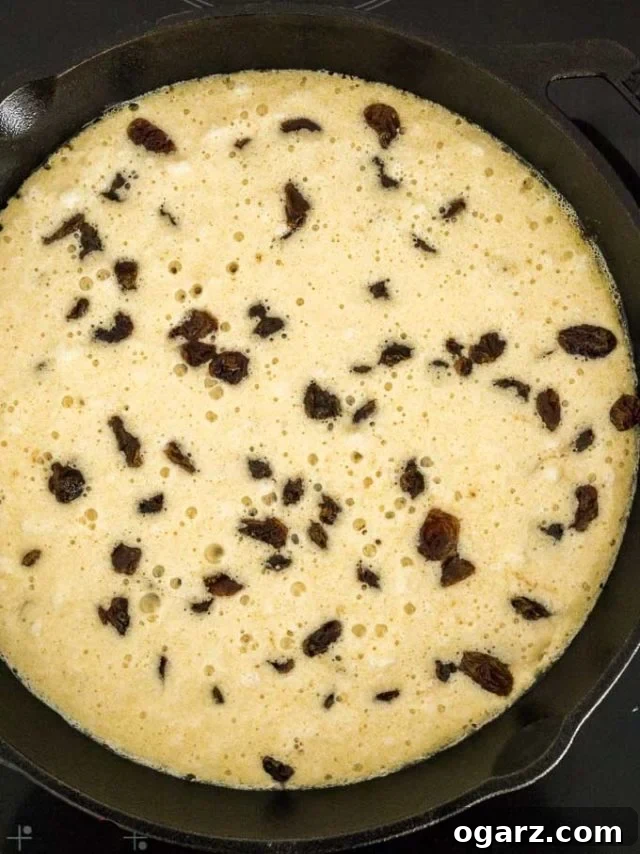
A distinctive and essential element of authentic Kaiserschmarrn is the inclusion of rum-soaked raisins. While you can opt for water if rum is not preferred, the rum adds a depth of flavor and aromatic complexity that is truly special. As you prepare the batter, soak the raisins in a few tablespoons of rum. These plump, flavorful raisins are then sprinkled over the pancake as it begins to cook through, infusing every bite with a sweet, boozy warmth that even raisin skeptics often adore.
Cooking and the Characteristic “Scramble”
The batter is poured into a buttered skillet and cooked over medium heat until golden brown on the bottom and mostly set on top. Once it’s ready for its flip, a little sugar is sprinkled on top to aid in caramelization. Using a spatula, the large pancake is divided into quarters and carefully turned. A bit more butter can be added to the pan to ensure even browning.
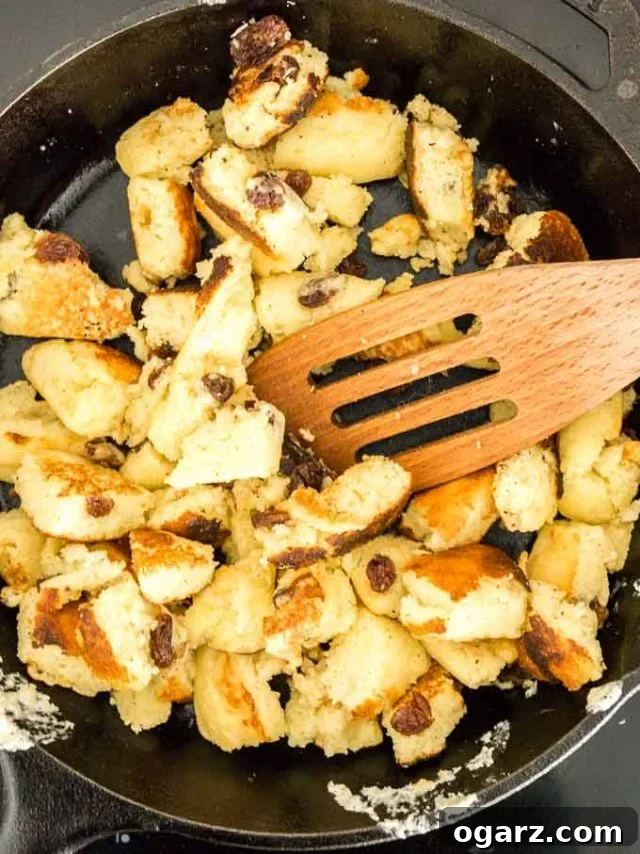
The most defining step comes next: the “schmarrn” itself. With two spatulas or forks, you tear the partially cooked pancake into irregular, bite-sized pieces. This isn’t about neat cuts; it’s about creating varied shapes and edges that will become perfectly crisp during the final caramelization stage. These torn pieces are then tossed with more butter and granulated sugar over medium-high heat, allowing the sugar to melt and coat each piece in a glorious, golden caramel. This caramelization process is what gives Kaiserschmarrn its signature irresistible flavor and delightful chewiness.
Tips for the Perfect Kaiserschmarrn
- Don’t Overmix the Batter: After folding in the egg whites, stop as soon as no large lumps remain. Overmixing will deflate the batter, resulting in a less fluffy pancake.
- Proper Pan Size: A 10-12 inch skillet is ideal. This allows the pancake to spread evenly without being too thick or too thin, ensuring even cooking and tearing.
- Heat Control: Cook the initial pancake over medium heat to allow it to cook through without burning the bottom. Increase heat slightly for caramelization.
- Generous Caramelization: Don’t skimp on the butter and sugar during the final caramelization. This is where the magic happens, creating those delightful crispy, golden edges.
- Rum is Key (But Optional): While rum adds authentic flavor, if you prefer not to use alcohol, you can soak the raisins in warm water or apple juice instead.
- Serve Immediately: Kaiserschmarrn is best enjoyed fresh off the skillet when it’s warm, fluffy, and the caramel is still slightly gooey.
Serving Suggestions & Pairings
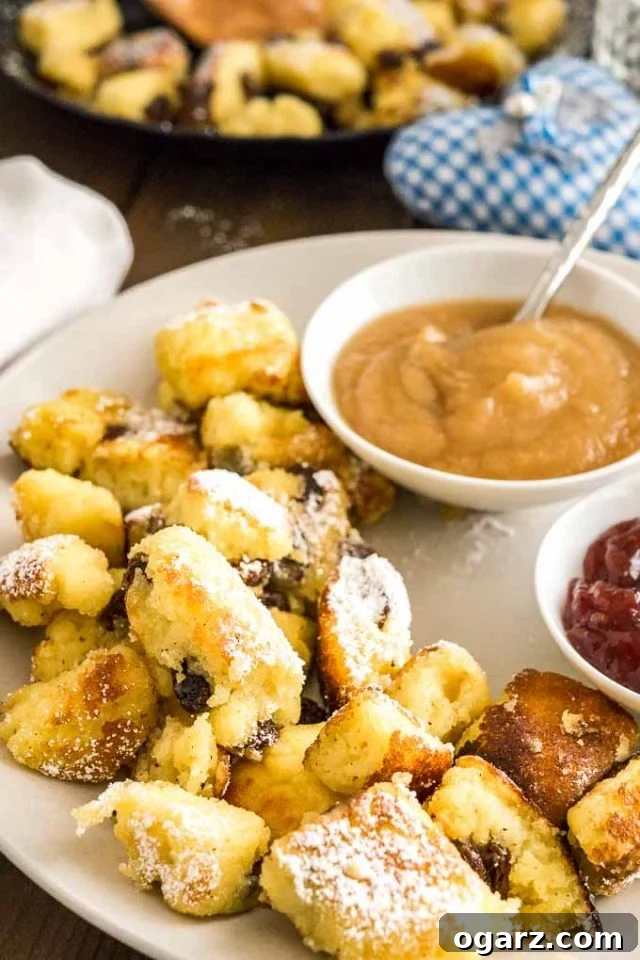
This authentic Austrian pancake recipe is definitely for days when you want to indulge. One pan of Kaiserschmarrn is typically enough to serve up to four people as a dessert, especially when accompanied by its traditional partners. The most classic accompaniment is homemade applesauce (Apfelmus), whose tartness perfectly balances the sweetness of the pancake. Another beloved pairing is Zwetschgenröster, a rich fruit compote made from plums, offering a delightful depth of flavor.
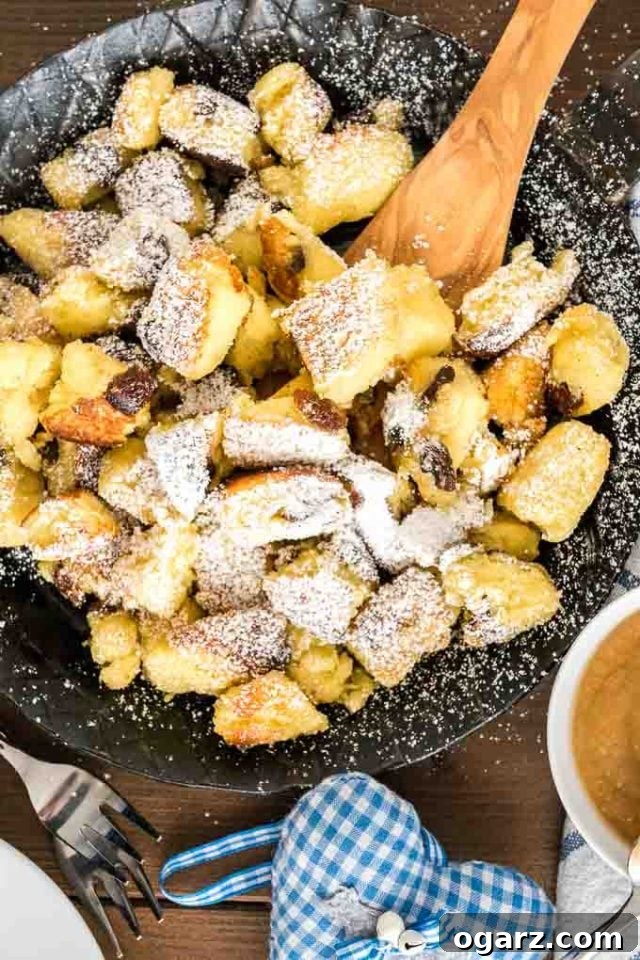
However, the possibilities don’t end there! Feel free to explore other fruit compotes like cherry, apricot, or berry compote. Fresh berries (strawberries, raspberries, blueberries) add a burst of freshness and color. For an extra luxurious touch, a scoop of vanilla ice cream or a dollop of whipped cream can elevate the experience. When dining at a traditional Bavarian or Austrian restaurant, or at Oktoberfest, Kaiserschmarrn is often served directly in the skillet, generously blanketed with a snowy dusting of confectioners’ sugar. Recreating this presentation at home adds to the authentic charm and makes for an impressive centerpiece.
And here’s a common phenomenon that many will recognize: no matter how full you might feel after a meal, there always seems to be a little extra room for Kaiserschmarrn. Its light texture and captivating flavor have a way of making you believe you can always manage “just one more bite!”
Frequently Asked Questions About Kaiserschmarrn
Q: Can I make Kaiserschmarrn without rum?
A: Yes, absolutely! While rum-soaked raisins are traditional, you can soak the raisins in warm water, apple juice, or even orange juice for a non-alcoholic version. The flavor will be slightly different but still delicious.
Q: What if my Kaiserschmarrn isn’t fluffy?
A: The key to fluffiness is properly beaten egg whites that are gently folded into the batter. Ensure your egg whites are beaten to stiff peaks and avoid overmixing the batter once they’re incorporated. Also, cooking it in a well-greased pan on medium heat allows it to puff up.
Q: Can I prepare the batter ahead of time?
A: It’s best to make Kaiserschmarrn batter just before cooking. The air in the beaten egg whites is delicate and will deflate over time, leading to a less fluffy pancake.
Q: What kind of skillet is best for Kaiserschmarrn?
A: A cast-iron skillet is highly recommended as it retains and distributes heat evenly, which is crucial for achieving that perfect golden-brown crust and caramelization. A good quality non-stick pan can also work.
Q: Can I add other fruits to Kaiserschmarrn?
A: While raisins are traditional, you can certainly experiment! Sliced apples, cherries, or even berries can be added to the batter along with or instead of the raisins for a different twist.
Looking for More German Recipes?
- Easy German Spaetzle Recipe
- Cheese Spaetzle Recipe
- Vanillekipferl (German Vanilla Crescent Cookies)
- Bavarian Beer Cheese Spread (Obatzda)
- German Apple Cake (Versunkener Apfelkuchen)
Essential Tools for Making This Recipe:
A **Cast-Iron Skillet** is truly indispensable for Kaiserschmarrn. Its superior heat retention and distribution capabilities ensure an even, golden crust and perfect caramelization, making it a favorite in my kitchen for countless dishes. It’s oven-safe, incredibly durable, and surprisingly affordable.
A **Stand Mixer** makes preparing the batter much easier, especially when beating the egg whites to stiff peaks. Its consistent power ensures optimal aeration, which is key for the fluffy texture of Kaiserschmarrn. Plus, a stylish mixer can double as a beautiful countertop decoration!
WANT TO TRY THIS KAISERSCHMARRN?
PIN IT TO YOUR DESSERT BOARD TO SAVE IT OR SHARE ON FACEBOOK!
Follow Plated Cravings on Pinterest for more great recipes!
Share this recipe with friends and family!
Kaiserschmarrn
Ingredients
For the rum-soaked raisins:
- 1/3 cup raisins
- 3 Tbsp Rum, or water
For the pancake:
- 3 large eggs, divided
- 3 Tbsp unsalted butter, melted
- 1 tsp vanilla extract
- 2 Tbsp granulated sugar
- 1 pinch of salt
- 1 cup all-purpose flour
- 1 cup milk
To caramelize:
- 2 Tbsp unsalted butter
- 2 Tbsp granulated sugar
To serve:
- 2 Tbsp Powdered sugar
- 1 cup applesauce
Instructions
-
In a small bowl combine raisins and rum. If you can’t use rum, soak the raisins in water but it’s highly encouraged to use rum for the authentic flavor.
-
Separate the eggs, setting the egg yolks aside for a moment.
-
In a clean bowl (preferably of a stand mixer fitted with a whisk attachment), add the three egg whites and beat at high speed for about 2.5 minutes until stiff peaks form. Be careful not to overbeat. Transfer the stiff egg whites to a separate bowl and set aside.
-
To the now empty mixer bowl (still with whisk attachment), add the three egg yolks, melted butter, vanilla extract, sugar, and a pinch of salt. Combine at medium speed for about 2-3 minutes until smooth.
-
On low speed, alternately add flour and milk, a tablespoon of each at a time, until all the milk and flour are incorporated. Avoid overmixing. Scrape down the sides and bottom of the bowl as needed to ensure everything is well combined.
-
Using a metal spoon or rubber spatula, gently fold the stiff egg whites into the batter until just combined and no large egg white lumps remain. Be very gentle and light-handed to maintain the airiness.
-
Heat 1 tablespoon of butter in a 12-inch skillet over medium heat. Pour the batter evenly into the skillet and cook for about 6-7 minutes. After approximately 3 minutes, sprinkle the drained rum-soaked raisins over the batter. Use a spoon or spatula to carefully peek under the pancake to check if it’s golden brown.
-
Once the pancake is golden brown underneath, sprinkle a little bit of granulated sugar over the top. Using a spatula, carefully divide the pancake into quarters and turn each piece over. Add a small amount of butter to the pan as you turn the pancake pieces to ensure they don’t stick and cook evenly.
-
Continue cooking for 3-4 minutes until the quarters are golden brown on the second side.
-
Using two spatulas or forks, begin tearing the pancake quarters into bite-sized, irregular pieces. The goal is a rustic, “scrambled” appearance.
-
Add 2 tablespoons of butter and sprinkle 2 tablespoons of granulated sugar over the torn pancake pieces. Turn up the heat to medium-high and gently toss the pieces with a spatula for about 3-4 minutes, until the sugar has melted and caramelized, coating each piece in a glorious golden crust.
-
Generously sprinkle with confectioners’ sugar (powdered sugar) and serve hot, directly in the pan, with applesauce or plum compote on the side.
Nutrition
Carbohydrates: 56g |
Protein: 10g |
Fat: 20g |
Saturated Fat: 11g |
Cholesterol: 167mg |
Sodium: 81mg |
Potassium: 304mg |
Fiber: 2g |
Sugar: 21g |
Vitamin A: 738IU |
Vitamin C: 1mg |
Calcium: 98mg |
Iron: 2mg
Like this recipe? Rate and comment below!
NEVER MISS A RECIPE!
PINTEREST / FACEBOOK / INSTAGRAM / TWITTER
If you’ve tried this or any other of my recipes, don’t forget to rate the recipe and to leave me a comment. I love hearing from you!