
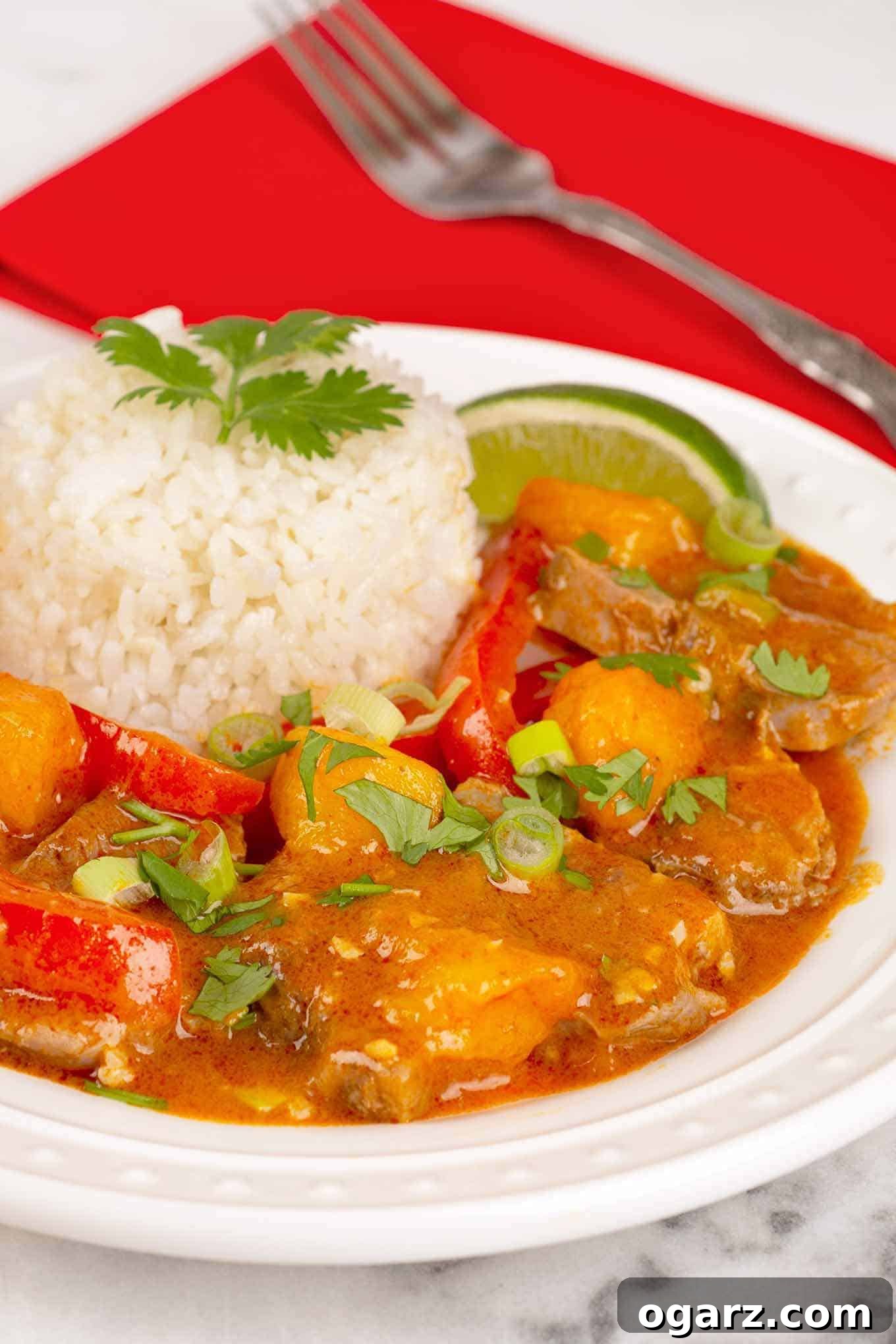

Embark on a culinary journey to Thailand from the comfort of your kitchen with this incredibly flavorful and surprisingly easy Thai Mango Red Curry Duck recipe. This restaurant-quality dish combines tender, succulent duck breast with the exotic sweetness of fresh mango, all bathed in a rich, aromatic coconut-red curry sauce. Served alongside fluffy jasmine rice and brightened with a squeeze of fresh lime and a sprinkle of vibrant cilantro, it’s an unforgettable meal that’s perfect for a weeknight dinner or entertaining guests.
Thai cuisine is renowned for its harmonious balance of sweet, sour, salty, spicy, and umami flavors. This curry is a prime example, offering a complex yet approachable taste profile that will delight your palate. While many enjoy this dish in their favorite Thai eateries, recreating its authentic flavors at home is a rewarding experience that’s well within reach for any home cook. Our simplified recipe guides you through each step, ensuring a delicious outcome every time.
Why Duck is the Perfect Protein for Thai Curry
Duck often features prominently on Thai restaurant menus, and for good reason. Its distinct, rich, and slightly gamey flavor profile is robust enough to stand up to the bold, fragrant spices characteristic of Thai cuisine, making it an ideal canvas for this vibrant red curry. Unlike more delicate meats, duck breast, particularly Pekin (also known as Long Island) duck, offers a substantial texture and a beautiful layer of fat that, when rendered properly, becomes incredibly crispy and adds an unparalleled depth of flavor to the dish.
The process of rendering the duck fat not only crisps the skin to perfection but also provides a flavorful foundation for sautéing other aromatics. This rich fat infuses the curry sauce with an extra layer of savory goodness that complements the sweet mango and spicy curry paste beautifully. For those new to cooking duck, don’t be intimidated; our instructions detail how to achieve perfectly cooked, tender duck breast with a golden, crispy skin. If duck isn’t your preference or readily available, we also provide a fantastic alternative using pork tenderloin, ensuring everyone can enjoy this exquisite curry.
Mastering Your Homemade Thai Curry: Essential Tips
Creating an authentic and delicious Thai curry at home is simpler than you might think, especially with a few key insights. This dish comes together in just a few straightforward steps, but paying attention to these tips will elevate your curry from good to truly exceptional.
- Selecting a Superior Red Curry Paste: The foundation of any great Thai curry is its paste. For truly authentic Thai flavors, invest in a good quality red curry paste. Our top recommendations are Aroy-D and Maesri, both celebrated for their vibrant, well-balanced spice profiles and genuine taste. These brands can typically be found in most Asian grocery stores or ordered conveniently online from retailers like Amazon or dedicated Thai ingredient suppliers such as ImportFood.com. The quality of your curry paste will significantly impact the depth and authenticity of your final dish, so choose wisely!
- Embrace Full-Fat Coconut Milk for Creaminess: When it comes to achieving that luxuriously silky, rich texture that defines a superb coconut curry, full-fat coconut milk is non-negotiable. Low-fat or “light” versions simply won’t deliver the decadent mouthfeel and depth of flavor you’re looking for. The natural fats in full-fat coconut milk are crucial for creating a creamy sauce that coats the ingredients beautifully and melds all the flavors together seamlessly.
- Precision Cooking for Tender Protein: Whether you opt for duck breast or pork tenderloin, the key to an enjoyable curry is ensuring your protein is perfectly cooked. Both duck and pork tenderloin are best when served at a medium doneness, remaining tender and juicy. Since this recipe involves cooking your meat separately before adding it back into the prepared sauce, it’s vital not to overcook it in the initial step. Overcooked meat can become tough and dry, detracting from the overall experience. Follow the temperature guidelines closely to achieve ideal tenderness.
- Fresh vs. Frozen Mango: Maximizing Flavor and Texture: While fresh mango is always preferred for its vibrant flavor and firm texture, frozen mango can be used if fresh is out of season or unavailable. If using frozen, remember to defrost the mango chunks thoroughly in a colander before incorporating them into the curry. Frozen mango often releases excess liquid as it thaws, which could potentially water down your rich curry sauce. Patting them dry slightly after defrosting can also help prevent this. The sweetness and slight tang of ripe mango are integral to balancing the heat of the curry.
- The Unmistakable Brightness of Fresh Lime and Cilantro: These two fresh ingredients are more than just garnishes; they are essential flavor components that bring life and balance to the dish. The bright acidity of fresh lime juice cuts through the richness of the coconut milk and duck, preventing the curry from feeling too heavy and adding a refreshing zest. Fresh cilantro, with its distinctive fragrant and slightly peppery notes, provides a cooling contrast to the curry’s warmth and heat, enhancing the overall aromatic experience. Don’t skip these crucial finishing touches!
If you’re a fan of duck and eager to explore more sophisticated ways to prepare it, consider trying our recipe for Duck Breast a l’Orange. It offers an accessible version of the French classic and provides valuable insights into selecting and cooking duck breasts.
Thai Mango Red Curry Duck
Lynne Webb
Loaded with the fragrant, complex flavors of authentic Thai cuisine, this savory coconut curry recipe features perfectly cooked, tender duck breast and sweet fresh mango, creating a truly memorable dish that’s surprisingly easy to master at home.
10 mins
25 mins
35 mins
4 servings
Ingredients
- 4 boneless duck breasts (Pekin/Long Island variety), or 1 pork tenderloin (see notes below for preparation)
- 1 tablespoon coconut or vegetable oil
- 4 cloves garlic, minced
- 1 red bell pepper, seeded and sliced into thin strips
- 1-1/3 cups full-fat coconut milk (not low-fat)
- 1-1/2 to 2 tablespoons red curry paste (start with less and add more to taste, see notes below)
- 1-1/2 tablespoons fish sauce
- 1 tablespoon granulated sugar
- 2 tablespoons freshly squeezed lime juice
- 2 ripe mangoes, peeled, pitted, and cut into generous chunks
- 2 scallions, thinly chopped (for garnish and flavor)
- 2 tablespoons chopped fresh cilantro (for garnish and freshness)
- 4 servings cooked jasmine rice, for serving
Instructions
- Prepare the Duck Breast: Carefully score the skin on each duck breast in a crosshatch pattern at 1/4-inch intervals, taking care not to cut into the meat. Season both sides generously with salt and freshly ground black pepper. This scoring helps render the fat more effectively and creates a crispier skin.
- Render the Duck Fat: Place the seasoned duck breasts, skin side down, in a heavy frying pan or cast-iron skillet over medium heat (approximately 275°F / 135°C). The goal here is to slowly render the fat, not to achieve a quick sear initially. You should see the fat begin to melt and sizzle gently.
- Achieve Crispy Skin: Continue cooking the duck, without turning, for 6 to 10 minutes. During this time, the majority of the fat should render out of the breast, and the skin should become beautifully golden brown and wonderfully crisp.
- Cook the Duck Meat: Once the duck skin is crisp, carefully pour off any rendered fat (reserve it for other cooking, if desired). Turn the duck breasts over. Slightly raise the heat and continue cooking until an instant-read thermometer inserted into the thickest part of the breast registers 125°F (52°C) for medium-rare, typically 3 to 6 minutes. Adjust cooking time based on your preferred doneness.
- Rest the Duck: Transfer the cooked duck breasts to a clean cutting board. Allow them to rest for at least 10 minutes before slicing them into 1/4-inch thick pieces. Resting is crucial for the juices to redistribute, ensuring tender and flavorful meat.
- Prepare the Curry Sauce Base: While the duck is cooking and resting, combine the coconut milk, red curry paste, fish sauce, granulated sugar, and freshly squeezed lime juice in a medium bowl. Whisk thoroughly until the mixture is smooth and all ingredients are well blended. Taste the sauce and add a bit more curry paste if you prefer a spicier or more intense flavor. Set this mixture aside.
- Sauté Aromatics and Bell Pepper: Return the same pan (where you cooked the duck) to the stove over medium-high heat. Add the minced garlic and red bell pepper strips. Stir-fry for about 1 minute, or just until the garlic becomes fragrant and the bell pepper begins to soften slightly.
- Simmer the Curry: Stir in the prepared coconut milk mixture to the pan. Bring the curry to a slow simmer, stirring frequently. Allow it to cook for 5 minutes, giving the flavors time to meld and the sauce to thicken slightly.
- Add Mango and Scallions: Gently fold in the mango chunks and about half of the chopped scallions into the simmering curry sauce.
- Combine and Heat Through: Carefully return the sliced duck breast to the pan, ensuring each piece is coated in the fragrant curry sauce. Simmer just long enough to heat the duck through, typically 1-2 minutes. Avoid overcooking the duck at this stage.
- Serve: To serve, portion individual servings of steaming jasmine rice onto plates. Arrange the duck slices, mango chunks, and bell pepper strips artfully alongside or on top of the rice. Generously spoon the rich curry sauce over each serving.
- Garnish: Garnish each plate with the remaining fresh chopped cilantro and an extra lime wedge for a final burst of freshness and acidity. Transfer any remaining sauce to a serving bowl for guests to add more at the table.
Recipe Notes
Pork Tenderloin Variation:
If duck is not available or you prefer an alternative, pork tenderloin makes an excellent substitute in this recipe. Here’s how to prepare it for your curry:
- Carefully trim any silverskin from the pork tenderloin. Quarter the tenderloin lengthwise, then cut it into bite-sized chunks.
- Lightly season the pork chunks with freshly ground black pepper and a pinch of salt.
- Add a small amount of coconut or vegetable oil to a frying pan and place it over medium-high heat.
- Add the seasoned pork chunks to the hot pan and stir-fry until they are lightly browned on the outside and still rosy pink and tender on the inside. It is crucial not to overcook the pork, as it can dry out quickly.
- Remove the cooked pork from the pan and set it aside. Proceed with the remainder of the recipe as written, adding the cooked pork back into the sauce at the same step as the duck.
About Thai Red Curry Paste:
The amount of red curry paste you add to this dish is highly adaptable and depends on both your personal taste preference and the specific brand you are using, as spice levels can vary significantly. Some brands are much spicier than others. We recommend starting with 1.5 tablespoons and tasting the sauce. You can always add more a little at a time until you reach your desired level of heat and flavor intensity.
As mentioned, our favorite brands for authentic flavor are Aroy-D and Maesri. Both are products of Thailand and deliver the complex, aromatic notes essential to this curry. You can often find them in the international aisle of larger supermarkets, Asian specialty stores, or online marketplaces such as Amazon or ImportFood.com, which specializes in Thai ingredients.
Nutrition Information (Approximate Per Serving)
- Calories: 443
- Total Fat: 20g
- Cholesterol: 56mg
- Sodium: 673mg
- Carbohydrates: 48g
- Fiber: 4g
- Sugar: 28g
- Protein: 19g
Please note: Nutrition information is an automatic calculation and should be used as an approximation only. Actual values may vary based on specific ingredients and preparation methods.
We hope this detailed guide empowers you to create an unforgettable Thai Mango Red Curry Duck experience in your own kitchen. The blend of crispy duck, sweet mango, and a richly spiced coconut sauce is truly a culinary delight that transcends the ordinary. Experiment with spice levels, savor the vibrant aromas, and enjoy the satisfaction of crafting an authentic Thai masterpiece.
If you loved this recipe, we encourage you to share your feedback and experience in the comments below. Your culinary adventures inspire us!