
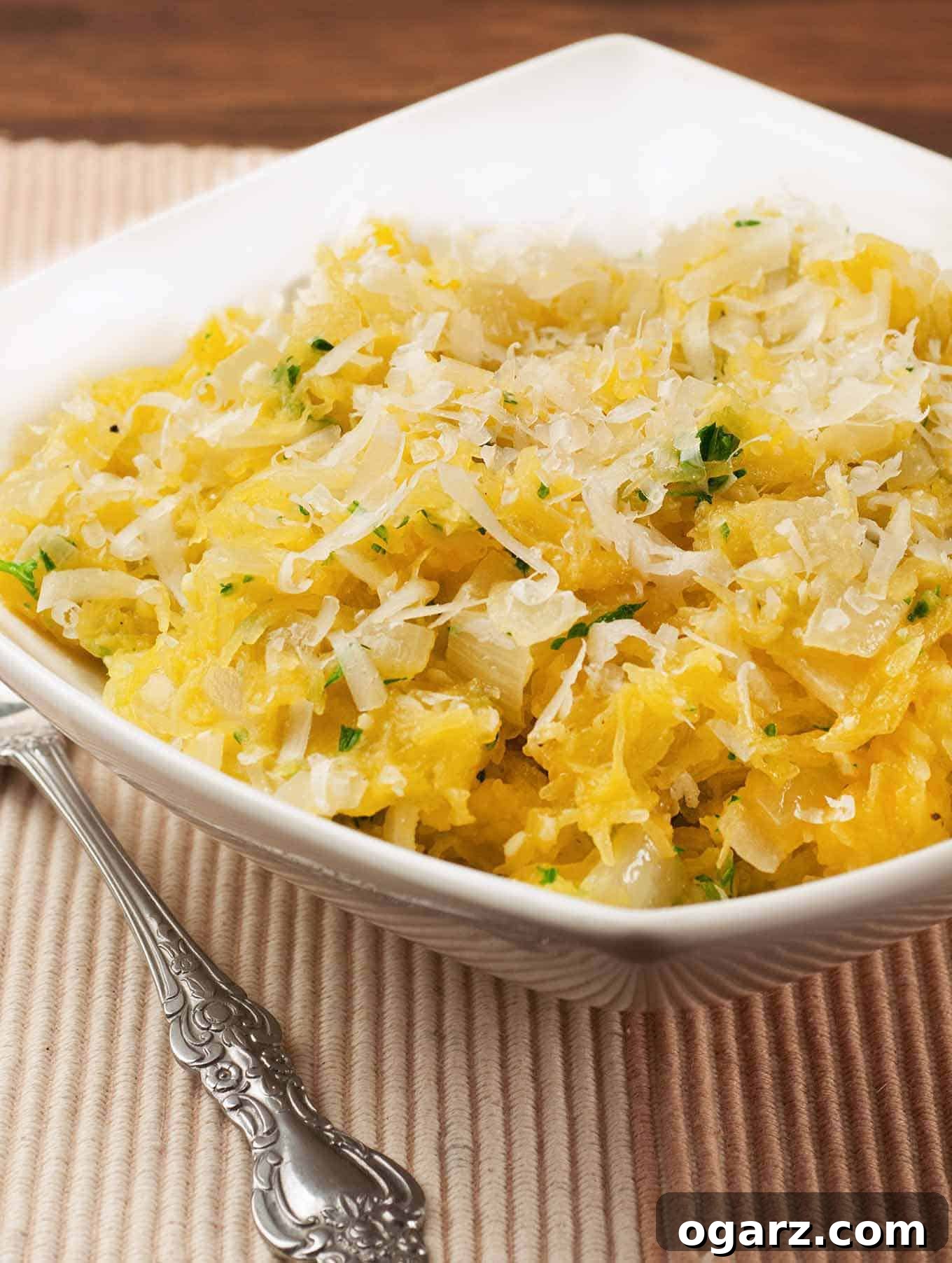
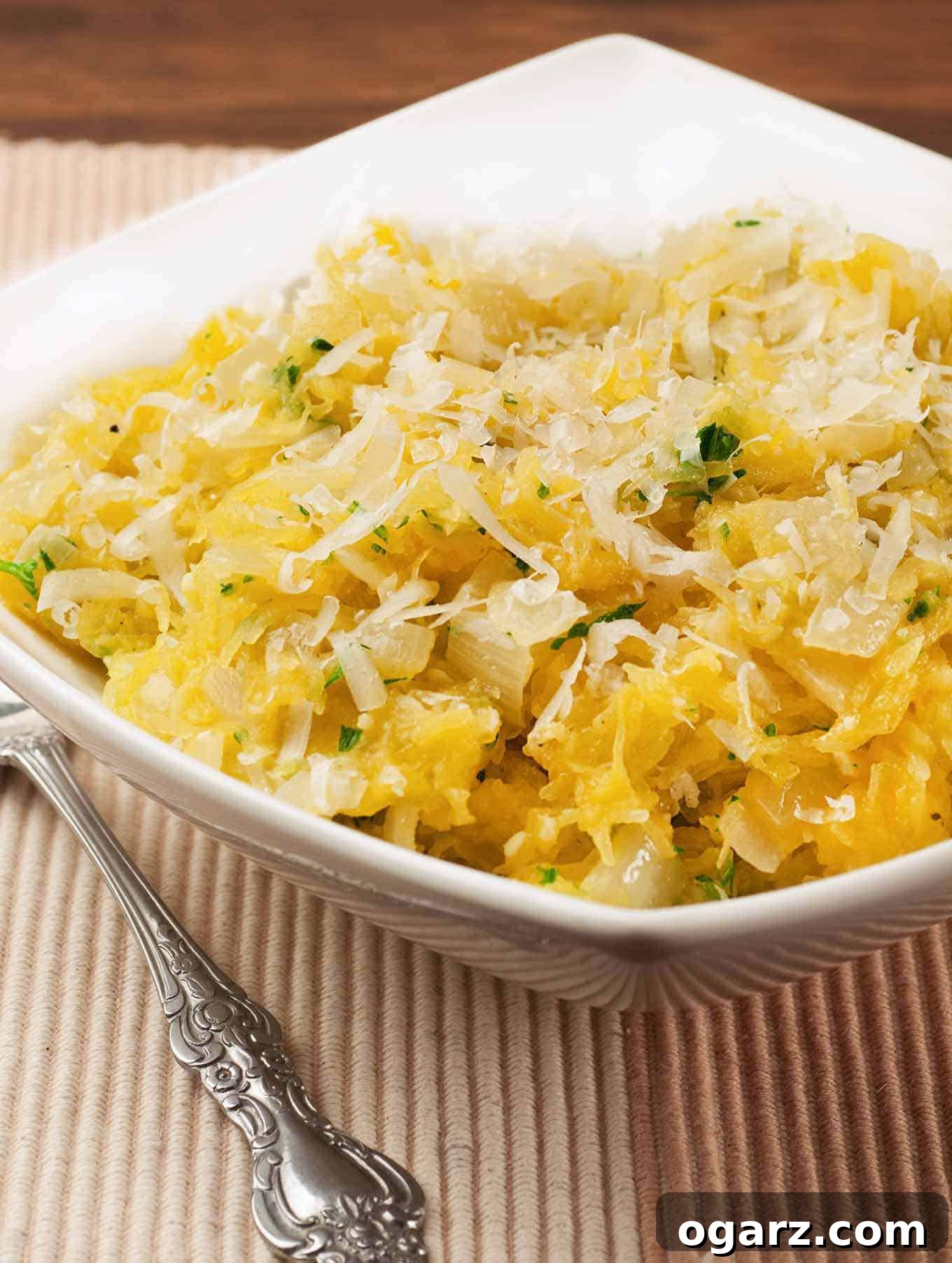
Garlic Parmesan Spaghetti Squash: Your Ultimate Healthy & Delicious Side Dish
Discover a remarkably delicious and incredibly versatile side dish that will revolutionize your weeknight dinners: Garlic Parmesan Spaghetti Squash. This recipe transforms humble roasted spaghetti squash strands into a flavorful, low-carb alternative to traditional pasta or potatoes, enriched with sautéed garlic, sweet onions, fresh parsley, and savory Parmesan cheese. It’s not just easy to make; it’s a culinary delight that pairs perfectly with a wide array of main courses, from succulent roasted chicken to delicate pan-seared fish or tender grilled pork. Whether you’re aiming for a healthier lifestyle, reducing your carbohydrate intake, or simply seeking new ways to enjoy vegetables, this dish promises satisfaction without compromise. Dive into this guide to master a dish that’s as nutritious as it is flavorful.
Why You’ll Fall in Love with This Garlic Parmesan Spaghetti Squash Recipe
There are countless reasons why this Garlic Parmesan Spaghetti Squash recipe deserves a permanent spot in your culinary repertoire. First and foremost, its incredible flavor profile stands out. The sweetness of caramelized onions combined with pungent garlic, herbaceous parsley, and sharp Parmesan cheese creates a symphony of tastes that elevates the mild squash to gourmet levels. Beyond taste, its health benefits are undeniable. Spaghetti squash is naturally low in calories and carbohydrates, making it an excellent choice for those following ketogenic, low-carb, or weight-management diets. It’s also packed with fiber, vitamins, and minerals, contributing to a well-balanced diet. Furthermore, the simplicity of preparation means you don’t need to be an experienced chef to achieve fantastic results. With minimal hands-on time, you can create a wholesome, impressive side that caters to various dietary needs and preferences, offering a refreshing alternative to heavier starches without sacrificing flavor or satisfaction.
What Exactly is Spaghetti Squash?
Spaghetti squash is a unique winter squash known for its distinctive flesh that separates into pasta-like strands when cooked. Unlike its denser counterparts like butternut or acorn squash, spaghetti squash has a milder, slightly nutty flavor and a firm, stringy texture that makes it an excellent substitute for traditional wheat-based pasta. This characteristic has earned it immense popularity among those seeking gluten-free, low-carb, or vegetable-forward alternatives. Nutritionally, it’s a powerhouse, offering a good source of Vitamin A, Vitamin C, B vitamins, and dietary fiber, all while being significantly lower in carbohydrates and calories than regular pasta. Understanding its unique properties is the first step to unlocking its full potential in your kitchen, transforming it from a simple vegetable into a versatile foundation for countless healthy meals.
Choosing and Storing the Perfect Spaghetti Squash
Selecting a ripe spaghetti squash is crucial for the best flavor and texture. Look for a squash that feels firm and heavy for its size, with no soft spots, bruises, or cracks. The skin should be a vibrant, uniform yellow or pale orange color, indicating ripeness. Avoid any squash with green patches, as this suggests it was picked too early. A dull, matte finish on the skin is also a good sign, whereas a shiny appearance might indicate immaturity. Once you’ve chosen your perfect squash, proper storage will help maintain its quality for weeks, or even months. Store whole spaghetti squash in a cool, dark, dry place, such as a pantry or basement, where it can last for 1 to 3 months. Avoid storing it in the refrigerator before cutting, as this can actually reduce its shelf life. Once cut, wrap any unused portions tightly in plastic wrap and refrigerate, consuming within 3-5 days.
The Art of Roasting Spaghetti Squash for Perfect Strands
Roasting is arguably the best method to prepare spaghetti squash, yielding tender, easily separated strands with a slightly caramelized flavor. The high heat of the oven brings out its natural sweetness and ensures a delightful texture. Here’s a detailed guide to achieving perfection:
- **Preparation:** Start by carefully cutting the spaghetti squash in half lengthwise. A sharp, sturdy knife is essential for this step. Be cautious, as the squash can be tough. For easier cutting, you can microwave the whole squash for 2-3 minutes to slightly soften the skin.
- **Seed Removal:** Scoop out the seeds and fibrous membranes from the center of each half using a spoon. Don’t worry about getting every tiny seed; just remove the bulk of it.
- **Seasoning:** Drizzle the cut sides with a little olive oil, then season generously with salt and freshly ground black pepper. This step enhances the flavor of the squash itself, providing a great foundation for the garlic and Parmesan.
- **Baking Setup:** Place the squash halves cut-side down in a baking dish. Add about a quarter-inch of water to the bottom of the dish. This creates a steamy environment that helps the squash cook evenly and prevents it from drying out, resulting in softer, more pliable strands.
- **Roasting:** Tent the baking dish loosely with aluminum foil. This helps to steam the squash initially, ensuring it cooks through without over-browning. Roast in a preheated oven (usually 375°F / 190°C) until the flesh is tender when pierced with a sharp knife or fork, typically 45 to 60 minutes, depending on the size of your squash.
- **Fluffing the Strands:** Once tender, remove the squash from the oven. Let it cool slightly until it’s comfortable to handle. Using a fork, gently rake the cooked flesh from the skin into a large bowl. You’ll see the distinct “spaghetti” strands emerge effortlessly. Discard the skins.
This roasting technique ensures your spaghetti squash is perfectly cooked and ready to absorb the incredible flavors of garlic, Parmesan, and fresh herbs, forming the base of our spectacular side dish.

Garlic Parmesan Spaghetti Squash
Lynne Webb
15 mins
1 hr 5 mins
1 hr 20 mins
4 servings
Rate Recipe
Print Recipe
Ingredients
- 1 medium spaghetti squash, 3 to 3-1/2 lbs
- 2 tablespoons olive oil
- 1 tablespoon butter
- 3/4 cup onion, chopped
- 4 cloves garlic, finely chopped
- 2 tablespoons fresh parsley, chopped
- Salt and fresh ground black pepper, to taste
- 1/4 cup Parmesan cheese, finely grated
Instructions
- Preheat your oven to 375°F (190°C).
- Carefully cut the spaghetti squash in half lengthwise. Using a spoon, scoop out all the seeds and fibrous membranes from both halves. Sprinkle the cut sides generously with salt.
- Place the squash halves, cut side down, in a baking dish. Add approximately 1/4 inch of water to the bottom of the dish.
- Loosely tent the baking dish with aluminum foil. Bake in the preheated oven for about 45 to 50 minutes, or until the squash flesh is very tender when pierced with a sharp knife.
- Remove the squash from the oven and let it cool slightly. Once cool enough to handle, use a fork to scrape the cooked flesh out of the skin, creating long, spaghetti-like strands. Transfer these strands to a large bowl and set aside.
- In a large skillet, heat the olive oil and butter over medium heat. Once the butter is melted and sizzling, add the chopped onion. Sauté the onion for 5 to 7 minutes, stirring occasionally, until it becomes soft, translucent, and lightly caramelized.
- Add the finely chopped garlic to the skillet with the onions. Continue to sauté for another 2 to 3 minutes, stirring constantly, until the garlic is fragrant but not browned.
- Add the cooked spaghetti squash strands to the skillet with the sautéed onion and garlic. Toss gently to combine all the ingredients thoroughly. Season the mixture generously with salt and fresh ground black pepper to taste. Continue to cook for 2 to 3 minutes, ensuring the squash is heated through and flavors are well integrated.
- Finally, stir in the fresh chopped parsley and finely grated Parmesan cheese. Toss again to ensure the cheese melts slightly and the parsley is evenly distributed. Serve immediately and enjoy your healthy, flavorful side dish!
Pro Tips for the Best Garlic Parmesan Spaghetti Squash
Achieving culinary perfection often lies in the details. Here are some expert tips to ensure your Garlic Parmesan Spaghetti Squash turns out fantastic every time:
- **Don’t Overcook:** While you want tender squash, avoid overcooking it to the point of mushiness. Overcooked squash loses its desirable “spaghetti” texture and can become watery. Check for doneness around the 45-minute mark.
- **Quality Ingredients Matter:** Fresh garlic and onion make a noticeable difference in flavor compared to pre-minced or powdered versions. Similarly, a block of Parmesan cheese grated fresh just before serving will have a superior taste and texture compared to pre-grated varieties.
- **Seasoning is Key:** Don’t be shy with salt and pepper. Spaghetti squash has a mild flavor on its own, so proper seasoning throughout the cooking process is essential to bring out its best. Taste and adjust as you go.
- **Adjust Garlic to Taste:** Four cloves of garlic provide a robust flavor, but if you’re a garlic lover, feel free to add an extra clove or two. If you prefer a milder garlic presence, reduce the amount slightly.
- **Caramelize Onions Properly:** The slight sweetness from lightly caramelized onions adds depth. Ensure you sauté them long enough to achieve that golden hue and tender texture before adding the garlic.
- **Add Fresh Herbs:** While parsley is specified, don’t hesitate to experiment with other fresh herbs like chives, basil, or even a touch of thyme or oregano for different flavor profiles. Add them at the very end to preserve their freshness and vibrant color.
- **Serving Temperature:** This dish is best served warm, immediately after preparation, when the cheese is just melted and the flavors are at their peak.
Serving Suggestions for Garlic Parmesan Spaghetti Squash
One of the beauties of Garlic Parmesan Spaghetti Squash is its incredible versatility. It shines as a standalone vegetarian meal but truly excels as a complementary side dish. Here are some ideas to inspire your next meal:
- **With Poultry:** Serve alongside roasted chicken breast, pan-seared turkey cutlets, or grilled chicken thighs. The light yet flavorful squash won’t overpower the poultry.
- **With Fish & Seafood:** It’s an excellent pairing for baked salmon, grilled cod, or even shrimp scampi. The garlic and Parmesan notes complement seafood beautifully.
- **With Pork:** Roasted pork loin, pork chops, or even a savory pork tenderloin are fantastic partners for this squash dish.
- **As a Vegetarian Main:** Enhance it with roasted cherry tomatoes, sautéed mushrooms, or a sprinkle of toasted pine nuts for a more substantial vegetarian entree. A fried egg on top can also make it a delightful breakfast or brunch option.
- **Under a Protein:** Use it as a base for hearty stews, chili, or even a rich bolognese sauce for a low-carb “pasta” experience.
- **With a Green Salad:** A simple green salad with a light vinaigrette provides a refreshing contrast to the rich flavors of the squash.
Variations & Customizations
This Garlic Parmesan Spaghetti Squash recipe is a fantastic starting point, but don’t hesitate to make it your own! Here are a few ideas to customize and vary the dish:
- **Add More Vegetables:** Incorporate diced bell peppers, spinach, zucchini, or cherry tomatoes during the sautéing process for added nutrients and color. Mushrooms would also be a delicious addition.
- **Spice It Up:** A pinch of red pepper flakes added with the garlic will give it a subtle kick. For more heat, add a dash of cayenne pepper.
- **Different Cheeses:** While Parmesan is classic, experiment with other cheeses. Grated Pecorino Romano offers a sharper, saltier flavor, while a touch of smoked gouda or mozzarella could add a creamy, comforting element.
- **Herbs Galore:** Beyond parsley, fresh basil, chives, oregano, or even a sprinkle of rosemary can completely change the aromatic profile.
- **Boost Protein:** For a complete meal, stir in cooked shredded chicken, crumbled turkey sausage, or sautéed chickpeas.
- **Creamy Texture:** For a richer dish, add a tablespoon or two of cream cheese or a splash of heavy cream at the very end, stirring until well combined.
- **Citrus Brightness:** A squeeze of fresh lemon juice or a dash of lemon zest at the end can brighten up all the flavors.
Explore More Delicious Squash Recipes:
- Spaghetti Squash with Tomatoes and Rosemary
- Pork and Squash Skillet Dinner
- Roasted Butternut Squash and Chestnut Soup
- Huevos Rancheros Inspired Spaghetti Squash
Frequently Asked Questions About Spaghetti Squash
- Can I prepare spaghetti squash ahead of time?
- Yes, you can roast the spaghetti squash ahead of time. Once cooled, rake out the strands and store them in an airtight container in the refrigerator for up to 3-4 days. When ready to serve, gently reheat the squash with the sautéed onion, garlic, and other ingredients.
- Is spaghetti squash truly a good pasta substitute?
- While it won’t perfectly mimic the chewiness of wheat pasta, spaghetti squash offers a fantastic low-carb, gluten-free alternative. Its mild flavor and noodle-like strands make it an excellent base for sauces and savory toppings, providing a satisfying texture without the heavy carb load.
- How do I get longer spaghetti squash strands?
- To maximize strand length, cut the squash crosswise into rings instead of lengthwise. This allows you to rake out longer strands. However, cutting it lengthwise is generally easier and safer, and still yields plenty of “noodles” for this recipe.
- Can I freeze cooked spaghetti squash?
- Yes, you can freeze cooked spaghetti squash strands. Allow them to cool completely, then place them in an airtight freezer-safe bag or container. It can be frozen for up to 6 months. Thaw in the refrigerator overnight before reheating and incorporating into your dish.
- What if my spaghetti squash is too hard to cut?
- If your squash is exceptionally firm, pierce it several times with a fork and microwave it whole for 2-4 minutes. This will soften the skin slightly, making it much easier and safer to cut in half.
Enjoyed this recipe? Share your thoughts and rate it below!