
Irresistible Buttery Orange Biscotti: Two Delicious Variations for Every Occasion
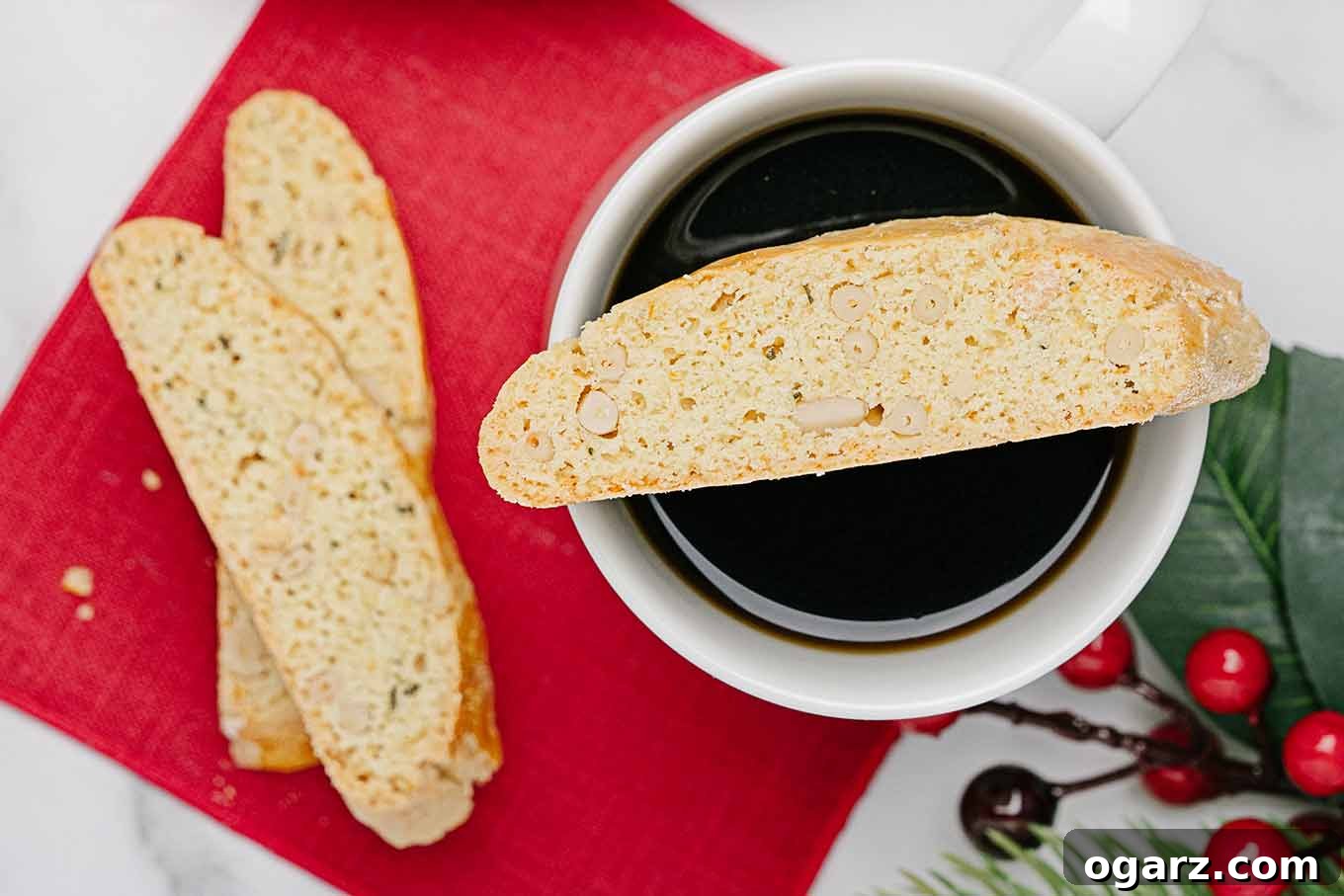
Biscotti, those delightful twice-baked Italian cookies, are a testament to simple elegance. While the traditional Italian version is famously hard and crunchy, perfect for dipping into Vin Santo, the American style incorporates butter to achieve a softer, lighter, and more tender texture. This makes them incredibly versatile and appealing to a wider palate. Because they are relatively easy to prepare and boast an impressive shelf life, these buttery orange biscotti are an ideal choice for holiday baking, thoughtful gift-giving, or simply a sweet treat to enjoy with your morning coffee or afternoon tea.
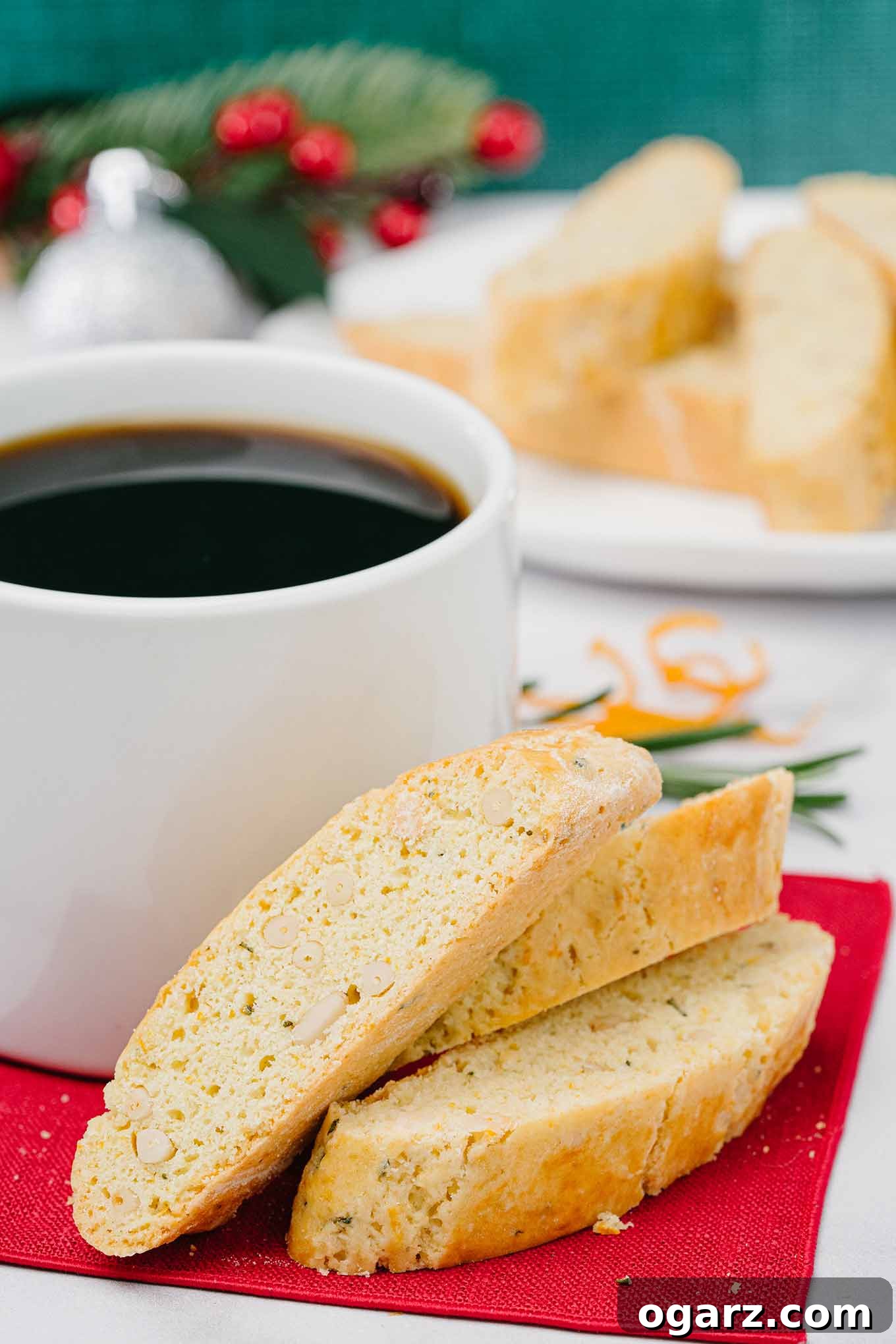
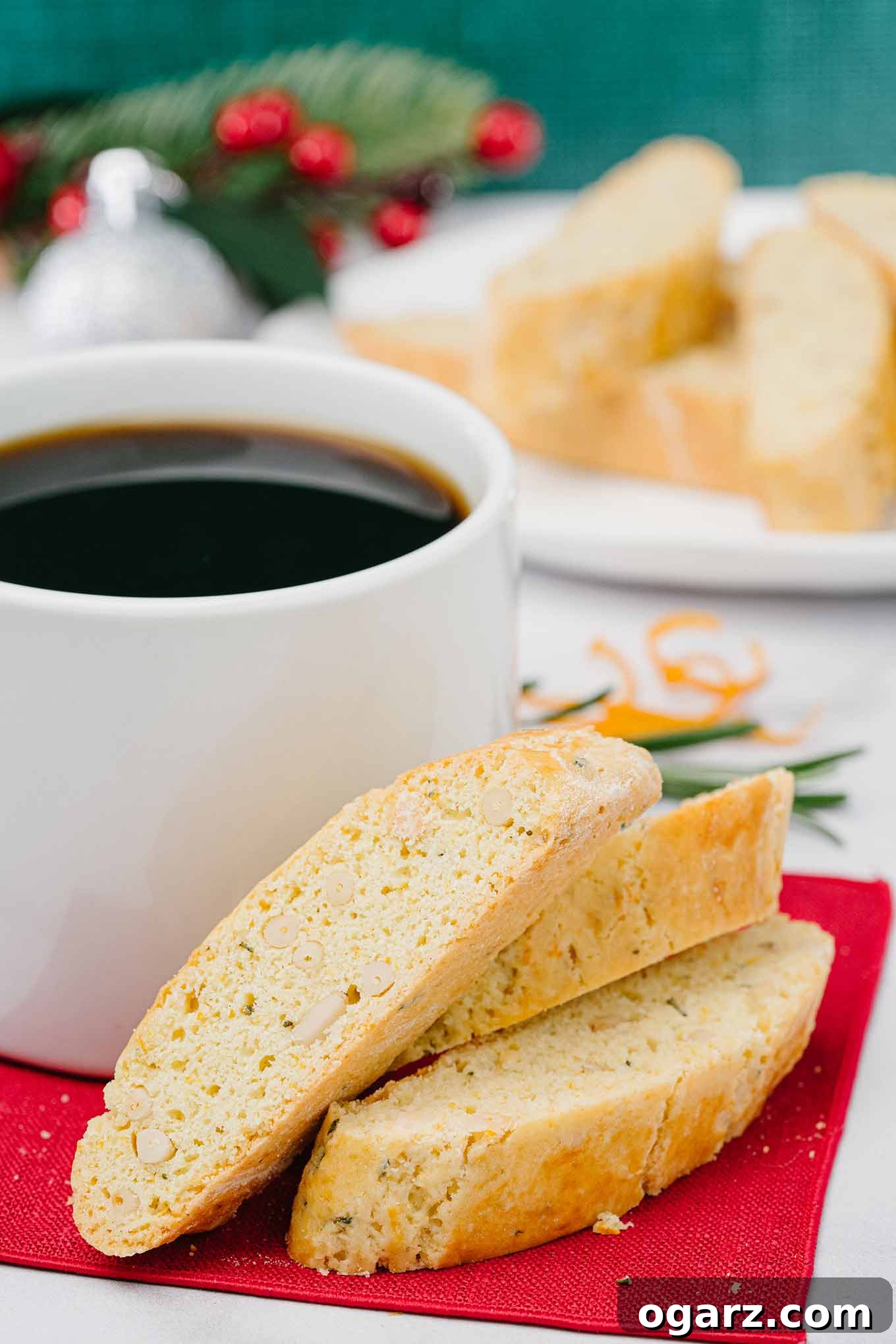
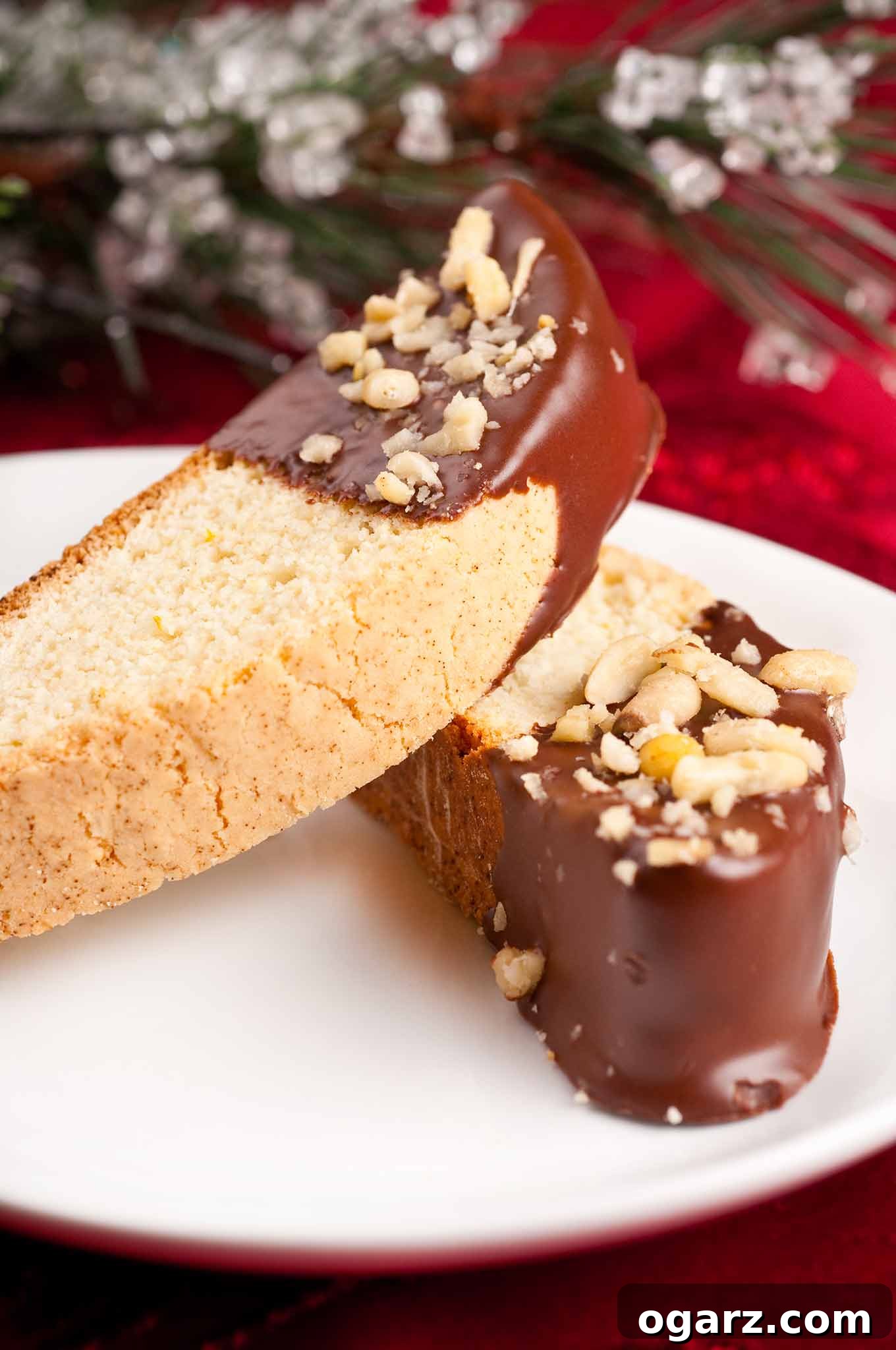
Our recipe for buttery orange biscotti takes this beloved cookie to new heights with a vibrant citrus flavor profile. We’ve crafted a fundamental recipe infused with orange liqueur, fresh orange zest, and, of course, butter, then developed two distinct, equally delicious variations. One version features the delightful crunch of pine nuts and a subtle herbaceous hint of chopped rosemary mixed directly into the dough. The other offers a decadent experience, with each biscotto dipped in rich chocolate and sprinkled with additional chopped nuts for an extra layer of texture and flavor. Both promise a uniquely satisfying experience, perfect for any cookie lover.
Essential Ingredients for Perfect Orange Biscotti
Crafting these exquisite biscotti begins with selecting the right core ingredients. While the full list with precise quantities is provided in the recipe card below, understanding the role of each key component will help you achieve the best possible results.
The Citrus Core: Orange Liqueur and Fresh Zest
- Orange Liqueur: A small amount of orange liqueur, such as triple sec or the more refined Grand Marnier, plays a crucial role in these biscotti. It imparts a concentrated, deep orange flavor and an enticing aroma that elevates the cookies beyond simple citrus notes. The alcohol cooks off during baking, leaving behind only its essence. For those preferring a non-alcoholic option, combining orange extract with a touch of milk offers a suitable substitute without compromising on flavor intensity.
- Orange Zest: Freshly grated orange zest is indispensable for enhancing the bright, citrusy character of these cookies. The zest, which contains the essential oils of the orange, provides a burst of natural flavor that complements the liqueur beautifully. Always use a microplane or fine grater to extract only the colored part of the peel, avoiding the bitter white pith.
The Heart of Softness: Butter
- Unsalted Butter: The defining characteristic of American-style biscotti is their softer, more tender texture, and this is largely due to the addition of butter. We strongly recommend using unsalted butter for all your baking endeavors. This allows you to control the total salt content in your recipe, ensuring a balanced flavor profile. Softened butter creams beautifully with sugar, creating a light and airy base for the dough.
Flavorful Additions: Optional Mix-Ins and Toppings
Once you’ve mastered the basic orange biscotti dough, the real fun begins with customizing your cookies. These optional additions allow you to create distinct variations from a single foundational recipe.
- Pine Nuts (Pignoli): Toasted pine nuts are a fantastic addition, contributing both a delicate crunch and an extra layer of buttery, nutty flavor that harmonizes wonderfully with the orange. Toasting them gently before mixing enhances their aroma and taste profile.
- Fresh Rosemary: Finely chopped fresh rosemary introduces a subtle, aromatic herbaceous background flavor. This unexpected pairing with orange is a classic in many culinary traditions, offering a sophisticated and unique twist to your biscotti. Ensure the rosemary is very finely minced to integrate well into the dough.
- Semi-Sweet Chocolate: For the decadent chocolate-dipped version, semi-sweet chocolate chips are our go-to choice (Ghirardelli is a reliable brand). Their balanced sweetness pairs perfectly with the citrusy biscotti. While dark chocolate can be used, it requires more careful melting to achieve a smooth consistency, and the microwave method may need adjustment. White chocolate or milk chocolate are also delightful alternatives for those seeking a different flavor profile.
Crafting Buttery Orange Biscotti: A Step-by-Step Guide
Making American-style biscotti with butter is a rewarding process, yielding delicious results. Here’s a quick overview of the essential steps. Detailed, step-by-step instructions, including specific quantities, are found in the printable recipe card below.
Preparation is Key
Before You Begin: Start by preheating your oven to 350°F (175°C). Line a large baking sheet with parchment paper to prevent sticking and ensure even baking. Lightly dust the parchment paper with a generous amount of flour. This crucial step helps prevent the sticky dough from adhering to the paper during shaping, making the process much smoother.
Mixing the Perfect Biscotti Dough
In a medium bowl, sift together the all-purpose flour, baking powder, and salt. Sifting ensures that these dry ingredients are well combined and free of lumps, leading to a consistently textured biscotti. In a separate, larger mixing bowl, cream the softened butter and sugar together until the mixture is light, fluffy, and pale in color. This process incorporates air, contributing to the biscotti’s tender crumb. Gradually beat in the eggs, one at a time, followed by the vanilla extract, orange liqueur, and fresh orange zest until the mixture is light and smooth. Finally, gradually add the sifted dry ingredients to the wet mixture, combining gently with a spatula until just incorporated. It’s essential not to overmix the dough, as this can lead to tough biscotti. Stop mixing as soon as no streaks of flour remain.
Flavor Variation Note: If you are preparing the orange-rosemary version, this is the stage to gently fold in the toasted pine nuts and finely chopped fresh rosemary. If you’re opting for the chocolate-dipped version, proceed directly to the next step. (Refer to the recipe notes section below for guidance on splitting the dough to make both varieties from a single batch).
Shaping and the First Bake
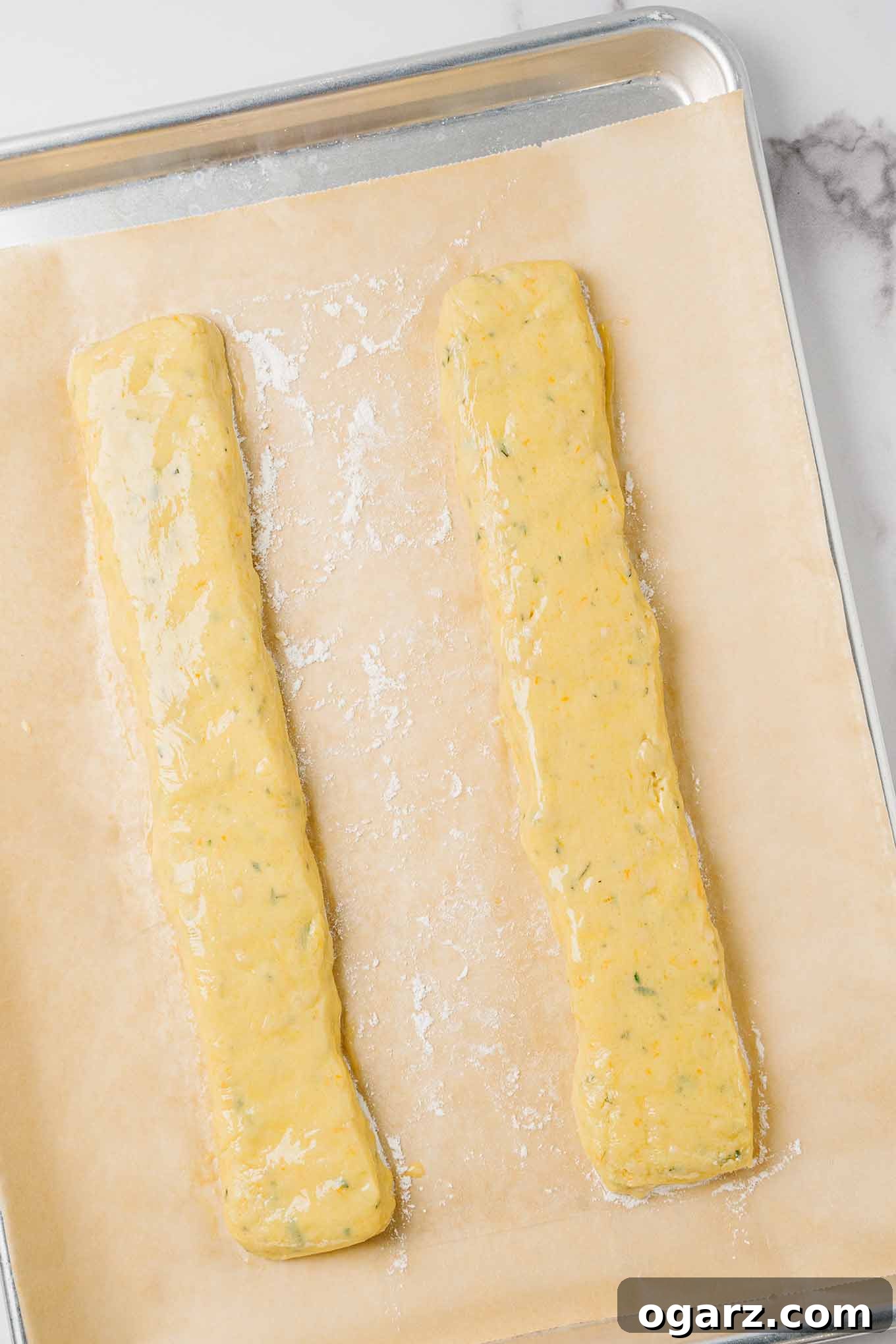
Forming the Dough Logs: The biscotti dough will be somewhat sticky, which is perfectly normal for a buttery version. Divide the dough into two equal portions and spoon each onto the prepared, floured baking sheet. With well-floured hands, gently form each portion into a log approximately 10 inches long, 2 inches wide, and about 3/4 inch high. Take your time to smooth and shape the logs evenly, re-flouring your hands as needed. Uniform logs ensure that your biscotti slices will be consistent in size and bake evenly.
Optional Egg Wash (Orange-Rosemary Version): If you are making the orange-rosemary variation, brush the logs liberally with an egg wash (one egg beaten with a tablespoon of water) after shaping. This creates a beautiful golden sheen and a slightly crispier crust. For the chocolate-dipped version, this step is unnecessary.
The First Baking: Place the baking sheet into the preheated oven and bake for 25 to 30 minutes. Midway through the baking time, rotate the pan 180 degrees to ensure even cooking and browning. The logs are done when they appear golden brown and may have developed a few slight cracks on their surface. These cracks are a natural part of the biscotti’s character. Remove the logs from the oven and let them cool on the baking sheet for a crucial 10 minutes. This cooling period helps the logs firm up, making them easier to slice without crumbling. While they cool, lower your oven temperature to 325°F (160°C) in preparation for the second bake.
Slicing and the Second Bake
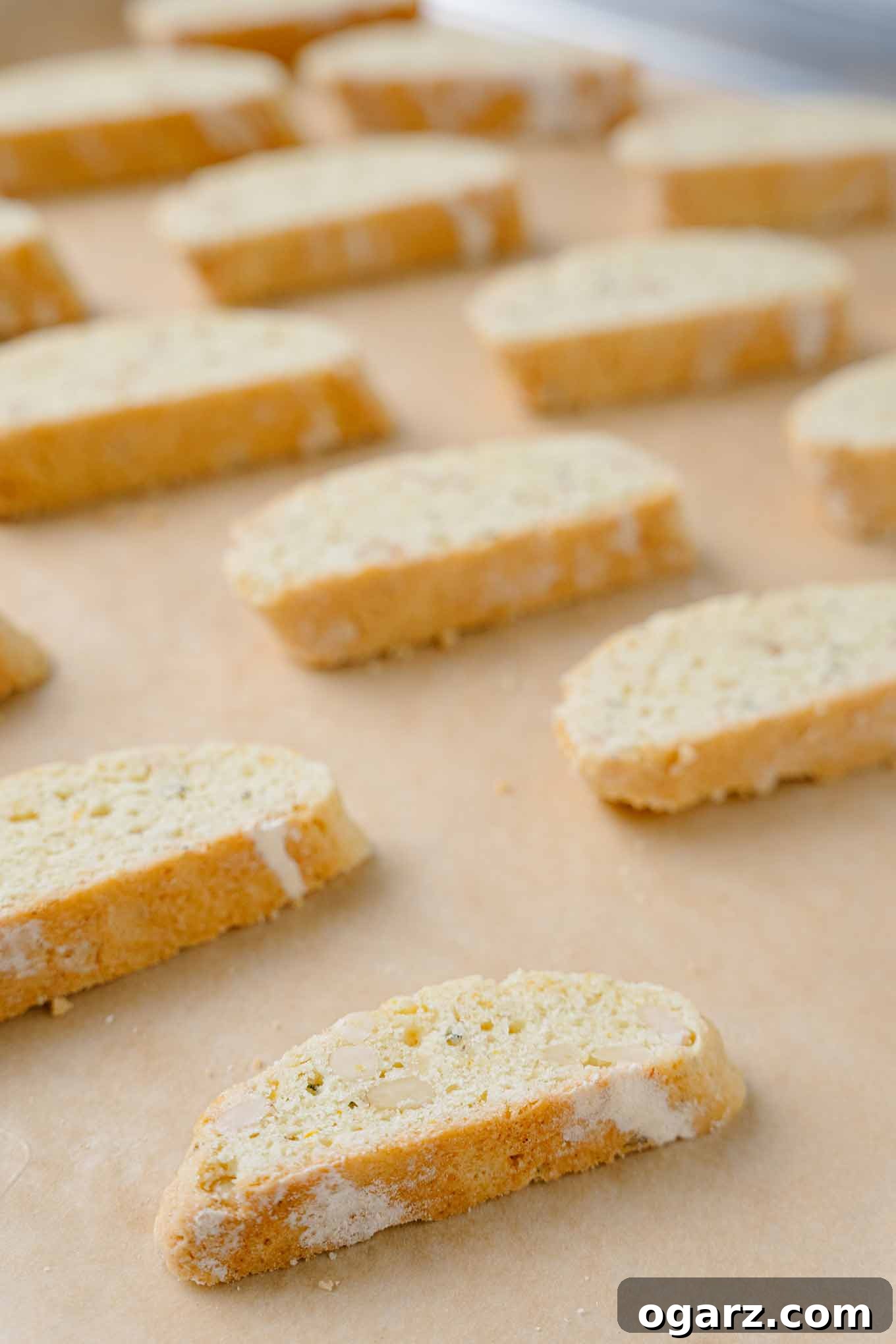
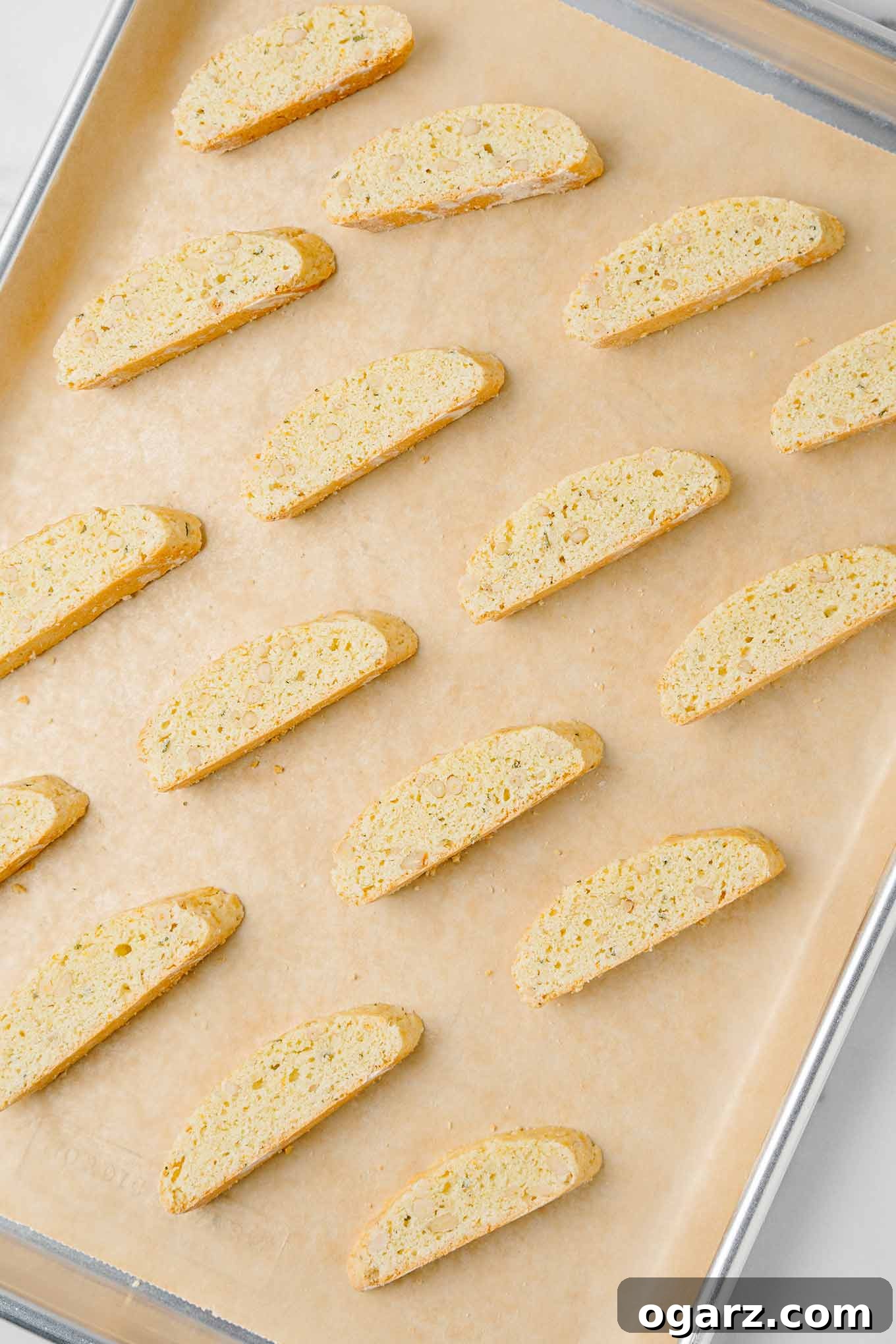
Slicing the Biscotti: Once the logs have cooled slightly, transfer them to a cutting board. Using a sharp serrated knife or a bread knife, carefully cut each log on the diagonal into slices approximately 3/8-inch thick. The serrated edge helps to cleanly cut through the crust without crushing the delicate interior. Line your baking sheet with a fresh sheet of parchment paper (no flour needed this time) and arrange the sliced biscotti about 1/2 inch apart. Give them space to crisp up evenly.
The Second Baking (The “Biscotti” Step): Return the baking sheet with the sliced biscotti to the oven. Bake for 10 minutes. After this initial period, remove the baking sheet, carefully flip each biscotti over, and then bake for an additional 10 minutes. This twice-baked process is what gives biscotti their characteristic crisp texture. The exact baking time for this second phase can be adjusted based on your preference for crispness – some prefer a slightly chewier biscotti, while others crave maximum crunch. Once baked to your liking, remove the biscotti from the oven and transfer them to wire racks to cool completely. Cooling on a rack ensures air circulation, preventing them from becoming soggy.
Elevate with Chocolate: The Dipped Variation
For those making the chocolate-dipped version, these final steps add a luxurious finish.
- Cool Completely: It is imperative that the biscotti cool completely to room temperature before dipping, which typically takes about 30 minutes. Dipping warm biscotti into chocolate will cause the chocolate to melt unevenly and won’t set properly.
- Melt the Chocolate: Place your semi-sweet chocolate chips in a microwave-safe measuring cup or a small bowl. Heat them in the microwave on 50% power for 1 to 1-1/2 minutes. Remove and stir. Continue heating in short 15-second increments, stirring after each, until the chocolate is completely melted and beautifully smooth. Be careful not to overheat the chocolate, as it can seize or burn. Alternatively, you can melt the chocolate using a double boiler for a more controlled process.
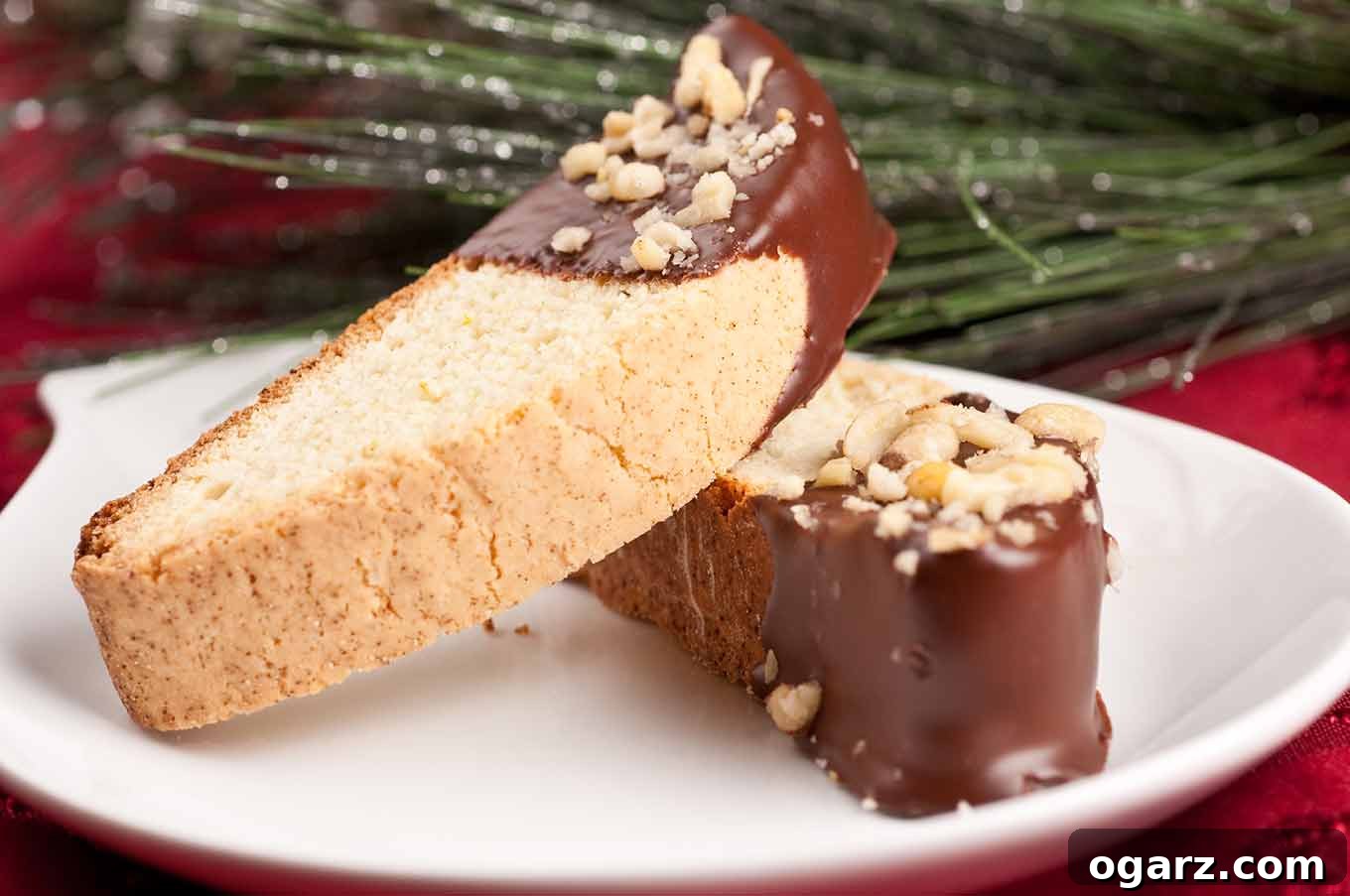
- Dip and Sprinkle: Line a clean baking sheet with wax paper. Working with one biscotti at a time, dip one end of the cooled cookie into the melted chocolate, coating it to your desired extent. Allow any excess chocolate to drip off, then immediately place the dipped biscotti on the wax paper. While the chocolate is still wet, sprinkle it generously with some finely chopped toasted pine nuts. The immediate sprinkling ensures the nuts adhere beautifully. Repeat this process with all the remaining biscotti.
- Harden and Serve: Allow the chocolate to harden completely at room temperature or, if you’re in a hurry, briefly in the refrigerator, before storing or serving. This ensures a clean, non-messy finish.
Recipe Notes & Essential Tips for Success
Here are some additional insights and tips to ensure your buttery orange biscotti turn out perfectly every time.
For an Alcohol-Free Version
If you prefer to omit the orange liqueur, simply substitute 1/2 teaspoon of good quality orange extract for the liqueur and add 2 teaspoons of milk to the wet ingredients. This will maintain the vibrant orange flavor without any alcohol.
Making Both Orange Rosemary & Chocolate Dipped Biscotti
This recipe is wonderfully adaptable for making a half batch of each delightful variety. Here’s how to do it efficiently:
- Begin by cutting the quantities of pine nuts, rosemary, and chocolate chips specified in the recipe card in half.
- Once you have thoroughly combined the wet and dry ingredients to form the initial dough, carefully remove half of this dough from the mixing bowl. This portion will be used for your chocolate-dipped biscotti. Proceed with shaping this half into a log on your prepared baking sheet as directed in the main instructions.
- With the remaining half of the dough in the bowl, mix in the reduced quantity of pine nuts and finely chopped rosemary. After these are evenly distributed, form this portion into a second log on the same baking sheet. Remember to brush this log liberally with the egg wash to achieve that beautiful golden finish.
- The baking time for both varieties remains exactly the same. Follow the detailed instructions for both the first and second baking phases, as well as the chocolate-dipping steps for that particular variation, once the biscotti have cooled.
How to Store Your Delicious Biscotti
Because these American-style biscotti are enriched with butter, their shelf life is slightly shorter than their harder, butter-free Italian counterparts. Proper storage is crucial to maintain their freshness and flavor:
- Room Temperature: Store your cooled biscotti in a tightly sealed, airtight container at room temperature. They will remain fresh and delightful for up to 10 days.
- Refrigeration: For extended freshness, you can refrigerate the biscotti in an airtight container. When ready to serve, simply bring them back to room temperature to enjoy their optimal texture and flavor.
- Freezing: Biscotti freeze exceptionally well. Arrange them in a single layer on a baking sheet to freeze solid, then transfer them to an airtight freezer-safe bag or container. They can be frozen for up to 2-3 months. Thaw them at room temperature before serving.
5 Expert Tips for Baking Flawless Biscotti
Achieving perfect biscotti is within your reach with these helpful tips and tricks:
- Taming Sticky Dough: Biscotti dough, especially the buttery American style, can be quite sticky. To make shaping the logs easier, keep your hands well-floured. A fine mesh strainer with flour works wonders for dusting your hands periodically. Alternatively, some bakers find success using slightly wet hands to smooth and shape the dough without the need for additional flour. Experiment to find what works best for you.
- Achieving Smooth Logs: Beyond floured or wet hands, a wet spatula can be an invaluable tool for gently smoothing the dough logs into their desired uniform shape. This helps create a consistent appearance and ensures even baking.
- Cooling is Crucial Before Slicing: Always allow the baked logs of biscotti to cool significantly before attempting to slice them. Cutting hot or even warm logs will likely result in crumbling and an uneven cut. The slight cooling allows the structure to set.
- The King Arthur Slicing Secret: Here’s a brilliant tip from King Arthur Baking Company: Once your biscotti logs have cooled sufficiently, lightly spritz their tops with water using a clean spray bottle. This softens the crust just enough to prevent excessive crumbling when you slice them with your serrated knife, resulting in cleaner, more intact individual biscotti.
- Customizing Crispness: The second baking time is where you truly customize your biscotti’s texture. The recommended time in the recipe will yield a pleasantly crisp cookie. However, if you prefer an extra-crunchy result, after the initial second bake, turn the biscotti over and continue baking them. Check them every 5 minutes until they reach your desired level of crispness. Keep a close eye on them to prevent burning.

Buttery Orange Biscotti (Two Ways)
By Lynne Webb
Add this buttery orange biscotti recipe to your holiday cookie assortment. There are two versions to try – chocolate-dipped and orange-rosemary. Both are flavored with orange zest, orange liqueur, and pine nuts. They’re perfect for gift giving.
Prep: 15 mins
Cook: 50 mins
Total: 1 hr 5 mins
Servings: 36 biscotti
Rate Recipe
Print Recipe
Ingredients
- 2 cups all-purpose flour
- 1 teaspoon baking powder
- 1/4 teaspoon salt
- 4 tablespoons unsalted butter, softened
- 1 cup sugar
- 2 eggs, lightly beaten
- 1/2 teaspoon vanilla extract
- 1 tablespoon orange liqueur (see notes for an alcohol-free substitution)
- Zest of 1 large orange, about 1-1/2 tablespoons
For the orange-rosemary version:
- 1/2 cup pine nuts, toasted
- 1 to 1-1/2 tablespoons fresh rosemary, finely chopped
- 1 egg, beaten with 1 tablespoon water (for egg wash)
For the chocolate-dipped version:
- 1/2 cup semi-sweet chocolate chips
- 1/4 cup pine nuts, toasted and roughly chopped (for sprinkling)
Instructions
- Preheat the oven to 350°F (175°C). Line a baking sheet with parchment paper, dust it with a generous amount of flour, and set aside.
- Sift the flour, baking powder, and salt together in a medium bowl.
- In a separate, larger bowl, cream the butter and sugar together until light and fluffy. Add the eggs, vanilla, orange liqueur, and orange zest and beat until light and smooth.
- Gradually add the dry ingredients and combine gently with a spatula. Do not overmix. NOTE: If you’re making the orange-rosemary version, stir the pine nuts and chopped rosemary in now. If you’re making the chocolate-dipped version, skip to the next step. (See notes for cutting quantities and making one log of each).
- Spoon the dough onto the prepared baking sheet in two equal portions. With well-floured hands, form each portion into a 10 x 2-inch log about 3/4-inch high.
- Smooth and shape the logs evenly, flouring your hands again if needed. NOTE: If you’re making the orange-rosemary version, brush liberally with the egg wash after you’ve formed the logs. If you’re making the chocolate-dipped version, skip this step.
- Bake for 25 to 30 minutes, turning the pan once midway through to ensure even cooking. When the logs are done, they will be golden in color and may have developed a few slight cracks on the top. Remove from the oven and cool for 10 minutes. Lower the oven temperature to 325°F (160°C).
- Using a serrated or bread knife, cut each log on the diagonal into 3/8-inch thick slices. Line the baking sheet with a fresh sheet of parchment (no flour needed) and arrange the biscotti about 1/2 inch apart.
- Bake for 10 minutes. Remove the biscotti from the oven, flip each one over, then bake for an additional 10 minutes. Remove from the oven and cool the biscotti on wire racks.
For the chocolate-dipped biscotti:
- Let the biscotti cool completely to room temperature for about 30 minutes.
- Place the chips in a microwave-safe measuring cup and cook on 50% power for 1 to 1-1/2 minutes, then stir. Continue heating in 15-second increments, stirring each time, until completely melted and smooth.
- Line a baking sheet with wax paper. Working one biscotti at a time, dip one end into the melted chocolate, place on the wax paper, and sprinkle immediately with some chopped pine nuts.
- Repeat with the remaining biscotti and allow the chocolate to harden completely before storing or serving.
Notes
For an Alcohol-Free Version
Substitute 1/2 teaspoon orange extract for the orange liqueur and add 2 teaspoons of milk.
Splitting the Recipe: Orange Rosemary & Chocolate Dipped
If you want to make a half batch of each variety:
- Cut the quantities of pine nuts, rosemary, and chocolate chips in half.
- Once you’ve combined the wet and dry ingredients into a dough, remove half of it from the mixing bowl for the chocolate-dipped version and proceed through forming the log on the baking sheet with that portion.
- With the remaining dough, mix in the reduced quantity of pine nuts and rosemary, then proceed with forming that log on the baking sheet and brushing it with the egg wash.
- Baking time is the same for both varieties. Follow the recipe instructions for the chocolate-dipped version.
How to Store Biscotti
Because these biscotti are made with butter, they have a slightly shorter shelf life than those made without butter. Here’s how to store them:
Biscotti can be stored in a tightly sealed container for up to 10 days. You can also refrigerate (or freeze and defrost) them, just be sure to bring them to room temperature before serving.
Nutrition
Calories: 76, Total Fat: 3g, Cholesterol: 12mg, Sodium: 32mg, Carbohydrates: 11g, Fiber: 1g, Sugar: 6g, Protein: 1g
Nutrition information is automatically calculated, so should only be used as an approximation.