
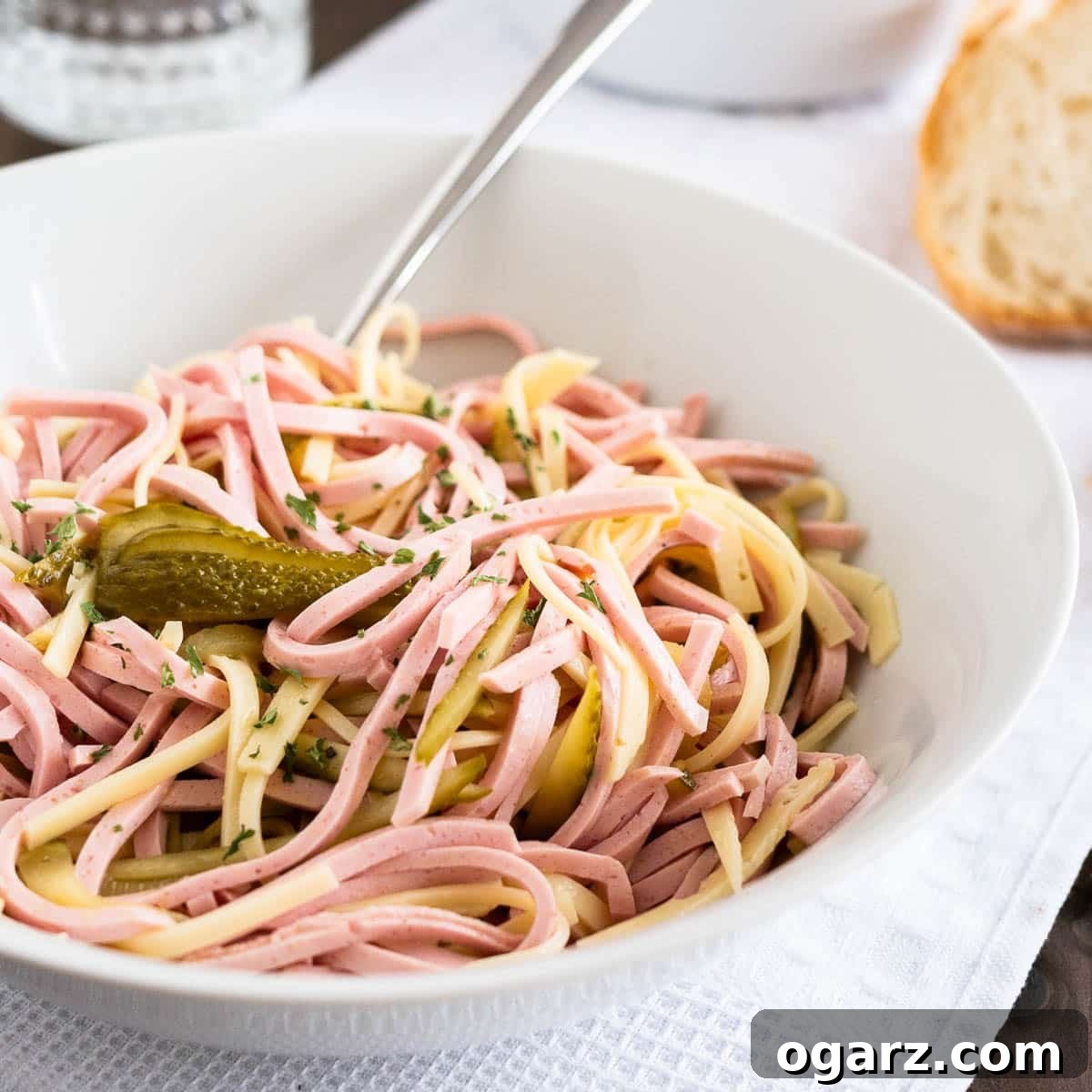
Wurstsalat: The Quintessential German Sausage Salad for Any Occasion
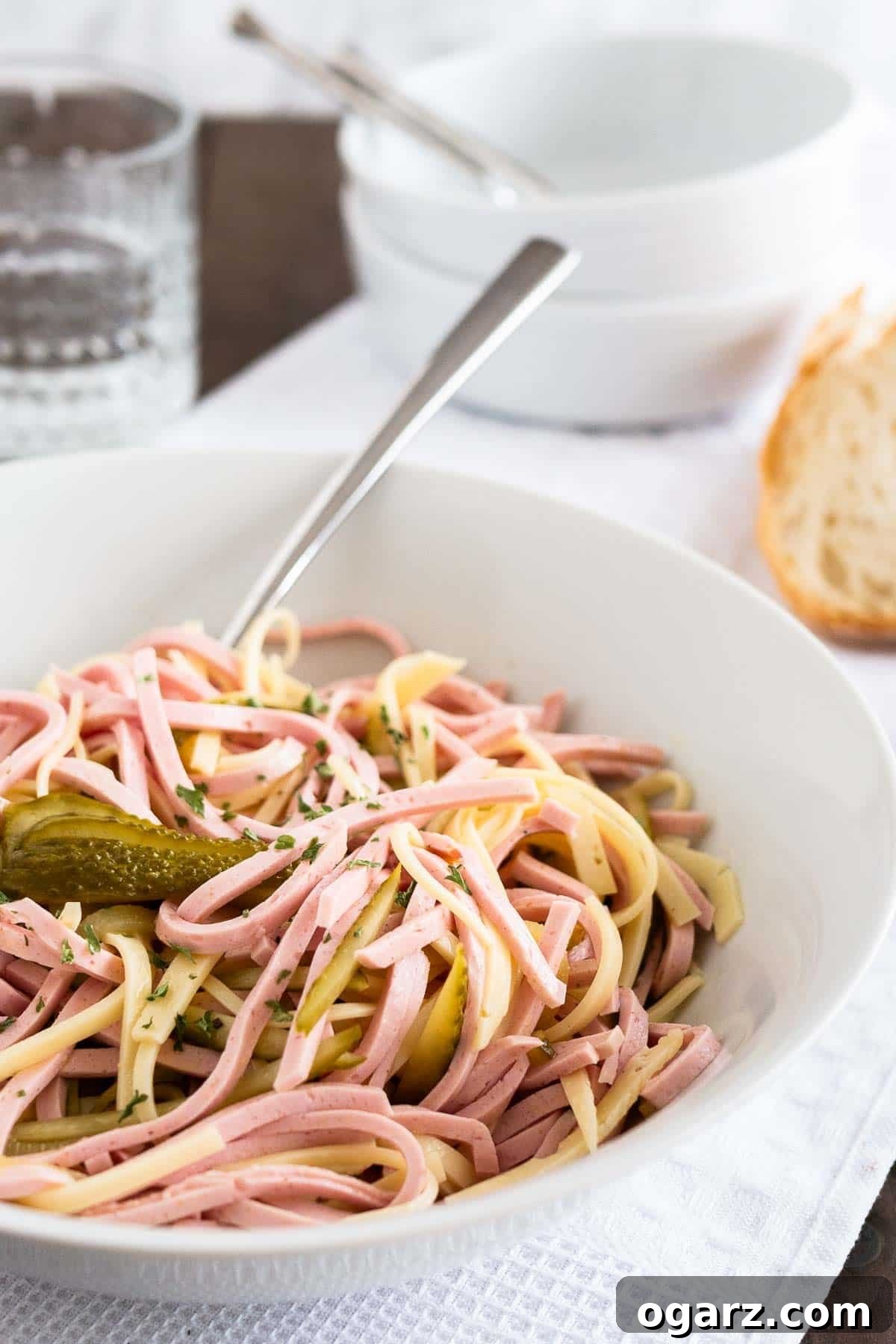
Step into any traditional Bavarian restaurant or bustling beer garden, especially during the warmer months, and you’re almost guaranteed to find one dish taking center stage: Wurstsalat. This refreshing German sausage salad, a beloved staple across Germany, Austria, and Switzerland, is the epitome of simple elegance and robust flavor. Made with thinly sliced sausage, typically Emmentaler cheese, and crisp pickles all coated in a vibrant, tangy vinaigrette, Wurstsalat is far more than just a salad—it’s a cultural icon, a perfect summer dish, and a fantastic meal for any time of year.
Whether you’re planning a quick weeknight dinner, a leisurely lunch, or an authentic spread for your Oktoberfest celebration, Wurstsalat delivers. It’s incredibly easy to prepare, often taking less than 15 minutes, making it a go-to for delicious German fare without the fuss. Served traditionally with hearty rustic bread to soak up every last drop of the delectable dressing, it offers a satisfying and flavorful experience that will transport your taste buds straight to the heart of Bavaria.
For those eager to explore more traditional German summer flavors, don’t miss our German Cucumber Salad Recipe, offering crisp coolness, or our Authentic German Potato Salad, a warm, savory classic that perfectly complements any meal.
Why This Wurstsalat Recipe Stands Out
While Wurstsalat might seem straightforward, the nuances of an authentic recipe can elevate it from good to truly unforgettable. Our rendition brings generations of Bavarian culinary wisdom to your kitchen, ensuring a result that’s both easy to achieve and incredibly flavorful. Here’s why you’ll love it:
- A Cherished Family Tradition: This isn’t just any recipe; it’s a secret family gem passed down from my husband’s aunt, who once served it in her own restaurant in Germany. This heritage ensures an authentic taste profile that’s hard to replicate.
- Effortless Preparation: Forget complicated steps or lengthy cooking times. Our Wurstsalat comes together in less than 20 minutes, making it ideal for busy schedules without compromising on taste.
- Enhanced Flavor & Longevity: We incorporate a clever tip: adding fresh, thinly sliced onions just before serving. This simple technique not only enhances the salad’s crispness and pungent flavor but also helps the salad keep longer in the refrigerator, ensuring fresh taste with every bite.
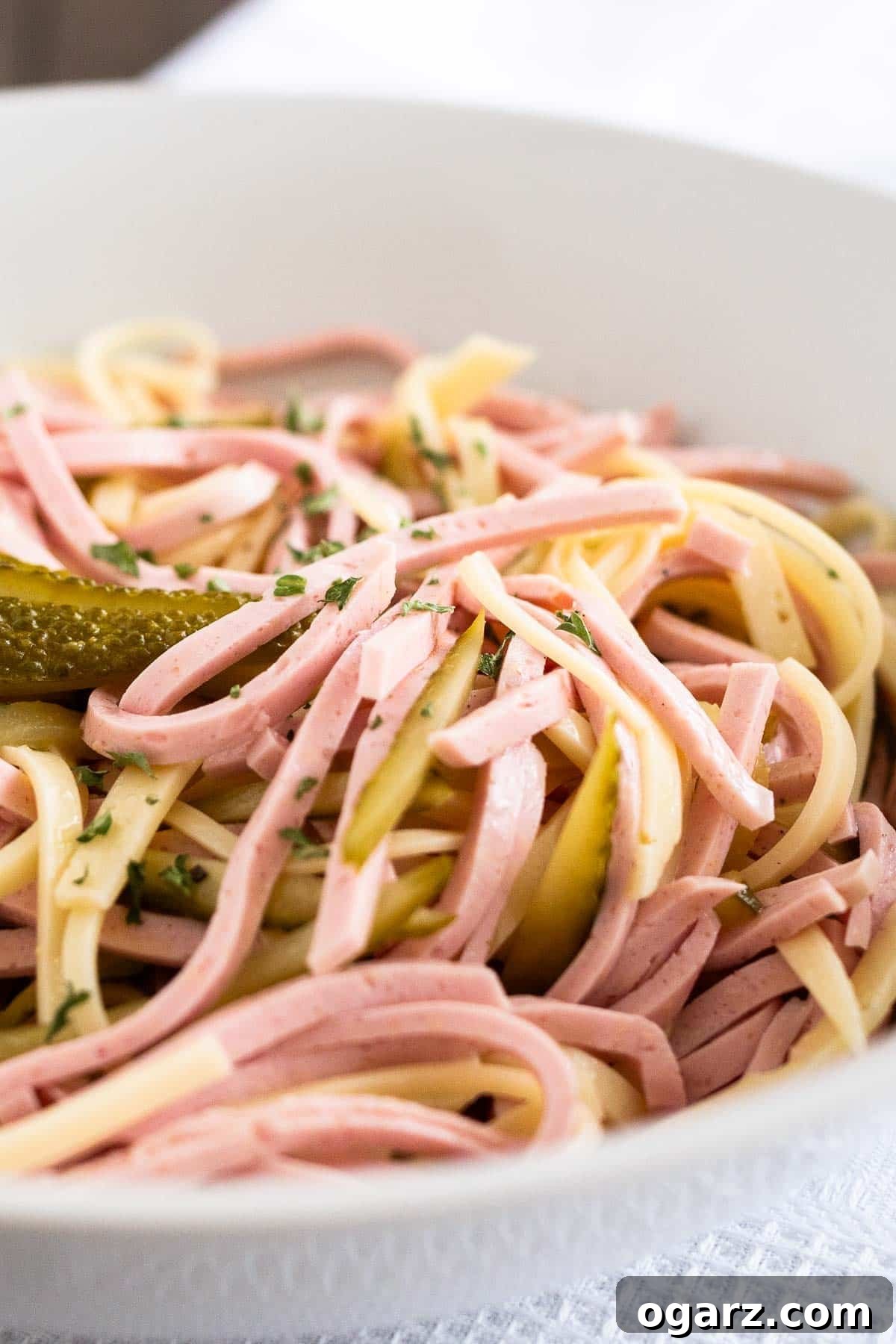
Mastering Your Wurstsalat: Key Ingredient Insights
The beauty of Wurstsalat lies in its simplicity, but selecting the right ingredients is crucial for achieving that authentic German flavor profile. Here’s a closer look at the components that make this salad truly special:
- Sausage Selection: The Foundation of Flavor
For an authentic German Wurstsalat, Lyoner sausage (also known as Fleischwurst) is the top choice. It’s a finely ground, cooked sausage with a delicate flavor and smooth texture, perfect for slicing thinly. If Lyoner is not readily available in your area, high-quality ring bologna makes an excellent substitute, offering a similar texture and mild taste. In Switzerland, Cervelat sausage is traditionally used, known for its distinctive taste and snap. When slicing, aim for thin, uniform pieces—julienned or thinly sliced rounds work best for incorporating the dressing and other ingredients.
- Cheese: The Creamy Counterpart
Emmentaler cheese is the traditional cheese for Wurstsalat. Its mild, nutty flavor and firm texture provide a wonderful contrast to the savory sausage and tangy pickles. Emmentaler is a Swiss-type cheese, recognizable by its large holes. If you can’t find Emmentaler, a good quality Swiss cheese or even a mild Gruyère can serve as a suitable alternative, ensuring you maintain that essential creamy, savory element.
- Pickles: The Tangy Heart of the Salad
Do not underestimate the power of the pickles! German pickles (Gherkins) are absolutely essential for the authentic taste of Wurstsalat. They are typically sourer and less sweet than their American counterparts, providing the critical tangy balance. Furthermore, the brine from these pickles plays a vital role in our dressing, contributing a unique depth of flavor that cannot be replicated. Look for brands like Kühne or Hengstenberg Dill Pickles (affiliate link) in the international aisle of larger grocery stores in the US and Canada. Finely slice them to integrate perfectly with the other ingredients.
- Vinegar: The Pungent Kick
The right vinegar is key to the Wurstsalat’s signature tangy vinaigrette. I highly recommend using a German seasoned vinegar (affiliate link) for the most authentic flavor. These vinegars often have a slightly milder acidity and a hint of spice, perfect for salads. If German seasoned vinegar is unavailable, white wine vinegar or apple cider vinegar are excellent alternatives that will provide the necessary acidity without overpowering the other flavors.
- Oil: The Smooth Emulsifier
For the most traditional taste, Sunflower oil is the preferred choice in Germany for Wurstsalat. It’s a neutral-flavored oil that allows the other ingredients to shine. If sunflower oil isn’t on hand, any other flavor-neutral oil, such as avocado oil or grapeseed oil, will work beautifully to create a smooth, well-balanced dressing.
- Onions: The Freshness Factor (Optional but Recommended)
While some recipes call for mixing raw onions directly into the salad, I advise against it if you plan to store leftovers. Raw onions tend to shorten the salad’s shelf life and can become quite pungent over time. Instead, prepare thinly sliced white onions separately and add them just before serving. This ensures maximum freshness, a pleasant crisp texture, and allows the salad to keep longer without compromising flavor. Red onions can also be used for a milder taste and beautiful color contrast.
Exploring Regional Wurstsalat Variations
Wurstsalat is a dish with many faces, evolving slightly in flavor and composition depending on the region and country. While the core concept remains the same—sausage, cheese, and pickles in a vinaigrette—these variations offer delightful twists on a classic. It’s a popular dish not only in Germany but also widely enjoyed in Austria and Switzerland.
- Bayerischer Wurstsalat (Bavarian Sausage Salad): This is perhaps the most well-known form. Traditionally, “Bayerischer Wurstsalat” was often made simply with just sausage, typically Lyoner. However, it’s very common now for most restaurants and households to add Emmentaler cheese and pickles, often then referred to as Bayerischer Wurstsalat mit Käse (Bavarian Sausage Salad with Cheese) to specify the inclusion. The dressing is characteristically light and tangy.
- Schweizer Wurstsalat (Swiss Sausage Salad) / Elsässer or Straßburger Wurstsalat: In Switzerland, the star of this salad is typically Cervelat sausage, a unique Swiss sausage known for its smoky flavor and firm texture. Paired with Emmental cheese and tart pickles, the Swiss version often has a slightly milder dressing, letting the quality of the sausage and cheese truly shine. The terms Elsässer (Alsatian) or Straßburger (Strasbourg) Wurstsalat refer to variations found in the Alsace region of France, which shares culinary traditions with both Germany and Switzerland.
- Schwäbischer Wurstsalat (Swabian Sausage Salad): Hailing from the Swabia region in southwestern Germany, this variation offers a more robust flavor profile. What sets it apart is the inclusion of not just “normal” sausage (like Lyoner) but also “Blutwurst” (blood sausage). This adds a deeper, richer, and more distinctive flavor, making it a favorite for those who enjoy adventurous and hearty traditional dishes.
Did You Know? Wurstsalat vs. Fleischsalat
Many people outside of Germany might wonder about the difference between Wurstsalat (sausage salad) and Fleischsalat (meat salad), as both involve sliced meats in a salad format. The key distinction lies entirely in the dressing and typical serving style:
- Wurstsalat: This dish is characterized by its light and refreshing vinegar-based dressing. It’s designed to be a lighter, tangy meal, making it perfect for summer. Wurstsalat is also usually served as a main dish, often accompanied by bread or potatoes, providing a satisfying standalone meal.
- Fleischsalat: In contrast, Fleischsalat features a rich and creamy mayonnaise-based dressing. This makes it a heartier, more indulgent salad. Fleischsalat is typically served as a side dish or as part of a larger Brotzeit (a traditional German cold platter or snack board, often enjoyed with beer). It’s more commonly found spread on bread or rolls, akin to a deli salad.
Understanding this difference helps appreciate the distinct culinary roles and flavor profiles each salad brings to the German table.
Serving Wurstsalat: Crafting a Complete German Meal
Wurstsalat is incredibly versatile and pairs wonderfully with a variety of classic German accompaniments, making it easy to create a satisfying meal or a lavish beer garden feast right at home. Its tangy flavor profile beautifully complements rustic and comforting sides.
- Rustic German Bread: This is arguably the most traditional pairing. A crusty rye bread, a dense farmer’s bread, or simple white rolls are perfect for soaking up the delicious vinaigrette and enjoying alongside the salad.
- Bavarian Pretzels (Brezen): The soft, chewy texture and salty exterior of a freshly baked Bavarian pretzel offer an irresistible contrast to the tangy Wurstsalat. It’s a match made in culinary heaven, especially with a cold beer.
- Potatoes: Whether you opt for crispy fried potatoes, a warm German potato salad, or even French fries (a more modern pairing in some regions), potatoes provide a comforting starch that rounds out the meal.
If you’re aiming to host a truly authentic beer garden feast, Wurstsalat is an excellent starting point. To expand your German culinary journey, I highly recommend adding a few more delightful dishes:
- My Authentic German Potato Salad, served warm or cold, is a perennial favorite.
- The rich and savory Bavarian Beer Cheese Spread (Obatzda) is perfect for spreading on pretzels or bread.
- Our crisp and refreshing German Cucumber Salad adds a light, fresh element to the spread.
- And for a classic German dessert, a slice of German Apple Cake (Versunkener Apfelkuchen) makes for a sweet and comforting finish.
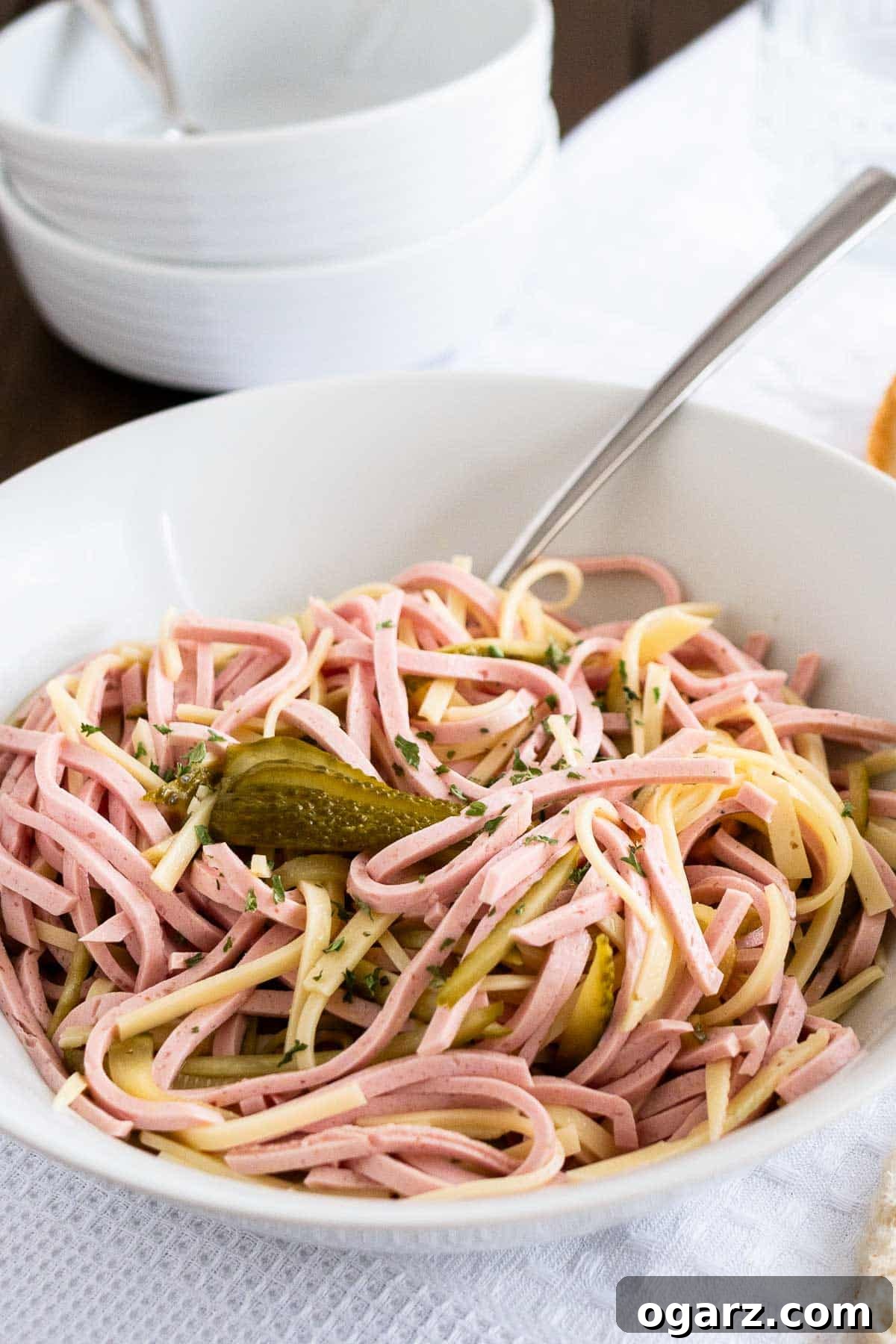
Tips for Perfect Wurstsalat: Preparation and Storage
One of the many advantages of Wurstsalat is its make-ahead potential. In fact, it often tastes even better after the flavors have had some time to meld and develop in the refrigerator. Proper storage ensures you can enjoy this delicious salad for days to come.
- Advance Preparation for Enhanced Flavor: Wurstsalat can, and should, be made in advance. After preparing the salad and mixing in the dressing, allow it to rest in the fridge for at least 1 hour. This crucial chilling time allows the sausage, cheese, and pickles to absorb the tangy vinaigrette, deepening and harmonizing all the flavors. For the best taste, an overnight chill is often recommended.
- Storing Leftovers: Any leftover Wurstsalat should be transferred to an airtight container and stored in the refrigerator.
- Without Onions: If you omit the raw onions from the initial mix and add them just before serving (as recommended), the salad will keep well for up to 2 days in the fridge.
- With Onions: If you choose to mix raw onions into the entire batch of salad, it’s best to consume the salad on the same day. Raw onions tend to shorten the salad’s shelf life and can become overly pungent, affecting the overall taste and texture.
- Always use an airtight container: This prevents the salad from drying out and absorbing other odors in the refrigerator, ensuring it stays fresh and delicious.
Frequently Asked Questions About Wurstsalat
- Can I use a different type of sausage?
While Lyoner (Fleischwurst) or good quality bologna are traditional, you can experiment. Some enjoy it with thinly sliced frankfurters, even cooked ham, or a lean German cold cut. Just ensure the sausage is fully cooked and has a relatively mild flavor so it doesn’t overpower the dressing and other ingredients.
- What if I can’t find German pickles?
If authentic German dill pickles are unavailable, look for whole dill pickles that are sour, not sweet or bread-and-butter style. Check the ingredients for minimal sugar. The key is to find pickles with a robust, tangy brine that you can use in the dressing.
- Can I add other vegetables to Wurstsalat?
Absolutely! While the classic version is simple, many people enjoy adding finely diced bell peppers (especially red or green), thinly sliced radishes for a peppery crunch, or even chives mixed into the salad for extra freshness. Just be mindful that adding more vegetables might slightly alter the storage time.
- Is Wurstsalat a healthy dish?
Wurstsalat can be a balanced meal. It provides protein from the sausage and cheese, and vitamins from the pickles and dressing ingredients. Portions can be adjusted, and using leaner sausages or less cheese can reduce the fat content if desired. It’s often lighter than many mayonnaise-based salads.
- How thin should I slice the ingredients?
For the best texture and to allow the dressing to coat everything evenly, aim for very thin slices for both the sausage and the cheese. A mandoline slicer can be very helpful for achieving uniform, thin pieces, or a very sharp knife and a steady hand.
Conclusion: Embrace the Simplicity of German Tradition
Wurstsalat is a testament to the idea that some of the most delicious dishes are often the simplest. This German sausage salad offers a refreshing, flavorful, and incredibly easy meal that captures the essence of Bavarian culinary tradition. Whether you’re enjoying it as a quick lunch, a delightful summer dinner, or as a key component of a festive Oktoberfest spread, its combination of savory sausage, nutty cheese, and tangy pickles in a zesty vinaigrette is a guaranteed crowd-pleaser.
With its straightforward preparation and minimal cooking required, Wurstsalat is an ideal dish for home cooks of all skill levels. Embrace the authentic flavors, try the family secret tips, and discover why this simple salad has remained a cherished favorite across German-speaking countries for generations. So, gather your ingredients, slice them thin, and prepare to be delighted by the quintessential German Sausage Salad.
More German Recipes to Savor
Main Dishes
Jagerschnitzel
German Recipes
Bread Dumplings
Main Dishes
German Schnitzel
Cakes
Black Forest Cake
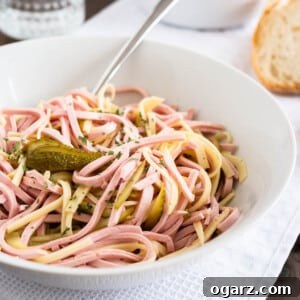
Wurstsalat
Ingredients
- 10 oz Bologna sausage, or Lyoner, finely sliced (about 4 cups)
- 7 oz Emmental cheese, finely sliced (about 2 cups)
- 1 cup German pickles, finely sliced
- 3 tablespoons vinegar
- 2 tablespoons sunflower oil, or flavor neutral oil
- 3 tablespoons water
- 4 tablespoons brine from the pickles
- salt, to taste
- pepper, to taste
- 1 medium white onion, finely sliced (optional)
- chopped parsley or chives, to garnish
Instructions
- Combine 10 oz Bologna sausage, 7 oz Emmental cheese, and 1 cup German pickles in a big bowl.
- For the dressing, combine 3 tablespoons vinegar, 2 tablespoons sunflower oil, 3 tablespoons water, and 4 tablespoons brine from the pickles in a jar or bowl. Mix well, then pour over the ingredients in the big bowl.
- Toss together and season with salt and pepper to taste.
- Cover the bowl and let it rest in the fridge for at least 1 hour.
- Garnish with chopped parsley or chives and sliced onion (optional) just before serving.
Nutrition
Carbohydrates: 8g |
Protein: 25g |
Fat: 40g |
Saturated Fat: 16g |
Polyunsaturated Fat: 2g |
Monounsaturated Fat: 17g |
Cholesterol: 89mg |
Sodium: 1.499mg |
Potassium: 339mg |
Fiber: 1g |
Sugar: 5g |
Vitamin A: 537IU |
Vitamin C: 3mg |
Calcium: 528mg |
Iron: 1mg
Like this recipe? Rate and comment below!