
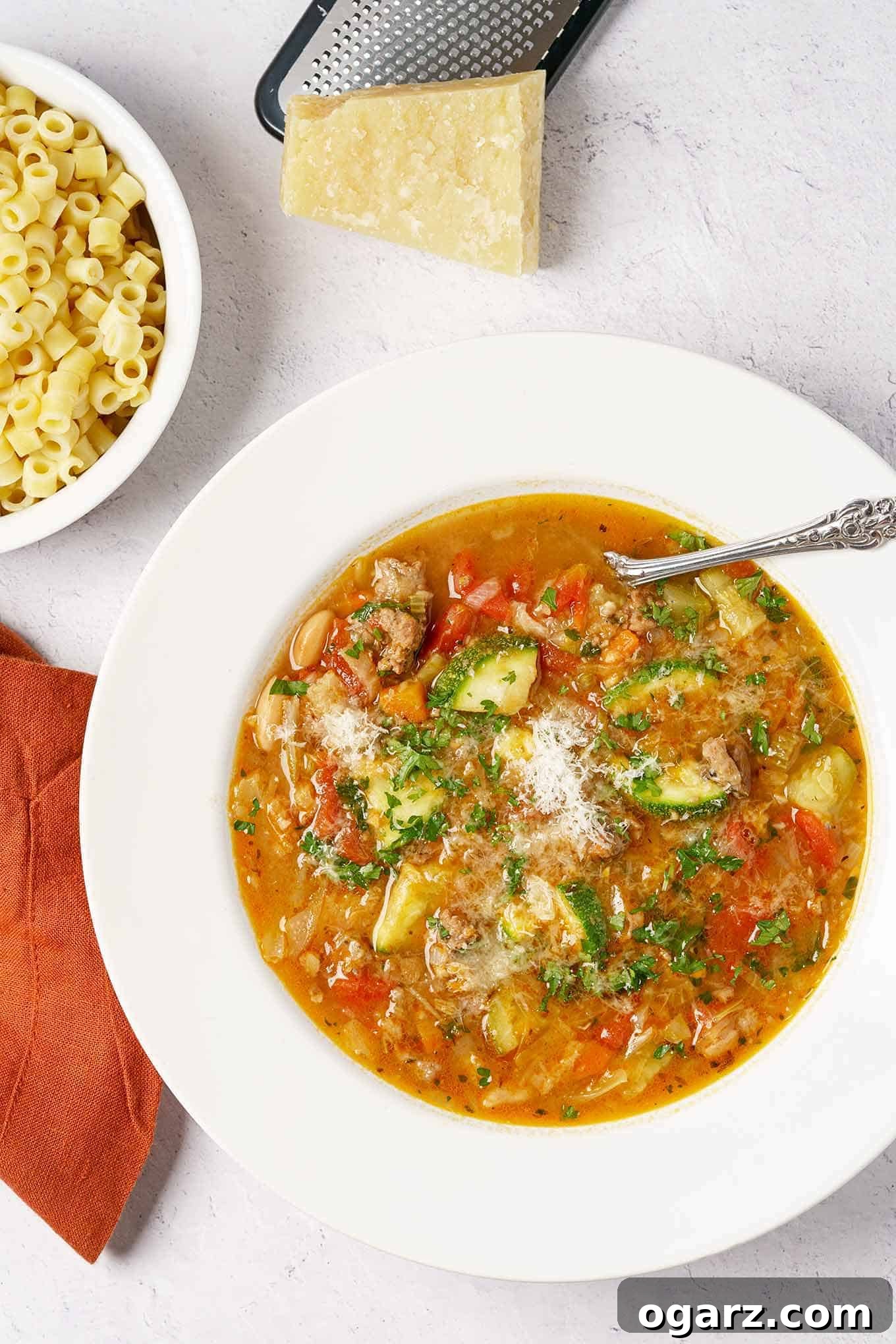
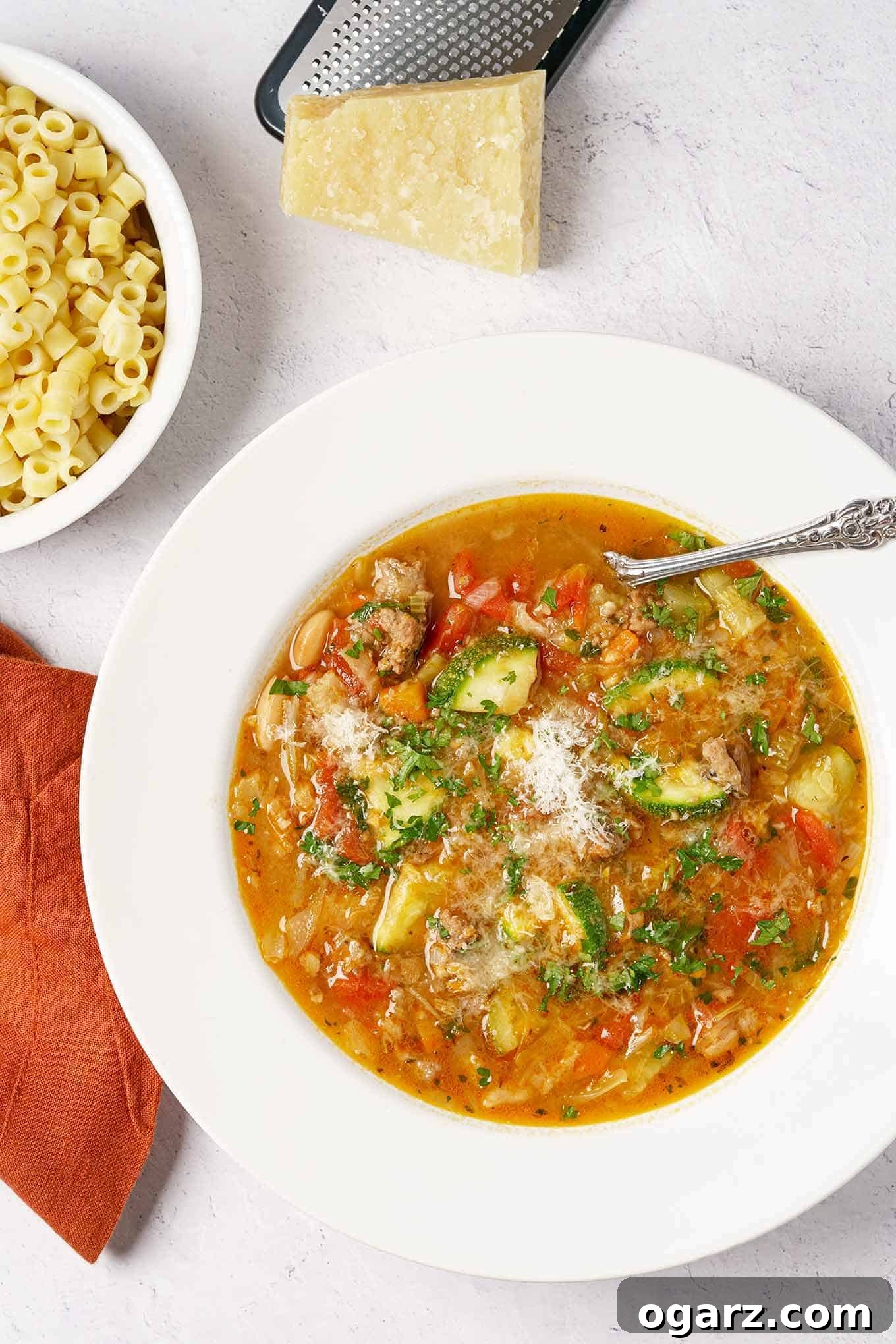
The Ultimate Hearty Minestrone Soup with Italian Sausage
Few dishes offer the comforting warmth and wholesome satisfaction of a truly great bowl of minestrone. This Italian classic, often hailed as “the big soup,” is more than just a meal; it’s an experience—a testament to the power of fresh, seasonal ingredients coming together in a harmonious blend of flavors and textures. Our exceptional recipe for minestrone soup is designed to be a centerpiece meal, one you’ll want to cook once and savor multiple times, offering a complete, nourishing dish in every spoonful.
Rooted deeply in Italian culinary tradition, minestrone is a vibrant vegetable soup, frequently enriched with pasta, rice, or bread. Its beauty lies in its adaptability; regional variations abound across Italy, each reflecting the local produce and gastronomic preferences. While historically a more rustic, vegetable-forward dish, our rendition introduces a delicious twist: the robust flavor of Italian sausage. This addition, though not strictly traditional, elevates the soup to an even heartier, more satisfying meal, perfect for chilly evenings or a fulfilling family dinner.
Making this minestrone is a labor of love that rewards generously. Despite a seemingly extensive ingredient list, much of the cooking time is hands-off, allowing the rich flavors to meld beautifully. The result is a thick, flavorful soup brimming with tender vegetables, savory meats, and a comforting broth that promises to warm you from the inside out. Prepare to transform simple kitchen staples into an extraordinary culinary delight that will earn rave reviews.
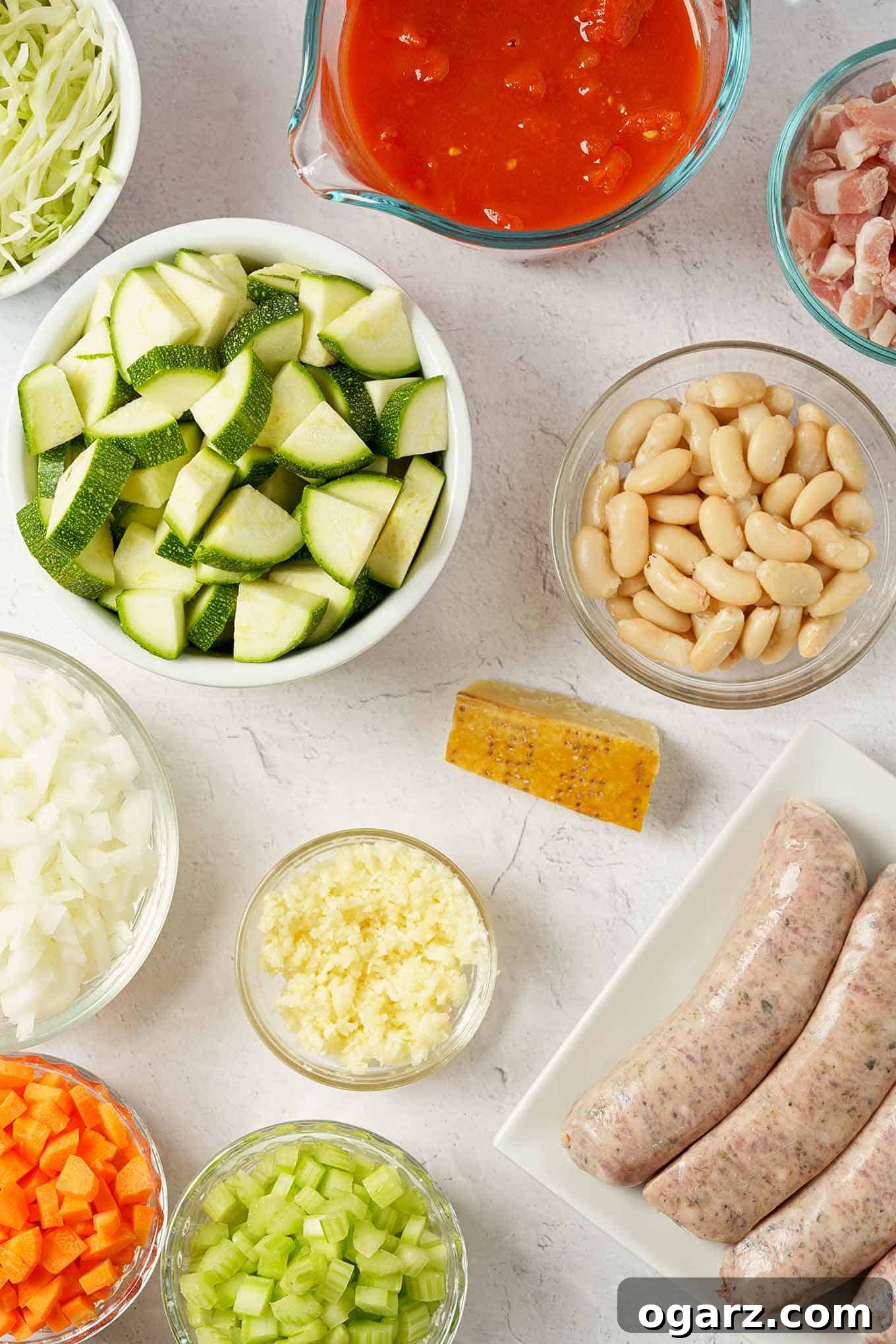
Key Ingredients for an Unforgettable Minestrone
The secret to a truly exceptional minestrone lies in the quality and thoughtful combination of its ingredients. Each component plays a vital role, contributing to the layers of flavor and the hearty texture that define this beloved soup. Here’s a detailed look at the core elements that make our Italian sausage minestrone truly special:
- Pancetta: Often described as the Italian cousin to bacon, pancetta is salt-cured pork belly, typically unsmoked. Its delicate fat renders down beautifully, providing a crucial depth of savory flavor and a silky richness to the soup base. It’s the foundation of many classic Italian dishes, and its inclusion here adds an authentic touch and an unparalleled umami boost. You can often find it pre-diced for convenience, but if not, simply ask your deli for a 1/4 to 3/8-inch thick slice and dice it yourself for the freshest taste.
- Soffritto (Onion, Carrots, Celery, and Garlic): This aromatic base is the soul of Italian cooking, analogous to the French mirepoix. Sautéed slowly until sweet and tender, the soffritto—a harmonious blend of finely chopped onion, carrots, and celery, enhanced with fragrant garlic—creates an essential layer of flavor that permeates the entire soup. Unlike mirepoix, which often uses butter, soffritto typically calls for olive oil, sometimes with the addition of pancetta or prosciutto for extra richness. This combination sets the stage for the deep, complex flavors to come.
- Italian Sausage: While not a traditional element in every minestrone, our recipe thoughtfully incorporates Italian sausage. This inclusion transforms the soup from a first course to a substantial, satisfying main dish. The spiced meat, whether mild or hot, introduces a delightful counterpoint to the vegetables and beans, imparting a rich, savory essence that makes each spoonful incredibly flavorful and hearty. If you prefer a lighter soup or are serving it as an appetizer, you can certainly omit the sausage, but we highly recommend its flavorful contribution.
- Dry Red Wine: A splash of dry red wine after sautéing the meats and vegetables is more than just a liquid addition; it’s a deglazing agent and a flavor enhancer. As it simmers, the wine scrapes up all the flavorful browned bits from the bottom of the pan, integrating them into the broth. This process, coupled with the tomatoes, adds a sophisticated, robust, and slightly tangy complexity to the soup base, deepening its overall character.
- Diced Tomatoes: Along with their flavorful juices, diced tomatoes form a key component of the classic minestrone broth. They provide a vibrant acidity that beautifully balances the richness of the sausage and pancetta, as well as the creamy earthiness of the cannellini beans. Tomatoes also contribute a natural sweetness and a hearty texture, making the soup wonderfully substantial.
- Cannellini Beans: These creamy white kidney beans are indispensable in our minestrone. This recipe ingeniously uses them in two forms: a portion is puréed to create a natural, wholesome thickener for the soup, adding a velvety texture and a boost of protein and fiber. The remaining whole beans are reserved and added later, providing delightful bites of texture and visual appeal. This dual application ensures a rich body without relying solely on starches.
- Low-Sodium Chicken Broth: The quality of your broth significantly impacts the final taste of your minestrone. We recommend a low-sodium chicken broth to allow you to control the seasoning precisely. If you have homemade chicken stock on hand, even better – its superior depth of flavor will truly elevate this soup to gourmet status. Beef stock can also be used for an even richer, darker broth.
- Green Cabbage: Thinly shredded green cabbage is a fantastic addition, contributing both to the heartiness and the nutritional profile of the soup. As it softens, it adds a mild, earthy flavor and a pleasing texture that complements the other vegetables. From a health perspective, cabbage packs in extra fiber and vitamins, making this soup even more nourishing.
- Zucchini: This versatile summer squash, with its mild flavor and tender texture, acts as a wonderful absorber of the rich flavors in the soup. Cut into bite-sized cubes, zucchini adds a fresh element, a touch of vibrant green, and a pleasant textural contrast to the other ingredients. It’s best added later in the cooking process to ensure it remains tender-crisp, not mushy.
- Parmigiano-Reggiano Cheese Rind: This might seem like an unusual ingredient, but an aged Parmesan rind is a secret weapon for imparting an incredible depth of umami and a subtle creaminess to the broth. As it simmers, the rind slowly releases its intense savory notes and a slight thickness, transforming the soup into something truly extraordinary. Remember to remove it before serving!
- Soft Breadcrumbs: For those who prefer an even thicker, more robust soup, soft breadcrumbs are an ideal natural thickener. Added towards the end of cooking, they gently absorb the liquid, creating a denser consistency without altering the core flavors. You can adjust the amount to your personal preference, adding a little at a time until the desired thickness is achieved.
- Fresh Parsley: A garnish of freshly chopped parsley stirred in just before serving is not merely for aesthetics. It provides a burst of fresh, herbaceous flavor and a vibrant green color that brightens the entire dish. It’s the perfect finishing touch, adding a lift to the rich and savory base.
- Grated Cheese: A generous sprinkle of freshly grated Parmigiano-Reggiano cheese over each bowl is the quintessential finishing touch. Its salty, nutty flavor melts slightly into the hot soup, adding another layer of indulgence and savory complexity.
Mastering Minestrone: Tips for Perfect Pasta
While minestrone is incredibly satisfying on its own, adding pasta can elevate it further. If you choose to include pasta, selecting a small cut like ditalini (as pictured) is ideal. However, the most crucial tip for pasta in minestrone is to cook and store it separately from the main soup.
Cooking pasta directly in the soup will cause it to absorb too much liquid and swell, making the soup overly thick and potentially mushy. It can also lead to soggy pasta and diminished flavor when reheating leftovers. To ensure perfectly al dente pasta every time, cook it according to package directions in a separate pot. Then, when you’re ready to serve, simply place a spoonful of the cooked pasta into the bottom of each individual bowl, ladle the hot minestrone over it, and give it a gentle stir. This method guarantees that your pasta remains firm and flavorful, and your soup maintains its ideal consistency.
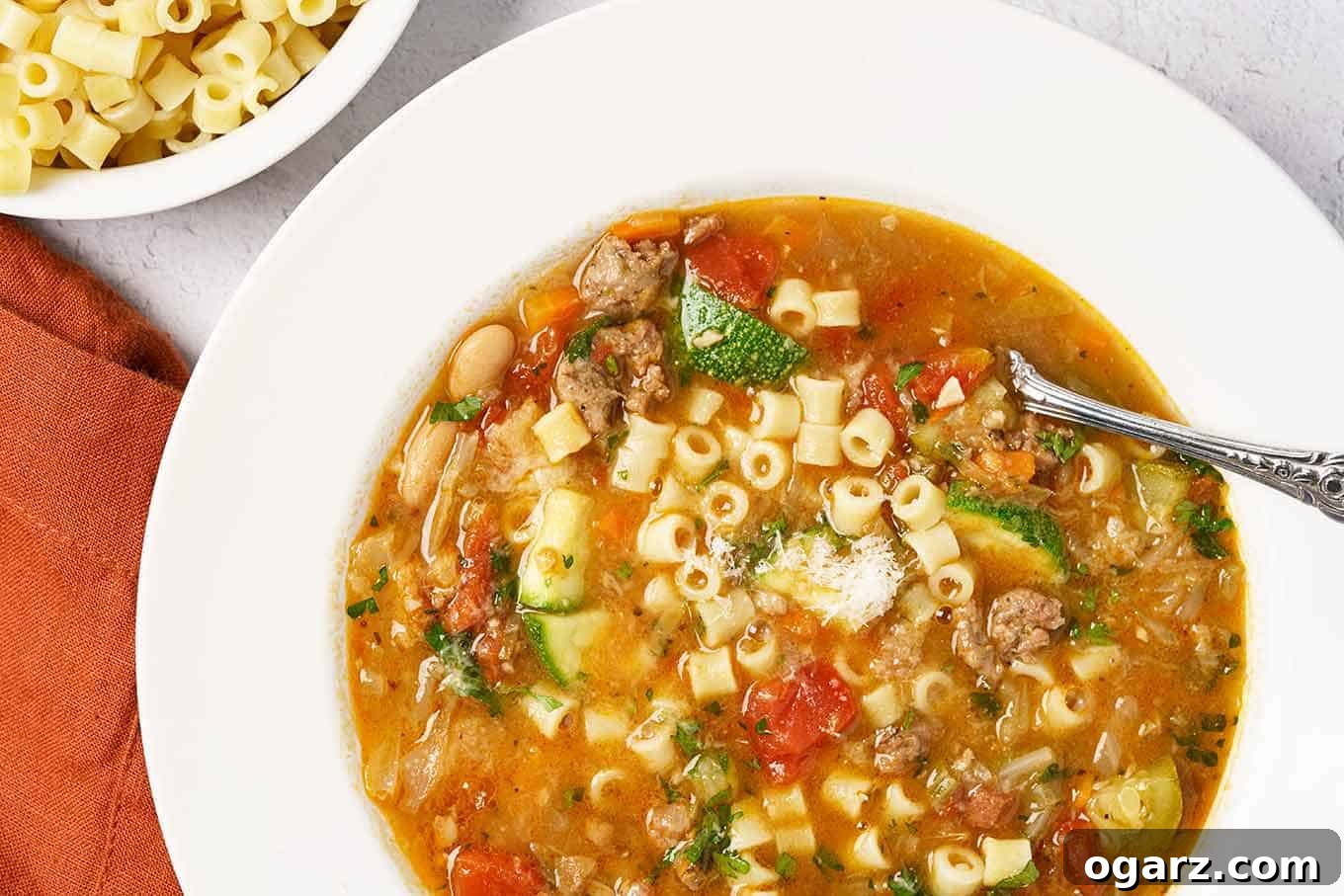
Serving Your Hearty Minestrone
Our hearty minestrone soup with Italian sausage is a complete meal in itself, packed with protein, vegetables, and complex carbohydrates. However, if you’re preparing this for a special Sunday dinner or hosting guests, you might want to enhance the experience with a few complementary sides. A crisp, tossed green salad with a light vinaigrette offers a refreshing contrast to the richness of the soup, while warm, homemade garlic breadsticks or a crusty artisan loaf are perfect for soaking up every last drop of the delicious broth.
When it comes to beverage pairings, a full-bodied Italian red wine like a Chianti or Barbera makes an obvious and excellent choice, harmonizing beautifully with the robust flavors of the sausage and tomatoes. For beer enthusiasts, a crisp, light European-style lager such as Peroni Nastro Azzurro provides a refreshing palate cleanser that complements the soup without overpowering it.
Storing and Reheating Leftovers
One of the best qualities of minestrone is how wonderfully it tastes the next day, as the flavors continue to meld and deepen. For optimal storage, allow the soup to cool completely before transferring it to airtight containers. It can be refrigerated for up to 3-4 days. Remember, if you added pasta directly to the pot, it might absorb more liquid and become softer over time. This is another reason to store pasta separately if you anticipate leftovers.
To reheat, gently warm the soup on the stovetop over medium-low heat, stirring occasionally, until it reaches a simmer. You may need to add a splash of extra chicken broth or water to thin it out to your desired consistency. If you stored the pasta separately, simply add the hot soup over freshly cooked or reheated pasta in your bowl.
Variations and Customizations
The beauty of minestrone lies in its flexibility. Feel free to customize this recipe based on your preferences or what’s in season. For a vegetarian option, simply omit the pancetta and Italian sausage, and use vegetable broth instead of chicken. You can enhance the umami with a tablespoon of tomato paste or a dash of mushroom powder. Experiment with other seasonal vegetables like green beans, spinach (added at the very end), or different types of squash. For an added layer of flavor, consider a touch of balsamic glaze or a sprinkle of fresh basil just before serving. This recipe provides a fantastic foundation for your culinary creativity.
More Italian Soup Recipes
- Instant Pot Italian Chicken Soup
- Pasta e Fagioli
- Italian Wedding Soup
- Stracciatella with Spinach

Hearty Minestrone Soup
Print Recipe
Ingredients
- 2 cans, 15-ounce low sodium cannellini beans
- 2 tablespoons olive oil
- 1/4 lb pancetta, diced
- 1 small onion, chopped
- 2 carrots, peeled and chopped
- 2 stalks celery, chopped
- 1 teaspoon dried oregano
- 1/4 to 1/2 teaspoon crushed red pepper flakes
- Freshly ground black pepper
- 10 cloves garlic, minced
- 1 lb Italian sausage removed from the casing
- 1 cup dry red wine
- 6 cups chicken broth
- 2 cups diced tomatoes, including juices
- 4 cups green cabbage, thinly sliced
- Parmigiano-Reggiano cheese rind, optional
- 2 medium zucchini, cut into bite-sized cubes
- 1/4 to 1/2 cup fresh breadcrumbs, optional
- 1/4 cup fresh parsley, chopped
- Grated Parmigiano-Reggiano cheese for serving
- Cooked ditalini pasta, optional
Instructions
-
Drain the cannellini beans into a colander and rinse them thoroughly. Reserve 1/2 cup and add the remainder to the work bowl of a food processor. Purée until smooth and set aside.
-
Heat the olive oil over medium heat in a heavy-bottomed stockpot or Dutch oven. Add the pancetta and cook, stirring occasionally until the fat has rendered, 4 to 5 minutes.
-
Add the onion, carrots, and celery, and continue cooking until the vegetables are soft and just beginning to caramelize.
-
Sprinkle with oregano, crushed red pepper, and add a few grinds of black pepper. Refrain from adding any salt at this point (see recipe notes).
-
Stir in the garlic and continue cooking until fragrant, 1 minute longer.
-
Add the sausage to the pot, begin breaking the meat into small chunks, and continue cooking until lightly browned.
-
Deglaze the pan with the red wine, scrape up any browned bits that may have accumulated on the bottom of the pan, and bring to a simmer.
-
Reduce the heat to medium-low, and stir in the chicken broth, tomatoes, cannellini purée, cannellini beans, cabbage, and Parmigiano-Reggiano cheese rind.
-
Cover and cook on a low simmer for 1 hour, stirring occasionally. If you find the soup is bubbling too hard, reduce the heat to low.
-
After an hour of cooking, add the zucchini and taste for seasoning. You will most likely need to add a little salt at this point, but do it in small increments tasting in between additions.
-
If you feel the soup needs additional thickening, stir in 1/4 cup of the soft breadcrumbs, cook for 5 minutes, check the thickness and add more (up to 1/4 cup additional) if desired.
-
Cover and cook for 30 minutes longer.
-
The minestrone can be kept warm over very low heat until ready to serve. About 5 minutes before serving, stir in the parsley.
-
Ladle the soup into individual serving bowls and top with grated cheese.
Notes
Seasoning tips:
Because the cannellini beans, pancetta, Italian sausage, and diced tomatoes all contain salt, we never add any until the soup has been cooking for about an hour.
At that point, the flavors will have developed and we find we need to make very few adjustments to the seasoning.
Nutrition
Nutrition information is automatically calculated, so should only be used as an approximation.