
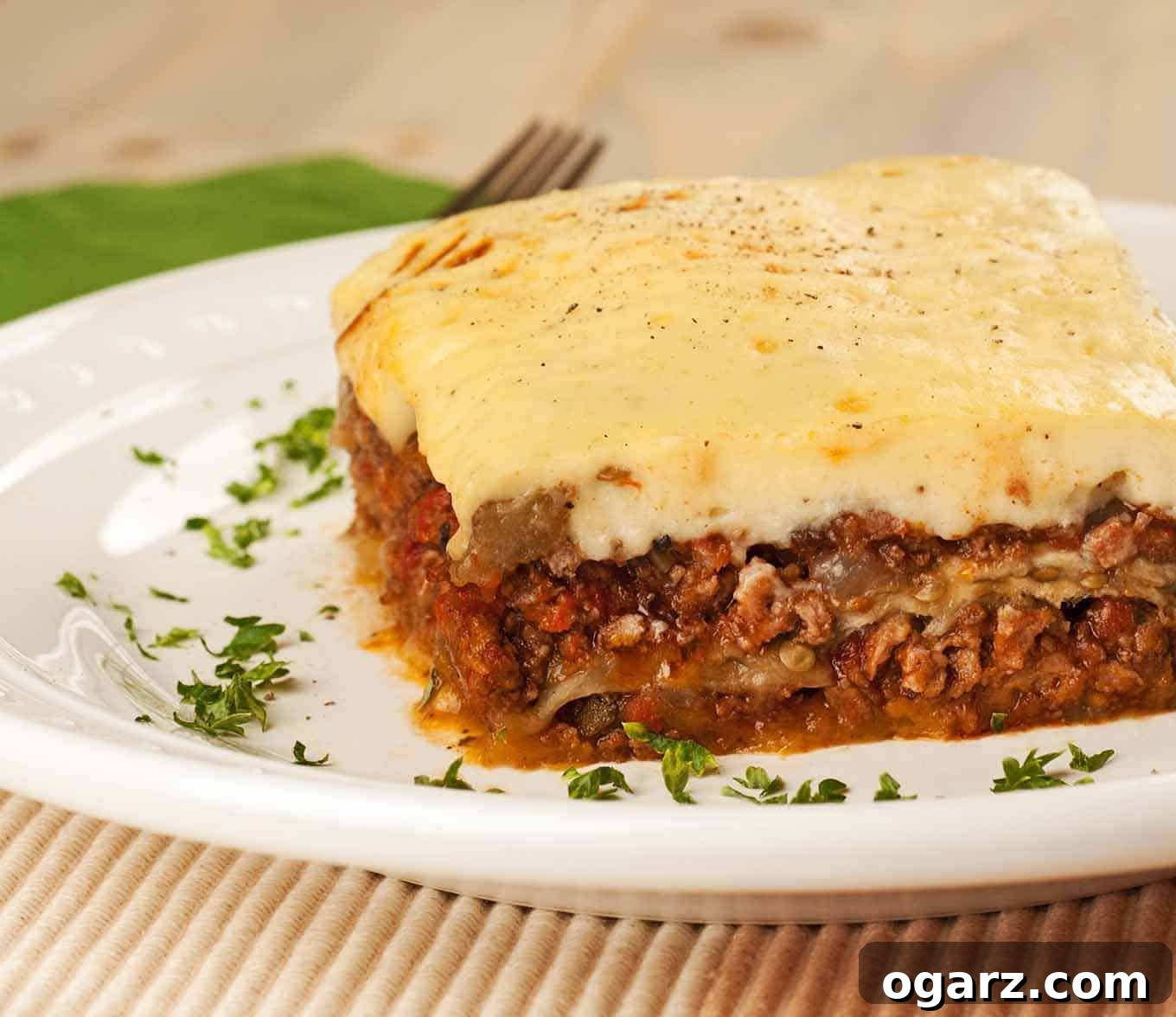
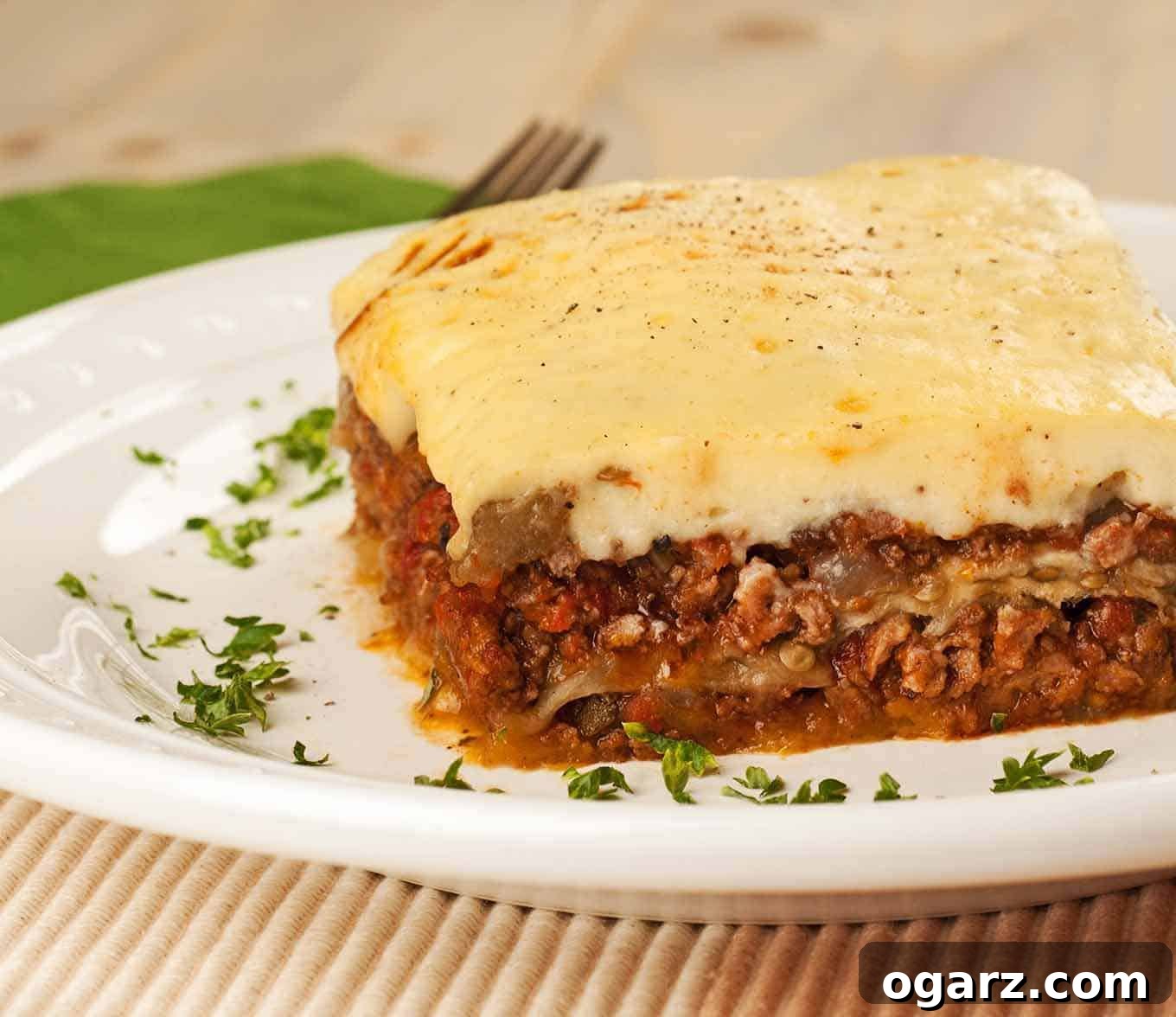
Embark on a culinary journey to the heart of Greece with this authentic Moussaka recipe. Often compared to lasagna due to its comforting layered structure, Moussaka stands as a true masterpiece of Mediterranean cuisine. This classic Greek dish brings together tender layers of roasted eggplant, a richly seasoned ground lamb filling, and is crowned with a luxuriously creamy béchamel sauce. It’s a dish that not only satisfies the palate but also tells a story of tradition, warmth, and hospitality. Perfect for a casual dinner with family or a more festive gathering with friends, Moussaka is also an excellent make-ahead meal, allowing you to enjoy its exquisite flavors without the last-minute rush.
To elevate your Greek feast, consider serving this Moussaka with a vibrant green salad dressed with a zesty Greek-style vinaigrette. For an authentic appetizer pairing, our Classic Skordalia, a garlic potato dip, offers a fantastic contrast and a delightful start to your meal.
Authentic Greek Moussaka Recipe: A Layered Masterpiece of Mediterranean Comfort
Moussaka is more than just a dish; it’s an experience. Its appeal lies in the harmonious blend of textures and flavors – the soft, earthy eggplant, the robust, aromatic lamb, and the smooth, delicate béchamel. This recipe guides you through each step to create a truly memorable Moussaka that will transport your taste buds straight to the sunny shores of Greece.
What is Moussaka? A Glimpse into Greek Culinary Heritage
Moussaka (pronounced moo-sah-KAH) is a beloved baked dish found across the Balkans and the Middle East, though the Greek version, with its distinctive béchamel topping, is perhaps the most famous internationally. While regional variations exist, the core elements typically involve a base of vegetables, a minced meat filling, and a savory topping. The Greek rendition, as we know it today, gained prominence in the early 20th century, largely influenced by the French culinary education of Nikolaos Tselementes, a pioneering Greek chef. He introduced the béchamel sauce, transforming Moussaka from a simpler, more rustic dish into the sophisticated, oven-baked casserole that graces tables worldwide.
Historically, Moussaka represented the hearty, nourishing cuisine of the Mediterranean, utilizing readily available ingredients like lamb and fresh seasonal vegetables. It’s a dish often prepared for Sunday lunches or special occasions, symbolizing family, togetherness, and the rich culinary traditions passed down through generations. Its comforting nature makes it a perfect dish for any time of year, offering a taste of warmth and sunshine even on the coldest days.
The Essential Components of Traditional Greek Moussaka
Crafting the perfect Moussaka involves mastering its three distinct, yet complementary, layers. Each component plays a crucial role in building the overall flavor and texture profile that makes this dish so iconic.
1. The Eggplant Layers: Foundation of Flavor
The eggplant forms the bedrock of Moussaka. For a truly authentic taste and texture, preparation is key. We advocate for partially cooking the eggplant slices before assembly. This crucial step prevents the eggplant from releasing excess moisture into the final dish, ensuring a firm structure and preventing a watery outcome. Roasting the eggplant rather than frying it also results in a lighter, healthier dish without sacrificing flavor. Seasoning the slices with salt and pepper and a drizzle of olive oil before roasting brings out their natural sweetness and creates a beautifully tender base that absorbs the flavors of the meat sauce above it.
2. The Rich Lamb Filling: The Heart of the Dish
The ground lamb mixture is where much of Moussaka’s robust flavor resides. Lamb, a staple in Greek cuisine, lends a distinctive richness that is central to the dish’s character. The meat is browned with aromatic vegetables like onion, celery, and garlic, creating a savory foundation. What truly sets Greek Moussaka apart are the spices: a generous hand with ground cinnamon and allspice, along with dried oregano, infuses the lamb with a warm, earthy, and subtly sweet aroma that is unmistakably Greek. Red wine and diced tomatoes further deepen the flavor, simmering down to a thick, luscious ragu that perfectly complements the eggplant.
3. The Creamy Béchamel Sauce: The Golden Crown
The béchamel sauce is the glorious topping that elevates Moussaka to its regal status. This classic French mother sauce, adopted and adapted by Greek cuisine, provides a luxurious, creamy blanket over the entire casserole. Made from a roux of butter and flour, slowly whisked with milk infused with bay leaf and whole allspice berries, it’s a testament to culinary elegance. The addition of a lightly beaten egg and grated Parmesan cheese at the end gives the béchamel an extra layer of richness, a golden hue, and helps it set beautifully during baking. A touch of nutmeg provides a warm, subtle spice that perfectly balances the creamy texture.
Mastering the Art of Moussaka: Tips for Success
While Moussaka might seem intricate, following these tips will ensure a perfect result every time:
- Eggplant Preparation: Don’t skip the roasting step! It’s vital for drawing out moisture and achieving a tender, flavorful eggplant that won’t make your Moussaka soggy. Slicing the eggplant uniformly (about 3/8 inch thick) ensures even cooking.
- Browning the Lamb: Ensure your pan is hot enough to properly brown the ground lamb, creating deep, rich flavors. Don’t overcrowd the pan; cook in batches if necessary. Always drain excess fat to prevent a greasy final dish.
- Spice Balance: The cinnamon and allspice are characteristic of Greek Moussaka. Don’t be shy, but also taste as you go. The combination should be fragrant and warm, not overpowering.
- Béchamel Perfection: Whisking is your best friend when making béchamel. To avoid lumps, slowly add the warmed milk to the roux, whisking continuously. When incorporating the egg, allow the béchamel to cool slightly, then add the egg slowly while whisking vigorously to prevent scrambling. This creates a smooth, velvety sauce.
- Layering with Care: Arrange the eggplant slices snugly to cover each layer. This helps hold the casserole together and ensures every bite has a bit of each delicious component.
- Resting is Key: After baking, allow the Moussaka to rest for at least 10-15 minutes before slicing. This allows the layers to settle and firm up, making for cleaner, more beautiful portions.
Serving Suggestions and Pairings
Moussaka is a hearty meal on its own, but it truly shines when served alongside simple, fresh accompaniments. A crisp green salad with a light lemon-herb vinaigrette provides a refreshing contrast to the richness of the Moussaka. For a complete Greek experience, consider:
- Skordalia: A traditional Greek garlic and potato dip that makes a fantastic appetizer.
- Crusty Bread: Perfect for soaking up any leftover savory juices.
- Greek Olives and Feta: A simple platter offers briny, salty notes that complement the dish.
- Wine Pairing: A medium-bodied red wine, such as a Xinomavro from Greece, a Cabernet Sauvignon, or a Merlot, would pair beautifully with the rich lamb and aromatic spices.
Frequently Asked Questions About Moussaka
Here are answers to some common questions about making and enjoying Moussaka:
Can I make Moussaka ahead of time?
Absolutely! Moussaka is an excellent make-ahead dish. You can assemble the entire casserole, cover it tightly with foil, and refrigerate it for up to 2 days before baking. You might need to add an extra 10-15 minutes to the baking time if baking from cold.
Can Moussaka be frozen?
Yes, Moussaka freezes beautifully. For best results, bake the Moussaka completely, then allow it to cool thoroughly. You can freeze it whole or in individual portions. Wrap it tightly in plastic wrap and then in foil, and freeze for up to 3 months. To reheat, thaw overnight in the refrigerator and then bake in a preheated oven at 350°F (175°C) until heated through, about 30-40 minutes for individual portions, or longer for a whole casserole.
What if I don’t like lamb or can’t find it?
While traditional Moussaka calls for ground lamb, you can certainly substitute it with other ground meats. Ground beef, pork, or a combination of beef and pork are popular alternatives. Ground chicken or turkey can also be used for a lighter version, but you might want to add a bit more olive oil or a slice of bacon to the mixture for richness. The key is to ensure your chosen meat is well-seasoned with the traditional Greek spices.
How do I prevent my Moussaka from being watery?
The primary way to prevent a watery Moussaka is to properly prepare the eggplant. Roasting or salting and draining the eggplant before layering removes excess moisture. Additionally, ensure your meat sauce simmers long enough to thicken and reduce any liquid before assembly.
What kind of eggplant should I use?
Medium-sized globe eggplants work well for this recipe. Look for firm, shiny eggplants that feel heavy for their size.
Moussaka
By Lynne Webb
Made with layers of eggplant, seasoned ground lamb and a topping of béchamel sauce, moussaka is a delicious, make-ahead dish that’s just perfect for a casual dinner with family and friends.
Prep time: 25 mins
Cook time: 1 hr 20 mins
Total time: 1 hr 45 mins
Servings: 8 servings
Ingredients
For the eggplant:
- 3 medium eggplant, about 2-1/2 lbs
- Olive oil
- Salt and freshly ground black pepper
For the meat mixture:
- 1-1/2 lbs ground lamb
- 2 tablespoons olive oil
- 1-1/2 cups onion, chopped
- 2 stalks celery, chopped
- 3 cloves garlic, finely chopped
- 1/2 teaspoon ground allspice
- 3/4 teaspoon ground cinnamon
- 1 teaspoon dried oregano
- 1-1/2 teaspoons salt
- Freshly ground black pepper
- 1/3 cup red wine
- 1-1/2 cups diced tomatoes, undrained
- 2 tablespoons tomato paste
- 2 tablespoons fresh parsley, chopped
For the béchamel sauce:
- 3 cups whole milk
- 1 bay leaf
- 6 whole allspice berries
- 6 tablespoons butter
- 6 tablespoons flour
- 1 large egg, lightly beaten
- 1/4 cup grated Parmesan cheese
- 1/2 teaspoon nutmeg
Instructions
- Preheat the oven to 425°F (220°C). Coat 2 baking sheets with nonstick spray.
- Peel and cut the eggplant lengthwise into 3/8-inch thick slices. Arrange the slices in a single layer on the baking sheets, brush the tops with a little olive oil and season with salt and pepper. Roast for 8 to 10 minutes, or until the eggplant is barely tender when pierced with the tip of a sharp knife. Remove from the oven and set aside.
- Reduce the oven temperature to 350°F (175°C).
- While the eggplant is roasting, heat 1 tablespoon of the olive oil in a large pan over medium-high heat. Add the ground lamb and cook until nicely browned. For best results, use a wooden spoon to break up the lamb as much as possible during browning. Drain the fat from the pan and return to the heat.
- Add the remaining tablespoon of olive oil to the pan along with the onion, celery and garlic. Continue cooking, stirring often, until the vegetables are softened, 5 to 7 minutes.
- Add the allspice, cinnamon, oregano, salt and a few grinds of black pepper. Combine well, and cook for an additional minute. Stir in the red wine, diced tomatoes and tomato paste. Reduce the heat to medium and cook, stirring occasionally, for 8 to 10 minutes, or until the sauce has thickened. Taste and adjust the seasoning if necessary. Remove from the heat and stir in the parsley.
- While the meat mixture simmers, make the béchamel sauce. Warm the milk, bay leaf and allspice berries in a small saucepan over low heat. In a separate saucepan, melt the butter over medium heat, whisk in the flour and blend until smooth. Continue cooking until the mixture turns a rich golden color, 3 to 5 minutes. Remove the allspice and bay leaf from the hot milk, then add it slowly to the flour mixture, whisking constantly to maintain a smooth texture.
- Continue cooking, stirring constantly, for another 3 to 4 minutes. Remove from the heat and allow to cool for 5 minutes, stirring occasionally. Slowly add the beaten egg, Parmesan cheese and nutmeg, whisking until smooth and well blended. Set aside.
- To assemble the moussaka, coat a 13 x 9 x 2-inch casserole thoroughly with nonstick spray.
- Arrange a layer of eggplant slices to cover the bottom. Spread about 1/2 of the meat mixture on top and cover with another layer of eggplant. Spread the remaining meat mixture over that and finish with the remaining eggplant. Pour the béchamel sauce evenly over the entire dish, using a spatula to smooth it if necessary.
- Cover the dish with foil and bake for 35 minutes. Remove the foil and return to the oven for another 15 minutes, or until the top develops a golden brown color. Allow to cool for 10 minutes before cutting.
Notes from the Chef
We like to partially cook the eggplant prior to assembling the Moussaka to make sure that it doesn’t give off too much liquid in the final dish, ensuring a firm and flavorful casserole. Also, we use ground lamb whenever possible for its authentic flavor, but if you don’t care for lamb or can’t find it, ground pork, beef, or even chicken will work out just fine as alternatives.
This dish reheats well and can be stored, tightly covered, in the refrigerator for up to 3 days, making it perfect for meal prepping or enjoying delicious leftovers.
Whether you’re new to Greek cuisine or a seasoned fan, this Moussaka recipe promises a truly authentic and satisfying culinary experience. Its layered complexity, rich flavors, and comforting warmth make it a perfect centerpiece for any meal. Enjoy the process of creating this timeless Greek classic and savor every delicious bite!