
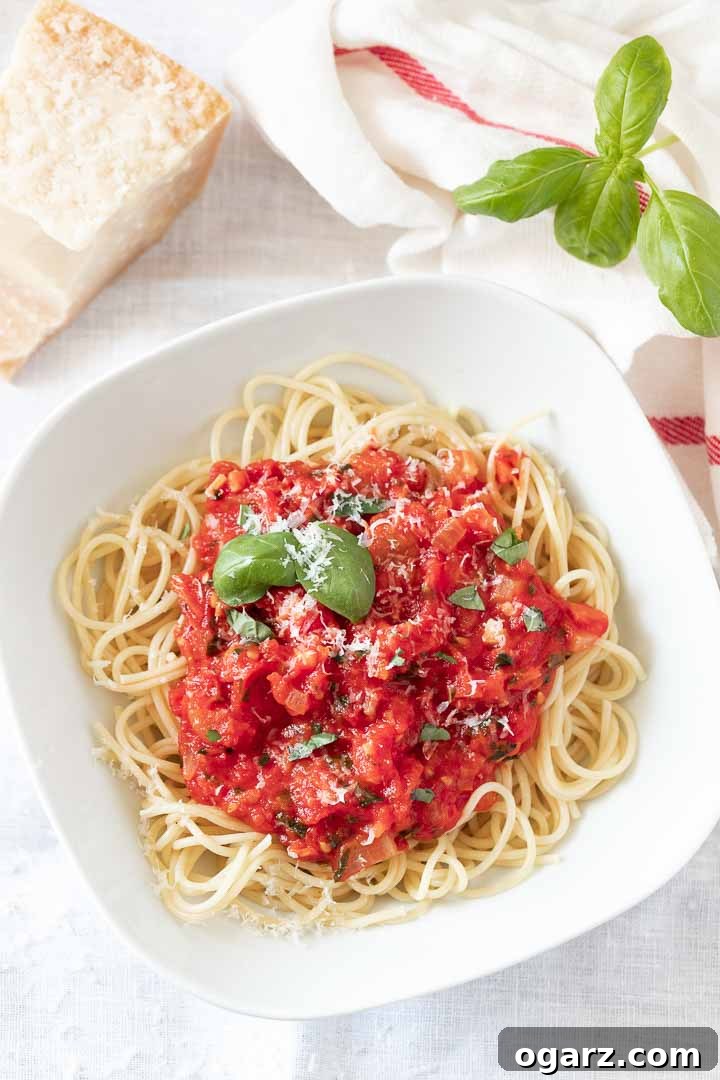
The Ultimate Guide to Making Flavorful Homemade Fresh Tomato Sauce
There’s nothing quite like the vibrant taste of homemade fresh tomato sauce, especially when crafted from juicy, sun-ripened tomatoes. This simple yet incredibly flavorful sauce is the perfect companion to your favorite pasta, elevated with a sprinkle of Parmesan cheese and a scattering of fresh basil leaves. Forget bland, store-bought jars; this easy marinara recipe is your ticket to utilizing the abundance of summer tomatoes, transforming them into a culinary masterpiece that will impress every palate.
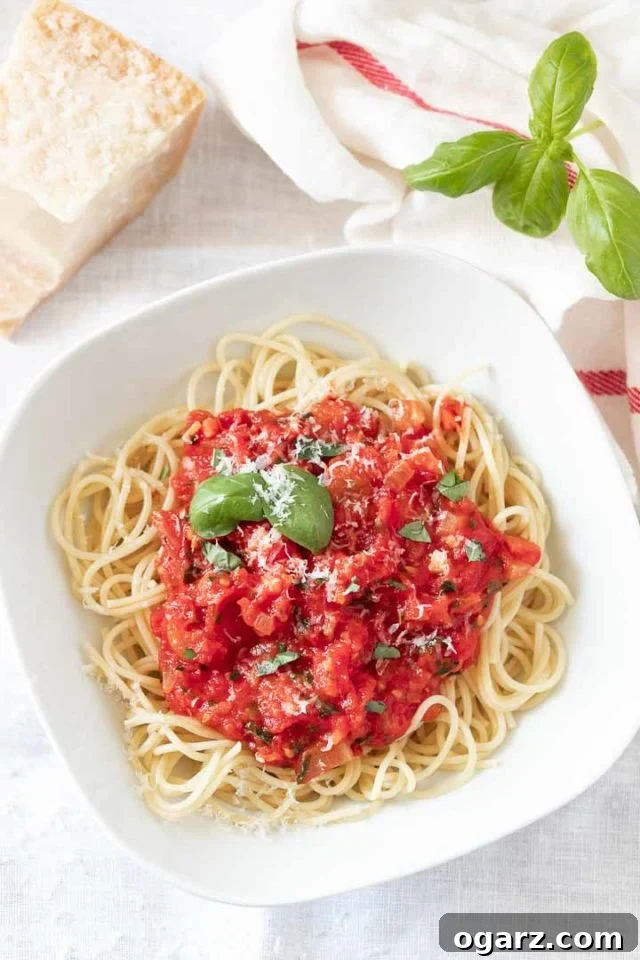
Creating your own spaghetti sauce from scratch using fresh tomatoes is a truly rewarding experience, especially when you have an abundance of ripe, flavorful tomatoes on hand. Whether they’re from your garden, a local farmer’s market, or a generous neighbor, turning these seasonal gems into a rich, homemade pasta sauce is surprisingly simple. The distinct advantage of using fresh tomatoes over canned varieties lies in the bright, authentic, and delightfully fruity aroma they impart, a flavor profile that canned tomatoes simply cannot replicate.
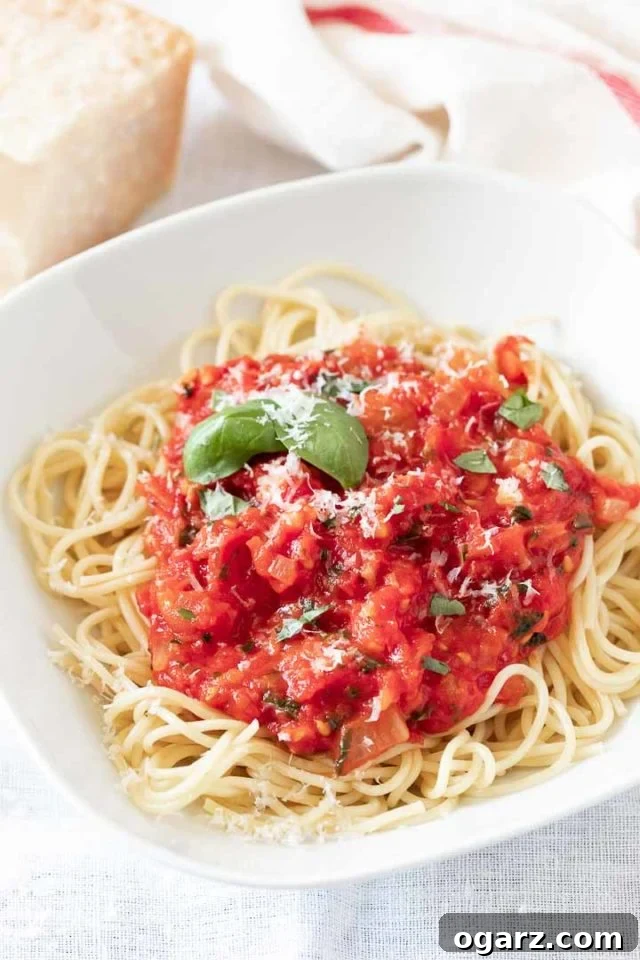
A homemade pasta sauce, served piping hot with freshly grated Parmesan and aromatic basil, embodies simple perfection. The depth of flavor in your sauce will largely depend on the tomatoes you choose – some varieties offer a sweeter profile, while others provide a pleasant tartness. In my experience, almost any ripe tomato can contribute to a delicious sauce. I often use whatever I have available; for instance, a recent gift of small, garden-fresh tomatoes from a neighbor, despite requiring a bit more effort to peel, yielded an incredibly delicious and unforgettable fresh tomato pasta sauce.
Choosing the Best Tomatoes for Your Sauce
For an exceptional tomato sauce, plum tomatoes are generally considered the superior choice. Their dense, meaty flesh and lower water content result in a thicker, richer sauce. Ideally, using a variety of plum tomatoes can further enhance your sauce, producing a more balanced flavor and an optimal pulp-to-juice ratio. Here are some excellent varieties of plum tomatoes to consider:
- Roma: A classic choice, known for their firm texture and excellent flavor for sauces.
- San Marzano: Hailed by many chefs as the gold standard for sauces, these Italian plum tomatoes are less acidic and boast a sweet, intense flavor.
- Amish Paste: A heirloom variety that produces large, flavorful, and meaty tomatoes, perfect for cooking down into a rich sauce.
- Big Mama: As the name suggests, these are larger paste tomatoes, offering a good balance of flavor and meatiness.
While plum tomatoes are ideal, don’t shy away from using other ripe tomato varieties if that’s what you have. Mixing in a few beefsteak tomatoes for body or cherry tomatoes for a burst of sweetness can also create a wonderfully complex and flavorful sauce.
Essential Tips and Tricks for Homemade Fresh Tomato Sauce
Crafting the perfect fresh tomato sauce is an art, but with these expert tips, you’ll achieve delicious results every time:
- Select Perfectly Ripe Tomatoes: The foundation of a great sauce is truly ripe tomatoes. Look for ones that are vibrantly colored, fragrant, and slightly soft to the touch, with no green spots. (Refer to our ripening tips below if your tomatoes aren’t quite ready).
- Embrace Variety: As mentioned, using a mix of plum tomato varieties can contribute to a more profound and well-rounded flavor profile in your sauce. Different tomatoes bring different notes of sweetness and acidity.
- To Seed or Not to Seed: Some recipes suggest removing tomato seeds, claiming they can impart a bitter taste. However, extensive culinary research, including insights from Cook’s Illustrated, indicates that this step makes little to no difference in the final flavor. I personally skip seeding because the gel surrounding the seeds holds a significant amount of flavor, and it’s a much less messy process to leave them in.
- The Magic of Pasta Water: Don’t discard all your pasta cooking water! Adding a ladleful of this salty, starchy liquid to your sauce is a game-changer. The starch helps to emulsify the sauce, making it thicker and allowing it to cling beautifully to the pasta, while the salt enhances the overall flavor. This trick works wonders even if you’re jazzing up store-bought marinara!
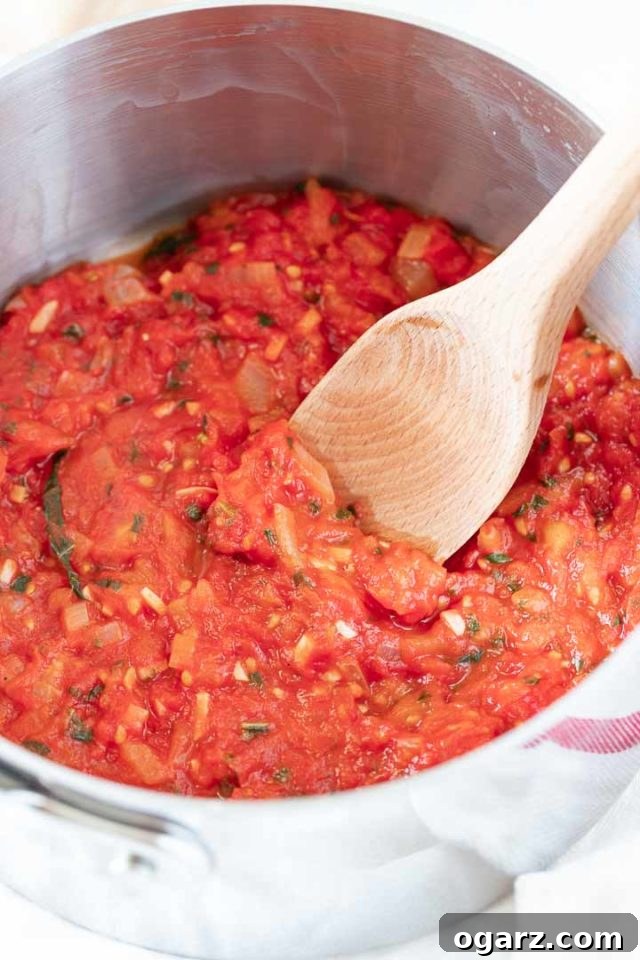
- Achieving Your Desired Consistency: This recipe typically yields a chunky sauce, which I personally love. If you prefer a smoother texture for your pasta sauce, you can easily purée it. Use an immersion blender directly in the pot for a few seconds, or transfer batches to a standard blender, blending until it reaches your preferred consistency.
- Combine Pasta and Sauce in the Pot: For optimal flavor and texture, I highly recommend adding your cooked, drained pasta directly into the pot with the sauce and tossing it together for a minute or two before serving. This allows the pasta to absorb some of the sauce’s flavor and ensures every strand is perfectly coated. (Though for photographic purposes, I sometimes arrange them separately!)
- Storage and Longevity: While this fresh tomato sauce is undeniably best enjoyed immediately, leftovers can be stored. Transfer any remaining sauce to an airtight container or jar and refrigerate for 2-3 days. For longer storage, this sauce freezes beautifully for up to 3 months.
Step-by-Step Guide: How to Make Tomato Sauce from Fresh Tomatoes
Creating this delicious fresh tomato sauce is a straightforward process that yields incredible results. Follow these steps for a truly authentic taste:
1. Prepare the Tomatoes (Blanching and Peeling)
Begin by bringing a large stockpot of water to a rolling boil. While the water heats, fill a separate large bowl with ice water and place it next to your stove. This ice bath is crucial for stopping the cooking process and making peeling easier. Carefully cut a small ‘X’ across the bottom of each tomato. Gently place the scored tomatoes into the boiling water for about 60 seconds. The skin should begin to pucker and loosen around the ‘X’. Using a slotted spoon, immediately transfer the blanched tomatoes to the ice water bath. Let them cool for 1-2 minutes. Once cool enough to handle, easily remove the loosened skin with your fingers. Finally, roughly chop the peeled tomatoes, discarding the stems and any hard white core.
2. Sauté Aromatics
In the same (now empty) stockpot, heat two tablespoons of good quality olive oil over medium heat. Add the chopped yellow onion and sauté for about 4 minutes until it becomes soft and translucent, releasing its sweet aroma. Then, add the minced garlic and cook for just 1 more minute, being careful not to burn it, as burnt garlic can taste bitter.
3. Cook the Sauce to Perfection
Add the roughly chopped tomatoes, along with all their juices, to the pot with the sautéed aromatics. Increase the heat to high. Season generously with salt and freshly ground black pepper to taste. Bring the mixture to a lively simmer, then add the sugar, fresh basil, and fresh thyme. The sugar helps to balance the acidity of the tomatoes and enhance their natural sweetness. Reduce the heat to medium-high and let the sauce cook, uncovered, for about 15 minutes. Stir occasionally. During this time, the tomato mixture will thicken significantly and reduce by about half, concentrating all those wonderful flavors. You’ll know it’s ready when it’s rich, chunky, and fragrant.
4. Prepare Pasta and Combine
While your sauce is simmering, bring a separate large pot of water to a boil for your pasta. Once boiling, add 1 tablespoon of salt – this is essential for seasoning the pasta itself. Cook your favorite pasta according to package instructions until it is al dente (firm to the bite). Before draining, remember to reserve about ½ cup of the starchy pasta water.
5. Finish and Serve
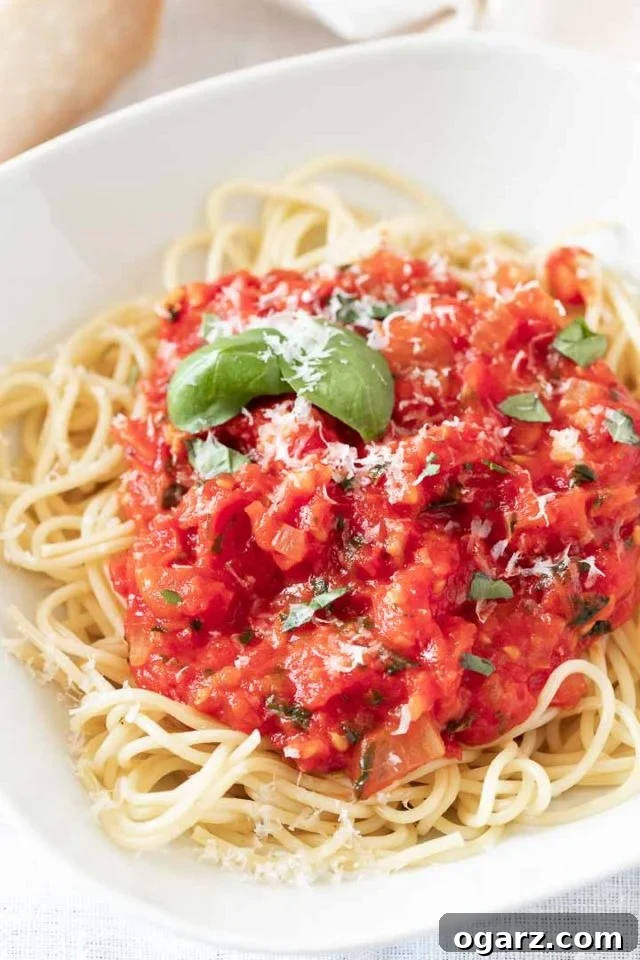
Add ½ cup of the reserved pasta water to the finished tomato sauce in the pot. Stir well; the starchy water will help bind the sauce and make it even more flavorful and capable of coating the pasta beautifully. Taste and adjust the seasoning if needed. Finally, add the drained al dente pasta directly into the pot with the sauce and toss vigorously to combine everything evenly. Serve immediately onto plates, topping each serving with a generous sprinkle of freshly grated Parmesan cheese and a few fresh basil leaves for a pop of color and extra aroma. Enjoy!
Quick Tips for Ripening Tomatoes at Home
If your tomatoes aren’t quite ripe when you’re ready to make sauce, here are a few simple methods to encourage ripening:
- Paper Bag Method: Place green or underripe tomatoes in a brown paper bag. Add a ripening banana or apple to the bag, as these fruits release ethylene gas, a natural ripening agent. Fold the top of the bag to seal it loosely and leave it on your kitchen counter. Check every few days; the tomatoes should ripen within a few days to a week.
- Countertop Ripening: If your tomatoes only have a few green spots or just need a day or two to fully ripen, simply leave them on your kitchen counter, out of direct sunlight. They will typically ripen within 2-3 days under normal room temperature conditions. Avoid refrigerating unripe tomatoes, as this can halt the ripening process and negatively affect their flavor and texture.
Recommended Tools and Ingredients for Making Fresh Tomato Sauce
Having the right kitchen tools can make the sauce-making process even more enjoyable and efficient:
- Large Stockpot: A high-quality, heavy-bottomed stockpot is essential for blanching tomatoes and simmering your sauce. A good pot ensures even heat distribution and prevents sticking. While a splurge, investing in durable cookware makes a difference.
- Pasta Pot with Strainer Insert: This type of pot is incredibly convenient for cooking and draining pasta, simplifying the process and making cleanup easier. It’s often an affordable yet highly functional kitchen addition.
- Sturdy Cutting Board: A large cutting board with a juice groove is ideal for preparing tomatoes and other ingredients. The groove helps catch any liquids, keeping your countertop clean. Tapered edges also help prevent slipping.
- Immersion Blender (Optional): If you prefer a smoother sauce, an immersion blender is a fantastic tool to have. It allows you to purée the sauce directly in the pot, minimizing extra dishes.
- Quality Olive Oil: Using a good extra virgin olive oil enhances the overall flavor of your sauce.
- Fresh Herbs: Don’t skimp on fresh basil and thyme; they add incomparable aroma and taste.
- Parmesan Cheese: Freshly grated Parmesan cheese is the perfect finishing touch, adding a salty, umami depth.
Want to try this Fresh Tomato Pasta Sauce Recipe?
PIN IT TO YOUR DINNER BOARD TO SAVE IT OR SHARE ON FACEBOOK!
Follow Plated Cravings on Pinterest for more great recipes!
5 from 2 votes
Fresh Tomato Sauce
Ingredients
- 5 pounds plum tomatoes, about medium 14 plum tomatoes
- 2 tablespoons olive oil
- 1/2 cup chopped yellow onion
- 2 cloves garlic, minced
- Salt and ground black pepper, to taste
- 1/2 tsp sugar
- 1 tsp chopped fresh thyme
- 6 large fresh basil leaves, chopped
- Parmesan cheese, to serve
Instructions
-
Fill a large stockpot with water and bring to a boil.
-
Fill a large enough bowl with ice water and put it beside the stove.
-
Cut an x across the bottom of all tomatoes and put the tomatoes in the boiling water for 60 seconds.
-
Use a slotted spoon and transfer the tomatoes to the ice water bowl. Let them sit in there for 1-2 minutes. Then remove the skin and roughly chop the tomatoes, discarding the stems and any white flesh. Set aside.
-
Heat the olive oil in the (empty) pot over medium heat. Add the onion and sauté for 4 minutes until soft. Then add the garlic and cook for 1 more minute. Add the tomatoes and their juices and increase the heat to high. Season with salt and pepper.
-
Bring to a simmer then add the sugar, basil, and thyme to the pot and reduce heat to medium-high. Cook for about 15 minutes until the tomato mixture has thickened and is reduced to about half.
-
In the meantime bring a large pot of water to a boil. When it’s boiling add 1 Tbsp of salt and cook the pasta according to package instructions until al dente.
-
Add ½ cup of the pasta water to the tomato sauce and adjust the seasoning, then add the drained pasta to the pot and toss it with the sauce to combine. Serve with grated Parmesan cheese.
Nutrition
Calories: 176kcal | Carbohydrates: 25g | Protein: 5g | Fat: 8g | Saturated Fat: 1g | Sodium: 29mg | Potassium: 1372mg | Fiber: 7g | Sugar: 16g | Vitamin A: 4755IU | Vitamin C: 79.9mg | Calcium: 64mg | Iron: 1.5mg
Calories from Fat 72
NEVER MISS A RECIPE!
PINTEREST/ FACEBOOK / INSTAGRAM / TWITTER
If you’ve tried this or any other of my recipes, don’t forget to rate the recipe and to leave me a comment. I love hearing from you!