
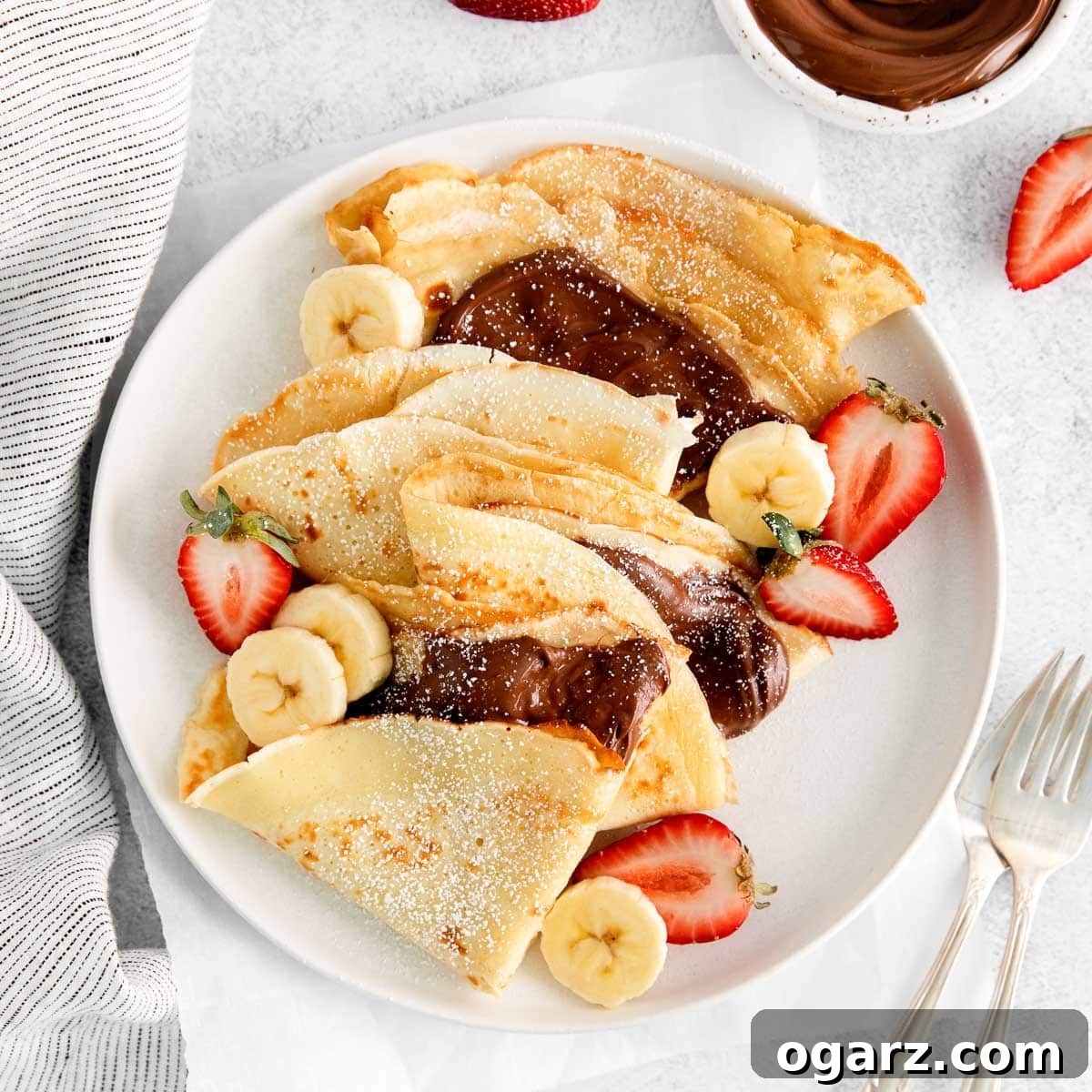
Unlock the secrets to crafting the most exquisite French crêpes right in your own kitchen! These delicate, paper-thin pancakes, with their irresistibly light, soft texture, subtly crisp edges, and rich buttery flavor, are incredibly versatile. Whether you dream of a sweet treat drizzled with chocolate or a savory delight filled with cheese and ham, this comprehensive guide will show you how to master them effortlessly.
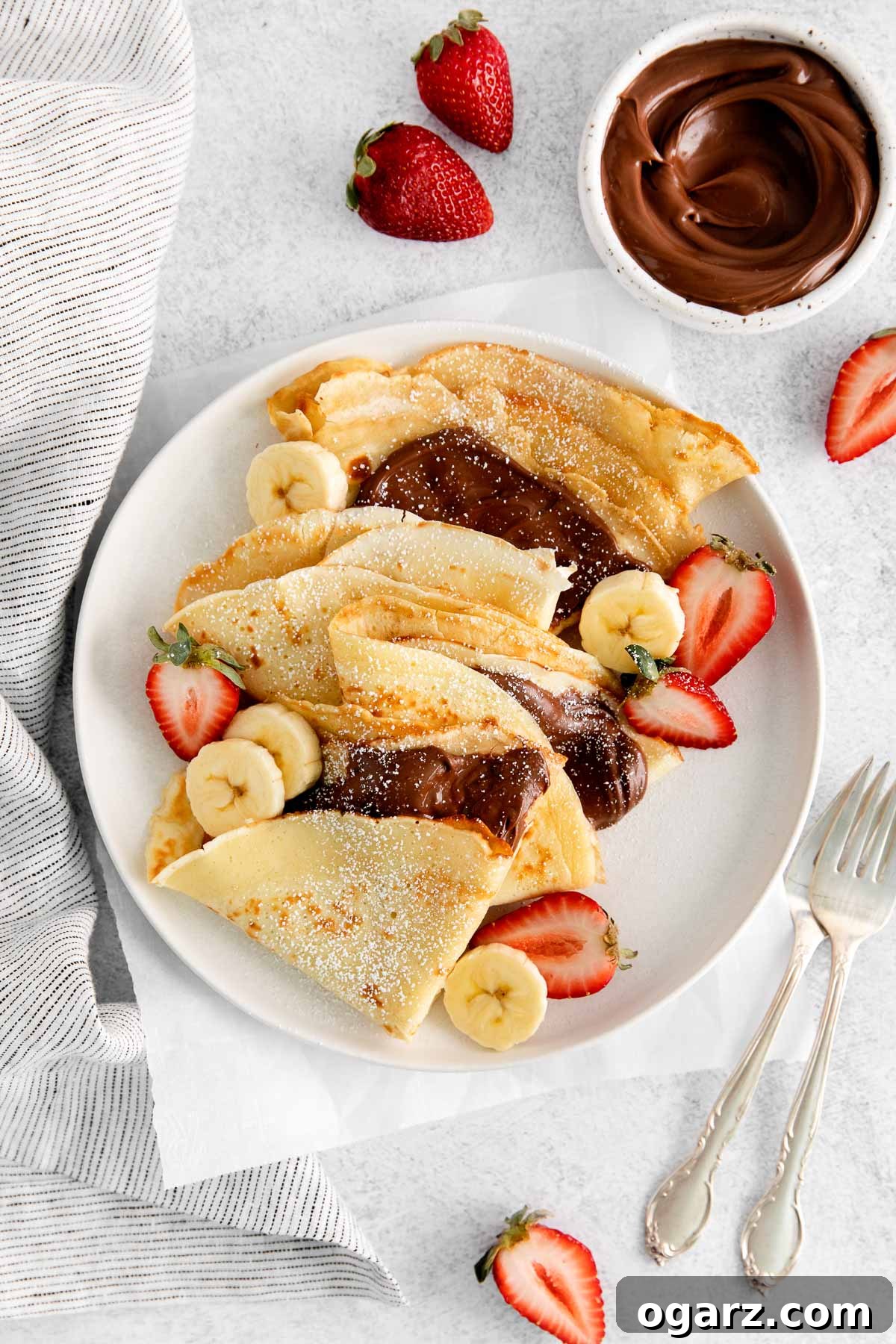
There’s nothing quite like the simple elegance of a freshly made French crêpe. These soft, buttery delights are a quintessential French delicacy, perfect for any meal of the day. Traditionally enjoyed as a scrumptious breakfast treat or an indulgent dessert, adorned with your favorite sweet filling and a dusting of powdered sugar, our French crêpe recipe is remarkably versatile. It seamlessly transitions to a savory option, making it ideal for a sophisticated breakfast, a delightful brunch, a light lunch, or even a satisfying dinner. Just like our beloved German Pancakes (Pfannkuchen), these crêpes are sure to become a family favorite.
In this guide, I’ll demystify the art of making these exquisite French pancakes, proving just how incredibly easy they are to prepare. I’ll share my top tips and tricks for achieving perfect results every time, alongside an extensive list of my favorite sweet and savory filling ideas to inspire your culinary creativity. You’ll be surprised at how foolproof it is to whip up impeccable crêpes at home—no fancy, specialized crêpe pan required!
Why You’ll Adore This Easy Crêpe Recipe
- Unrivaled Versatility: Seamlessly switch between sweet or savory preparations, catering to any craving or mealtime.
- Perfect for Meal Prep: Crêpes can be prepared in advance, stored in the fridge, and easily reheated, making them a convenient option for busy schedules.
- Everyday Ingredients: This recipe calls for staple pantry items you likely already have on hand, simplifying your shopping list.
- No Special Equipment Needed: Forget about specialized crêpe makers! A standard non-stick skillet works wonderfully, making this recipe accessible to all home cooks.
- Impressive Yet Effortless: Despite their elegant appearance, these crêpes are surprisingly simple to make, perfect for impressing guests without stress.
- Crowd-Pleaser: From picky eaters to gourmet palates, crêpes filled with diverse options are always a hit.
Essential Ingredients for Perfect French Crêpes
Crafting the perfect crêpe begins with understanding the role of each ingredient. Here’s a detailed look at what you’ll need and why:
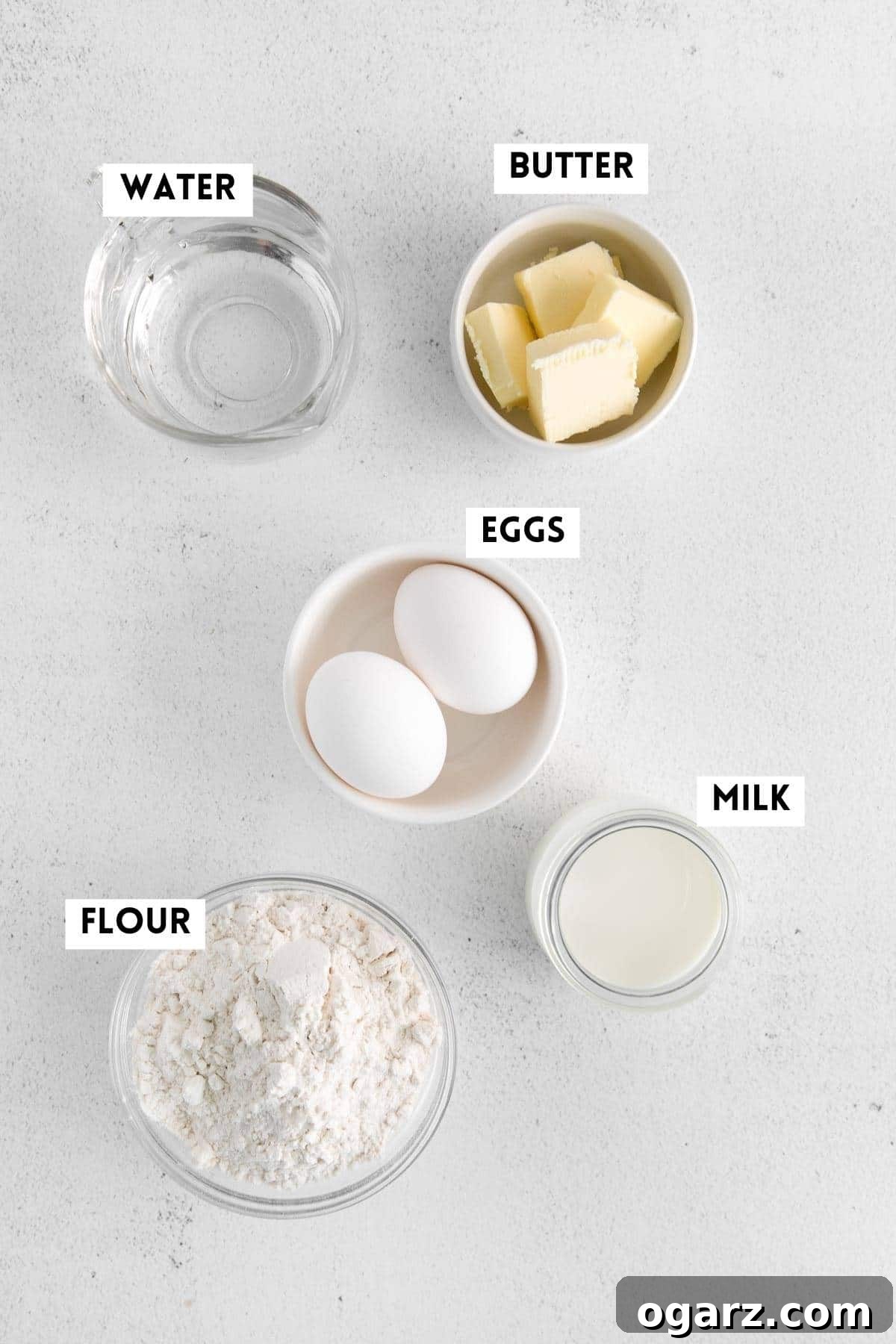
- Milk: Whole milk is my preferred choice as it imparts a beautiful richness and ensures a moist, tender crêpe. While 2% and skim milk can also be used, they may result in a slightly less rich flavor and texture. I haven’t tested this recipe with non-dairy alternatives, but unsweetened almond or oat milk could potentially work, possibly altering the final taste and consistency slightly. Ensure your milk is at room temperature for a smoother batter.
- Water: A crucial component for achieving the signature thinness of French crêpes. Room temperature water helps the batter come together smoothly and prevents it from becoming too thick, which can lead to rubbery crêpes.
- Eggs: Large eggs act as the primary binding agent, giving the crêpes their structure and flexibility. They also contribute to the rich color and delicate texture. For optimal blending and to prevent curdling, it’s essential that your eggs are at room temperature.
- Unsalted Butter: Butter is the secret to the crêpes’ luxurious richness and exquisite flavor. It also helps keep them wonderfully soft and pliable. Using unsalted butter allows you to control the overall saltiness of the dish, especially when adapting for sweet or savory variations. Beyond the batter, you’ll need extra butter for frying, or you can opt for clarified butter (ghee) or a neutral cooking oil for greasing your pan.
- All-Purpose Flour: Flour provides the necessary structure to the crêpes, ensuring they hold together without being overly thick. The key is to measure your flour accurately using the spoon and level method to avoid incorporating too much. Excess flour can result in dense, heavy crêpes rather than the light, ethereal ones we’re aiming for.
- Optional Flavorings: Depending on whether you’re making sweet or savory crêpes, you can add granulated sugar and vanilla extract, or Parmesan cheese and kosher salt directly to the batter. These simple additions elevate the flavor profile significantly.
Step-by-Step Guide: How to Make Irresistible French Crêpes
Preparing homemade crêpes is far simpler than you might imagine. Follow these detailed steps to achieve perfect results every time. You can find precise measurements and additional notes on the printable recipe card at the bottom of this page.
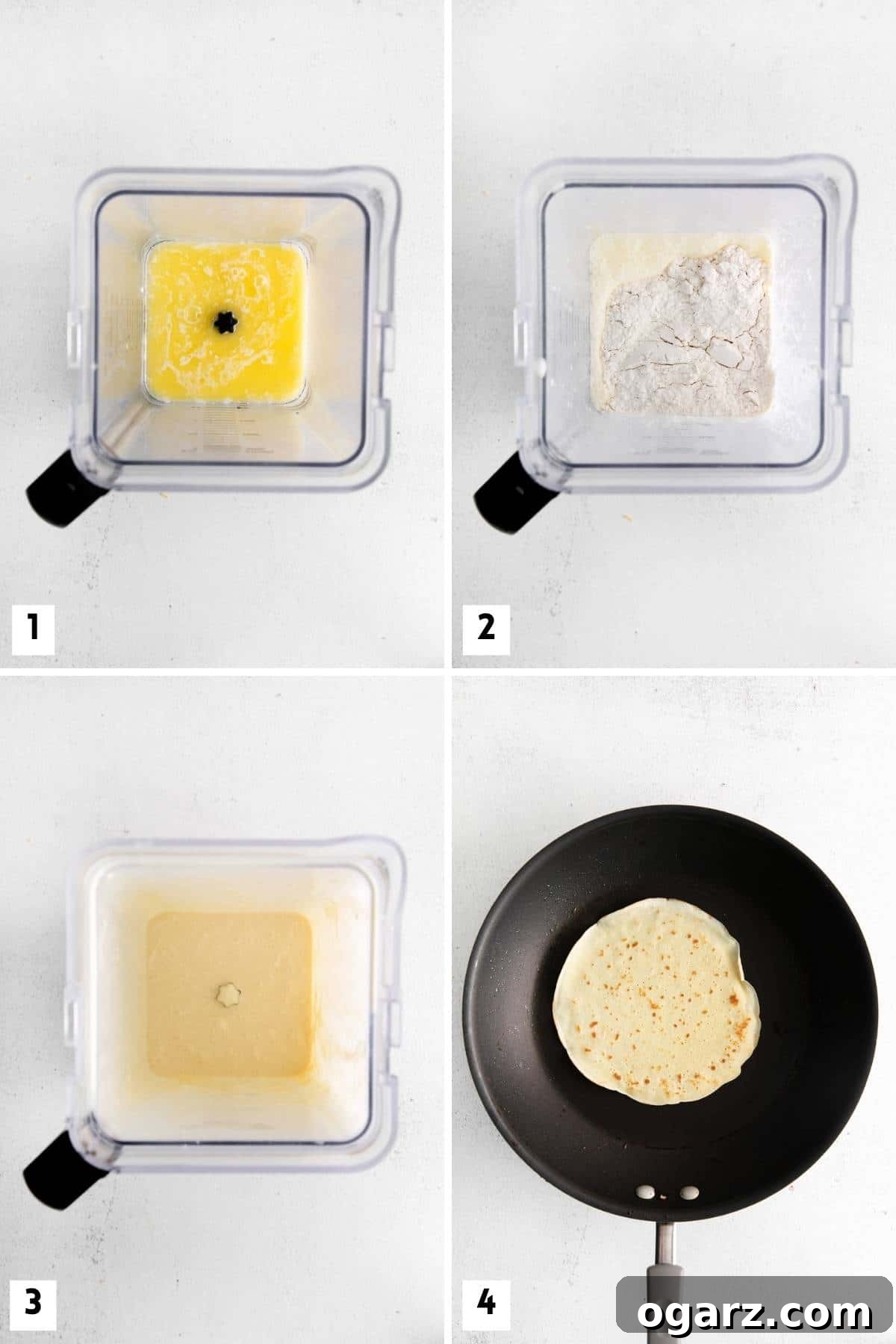
- Prepare the Wet Ingredients: In a high-speed blender, combine the room temperature milk, water, eggs, and melted unsalted butter. Blend these ingredients for about 15-20 seconds, or until they are thoroughly combined and smooth. This initial blend ensures a consistent base for your batter.
- Incorporate the Dry Ingredients and Chill: Add the all-purpose flour to the blender. If you’re using optional flavorings (such as sugar and vanilla for sweet crêpes, or Parmesan and salt for savory), add them now. Pulse the blender for an additional 10-15 seconds, just until any large dry clumps of flour have disappeared. Be careful not to overmix, as this can develop the gluten too much, leading to tough crêpes. Scrape down the sides of the blender with a spatula as needed to ensure everything is fully incorporated.
- The Essential Chill Time: Transfer the crêpe batter to an airtight container and refrigerate it for a minimum of 30 minutes, or ideally, up to overnight. This chilling period is crucial: it allows the flour to fully hydrate and absorb excess water, resulting in incredibly thin, delicate, and crisp-edged crêpes. Don’t skip this step – it makes a significant difference in the final texture!
- Heat Your Skillet: Place a large (8-inch is ideal for classic crêpes) non-stick skillet over medium-low heat. It’s important to let the pan heat gradually and evenly. A properly heated pan is key to preventing sticky crêpes and ensuring even cooking.
- Lightly Grease the Pan: Once the pan is just warm, add about ½ teaspoon of butter to the skillet. Swirl the butter around to melt and evenly coat the bottom of the pan. You only need a thin layer; too much butter can make the crêpes greasy. For subsequent crêpes, you might only need a tiny dab or none at all if your pan is well-seasoned.
- Pour and Swirl the Batter: When the butter has melted and the pan is ready, pour ¼ cup of the chilled batter into the center of the pan. Immediately, as you pour, lift and tilt the pan in a circular motion. This technique helps the thin batter spread quickly and evenly into a perfect circle. Don’t worry if it’s not perfectly round on your first try – practice makes perfect! If tilting is tricky, simply pour the batter and gently shake the pan to distribute it into a thin layer. They’ll still taste delicious, even if they’re not picture-perfect.
- Cook the First Side: Cook the crêpe for 1 to 2 minutes. Watch for visual cues: the edges will start to turn golden brown, and the surface will appear set with small bubbles forming. You should also be able to easily lift an edge with a spatula to check for a golden underside.
- Flip and Finish Cooking: Carefully flip the crêpe using a thin, wide spatula. Cook the second side for an additional 30 seconds to 1 minute, or until it’s lightly golden. The second side usually cooks faster.
- Repeat and Serve: Remove the cooked crêpe from the pan and place it on a plate. Repeat steps 5-8 with the remaining batter, adding a tiny bit more butter to your pan between crêpes as needed. Stack the cooked crêpes on a plate, covering them loosely with foil to keep them warm while you finish. Serve them immediately with your favorite sweet or savory fillings.
Mastering Crêpes: Expert Tips for Success
Achieve crêpe perfection with these invaluable insights and techniques:
- Optional Flavorings (Add to Batter):
- For Sweet Crêpes: Enhance your batter with 2 tablespoons of granulated sugar and 1 teaspoon of pure vanilla extract. These additions create a beautifully fragrant and subtly sweet base.
- For Savory Crêpes: Infuse your batter with 3 tablespoons of freshly grated Parmesan cheese and ½ teaspoon of kosher salt. This provides a delightful umami depth, perfect for savory fillings.
- The Importance of Resting Time: Never skip chilling the batter. Allowing the crêpe batter to rest in the fridge for at least 30 minutes (or up to overnight) is vital. This time allows the gluten to relax, which prevents rubbery crêpes, and enables the flour to fully absorb the liquids, resulting in a perfectly smooth, thin, and pliable crêpe.
- Optimize Cooking Speed: Crêpes cook quickly! If they cook too slowly, they can become dry and rubbery. Ensure your skillet is consistently heated to the right medium-low temperature before adding the batter. A slight sizzle when the batter hits the pan indicates readiness.
- Gluten-Free Alternatives: For those with dietary restrictions, these crêpes can be made gluten-free. Substitute the all-purpose flour with an equal amount of good quality all-purpose gluten-free flour blend or buckwheat flour. Keep in mind that gluten-free crêpes tend to be more delicate and may require a lighter touch when flipping.
- Choosing the Best Pan: While specialized crêpe pans exist, they are not a necessity. A high-quality 8-inch or 10-inch non-stick skillet works best, ensuring the crêpes release easily. If you’re using a cast iron or stainless steel pan without a non-stick coating, make sure it is very well-buttered or lightly oiled and properly seasoned to prevent sticking.
- Adjusting for Different Pan Sizes: The amount of batter you need per crêpe will vary with your pan size. For an 8-inch pan, approximately ¼ cup of batter is perfect. For a 10-inch pan, you might need closer to ⅓ cup. Experiment a little to find the ideal amount for your specific pan.
- Achieving Softer Crêpes: This recipe yields traditional crêpes with lovely caramelization and slightly crisp edges. If you prefer an even softer, more tender crêpe, cook them until the surface is just set and slightly opaque, but before the edges begin to brown significantly. Flip, cook for only about 10-15 seconds more on the second side, then remove from heat.
- Blender for Best Consistency: For the smoothest, most consistent batter, I highly recommend using a high-speed blender or even a food processor. This ensures all ingredients are thoroughly combined without any lumps. If you don’t have a blender, a whisk can be used, but ensure all ingredients (especially eggs and milk) are at room temperature to help them integrate smoothly. Whisk vigorously until no lumps remain.
- The “First Crêpe Rule”: Don’t be discouraged if your very first crêpe isn’t perfect. It often serves as a “test crêpe” to gauge your pan’s temperature and the batter’s consistency. Adjust heat or batter thickness (by adding a teaspoon of milk if too thick) as needed.
- Stacking and Keeping Warm: As you cook crêpes, stack them on a plate and cover loosely with aluminum foil or a clean kitchen towel. This helps them stay warm and moist, preventing them from drying out.
Crêpe Recipe FAQs: Your Questions Answered
Absolutely! Crêpes are excellent for meal prep. You have several options: you can refrigerate the prepared batter for up to two days, keep cooked crêpes warm in a low oven (around 200°F) for up to an hour, or store cooled, cooked crêpes in an airtight container in the fridge for up to three days. They also freeze beautifully!
Crêpes are the elegant, thin French equivalent of American pancakes. The primary difference lies in the leavening agent. Crêpes typically do not contain baking powder or baking soda, which is why they are thin and flat rather than fluffy like traditional pancakes. They share a similar foundational flavor profile but are distinguished by their delicate, buttery, and often larger form. Crêpes are designed to be filled, rolled, or folded around various sweet or savory ingredients.
While you technically *can* use self-rising flour, it’s generally not recommended for traditional French crêpes. Self-rising flour contains a leavening agent, which will cause your crêpes to puff up and become thicker, resembling more traditional American pancakes rather than the thin, flat crêpes you’re aiming for. For authentic crêpes, all-purpose flour is the best choice.
The ideal crêpe batter should be thin, pourable, and have the consistency of heavy cream or thin buttermilk. If it’s too thick, your crêpes will be heavy and bread-like. If it’s too thin, they might tear easily. If your batter seems too thick after resting, add a tablespoon or two of milk or water to reach the perfect consistency.
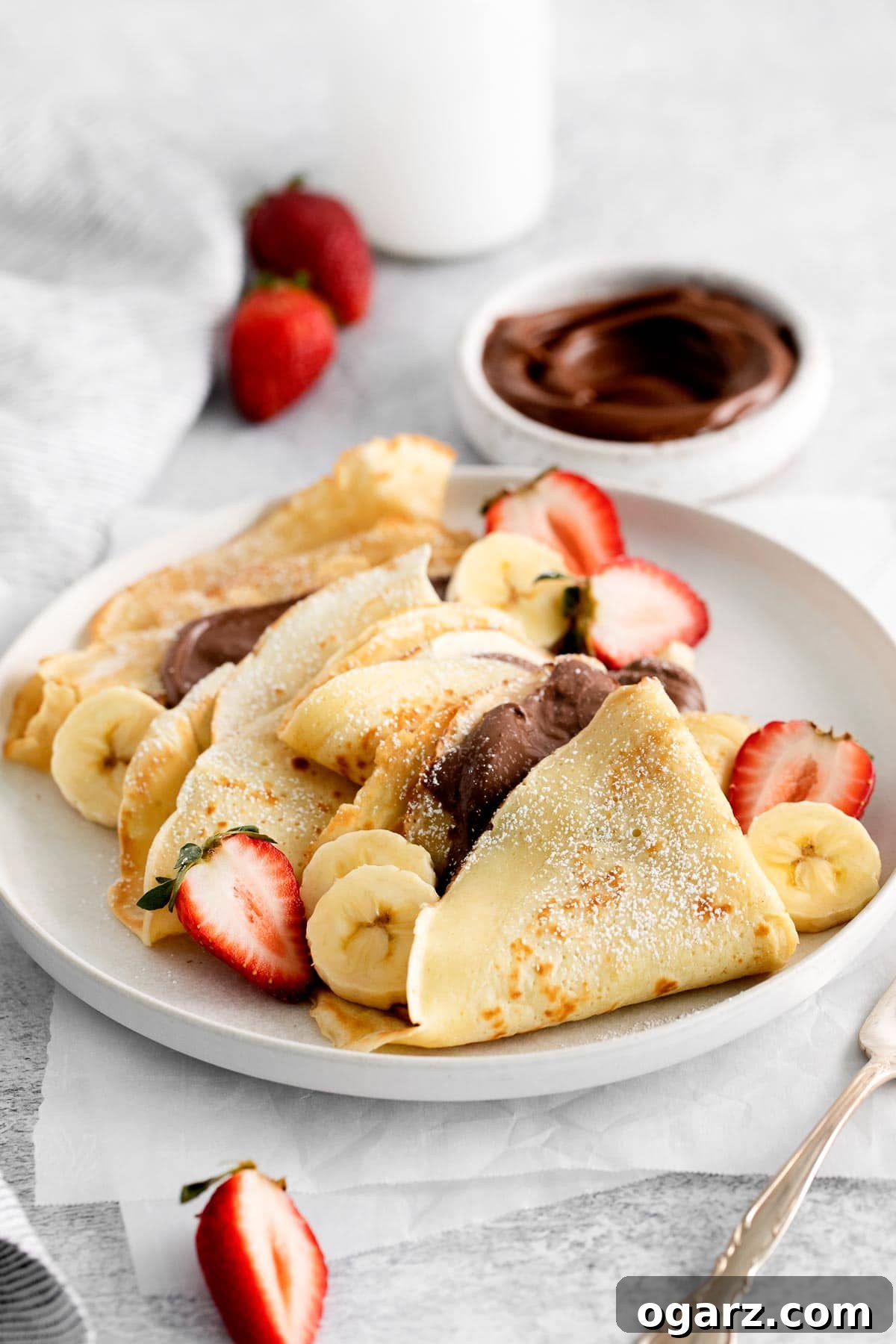
Inspiring Crêpe Filling Ideas: Sweet & Savory Delights
One of the most exciting aspects of making crêpes is the endless possibilities for fillings. Classic French crêpes are typically served folded into quarters or elegantly rolled up, embracing a myriad of sweet or savory ingredients. In France, Nutella-filled crêpes are a ubiquitous sweet favorite, while the timeless ham and cheese combination (jambon-fromage) can be found on virtually every crêperie and bistro menu across the country. Let your imagination soar with these delicious suggestions:
Decadent Sweet Crêpes (Crêpes Sucrées)
Sweet crêpes, known as crêpes sucrées in French, transform these delicate pancakes into a decadent breakfast, a delightful snack, or an exquisite dessert. Fill them with your favorite spreads, fresh fruits, or other sweet concoctions, then finish with a delicate dusting of powdered sugar. A quintessential French favorite is, of course, Nutella, often paired with sliced bananas. Here are some of my top sweet filling recommendations for crêpes:
- Fruit Preserves & Jams: Classic and simple, choose your favorite berry jam, apricot, or fig preserve.
- Nutella: The ultimate crowd-pleaser. Spread generously and add sliced bananas or strawberries for an extra treat.
- Creamy Delights: Light and airy homemade whipped cream, rich sweetened mascarpone, or tangy crème fraîche.
- Fresh Fruit Medley: A vibrant assortment of fresh berries (strawberries, blueberries, raspberries), thinly sliced apples or pears, or elegant fresh figs drizzled with honey.
- Warm Pie Fillings: Spoon in store-bought or homemade cherry, blueberry, or apple pie filling for a comforting dessert.
- Luscious Fruit Sauces: Elevate your crêpes with a homemade blueberry sauce, mixed berry compote, or a rich caramel sauce.
- Cinnamon Sugar: A simple yet satisfying blend of ¼ cup granulated sugar combined with 1 tablespoon of ground cinnamon.
- Lemon and Sugar: A timeless French classic – fresh lemon juice squeezed over the crêpes, followed by a sprinkle of granulated white sugar.
- Gourmet Spreads: Explore cookie butter, rich dulce de leche, creamy peanut butter, or tart lemon curd for diverse flavors.
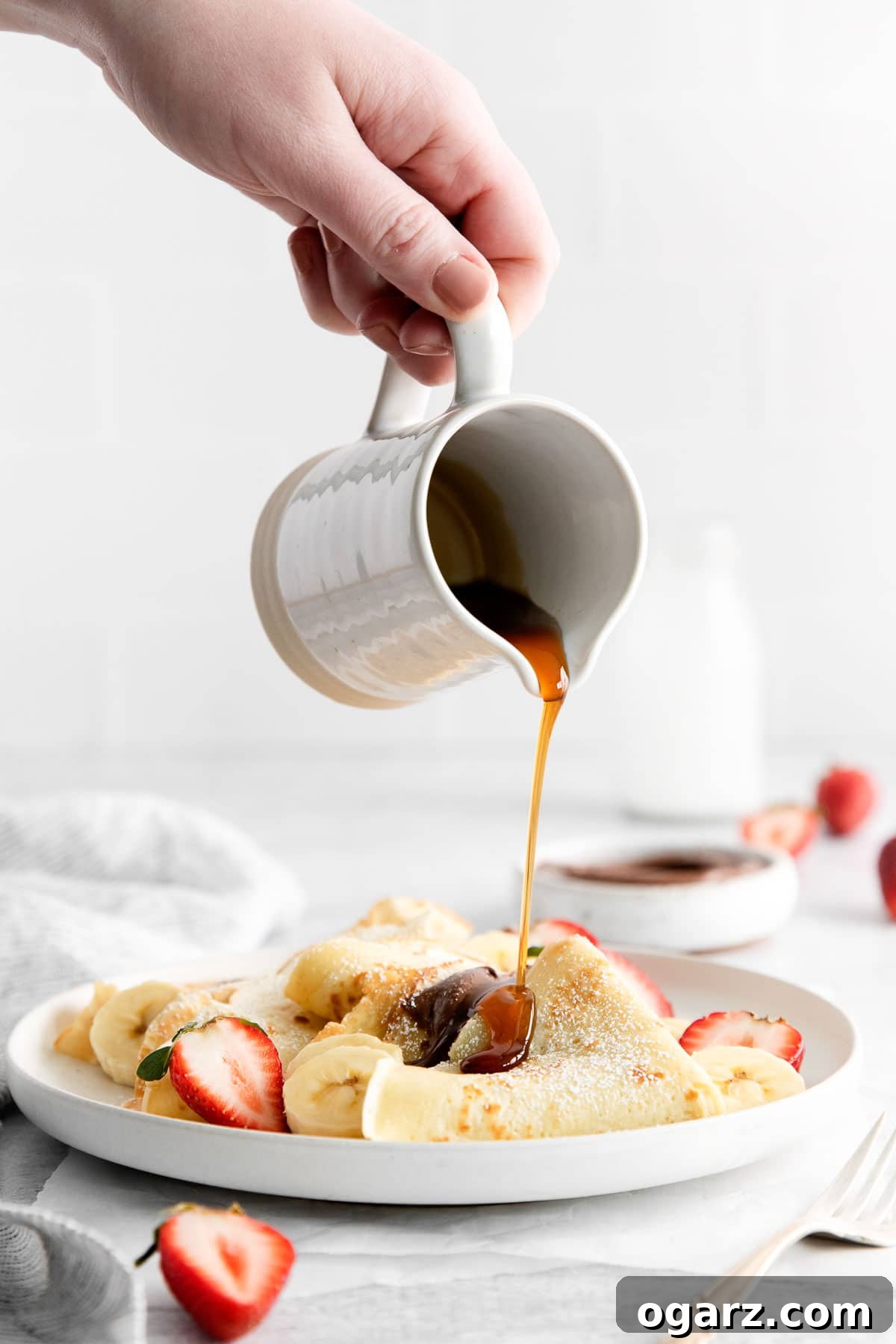
- Sweet Syrups: Drizzle with pure maple syrup, golden honey, or a touch of agave nectar.
- Rich Chocolate: Warm chocolate sauce, melted chocolate chips, or a homemade ganache.
- Specialty Fillings: A delightful strawberry and cream cheese filling, or simply paired with extra homemade whipped cream.
Hearty Savory Crêpe Fillings (Crêpes Salées)
Savory crêpes, known as crêpes salées, are often crafted with buckwheat flour in France, which lends them a distinct darker hue and a less sweet, nutty flavor profile. However, making savory crêpes with all-purpose flour is also very common and equally delicious, offering a lighter canvas for your fillings. Here are some of my favorite savory filling ideas for crêpes:
- Egg-centric Options: Fluffy scrambled eggs (perhaps with diced peppers and onions), or a perfectly fried egg nestled within the crêpe.
- Classic Caprese: Layers of fresh mozzarella slices, ripe tomato slices, and fragrant fresh basil leaves.
- Sautéed Vegetables: Earthy sautéed mushrooms, peppery arugula, a medley of seasonal roasted vegetables (like asparagus or bell peppers), or tender wilted spinach.
- Premium Deli Meats: Thinly sliced cooked ham (Jambon de Paris is excellent), savory prosciutto, or other cured meats.
- Smoked Salmon Indulgence: Luxurious smoked salmon paired with creamy dill-infused cream cheese and a sprinkle of capers.
- Ham and Cheese Perfection: The iconic combination of thinly sliced ham and melted Gruyère, Emmentaler, or cheddar cheese.
- Crispy Bacon: Crumbled crispy bacon adds a delightful texture and salty kick.
- Creamy Avocado: Sliced fresh avocado, perhaps with a squeeze of lime and a dash of chili flakes.
- Artisan Cheeses: As a filling or topping, consider rich Emmentaler, tangy soft goat cheese, mild fresh mozzarella, nutty Gruyère, or sharp cheddar.
- Fresh Herbs: Brighten any savory crêpe with finely minced chives, fresh parsley, aromatic basil, or a mix of your favorite fresh herbs.
- Chicken and Mushroom: Diced cooked chicken mixed with sautéed mushrooms in a creamy sauce.
- Spinach and Feta: Wilted spinach combined with crumbled feta cheese and a touch of garlic.
Make-Ahead & Storage Solutions for Crêpes
One of the many benefits of crêpes is their excellent make-ahead potential, making them perfect for entertaining or quick meals. Here’s how to store them effectively:
Keeping Crêpes Warm:
To serve multiple crêpes simultaneously, you can keep freshly cooked crêpes warm. Stack them on a baking sheet and cover loosely with aluminum foil. Place them in a preheated 200°F (95°C) oven for up to 30 minutes. This method gently holds their temperature without drying them out.
Storing Cooled Crêpes:
Once your crêpes have cooled completely, they can be stored for later enjoyment. Stack them with a piece of parchment paper between each crêpe to prevent sticking. Place the stack in an airtight container or wrap them tightly with plastic wrap. Store in the refrigerator for up to 3 days.
- To Reheat in the Oven: Arrange cooled crêpes on a parchment paper-lined baking sheet. Cover with aluminum foil to maintain moisture and reheat in a 240°F (115°C) oven for 10 to 12 minutes, or until warmed through.
- To Reheat in a Skillet: For individual servings, gently reheat crêpes in a non-stick skillet over medium-low heat for about 15-20 seconds per side, until heated through and pliable.
Storing Crêpe Batter:
The beauty of crêpe batter is that it improves with a little rest. You can prepare the batter in advance and store it in an airtight container in the fridge for up to two days. Give it a quick whisk before using, as some separation might occur.
Freezing Cooked Crêpes:
For longer storage, crêpes freeze exceptionally well. Stack cooled crêpes with parchment paper between each one. Wrap the stack tightly in plastic wrap, then place in a freezer-safe bag or container. They can be frozen for up to 2 months. Thaw frozen crêpes in the refrigerator overnight before reheating, or reheat gently from frozen in a skillet or oven, adding a few extra minutes to the heating time.
More Irresistible Breakfast & Brunch Recipes to Explore
Breakfast & Brunch
Dutch Baby Pancake
Breakfast & Brunch
Pumpkin Pancakes
Air Fryer
Air Fryer Toast
Breakfast & Brunch
French Toast Casserole
Pin
Classic French Crêpes
Julia Foerster
Discover how simple it is to prepare authentic, thin, and buttery French crêpes! This recipe yields delicate crêpes with crisp edges, perfect for both sweet and savory fillings.
5 minutes
20 minutes
30 minutes
55 minutes
10 crêpes
Ingredients
- ½ cup whole milk
- ½ cup water, room temperature
- 2 large eggs, room temperature
- 4 tablespoons unsalted butter, melted (plus more for greasing your pan)
- 1 cup all-purpose flour
Instructions
- Add the milk, water, eggs, and melted butter to a high-speed blender. Blend for 15 seconds, or until completely combined.
- Add the flour (and any optional flavorings for sweet or savory, as noted in tips) and pulse for an additional 10 seconds, or until any large dry clumps are gone. Scrape down the sides of the blender as needed. Do not overmix.
- Place the crêpe batter in an airtight container in the fridge to chill for at least 30 minutes– or up to overnight. Chilling the batter helps the flour absorb water, ensuring the crêpes are thin and delicate– don’t skip this step!
- Heat a large (8”) nonstick skillet over medium-low heat. When the pan is just warm, add about ½ teaspoon of butter to the skillet. You want just enough butter to melt and coat the skillet evenly.
- When the butter has melted, pour ¼ cup of batter into the center of the pan. As you pour the batter, immediately tilt and swirl the pan into a circle– this will help the batter spread into an even, thin layer. If tilting is challenging, simply pour and gently shake the pan to spread the batter.
- Cook for 1–2 minutes, or until the crêpe is golden brown around the edges and on the bottom side. Then, carefully flip the crêpe with a thin spatula and cook for an additional 30 seconds to 1 minute, or until lightly golden.
- Repeat steps 4-6 with the remaining crêpe batter, adding a small amount of butter to your pan as needed for each new crêpe.
- Serve your freshly made crêpes immediately with your favorite sweet or savory fillings and enjoy!
Notes
- Optional Flavorings:
- For sweet crêpes, add 2 tablespoons of granulated sugar and 1 teaspoon of pure vanilla extract to the batter.
- For savory crêpes, add 3 tablespoons of freshly grated Parmesan cheese and ½ teaspoon kosher salt to the batter.
- Resting time: Letting the batter rest for at least 30 minutes (or up to overnight) before cooking helps relax the gluten, resulting in softer, more delicate crêpes.
- Quick cooking time: Crêpes cook rapidly. If you cook them too slowly, they can become dry and rubbery. Ensure your skillet is well heated to medium-low before adding the batter.
- Gluten-free: To make these crêpes gluten-free, substitute all-purpose flour with an equal amount of an all-purpose gluten-free flour blend or buckwheat flour. Be aware that gluten-free crêpes will be more delicate and may tear more easily.
- Best Pan: A good quality non-stick pan is ideal for making homemade crêpes; you do not need a special crêpe pan. If using a pan without a non-stick coating (like cast iron), ensure it is thoroughly buttered or seasoned.
- Different pan sizes: Adjust batter quantity based on your pan size. For an 8-inch pan, about ¼ cup of batter works well. For a 10-inch pan, you might need slightly more.
- Softer crêpes: This recipe produces traditional crêpes with some delicious caramelization and slightly crisp edges. For a softer texture, cook until the surface is just set and opaque, but before the edges turn brown. Flip and cook for only about 10 more seconds before removing from the heat.
- Blender for consistency: Using a high-speed blender is recommended for the smoothest batter. If using a whisk, ensure all ingredients are at room temperature and whisk vigorously until lump-free.
Nutrition
Calories: 106kcal
|
Carbohydrates: 10g
|
Protein: 3g
|
Fat: 6g
|
Saturated Fat: 3g
|
Polyunsaturated Fat: 1g
|
Monounsaturated Fat: 2g
|
Trans Fat: 1g
|
Cholesterol: 46mg
|
Sodium: 19mg
|
Potassium: 45mg
|
Fiber: 1g
|
Sugar: 1g
|
Vitamin A: 207IU
|
Calcium: 24mg
|
Iron: 1mg
Like this recipe? We’d love to hear from you! Please rate and leave a comment below!