
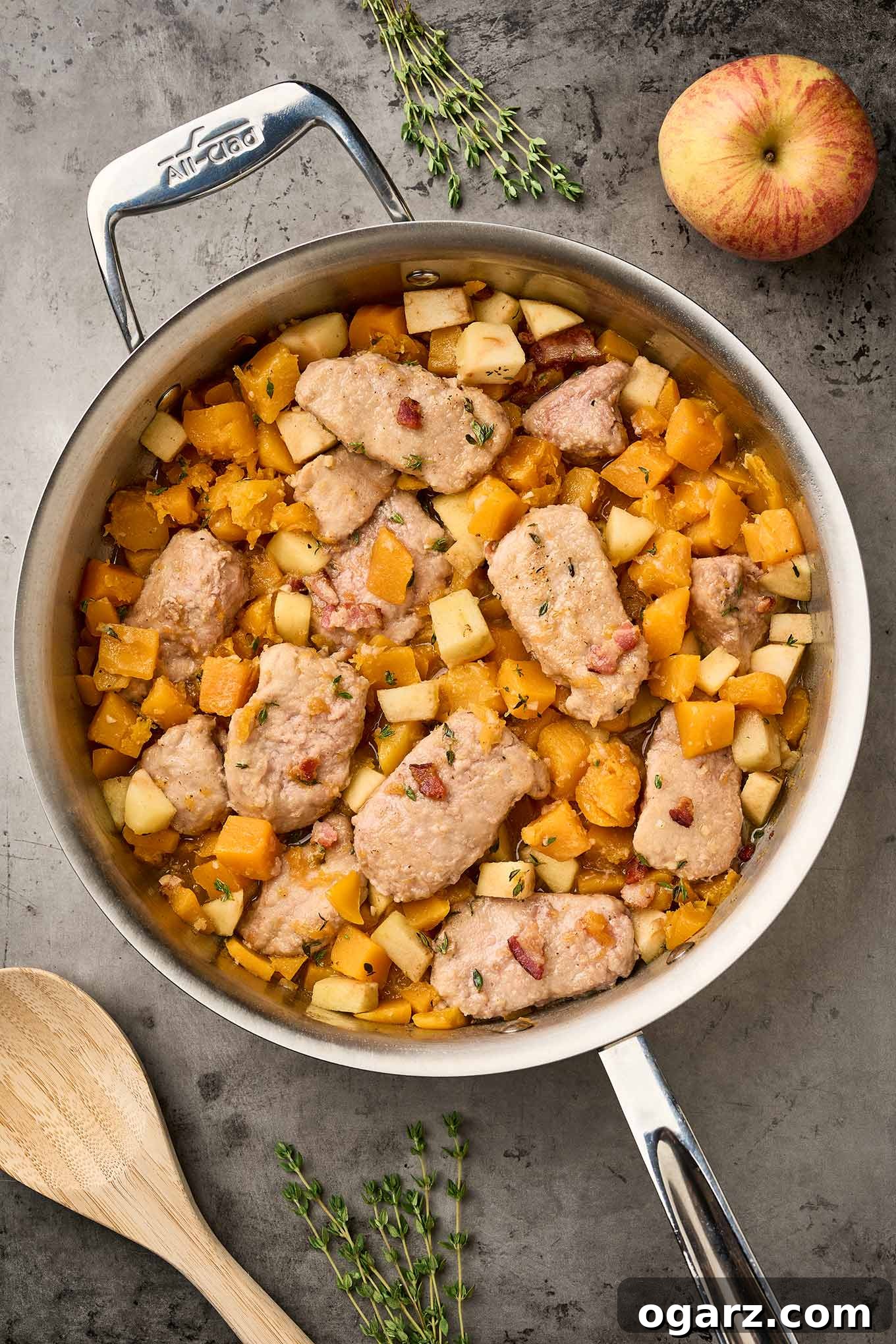

Maple-Thyme Pork with Apples and Butternut Squash: An Easy Skillet Dinner for Fall
Embrace the vibrant flavors of autumn with this exquisite Maple-Thyme Pork Skillet, a truly satisfying one-pan dinner. Featuring tender pork medallions, sweet apples, and earthy butternut squash, all brought together in a rich maple-thyme sauce and finished with crispy bacon, this dish is a celebration of fall. It’s designed for efficiency without compromising on taste, making it an ideal choice for busy weeknights yet elegant enough for a special family gathering. Each ingredient contributes a unique texture and layer of flavor, creating a harmonious and balanced meal that is both comforting and incredibly delicious.
This recipe transforms simple ingredients into a gourmet experience right in your kitchen. The quick-cooking nature of pork tenderloin medallions makes it a go-to protein for those seeking a flavorful meal without a lengthy preparation time. Coupled with the seasonal sweetness of apples and the hearty goodness of butternut squash, this skillet dinner delivers a captivating blend of savory, sweet, and herbaceous notes. The addition of smoky bacon provides a delightful crunch and depth, while a drizzle of pure maple syrup perfectly complements the fresh thyme, weaving all these wonderful components into a cohesive and unforgettable dish.
Unlock the Flavors: Essential Ingredient Notes and Smart Substitutions
Crafting the perfect Maple-Thyme Pork Skillet begins with understanding your ingredients. Below, you’ll find key insights into each component, ensuring you achieve optimal flavor and texture. For precise measurements, please refer to the complete recipe card at the end of this article.

Pork Tenderloin: The Star Protein
For this recipe, select a single pork tenderloin weighing approximately 1 to 1-1/4 pounds. Pork tenderloin is celebrated for its lean profile and incredible tenderness, making it a fantastic choice for quick skillet meals. To prepare the medallions, begin by trimming any silverskin – a thin, silvery membrane that can become tough when cooked – from the surface of the tenderloin. Then, slice the tenderloin into thick 1-inch rounds. For even cooking and maximum tenderness, gently pound these rounds to a uniform 1/2-inch thickness between sheets of plastic wrap. This technique ensures that each medallion cooks quickly and consistently, yielding a melt-in-your-mouth texture that is simply irresistible. This careful preparation is key to the success of your pork skillet.
Butternut Squash: Earthy Sweetness
Fresh butternut squash is paramount for achieving the best texture and robust flavor in this dish. Its natural sweetness and creamy consistency provide a delightful contrast to the savory pork. While pre-cut, fresh squash offers convenience, ensure it is cut into evenly sized pieces (roughly 1/2 to 3/4 inch cubes) to promote uniform cooking. Uneven pieces can lead to some being undercooked while others become overly soft. If you opt for frozen butternut squash, it’s crucial to defrost it completely before adding it to the pan, and drain off any excess liquid that accumulates. Be aware that frozen squash may result in a slightly softer, potentially mushier texture compared to its fresh counterpart, which delivers a more satisfying bite.
Apples: The Sweet and Tart Balance
The choice of apple significantly impacts the dish’s overall flavor and texture. Golden Delicious apples are highly recommended as they hold their shape beautifully during cooking and contribute a balanced sweetness that perfectly complements the other ingredients. Other excellent options that maintain their structure and offer a pleasant sweetness include Gala and Fuji apples. These varieties will soften slightly but won’t turn into mush, adding a lovely, tender bite. It’s best to steer clear of Granny Smith apples for this recipe, as their high tartness can overpower the subtle maple and thyme notes, disrupting the intended flavor balance of the skillet meal.
Bacon: Smoky Depth and Crisp Texture
Thick-cut bacon is more than just a garnish; it’s a fundamental flavor builder in this recipe. Its rich, smoky essence plays a crucial role in harmonizing the sweet and savory elements of the dish, adding a layer of complexity that elevates the entire meal. Beyond flavor, the crispy texture of the cooked bacon provides a delightful contrast to the tender pork and soft squash. If you prefer a milder, less smoky flavor profile, cubed pancetta makes an excellent substitute. Pancetta, a cured Italian pork belly, offers a similar richness and texture when rendered, albeit with a more delicate, savory character that will still beautifully enhance the dish.
Thyme and Maple Syrup: The Aromatic Duo
Fresh thyme is indispensable for its earthy, aromatic qualities that wonderfully complement the apples and butternut squash. Its subtle, herbaceous notes add a sophisticated freshness to the rich flavors of the skillet. If fresh thyme isn’t available, you can substitute with dried thyme, but remember to reduce the quantity by two-thirds (so, if the recipe calls for 2 teaspoons fresh, use about 2/3 teaspoon dried). To maximize its flavor release, gently crumble dried thyme between your fingers before adding it to the pan. Paired with pure maple syrup, which provides a natural, caramel-like sweetness, these two ingredients form the signature glaze that ties all the autumnal flavors together, creating a truly memorable sauce.
Prep Overview
Mastering the Maple-Thyme Pork Skillet: A Step-by-Step Culinary Journey
Embarking on this culinary adventure is straightforward, with each step meticulously designed to build layers of irresistible flavor. This quick overview highlights the process, ensuring a smooth and enjoyable cooking experience. For comprehensive, detailed instructions, please consult the printable recipe card below.
This remarkable dish comes together effortlessly in a single pan, making cleanup a breeze. The beauty of this recipe lies in its sequential steps, where each action contributes to the overall depth and complexity of the final product. From the initial sear of the pork to the gentle simmering of the vegetables, every stage is vital in creating a harmonious blend of flavors and textures that define this autumnal skillet meal.


The journey begins with preparing the pork tenderloin medallions. Lightly dredge these lean cuts in seasoned flour, a crucial step that creates a delicate crust during searing. This initial quick sear on both sides not only locks in the pork’s natural moisture, ensuring juicy results, but also leaves behind wonderfully browned bits on the bottom of the pan. These flavorful remnants, known as fond, are essential. They form the rich foundation for your sauce, adding an incredible depth of flavor as the pan is later deglazed.
Next, the focus shifts to building layers of flavor. In the same skillet, cook the diced bacon until it’s perfectly crisp and its fat has rendered, infusing the pan with smoky notes. Remove the bacon and set it aside, reserving some of the flavorful rendered fat. Then, add the minced garlic to the pan, sautéing it briefly until fragrant, careful not to burn it. This aromatic base is followed by deglazing the pan with chicken broth, actively scraping up all those delicious browned bits from the searing pork. This process captures every ounce of flavor. Stir in the cubed butternut squash, cover the skillet, and let it simmer gently. This allows the squash to tenderize beautifully, absorbing the savory liquid. Keep an eye on the broth; it should reduce slightly, concentrating its flavors. If you notice it evaporating too quickly, simply reduce the heat and add a little extra broth to maintain the perfect simmering consistency.

The final stage brings all the elements together for a harmonious finish. Once the butternut squash is tender, it’s time to incorporate the remaining ingredients. Add the sliced apple, a generous pour of maple syrup, the previously seared pork medallions, the crispy bacon, and fresh thyme leaves to the skillet. Gently stir to combine, ensuring all components are nestled within the luscious sauce. Allow the dish to simmer for just a few more minutes. This brief simmer allows the flavors to meld, the apples to soften slightly, and the pork to finish cooking through, reaching its ideal internal temperature of 145°F (63°C). Once cooked, remove the skillet from the heat and let the dish rest for about 3 minutes. This resting period is vital for the pork, allowing the juices to redistribute, ensuring maximum tenderness and flavor before you serve this delightful fall-inspired meal.
Serving Suggestions: Completing Your Autumnal Meal
This Maple-Thyme Pork with Apples and Butternut Squash is a hearty, well-rounded one-pan meal that can easily stand alone as a complete dinner. Its rich flavors and diverse textures offer a satisfying experience on their own. However, for those looking to expand the meal or add a touch of freshness, several simple additions can elevate the dining experience. A crisp, vibrant green salad, perhaps dressed with a light vinaigrette, provides a refreshing counterpoint to the richness of the pork and sauce. Alternatively, a simple green vegetable such as steamed green beans, sautéed spinach, or asparagus would be lovely additions, offering a pop of color and an extra serving of nutrients. Consider a side of fluffy couscous or wild rice to soak up every last drop of the delectable maple-thyme sauce, making it even more fulfilling. For a touch of rustic elegance, a crusty loaf of bread is also a perfect accompaniment.
Explore More Delicious Weeknight Pork Recipes
If you savor the delightful balance of sweet and savory flavors found in this Maple-Thyme Pork Skillet, you’ll be thrilled to discover our other quick-cooking pork recipes. Each offers a unique flavor profile while maintaining the ease and versatility of pork tenderloin medallions. Our Curried Pork with Apples masterfully blends warm, aromatic curry spices with a touch of creamy richness, creating an exotic yet comforting meal that pairs wonderfully with a bed of rice or couscous. For those who crave bright, tropical notes, our Pineapple Pork transports your taste buds to the Caribbean with juicy pork medallions bathed in a sweet and subtly spicy pineapple rum sauce. Both are fantastic examples of easy skillet dinners that beautifully showcase the adaptability and quick-cooking nature of pork tenderloin, ensuring a delicious and diverse culinary journey throughout your week.

Maple-Thyme Pork with Apples and Butternut Squash
By Lynne Webb
This easy one-pan dinner combines perfectly seared pork tenderloin medallions with tender apple, crispy bacon, sweet butternut squash, and a light, aromatic maple-thyme glaze. It’s a quick, fall-inspired meal that delivers an exquisite balance of savory and subtly sweet flavors, perfect for any occasion.
Prep Time: 14 mins
Cook Time: 25 mins
Total Time: 40 mins
Servings: 4 servings
Rate Recipe
Print Recipe
Ingredients
- 1 pork tenderloin, 1 to 1-1/4 lbs
- 1/4 cup flour
- Salt and freshly ground black pepper, to taste
- 2 tablespoons vegetable oil
- 2 slices thick-cut bacon, diced
- 3 cloves garlic, minced
- 3/4 cup low-sodium chicken broth, divided
- 12 ounces butternut squash cubes, about 2 cups (see notes below for fresh vs. frozen)
- 1/4 cup maple syrup (pure, Grade A recommended)
- 1 apple, peeled, cored, and cut into 1/2-inch cubes (Golden Delicious, Gala, or Fuji)
- 2 teaspoons fresh thyme leaves (or 2/3 teaspoon dried, crumbled)
Instructions
- Prepare the Pork: Trim any silverskin from the pork tenderloin. Slice the tenderloin into 1-inch thick rounds. Place these rounds between two sheets of plastic wrap and gently pound them to a uniform 1/2-inch thickness. This ensures even cooking and tender medallions.
- Season and Sear Pork: In a shallow dish, combine the flour with 1 teaspoon of salt and several generous grinds of black pepper. Lightly dredge each pork medallion in this seasoned flour mixture, shaking off any excess. Heat the vegetable oil in a large, heavy-bottomed skillet (cast iron or stainless steel works best) over medium-high heat. Working in batches if necessary to avoid overcrowding the pan, sear the pork medallions for about 1 minute per side, just until they develop a light golden crust. This initial searing creates delicious browned bits (fond) in the pan, which are essential for the sauce. Transfer the seared pork to a clean plate and set aside.
- Cook Bacon: Add the diced thick-cut bacon to the same skillet (no need to clean it). Cook over medium heat for 3 to 4 minutes, stirring occasionally, until the bacon is beautifully crisp. Using a slotted spoon, transfer the crispy bacon to a paper-towel-lined plate to drain, reserving about 1 tablespoon of the rendered bacon fat in the skillet.
- Build the Sauce Base: Reduce the heat to medium. Add the minced garlic to the reserved bacon fat in the skillet. Sauté the garlic for about 1 minute, stirring constantly, until it becomes fragrant. Be careful not to burn the garlic, as it can turn bitter. Immediately pour in 1/2 cup of the low-sodium chicken broth to deglaze the pan. Use a wooden spoon or spatula to scrape up all the flavorful browned bits from the bottom of the skillet, incorporating them into the broth.
- Simmer Squash: Stir the butternut squash cubes into the broth mixture in the skillet. Cover the skillet and let it cook, stirring occasionally, for 7 to 8 minutes, or until the squash is tender when pierced with a fork. If the broth seems to evaporate too quickly, you can reduce the heat further and add a splash more broth to maintain a gentle simmer.
- Combine and Finish: Add the remaining 1/4 cup of chicken broth, the maple syrup, and the cubed apple to the skillet. Stir gently to combine all the ingredients. Return the reserved seared pork medallions and crispy bacon to the pan, nestling the pork among the squash and apples.
- Final Simmer and Serve: Sprinkle the fresh thyme leaves over the dish. Continue to simmer for about 3 minutes, or until the pork is cooked through and reaches an internal temperature of 145°F (63°C) when checked with a meat thermometer. Once cooked, remove the skillet from the heat and allow the dish to rest for 3 minutes before serving. This resting period helps the pork retain its juices, ensuring it remains tender and flavorful.
Notes
About the Butternut Squash: If using frozen butternut squash, be sure to defrost it completely before adding it to the pan. Drain off any accumulated liquid to prevent excess water from thinning the sauce and affecting the texture. While convenient, frozen squash may result in a slightly softer final texture compared to fresh.
Nutrition
Calories: 460, Total Fat: 19g, Cholesterol: 104mg, Sodium: 794mg, Carbohydrates: 37g, Fiber: 3g, Sugar: 19g, Protein: 34g
Nutrition information is automatically calculated and should be used as an approximation. Individual values may vary based on specific ingredients and preparation methods.