
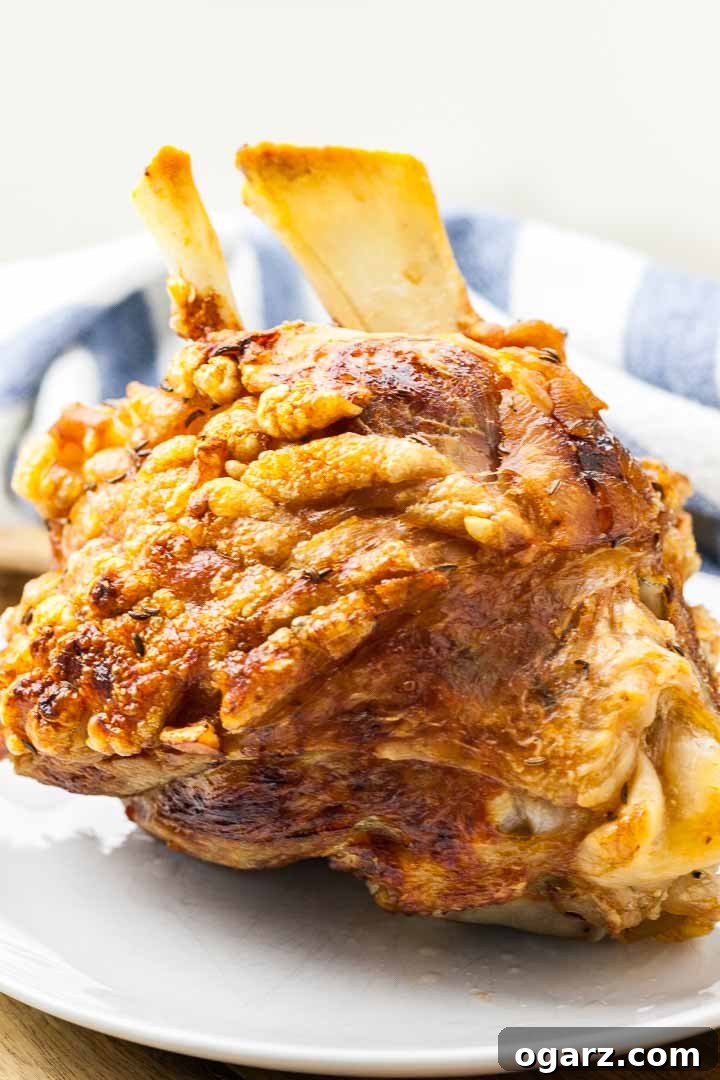
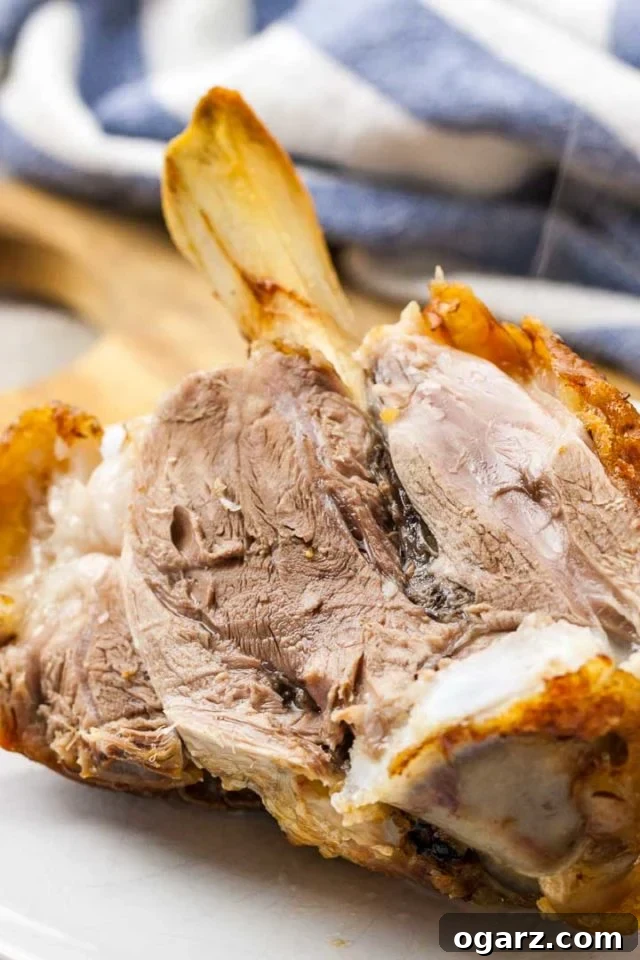
Welcome to the ultimate guide to preparing an authentic German classic: Schweinshaxe, also known as roasted pork hock or ham hock. This iconic Bavarian dish, renowned for its incredibly crispy skin and succulent, tender meat, is a staple at Oktoberfest celebrations but truly shines on any occasion throughout the year. While the recipe requires a few hours of patience, the hands-on effort is minimal, and the reward is an unforgettable culinary experience that transports your taste buds straight to the heart of Germany.
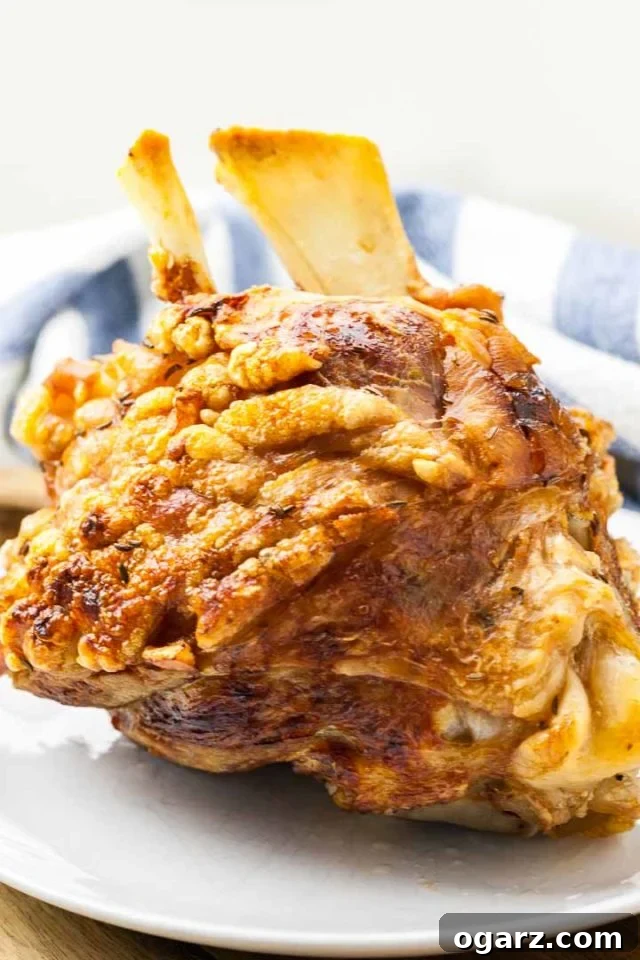
For those who have savored a genuine Schweinshaxe in Munich or a traditional German eatery, you understand the magic: a remarkable contrast between the super crispy, golden-brown pork rind that crackles with every bite, and the incredibly tender, flavorful meat beneath. This dish isn’t just a meal; it’s an experience, a celebration of rich German culinary heritage.
There are a couple of popular methods for preparing Schweinshaxe: roasting it directly or a two-step process involving simmering before roasting. Our preferred method, and the one that consistently yields perfect roasted pork knuckles at home, involves simmering the pork hock in water with aromatics first, followed by a thorough roasting in the oven. This technique is the secret to achieving that coveted combination of ultra-crispy skin and fall-off-the-bone tender meat, infused with wonderful flavor.
What Exactly is a Pork Hock?
A pork hock, also widely known as a ham hock, pig knuckle, or pork knuckle, is a specific cut of meat taken from the pig’s leg. It’s the joint located at the bottom of the shank, positioned between the tibia/fibula and the ankle where the foot connects to the hog’s leg. It’s important to note that while it comes from the leg, it is not considered part of the ham itself, which comes from a different section of the leg.
This cut is rich in connective tissue, which might sound unappealing at first. However, during the slow cooking process—especially simmering—this connective tissue breaks down and melts into gelatin, infusing the meat with incredible flavor and contributing to its wonderfully tender, moist texture. Despite its complex flavor and texture potential, the pork knuckle is a relatively inexpensive cut of meat, making it an excellent choice for a hearty, budget-friendly meal.
To prepare an authentic German Schweinshaxe (where “Schwein” means pig and “Haxe” means hock), you need a **fresh, uncured, and unsmoked pork knuckle**. It’s crucial to avoid cured or smoked ham hocks, as these will result in a completely different flavor profile and texture. Schweinshaxen are traditionally made from the rear legs of the pig, as these typically have a thicker layer of fat, which renders beautifully to create that signature crispy skin. However, pork hocks from the front legs can also be used with excellent results. Generally, **one large pork knuckle is sufficient to serve about two adults**, depending on its size and your appetite.
Mastering the Art of German Pork Hock: A Step-by-Step Guide
Preparing a truly magnificent Schweinshaxe is a labor of love that involves two main stages: a gentle simmer to tenderize the meat, followed by high-heat roasting to achieve the ultimate crispy skin. Here’s how to do it:
Step 1: The Initial Simmer – Building Tenderness and Flavor
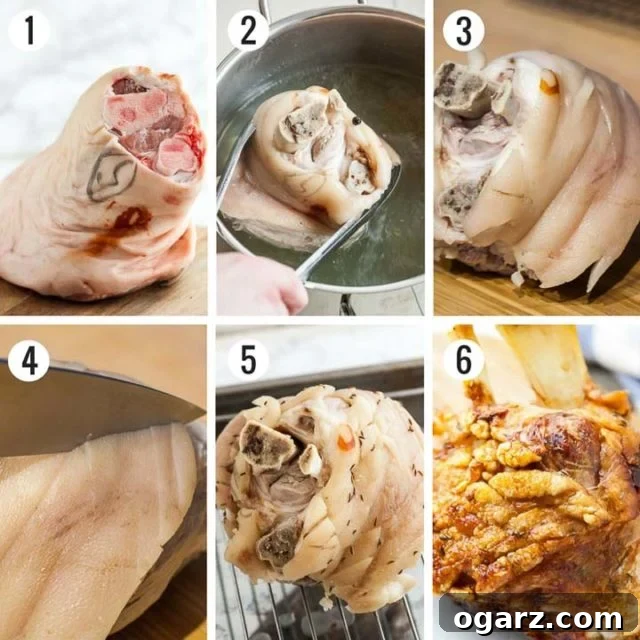
Begin by selecting a large stockpot, ensuring it’s spacious enough to fully submerge your pork hocks. Fill the pot with water and bring it to a rolling boil. Once boiling, generously add about 2 teaspoons of salt, along with your chosen aromatics: quartered onions, black peppercorns, fragrant bay leaves, and juniper berries. These ingredients are vital for infusing the pork with a deep, aromatic flavor during the simmering process.
Carefully submerge the pork hock (or hocks, if doubling the recipe) into the seasoned boiling water. Immediately reduce the heat to a very low setting, just enough to keep the water hot but not actively boiling or even simmering vigorously. The goal is a gentle “poaching” rather than a hard boil, which could toughen the meat. Allow the pork knuckles to cook at this low temperature for approximately 90 minutes. This extended, gentle simmer is the secret to breaking down the connective tissues, resulting in incredibly tender meat that will practically fall off the bone later.
Step 2: Scoring the Skin for Maximum Crispiness
After the 90-minute simmering period, use sturdy tongs to carefully remove the pork knuckles from the hot water. Transfer them to a cutting board. At this stage, the skin will be softened, making it much easier to work with. Using a very sharp knife, meticulously incise the pork skin in a beautiful diamond pattern. This scoring technique is not just for aesthetics; it serves several crucial purposes:
- **Enhanced Crispiness:** The cuts allow the fat beneath the skin to render out more effectively during roasting, creating air pockets that expand and crisp up into glorious crackling.
- **Flavor Penetration:** The incisions provide more surface area for the seasoning to penetrate deeper into the skin and some of the meat.
- **Easier Eating:** Once roasted and super crispy, the scored skin is much easier to cut through and enjoy at the table.
Be careful to cut only through the skin and the fat layer, avoiding cutting into the meat itself. Once scored, pat the hocks thoroughly dry with paper towels. Removing excess moisture is another critical step for achieving truly crispy crackling.
The Roasting Process: Achieving Golden Perfection
How Long to Cook Ham Hocks in the Oven?
Before moving to the oven, preheat it to 390°F (200°C). While the oven heats, generously rub the entire surface of the scored pork knuckle with caraway seeds and an ample amount of salt. Caraway seeds are a classic German spice that imparts a distinctive, warm, and slightly peppery flavor, perfectly complementing the rich pork. The salt helps draw out moisture and contribute to the crackling formation.
Place the seasoned pork hock on a rack set within a sturdy roasting pan. The rack is essential as it allows air to circulate around all sides of the hock, ensuring even cooking and crisping. Roast the pork hock in the preheated oven for approximately 90 minutes. For optimal results, consider turning the pork hocks halfway through the roasting time (after about 45 minutes) to promote even browning and crisping on all sides.
The Secret to Super Crispy Pork Knuckle Skin
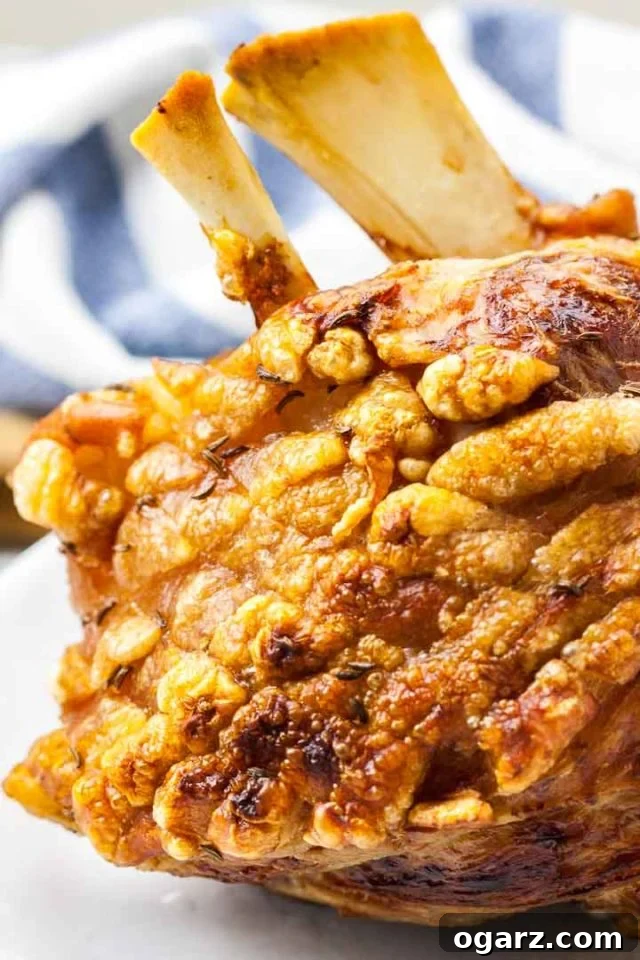
The final, most exciting stage of cooking Schweinshaxe is achieving that legendary crispy crackling. For the last 5-10 minutes of roasting, turn on your oven’s broiler. This direct, intense heat is what transforms the already delicious skin into an irresistible, bubbly, and crunchy crackling.
**Crucial Tip: Do Not Walk Away!** When broiling, it’s imperative to keep a very close eye on the pork hock. The skin can go from perfectly golden and crispy to burnt in a matter of seconds. Stay by the oven and watch it intently. You’ll hear the skin crackle and pop as it crisps up. Once it reaches a deep golden-brown hue and is audibly crunchy, remove it immediately from the oven. The result will be a magnificent, super crispy rind that is the hallmark of a perfectly cooked German pork hock.
Traditional German Accompaniments: What to Serve with Schweinshaxe
A glorious Schweinshaxe deserves equally traditional and satisfying side dishes. In Bavaria, roasted German pork knuckles are most commonly served with a selection of hearty accompaniments that balance the richness of the meat and complement its robust flavors:
- **Potato Salad (Kartoffelsalat):** Often a warm, vinegar-based potato salad, distinct from the mayonnaise-based American versions. Try my recipe for Authentic German Potato Salad for a true taste of Germany.
- **Potato Dumplings (Kartoffelklöße):** Soft, chewy potato dumplings are excellent for soaking up any delicious juices or gravy.
- **Mashed Potatoes (Kartoffelpüree):** A simpler, creamy potato option that always pairs well with roasted meats.
- **Sauerkraut:** Fermented cabbage, with its tangy and slightly sour notes, provides a crucial counterpoint to the rich pork, aiding in digestion and cleansing the palate.
- **Red Cabbage (Rotkohl):** Braised red cabbage, often cooked with apples and spices, offers a sweet and sour contrast that is both vibrant and delicious.
- **Gravy (Bratensoße):** A rich, savory gravy made from the pan drippings or a dedicated stock is often served alongside to enhance the overall experience.
For an authentic Bavarian experience, pair your Schweinshaxe with a crisp German beer, such as a traditional Märzen, Lager, or a malty Dunkel.
Frequently Asked Questions About Pork Hocks
Can I double this recipe?
Absolutely! This recipe can easily be doubled if you’re feeding a larger crowd. The key is to ensure you have a pot large enough to comfortably submerge all the pork knuckles in the simmering water. If one large pot isn’t sufficient, use two separate pots, ensuring each hock is fully covered with the seasoned liquid during the simmering stage.
Is a pork hock the same as a ham hock?
Yes, for most culinary purposes, a pork hock and a ham hock refer to the same cut of meat. They are both taken from the lower part of a pig’s leg. Sometimes, the term “ham hock” specifically refers to a hock from the rear leg, which tends to be meatier and fattier, while “pork hock” can refer to either front or rear. However, when buying fresh, uncured pork for Schweinshaxe, you can use either, treating them identically in terms of preparation.
Can I prepare Schweinshaxe ahead of time?
While best served fresh, you can prepare certain components ahead. The simmering step can be done a day in advance. After simmering, let the hocks cool, pat them dry, score the skin, and store them in the refrigerator. When ready to serve, bring them to room temperature, season, and proceed with the roasting and broiling steps. This can cut down on active cooking time on the day of serving.
What if I don’t have a roasting rack?
A roasting rack is highly recommended for even crisping. If you don’t have one, you can create a makeshift rack by scrunching up aluminum foil into several thick “ropes” and placing them at the bottom of your roasting pan to elevate the pork hock. Alternatively, you can use large, roughly chopped root vegetables (like carrots, celery, and onions) to create a bed for the hock, which will also add flavor to any pan drippings.
Can I give the pork hock bone to my dog?
No, it is **highly advisable not to give the cooked bone from a pork hock to your dog.** Cooked bones, especially those that have been simmered and then roasted, become brittle and are prone to splintering. These splinters can cause serious internal injuries, blockages, or choking hazards for your pet. Always discard cooked bones safely where your dog cannot access them.
Other Beloved German Recipes to Explore
If you’ve enjoyed the journey of making this traditional German Pork Hock, you might be interested in exploring more authentic German flavors. Here are a few other delightful recipes that bring the taste of Germany to your kitchen:
- Refreshing German Cucumber Salad (Gurkensalat)
- Creamy Bavarian Beer Cheese Spread (Obatzda)
- Classic German Apple Cake (Versunkener Apfelkuchen)
- Simple and Authentic German Spaetzle Recipe
- Homemade Bavarian Pretzels (Brezeln)
Essential Tools for Your Schweinshaxe Journey:
Having the right kitchen tools can make a significant difference in the ease and success of your cooking. For this German Pork Hock recipe, these items are particularly helpful:
**Roasting Pan with Rack:** An absolute must for achieving that perfect, all-around crispy skin. The rack elevates the pork hock, allowing hot air to circulate freely beneath it, while the pan below catches all the flavorful drippings, making cleanup a breeze and providing a base for gravy.
**Whole Caraway Seeds:** Integral to the authentic flavor profile of Schweinshaxe. Ensure you have whole seeds, as their subtle aroma and taste are key to this dish.
**Sharp Chef’s Knife:** Essential for precisely scoring the pork skin. While the skin is softer after simmering, a high-quality, sharp knife will make the task much easier and safer, allowing you to create clean, even diamond patterns without undue effort.
Ready to try this amazing Roasted Pork Hock Recipe?
PIN IT TO YOUR DINNER BOARD TO SAVE IT OR SHARE ON FACEBOOK!
Follow Plated Cravings on Pinterest for more great recipes!

Print Recipe
German Pork Hock (Schweinshaxe Recipe)
German Pork Hock, also known as roasted ham hock or Schweinshaxe, is a traditional Bavarian dish that’s popular not only during the Oktoberfest but all year round. This easy pork knuckle recipe takes a few hours but cooks without too much effort on your part and rewards you with crispy pork crackling and tender meat.
Ingredients
- 2 pork knuckles, fresh, uncured, unsmoked
- 1 tsp black peppercorns
- 4 bay leaves
- 4 juniper berries
- 1 large onion, peeled and quartered
- 1 tbsp caraway seeds
- Salt, to taste
Instructions
- Bring water in a big pot to a boil, add 2 tsp salt, quartered onions, peppercorns, bay leaves, and juniper berries. Turn down the temperature so that the water is still hot but not simmering and submerge the pork hocks. They should be covered with water. Let them cook at a low temperature for 90 minutes. The water should not boil or simmer.
- After 90 minutes use tongs to remove the pork knuckles from the water and use a sharp knife to incise the skin in a diamond pattern.
- Preheat oven to 390°F (200°C) and rub the pork knuckles with caraway seeds and salt. Place the hocks on a rack in a roasting pan and bake for about 90 minutes in the middle of the oven. Turn the pork hocks after 45 minutes.
- To crisp up the skin turn on the broiler for the last 5-10 minutes. Keep a close eye on them because the skin can get burned pretty quickly. It will crackle and get super crispy.
- Serve immediately!
Nutrition
Calories: 220kcal | Carbohydrates: 4g | Protein: 15g | Fat: 19g | Saturated Fat: 7g | Cholesterol: 56mg | Sodium: 57mg | Potassium: 77mg | Fiber: 1g | Sugar: 1g | Vitamin C: 2.4mg | Calcium: 28mg | Iron: 1mg
Like this recipe? Rate and comment below!
NEVER MISS A RECIPE!
PINTEREST / FACEBOOK / INSTAGRAM / TWITTER
If you’ve tried this or any other of my recipes, don’t forget to rate the recipe and to leave me a comment. I love hearing from you!