
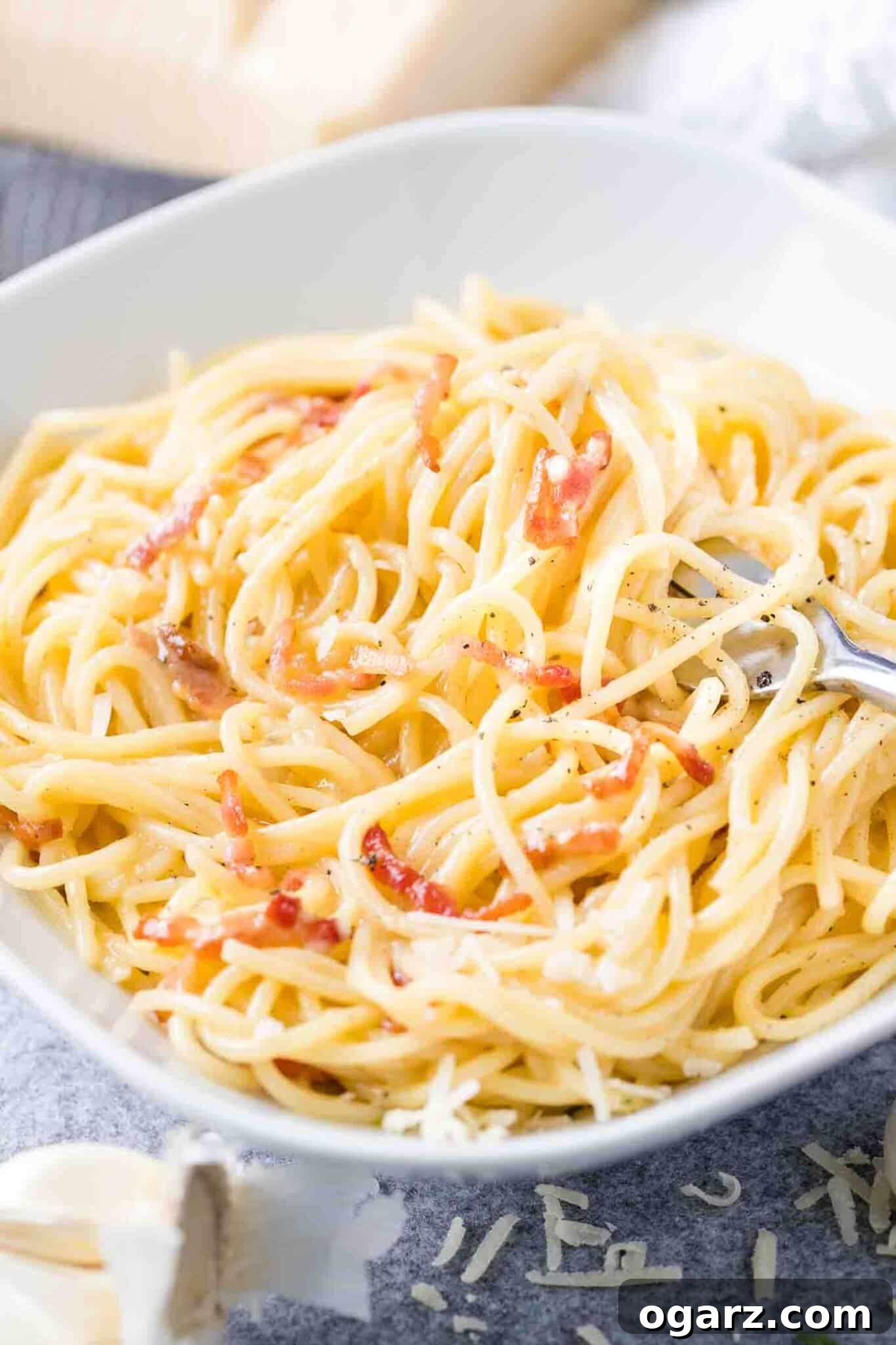
Authentic Pasta Carbonara: A Timeless Italian Classic for Your Dinner Table
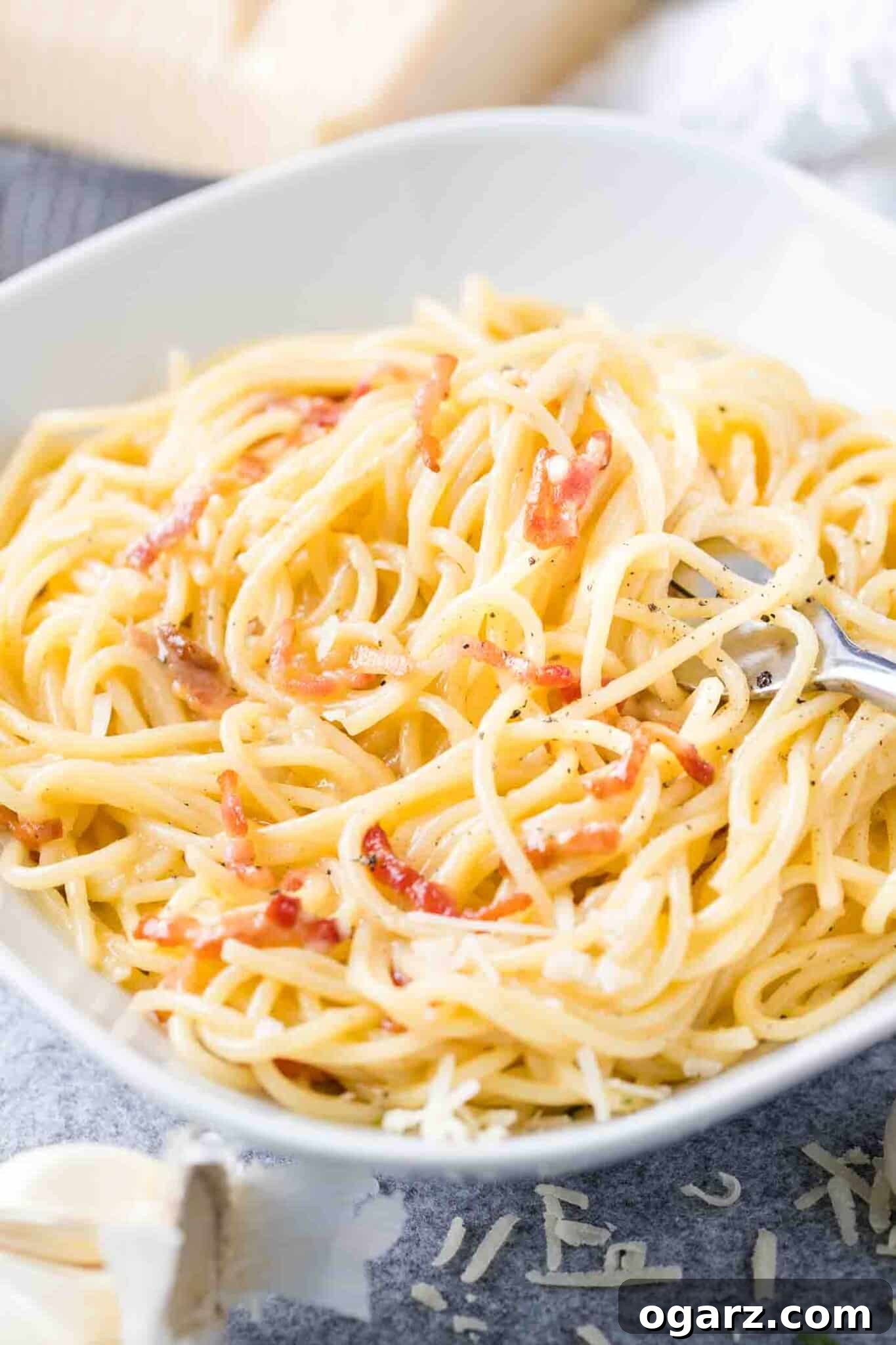
Delight in the rich, creamy flavors of genuine Pasta Carbonara, a beloved Italian classic that proves simple ingredients can create extraordinary meals. This authentic recipe guides you through preparing a restaurant-quality dish in under 20 minutes, making it the perfect choice for an indulgent yet quick weeknight dinner. Forget heavy creams and complicated steps; true Carbonara is about masterful technique and the incredible synergy of just a few core components.
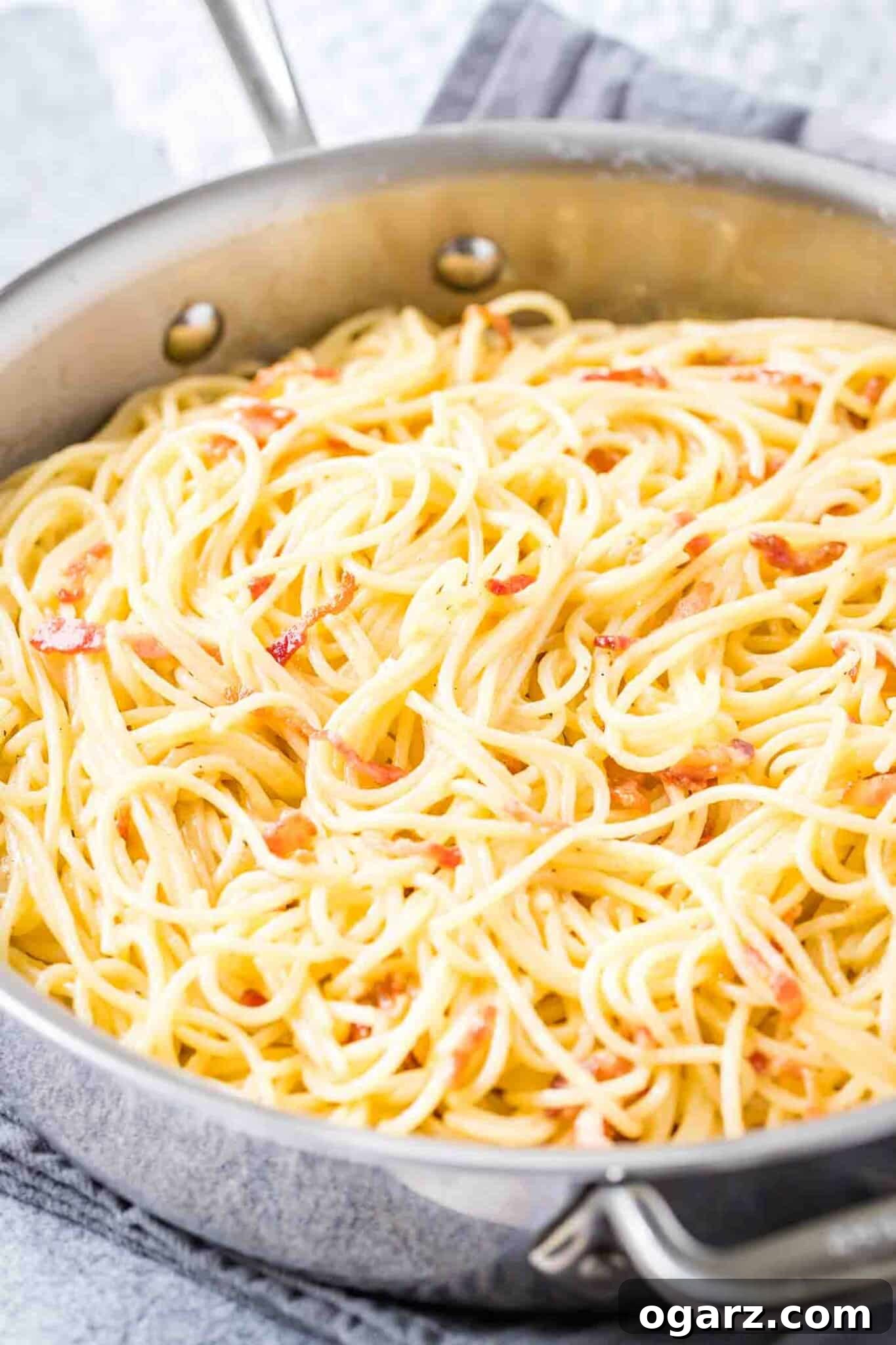
Originating from the Lazio region of Italy, specifically Rome, in the mid-20th century, Carbonara embodies rustic Italian culinary wisdom. It emerged from humble beginnings, a testament to resourceful cooking where readily available ingredients like cured pork, eggs, and hard cheese were transformed into a comforting and deeply satisfying meal. Contrary to popular misconceptions, authentic Carbonara is never made with heavy cream. Its signature smooth, velvety sauce is achieved through a magical emulsification process involving freshly grated Parmesan or Pecorino Romano cheese, eggs, the rendered fat from cured pork, and a splash of starchy pasta cooking water. This traditional approach yields a lighter yet incredibly rich sauce that clings beautifully to every strand of pasta, offering a depth of flavor that cream simply cannot replicate.
Our rendition of this timeless dish has become a firm favorite, frequently gracing our dinner table. It’s the ideal recipe for those evenings when time is short, but the desire for a deeply flavorful, homemade meal is strong. You’ll be amazed at how quickly you can create such an impressive dish using ingredients you likely already have on hand. It’s a culinary experience that transports you straight to a Roman trattoria with every bite.
Mastering Carbonara: The Essential Ingredients
The beauty of Carbonara lies in its simplicity. With only a handful of ingredients, each one plays a crucial role in developing the dish’s characteristic flavor and texture. Understanding these components and choosing quality items will elevate your Carbonara from good to unforgettable.
Pork Perfection: Guanciale, Pancetta, or Bacon?
Traditionally, Spaghetti Carbonara is made with Guanciale, a cured pork jowl. Guanciale offers a unique, deep pork flavor and a distinct texture when rendered. It’s rich in fat, which is essential for creating the luxurious sauce. If Guanciale is difficult to find, Pancetta, Italian cured pork belly, is an excellent substitute. Both Guanciale and Pancetta are unsmoked, allowing their pure pork flavor to shine.
In this recipe, we opt for high-quality **bacon**. While bacon is smoked after being cured, giving it a slightly different flavor profile than its Italian counterparts, it’s widely available and still delivers fantastic results. The key is to render the bacon slowly until it’s perfectly crispy, creating flavorful fat that forms the base of your sauce. Don’t be shy about using bacon if pancetta or guanciale are not accessible; your Carbonara will still be incredibly delicious.
The Cheese Factor: Parmigiano Reggiano & Pecorino Romano
The cheese is fundamental to the creamy texture and salty depth of Carbonara. While Parmigiano Reggiano (often called Parmesan) is a popular choice, a traditional Carbonara often features Pecorino Romano, or a blend of both. Pecorino Romano, made from sheep’s milk, is sharper and saltier than Parmigiano Reggiano, which offers a nuttier, more delicate profile. The combination can provide a beautifully balanced flavor.
Regardless of your preference, the cardinal rule is to use **freshly grated cheese**. Pre-grated Parmesan contains anti-caking agents that prevent it from melting smoothly and emulsifying properly, leading to a gritty or clumpy sauce. Invest in a block of high-quality cheese and grate it just before use for the best possible outcome.
Egg-ceptional Sauce: Whole Eggs for Creaminess
Many Carbonara recipes call for a combination of egg yolks and whole eggs, or sometimes only yolks. For convenience and consistent creaminess, our recipe utilizes **whole large eggs**. When combined with hot pasta and a little reserved pasta water, the eggs gently cook to form a rich, velvety sauce without scrambling. The heat from the pasta, typically above 160°F (71°C) after cooking, is sufficient to safely cook the eggs, ensuring they are not raw but perfectly integrated into the sauce. If you prefer, pasteurized eggs can be used for added peace of mind.
Pasta Power: Choosing the Right Shape
While various types of pasta can be used, long, thin strands are traditionally preferred for Carbonara. Spaghetti, linguine, and fettuccine are ideal choices because their surface area allows the egg and cheese sauce to coat them beautifully, creating that iconic creamy texture. The sauce clings to these shapes, ensuring a flavorful bite every time. Cooking the pasta al dente – firm to the bite – is crucial, as it provides a pleasant texture and prevents the pasta from becoming mushy in the sauce.
The Unsung Heroes: Black Pepper & Pasta Water
Don’t underestimate the power of freshly cracked black pepper in Carbonara. It adds a crucial aromatic kick and a subtle spicy note that balances the richness of the dish. Use a generous amount of freshly ground black pepper for the most impactful flavor.
And finally, the secret weapon: pasta cooking water. This starchy liquid is pure liquid gold for Carbonara. It helps emulsify the eggs, cheese, and rendered fat, creating a silky-smooth sauce that binds everything together perfectly. Never drain all your pasta water; always reserve at least a cup before draining, as you’ll likely need a few tablespoons to achieve the perfect consistency for your sauce.
Julia’s Expert Tips for Carbonara Success
Crafting the perfect Carbonara is a skill easily mastered with a few key insights. Follow these tips to ensure your dish is consistently creamy, flavorful, and truly authentic.
- Quality Ingredients are Paramount: Because Carbonara relies on so few ingredients, the quality of each one directly impacts the final taste. Opt for the best bacon or cured pork you can find, fresh, organic eggs, and genuine Parmigiano Reggiano or Pecorino Romano cheese.
- Mis en Place is Your Best Friend: Carbonara comes together very quickly, so having all your ingredients prepped and ready before you start cooking is crucial. Grate your cheese, whisk your eggs, chop your bacon, and have your garlic ready. This ensures a smooth, stress-free cooking process.
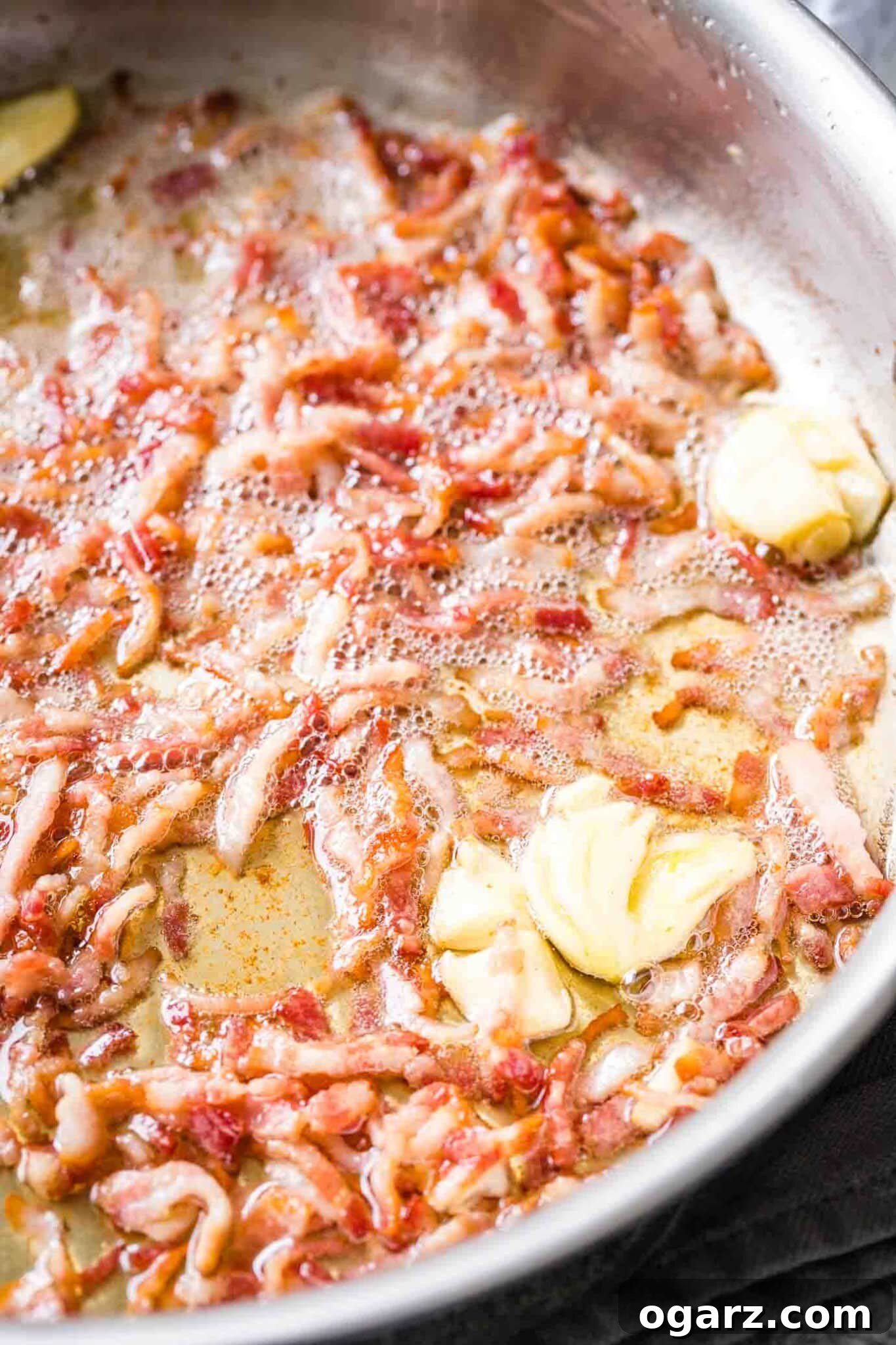
- Render the Pork Properly: Whether using bacon, pancetta, or guanciale, slow and steady wins the race. Cook the pork over medium heat until it’s wonderfully crispy and has rendered plenty of fat. This fat is essential for the sauce’s flavor and texture.
- Don’t Scramble the Eggs – Emulsify Them: The key to a creamy sauce is gentle cooking. After the pasta is transferred to the pan with the pork, turn off the heat. Let the pasta cool slightly for about a minute before adding the egg and cheese mixture. The residual heat from the pasta is enough to thicken the sauce without scrambling the eggs. Keep tossing continuously!
- The Magic of Pasta Water: Always reserve at least one cup of the starchy pasta cooking water before draining your pasta. This “liquid gold” is indispensable for creating the perfect consistency for your sauce. If the sauce seems too thick, add a tablespoon of pasta water at a time, tossing until it reaches your desired creaminess.
- Remove the Garlic: If you’re using garlic (as this recipe does), remember to remove and discard the cloves once the bacon is crispy. They’ve imparted their flavor, and leaving them in can lead to an overpowering taste or unpleasant texture in the finished dish.
- Serve Immediately: Carbonara is a dish that tastes best fresh off the stove. The sauce is at its creamiest and most luscious when hot. As it cools, the sauce can thicken and become less desirable, so gather everyone around the table as soon as it’s ready!
Common Carbonara Questions Answered
Here are answers to some frequently asked questions about making and enjoying Pasta Carbonara:
Reheating Carbonara can be tricky, as the sauce tends to dry out and the eggs can scramble if heated too quickly or unevenly. We generally recommend enjoying Carbonara fresh. However, if you must reheat it, avoid the microwave. Instead, gently warm it in a large pan over medium-low heat with a tablespoon or two of water. Continuously toss the pasta with tongs as it heats to help re-emulsify the sauce and prevent the eggs from scrambling. Start with minimal water and add more if needed to restore creaminess.
While various kinds of pasta can work, spaghetti, linguine, and fettuccine are traditionally considered the best choices for Carbonara sauce. Their long, thin shape provides a large surface area-to-volume ratio, allowing the raw egg and cheese mixture to cook properly and cling beautifully to each strand, creating that signature creamy coating. We often use spaghetti as it’s a pantry staple, but other shapes like penne can also work in a pinch, though they might not deliver the exact same textural experience.
The most common pitfall in making Carbonara is accidentally scrambling the eggs. The key is to control the heat. Ensure your pasta is still hot, but not scalding, when you add the egg mixture. After transferring the pasta to the pan with the cooked pork, turn off the heat and let the pasta sit for about 30-60 seconds to cool slightly. Then, pour in the egg and cheese mixture and toss vigorously and continuously. The residual heat from the pasta will gently cook the eggs into a smooth sauce, rather than scrambling them. A splash of warm pasta water also helps prevent scrambling by keeping the mixture fluid and aiding emulsification.
While traditional Carbonara doesn’t include vegetables, many home cooks enjoy adding them for extra flavor and nutrition. Cooked peas are a common and delicious addition that complements the richness of the dish. Mushrooms, asparagus, or spinach can also be incorporated. If adding vegetables, ensure they are cooked separately before adding them to the pasta and pork mixture, right before adding the egg sauce, to prevent them from cooling down the dish too much.
Serving Suggestions for Your Carbonara
Pasta Carbonara is a complete and satisfying meal on its own, but a simple accompaniment can enhance the dining experience. A crisp green salad with a light vinaigrette dressing offers a refreshing contrast to the richness of the pasta. A side of crusty Italian bread is perfect for soaking up any leftover sauce. For wine pairing, consider a light-bodied red like a Chianti or a crisp white like a Vermentino, both of which complement the savory flavors without overpowering the dish.
Embrace the simplicity and elegance of this authentic Italian recipe. With this guide, you’re ready to create a truly memorable Pasta Carbonara that will impress your family and friends. Enjoy the process of bringing a piece of Roman culinary tradition into your home!
More Easy Dinner Recipes You’ll Love
Air Fryer
Air Fryer Meatballs
Main Dishes
Creamy Salmon Pasta
Main Dishes
Beans and Rice
Main Dishes
Instant Pot Chili Recipe
Pasta Carbonara
Ingredients
- 1 ½ cups freshly grated Parmesan
- 4 large eggs
- freshly ground black pepper
- 2 teaspoons salt
- 1 pound dried pasta (such as spaghetti or linguine)
- 3 garlic cloves, peeled and crushed
- 2 tablespoons butter
- 9 slices bacon, chopped
Instructions
-
Fill a large saucepan with water and bring to a rolling boil.
-
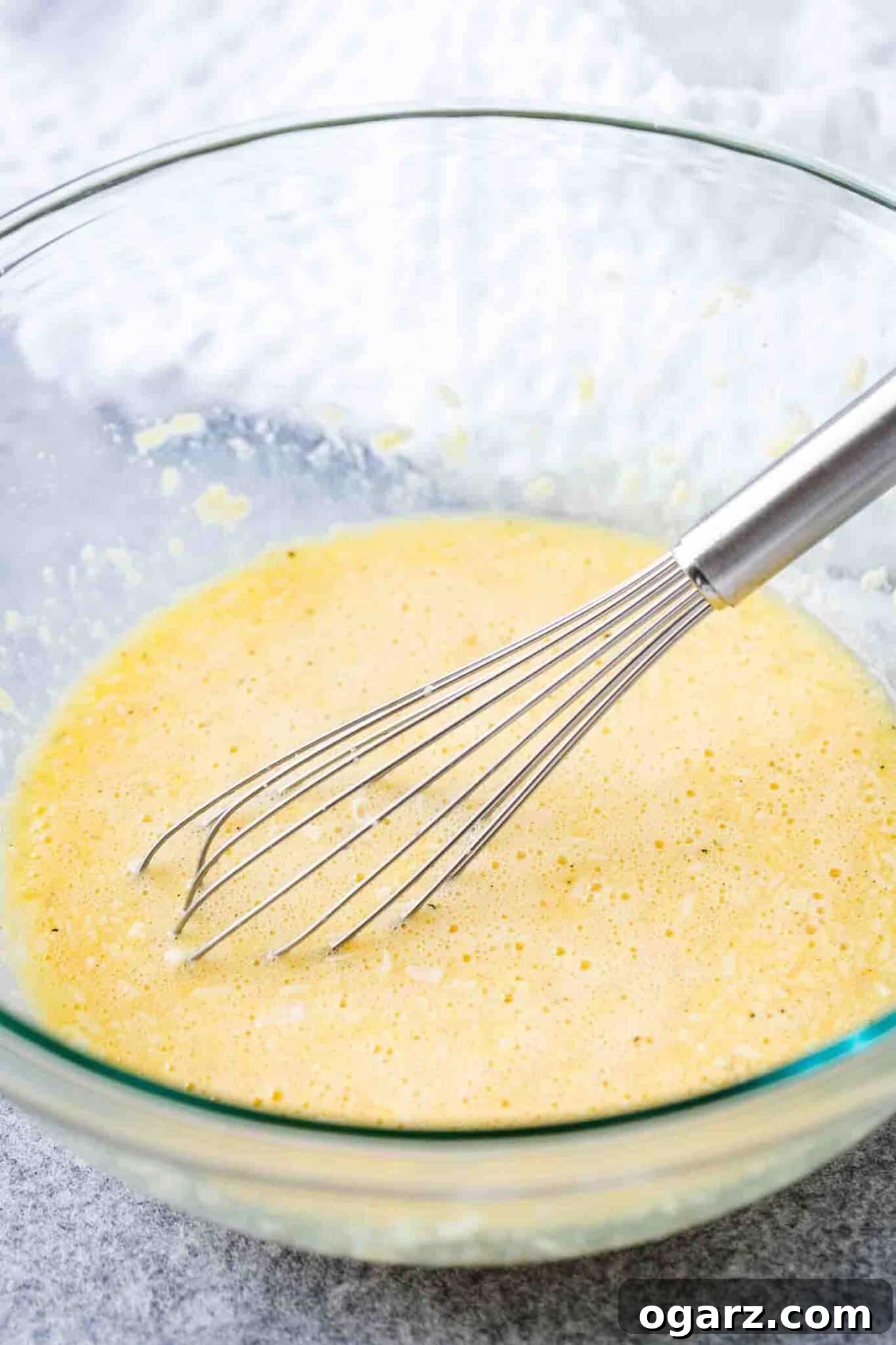
In a small bowl, whisk together 1 cup of the freshly grated Parmesan cheese with the 4 large eggs. Season this mixture generously with freshly ground black pepper. Set aside.
-
Once the water is boiling, add 2 teaspoons of salt, then add the dried pasta. Cook according to package instructions until the pasta is perfectly al dente.
-
While the pasta cooks, melt the butter in a large, wide pan over medium heat. Add the chopped bacon and crushed garlic cloves. Fry until the bacon is crispy, typically about 5-7 minutes, stirring occasionally. The rendered fat is crucial for the sauce.
-
When the bacon is crispy, remove and discard the garlic cloves from the pan. Reduce the heat to low to keep the bacon warm.
-
Before draining, reserve at least 1 cup of the starchy pasta cooking water. Using tongs or a slotted spoon, transfer the al dente pasta directly into the pan with the warm bacon and its rendered fat. Toss the pasta and bacon together until well combined. Do not discard the pasta water!
-
Turn off the heat under the pan and let the pasta sit for 1 minute to cool slightly. Then, pour the whisked egg and cheese mixture over the pasta. Toss vigorously and continuously until the pasta is evenly coated and a creamy, emulsified sauce forms. If the sauce appears too thick, add a tablespoon of the reserved pasta water at a time, continuing to toss, until it reaches your desired consistency.
-
Immediately transfer the Carbonara to serving plates. Sprinkle with the remaining freshly grated cheese and a final flourish of black pepper. Serve hot and enjoy!
Nutrition
Carbohydrates: 87g |
Protein: 40g |
Fat: 41g |
Saturated Fat: 18g |
Cholesterol: 237mg |
Sodium: 2211mg |
Potassium: 455mg |
Fiber: 3g |
Sugar: 3g |
Vitamin A: 725IU |
Vitamin C: 0.7mg |
Calcium: 497mg |
Iron: 2.8mg
Like this recipe? Rate and comment below!