
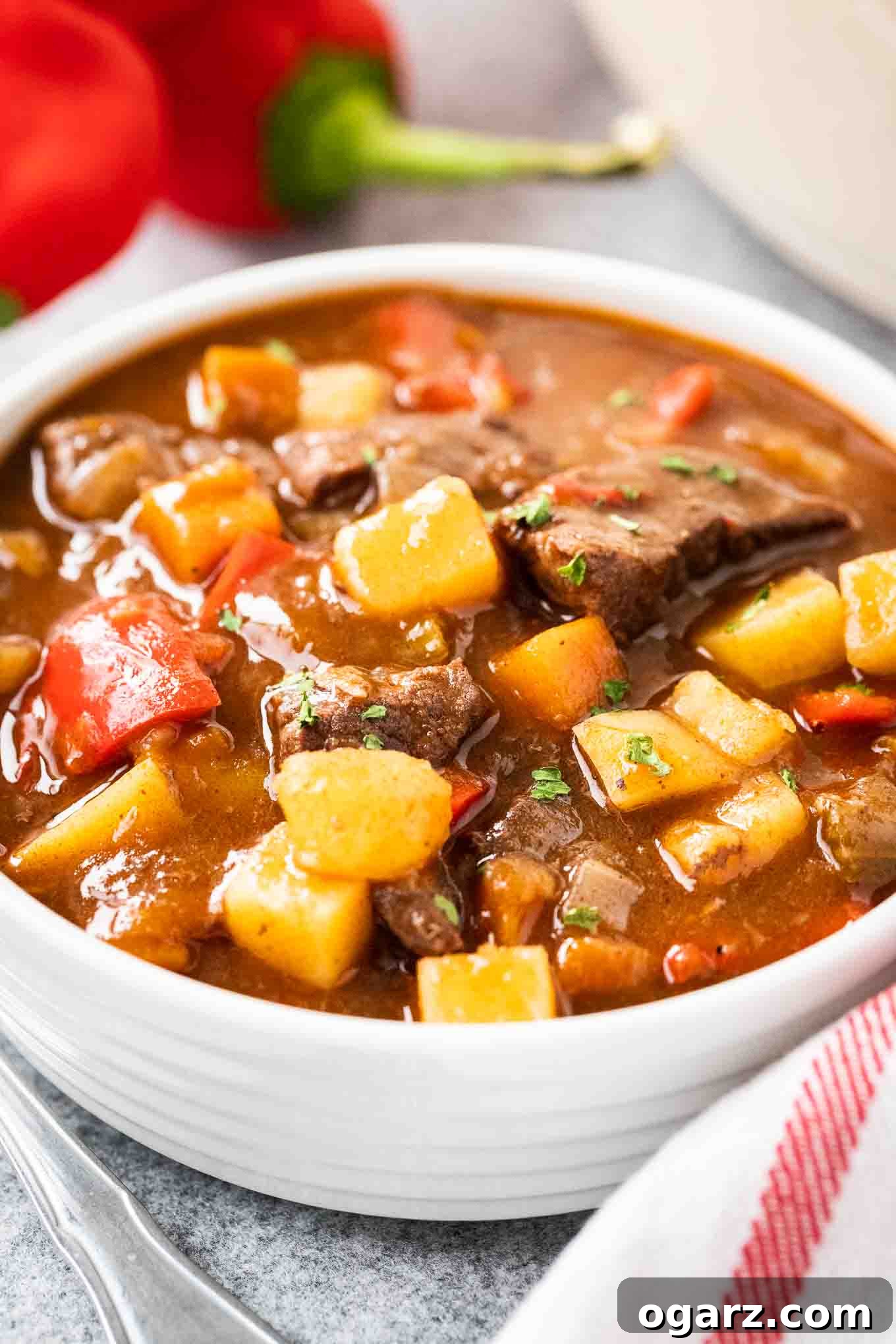
Prepare to savor the rich, soul-warming experience of **Authentic Hungarian Goulash**, a hearty beef stew that promises to become a cherished family favorite. This dish, celebrated for its melt-in-your-mouth tender beef and vibrant, paprika-infused broth, is surprisingly simple to create from scratch. It’s the quintessential comfort food, perfect for warding off the chill on cold winter days, and widely recognized across Europe, sometimes even referred to as German Goulash. While there are nuanced differences between regional versions, the essence of a deeply flavorful, slow-cooked beef stew remains constant. Whether you prefer it brimming with potatoes and bell peppers or served elegantly over a bed of egg noodles, this goulash offers a filling and incredibly satisfying dinner that truly embodies warmth and tradition.
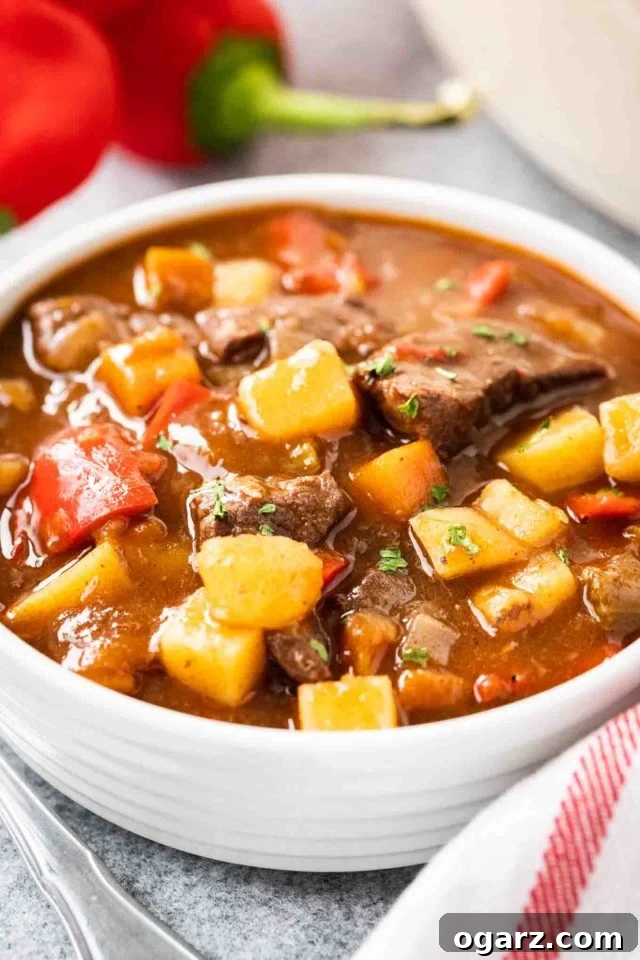
This **comforting Beef Goulash recipe** is the ideal meal for cold weather, guaranteed to be loved by the whole family! It’s a delicious beef stew distinguished by its rich, savory broth, deeply flavored with authentic Hungarian paprika and a touch of red wine. During the colder months, we naturally gravitate towards comforting recipes like Cheese Spaetzle, Kaiserschmarrn, and Easy Potato Bacon Soup. This robust and fulfilling goulash easily earns its spot as a staple in our home all season long.
Goulash holds a beloved place in European cuisine, a testament to its widespread appeal and adaptability. While it’s most famously known as Hungarian Goulash in North America, this dish is prepared in various forms across many European countries, each with its own subtle regional twists. For instance, German Goulash, Beef Bourguignon, and Viennese Goulash share a common heritage but diverge in their preparations. A key distinction between authentic Hungarian Goulash and its German counterpart often lies in consistency: traditional Hungarian Goulash tends to be thinner, almost soup-like, whereas German Goulash is typically thicker, resembling a rich stew. Despite these variations, the fundamental base of tender meat, aromatic vegetables, and characteristic spices remains at its heart.
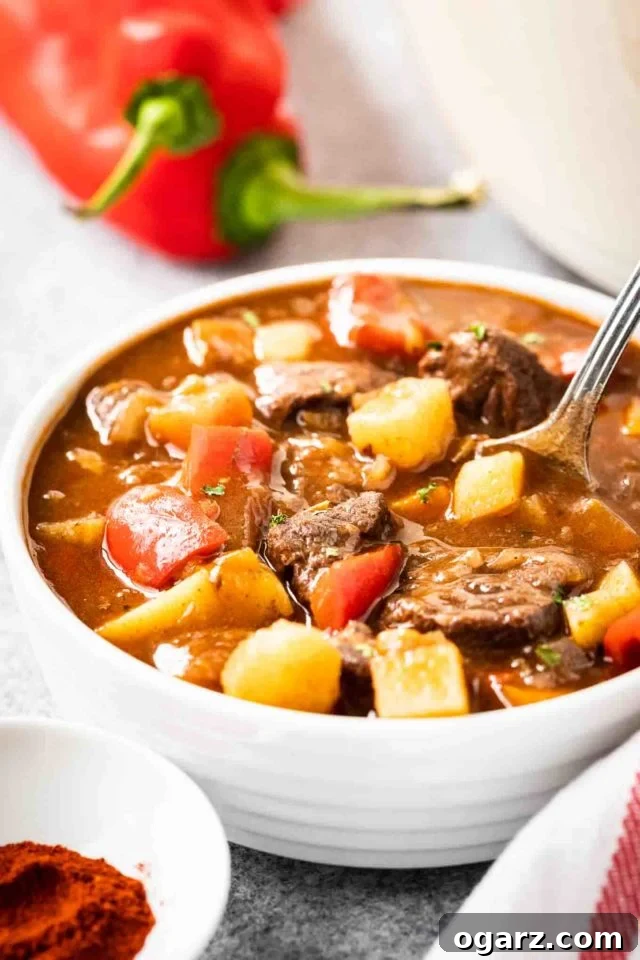
The versatility of goulash extends to its serving options, making it wonderfully adaptable to your preferences. It pairs beautifully with crusty rustic bread, making it perfect for soaking up every last drop of the rich sauce. Alternatively, serve it over classic egg noodles, alongside homemade German Spaetzle, or transform it into a complete one-pot meal by adding chopped potatoes and red bell peppers directly to the stew. My personal favorite way to enjoy it is with the addition of potatoes and peppers; it’s the easiest method to turn this simple paprika beef stew into a truly satisfying and wholesome dinner, ideal for feeding a crowd or providing ample leftovers.
The Culinary Journey: What is Goulash?
Before diving into the cooking process, it’s worth understanding the rich heritage of goulash. Originally a humble dish prepared by Hungarian herdsmen (gulyás means “herdsman” in Hungarian), goulash was a simple, hearty stew cooked in a cauldron over an open fire. Its core ingredients were beef, onions, and the then-newly introduced paprika. Over centuries, it evolved from a rustic meal into a national dish and spread across Central Europe, adapting to local tastes and available ingredients. This rich history is why you’ll find so many delightful variations, each bearing the hallmark of its region while staying true to the comforting spirit of goulash.
It’s crucial to differentiate traditional Hungarian Goulash from what is often called “American Goulash,” which typically features ground beef and macaroni. While delicious in its own right, American Goulash is a distinct dish. Our focus here is on the authentic, slow-cooked European style, characterized by chunks of tender beef and a deeply flavored, paprika-rich sauce.
Crafting Hungarian Goulash: A Step-by-Step Guide
Making traditional Goulash begins with a generous amount of chopped onions. This stew truly relies on a substantial base of aromatic onions, often in equal parts by weight to the beef, providing a natural sweetness and depth. The other non-negotiable ingredient is, of course, Hungarian paprika, which imparts both its characteristic color and complex flavor. While sweet Hungarian paprika is my preferred choice for its balanced profile, those who enjoy a spicier kick can opt for the hot variety.
The Aromatic Foundation: Sautéing Vegetables
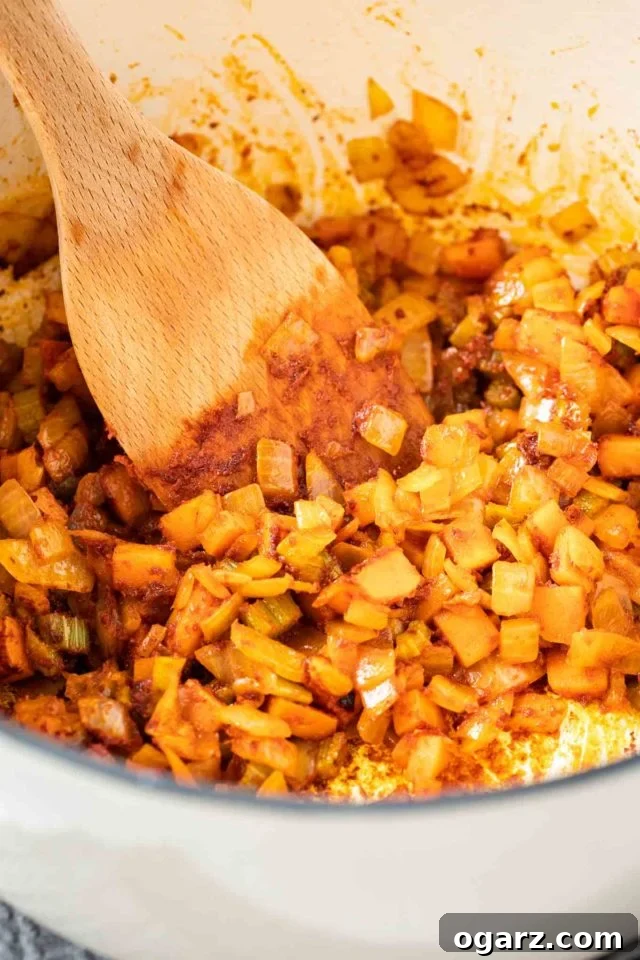
Begin by heating a combination of butter and oil (or traditionally, lard, if you can find it) in a sturdy Dutch oven or large stew pot. Add your finely chopped onions, along with diced carrots and celery. Sauté these vegetables gently until they are soft and have achieved a beautiful, light golden-brown color. This step is crucial for building the flavor base, as the caramelization of the onions adds immense depth to the final stew.
Building the Flavor Profile: Tomato Paste and Paprika
Once the vegetables are softened, stir in the tomato paste. Allow it to sauté for about a minute, stirring constantly. This brief cooking time helps to intensify its flavor, transforming it into a rich, savory component. Next, carefully add the Hungarian paprika powder. It’s vital to sauté the paprika for only a few seconds, just enough to bloom its flavors, but be extremely careful not to burn it, as burnt paprika can turn bitter and ruin the dish. Keep stirring continuously to prevent scorching.
Deglazing and Simmering: The Liquid Base
Immediately after the paprika, pour in the red wine and beef broth. Use a wooden spoon or spatula to scrape the bottom of the pot, loosening any browned bits that have stuck. This process, known as deglazing, incorporates those flavorful fond into the liquid, adding another layer of richness to your goulash. Bring this mixture to a gentle simmer, allowing the liquids to meld and infuse.
The Heart of the Stew: Adding Beef and Spices
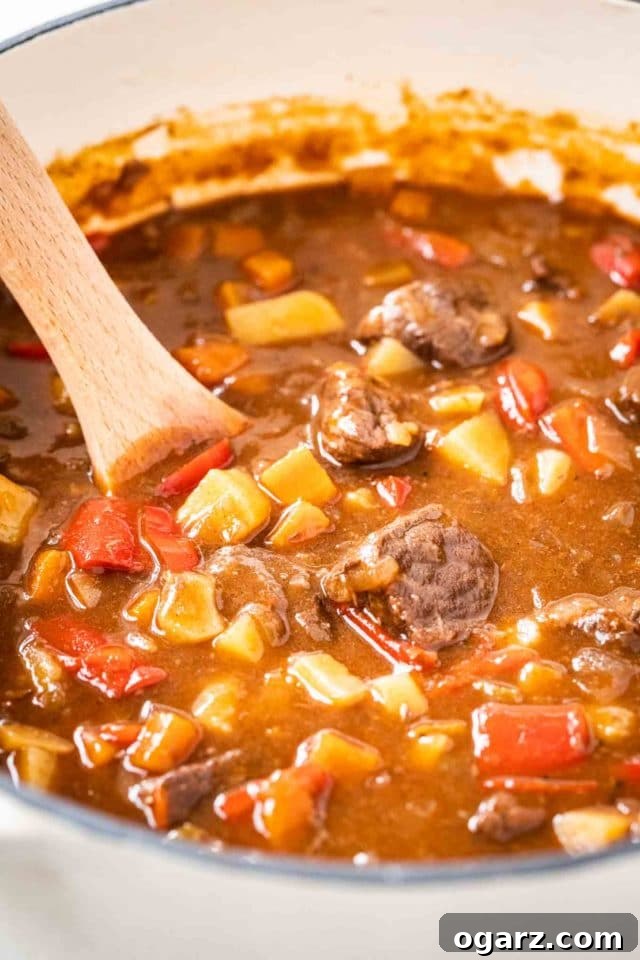
Once simmering, add the stewing beef, bay leaves, and a touch of black pepper. Submerge the beef fully in the liquid. Reduce the heat to a low simmer, cover the pot partially, and let it cook slowly until the meat becomes incredibly tender. This slow cooking process is key to achieving that signature melt-in-your-mouth texture. Some recipes suggest browning the beef separately, but in my experience, for this particular type of stew, it’s an unnecessary extra step. The rich flavors from the paprika, wine, and thoroughly sautéed vegetables provide more than enough depth without the need for additional browning.
The beauty of this goulash recipe is its inherent deliciousness, even without extra additions. However, for an even more satisfying and complete meal, consider adding a few chopped bell peppers and cubed potatoes. These additions enhance both the flavor and heartiness of the dish without requiring much extra effort, transforming it into a truly robust family dinner.
Enhance Your Goulash: Delicious Add-ins and Variations
While classic goulash is a culinary masterpiece on its own, adding a few extra ingredients can elevate its texture and flavor even further, allowing for personalized culinary creativity. Here are some fantastic add-ins to consider, many of which are characteristic of German Goulash or other regional variations:
- Bell Peppers: Incorporate 3 red bell peppers, cut into 1-inch pieces, approximately 30 minutes before the end of the cooking time. They add a touch of sweetness, color, and a delightful crisp-tender texture.
- Potatoes: For a heartier, one-pot meal, add 2 cups of cubed potatoes (such as Yukon Gold or red potatoes) about 30 minutes before the stew is finished cooking. They absorb the rich flavors beautifully.
- Creamy Finish: Stir in ¼ cup of heavy cream at the very end of the cooking process for a luxurious, creamy sauce that adds a delicate richness without overpowering the paprika.
- Root Vegetables: Experiment with other diced root vegetables like parsnips or sweet potatoes for additional sweetness and nutritional value.
- Mushrooms: Sautéed mushrooms can add an earthy depth to the stew, making it even more savory.
- Crispy Bacon Bits: For a smoky, savory crunch, sprinkle crispy bacon bits over individual servings just before serving.
Expert Tips and Tricks for the BEST Hungarian Goulash
Achieving the perfect goulash is a labor of love, and these expert tips will guide you to a truly exceptional dish:
- The Power of Paprika: Always use high-quality **Hungarian Sweet Paprika** for this recipe. It’s not just a spice; it’s the soul of goulash, providing its signature flavor and beautiful red hue. If you desire a gentle heat, a blend of sweet and hot Hungarian paprika can be used.
- Celery Root vs. Stalks: While many traditional goulash recipes call for celery root (celeriac) for its earthy flavor, it can be difficult to find. Using regular celery stalks is a perfectly acceptable and delicious alternative.
- The Right Pot: A 6-quart **Dutch oven works best** for this recipe. Its heavy bottom ensures even heat distribution, crucial for slow simmering, and its tight-fitting lid helps retain moisture and flavor.
- Paprika Precaution: Be extremely cautious not to burn the paprika. It has a tendency to burn very quickly, and once burnt, it imparts a bitter taste that can ruin the entire dish. Add it just before the liquids, and stir constantly for only a few seconds.
- Wine Alternatives: If you prefer not to use red wine, you can easily substitute it with an equal amount of **more beef broth**. While wine adds a subtle depth, the goulash will still be incredibly flavorful without it, as the alcohol cooks off during simmering.
- Choosing Your Wine: For the best flavor, use a **red wine that you would genuinely enjoy drinking**. You don’t need an expensive bottle, but avoid extremely cheap wines that might impart an undesirable taste. A dry red like Merlot, Cabernet Sauvignon, or Pinot Noir works wonderfully.
- Patience for Tenderness: Allow the stew to **simmer for at least two hours at a low temperature**. This extended cooking time is essential for the beef to become incredibly tender and for the flavors to fully develop. Tougher cuts might require a bit longer. When I use stewing beef from reputable sources, it consistently becomes melt-in-your-mouth tender after two hours.
- Perfect Consistency: I personally prefer my goulash to be slightly thick, like a rich stew. To achieve this, I add a cornstarch slurry (a mixture of cornstarch and cold water) at the end. If you prefer a thinner, more soup-like consistency, you can simply omit this step.
- Taste and Adjust: Always taste and adjust seasoning (salt and pepper) before serving. The flavors will deepen as it cooks, so a final adjustment is key.
What to Serve with Hearty Beef Goulash
Goulash is incredibly versatile and pairs wonderfully with a variety of sides, each offering a unique textural and flavor contrast. Here are some popular serving suggestions to complete your meal:
- Potato Dumplings (Kartoffelklöße): A classic German accompaniment, these light and fluffy dumplings are perfect for soaking up the rich sauce.
- Boiled Potatoes: Simple boiled potatoes, either whole or diced, offer a comforting and traditional pairing.
- Egg Noodles: A bed of tender egg noodles (such as wide egg noodles or spaetzle) is a popular choice, providing a soft texture that complements the tender beef.
- Spaetzle: Small, soft egg noodles or dumplings, traditional in German and Austrian cuisine, are an excellent and authentic choice.
- Nokedli (Hungarian Mini Egg Dumplings): These homemade Hungarian dumplings are specifically designed to accompany goulash and are truly delightful.
- Rustic Bread: A crusty loaf of bread is essential for dipping into the flavorful sauce.
- Sour Cream or Crème Fraîche: A dollop of cool sour cream or crème fraîche on top of each serving adds a tangy contrast that brightens the rich flavors of the goulash.
- Fresh Parsley: A sprinkle of fresh chopped parsley not only adds a pop of color but also a fresh, herbaceous note.
Make Ahead & Storage Tips
Goulash is one of those dishes that often tastes even better the next day, as the flavors have more time to meld and deepen. This makes it an excellent choice for meal prepping or entertaining.
- Make Ahead: You can prepare the goulash entirely a day or two in advance. Store it in an airtight container in the refrigerator. When ready to serve, gently reheat it on the stovetop over low heat, stirring occasionally, until warmed through. You may need to add a splash of beef broth or water if it has thickened too much.
- Storage: Leftover goulash can be stored in an airtight container in the refrigerator for 3-4 days.
- Freezing: Goulash freezes beautifully! Allow it to cool completely before transferring it to freezer-safe containers or heavy-duty freezer bags. It can be frozen for up to 3 months. Thaw overnight in the refrigerator before reheating. Note that if you add potatoes, they might become slightly softer in texture after freezing and thawing, but the flavor will remain excellent.
- Reheating: For best results, reheat goulash slowly on the stovetop. If reheating from frozen, it’s best to thaw it first. Add a little extra liquid if needed to reach your desired consistency.
Authentic Hungarian Goulash Recipe
Ingredients
- 1 Tbsp butter
- 1 Tbsp Olive oil
- 2 medium yellow onions, chopped (about 3 cups)
- 1 large carrot, diced
- 1 celery stalk, chopped
- 2 Tbsp tomato paste
- 1 Tbsp Hungarian sweet paprika
- 1 cup red wine
- 3 cup beef broth
- 2 pounds stewing beef, cut into 1.5-inch cubes
- 1/4 tsp ground black pepper
- 2 bay leaves
- 1 tsp salt (or to taste)
- 2 Tbsp water (for slurry)
- 2 Tbsp cornstarch (for slurry)
Instructions
- In a Dutch oven or large stew pot, heat butter and olive oil over medium-high heat. Add chopped onions, carrot, and celery, and sauté for about 4-5 minutes until lightly browned and softened.
- Add tomato paste and sauté for one more minute, stirring constantly, to deepen its flavor. Then add paprika powder and sauté for a few more seconds, being very careful not to burn the paprika.
- Pour in the red wine and beef broth. Scrape the bottom of the pot with a spatula to loosen any browned bits, incorporating them into the liquid. Bring the mixture to a gentle simmer.
- Once simmering, add the stewing beef, bay leaves, and black pepper. Return to a low simmer. Cover the pot loosely and let it simmer, stirring occasionally, for about 2 hours, or until the meat is very tender. If adding potatoes and bell peppers, stir them in 30 minutes before the end of the cooking time.
- The goulash is done when the meat is fork-tender and the sauce has naturally thickened. If the meat is not tender after two hours, continue cooking for another 30 minutes or until desired tenderness is reached.
- In a small bowl, combine 2 Tbsp water and 2 Tbsp cornstarch to create a slurry. Stir this slurry into the goulash. Bring to a simmer while stirring constantly until the sauce has thickened to your preference.
- Season with salt and pepper to taste. Remove the bay leaves before serving.
Nutrition
Calories from Fat 108
NEVER MISS A RECIPE!
PINTEREST / FACEBOOK / INSTAGRAM / TWITTER
If you’ve tried this or any other of my recipes, don’t forget to rate the recipe and to leave me a comment. I love hearing from you!