

Linzer Cookies are a delightful classic, deeply rooted in Austrian culinary tradition. These tender, buttery shortbread cookies, celebrated for their vibrant jam filling and delicate almond flavor, are an absolute joy to bake and savor. This easy-to-follow recipe, packed with expert tips, will guide you through creating these iconic jam-filled almond shortbread cookies, perfect for any occasion.

Few cookies capture the heart quite like Linzer Cookies. These charming jam-filled sandwich cookies have been a personal favorite since childhood, bringing a touch of festive magic to every bite. While they are a cherished staple during the Christmas season in many homes, their appeal extends far beyond the holidays. Their intricate design and exquisite taste make them a lovely treat for Valentine’s Day, and honestly, their irresistible flavor ensures they’re a welcome delight all year round.
What truly sets Linzer Cookies apart is their incredibly tender, melt-in-your-mouth texture, reminiscent of the finest shortbread. However, the true star of the show is undeniably the sweet, glistening filling nestled between two delicate almond shortbread layers. Traditionally, these Austrian gems are filled with a bright blackcurrant or raspberry jam, but the beauty of this recipe lies in its versatility, allowing you to choose any jam or spread that tantalizes your taste buds.
The secret to achieving the signature tender, crumbly, and distinctively shortbread-like texture that these Austrian cookies are famous for lies in two crucial steps: incorporating finely ground nuts into the dough and chilling the dough not once, but twice. These techniques ensure a stable dough that bakes up perfectly, delivering that characteristic richness and delicate crispness. If you’re looking for a truly classic, unforgettable cookie experience, this Linzer cookie recipe is an absolute must-try. Its blend of tradition, flavor, and delightful texture promises to become a beloved addition to your baking repertoire.
Explore More Delightful Cookie Recipes
Cookies, Brownies & Bars
Meringue Cookies
Christmas Recipes
Zimtsterne (Cinnamon Stars)
Cookies, Brownies & Bars
Nutella Cookies
Cookies, Brownies & Bars
Vanillekipferl (German Vanilla Crescent Cookies)
Essential Ingredients for Perfect Linzer Cookies
Creating perfect Linzer Cookies starts with understanding the role of each ingredient. Here’s a detailed overview of what you’ll need and why it matters, ensuring your cookies achieve that signature tender texture and rich flavor.
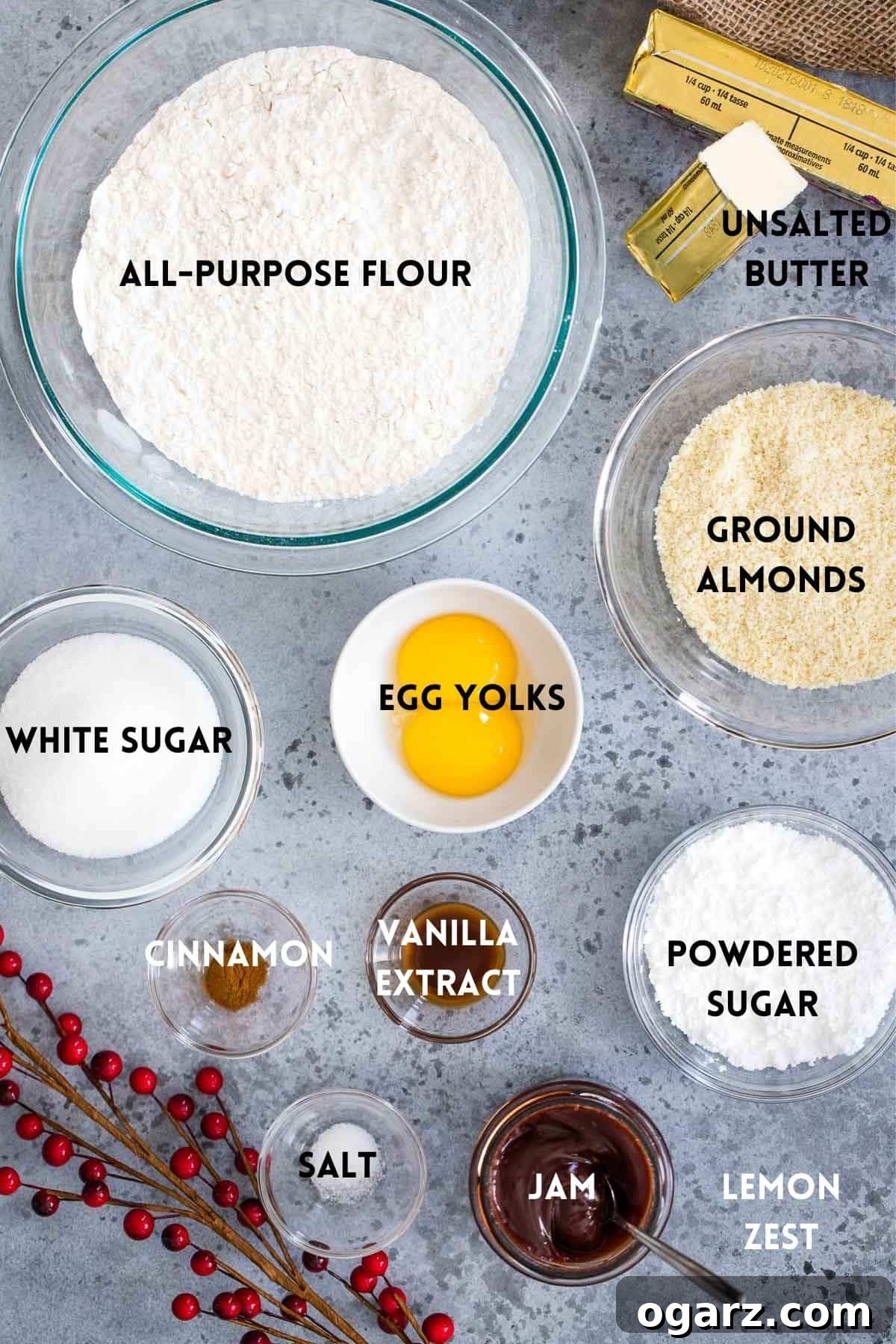
- Unsalted Butter: Using unsalted butter is crucial as it allows you to control the exact amount of salt in your recipe, resulting in a perfectly balanced flavor. Make sure your butter is softened at room temperature, which typically means taking it out of the fridge at least 30 minutes before you begin mixing. Softened butter creams easily with sugar, creating a light and airy base for your dough.
- All-Purpose Flour: This is the ideal flour for Linzer cookies, providing the necessary structure without making them too tough. Precision in measuring flour is key for tender cookies. Always use the “spoon and level” method: spoon flour into your measuring cup and then level off the excess with a straight edge. Avoid scooping directly from the container, as this compacts the flour and can lead to an overly dry, crumbly dough.
- Egg Yolks: This recipe calls for egg yolks only, and for good reason. Egg yolks contribute significantly to the cookies’ richness, tenderness, and delicate crumb. They also add a beautiful golden hue to the baked cookies. Don’t let the leftover egg whites go to waste; they’re perfect for making other delicious treats like Coconut Macaroons or meringues.
- Ground Blanched Almonds: Traditionally, Linzer cookies feature ground blanched almonds. “Blanched” means the almond skins have been removed before grinding, resulting in a finer texture and a lighter color, which is ideal for these delicate cookies. You can typically find pre-ground, blanched almonds in the baking aisle of most grocery stores. The almonds add a unique nutty depth and contribute to the distinct crumbly texture.
- Lemon Zest: Freshly grated lemon zest adds a wonderful bright, aromatic note that beautifully complements the richness of the butter and nuts. Ensure the lemon zest is finely grated using a microplane zester to release its essential oils without including the bitter white pith. Only the yellow rind should be used.
- Jam: The heart of a Linzer cookie is its sweet filling. While blackcurrant or raspberry jam are the traditional choices, any good quality jam or preserve will work. We recommend exploring different flavors to find your favorite pairing!
Delightful Filling Options for Your Linzer Cookies
The versatility of Linzer Cookies truly shines when it comes to their filling. While traditional jams are always a hit, don’t be afraid to experiment with other delicious options to create your unique flavor combinations.
- Classic Jam or Preserves: Raspberry and blackcurrant jam are traditional, offering a tart contrast to the sweet cookie. Strawberry, apricot, or cherry jams are also fantastic choices. For the best results and easiest application, especially if piping, opt for a seedless and smooth jam. This ensures a clean look and a pleasant mouthfeel without any unexpected fruit pieces.
- Homemade Lemon Curd: The bright, tangy flavor of homemade lemon curd pairs exquisitely with the buttery almond cookies. Its creamy texture and vibrant citrus notes offer a sophisticated alternative. Lime curd would also provide a refreshing twist.
- Rich Spreads: For a decadent treat, consider using creamy spreads like Nutella for a hazelnut-chocolate delight, or Biscoff cookie butter for a spiced caramel flavor. These spreads offer a different texture and a rich flavor profile that can transform your Linzer cookies into something truly special.
Step-by-Step Guide: Crafting Your Perfect Linzer Cookies
Making Linzer cookies from scratch is a rewarding process that results in beautifully tender and flavorful treats. Follow these detailed instructions for a seamless baking experience. Exact measurements and a printable recipe card can be found at the bottom of the page.
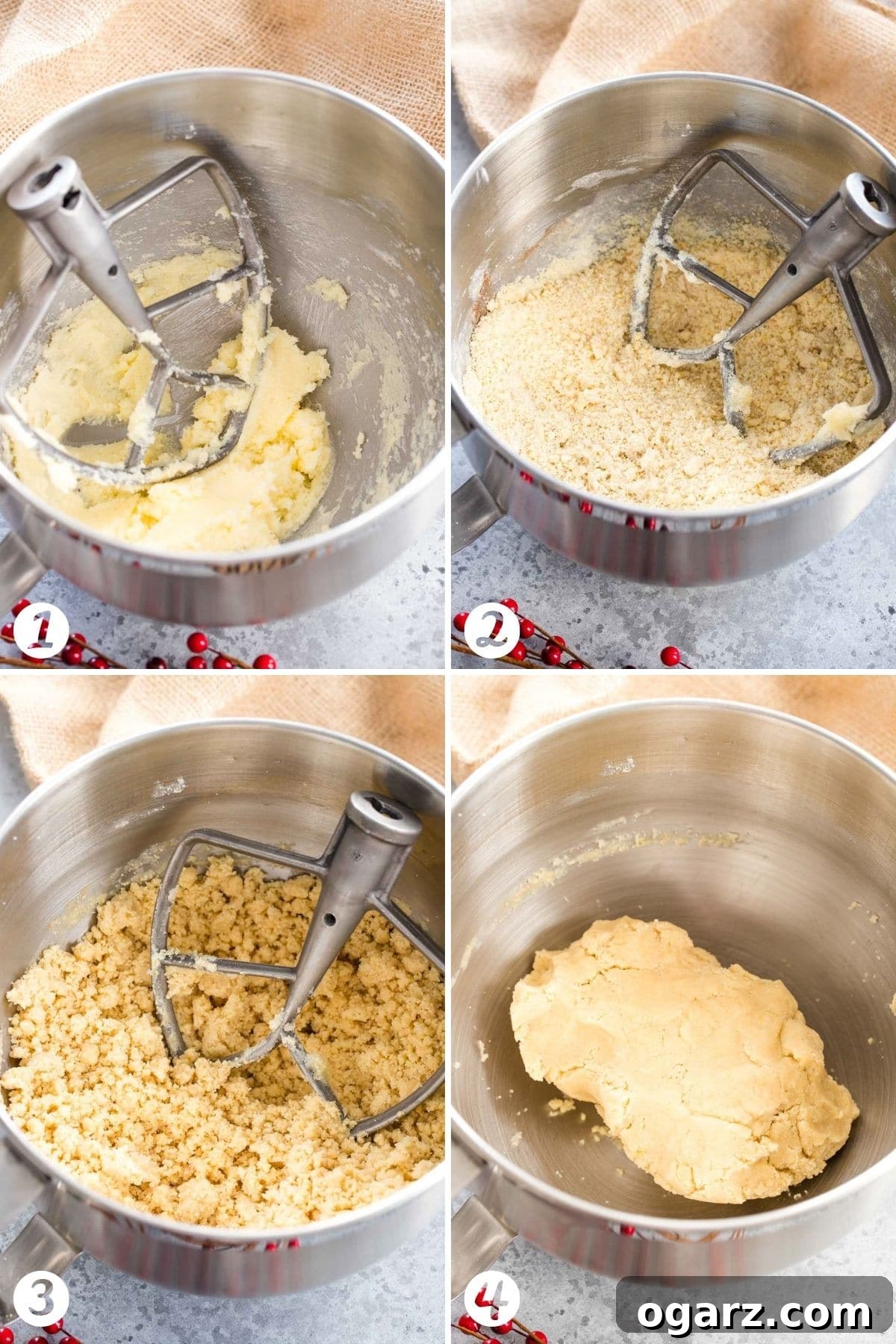
- Cream Butter and Sugar: In the bowl of a stand mixer fitted with the paddle attachment (or using a hand mixer), combine your softened butter and granulated sugar. Beat them together on medium speed until the mixture is light, fluffy, and well combined. Remember to scrape down the sides of the bowl periodically to ensure everything is incorporated.
- Incorporate Dry and Wet Ingredients: Add the all-purpose flour, salt, vanilla sugar (or vanilla extract), egg yolks, ground blanched almonds, cinnamon, and finely grated lemon zest to the butter and sugar mixture. Begin mixing on low speed. At first, the dough will appear quite dry and crumbly, which is completely normal for a shortbread-style dough. Continue mixing and kneading for a few more minutes.
- Form the Dough: As you continue to mix, the dough will gradually become moister, and the crumbly pieces will start to come together. To test if the dough is ready, take a handful of crumbs and press them together firmly with your fingers. If they stick to form a cohesive ball, your dough is ready. If it remains too crumbly, add 1 tablespoon of cold water at a time and mix until it just comes together.
- Chill the Dough (First Time): Once the dough has come together, use your hands to press all the crumbs into a flat, round disk. This shape helps it chill evenly. Wrap the dough disk tightly in plastic wrap and refrigerate it for at least one hour. This chilling step is vital for the dough to firm up, making it easier to roll and preventing the cookies from spreading too much during baking.
- Knead and Roll: Remove the chilled dough from the refrigerator. It will be quite firm. Divide the dough into two manageable portions. Briefly knead each portion by hand for a minute or two. This warms the butter slightly, making the dough more pliable and easier to roll without it cracking excessively. On a lightly floured work surface, roll out one portion of dough to an even thickness of about 1/5 inch (5mm).
- Cut Out Cookies: Using a Linzer cookie cutter (a round cutter with a smaller insert for the center cutout), begin cutting out your cookies. Remember to cut an equal number of whole rounds (bottoms) and rounds with the center cut out (tops). Carefully transfer the cut-out cookies to a baking sheet lined with parchment paper.
- Chill Cut-Out Cookies (Second Time): Once all your cookies are cut and arranged on the baking sheets, place the entire baking sheet back into the refrigerator to chill the cut-out cookies for another 30 minutes. This second chill ensures the cookies maintain their shape and develop a wonderfully tender and crisp texture when baked.
- Preheat Oven and Bake: While the cookies are chilling, preheat your oven to 350°F (175°C). Bake the chilled cookies for 8–12 minutes. Keep a close eye on them; they should only be very lightly browned around the edges. They might still appear soft in the center, but they will firm up as they cool. Overbaking will make them dry and less tender.
- Cool, Dust, and Assemble: Once baked, immediately transfer the cookies to a wire cooling rack and allow them to cool completely. Once cooled, lightly dust the top cookies (those with the center cut out) with powdered sugar using a fine-mesh sieve. Then, take the bottom cookies (the plain rounds) and pipe or spread a small amount of your chosen jam evenly over them. Carefully place a powdered sugar-dusted top cookie onto each jam-covered bottom cookie, creating a beautiful sandwich.

Expert Tips for Flawless Linzer Cookies
Achieving perfect Linzer Cookies requires a few crucial techniques. These expert tips will help you navigate common challenges and ensure your cookies are tender, flavorful, and beautifully presented.
- Accurate Flour Measurement is Key: Always spoon and level your flour into the measuring cup instead of scooping it directly from the container. Too much flour will result in a dry, crumbly dough that is difficult to work with and yields tough cookies.
- Nut Alternatives: While ground blanched almonds are traditional, feel free to substitute with an equal amount of ground hazelnuts, walnuts, or pecans for a different flavor profile. Almond flour also works beautifully as a convenient substitute for ground almonds.
- Manage Chilled Dough: After the initial chilling, the dough will be quite firm due to the butter content. To make it easier to roll, divide the dough into smaller portions and briefly knead each by hand. This warms the butter slightly, making the dough more pliable and less prone to cracking.
- Prevent Dough from Getting Too Warm: If you find the dough becoming too soft or sticky after rolling it out several times, simply gather it, re-wrap it, and chill it in the fridge for a few minutes until it’s firm enough to work with again.
- Choose Your Cookie Cutter Wisely: While a classic round Linzer cookie cutter is traditional, you can certainly use heart-shaped cutters or any other festive shapes. For the easiest and most consistent results, especially if you’re making many, a specialized Linzer Cookie Cutter set with interchangeable inserts is highly recommended.
- Troubleshooting Sticky Dough: If your cut-out cookie dough tends to stick to your work surface instead of releasing cleanly with the cutter, gently lift the edges of the dough with a thin spatula and sprinkle a little extra flour underneath before attempting to cut again.
- The Second Chill is Essential: Don’t skip chilling the cut-out cookies on the baking sheet in the fridge until the dough is cold. This crucial step prevents the cookies from spreading excessively in the oven, ensuring they maintain their crisp edges and delicate structure. This is how they get so tender and crisp!
- Avoid Overbaking: Linzer cookies should NOT brown significantly. They are meant to be pale with only very lightly golden edges. Remove them from the oven as soon as you see these subtle signs. They might feel soft initially, but they will firm up perfectly as they cool on the rack.
- Mind the Filling Amount: I recommend using only a small, thin layer of jam. The thicker the layer of filling, the softer the cookies will become during storage over several days. For neat and even application, a piping bag is my preferred method, but a small knife or spoon works just as well.
- Patience for Peak Flavor: These cookies, like many jam-filled treats, actually taste best after a day or two. The jam has time to slightly infuse into the cookie layers, softening them just enough to create a wonderfully harmonious texture and deeper flavor.
Linzer Cookies: Frequently Asked Questions
Linzer cookies are charming little shortbread sandwich cookies, distinguished by their delicate, buttery texture and a sweet jam filling. They are essentially a cookie-sized adaptation of the renowned Linzer Torte, an Austrian pastry classic. The top cookie typically features a small cut-out in the center, traditionally three holes or a single shape, and is elegantly dusted with powdered sugar. In Germany, these beloved cookies are known by various delightful names, including Hildabroetchen, Spitzbuben, Linzer sablés, or Linzer Augen (which translates to “Linzer eyes”).
While incredibly popular in Germany, where they are a common sight on any festive cookie platter, Linzer cookies (and the famous Linzer Torte they are inspired by) actually originate from Linz, a beautiful city in Austria. Their rich history and widespread appeal make them a cherished treat across both Austrian and German culinary traditions.
Using a Linzer cookie cutter is straightforward. First, select one of the smaller, interchangeable cutters (like a star or heart) and insert it securely into the base of the larger round cookie cutter by twisting. Use this assembled cutter to cut out half of your rolled-out dough portions. After cutting, simply push the plunger to release the cookie with its center cut-out onto your baking sheet. Then, remove the smaller insert from the large cookie cutter and use the plain round cutter to cut an equal number of whole, solid cookie rounds. This ensures you have matching tops and bottoms for all your sandwich cookies.

Storing Your Linzer Cookies for Lasting Freshness
To maintain their delicate texture and flavor, store your Linzer cookies in metal tins or any airtight container. Arrange them in layers separated by parchment paper to prevent sticking and preserve their pristine appearance. Stored in a cool, dry place, these cookies will keep beautifully for up to three weeks, without needing refrigeration. For convenience, the raw cookie dough can also be prepared ahead of time and stored wrapped tightly in plastic foil in the fridge for up to a week.
Freezing Linzer Cookies
While the baked Linzer cookies with their jam filling don’t freeze particularly well (as the jam can become watery upon thawing), you can absolutely freeze the raw cookie dough. Simply wrap the dough tightly in plastic foil and place it in a freezer-safe bag or container. When you’re ready to bake, transfer the frozen dough to the refrigerator and let it defrost overnight before proceeding with the rolling and baking steps of the recipe. This makes them an excellent make-ahead option for busy times.
Discover More Festive Holiday Baking Inspiration
If you’ve enjoyed making these classic Linzer Cookies, you’ll love exploring these other delightful recipes perfect for the holiday season and beyond. Expand your baking skills and treat your loved ones to an array of homemade goodies!
- Eggnog Cake – A wonderfully moist and richly flavored bundt cake, infused with the festive taste of eggnog.
- German Stollen – A traditional German Christmas fruit bread recipe, dense with candied fruits and nuts, dusted with powdered sugar.
- Coconut Macaroons – The PERFECT chewy and sweet coconut macaroons, simple yet irresistible.
- Cornflake Cookies – Crunchy, easy-to-make no-bake cookies that are a delight for all ages.
- Butterscotch Cookies – Exceptionally soft and chewy cookies bursting with rich butterscotch flavor.
- Marzipan Recipe – Learn how to make this versatile almond paste at home, perfect for confections and baking.

Linzer Cookies
Equipment
-
Linzer Cookie Cutter
-
Stand Mixer or Hand Mixer
-
Rolling Pin
-
Parchment Paper
-
Baking Sheets
-
Wire Cooling Rack
Ingredients
- ½ cup granulated sugar
- ¾ cup unsalted butter, softened
- 2 ⅓ cups all-purpose flour
- 1/4 tsp salt
- 1 tsp vanilla sugar, or vanilla extract
- 2 large egg yolks
- 1 cup ground blanched almonds, or other ground nuts or almond flour
- ¼ tsp cinnamon
- 1 tsp lemon zest, finely grated
To decorate:
- ¼ cup powdered sugar
- ½ cup (seedless) jam, e.g., raspberry, strawberry
Cups – Metric
Instructions
-
In the bowl of a stand mixer fitted with the paddle attachment, combine softened butter and granulated sugar until light and fluffy. Add flour, salt, vanilla sugar (or extract), egg yolks, ground blanched almonds, cinnamon, and finely grated lemon peel. Mix on low speed until the ingredients are just combined and form a crumbly dough. Use your hands to press the dough together into a flat disk. Wrap the dough tightly in plastic wrap and chill in the fridge for at least one hour to firm up.
-
Once chilled, remove the dough from the fridge and divide it into two portions. Briefly knead each portion by hand for a minute or two to make it more pliable for rolling.
-
On a lightly floured work surface, roll out one portion of dough to an even thickness of approximately 1/5 inch (5mm). Using a Linzer cookie cutter, cut out half of the cookies with your chosen center insert (these will be the tops) and an equal number of plain rounds without the insert (these will be the bottoms). Carefully transfer the cut-out cookies to a baking sheet lined with parchment paper. Chill the cut-out cookies on the baking sheet for an additional 30 minutes in the refrigerator.
-
While the cookies are chilling, preheat your oven to 350°F (175°C). Bake the chilled cookies for 8-12 minutes in the middle of the oven until their edges are very lightly browned. Avoid overbaking. Transfer the baked cookies to a wire cooling rack and let them cool completely.
-
To assemble and decorate, lightly sprinkle the top cookies (those with the cut-out centers) with powdered sugar using a fine-mesh sieve. Then, pipe or spread a thin layer of your chosen jam onto the plain bottom cookies. Carefully place a powdered sugar-dusted top cookie over each jam-covered bottom cookie. Allow the assembled cookies to set on the cooling rack for about 2 hours before transferring them to airtight cookie tins with parchment paper between layers for storage in a cool, dry place.
Notes
- IMPORTANT: Spoon and level the flour rather than scooping directly from the container. Too much flour will make the dough crumbly and difficult to handle!
- Instead of ground blanched almonds, you can also use the same amount of ground hazelnuts, walnuts, or pecans. Almond flour works too!
- After chilling the dough, divide it into smaller portions to make kneading easier. Because of the butter, this dough will get hard when chilled, but kneading it slightly makes it easy to roll out.
- If the dough gets too warm after rolling it out several times, chill it for a few minutes to firm it up.
- While traditionally a round cookie cutter is used, you could also use a heart-shaped cookie cutter or any cookie cutter you like. But the easiest way to make these cookies is to use a Linzer Cookie Cutter that comes with little shapes that can be inserted into the round cookie cutter.
- If the cookie dough sticks to the work surface instead of the cookie cutter, use a thin spatula to lift the dough a little bit and sprinkle some flour under it.
- Chill the cut-out cookies on the baking sheet in the fridge until the dough is cold. This way, the cookies get tender and crisp!
- Don’t bake these cookies for too long! They should NOT brown heavily; take them out of the oven when the edges start to get lightly golden. They might look soft, but they will firm up while they cool.
- I recommend using only a small amount of filling! The thicker the layer of filling, the softer the cookies will become when they are stored for a few days. You can use a piping bag (my preferred way) or a knife to apply the jam.
- These cookies taste best after a day! The jam will infuse into the cookies, and they will get a little bit softer, enhancing their flavor and texture.
Nutrition
Like this recipe? Share your thoughts below!