
Table of Contents
- A Scandinavian Delight: The Allure of Mashed Rutabagas
- Understanding Rutabagas: More Than Just a Root
- Key Ingredients: Flavor Harmony
- Step-by-Step Preparation: Crafting Your Creamy Rutabagas
- Expert Tips for Preparing Rutabagas
- Make-Ahead and Storage Solutions
- Serving Suggestions: Elevate Your Meal
- Variations and Customizations
- Creamy Mashed Rutabagas (Full Recipe)
- Nutrition Information
A Scandinavian Delight: The Allure of Mashed Rutabagas
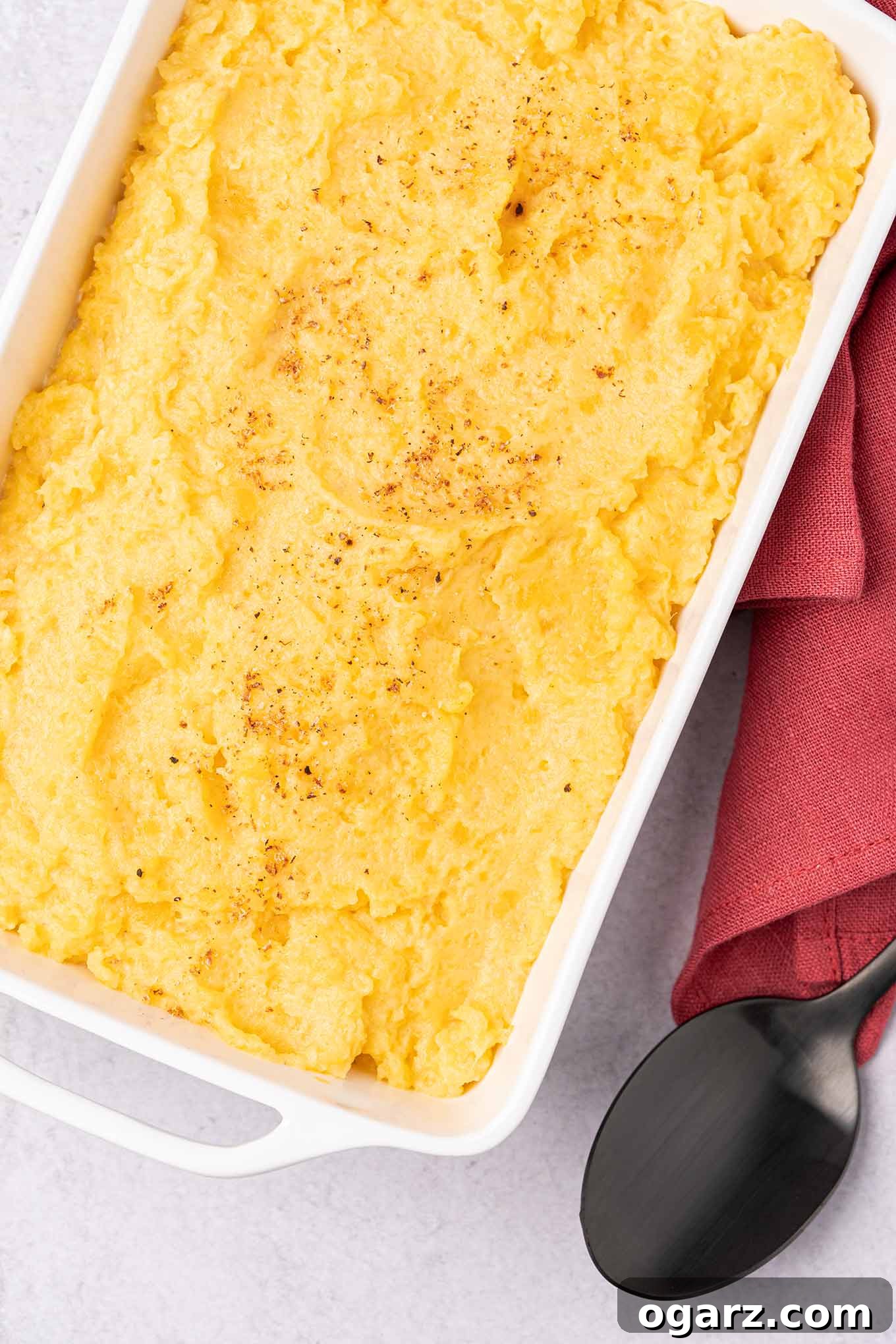
Embark on a culinary journey to the heart of Scandinavian tradition with our recipe for creamy mashed rutabagas. This cherished root vegetable, often celebrated during the crisp winter months and festive holiday seasons, transforms into an exquisitely comforting and flavorful side dish. Our rendition respectfully enhances the natural sweetness of rutabagas with a thoughtful touch of nutmeg and a delicate hint of vanilla – traditional Nordic seasonings that impart a comforting warmth and an alluring aroma.
This dish is a true embodiment of simple comfort food, yet it offers a distinctive twist that beautifully complements a wide array of roasted meats, poultry, and game. It stands as a testament to how humble ingredients, when prepared with meticulous care, can yield extraordinary culinary results. Bringing this dish to your table means inviting a taste of wholesome goodness and age-old culinary heritage into your home. Rutabagas, known as swedes in many regions, are a winter staple, renowned for their robust flavor and incredible versatility. While sometimes overshadowed by the more common potato, their unique earthy sweetness and subtly peppery notes offer a distinctive flavor profile that, once savored, is rarely forgotten.
Our recipe is crafted for accessibility, ensuring that both novice and seasoned cooks can effortlessly master this delightful side. Whether you’re curating a lavish holiday feast or simply seeking a cozy weeknight accompaniment, these mashed rutabagas are poised to become a beloved staple, promising to deliver both profound flavor and comforting warmth to your dining experience.
Understanding Rutabagas: More Than Just a Root
Before we delve into the preparation, let’s take a moment to appreciate the star of our dish: the rutabaga. This fascinating root vegetable is a naturally occurring hybrid of a turnip and a wild cabbage. It presents a mild, slightly sweeter flavor compared to a turnip, coupled with a firmer, denser texture. Typically larger than turnips, rutabagas boast a distinct yellowish-orange flesh beneath a purple-tinged, waxy skin. Beyond their enticing taste, rutabagas are a nutritional powerhouse, brimming with essential vitamins and minerals. They are an excellent source of Vitamin C, vital for immune health, and potassium, important for blood pressure regulation. Furthermore, their high fiber content aids digestion, all while being relatively low in calories, making them a remarkably healthy addition to any meal.
The culinary significance of rutabagas extends far beyond their nutritional benefits, deeply rooted in Northern European history. For centuries, they have served as a reliable and economical food source, particularly valued for their exceptional ability to be stored for extended periods, making them indispensable during the harsh, unforgiving winters. Their comforting essence is profoundly woven into the culinary fabric of countries such as Sweden, Norway, and Finland, where they are cherished for their capacity to provide both sustenance and warmth during the coldest months. Incorporating rutabagas into your cooking not only introduces a unique and appealing flavor dimension to your diet but also connects you to a rich, enduring tradition of wholesome, seasonal eating that has nourished communities for generations.
Key Ingredients: Flavor Harmony
While the comprehensive list of ingredients and their precise quantities are meticulously detailed in the printable recipe card below, here’s an insightful glance at the pivotal components of this delightful dish and their significant contributions to its overall flavor profile.
- Rutabagas: The Heart of the Dish
As previously highlighted, rutabagas are a truly delightful root vegetable, offering a distinctive mild, sweet, and subtly earthy flavor profile. This taste is often likened to a turnip but possesses its own unique character and depth. They are typically abundant and at their peak freshness from early autumn through late winter, generally between October and March, positioning them as an ideal ingredient for cozy, warming culinary creations. When selecting rutabagas, prioritize those that feel notably firm and heavy for their size, with a smooth, unblemished skin. It’s best to avoid any that feel light, soft, or exhibit visible blemishes or cracks. Their inherently robust nature makes them perfectly suited for mashing or roasting, offering a wonderful, flavorful alternative to more conventional side dishes. Specific techniques for preparing these dense vegetables will be covered shortly. - Vanilla Extract: A Touch of Nordic Elegance
The inclusion of vanilla extract in a savory preparation like mashed rutabagas might initially appear unconventional, yet it represents a time-honored Nordic tradition that masterfully enhances their natural sweetness. Even a modest splash of pure vanilla extract introduces a subtle, aromatic warmth that beautifully rounds out the overall flavor, preventing the dish from tasting overly vegetal or bland. This ingredient acts as a quiet secret, adding an unforeseen layer of sophistication and depth, making the rutabagas taste brighter and more inviting without imparting an overtly “vanilla” taste. It’s a testament to the nuanced understanding of flavor in Scandinavian cuisine. - Nutmeg: The Quintessential Winter Spice
Freshly ground nutmeg is another cornerstone of traditional Scandinavian flavoring, seamlessly harmonizing with the inherent sweetness of rutabagas and the rich creaminess of dairy products. Its warm, sweet, and delicately spicy notes contribute a comforting aroma and taste that is inextricably linked with autumn and winter cooking. The act of grinding nutmeg fresh, as opposed to utilizing pre-ground varieties, creates a profound difference in the intensity and fragrant essence of the spice, elevating the dish from merely good to truly exceptional. It serves as the perfect aromatic complement to the vanilla, culminating in a cohesive, inviting, and deeply satisfying flavor profile. - Butter and Heavy Cream: For Unrivaled Velvety Texture
These two dairy components are absolutely indispensable for achieving the luscious, creamy texture and luxurious mouthfeel that define truly exceptional mashed rutabagas. Melted butter permeates the dish with a savory, subtly nutty depth, while the heavy cream contributes significantly to the velvety smoothness and rich consistency. Together, they perform a culinary alchemy, transforming the naturally dense rutabagas into a silky, indulgent, and utterly delightful side dish. While it is possible to experiment with milk or half-and-half for a lighter alternative, for that authentic, deeply comforting richness and an unparalleled creamy texture, butter and heavy cream are unequivocally the recommended choices.
Preparation Overview
Step-by-Step Preparation: Crafting Your Creamy Rutabagas
For those embarking on the creation of this exquisite recipe, here’s a concise yet thoroughly comprehensive overview of the essential steps involved. Detailed, precise, step-by-step instructions, including exact measurements, can be found in the complete recipe card provided further below.
1. Cook the Rutabagas to Tender Perfection
The foundation of truly perfect mashed rutabagas lies in their meticulous cooking. Once your rutabagas have been carefully peeled and uniformly chopped into 1-inch chunks (refer to our detailed tips for preparation below for guidance on this crucial step), place them into a large, sturdy pot, preferably one with a heavy bottom to ensure even heat distribution. Generously cover the rutabaga chunks with cold water, ensuring they are fully submerged. Add a substantial pinch of salt to the water at this stage – this critical step seasons the rutabagas from the inside out as they cook, significantly enhancing their inherent flavor. Bring the water to a steady, rolling simmer over medium-high heat. Allow the rutabagas to cook undisturbed for approximately 25 to 35 minutes, or until they become exceptionally fork-tender. You should be able to effortlessly pierce them with a knife or fork, encountering very little to no resistance. Once cooked, thoroughly drain the rutabagas, removing as much water as possible to prevent a watery mash, and then transfer them to a spacious mixing bowl, ready for the mashing process.
2. Mash and Season for Creamy Indulgence
With the perfectly cooked rutabagas now resting in your mixing bowl, it’s time to transform them into a creamy, luxurious delight. Utilize a sturdy potato masher to begin mashing the rutabagas until the majority of the large lumps have been successfully eliminated, and you achieve a consistently smooth texture. For those aspiring to an even silkier, restaurant-quality consistency, an immersion blender or a traditional food mill can be employed to create an incredibly smooth purée. Once mashed to your preferred level of smoothness, it’s time to infuse the dish with its rich, signature flavors. Carefully stir in the melted butter, the luscious heavy cream, the delightful hint of freshly ground nutmeg, and the subtle splash of vanilla extract. Combine all of these exquisite ingredients thoroughly, ensuring they are well incorporated and that the mixture achieves a uniformly creamy consistency. Crucially, taste the mashed rutabagas at this stage and adjust the seasoning as needed, adding more salt or freshly ground black pepper to perfectly suit your individual palate. Once impeccably seasoned and texturally perfect, your creamy mashed rutabagas are ready to be served and savored.
Make-Ahead and Storage Solutions
One of the many convenient advantages of this exquisite dish is its remarkable flexibility with make-ahead preparation, positioning it as an exceptional choice for both elegant entertaining and bustling weeknight dinners. You can effortlessly prepare the mashed rutabagas entirely in advance. Simply transfer the finished dish to a lightly greased casserole dish. To maintain their warmth for serving later on the same day, cover the dish securely with foil and place it in a low oven, typically set between 200-250°F (95-120°C), until they are ready to be presented. For extended storage, allow the mashed rutabagas to cool completely to room temperature before transferring them into an airtight container. When properly stored in the refrigerator, they will remain fresh and delicious for up to 3-4 days.
To reheat refrigerated mashed rutabagas, transfer them to a baking dish, cover tightly, and bake at 350°F (175°C) for approximately 40 to 45 minutes, or until they are thoroughly heated through. During the reheating process, you may find it beneficial to add a small splash of additional cream or milk to restore their original creamy consistency and luscious texture. Freezing mashed rutabagas is also a viable option for even longer preservation. Once cooled, portion them into freezer-safe containers or heavy-duty freezer bags, meticulously removing as much air as possible to prevent freezer burn. They can be safely stored in the freezer for up to 3 months. For optimal results, thaw the frozen rutabagas overnight in the refrigerator before proceeding with the reheating instructions detailed above, adjusting the liquid content as needed to achieve your desired texture.
Expert Tips for Preparing Rutabagas
Navigating the preparation of rutabagas can sometimes feel like a formidable task due to their inherently dense and hard texture. However, armed with a few clever and practical techniques, you can easily conquer this robust root vegetable with confidence. Most rutabagas procured from your local grocery store will typically have already undergone initial trimming, with their root and top removed, and are often coated in a protective layer of wax. This wax serves a crucial purpose in preserving their freshness and extending their shelf life, but it absolutely must be thoroughly removed before any cooking commences.
- Selecting the Finest Rutabagas: When choosing rutabagas, prioritize those that feel noticeably heavy for their size, indicative of good moisture content and density. Look for specimens with smooth, unblemished skin. It is best to avoid any rutabagas that feel unusually light, soft to the touch, or exhibit deep cracks or significant bruises, as these may indicate an inferior quality or damage. Generally, smaller to medium-sized rutabagas tend to offer a sweeter flavor and are less fibrous compared to their very large counterparts.
- Effortless Wax Removal Technique: The protective wax coating can be quite tenacious and challenging to peel using conventional methods. To simplify this process considerably, begin by cutting a thin, uniform slice, approximately 1/4-inch thick, from each end of the rutabaga. This creates a stable and flat surface, allowing for safer and easier handling on your cutting board. Next, using a very sharp, sturdy chef’s knife or a paring knife, score deeply through the skin all the way around the widest circumference of the rutabaga. Carefully place the scored rutabaga on several thicknesses of paper towel (to absorb any melting wax) and microwave it on high power for approximately 2 to 3 minutes. This controlled application of gentle heat will effectively melt the wax and simultaneously soften the tough outer skin, making it significantly easier to remove with a standard vegetable peeler or a paring knife. Exercise caution, as the rutabaga will be hot immediately after microwaving.
- Safe and Efficient Peeling: Following the microwave treatment, utilize a robust vegetable peeler or a sharp paring knife to systematically remove the now-softened skin. Peel downwards in consistent strips, carefully rotating the rutabaga as you proceed. For enhanced safety and improved leverage, particularly with larger rutabagas, you might find it beneficial to halve or quarter the vegetable before beginning the peeling process.
- Uniform Chopping for Consistent Cooking: Once completely peeled, proceed to cut the rutabaga flesh into uniform 1-inch chunks. Consistency in the size of these pieces is absolutely paramount for achieving even cooking. This ensures that all rutabaga pieces become tender at precisely the same rate, preventing the undesirable outcome of some pieces remaining undercooked and firm while others become mushy.
By diligently adhering to these expert preparation tips, you will discover that preparing rutabagas is far less intimidating than it initially appears. These techniques will not only streamline your cooking process but also set the stage for creating a truly delicious and perfectly textured side dish that will impress.
Serving Suggestions: Elevate Your Meal
Creamy mashed rutabagas are an extraordinarily versatile side dish, harmonizing beautifully with an extensive array of main courses, particularly those robust, hearty meals that are ideal for cooler weather. Their subtle sweetness and earthy undertones provide a delightful contrast and complement to savory flavors, enhancing the overall dining experience. This makes them an exceptional choice for entertaining, as they boast the added advantage of being prepared in advance and reheated without any detriment to their exquisite flavor or luxurious texture.
- Classic Roasted Meats: Mashed rutabagas are a quintessential accompaniment to traditional roasted meats. Envision serving them alongside a succulent Garlic Herb Crusted Boneless Pork Sirloin Roast or gracing a festive table alongside an Orange Glazed Boneless Ham. The rich and savory flavors inherent in pork and ham are impeccably balanced and enhanced by the creamy, subtly sweet rutabagas.
- Poultry and Game: Elevate your poultry dishes beyond the ordinary by substituting mashed potatoes with these flavorful rutabagas. They pair exceptionally well with more unique and sophisticated entrées, such as a perfectly prepared Roasted Duck with Orange Rosemary Sauce, where their earthy profile can robustly stand up to the richness of duck meat. For a truly memorable and gourmet culinary experience, serve them as an exquisite counterpoint to Scandinavian Roasted Venison Tenderloin, creating a cohesive and profoundly satisfying meal.
- Hearty Stews and Casseroles: For a deeply comforting and wholesome weeknight meal, creamy mashed rutabagas can be an outstanding companion to rich beef stew, a fragrant lamb tagine, or even a hearty vegetarian casserole. Their creamy consistency allows them to beautifully absorb and complement the savory gravies and sauces of these dishes, adding a wonderful textural and flavorful dimension.
- Thanksgiving and Holiday Feasts: On your holiday table, these mashed rutabagas offer a sophisticated and intriguing alternative or a delightful addition to traditional mashed potatoes. Their distinct and refined flavor profile is sure to captivate and impress guests who are seeking something a little different, yet equally delicious and comforting.
- Elegant Garnish Ideas: To impart an extra touch of elegance and introduce a burst of fresh flavor, consider garnishing your creamy mashed rutabagas just before serving. A sprinkle of freshly chopped parsley, delicate chives, or an additional few grates of fresh nutmeg can elevate their visual appeal and aromatic qualities. A light drizzle of golden-browned butter or a scattering of toasted, crunchy breadcrumbs can also introduce a delightful textural contrast and added depth of flavor.
Irrespective of the occasion, these creamy mashed rutabagas are destined to be a welcomed and cherished addition to your meal, offering a comforting taste that subtly hints at the rich tapestry of Nordic culinary traditions and promising a delightful experience for all who partake.
Variations and Customizations
While our foundational recipe for creamy mashed rutabagas is undeniably delicious in its classic form, we warmly encourage you to experiment with various adaptations and enhancements to perfectly suit your individual taste preferences or the specific requirements of any occasion. This inherently versatile dish lends itself beautifully to creative modifications, allowing you to craft distinct and exciting flavor profiles.
- An Herbaceous Infusion: Introduce a vibrant, aromatic dimension by stirring in finely chopped fresh herbs such as thyme, rosemary, or sage into the mashed rutabagas. These herbs exquisitely complement the earthy undertones of the rutabaga, creating an especially harmonious pairing when served alongside robust roasted meats or poultry.
- Garlic-Kissed Richness: For those who appreciate a more savory and pungent flavor, consider adding 1 to 2 cloves of finely minced garlic to the rutabagas during their cooking process. Alternatively, you can gently sauté the garlic in the butter before incorporating it into the mash. Roasted garlic would also impart a wonderfully sweet, mellow, and deeply aromatic depth to the dish.
- Cheesy Indulgence: Elevate the creamy texture and introduce a rich, savory tang by stirring in a handful of your favorite grated cheese while the rutabagas are still warm. Varieties such as Parmesan, Gruyere, or a sharp cheddar will melt seamlessly into the mash, contributing a luxurious, savory, and subtly piquant dimension that is truly irresistible.
- Sweet & Savory Harmony: For a heightened exploration of the rutabaga’s natural sweetness, consider enhancing it further with a teaspoon of pure maple syrup or a delicate pinch of brown sugar. This adjustment can transform the side dish into one that leans more towards a glazed vegetable, making it an ideal and captivating addition to holiday meals.
- A Subtle Spicy Kick: For palates that delight in a hint of warmth and heat, a small pinch of cayenne pepper or a dash of your preferred hot sauce can be skillfully stirred into the mashed rutabagas, imparting a subtle yet invigorating kick.
- A Lighter Alternative: If you are seeking to reduce the overall richness of the dish without compromising on creaminess, you can thoughtfully substitute a portion of the heavy cream with milk (whole or low-fat) or even a flavorful vegetable or chicken broth. This modification will still yield a wonderfully creamy texture but with a notably lighter caloric and fat content.
- Root Vegetable Medley: Expand the complexity of your mash by combining rutabagas with other delightful root vegetables. Carrots, parsnips, or potatoes can be boiled and mashed together with the rutabagas, creating a vibrant medley that offers intricate layers of flavor, appealing textures, and a beautiful spectrum of colors, resulting in a truly unique side dish.
These straightforward yet impactful adjustments empower you to tailor the mashed rutabagas precisely to your personal palate and culinary vision, ensuring this dish becomes a celebrated and frequently revisited staple in your kitchen repertoire.
Creamy Mashed Rutabagas
Lynne Webb
15
35
50
6 servings
Rate Recipe
Print Recipe
Ingredients
- 2 rutabagas, 1 to 1-1/4 lbs each, peeled and cut into 1-inch chunks (see notes)
- Salt and freshly ground black pepper
- 1/2 teaspoon freshly ground nutmeg
- 4 tablespoons butter, melted
- 1/4 cup heavy cream
- 1 teaspoon vanilla extract
Instructions
-
Place the rutabagas in a large pot and cover them with cold water. Add some salt and bring to a rapid simmer.
-
Cook for about 25 minutes, or until the rutabagas are very tender when pierced with a knife. Drain thoroughly and transfer to a large mixing bowl.
-
Add 1/2 teaspoon of salt and a few grinds of black pepper and mash the rutabagas until all the large lumps are gone. Alternatively, you can purée the mixture until smooth with an immersion blender.
-
Stir in the nutmeg, butter, cream and vanilla and combine thoroughly.
-
Adjust the seasoning to taste and serve.
Notes
Make Ahead Instructions
You can make mashed rutabagas ahead of time, transfer them to a greased casserole dish, and keep them warm in a low oven. Or, refrigerate and reheat later for 40 to 45 minutes at 350°F, covered.
Tips for Preparing Rutabagas
Rutabagas are quite dense and hard, making them a formidable opponent on your cutting board. They are usually already trimmed of the root and top and heavily waxed when you buy them.
To prepare, cut a slice about 1/4-inch thick from each end, then using a sharp knife, score through the skin all the way around the widest part of the rutabaga.
Place on several thicknesses of paper towel and microwave on high for 2-1/2 to 3 minutes. This will melt the wax and soften the skin making the rutabaga much easier to peel.
Nutrition
Total Fat: 11g,
Cholesterol: 31mg,
Sodium: 182mg,
Carbohydrates: 17g,
Fiber: 4g,
Sugar: 9g,
Protein: 2g
Nutrition information is automatically calculated, so should only be used as an approximation.