
Table of Contents
- A Culinary Journey with Braised Pork Tenderloin
- Essential Ingredients for Flavorful Pork
- Mastering Braised Pork Tenderloin with Apples and Cabbage
- Recipe Adjustments and Storage Tips
- Achieving Perfection: Expert Tips for Braised Pork Tenderloin
- Explore More Delectable Pork Recipes
- Braised Pork Tenderloin with Apples and Cabbage (Printable Recipe)
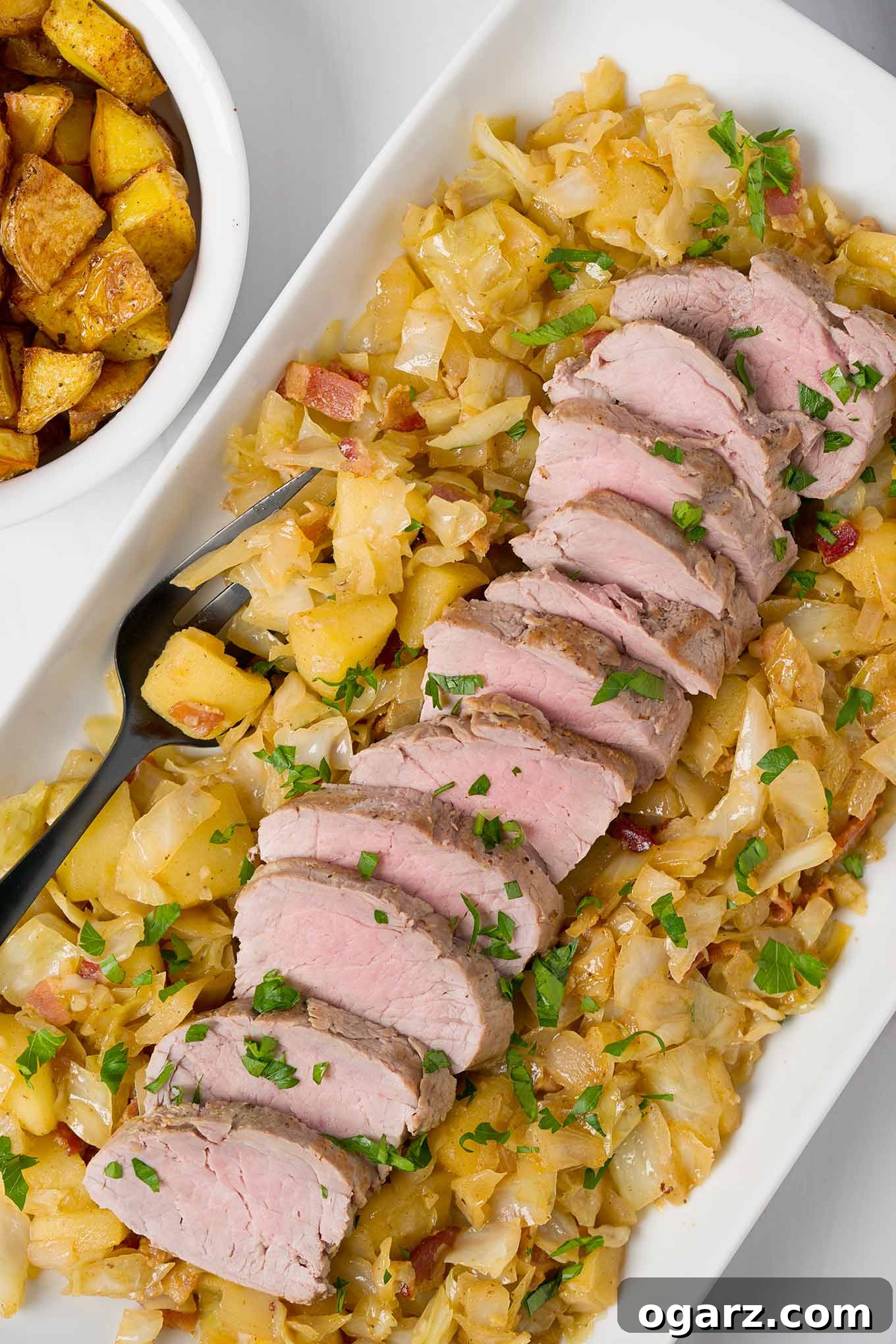
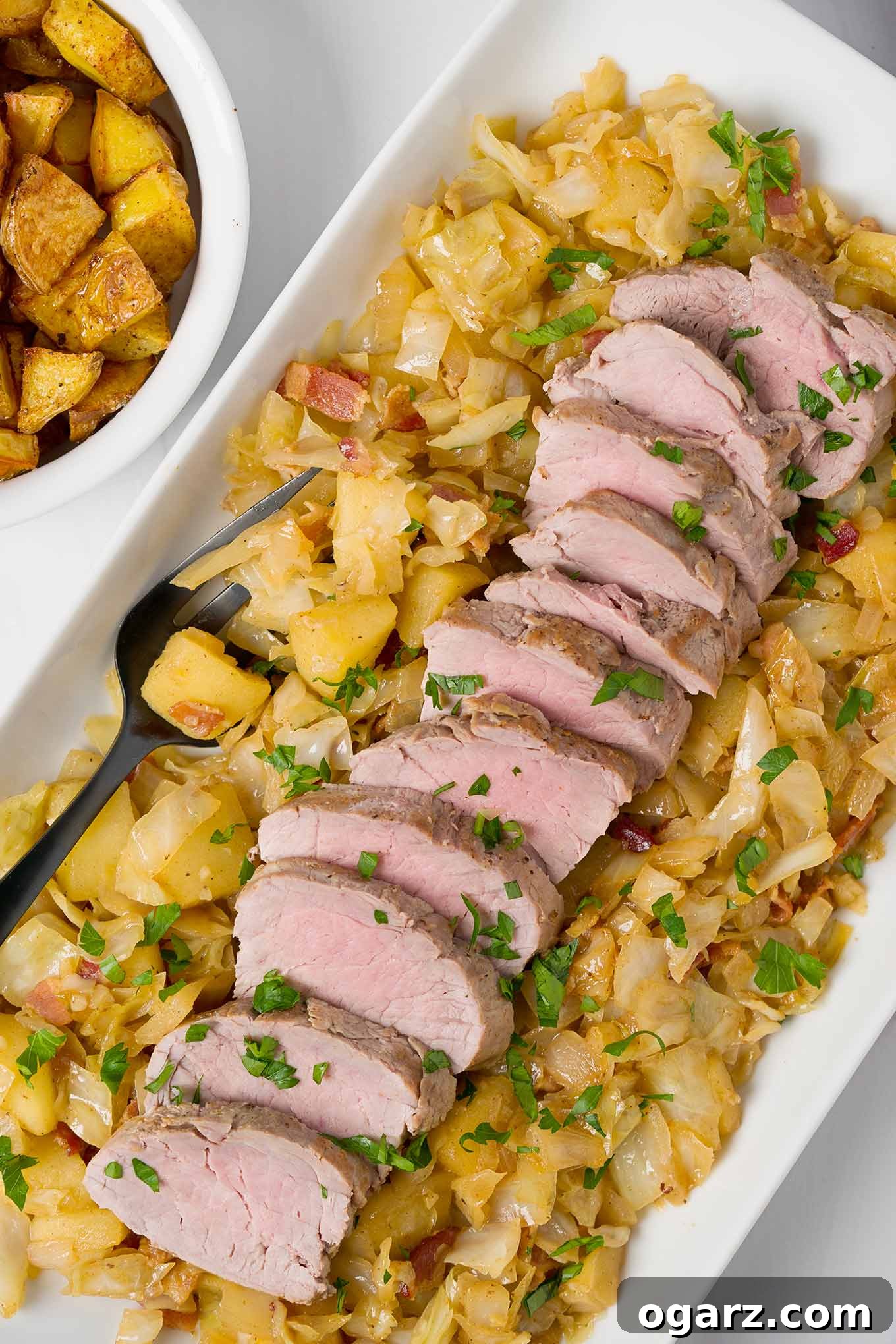
Embark on a culinary adventure with this exquisite braised pork tenderloin, a dish where the tender richness of pork meets the vibrant flavors of sautéed cabbage, crisp apples, and smoky bacon. Our unique braising liquid, a harmonious blend of apple cider, brown sugar, and Dijon mustard, deeply infuses the pork as it gently simmers alongside its delicious accompaniments. The result is a simple yet sophisticated one-pan dinner, brimming with captivating sweet and savory notes that truly tantalize the palate. This versatile meal stands perfectly on its own, or can be elegantly paired with a comforting side of roasted potatoes for a complete dining experience.
A Culinary Journey with Braised Pork Tenderloin
Here at My Gourmet Connection, our passion for creating dishes that expertly balance sweet and savory elements is well-known, and this recipe for braised pork tenderloin with apples and cabbage exemplifies that philosophy beautifully. The delightful contrast between the caramelized sweetness of apples and cabbage and the savory depth of pork and bacon creates an unforgettable flavor profile that keeps you coming back for more. Beyond its exceptional taste, what truly makes this dish a standout is its remarkable ease and efficiency, all coming together in a single pan. This simplifies both the cooking process and the cleanup, making it an ideal choice for busy weeknights or relaxed weekend meals. While we often recommend serving it with fluffy mashed potatoes or our signature roasted potatoes, which can conveniently cook in the oven while you prepare the skillet, feel free to explore other complementary sides like wild rice or quinoa to personalize your meal.
The beauty of braising lies in its ability to transform lean cuts of meat into incredibly tender and succulent masterpieces. This method, combined with the carefully selected aromatic ingredients, ensures every bite of pork tenderloin is moist, flavorful, and perfectly cooked. It’s a testament to how simple ingredients, when thoughtfully combined, can yield extraordinary results.
Essential Ingredients for Flavorful Pork
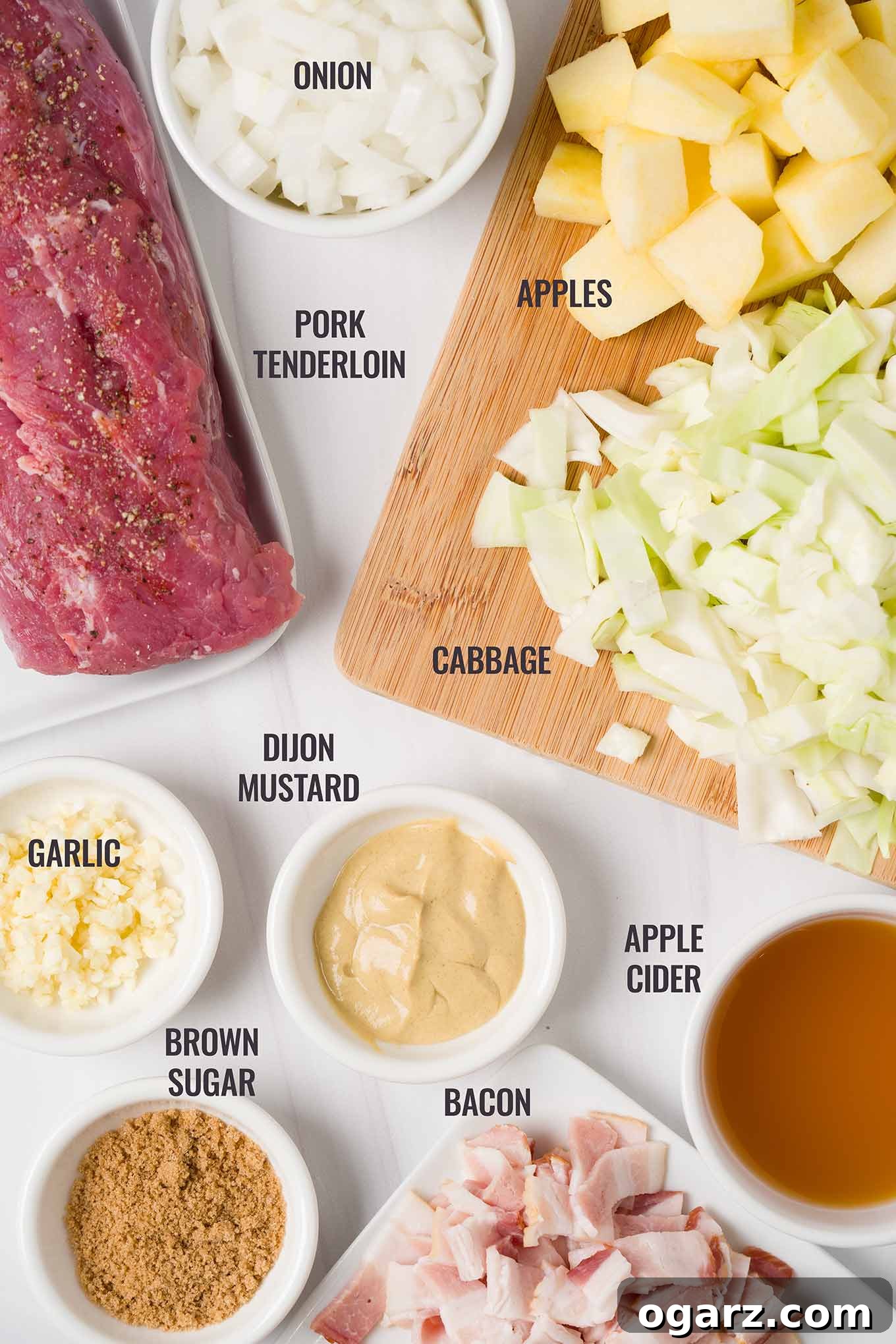
Understanding the role of each component is key to culinary success. Here’s what you need to know about the key ingredients in this braised pork tenderloin recipe. The complete list, including precise quantities, is conveniently located in the printable recipe card below.
- PORK TENDERLOIN: This premium, boneless cut of pork is renowned for its incredible tenderness and lean profile. Typically weighing between 1 to 1-1/4 pounds, it’s often sold in convenient two-packs. Its low marbling means it cooks quickly and requires careful attention to avoid overcooking, ensuring it remains wonderfully moist and flavorful. Look for tenderloins with a consistent thickness for even cooking.
- BACON: Bacon is a cornerstone ingredient in this dish, introducing a crucial element of smoky depth that beautifully complements the natural sweetness of apples and the mild, earthy flavor of sautéed cabbage. We highly recommend uncured, thick-cut bacon for its superior meaty texture and robust flavor, though any preferred brand and cut will certainly enhance the dish. The rendered bacon fat will also be used to sear the pork, adding another layer of flavor.
- APPLES: Diced apples offer a delightful burst of sweetness and a slight tartness, creating a classic and highly compatible pairing with pork. When combined with the smokiness of bacon and the gentle sweetness of caramelized cabbage, apples elevate the overall complexity of the dish. Varieties like Honeycrisp, Fuji, Gala, or even Granny Smith (if you prefer a tangier note) work wonderfully, holding their shape well during cooking.
- CABBAGE: A timeless accompaniment to pork, cabbage provides a pleasing texture and a subtle, earthy flavor that integrates seamlessly into this braised dish. As it sautés, it sweetens and softens, absorbing the rich flavors of the braising liquid and bacon fat, contributing to the dish’s comforting character. Green cabbage is the traditional choice, but savoy cabbage could offer a slightly more delicate texture.
- APPLE CIDER: Apple cider is an inspired choice for the braising liquid. Its mild acidity is instrumental in tenderizing the pork and helping to carry the rich flavors deep into the meat. Furthermore, its inherent sweetness and apple essence naturally enhance the dish’s overall profile, creating a truly autumnal and comforting meal. For an alternative, a dry white wine or chicken broth can also be used, but cider provides that signature flavor.
- DIJON MUSTARD & BROWN SUGAR: These two ingredients form the backbone of our flavorful braising liquid. Dijon mustard adds a tangy, slightly spicy depth, while brown sugar provides a balancing sweetness and helps to create a rich, slightly viscous sauce that coats every component beautifully.
Mastering Braised Pork Tenderloin with Apples and Cabbage
Ready to create this mouthwatering meal? Here’s a quick overview of the cooking process, designed for clarity and ease. For detailed, step-by-step instructions, complete with measurements and timings, please refer to the printable recipe card found further down the page.
PREP THE PORK: Begin by carefully trimming the silver skin from the pork tenderloin using a sharp knife. This ensures a more tender bite as silver skin does not break down during cooking. Generously season all sides of the pork with salt and freshly ground black pepper, preparing it for searing to lock in those delicious juices.
COOK BACON AND SEAR PORK: In a large, heavy-bottomed skillet or Dutch oven, fry the bacon pieces until they are wonderfully crisp and golden. Transfer the cooked bacon to a plate lined with paper towels to drain, reserving a small amount of the rendered bacon fat in the pan. This flavorful fat will be used to sear the seasoned pork tenderloin on all sides until it achieves a beautiful golden-brown crust. Searing is crucial for developing deep flavor through the Maillard reaction. Once seared, remove the pork and set it aside.
SAUTÉ AROMATICS AND CABBAGE: Return the pan to the stove over medium heat. Add butter and the diced onion, cooking until the onion softens and becomes translucent, releasing its sweet aroma. Next, stir in the minced garlic and cook briefly until fragrant, being careful not to let it brown, which can make it bitter. Add the chopped cabbage to the pan, season lightly with salt and pepper, and cook until it begins to wilt and soften. Then, return the crisp bacon bits to the pan and continue cooking until the cabbage starts to develop a lovely golden-brown caramelization, adding even more depth of flavor.
INFUSE WITH APPLE AND BRAISING LIQUID: Incorporate the chunks of fresh apple into the cabbage and bacon mixture. Pour in the apple cider, then add the Dijon mustard and brown sugar. Stir all ingredients thoroughly to combine, ensuring the flavors are well distributed. The liquid will begin to form the delicious braising sauce for the pork.

BRAISE TO PERFECTION: Gently nestle the seared pork tenderloin into the flavorful cabbage-apple mixture in the pan. Cover the skillet tightly and continue to cook over medium heat. Monitor the internal temperature of the pork using an instant-read thermometer, aiming for 135°F (57°C) when inserted into the thickest part of the tenderloin. Once it reaches this temperature, transfer the pork to a cutting board and allow it to rest for at least 5 minutes before slicing. This resting period is critical for the juices to redistribute, ensuring a tender and succulent result.
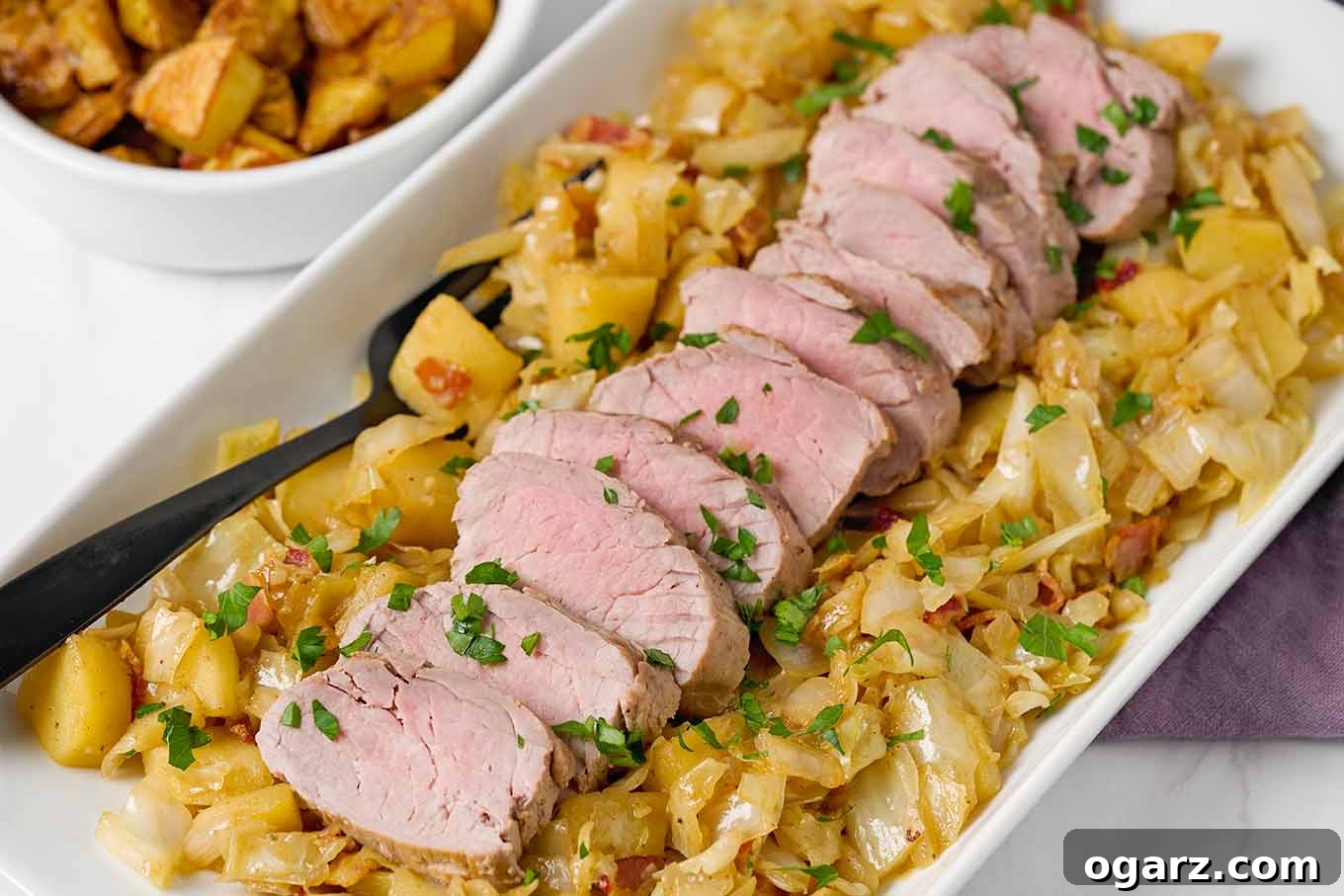
FINISH AND SERVE: While the pork is resting, increase the heat on the cabbage mixture to medium-high. Cook, stirring constantly, to reduce any remaining liquid until it has mostly evaporated and the apples are perfectly tender. Transfer this rich and flavorful cabbage mixture to a warm serving platter. Slice the rested pork tenderloin into thick medallions and artfully arrange them on top of the cabbage and apple bed. For a final flourish, garnish with freshly chopped parsley, adding a touch of color and freshness to this magnificent one-pan meal.
Recipe Adjustments and Storage Tips
Scaling for Smaller Portions
This recipe is initially designed to yield four generous servings, making it perfect for a family dinner or for enjoying delicious leftovers. However, if you’re cooking for two (or even just yourself), you have a couple of flexible options. The most straightforward approach is to simply halve all the ingredient quantities. For instance, if your pork tenderloin comes in a two-pack and you only need half, you can easily adapt the recipe. The second option, ideal for meal prepping, is to cook the full recipe and refrigerate the extra portions for another delightful meal later in the week.
When using only half of a pork tenderloin, closely follow all the recipe instructions but pay extra attention to the cooking time. Pork tenderloin is a lean cut and can dry out if overcooked. Begin checking the pork’s internal temperature with an instant-read thermometer after approximately 7 minutes of braising. Continue monitoring closely until it reaches the target temperature of 135°F (57°C) before resting.
Reheating Leftovers with Care
To ensure your leftover braised pork tenderloin and accompanying mixture maintain their incredible flavor and texture, proper storage and reheating are essential. For the best results, transfer the cabbage and apple mixture into a small, oven-safe casserole dish. Arrange the sliced pork medallions on top of the mixture. Cover the dish tightly with a lid or aluminum foil and refrigerate for up to 72 hours, preserving its freshness and taste.
When you’re ready to reheat, gently remove the pork slices from the casserole dish first. Cover the casserole containing the cabbage and apple mixture with foil and place it in a preheated 350°F (175°C) oven for about 15 minutes, allowing the vegetables to warm through without overcooking the pork. After this initial warming, remove the casserole from the oven, arrange the pork slices back on top of the heated cabbage mixture, and drizzle with a tablespoon or two of fresh apple cider to reintroduce moisture. Re-cover the dish and return it to the oven for an additional 5 to 7 minutes, or until the pork is thoroughly warmed through. This two-step reheating process prevents the tenderloin from becoming dry while ensuring all components are deliciously hot.
Achieving Perfection: Expert Tips for Braised Pork Tenderloin
While lean, tender cuts of meat are generally not suited for extensive liquid cooking, braised pork tenderloin stands as a delicious and noteworthy exception to this rule. The key lies in precise technique and timing. Follow these expert tips to ensure your braised pork tenderloin emerges moist, incredibly juicy, and cooked to absolute perfection every single time.
- TRIM THE SILVERSKIN FROM THE PORK: Silverskin is a tough, silvery-white membrane often found on the exterior of tenderloin cuts from various meats, including pork, beef, lamb, and venison. Unlike fat, silverskin does not render or break down during the cooking process; instead, it contracts, potentially making the meat tough and misshapen. It is crucial to remove it before cooking. To do so, slide the tip of a sharp knife (a fillet knife works best) just under the silverskin, keeping the blade angled slightly upwards to avoid removing too much meat. Grip the silverskin firmly and run the knife along its underside, carefully separating it from the tenderloin.
- SEAR THE PORK ON ALL SIDES IN A HOT PAN: Searing is a fundamental step that contributes immensely to the flavor and texture of your braised pork. This high-heat, quick-cooking process creates a beautiful golden-brown crust on the exterior of the pork through the Maillard reaction, developing complex, savory flavors that cannot be achieved through braising alone. Additionally, searing helps to lock in the meat’s natural juices. For this recipe, we cleverly utilize a small amount of the rendered bacon fat from the initial cooking stage, imparting an extra layer of smoky goodness to the seared pork. Ensure your pan is hot enough before adding the pork to achieve a proper sear.
- DON’T USE TOO MUCH LIQUID: The art of braising for lean cuts like pork tenderloin differs from that of tougher, fattier cuts that benefit from being submerged in liquid for extended periods. Pork tenderloin only requires a minimal amount of braising liquid to create a moist environment and infuse flavor without stewing the meat. The goal is to simmer it gently rather than boil it. In this recipe, apple cider perfectly complements the other ingredients, offering a balance of sweetness and acidity. However, depending on your desired flavor profile, other excellent alternatives include chicken or vegetable broth, dry white wine, or even orange juice for a brighter, citrusy note.
- DON’T OVERCOOK: This is arguably the most critical tip for cooking pork tenderloin. Because these tenderloins are relatively small in diameter and extremely lean, they cook very quickly and are prone to drying out if left on the heat for too long. Approximately 7 to 10 minutes of gentle braising time is typically sufficient to bring the meat to a medium-rare to medium doneness, which is ideal for tenderloin. Always use an instant-read meat thermometer inserted into the thickest part of the tenderloin to accurately gauge its internal temperature. Remove the pork from the heat when it registers between 135°F (57°C) and 140°F (60°C). Remember that the temperature will rise slightly during resting.
- ALWAYS LET THE MEAT REST: Regardless of the cooking method—braised, roasted, or grilled—allowing pork tenderloin to rest is a non-negotiable step for achieving maximum juiciness and tenderness. Once removed from the heat, loosely tent the tenderloin with foil and let it rest on a cutting board for at least 5 minutes before slicing. During this crucial period, the muscle fibers relax, and the internal juices, which have been pushed to the center by the heat, redistribute evenly throughout the entire cut of meat. Skipping this step will result in juices flowing out onto your cutting board, leaving you with drier, less flavorful pork.
Explore More Delectable Pork Recipes
If you’ve savored the delightful blend of sweet and savory flavors in this braised pork tenderloin, we invite you to continue your culinary journey with our diverse collection of pork recipes. You might particularly enjoy our Pork and Butternut Squash Skillet Dinner for another comforting and balanced meal, or discover the enticing options below. Each recipe promises ease, flavor, and a satisfying dining experience, perfect for any occasion.
Creamy Pork Curry with Apples
Spiced Pork Chops with Apples and Onions
Boneless Pork Chops with Pears
Caribbean Pineapple Pork Skillet
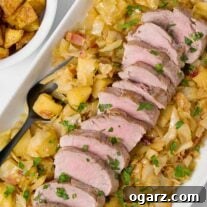
Braised Pork Tenderloin with Apples and Cabbage
Lynne Webb
15 minutes
40 minutes
55 minutes
4
servings
Print Recipe
Ingredients
- 1 pork tenderloin, 1 to 1-1/4 lbs, silverskin trimmed
- Salt and freshly ground black pepper
- 5 strips bacon, cut into 1/2-inch pieces (thick-cut preferred)
- 2 tablespoons butter
- 1/2 cup diced yellow onion
- 1 clove garlic, minced
- 4 to 5 cups chopped green cabbage, about 1/2 medium head, cored
- 2 apples, peeled, cored, and cut into 3/4-inch chunks (e.g., Honeycrisp, Fuji, Gala)
- 3/4 cup apple cider
- 1 tablespoon Dijon-style mustard
- 1 tablespoon brown sugar
- Chopped parsley for garnish, (optional)
Instructions
-
Using a sharp knife, carefully trim away the silverskin from the pork tenderloin. Season all sides of the pork generously with 3/4 teaspoon kosher salt and freshly ground black pepper.
-
In a large, heavy-bottomed frying pan or Dutch oven, fry the bacon pieces over medium-high heat until they are crisp. Transfer the cooked bacon to a plate lined with paper towels to drain excess fat. Drain most of the bacon fat from the pan, leaving just enough to sear the pork (about 1-2 tablespoons).
-
Return the pan with the reserved bacon fat to the stove. Add the seasoned pork tenderloin and sear on all sides until a golden-brown crust forms, about 2 minutes total. Transfer the seared pork to a clean plate and set aside while you prepare the cabbage mixture.
-
Reduce the heat to medium. Add the butter to the pan. Once melted, add the diced onion and cook, stirring occasionally, until it is soft and translucent, which should take about 3 to 4 minutes. Stir in the minced garlic and continue cooking for another minute until fragrant, being careful not to brown the garlic.
-
Add the chopped cabbage to the pan. Season with 1/2 teaspoon salt and some freshly ground black pepper. Cook, stirring often, until the cabbage wilts and softens, approximately 5 to 6 minutes. Return the crispy bacon to the pan and continue cooking for another 4 to 5 minutes, allowing the cabbage to lightly caramelize and deepen in flavor.
-
Stir in the apple chunks, apple cider, Dijon mustard, and brown sugar. Mix all the ingredients well to combine them thoroughly. Taste the mixture and adjust the seasoning if necessary, adding more salt, pepper, or a touch more sugar to balance the flavors.
-
Gently nestle the seared pork tenderloin back into the pan, submerging it slightly into the cabbage-apple mixture. Cover the pan tightly and cook over medium heat. Braise until an instant-read thermometer registers 135°F (57°C) when inserted into the thickest part of the tenderloin, which typically takes 7 to 10 minutes. Once cooked, transfer the tenderloin to a cutting board and allow it to rest for a minimum of 5 minutes before slicing. This resting period ensures the pork remains juicy.
-
While the pork is resting, increase the heat on the cabbage mixture to medium-high. Cook, stirring frequently, until any remaining liquid in the pan has evaporated and the apples are tender, and the sauce has thickened slightly.
-
To serve, spoon the delicious cabbage and apple mixture onto a serving platter. Slice the rested pork tenderloin into medallions and arrange them beautifully on top of the cabbage. If desired, garnish with fresh chopped parsley for a burst of color and herbaceous flavor.
Notes
Scale This Recipe for Two Servings
This recipe is written for four servings, but if you’re cooking for two (or even one), you have a couple of options. The first is to simply cut the ingredient quantities in half. The second option is to put away leftovers for another meal, ensuring you get to enjoy this delicious dish more than once.
If you’ll only be using half of a pork tenderloin, closely follow the recipe instructions but be sure to check the pork’s internal temperature after about 7 minutes of braising and monitor it closely to avoid overcooking this lean cut.
How to Reheat Leftovers
For best results when reheating, store the cabbage and apple mixture in a small casserole dish with the pork slices arranged on top. Cover tightly and refrigerate for up to 72 hours.
When you’re ready to reheat, first remove the pork slices. Then, cover the casserole with foil and place it in a preheated 350°F (175°C) oven for 15 minutes to warm the cabbage mixture. Remove from the oven, arrange the pork on top of the cabbage mixture, drizzle with a little bit of apple cider to add moisture, re-cover, and return the casserole to the oven for 5 to 7 minutes to gently warm the meat without drying it out.
Nutrition
Calories: 450
,
Total Fat: 22g
,
Cholesterol: 126mg
,
Sodium: 949mg
,
Carbohydrates: 28g
,
Fiber: 5g
,
Sugar: 20g
,
Protein: 35g
Nutrition information is automatically calculated, so should only be used as an approximation.
Like this recipe? Rate and comment below!