
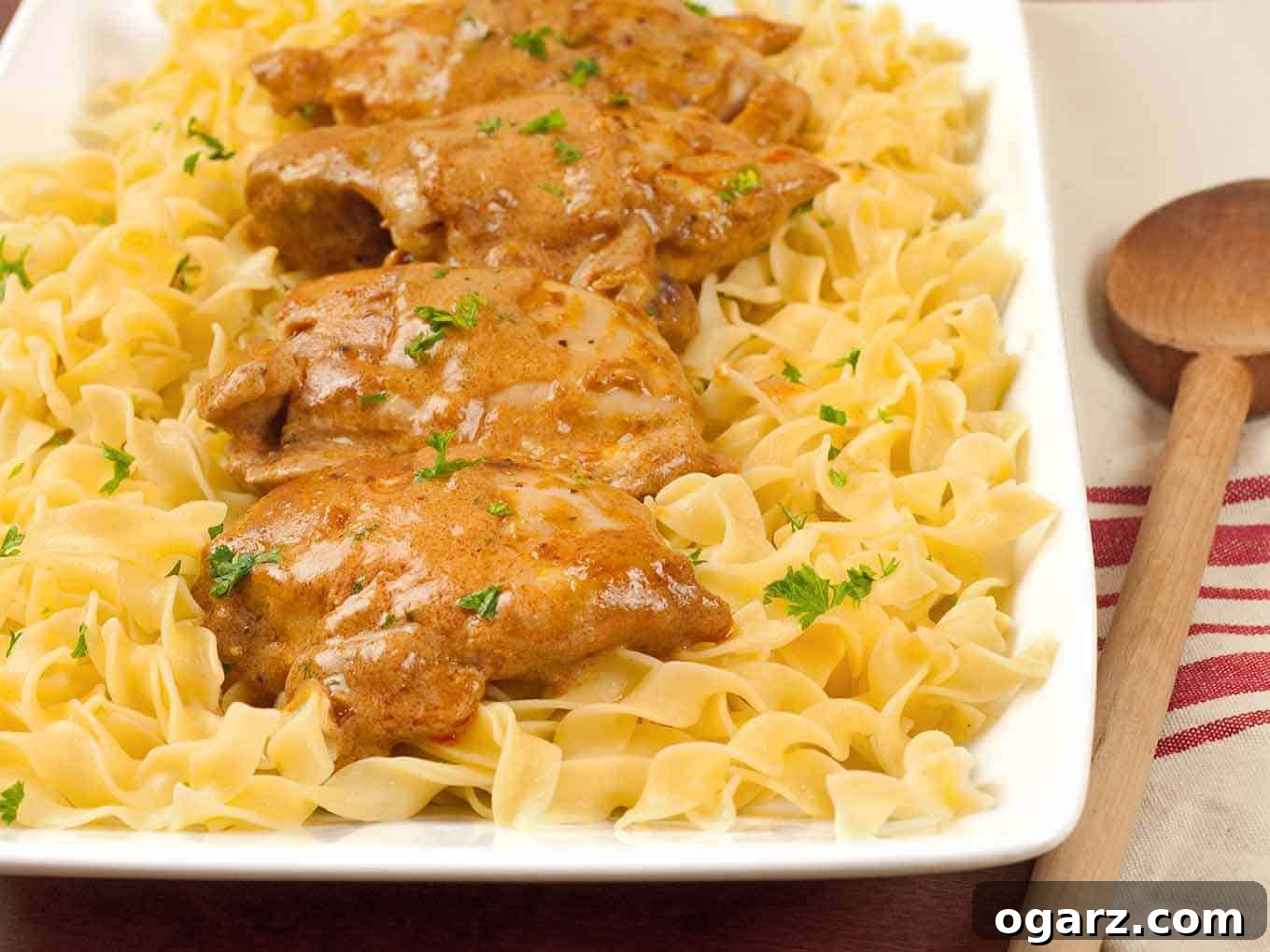
Easy Chicken Paprikash: A Beloved Hungarian Classic Made Simple for Weeknights
Chicken Paprikash, known in Hungary as Paprikás Csirke, is more than just a meal; it’s a heartwarming embrace from Hungarian culinary tradition. This rich, flavorful dish is a testament to the power of simple ingredients transformed into something extraordinary. At its heart lies the vibrant, sweet spice of Hungarian paprika, which lends the dish its iconic color and deep, earthy flavor. Often associated with cozy family dinners and comforting Sunday lunches, Chicken Paprikash traditionally involves simmering chicken pieces in a paprika-infused sauce. However, this easy version streamlines the process, making it perfectly suited for even the busiest weeknights without sacrificing any of its authentic taste or soul-satisfying warmth.
Our streamlined approach to this classic centers on roasting boneless, skinless chicken thighs to tender perfection in the oven. This method not only ensures juicy, evenly cooked chicken but also frees you up to simultaneously prepare the silky, sour cream-paprika gravy on the stovetop. This clever division of labor drastically cuts down on active cooking time, allowing you to bring a taste of Hungary to your table in under an hour. The result is succulent chicken enveloped in a creamy, deeply seasoned sauce that sings with the essence of paprika and a hint of tang from the sour cream. While traditionally served with buttered egg noodles or Hungarian Noodle Dumplings (Nokedli), it pairs beautifully with mashed potatoes, rice, or even a simple crusty bread to soak up every last drop of that glorious gravy.
The Rich History and Enduring Appeal of Hungarian Paprikash
The story of Chicken Paprikash is intrinsically linked to the history of Hungary itself and, more specifically, to its national spice: paprika. Originating in the fertile plains of Hungary, paprika became a staple in Hungarian kitchens, eventually defining much of the country’s cuisine. While paprika was introduced to Europe centuries ago, it was in Hungary that it truly found its culinary voice, evolving from a peasant spice to a cherished national ingredient. Paprikash, in its many forms, emerged as a celebration of this vibrant spice. The dish traditionally involved tougher cuts of chicken, slow-cooked to tenderness, allowing the flavors to meld and deepen over time.
Over generations, the recipe for Paprikás Csirke has been passed down, adapting slightly to regional variations and family preferences. Yet, the core elements remain constant: chicken, onion, paprika, and sour cream. It’s a dish that embodies comfort, economy, and the rich, comforting flavors of home. Our modern, easy take respects these traditions by focusing on the essential flavor profile while making it accessible for today’s fast-paced lifestyles. It’s a dish that continues to resonate with people worldwide, offering a taste of Hungarian heritage that feels both exotic and deeply familiar.
Unlocking Flavor: The Importance of Key Ingredients
The soul of a truly great Chicken Paprikash lies in the quality and balance of its core ingredients. Each component plays a vital role in creating the dish’s distinctive flavor and texture.
The Magic of Paprika: A Culinary Essential
Paprika is not just a spice; it’s the defining character of this dish. For authentic Chicken Paprikash, sweet Hungarian paprika is absolutely essential. This is distinct from Spanish paprika (which can be smoked) or hot paprika varieties. Sweet Hungarian paprika offers a vibrant red color and a mild, sweet, fruity, slightly earthy flavor without any significant heat. It’s crucial to use fresh, high-quality paprika, as older paprika can lose its potency and vibrancy. Look for brands that specify “sweet Hungarian” for the best results. The quantity can be adjusted to your personal preference – some like a bolder paprika presence, while others prefer a more subtle hint.
The Comfort of Boneless, Skinless Chicken Thighs
While traditional recipes might call for bone-in, skin-on chicken, our easy version opts for boneless, skinless chicken thighs. This choice offers several advantages: they cook quickly and evenly, remain incredibly moist and tender thanks to their higher fat content, and are easier to manage when serving. The absence of skin also means fewer steps for browning, simplifying the overall process. Chicken thighs are a more economical choice than breasts and pack more flavor, making them ideal for a hearty stew-like dish such as Paprikash. If you prefer chicken breast, ensure you don’t overcook it, as it can dry out easily; a shorter roasting time might be necessary.
The Creamy Finish: Sour Cream’s Role
Sour cream is the final, indispensable touch that transforms the paprika-infused broth into a luxurious, creamy gravy. It adds a delightful tang and richness that balances the sweetness of the paprika. For the best results, use full-fat sour cream, as lower-fat versions can sometimes curdle when heated. The technique of tempering the sour cream – gradually whisking in a small amount of the warm pan sauce before adding it to the main pot – is vital. This gentle introduction helps prevent the sour cream from splitting or curdling, ensuring a smooth and velvety sauce every time.
Easy Chicken Paprikash (Paprikash) Recipe
Easy Chicken Paprikas (Paprikash)
A traditional Hungarian dish, rich and full of sweet paprika flavor. This easy version features perfectly roasted boneless chicken thighs bathed in a luscious sour cream-paprika gravy, prepared efficiently while the chicken cooks.
By: Lynne Webb
Prep Time: 10 mins
Cook Time: 30 mins
Total Time: 40 mins
Servings: 4 servings
Ingredients
- 1-1/4 lbs boneless, skinless chicken thighs
- Salt and freshly ground black pepper, to taste
- 2 tablespoons olive oil
- 3 tablespoons butter, divided
- 1/2 cup onion, chopped
- 2 cloves garlic, finely chopped
- 2 stalks celery, chopped
- 2 to 3 teaspoons sweet Hungarian paprika, see notes below for recommendations
- 1-1/2 tablespoons flour
- 1-1/2 cups low-sodium chicken broth
- 1 cup sour cream
- 8 ounces egg noodles
- 1 tablespoon fresh parsley, chopped, for garnish
Instructions
- Prepare the Oven and Water: Preheat your oven to 425°F (220°C). At the same time, place a large pot of salted water on the stovetop and bring it to a rolling boil for the egg noodles.
- Roast the Chicken: Carefully trim any excess fat from the boneless, skinless chicken thighs. Season both sides generously with salt and freshly ground black pepper. Arrange the seasoned chicken thighs in a single layer in a shallow baking pan. Lightly dust the chicken with a little additional paprika for extra flavor and color. Roast in the preheated oven, turning the chicken once halfway through cooking, until an instant-read thermometer inserted into the thickest part of a thigh registers 165°F (74°C). This typically takes 16 to 20 minutes, depending on the thickness of your chicken.
- Start the Gravy Base: While the chicken is roasting, begin preparing the savory gravy. In a large skillet, heat the olive oil and 2 tablespoons of the divided butter over medium heat. Add the chopped onion and cook, stirring occasionally, until it softens and becomes translucent, about 2 minutes. Stir in the finely chopped garlic and celery, continuing to cook for just 1 minute longer, until the garlic becomes fragrant. Be careful not to let the garlic brown or burn. Season the vegetables with a pinch of salt and pepper, then generously sprinkle with 2 to 3 teaspoons of sweet Hungarian paprika. The exact amount can be adjusted based on the freshness and strength of your paprika and your personal taste preference.
- Create the Roux: Add the flour to the skillet with the sautéed vegetables and paprika. Cook, stirring constantly, for 4 to 5 minutes, ensuring the mixture is smooth and well blended. This step is crucial for developing flavor and avoiding a raw flour taste or grainy texture in the final gravy. Even if the flour appears blended sooner, continue cooking it for the full duration to achieve the best results.
- Thicken the Gravy: Increase the heat to medium-high. Gradually pour in the low-sodium chicken broth, a little at a time, whisking continuously to prevent lumps. Continue cooking and stirring until the mixture begins to thicken slightly and achieves a smooth, consistent gravy-like texture.
- Temper the Sour Cream: In a small separate bowl, place the sour cream. To prevent the sour cream from curdling when added to the hot gravy, whisk in 2 or 3 tablespoons of the warm pan sauce into the sour cream until thoroughly combined. This gently brings the sour cream up to temperature.
- Finish the Gravy: Pour the tempered sour cream mixture into the skillet with the gravy, stirring until the sauce is completely smooth and creamy. Once the chicken is ready, carefully add the roasted thighs to the finished sauce. Using tongs, turn the chicken several times to ensure each piece is thoroughly coated in the luscious paprika gravy. Remove the skillet from the heat and cover it to keep the chicken and gravy warm while you prepare the noodles.
- Cook and Serve Noodles: Cook the egg noodles in the boiling salted water according to the package directions until al dente. Drain the cooked noodles well, then return them to their pot. Add the remaining 1 tablespoon of butter and the chopped fresh parsley, tossing gently to coat. Season the noodles to taste with salt and pepper.
- Plate and Enjoy: To serve, artfully plate a generous portion of the buttered egg noodles. Top the noodles with the chicken thighs, and spoon additional rich paprika gravy generously over everything. Serve immediately and savor this comforting Hungarian classic!
Notes
Recipe Notes:
While any brand of sweet paprika will work in a pinch, we highly recommend sourcing an authentic Hungarian brand for the most genuine flavor. Szeged Sweet Hungarian Paprika is widely available in many supermarkets and delivers a robust, sweet flavor profile that truly elevates this dish. Its rich color and depth are perfect for a classic Paprikash.
Serving Suggestion:
For an even more authentic Hungarian experience, consider pairing your Chicken Paprikash with our homemade Hungarian Noodle Dumplings (Nokedli). These light, chewy dumplings are similar to German spaetzle and make a fantastic accompaniment, perfect for soaking up the delicious gravy.
Special Note: Culinary traditions often evolve, and recipes like Paprikash can vary significantly from family to family and region to region. These variations are a beautiful part of culinary heritage, shaped by personal tastes, ingredient availability, and even dietary considerations over generations. We welcome constructive discussion about different recipe approaches and family traditions. However, comments that are purely contradictory or insulting will not be published, as our goal is to foster a positive and respectful exchange of culinary ideas.
Expert Tips for a Perfectly Flavorful Paprikash
Achieving the perfect Chicken Paprikash is an art, but it’s an accessible one with a few expert tips. Paying attention to these details can elevate your dish from good to truly exceptional.
Choose Your Paprika Wisely
As mentioned, the type and quality of paprika are paramount. Invest in good quality sweet Hungarian paprika. Store your paprika in an airtight container in a cool, dark place to preserve its flavor and color. Old paprika will taste flat and lack the vibrant hue characteristic of this dish.
The Golden Rule of Paprika: Don’t Burn It!
Paprika, especially Hungarian paprika, has delicate sugars that can burn quickly when exposed to high heat. Burnt paprika turns bitter and can ruin the entire dish. Always add paprika to the pan off the heat or over very low heat, and stir it in quickly with the onions and other aromatics. It needs only a brief moment to bloom its flavors and color in the warm oil and fat before liquids are added.
Tempering Sour Cream: A Non-Negotiable Step
This is a critical technique to prevent your sour cream from curdling or separating in the hot gravy. By whisking a few spoonfuls of the warm sauce into the cold sour cream first, you gently bring its temperature up. This gradual equalization of temperature prevents the shock that causes dairy to curdle when added directly to a hot liquid. The result is a smooth, velvety, professional-looking sauce.
Achieving the Perfect Gravy Consistency
The flour in this recipe creates a roux, which thickens the sauce. Ensure you cook the flour for the recommended 4-5 minutes after adding it to the butter and oil. This process cooks out the raw flour taste and helps to create a smooth texture. When adding the chicken broth, do so gradually, whisking constantly, to prevent lumps. The gravy should be thick enough to coat the back of a spoon but still pourable. If it’s too thick, add a little more chicken broth or water; if too thin, let it simmer gently for a few more minutes to reduce.
Resting the Chicken
While the chicken is roasting and the gravy is made, once you add the cooked chicken to the sauce, cover the skillet. This allows the chicken to rest slightly, reabsorbing its juices, and further infusing it with the rich flavors of the paprika gravy. It ensures maximum tenderness and flavor in every bite.
Beyond the Basics: Serving Suggestions and Delicious Variations
Chicken Paprikash is wonderfully versatile, allowing for a variety of accompaniments and even modifications to suit different tastes.
Classic Serving Suggestions
- Buttered Egg Noodles: This is arguably the most classic pairing. The tender, buttery noodles are perfect for soaking up the creamy paprika gravy.
- Hungarian Noodle Dumplings (Nokedli): For an authentic experience, try making Nokedli. These small, irregular dumplings offer a delightful chewy texture that complements the rich sauce beautifully.
- Mashed Potatoes: Creamy mashed potatoes are another excellent choice, providing a comforting bed for the chicken and sauce.
- Rice: A simple steamed white rice can also serve as a great absorbent base.
- Crusty Bread: Don’t underestimate the simple pleasure of a good crusty bread for mopping up every last drop of the exquisite gravy.
Completing the Meal
To balance the richness of the Paprikash, a light, fresh side is often welcome. A crisp green salad with a simple vinaigrette, or a refreshing cucumber salad dressed with a sour cream and dill dressing, provides a lovely contrast.
Exciting Variations to Explore
Once you master the basic recipe, feel free to experiment:
- Other Proteins: While chicken is traditional, the paprika gravy base works beautifully with other meats. Try thinly sliced pork loin for Pork Paprikash (Sertéspörkölt), or even beef for a richer, stew-like dish. For a vegetarian option, hearty mushrooms or smoked tofu can be excellent substitutes.
- Adding Bell Peppers: Some regional variations include sliced bell peppers (especially green bell peppers) cooked with the onions and celery, adding another layer of sweetness and subtle vegetal flavor.
- Spice Level: If you enjoy a bit of heat, you can add a pinch of hot Hungarian paprika alongside the sweet variety, or a small amount of cayenne pepper, to taste.
- Herb Enhancements: While simple, some recipes might incorporate a touch of fresh marjoram or caraway seeds for an additional aromatic layer.
Storage and Reheating for Delicious Leftovers
One of the many joys of Chicken Paprikash is how wonderfully it tastes the next day, as the flavors have more time to meld and deepen. This dish makes excellent leftovers!
Storing Leftovers
Allow the Chicken Paprikash to cool completely at room temperature before transferring it to an airtight container. It can be safely stored in the refrigerator for up to 3-4 days. For longer storage, Chicken Paprikash freezes well. Transfer to freezer-safe containers and freeze for up to 2-3 months. Thaw overnight in the refrigerator before reheating.
Reheating Instructions
When reheating, it’s best to do so gently to prevent the sour cream from curdling. For individual portions, microwave on medium power, stirring occasionally, until heated through. For larger quantities, reheat on the stovetop over low to medium-low heat, stirring frequently, until simmering gently. If the sauce appears too thick after refrigeration, you can thin it out with a splash of chicken broth or water during reheating. Ensure the chicken reaches an internal temperature of 165°F (74°C) when reheating.
Embrace the Comfort: Your New Weeknight Favorite
Chicken Paprikash is more than just a recipe; it’s a culinary journey to the heart of Hungarian tradition, brought to your kitchen with effortless ease. Our simplified version ensures that this deeply flavorful and comforting dish is no longer reserved for special occasions or lengthy weekend cooking projects. With juicy, perfectly roasted chicken thighs bathed in a rich, creamy, paprika-infused gravy, it offers a satisfying and wholesome meal that’s both economical and incredibly delicious.
Whether you serve it with classic egg noodles, the delightful Hungarian dumplings, or your favorite mashed potatoes, this easy Chicken Paprikash is destined to become a cherished addition to your weekly meal rotation. It’s a testament to how traditional flavors can be adapted for modern life, proving that authentic taste and convenience can indeed go hand-in-hand. So, gather your ingredients, savor the aroma of blooming paprika, and prepare to delight your family and friends with a hearty taste of Hungary. Enjoy!