
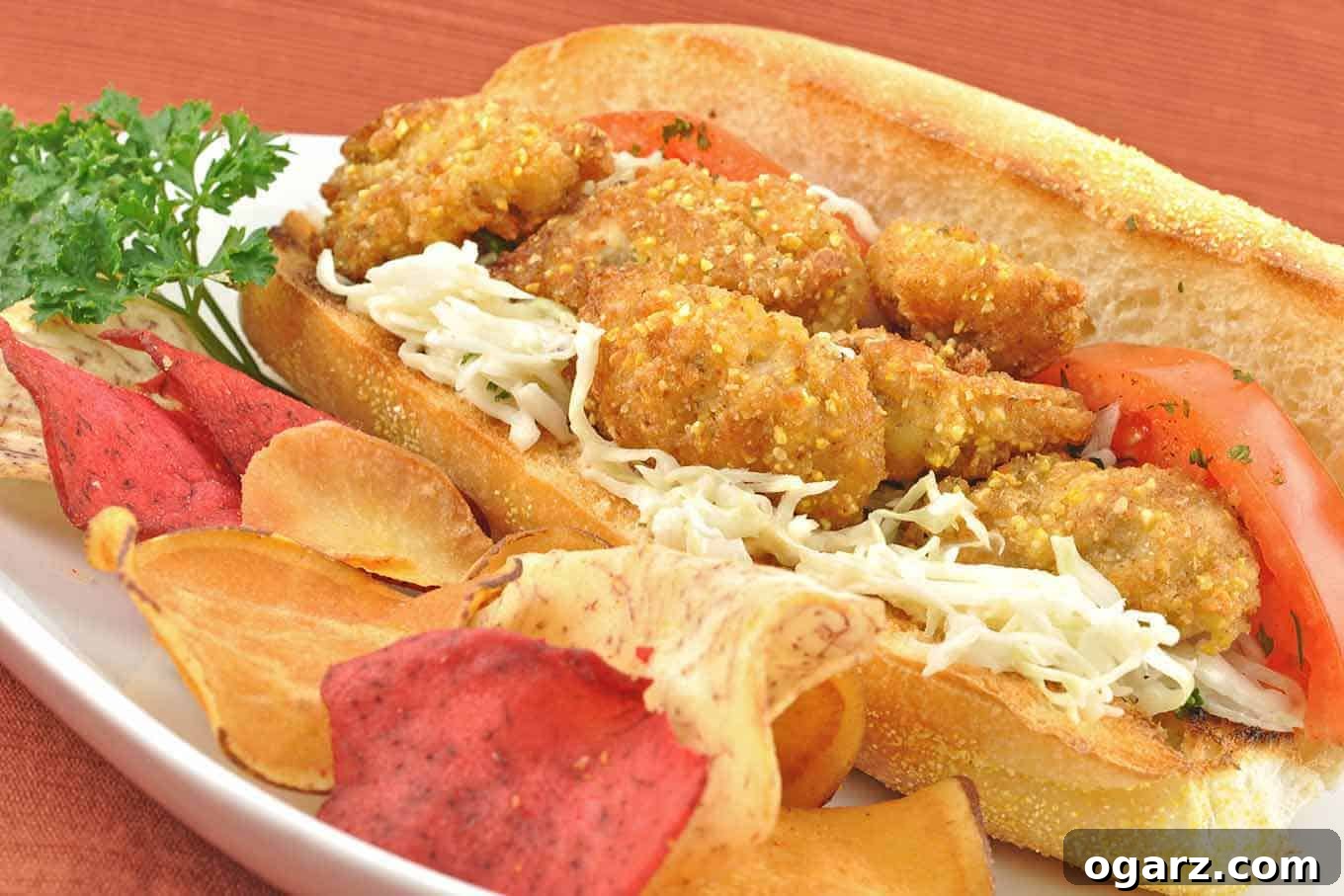

In the vibrant tapestry of American cuisine, few sandwiches command as much respect and adoration as the po’boy. Among its many delectable variations, the **pan-fried oyster po’boy** stands out as an undeniable king, a symphony of textures and flavors that transports your taste buds straight to the bustling streets of New Orleans. This iconic sandwich isn’t just a meal; it’s a culinary experience, a testament to the rich gastronomic heritage of the Gulf Coast.
While the exact origins of the po’boy are steeped in charming local folklore, it’s widely accepted that this beloved sandwich has been a cornerstone of New Orleans dining since the early 20th century. Our rendition celebrates this tradition, featuring perfectly pan-fried oysters nestled in toasted hoagie rolls, complemented by juicy slices of ripe beefsteak tomatoes and a quick, zesty garlic and onion slaw that cuts through the richness of the seafood with delightful precision.
The Legendary New Orleans Po’Boy: A Taste of History
To truly appreciate the pan-fried oyster po’boy, one must first understand the rich history of its namesake. The “poor boy” sandwich, as it was originally known, emerged from the humble kitchens of New Orleans, purportedly coined by the Martin Brothers, Bennie and Clovis, during the 1929 streetcar strike. They famously offered free sandwiches to striking workers, declaring that “another poor boy is coming.” These early po’boys were often simple affairs, filled with roast beef or inexpensive cuts of meat, served on long loaves of French bread.
Over the decades, the po’boy evolved from a sustenance meal for the working class into a beloved culinary icon, expanding its fillings to embrace the abundant seafood of the Gulf. Shrimp, catfish, and, of course, oysters became popular choices, showcasing the region’s diverse culinary landscape. The essence of a true New Orleans po’boy lies not just in its filling but in its foundation: a crispy, airy French bread loaf, specifically designed to withstand the generous fillings without becoming soggy, yet soft enough to yield to each bite. Often, a po’boy is served “dressed,” meaning it includes crisp lettuce, fresh tomato slices, tangy pickles, and a slather of mayonnaise, creating a harmonious balance of flavors and textures.
Today, the po’boy remains a culinary institution, a symbol of New Orleans’ resilience and its unparalleled ability to transform simple ingredients into extraordinary dishes. The pan-fried oyster po’boy, in particular, represents the zenith of this tradition, offering a sublime combination of delicate, briny oysters and a satisfying crunch that makes it utterly irresistible.
Crafting the Perfect Pan-Fried Oyster Po’Boy: A Culinary Masterclass
Creating an exceptional pan-fried oyster po’boy is an art form that balances simplicity with precision. It begins with selecting the freshest ingredients and understanding the nuances of each component. This recipe is designed to guide you through the process, ensuring a perfect sandwich every time.
The Stars of the Show: Fresh Oysters and Their Golden Coating
The foundation of this po’boy is, naturally, the oysters. Opt for fresh, shucked oysters from a reputable source. Their natural briny flavor and tender texture are paramount. The coating is equally critical, providing that signature crispy exterior. Our recipe combines yellow cornmeal for its characteristic texture, all-purpose flour for binding, unseasoned dry breadcrumbs for extra crunch, and a blend of salt, cayenne, and paprika for a flavorful kick. This mixture creates a robust crust that perfectly encases the delicate oysters, ensuring they cook up golden and delicious.
The Zesty Counterpoint: Homemade Garlic-Onion Slaw
A great po’boy needs balance. The richness of fried oysters finds its perfect counterpoint in a bright, tangy slaw. Our garlic-onion slaw is simple yet impactful, featuring finely shredded cabbage and thinly sliced sweet onion. The dressing, a creamy blend of buttermilk, mayonnaise, minced garlic, a hint of hot sauce, and a pinch of sugar, provides a refreshing tang and a subtle warmth that complements the oysters without overpowering them. This slaw adds moisture, crunch, and a burst of flavor that elevates the entire sandwich experience.
The Foundation: The Perfect Hoagie Roll and Ripe Tomatoes
No po’boy is complete without the right bread. While true New Orleans French bread is ideal, a good quality hoagie roll with a crisp crust and soft interior works beautifully. Lightly toasting the rolls adds another layer of texture and prevents them from becoming soggy. Fresh, ripe beefsteak tomatoes, thickly sliced and lightly seasoned, add a juicy, acidic element that contrasts wonderfully with the fried oysters and creamy slaw.
How to Make Pan-Fried Oyster Po’Boys
Here’s an overview of how to bring this decadent dish to life. The complete ingredient list, specific quantities, and detailed, step-by-step instructions are provided in the recipe section below for your convenience.
- Prepare the Coating & Wet Mixture: In one shallow dish, combine the dry coating ingredients (cornmeal, flour, breadcrumbs, salt, cayenne, and paprika). In a separate shallow dish, whisk together the egg and buttermilk to create the wet mixture.
- Coat the Oysters: Gently add the shucked oysters to the egg-buttermilk mixture, ensuring each oyster is fully coated. Carefully transfer them to the dry cornmeal mixture, turning them gently until evenly covered. Place the coated oysters in a single layer on a plate, allowing a little space between each, and let them rest for 10 minutes. This resting period is crucial for the coating to adhere properly and helps maintain oil temperature during frying.
- Make the Slaw: While the oysters are resting, prepare the garlic-onion slaw. In a large bowl, combine the shredded cabbage and thinly sliced sweet onion. In a separate, smaller bowl, whisk together the dressing ingredients: buttermilk, mayonnaise, minced garlic, hot sauce, and sugar. Pour the dressing over the cabbage and onion, tossing thoroughly to combine. Season the slaw to taste with salt and pepper, then set it aside.
- Heat the Oil: Pour about 1/4-inch of neutral oil (such as canola or corn oil) into a large, sturdy frying pan or skillet. Heat the oil to approximately 350°F (medium-high heat). You can test the oil’s readiness by dropping a tiny pinch of the dry crumb mixture into it; if it sizzles immediately, the oil is at the correct temperature.
- Pan-Fry the Oysters: Working in batches to avoid overcrowding the pan, add about one-third of the coated oysters to the hot oil. Fry them until they are beautifully golden brown and crispy on both sides, typically about 2.5 to 3 minutes per side. Use tongs to gently turn them. Once cooked, transfer the oysters to a paper towel-lined plate to drain any excess oil. Repeat this process with the remaining oysters.
- Assemble the Po’Boys: To build your sandwiches, lightly toast the hoagie rolls, then split them. Line the bottom half of each roll with generous slices of ripe tomato, seasoning them lightly with salt and freshly ground black pepper. Next, add a portion of the zesty garlic-onion slaw. Finally, divide the crispy pan-fried oysters evenly among the rolls, typically about six oysters per sandwich, and crown with the top half of the roll.
Mastering the Fry: Expert Tips for Impeccable Oysters
While oysters might seem delicate, they are surprisingly forgiving to pan-fry when you follow a few key techniques. These tips will ensure your pan-fried oysters are consistently plump, juicy, and perfectly crispy, avoiding common pitfalls and elevating your po’boy to professional standards.
- Gentle Handling is Key: Oysters are tender, so handle them with care throughout the coating and frying process. This prevents them from breaking apart and helps them retain their natural juices, ensuring they remain plump and succulent after cooking.
- The Importance of Resting Time: Once the oysters are coated with the crumb mixture, do not skip the 10-minute resting period. This crucial step allows the moisture from the oysters to be absorbed by the coating, helping it adhere better and preventing it from flaking off during frying. It also slightly raises the oysters’ temperature, reducing the shock to the hot oil and minimizing temperature drops.
- Adequate Oil Depth: Ensure you add enough neutral oil to the pan to equal about half the thickness of your oysters. For most average-sized oysters, a 1/4-inch depth works well. If your oysters are particularly plump, you might need to add a bit more oil to achieve even cooking and a consistent golden crust.
- Don’t Overcrowd the Pan: This is one of the most vital rules for successful frying. Always work in batches. Overcrowding the pan dramatically lowers the oil’s temperature, leading to several problems: the coating might become soggy and fall off, and the oysters will absorb too much oil, resulting in a greasy, less crispy product. Give each oyster space to sizzle and brown properly.
- Know When to Flip: A good indicator that it’s time to turn the oysters is when you start to see a slight condensation or moisture forming on the uncooked upper side. This usually happens after about 2.5 to 3 minutes. Flipping them at the right moment ensures both sides achieve that beautiful golden-brown crispness.
- Keeping Oysters Warm: If you’re frying multiple batches and want to keep the cooked oysters warm and crispy, place them in a single layer on a baking sheet. Transfer the baking sheet to a preheated oven at a low temperature, around 250°F (120°C), for the few minutes it takes to cook subsequent batches. Crucially, do not cover them, as this will trap steam and make them soggy.
- Consider an Electric Skillet: For precise temperature control, an electric skillet is an excellent tool for pan-frying. Its ability to maintain a consistent oil temperature simplifies the frying process and can lead to superior, more consistent results, especially if you’re new to frying.
Serving Suggestions and Pairings
A pan-fried oyster po’boy is a hearty and satisfying meal on its own, but it truly shines when paired with classic accompaniments. For a traditional experience, serve your po’boys with a side of crispy potato or sweet potato chips, or even some seasoned French fries. A few extra dill pickle spears on the side always add a welcome tangy crunch. Don’t forget a bottle of your favorite hot sauce for those who like an extra kick, and perhaps a few lemon wedges for a bright, acidic finish.
To drink, a cold glass of iced tea is a perfect non-alcoholic choice, reflecting the Southern hospitality of New Orleans. For adults, a crisp, light-bodied lager or a refreshing pilsner beer complements the richness of the fried oysters beautifully without overpowering the delicate flavors. Enjoy your po’boys fresh and hot for the best possible experience!
Beyond Oysters: Exploring Po’Boy Variations
While this recipe focuses on the exquisite pan-fried oyster po’boy, the versatility of this classic sandwich is boundless. If you fall in love with the concept, consider exploring other popular variations. The shrimp po’boy, featuring crispy fried Gulf shrimp, is another beloved seafood option that offers a similar delightful crunch and briny flavor. For meat lovers, the classic roast beef po’boy, often served “debris-style” with gravy and tender shreds of beef, is a rich and savory alternative. Catfish po’boys also offer a lighter, flaky fried fish option. Each variation provides a unique journey into the heart of New Orleans’ culinary traditions, proving that the po’boy is much more than just a sandwich—it’s a cultural staple.

Pan Fried Oyster Po’Boys
Lynne Webb
15
mins
10
mins
25
mins
4
servings
Enjoy this classic recipe!
Ingredients
- 2 dozen oysters, shucked
- 1/3 cup yellow cornmeal
- 1/3 cup all-purpose flour
- 1/3 cup dry breadcrumbs (unseasoned)
- 1/2 teaspoon salt
- 1/4 teaspoon cayenne, or more to taste
- 1/2 teaspoon paprika
- 1 large egg, lightly beaten
- 1/4 cup buttermilk
- Neutral oil (canola, corn) for frying
For the garlic-onion slaw:
- 5 cups finely shredded cabbage
- 1/2 sweet onion (Vidalia, Maui), very thinly sliced
- 1/3 cup buttermilk
- 2 tablespoons mayonnaise
- 1/2 clove garlic, minced
- 1/4 teaspoon hot sauce
- Pinch of sugar
- Salt and pepper to taste
For the sandwiches:
- 2 tomatoes, cored and thickly sliced
- 4 hoagie rolls, split and lightly toasted
Instructions
-
Combine the cornmeal, flour, breadcrumbs, salt, cayenne, and paprika in a shallow dish or pie plate.
-
In another shallow dish, whisk together the egg and buttermilk. Add the oysters, a few at a time, to the mixture and use a spoon to turn them gently to coat.
-
Use a pair of tongs to carefully transfer the oysters to the cornmeal mixture and turn them one by one to coat in the crumb mixture. Once coated, transfer the oysters in a single layer to a plate, leaving space between them. Repeat the process with any remaining oysters. Let stand for 10 minutes before frying.
-
While the oysters “rest,” make the slaw. Place the cabbage and onion in a large mixing bowl. In a separate bowl, whisk together the buttermilk, mayonnaise, garlic, hot sauce, and sugar.
-
Add the dressing to the cabbage, toss to combine, and season to taste with salt and pepper. Set aside until ready to assemble the sandwiches.
-
Heat 1/4-inch of oil in a large skillet to 350°F (medium-high). You can test the temperature of the oil by adding a pinch of the dry crumb mixture. If the oil sizzles immediately, it’s ready.
-
Add about 1/3 of the oysters (don’t overcrowd the pan) and fry until golden brown and crispy, turning once, about 2-1/2 minutes per side. Transfer cooked oysters to a paper towel-lined plate to drain, then repeat with the remaining oysters.
-
To assemble the sandwiches, line each roll with tomato slices and season them lightly with salt and pepper. Add a portion of the slaw and top each with 6 oysters.
Notes
Tips for Pan-Frying Oysters:
For detailed advice on pan-frying oysters to perfection, please refer to the “Mastering the Fry: Expert Tips for Impeccable Oysters” section above.
Nutrition
Calories:
426
,
Total Fat:
11g
,
Cholesterol:
48mg
,
Sodium:
772mg
,
Carbohydrates:
68g
,
Fiber:
6g
,
Sugar:
13g
,
Protein:
13g
Nutrition information is automatically calculated, so should only be used as an approximation.
We hope you enjoy this delightful journey into the heart of New Orleans cuisine. Share your culinary adventures in the comments below!