
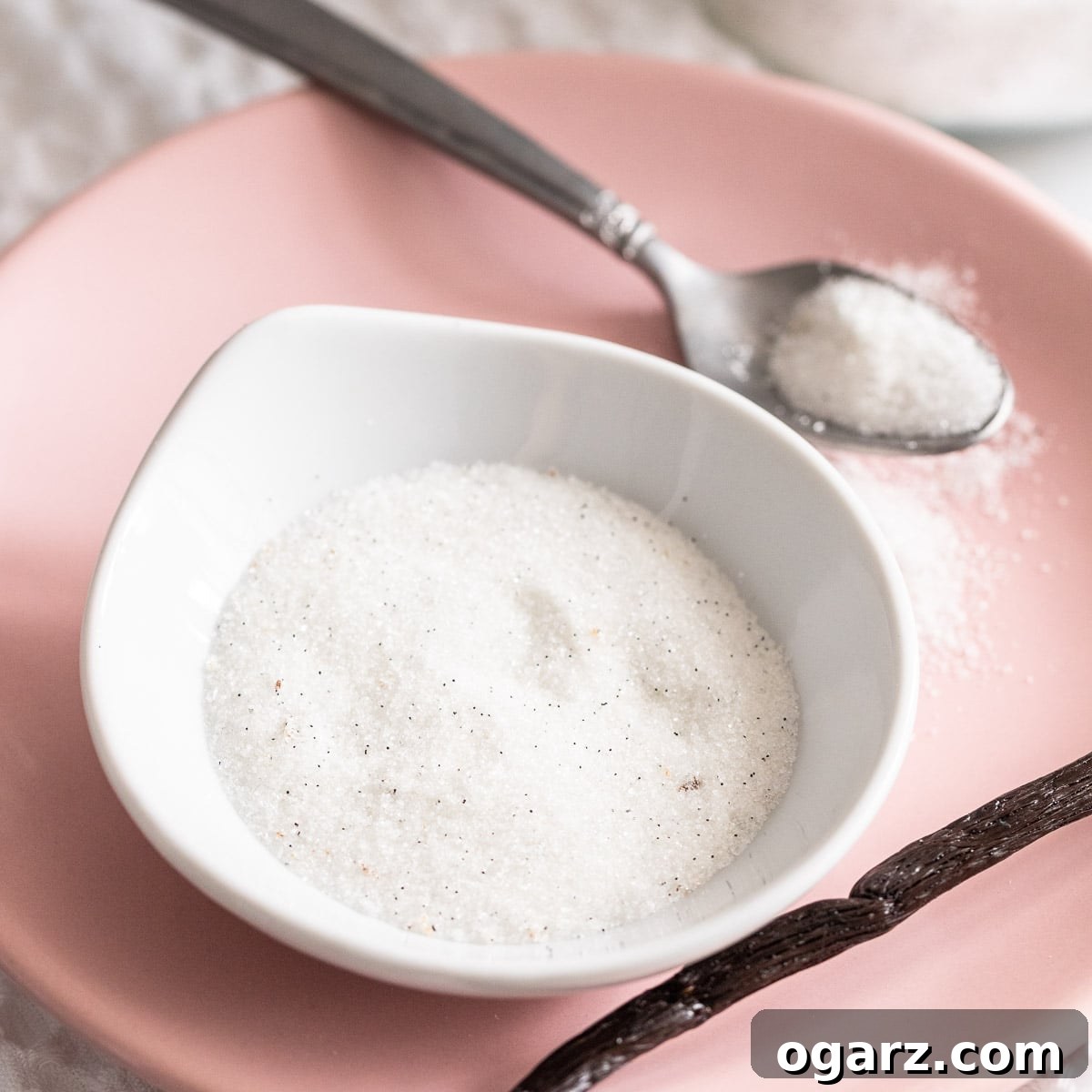
Homemade Vanilla Sugar: Your Essential Guide to Authentic German Baking & Exquisite DIY Gifts
Vanilla sugar, known as “Vanillezucker” in Germany, is more than just a pantry staple; it’s a culinary cornerstone in German and European baking traditions. Infusing everyday granulated sugar with the rich, aromatic essence of real vanilla beans transforms it into a versatile ingredient that elevates countless recipes. While often challenging to find true vanilla extract in Germany, vanilla sugar fills this void, becoming the secret weapon behind beloved desserts like German Apple Cake and delicate Linzer cookies. Beyond its culinary uses, this fragrant concoction is incredibly easy to make at home and serves as a thoughtful, delightful homemade Christmas gift or a charming present for any baking enthusiast.
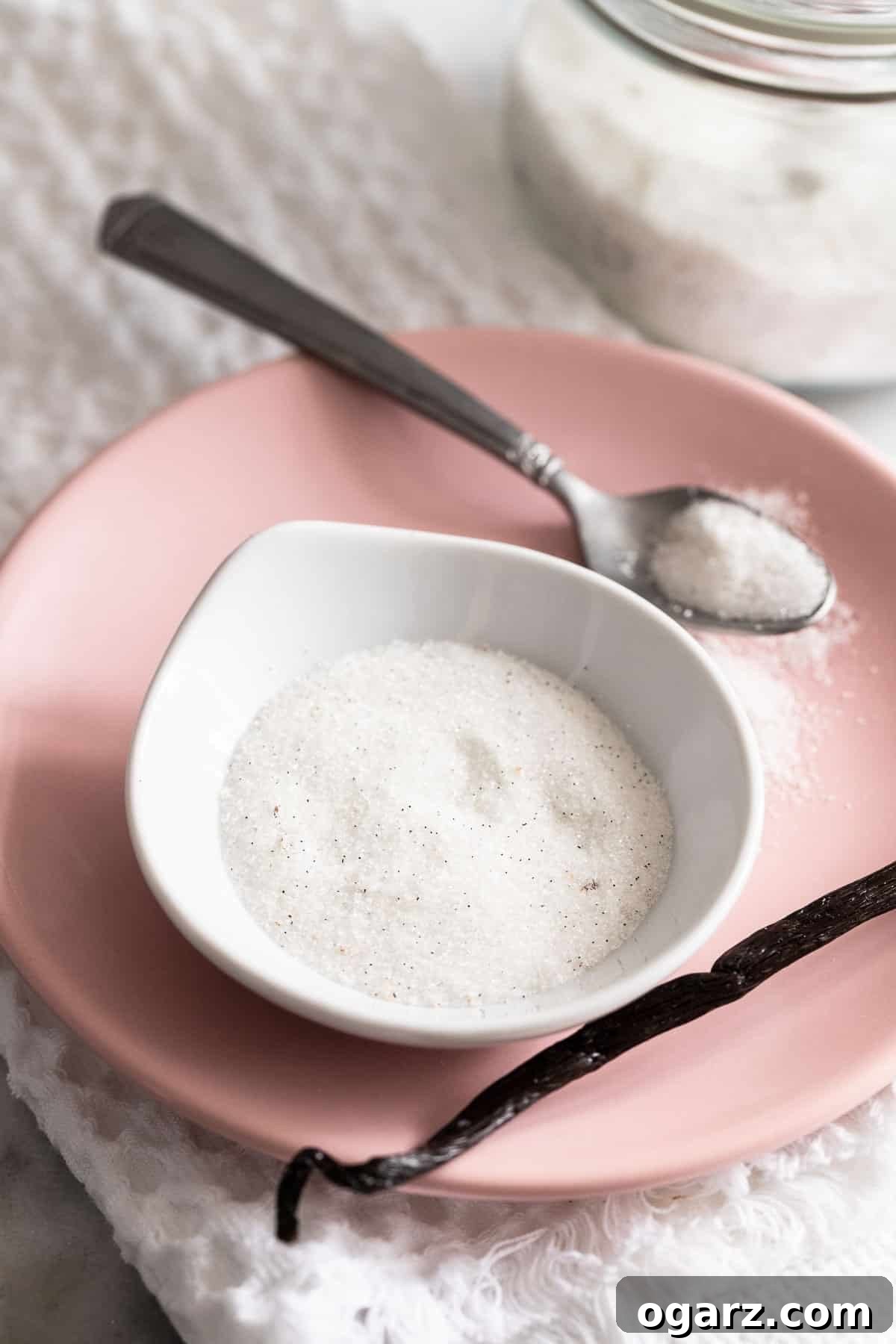
Imagine the warm, inviting aroma of vanilla permeating your kitchen as you prepare your favorite pastries or stir it into your morning coffee. Homemade vanilla sugar offers a depth of flavor and freshness that store-bought versions often lack. It’s a simple project that yields impressive results, providing you with a superior ingredient for all your sweet endeavors. Whether you’re a seasoned baker looking to authentic German recipes or simply seeking a unique gift idea, mastering the art of making vanilla sugar is a rewarding experience.
Why Make Your Own Vanilla Sugar? The Benefits of DIY Vanillezucker
While vanilla sugar packets are readily available in European grocery stores, crafting your own offers a multitude of advantages. Here’s why this simple recipe is a game-changer for any home cook or baker:
- Unbeatable Flavor and Aroma: Homemade vanilla sugar boasts a far more intense and authentic vanilla flavor compared to many commercial products, especially those that use artificial vanillin. You control the quality of your vanilla beans, leading to a truly superior product.
- Cost-Effective: Buying individual packets of vanilla sugar can add up quickly, especially if you bake often. Making a batch at home with a single high-quality vanilla bean and a bag of sugar is significantly more economical in the long run.
- Simple Ingredients, Effortless Process: You only need two basic ingredients: granulated sugar and a vanilla bean. The process involves minimal effort and very little hands-on time, making it accessible for even novice cooks.
- Versatile Culinary Addition: Use it as a direct substitute for vanilla extract, sprinkle it over fruits, add it to beverages, or incorporate it into any recipe that calls for sugar, instantly infusing it with a delicate vanilla note.
- The Perfect Personalized Gift: Fill charming glass jars with your homemade vanilla sugar, add a decorative label, and you have an exquisite, personal gift that any baker or foodie will cherish. It’s ideal for holidays, housewarmings, or as a thoughtful hostess gift.
- Authenticity for European Recipes: For those delving into traditional German, Austrian, or other European baking, vanilla sugar is often the specified ingredient, not vanilla extract. Making your own ensures you’re true to the original flavors and textures of these classic recipes.
Key Ingredients for Homemade Vanilla Sugar
Creating aromatic vanilla sugar requires just two essential components. The quality of these ingredients directly impacts the final flavor, so choosing wisely is key.
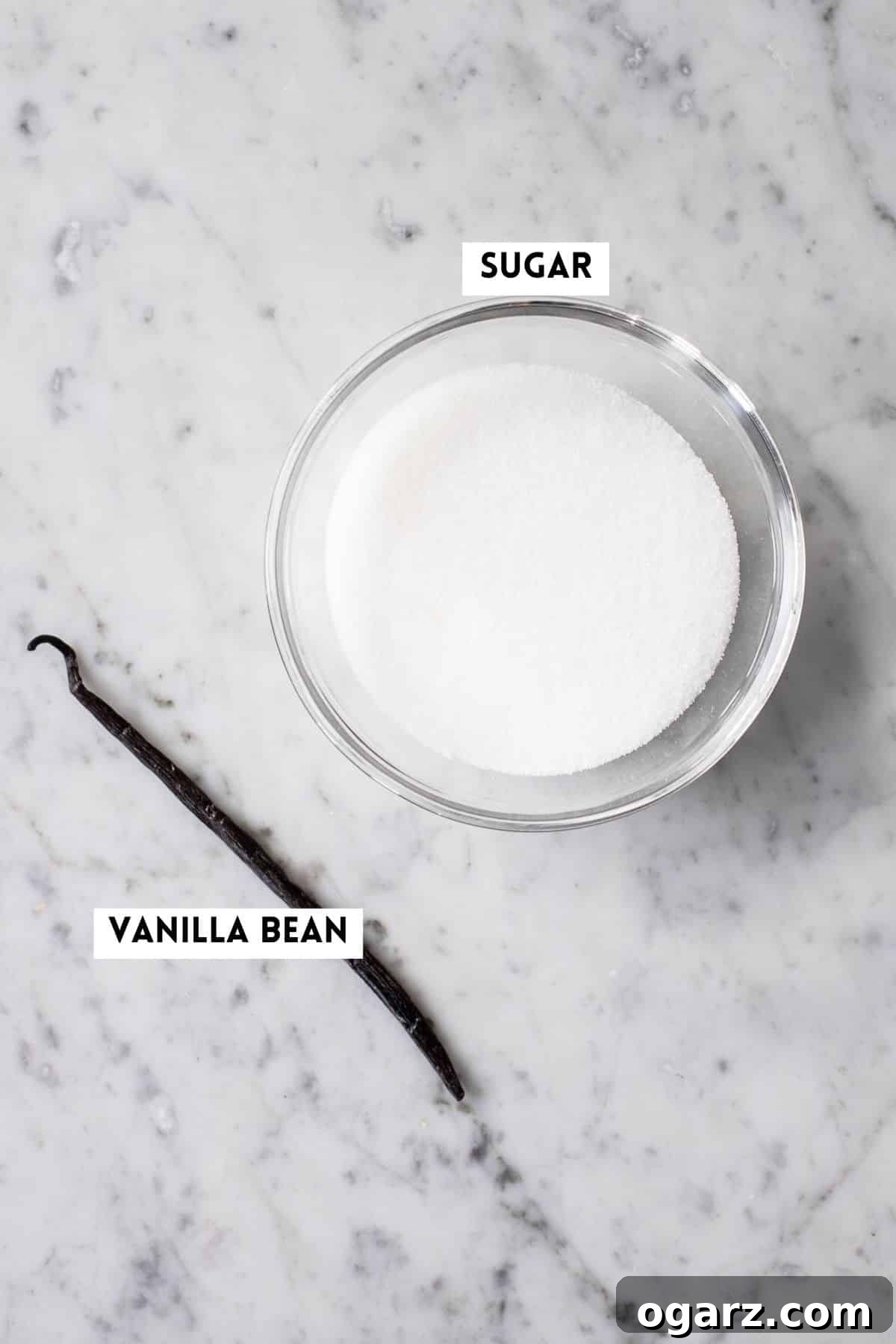
- Sugar: The foundation of your vanilla sugar.
- White Granulated Sugar: This is the ideal choice. Its neutral flavor allows the delicate notes of the vanilla bean to shine through without competition. Granulated sugar also has the right texture for easy sprinkling and absorption of vanilla oils.
- Avoid Brown Sugar: While tempting for its rich molasses notes, brown sugar tends to overpower the subtle vanilla flavor, masking its essence. Stick to white sugar for the most authentic and balanced result.
- Sugar Alternatives: For those monitoring sugar intake, certain sugar alternatives like monk fruit sugar can also be used. Ensure it has a fine, granulated texture similar to regular sugar for optimal infusion and consistency.
- Vanilla Bean: The heart of your vanilla sugar, responsible for its distinctive aroma and flavor.
- Freshness is Key: Always use a fresh, plump vanilla bean pod. A dry or brittle bean will have less flavor to impart.
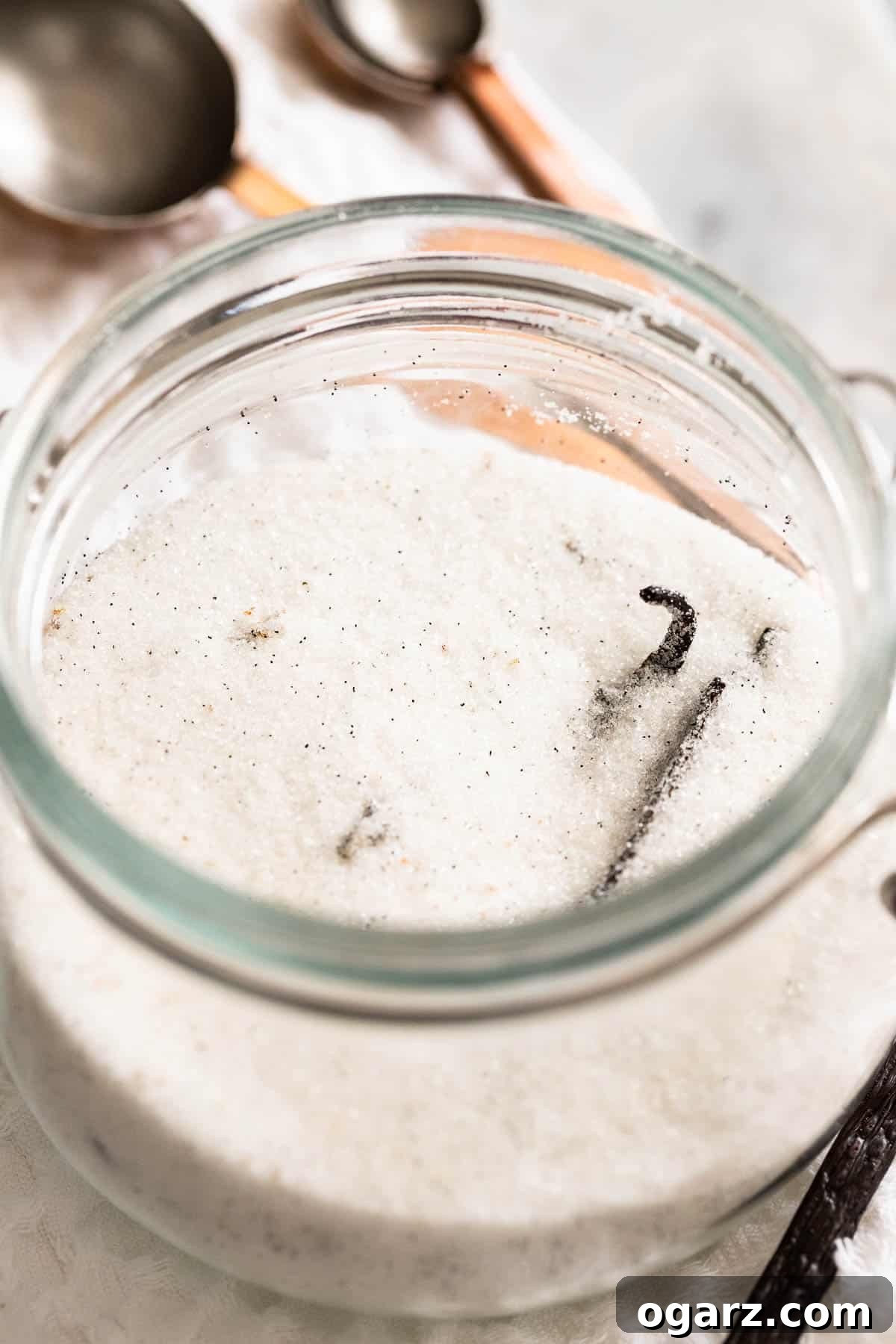
- Both Pod and Seeds: For the best flavor and visual appeal, you’ll use both the scraped-out seeds and the remaining vanilla bean pod. The tiny black flecks of vanilla seeds dispersed throughout the sugar are a hallmark of authentic vanilla sugar.
- Sourcing: Vanilla beans can be found at specialty grocery stores, spice shops, or online retailers. Look for beans that are pliable and have a rich, sweet aroma.
Understanding Vanilla Bean Varieties: Choose Your Flavor Profile
Not all vanilla beans are created equal. Different varieties offer distinct flavor profiles and moisture levels, impacting how they perform in your homemade vanilla sugar. Knowing the differences can help you select the best bean for your desired outcome.
- Grade A Vanilla Beans: Also known as ‘gourmet’ or ‘prime’ beans, these are plump, moist, and pliable. They have a higher moisture content (typically 25-35%), which means their flavor compounds transfer more quickly to the sugar. While the flavor might be slightly more diluted initially due to moisture, it infuses efficiently, making them an excellent choice when you want a quicker flavor development. They often appear oily and glossy.
- Grade B Vanilla Beans: Often referred to as ‘extraction grade,’ these beans are typically drier and thinner, with a lower moisture content (15-25%). They possess a highly concentrated vanilla flavor because the sugars and oils are less diluted. While it takes longer for their robust flavor to fully transfer, they are perfect for extended infusion periods, yielding a deeply aromatic vanilla sugar. These are commonly used for making vanilla extract but work wonderfully here too if you have patience.
- Madagascar Vanilla Beans (Bourbon Vanilla): This is the most popular and widely recognized vanilla variety, originating from Madagascar and other islands in the Indian Ocean. Bourbon vanilla beans are prized for their classic, rich, creamy, and full-bodied vanilla flavor, often with hints of caramel. They are versatile and provide the quintessential vanilla taste most people associate with baking.
- Tahitian Vanilla Beans: Hailing from Tahiti, these beans offer a unique and complex flavor profile. They are often described as fruity, floral, and slightly aniselike, with notes of cherry and plum. Tahitian vanilla provides a more delicate and nuanced vanilla note, which can be exquisite in certain desserts or when you desire a lighter, brighter vanilla presence in your sugar.
For most applications, Madagascar Bourbon vanilla beans (Grade A or B) will provide that classic, comforting vanilla flavor for your sugar. However, don’t hesitate to experiment with Tahitian beans if you’re looking for something a little different and more adventurous!
Step-by-Step Guide: Crafting Your Homemade Vanilla Sugar
Making vanilla sugar is incredibly straightforward, requiring minimal effort for maximum flavor payoff. Follow these simple steps to create your own aromatic pantry staple.
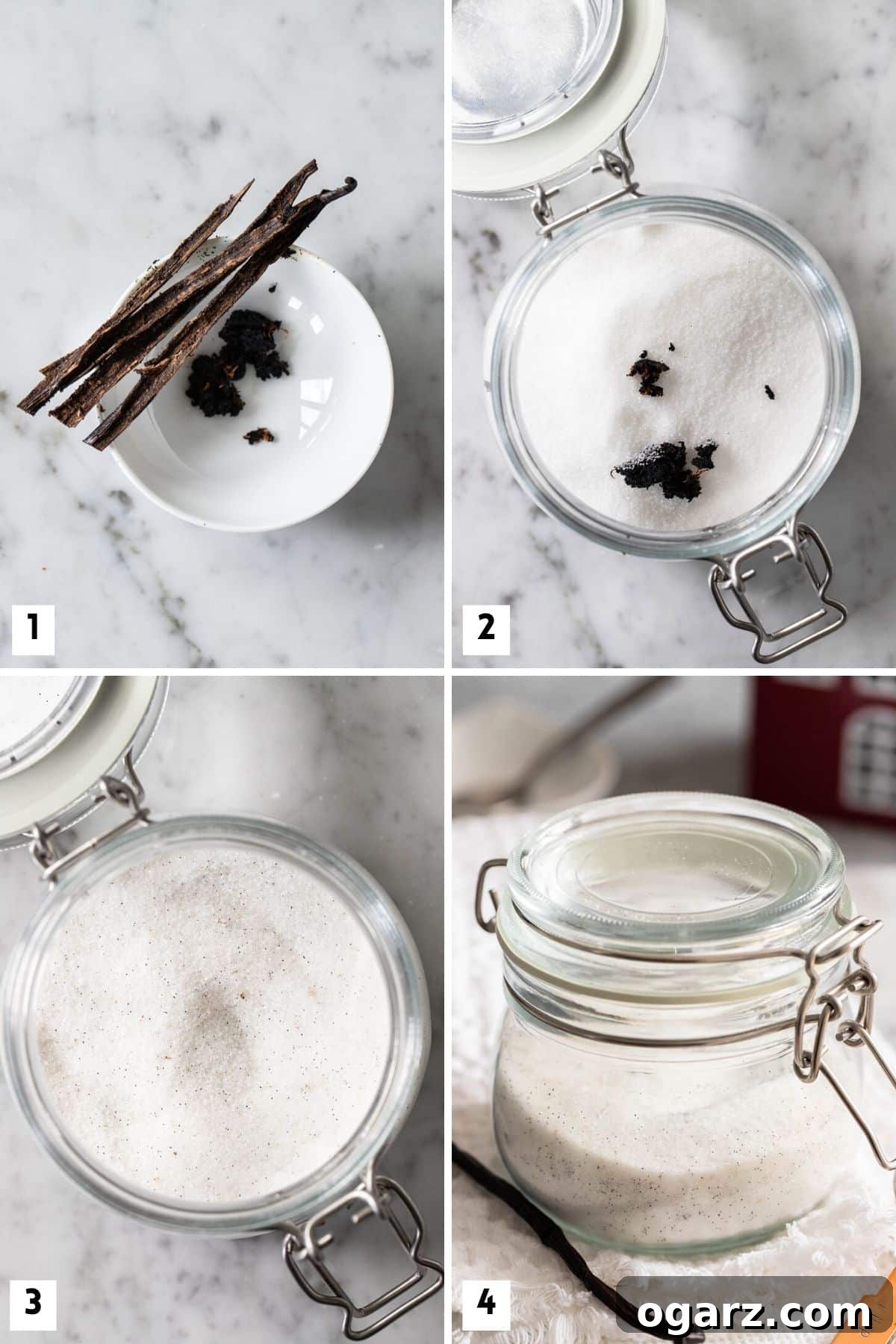
- Prepare the Vanilla Bean: Lay your fresh vanilla bean on a cutting board. Using a sharp paring knife, carefully slice the bean lengthwise down the middle, splitting it open but keeping the two halves connected at one end. Then, use the dull side of your knife or a spoon to scrape out all the tiny, dark vanilla seeds from the inside of both halves. These precious seeds are packed with flavor!
- Combine Seeds and Sugar: Choose a clean, dry airtight storage jar (a Mason jar or similar glass jar works perfectly). Pour your granulated sugar into the jar. Add the scraped vanilla seeds to the sugar. Close the lid tightly and give the jar a good, vigorous shake. This action helps to distribute the vanilla seeds evenly throughout the sugar, ensuring a consistent infusion.
- Add the Pod Halves: Take the two scraped-out vanilla bean halves (which still contain residual vanilla flavor) and slice them into smaller pieces, if desired, to fit comfortably in your jar. Bury these vanilla bean pieces deep within the sugar in the jar. They will continue to impart their rich essence over time.
- Infuse and Wait: Seal the jar tightly. Place the jar at room temperature in a dark place, such as your pantry or a cabinet. Let the sugar sit and infuse for at least one week. While you can technically use it sooner, waiting a full week allows the vanilla flavor to fully develop and permeate the sugar, yielding the best results. The longer it sits, the more intense the flavor will become.
Expert Tips for Perfect Homemade Vanilla Sugar
Achieving the best vanilla sugar is easy, but a few pro tips can elevate your results and ensure your sugar remains flavorful and fresh for longer.
- Patience is a Virtue: The vanilla sugar will deepen in flavor over time. While you can use it after a few days, allowing it to sit for at least 1-2 weeks will produce a much richer, more pronounced vanilla essence. The longer the infusion, the more potent and delicious your vanilla sugar will be.
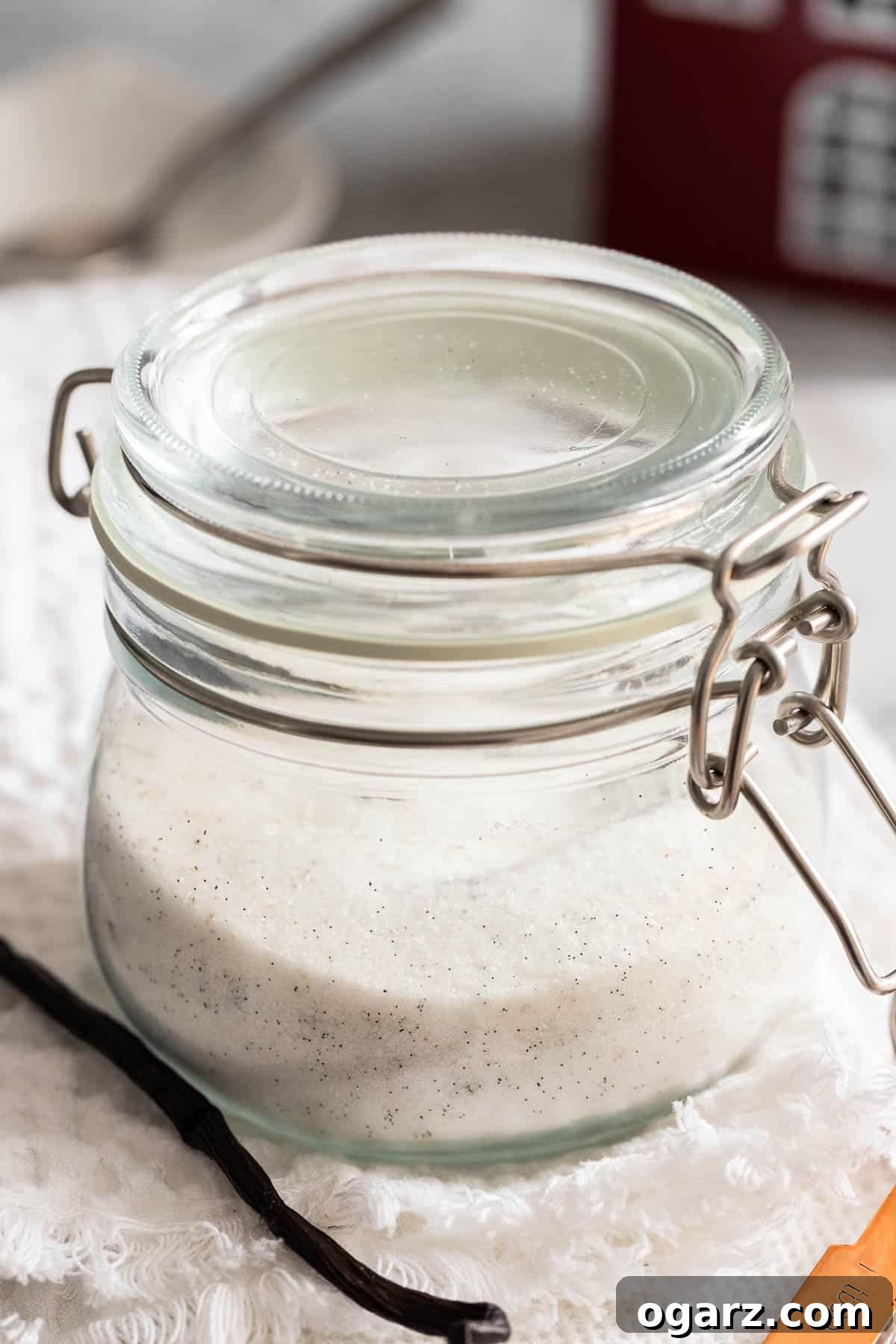
- Choose the Right Container: Any airtight container will work, but a glass jar is ideal. Glass doesn’t absorb odors, allowing the vanilla aroma to shine, and it’s easy to see the beautiful vanilla flecks. Mason jars are excellent, as are recycled glass jars with tight-fitting lids. Making the recipe directly in the storage container saves on cleanup!
- Leave the Bean In: There’s no need to remove the vanilla bean pod pieces from the sugar. They will continue to infuse the sugar with flavor for months, constantly enriching it. As you use the sugar, the bean pieces will simply remain at the bottom, doing their work.
- Optimal Storage Conditions: Store your vanilla sugar in a cool, dark place, away from direct sunlight and heat. This helps to preserve the delicate vanilla flavor and aroma. Properly stored, homemade vanilla sugar can keep its potency for at least one year, often longer.
- Prevent Clumping: Over time, the sugar might absorb some moisture from the vanilla bean and clump together. This is completely normal and doesn’t affect the flavor. Simply give the jar a good shake, or stir the sugar with a spoon to break up any clumps.
- Reuse and Recycle Your Vanilla Beans: Don’t discard the vanilla bean pieces after they’ve infused your sugar! Once they appear dry and have imparted most of their initial flavor, you can dry them out completely. If you have a spice grinder or a powerful blender, you can grind the dried vanilla bean into a fine powder and add it back to the sugar for an extra boost of flavor and aroma. The entire vanilla bean is edible.
- Scale the Recipe Easily: This recipe is incredibly adaptable. You can easily double or triple the quantities to make larger batches. Consider making smaller individual jars, especially if you plan to give them as gifts, rather than one very large container.
- Experiment with Sugar Alternatives: For those seeking lower-sugar options, granulated sugar alternatives like monk fruit sugar or erythritol can be used. Ensure the alternative has a similar crystal size to granulated sugar for proper infusion.
Frequently Asked Questions About Vanilla Sugar
Can you make vanilla sugar with vanilla extract or vanilla paste?
No, it is not recommended to use vanilla extract or paste for making vanilla sugar. Vanilla extract is liquid, and adding it to sugar would introduce too much moisture, causing the sugar to clump and potentially dissolve. It would also likely turn the sugar brown. Vanilla sugar is made by infusing sugar with the natural oils and aroma directly from a dried vanilla bean, not by mixing it with a liquid extract.
Can you use vanilla extract instead of vanilla sugar in recipes?
Yes, in many recipes, you can substitute vanilla extract for vanilla sugar, but with some considerations. As a general guideline, use 1 teaspoon of vanilla extract for every 1 to 1 1/2 teaspoons of vanilla sugar specified in a recipe. However, remember that vanilla extract doesn’t add sweetness, while vanilla sugar does. If you’re replacing a significant amount of vanilla sugar, you might need to adjust the overall sugar content in your recipe. Also, if a recipe relies on vanilla sugar for both flavor and texture (like in a dry rub), extract may not be suitable without other modifications.
Can I make vanilla sugar in a food processor?
Yes, using a food processor can speed up the infusion process. You can pulse the granulated sugar and the whole vanilla bean (or just the seeds and scraped pod) a few times. This method finely grinds the vanilla bean, distributing its flavor more quickly and intensely throughout the sugar. It’s perfect if you want to use your vanilla sugar right away. However, be aware that a food processor can make the sugar finer, which might alter its texture, making it less ideal for sprinkling if you prefer a coarser sugar.
What is vanilla sugar? How is Vanillezucker different from Vanillin Zucker?
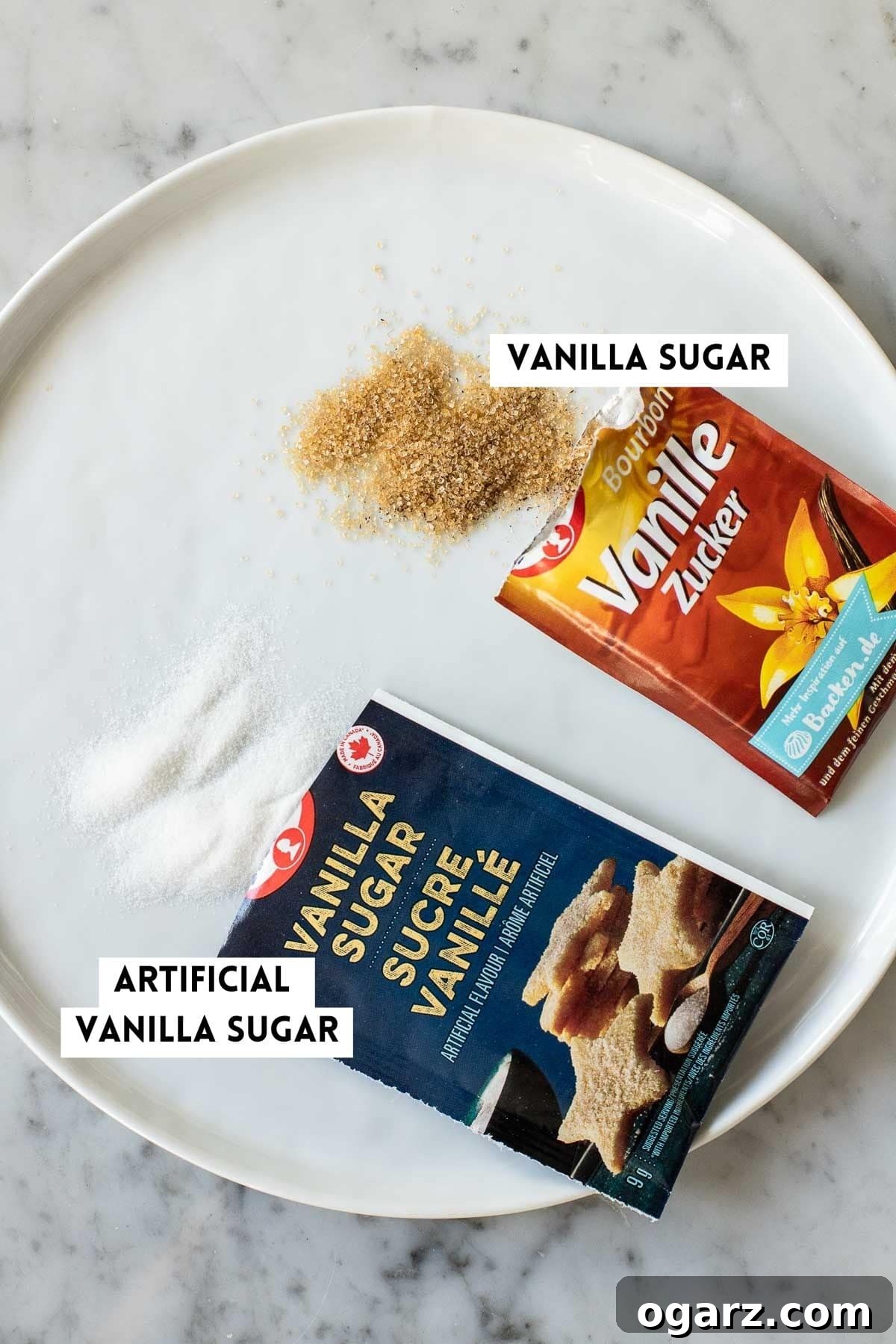
Vanilla sugar (Vanillezucker) is white granulated sugar that has been naturally flavored with real vanilla beans. It’s a common ingredient in European baking, providing a sweet, aromatic vanilla note. It often contains tiny black flecks from the vanilla bean. It’s typically sold in small packets in Germany and specialty food stores in North America. It’s important to distinguish it from Vanillin Zucker (vanillin sugar), which is a cheaper version made with artificial vanillin flavoring rather than natural vanilla beans. Always look for “Vanillezucker” or “Vanilla Sugar” explicitly stating “with real vanilla” to ensure you’re getting the authentic product.
Substituting Vanilla Extract with Vanilla Sugar
Homemade vanilla-flavored sugar is a fantastic ingredient to have on hand, offering a more nuanced and authentic vanilla taste than most extracts. It can often be used in recipes that call for vanilla extract or even fresh vanilla beans, adding both sweetness and complex aroma.
When replacing vanilla extract with homemade vanilla sugar, a good general ratio to remember is: 1 teaspoon of vanilla extract can be replaced with 1 to 1 1/2 teaspoons of homemade vanilla sugar.
It’s important to consider two factors when making this substitution:
- Sweetness Adjustment: Since vanilla sugar adds sweetness, you might need to slightly reduce the amount of regular sugar elsewhere in your recipe, especially if you’re substituting a larger quantity of vanilla sugar. Taste your batter or dough if possible, or err on the side of caution.
- Liquid Content: Vanilla extract is a liquid. If a recipe is very sensitive to liquid ratios (like some delicate French pastries), you might need to add an extra teaspoon of liquid (like milk, water, or a very small amount of another extract) for every teaspoon of vanilla extract you’ve replaced with vanilla sugar. However, for most standard baking recipes, this adjustment isn’t strictly necessary.
For best results, always consider the specific recipe and make small adjustments as you become more familiar with the impact of homemade vanilla sugar on your baking.
Creative Uses for Your Homemade Vanilla Sugar
Once you’ve got a jar of this fragrant homemade vanilla sugar, you’ll find countless ways to incorporate its delightful flavor into your daily life and special creations. It’s incredibly versatile and goes beyond just baking.
- Baking & Desserts: This is its primary domain. Use vanilla sugar in any sweet recipe that calls for vanilla extract or fresh vanilla beans. It’s perfect for:
- Cakes and Cupcakes: Add it to the batter for a richer vanilla flavor.
- Cookies: Especially wonderful in sugar cookies, shortbread, and Linzer cookies.
- Pies and Tarts: Elevate fruit fillings or custards.
- Pancakes & Waffles: Mix into the batter or sprinkle on top after cooking.
- Puddings & Custards: Infuse creamy desserts with a superior vanilla taste.
- Whipped Cream: A spoonful in homemade whipped cream (like this recipe) makes an extraordinary difference.
- Sweetening Beverages: Infuse your drinks with a hint of vanilla warmth.
- Coffee & Tea: Stir a teaspoon into your morning brew or afternoon tea.
- Hot Chocolate: Enhance the richness of hot cocoa.
- Smoothies & Milkshakes: Add a sweet vanilla note to blended drinks.
- Breakfast & Brunch: A simple sprinkle can transform everyday meals.
- Oatmeal & Cereal: A lovely topping for hot or cold cereals.
- Yogurt & Fruit: Sweeten plain yogurt or fresh berries.
- French Toast: Sprinkle over French toast or add to the egg dip.
- Dutch Baby Pancakes: My Dutch baby pancake recipe is even more delicious with a generous dusting on top.
- Non-Food Uses (Gifts!): Get creative with its fragrant properties.
- Homemade Sugar Scrubs: Combine vanilla sugar with a carrier oil (like coconut or almond oil) and a few drops of essential oil for a luxurious, exfoliating body scrub. It makes a fantastic, fragrant gift!
More German Recipes to Try
Desserts
Vanilla Sauce
Holidays
Lebkuchengewürz
German Recipes
The BEST German Christmas Cookies
Cookies, Brownies & Bars
Vanillekipferl (German Vanilla Crescent Cookies)
Print Recipe
Vanilla Sugar
By: Julia Foerster
Vanilla sugar is so easy to make at home and used in many German baking recipes. It also makes a delicious homemade Christmas gift!
Prep Time: 5 minutes
Cook Time: 0 minutes
Total Time: 5 minutes
Servings: 1 cup
Ingredients
- 1 cup granulated sugar
- 1 vanilla bean
Instructions
- Fill the sugar into a glass jar with an airtight lid.
- Cut the vanilla bean in half lengthwise and scrape out the vanilla seeds with a knife. Add seeds to the sugar, close the jar, and give it a good shake to distribute the seeds.
- Cut the scraped-out vanilla bean halves into smaller pieces and add them to the jar, burying them in the sugar.
- Let the jar sit at room temperature for at least 1 week for the flavors to fully infuse. It is then ready to be used.
Notes
- The vanilla sugar will get more flavorful the longer it sits. You can use it right away, but waiting at least 1 week is recommended for the best flavor.
- You can use any airtight glass container like a Mason jar. Make the recipe right in the container, no need for an extra bowl.
- Leave the vanilla bean pieces in the sugar; they will continue to infuse flavor.
- The sugar keeps for at least 1 year if stored in a cool, dark place.
- If the sugar clumps over time, simply shake the jar or stir with a spoon.
- If you have a spice grinder, you can grind the dried vanilla bean (after it has infused for a while) and add it back to the sugar for an extra flavor boost. The whole vanilla bean is edible.
- Easily double or triple this recipe. Consider making individual portions in smaller jars for gifting.
- You can also use a sugar alternative like monk fruit sugar in this recipe.
Nutrition (per 1 cup, approximately)
Calories: 782kcal | Carbohydrates: 200g | Fat: 1g | Sodium: 2mg | Potassium: 4mg | Sugar: 200g | Calcium: 2mg | Iron: 0.1mg