
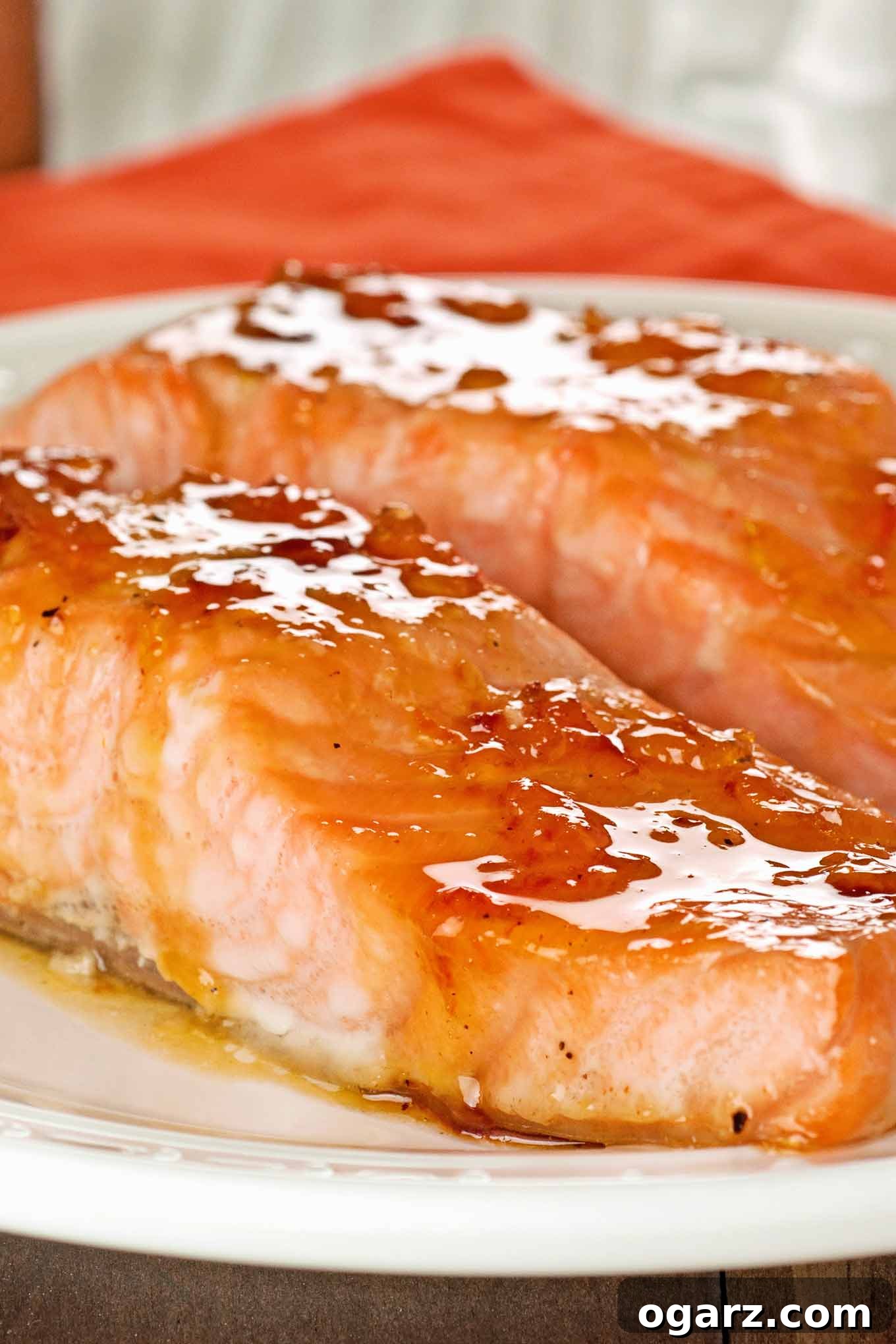
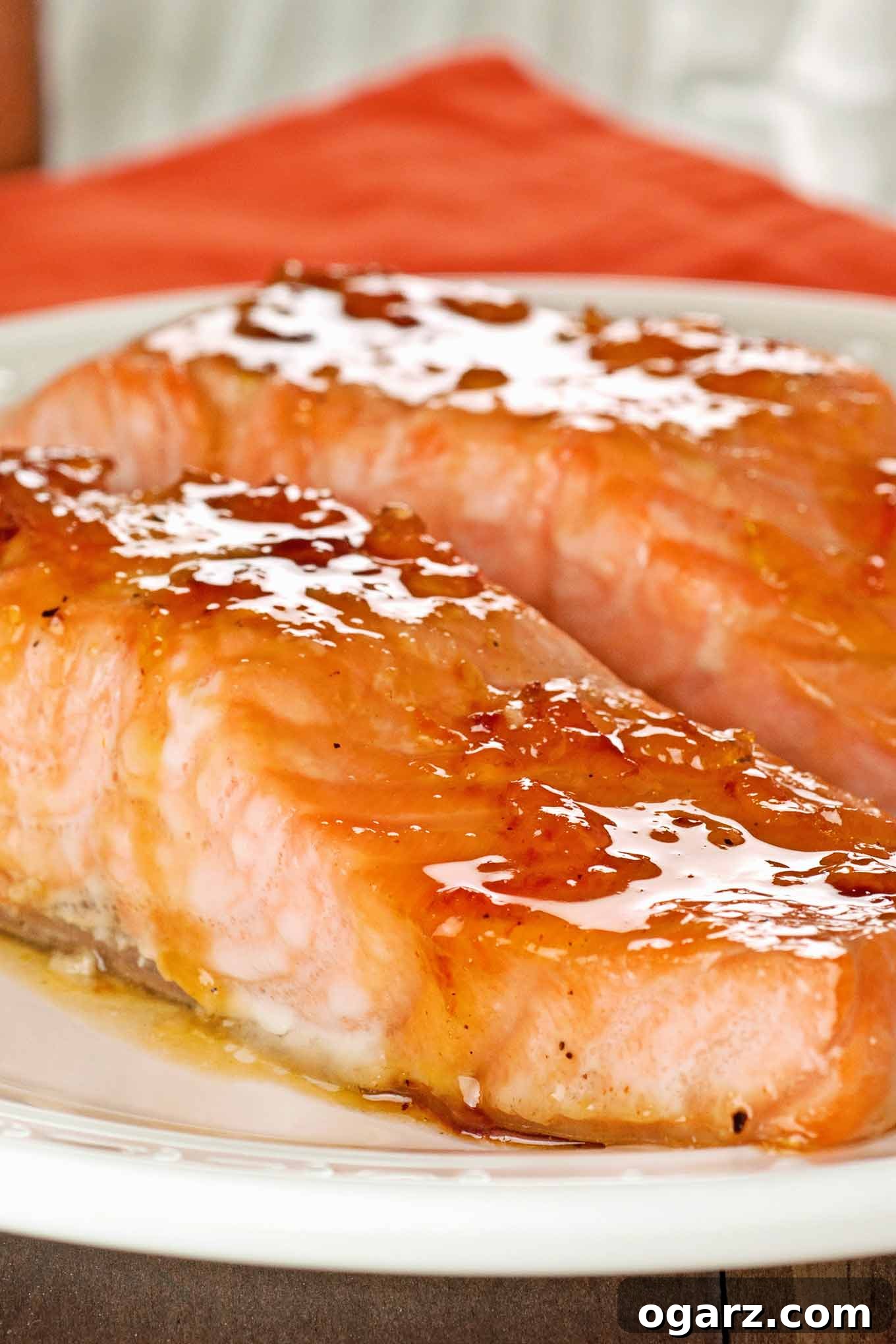
Effortless Elegance: Oven-Roasted Orange and Bourbon Glazed Salmon
In the quest for a meal that effortlessly combines gourmet taste with weeknight convenience, salmon consistently emerges as a top contender. Its rich flavor, flaky texture, and robust structure make it an ideal candidate for various cooking methods, especially high-heat oven roasting. This particular recipe takes a beloved classic and elevates it further with an easy-to-prepare, yet incredibly sophisticated, orange marmalade and bourbon glaze. Perfect for a quick family dinner or an impressive dish for guests, this oven-roasted salmon is a testament to how simple ingredients can create extraordinary flavors.
This recipe is designed to be straightforward, requiring minimal fuss but delivering maximum impact. The sweet and tangy notes of orange marmalade are beautifully complemented by the subtle smokiness and depth of bourbon, with a hint of cayenne pepper adding an unexpected but welcome warmth. Prepare to transform your dinner table with a dish that’s both healthy and utterly delicious.
Key Ingredients and Smart Substitutions for Your Perfect Salmon
Crafting the perfect orange and bourbon glazed salmon begins with selecting quality ingredients and understanding how each contributes to the final dish. Here’s a deeper dive into what you’ll need and how you can adapt the recipe to your preferences.
- Salmon Fillets: The star of our dish! While Atlantic salmon is featured here and widely available, feel free to experiment with other varieties like sockeye, coho, or king salmon. Each offers a slightly different fat content and flavor profile. Sockeye, for instance, is leaner and has a more intense salmon flavor, while king salmon is richer. Regardless of your choice, aim for skin-on fillets, ideally weighing 5 to 6 ounces each and about an inch thick. The skin helps protect the fish from overcooking and keeps it moist, and it can be easily removed after roasting. For best results, always choose fresh, high-quality salmon from a reputable source. If using frozen salmon, ensure it’s fully thawed in the refrigerator overnight before cooking.
- Orange Marmalade: This is the foundation of our vibrant glaze. Opt for a good-quality orange marmalade, preferably one that lists sugar as a primary ingredient rather than high-fructose corn syrup, for a cleaner, more authentic citrus flavor. Brands like Smucker’s Natural or Crosse and Blackwell are excellent choices. The slight bitterness from the orange peel in marmalade is crucial for balancing the sweetness and adding complexity. If orange isn’t your favorite, apricot preserves offer a wonderful alternative, providing a similar sweetness with a milder fruit profile. Peach or fig preserves could also work for a different twist.
- Bourbon: The bourbon lends a subtle, smoky, and caramel-like depth to the glaze that truly sets this recipe apart. Any decent brand of bourbon or even a good whiskey will work beautifully. The alcohol content cooks off during the glaze preparation, leaving behind only its rich flavor. For a non-alcoholic version, you can substitute the bourbon with an equal mix of orange juice and a splash of lemon juice. A dash of apple cider vinegar can also be added for a slight tang to mimic some of bourbon’s complexity.
- Cayenne Pepper: A pinch of cayenne is our secret weapon for adding a gentle warmth and a barely-there kick that brilliantly cuts through the sweetness of the marmalade and balances the rich salmon. It’s entirely optional, so if you prefer a no-heat glaze, feel free to omit it. For those who enjoy a bit more spice, a larger pinch or even a small amount of red pepper flakes could be used. Smoked paprika is another excellent alternative, adding color and a different kind of warmth without significant heat.
- Brown Sugar: This adds an extra layer of sweetness and a hint of molasses flavor to the glaze, helping it caramelize beautifully on the salmon. Both light or dark brown sugar will work.
- Butter: Incorporated at the end of the glaze preparation, butter adds a luscious sheen and richness, making the glaze incredibly smooth and flavorful.
- Salt and Freshly Ground Black Pepper: Essential seasonings that enhance the natural flavors of the salmon. Always season generously before applying the glaze.
How to Master Orange and Bourbon Glazed Salmon: A Step-by-Step Guide
Creating this flavorful salmon dish is simpler than you might imagine. Follow these clear steps for a perfectly cooked, beautifully glazed result.
- Prepare Your Workspace: Begin by preheating your oven to 425°F (220°C). This high temperature is key to achieving that perfectly roasted exterior and moist interior. While the oven heats, line a rimmed baking sheet with aluminum foil. This makes cleanup incredibly easy and prevents the glaze from sticking. Lightly coat the foil with a nonstick cooking spray to ensure the salmon lifts off effortlessly.
- Season the Salmon: Arrange your salmon fillets, skin side down, on the prepared baking sheet. Ensure there’s a little space between each fillet for even cooking. Generously season both sides of the salmon with salt and freshly ground black pepper. This foundational seasoning is crucial before the glaze is applied, ensuring the fish itself is well-flavored.
- Craft the Glaze: In a small saucepan, combine the orange marmalade, bourbon, light brown sugar, and a pinch of cayenne pepper (if using). Place the saucepan over medium-high heat and bring the mixture to a gentle boil, stirring occasionally to dissolve the sugar.
- Thicken the Glaze: Once boiling, reduce the heat to medium-low. Continue to cook, stirring frequently, for about 5 to 7 minutes. The goal is for the glaze to thicken to a consistency similar to its original marmalade base. It should coat the back of a spoon. Be patient and don’t rush this step, as proper thickening will create that wonderful caramelized crust on the salmon.
- Finish the Glaze: Remove the saucepan from the heat. Stir in the butter until it has completely melted and is fully incorporated into the glaze. This adds a beautiful sheen and enriches the flavor. Allow the glaze to cool for at least 5 minutes; it will continue to thicken slightly as it cools, making it easier to apply to the fish.
- Glaze and Roast: Carefully divide the prepared glaze evenly over the top of each salmon fillet. Use a spoon or a pastry brush to ensure each piece is well coated. Transfer the baking sheet to the preheated oven. Roast the salmon for approximately 6 to 8 minutes, or until the glaze is lightly caramelized and bubbling, and the fish is cooked to medium doneness. The exact cooking time will depend on the thickness of your salmon fillets and your oven’s calibration. For perfect doneness, refer to the roasting tips below.
- Serve Immediately: Once cooked, remove the salmon from the oven. Let it rest for a minute or two on the baking sheet to allow the juices to redistribute. Then, transfer the fillets to individual serving plates and serve hot.
Expert Tips for Perfectly Roasted Salmon
Roasting salmon is a fantastic way to achieve a moist, flavorful fillet with a slightly crisp exterior. Here are some essential tips to ensure success every time:
- Avoid Overcooking the Salmon: This is arguably the most critical tip for any salmon recipe. Overcooked salmon becomes dry and tough. For the best results, we highly recommend cooking salmon to medium doneness. This means the center will still be slightly translucent and flaky. The easiest and most accurate way to check for doneness is with an instant-read thermometer. Insert it into the thickest part of the fillet:
- Wild-caught salmon is typically done when it reaches an internal temperature of 120°F (49°C).
- Farmed salmon, with its higher fat content, benefits from cooking a little longer, reaching an internal temperature of 125°F (52°C).
Remember that fish will continue to cook slightly after being removed from the oven (carryover cooking), so it’s better to pull it out a degree or two early.
- Cook with the Skin On: Even if you don’t plan to eat the skin, cooking salmon with it on offers significant benefits. The skin acts as a protective barrier, preventing the delicate flesh from drying out and sticking to the pan. It also helps the fillet hold its shape during cooking.
- Remove the Skin Before Serving (Optional): If you prefer to serve your salmon without the skin, it’s incredibly easy to remove after cooking. Simply slip a thin spatula or knife between the cooked skin and the flesh of each fillet before transferring it to individual serving plates. The skin should peel away cleanly.
- Let It Rest: Just like with other proteins, allowing the salmon to rest for 2-5 minutes after roasting helps the juices redistribute throughout the fillet, resulting in a more tender and moist piece of fish.
- Pat Dry for Better Glazing: Before seasoning, gently pat the salmon fillets dry with paper towels. This helps the seasoning and glaze adhere better and promotes a more even sear or caramelization.
- Even Thickness for Even Cooking: Try to choose salmon fillets of roughly similar thickness. If you have fillets of varying sizes, you might need to remove the thinner ones from the oven slightly earlier to prevent them from overcooking.
Make It A Meal: Thoughtful Pairings for Your Salmon
This orange and bourbon glazed salmon is a fantastic choice for a weeknight when you desire a sophisticated meal without spending hours in the kitchen. Pairing it with equally easy yet flavorful side dishes will complete your culinary experience.
- Quick Pearl Couscous: Also known as Israeli couscous, pearl couscous is an excellent accompaniment due to its light texture and incredibly fast cooking time. It’s heartier than traditional couscous and readily absorbs flavors. To save on dishes, you can often prepare it in the same small saucepan you used for the glaze (after cleaning, of course!). Simply follow the package directions, typically involving toasting the couscous lightly in a bit of olive oil or butter, then simmering in water or broth. Finish by tossing it with a touch of butter and a sprinkle of your favorite all-purpose seasoning blend for extra depth. Transfer to a serving dish, cover to keep warm, or give it a quick reheat in the microwave just before serving.
- Vibrant Roasted Green Beans: Another simple yet elegant side are roasted green beans. Fresh green beans require minimal prep and roast beautifully alongside your salmon. Toss them with a drizzle of olive oil, a squeeze of fresh lemon juice, salt, and pepper. Spread them in a single layer on the same foil-lined baking sheet you’ll use for the salmon. Roast them at 400°F (200°C) until they are tender-crisp and slightly charred, usually about 15 to 20 minutes. If cooking them simultaneously with the salmon (which typically roasts at 425°F), adjust your roasting time accordingly or roast the beans first and keep them warm while the salmon cooks. This method minimizes cleanup and maximizes flavor.
- Asparagus or Broccoli: Similar to green beans, fresh asparagus spears or broccoli florets tossed with olive oil, salt, and pepper can be roasted until tender-crisp. They offer a lovely green contrast and healthy nutrients.
- Simple Rice Pilaf or Quinoa: If you prefer a grain-based side that’s not couscous, a fluffy rice pilaf or protein-rich quinoa can be prepared simultaneously on the stovetop and complements the salmon beautifully.
- Fresh Green Salad: A light, refreshing green salad with a citrusy vinaigrette would provide a wonderful counterpoint to the rich glaze.
- Garnishes: A sprinkle of fresh chopped parsley or cilantro, or a few lemon wedges, can add a pop of color and freshness when serving.
The Healthy Benefits of Salmon
Beyond its incredible taste and ease of preparation, salmon is a nutritional powerhouse, making this glazed salmon dish a fantastic choice for a healthy diet. It’s renowned for being an excellent source of omega-3 fatty acids, particularly EPA and DHA, which are crucial for heart health, brain function, and reducing inflammation. Regular consumption of omega-3s has been linked to a lower risk of heart disease, improved cognitive function, and better joint health.
Salmon is also an outstanding source of high-quality protein, essential for muscle repair, growth, and overall body function. A single serving can provide a significant portion of your daily protein needs. Additionally, it’s packed with essential vitamins and minerals, including Vitamin D, which is vital for bone health and immune function; B vitamins (B12, B6, niacin), which play key roles in energy production and nerve function; and selenium, an antioxidant mineral that supports thyroid health and immune response.
Incorporating salmon into your diet, especially through delicious and easy recipes like this Orange and Bourbon Glazed Salmon, is a flavorful way to boost your nutrient intake and support overall wellness.
Frequently Asked Questions About Orange and Bourbon Glazed Salmon
Here are answers to some common questions that might arise when preparing this delicious salmon recipe:
- Can I use frozen salmon fillets? Yes, absolutely. If using frozen salmon, ensure it is completely thawed before cooking. The best way to thaw salmon is slowly in the refrigerator overnight. Avoid thawing at room temperature, which can affect texture and safety. Once thawed, pat the fillets dry as instructed.
- Can I prepare the glaze ahead of time? Yes, the orange and bourbon glaze can be made up to 2-3 days in advance and stored in an airtight container in the refrigerator. When you’re ready to use it, gently reheat it in a small saucepan over low heat until it’s pourable again. You might need to add a tiny splash of water or bourbon if it has thickened too much.
- How long do leftovers last? Cooked salmon can be stored in an airtight container in the refrigerator for up to 2-3 days. Reheat gently in the microwave or a low oven to prevent it from drying out. Leftover glazed salmon is also delicious cold on salads!
- Can I grill or pan-sear the salmon instead of roasting? While this recipe is optimized for oven roasting, you can certainly adapt it for grilling or pan-searing. For grilling, preheat your grill to medium-high heat, lightly oil the grates, and cook skin-side down first. Brush with glaze during the last few minutes of cooking. For pan-searing, heat a skillet with a little oil over medium-high heat, cook skin-side down until crispy, then flip and finish cooking, brushing with glaze in the final minutes. Be mindful of potential flare-ups from the sugary glaze.
- Is the recipe spicy? The recipe calls for just a “pinch of cayenne,” which adds a very subtle warmth rather than intense spice. Most palates will find it adds a nice balance without being hot. If you are very sensitive to spice, you can omit it entirely. If you like more heat, you can add a bit more.
- What if my glaze doesn’t thicken? Ensure you’ve brought the glaze to a boil and then reduced it to a simmer, allowing it to cook for the full 5-7 minutes, stirring frequently. If it’s still too thin, continue to simmer it gently for a few more minutes until it coats the back of a spoon. Be careful not to scorch it.

Orange and Bourbon Glazed Salmon
A quick-to-fix glaze made with orange marmalade, bourbon, and a pinch of cayenne is an easy way to elevate the flavor of oven-roasted salmon to gourmet levels.
Rate Recipe
Print Recipe
Ingredients
- 4 salmon fillets, skin on, 5 to 6 ounces each
- Salt and freshly ground black pepper
- 1/4 cup orange marmalade
- 3 tablespoons bourbon
- 1 tablespoon light brown sugar
- Pinch cayenne
- 1/2 tablespoon butter
Instructions
-
Preheat the oven to 425°F (220°C), line a rimmed baking sheet with aluminum foil, and coat with nonstick spray.
-
Arrange the salmon fillets, skin side down on the prepared baking sheet, and season generously with salt and freshly ground black pepper.
-
Combine the orange marmalade, bourbon, brown sugar, and cayenne in a small saucepan and bring to a boil over medium-high heat.
-
Reduce the heat to medium-low and cook, stirring frequently, until the glaze has thickened to the original consistency of the marmalade, typically 5 to 7 minutes.
-
Remove from the heat, stir in the butter until melted and fully incorporated. Let the glaze cool for at least 5 minutes.
-
Divide the glaze evenly over each of the salmon fillets and roast in the preheated oven until the glaze is lightly caramelized and the fish is cooked to medium doneness, about 6 to 8 minutes depending on the thickness of your salmon (see notes for temperature guidelines).
-
Remove from the oven, allow to rest for a couple of minutes, and serve hot.
Notes
- Don’t overcook the salmon: For best results, aim for medium doneness. Use an instant-read thermometer. Wild-caught salmon is done at 120°F (49°C), while farmed salmon reaches doneness around 125°F (52°C) in the thickest part of the fillet.
- Remove the skin before serving: If preferred, simply slip a thin spatula between the cooked skin and the flesh of each fillet before transferring to individual serving plates. The skin should come off easily.
- Resting the salmon: Allow the cooked salmon to rest for 2-5 minutes after removing it from the oven to ensure maximum moisture and tenderness.
Nutrition (Approximate)
Total Fat: 11g,
Cholesterol: 90mg,
Sodium: 92mg,
Carbohydrates: 16g,
Fiber: 0.1g,
Sugar: 15g,
Protein: 31g
Nutrition information is automatically calculated, so should only be used as an approximation.
Like this recipe? We’d love to hear from you! Rate and comment below to share your experience with this delightful Orange and Bourbon Glazed Salmon.