
Mastering Succulent Braised Beef Brisket: A Red Wine & Orange Infusion
There’s something uniquely satisfying about transforming a seemingly tough cut of meat into a fork-tender, melt-in-your-mouth masterpiece. Beef brisket, known for its robust flavor and fibrous texture, is a prime candidate for this culinary alchemy. While it might intimidate some home cooks, the secret lies in a time-honored technique: braising. This method, involving slow cooking in a flavorful liquid, not only tenderizes the meat but also infuses it with incredible depth and aroma, creating an unforgettable dining experience.
This particular recipe elevates traditional braised brisket with a vibrant and aromatic twist. We harness the robust notes of red wine, the bright zest and juice of fresh oranges, and the earthy, fragrant essence of rosemary and thyme. The result is a main dish that balances richness with refreshing citrus and herb notes, making it perfect for impressing guests or enjoying a luxurious family meal. The beauty of oven-braising is its simplicity – once the initial preparation is done, the oven does most of the work, leaving you free to focus on other aspects of your gathering or simply relax as the tantalizing aromas fill your kitchen. Prepare to savor a truly remarkable dish that combines classic comfort with sophisticated flavors.
The Art of Braised Brisket Done Right
Brisket, by its very nature, is a muscle-rich cut from the lower chest of the cow. Its inherent toughness and high collagen content demand a cooking method that actively breaks down connective tissues slowly and gently. Braising, which combines searing to develop a rich, caramelized crust with long, moist cooking, is the ideal technique. It’s a low-effort, high-reward method, requiring minimal hands-on time after the initial prep. The prolonged exposure to consistent, gentle heat and moisture slowly renders the intramuscular fat and transforms tough collagen into succulent gelatin, resulting in incredibly tender meat that easily pulls apart with a fork.
The true magic of this particular braised brisket recipe lies in its exquisitely balanced braising liquid. Unlike simpler preparations, ours is a symphony of carefully selected flavors designed to penetrate every fiber of the meat. A full-bodied red wine provides a deep, tannic base, contributing a complex fruitiness and acidity that aids in tenderization. Fresh orange zest and orange juice introduce a bright, acidic counterpoint, a subtle sweetness, and a wonderful aromatic lift, cutting through the richness of the beef. Rosemary and thyme, classic partners to beef, weave their earthy, aromatic magic throughout the dish, imparting a complex herbaceousness. This thoughtful combination ensures that as the brisket slowly cooks, it’s not just tenderized but thoroughly infused with a memorable, aromatic flavor profile that will delight your palate and impress your guests, making it a standout dish for any occasion.
Key Ingredients for an Unforgettable Brisket
Crafting a truly exceptional braised brisket begins with understanding and selecting the right ingredients. Each component plays a vital role in developing the complex flavors and achieving the perfect texture that makes this dish so rewarding.
- Beef Brisket (Shopping Tips): When shopping for brisket, you’ll typically encounter cuts ranging from 2-1/2 to 4 pounds. These are usually 1 to 1-1/2 inches thick and often labeled as “flat-cut brisket” or “first cut.” The flat cut is leaner, with a uniform thickness and a thin layer of fat on top, making it ideal for slicing. Occasionally, you might find the “point-cut” (or “second cut”), which is fattier and better suited for shredding. It is absolutely crucial not to confuse fresh brisket with corned beef brisket. Corned beef has been cured in a flavored brine and is a different product entirely, used for dishes like New England Boiled Dinner. For our braised brisket, select a fresh, untrimmed or lightly trimmed piece. The fat marbled within the muscle fibers and the surface fat will slowly melt and render during the long braising process, contributing immense moisture, flavor, and richness to the final dish. Be aware that the final yield of cooked, sliced meat will be approximately 2/3 of the brisket’s original raw weight after the braising and trimming process.
- Red Wine: The choice of red wine significantly impacts the depth and character of the braising liquid. We highly recommend a medium to full-bodied, fruit-forward red wine such as Pinot Noir, Merlot, a lighter-style Cabernet Sauvignon, or a Zinfandel. These varietals offer sufficient acidity to tenderize the meat and a rich fruit profile that complements the beef without overwhelming it. The general rule of thumb applies here: “Cook with a wine you would genuinely enjoy drinking.” Avoid cooking wines, which often contain added salt and preservatives, diminishing the quality of your sauce.
- Navel Oranges: Navel oranges are the ideal selection for this recipe due to their sweet, seedless flesh and incredibly vibrant, aromatic zest. The zest is paramount, as it contains intense essential oils that are crucial for infusing the braising liquid with bright, complex citrus notes. The juice, on the other hand, adds a balanced acidity and natural sweetness that harmonizes beautifully with the rich red wine. If possible, opt for organic navel oranges, especially since you’ll be using the zest, to ensure a cleaner flavor free from unwanted wax or pesticides.
- Fresh Rosemary and Thyme: The difference that fresh herbs make in this dish is truly remarkable. Their potent, earthy, slightly peppery, and piney aromas infuse deeply into the brisket and sauce, creating a sophisticated and memorable flavor profile. While dried herbs can be used as a last resort, they are far more concentrated and less vibrant than their fresh counterparts. As a general rule for substitution, reduce the quantity of dried herbs to 1/3 of what is called for fresh. For example, if the recipe calls for 1 tablespoon of fresh rosemary, use 1 teaspoon of dried. For the best flavor, always prioritize fresh.
- Bay Leaves: Often underestimated, bay leaves are a foundational aromatic in many slow-cooked dishes. They provide a subtle, almost floral, slightly minty, and herbaceous note that beautifully rounds out the overall flavor of the braising liquid. They don’t dominate but instead act as a background player, enhancing and balancing the other ingredients to create a more complex and harmonious sauce that tastes deeply developed.
- Essential Aromatics and Thickeners (Shallots, Garlic, Flour): Shallots and garlic form a critical aromatic foundation, releasing their pungent, sweet, and savory notes when gently sautéed. This creates the initial layer of flavor in your braising liquid. Flour is an indispensable component for creating a roux, which is crucial for thickening the braising liquid into a rich, velvety sauce. This simple yet effective technique ensures your sauce achieves a luscious consistency that beautifully coats the tender, sliced brisket.
Step-by-Step Guide: How to Make Orange Braised Beef Brisket
This comprehensive guide walks you through each stage of preparing this tender and flavorful orange braised beef brisket. Every step is designed to build layers of flavor and ensure the meat reaches its ultimate tenderness, resulting in a spectacular finished dish. Detailed measurements and precise instructions are also provided in the complete recipe card further below.
- Prepare Your Oven and Brisket: Begin by preheating your oven to a steady 300°F (150°C). Maintaining this consistent, low heat is absolutely crucial for the slow braising process, allowing the meat to tenderize gradually without drying out. While the oven heats, generously season your raw brisket on both sides with kosher salt, onion powder, and freshly ground black pepper. Don’t be shy with the seasoning; this initial application is vital for flavor penetration deep into the meat.
- Sear for Deep Flavor: Heat 1 tablespoon of olive oil in a heavy braising pan or a large oven-safe Dutch oven (refer to our notes below for suitable alternatives if you don’t have one) over medium-high heat. Once the oil shimmers and is hot but not smoking, carefully place the seasoned brisket into the hot pan. Sear each side for about 4-5 minutes until a deep, golden-brown crust forms. This crucial step, known as the Maillard reaction, develops rich, complex, savory flavors that will form the delicious foundation of your braising sauce. Once seared, transfer the brisket to a clean plate and set it aside.
- Build the Aromatic Base: Reduce the heat to medium in the same pan. Add the remaining 2 tablespoons of olive oil. Then, add the minced shallots and garlic, cooking them gently for about 2 minutes. Stir frequently until they soften and release their wonderfully fragrant aromas. Be diligent to ensure the garlic doesn’t burn, as burnt garlic can impart a bitter taste.
- Create the Roux and Deglaze: Sprinkle 2 tablespoons of all-purpose flour evenly over the sautéed shallots and garlic. Using a sturdy spatula or wooden spoon, stir constantly, making sure to scrape up any browned bits (known as “fond”) from the bottom of the pan. These fond bits are concentrated flavor. Continue cooking for another 2-3 minutes until the flour is well incorporated into the aromatics and begins to turn a light golden color. This creates a roux, which will thicken your sauce.
- Whisk in Liquids Smoothly: Gradually whisk in 1/4 cup of water, stirring continuously until the mixture is smooth and starts to thicken. This step helps dissolve the roux. Then, slowly pour in the red wine and fresh orange juice, whisking diligently and continuously to prevent any lumps from forming and to ensure a perfectly smooth, uniform sauce base.
- Infuse with Herbs and Zest: Carefully zest the entire navel orange directly into the simmering sauce. Add the minced fresh rosemary, fresh thyme leaves, and the bay leaves to the pan. Bring the mixture to a gentle simmer, stirring occasionally, and allow it to cook for about 3 minutes. This brief simmering period allows the vibrant flavors of the zest and herbs to meld and infuse into the liquid.
- Return Brisket and Garnish: Gently return the seared brisket to the pan, nestling it comfortably into the simmering braising liquid. Cut 4 or 5 thick, attractive slices from the center of the zested orange and arrange them artistically on top of the brisket. Crown these with a few sprigs of fresh thyme for added aroma and visual appeal. Squeeze any remaining juice from the orange pieces over the meat and generously spoon some of the flavorful sauce over the top to keep the exposed surfaces moist and to further infuse flavor.
- Begin the Long Braise: Cover the pan tightly with its lid or with heavy-duty aluminum foil, creating a sealed environment. Transfer the pan to your preheated 300°F (150°C) oven. Allow the brisket to braise for the first 2 hours. Midway through this time (after approximately 1 hour), carefully remove the pan from the oven, quickly baste the meat with the accumulating sauce, and then re-cover and return to the oven. This basting keeps the exposed top of the brisket from drying out.
- Add Pearl Onions and Continue Cooking: After the initial 2 hours of cooking, carefully remove the pan from the oven once more. Gently add the pearl onions around the brisket in the pan and baste the meat again with the sauce. The onions will cook and soften beautifully in the braising liquid. Re-cover the pan tightly and return it to the oven for an additional 1 to 1.5 hours, or until the brisket is incredibly tender and can be easily pierced with a fork with very little resistance.
- Rest the Meat for Juiciness: Once the brisket is cooked to perfection, carefully remove it from the braising liquid and place it on a clean carving board. Tent it loosely with aluminum foil to keep it warm and allow it to rest for at least 15-20 minutes. This resting period is absolutely essential for the meat’s juices to redistribute throughout the muscle fibers, resulting in a significantly more tender, moist, and flavorful final product. Transfer the cooked pearl onions to a separate dish and set them aside.
- Refine the Braising Sauce: Pour the entire braising liquid from the pan into a gravy separator to easily remove excess fat. Alternatively, use a large spoon to carefully skim the fat from the surface of the sauce. Transfer about 1 cup of the defatted sauce to a glass measuring cup, and the remaining sauce to a small saucepan.
- Thicken the Sauce to Perfection: Create a slurry for thickening the sauce by whisking the remaining 1 tablespoon of all-purpose flour into the reserved 1 cup of braising sauce until it forms a smooth, lump-free mixture. Place the saucepan with the main portion of sauce over medium-high heat. Once simmering gently, slowly pour the flour slurry into the sauce, whisking continually to prevent any lumps and ensure a silky-smooth texture. Continue to whisk until the sauce thickens to your desired consistency. If it’s too thin, you can create another small slurry with a tiny bit more flour and water; if too thick, a splash of water or broth will thin it. Transfer the perfectly thickened sauce to a warm serving bowl or gravy boat.
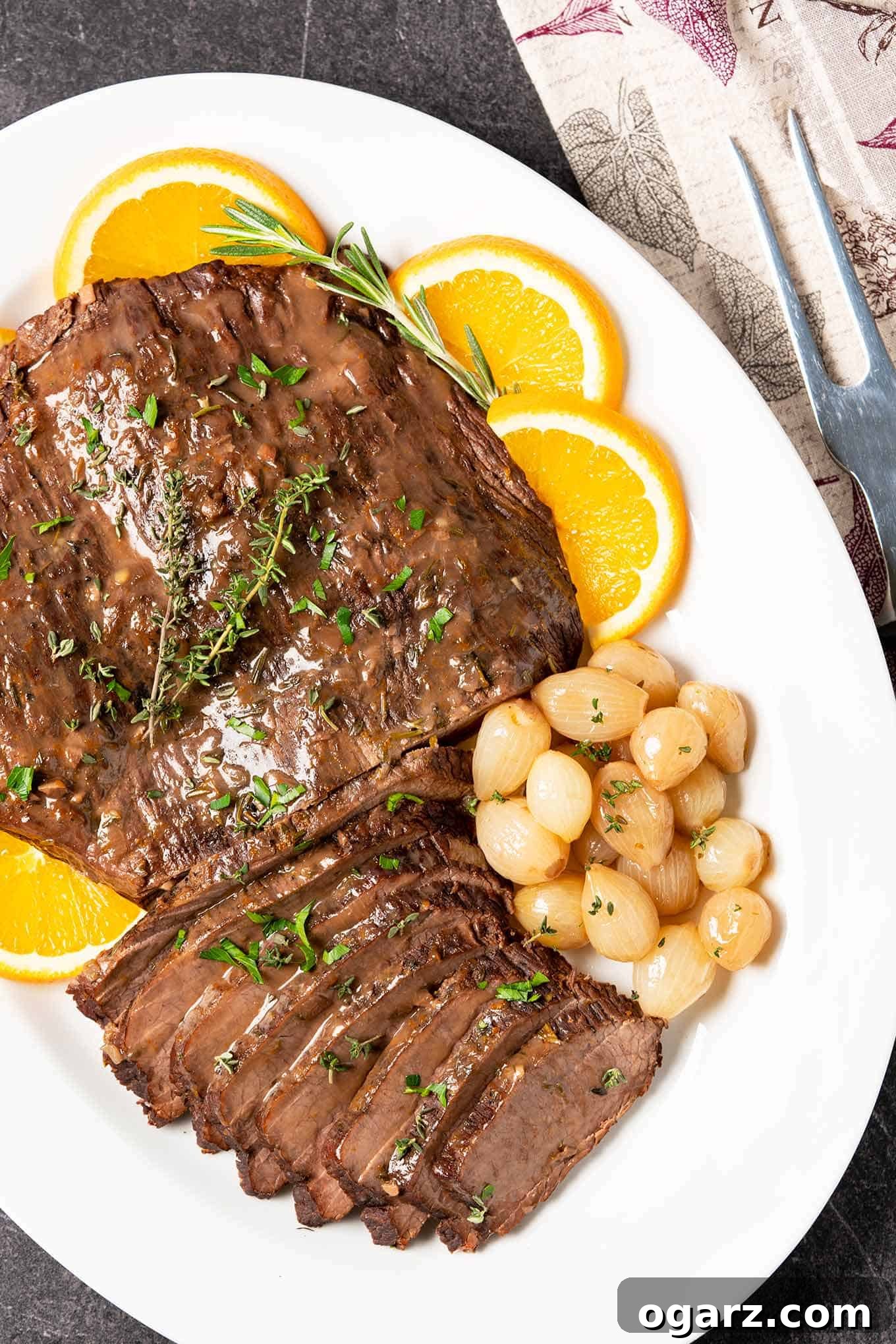
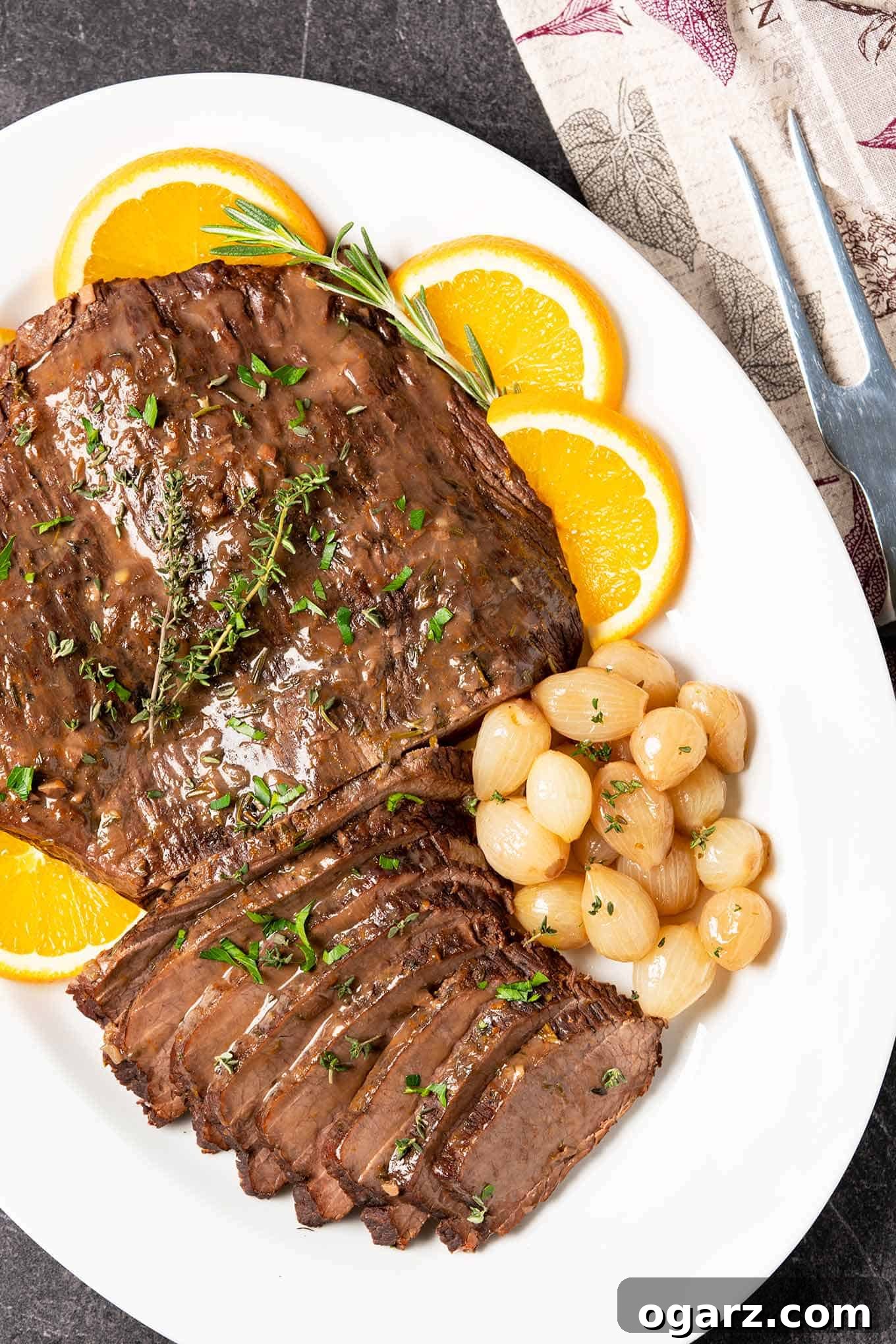
- Carve and Serve Your Masterpiece: Finally, carve the rested brisket against the grain into 1/4-inch thick slices. Carving against the grain is a crucial step for maximizing the tenderness of each bite. Arrange the beautiful slices elegantly on a warm serving platter. Spoon a generous amount of the rich red wine and orange sauce over the top. Garnish with the tender pearl onions, a few fresh orange slices, and sprigs of fresh rosemary and thyme for an appealing and aromatic presentation. Serve immediately and prepare to enjoy a truly magnificent meal!
Recipe Notes and Expert Tips for Success
To ensure your braised beef brisket is a resounding success and to make your cooking experience as smooth as possible, consider these helpful notes and expert tips:
- Make-Ahead Mastery: This braised brisket recipe is an ideal candidate for preparing a day in advance. In fact, many culinary experts believe that the flavors deepen, meld, and become even more harmonious after a full day in the refrigerator. If you plan to refrigerate it before serving, simply follow all cooking steps as written. Once the brisket is cool, refrigerate the entire dish (meat and sauce) in its pan or an airtight container. The next day, the rendered fat will have solidified on top, making it incredibly easy to remove and discard before reheating. This not only simplifies fat removal but also results in a cleaner, richer-tasting sauce. To reheat, gently place the covered brisket (in its pan) back into the oven at 325°F (160°C) for approximately 45 minutes, or until thoroughly warmed through to the center. This make-ahead approach is perfect for stress-free entertaining.
- Braising Pan Alternatives: While a dedicated braiser or a heavy Dutch oven is undoubtedly the ideal vessel for this recipe, don’t let its absence deter you. The key is to use any oven-proof pan that isn’t significantly larger than your brisket. Using a pan that’s too big will allow for excessive evaporation of your precious braising liquid, which you want to preserve for the succulent sauce. Suitable alternatives include a deep casserole dish, a sturdy roasting pan, or even a deep lasagna pan. The most important aspect is that your chosen vessel can be tightly covered with a snug-fitting lid or heavy-duty aluminum foil. This tight seal creates a moist, steamy environment inside the pan, essential for the “low and slow” braising process and achieving that coveted fork-tender texture.
- Recipe Credit and Inspiration: This cherished recipe was thoughtfully adapted from “Fast & Festive Meals for the Jewish Holidays” by the talented Marlene Sorosky. We rarely re-publish other people’s recipes, but this particular one has been such a consistent and beloved favorite in our kitchen over the years. Given that the original book is now out of print, we felt it was too good not to share, bringing this delightful and reliable dish to a new generation of home cooks. For those interested in exploring the original collection and other wonderful recipes by Marlene Sorosky, used copies of her books can often be found on platforms like Amazon.
Make It A Meal: Perfect Side Dish Pairings for Braised Brisket
A dish as rich, tender, and flavorful as braised beef brisket deserves equally delightful and complementary accompaniments. To complete your meal and create a truly memorable dining experience, consider these harmonious pairings:
- Rustic Mashed Potatoes: The creamy, comforting texture of rustic mashed potatoes acts as the perfect canvas for soaking up every last drop of the exquisite red wine and orange braising sauce. Their comforting simplicity provides a beautiful, familiar counterpoint to the brisket’s complex flavors.
- Roasted Green Beans with Toasted Walnuts & Shallots: For a touch of freshness, vibrant color, and delightful crunch, a serving of roasted green beans with toasted walnuts and shallots is an excellent choice. The bright green vegetables offer a slightly crisp texture and a fresh, subtly bitter note that beautifully cuts through the richness of the meat, while the toasted walnuts add a satisfying earthy depth.
- Creamy Polenta or Grits: For an alternative to potatoes, consider creamy polenta or grits. Their smooth, warm texture provides a comforting base that pairs wonderfully with the rich sauce.
- Glazed Carrots or Root Vegetable Puree: Sweet, tender glazed carrots or a savory root vegetable puree (like parsnip or celery root) would offer an elegant and earthy balance, echoing some of the subtle sweetness in the brisket’s sauce.
- Crusty Artisanal Bread: Never underestimate the power of a good, crusty loaf of artisanal bread. It’s perfect for soaking up every last, flavorful drop of that incredible sauce, ensuring no deliciousness goes to waste!
- Wine Pairing: To elevate the meal further, consider serving the same red wine you used for braising, or opt for another robust red like a Syrah, a rich Bordeaux blend, or even a fruit-forward Zinfandel.

Got Leftover Brisket? Craft a Gourmet Sandwich!
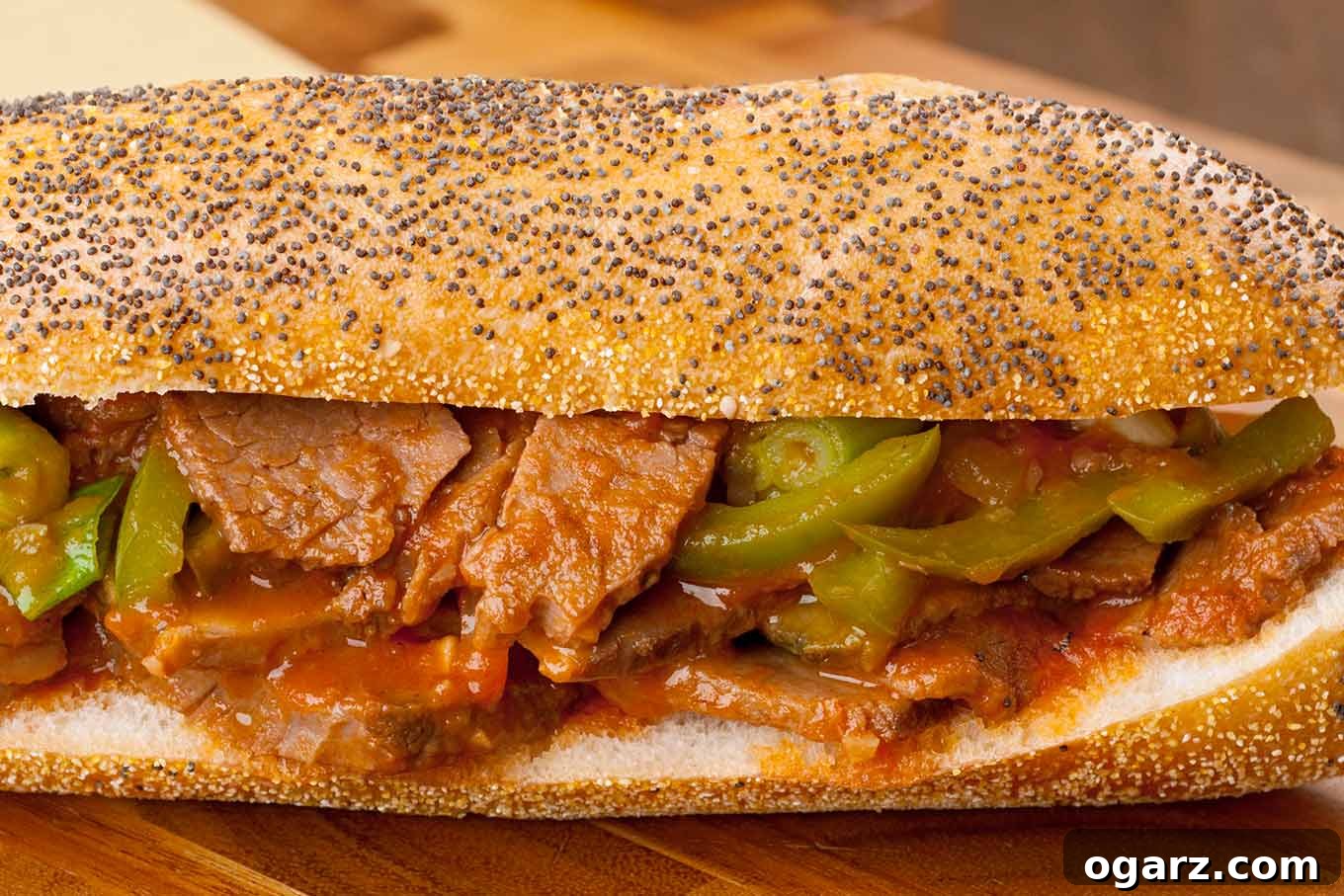
One of the absolute best parts about making a delicious braised brisket is the incredible potential for next-day leftovers. Transform any remaining tender, flavorful slices into an extraordinary sandwich that offers a unique and gourmet twist on a classic steak sandwich. The savory, tender braised brisket combined with tangy barbecue sauce and perfectly sautéed peppers and onions creates a symphony of flavors and textures that is truly irresistible.
- Prepare the Brisket and Veggies: Begin by thinly slicing enough leftover braised brisket to generously fill two 6-inch hoagie rolls. Aim for uniform, thin slices for even distribution and easier eating. In a large skillet, heat a tablespoon of olive oil over medium heat. Add one medium-sized green pepper, cut into 1/2-inch cubes, along with a minced clove of garlic and a handful of chopped onion or scallions. Sauté these vegetables gently, stirring occasionally, until the green pepper is tender-crisp and the onions are translucent and wonderfully fragrant. This typically takes about 5-7 minutes. Once cooked, transfer the sautéed vegetables to a plate and set them aside.
- Warm the Brisket in Sauce: In the same skillet (no need to clean it, the fond adds flavor), pour in about 1-1/2 cups of your favorite tangy barbecue sauce. Bring the sauce to a gentle simmer over medium heat. Add the thinly sliced brisket to the simmering sauce, stirring gently to ensure all the meat is thoroughly coated. Allow the brisket to warm through completely, absorbing the rich barbecue sauce flavors for about 3-5 minutes. This step ensures the brisket is moist and infused with the new flavors.
- Combine and Assemble Your Masterpiece: Once the brisket is warmed and coated, return the sautéed green pepper and onion mixture to the pan. Stir well to combine all the ingredients, ensuring the vegetables are evenly distributed with the brisket and sauce. Divide the flavorful brisket mixture evenly between the two hoagie rolls, making sure each bite will be packed with deliciousness. For an extra touch, you could lightly toast the hoagie rolls before filling. Serve immediately for a satisfying, uniquely delicious, and elevated leftover meal.
Red Wine & Orange Braised Beef Brisket Recipe
Slow-cooked in a rich red wine sauce, vibrant with orange, rosemary, and thyme, this braised beef brisket is an elegant and easy entree, perfect for company or a special family meal.
Author: Lynne Webb
Prep Time: 20 mins
Cook Time: 3 hrs 30 mins
Total Time: 3 hrs 50 mins
Servings: 8 servings
Ingredients
For the Brisket and Searing:
- 3 to 4 pound beef brisket, trimmed of excess fat
- 1-1/2 teaspoons kosher salt
- 1/2 teaspoon onion powder
- Freshly ground black pepper, to taste
- 3 tablespoons olive oil, divided
- Sprigs of fresh thyme, for garnish
- 1 lb pearl onions, ends trimmed, skins removed
For the Braising Liquid:
- 1 shallot, minced (about 2 tablespoons)
- 4 cloves garlic, minced
- 3 tablespoons all-purpose flour, divided (plus more if needed for sauce thickening)
- 1/4 cup water
- 1 cup medium to full-bodied red wine (Pinot Noir or Merlot recommended)
- 3/4 cup fresh orange juice
- 1 navel orange, zested and sliced
- 1 tablespoon fresh rosemary, minced
- 1 tablespoon fresh thyme leaves
- 2 bay leaves
Instructions
- Preheat your oven to 300°F (150°C).
- Season the beef brisket generously on both sides with kosher salt, onion powder, and freshly ground black pepper.
- Heat 1 tablespoon of olive oil in a heavy braising pan or Dutch oven over medium-high heat. Sear the seasoned brisket for about 4 minutes per side until deeply browned. Transfer the seared brisket to a plate and set aside.
- Add the remaining 2 tablespoons of olive oil to the same pan and reduce heat to medium. Add the minced shallots and garlic, and cook until softened and aromatic, about 2 minutes.
- Scatter 2 tablespoons of flour over the shallots and garlic. Stir with a spatula, scraping up any browned bits from the bottom of the pan. Continue cooking until the flour is well incorporated and lightly golden, about 2-3 minutes.
- Gradually whisk in the 1/4 cup water, stirring until smooth and slightly thickened. Slowly whisk in the red wine and orange juice until the mixture is smooth and lump-free.
- Zest the entire navel orange directly into the sauce. Add the minced fresh rosemary, fresh thyme leaves, and bay leaves. Bring the mixture to a gentle simmer, stirring occasionally, for 3 minutes.
- Return the seared brisket to the pan. Cut 4-5 slices from the zested orange and place them on top of the brisket, along with fresh thyme sprigs. Squeeze any remaining juice from the orange pieces over the meat and spoon some of the sauce over the brisket.
- Cover the pan tightly and transfer it to the preheated oven. Braise for 2 hours, basting the meat with the sauce midway through (after 1 hour).
- After the initial 2 hours, add the pearl onions to the pan around the brisket and baste the meat again. Re-cover the pan and return it to the oven for an additional 1 to 1.5 hours, or until the brisket is incredibly tender.
- Remove the brisket from the sauce and place it on a carving board. Tent it loosely with foil and let it rest for 15-20 minutes. Transfer the pearl onions to a separate dish.
- Pour the braising sauce into a gravy separator to remove excess fat, or skim the fat from the surface with a spoon. Transfer about 1 cup of the defatted sauce to a glass measure, and the remainder to a small saucepan.
- Create a slurry by whisking the remaining 1 tablespoon of flour into the reserved 1 cup of braising sauce until smooth.
- Place the saucepan with the main portion of sauce over medium-high heat. Slowly pour the flour slurry into the simmering sauce, whisking continually until smooth and thickened to your preference. If needed, repeat with a little more flour slurry. Transfer the finished sauce to a serving bowl or gravy boat.
- Carve the rested brisket against the grain into 1/4-inch thick slices. Arrange on a serving platter, spoon a generous amount of sauce over the top, and garnish with the pearl onions, fresh orange slices, and fresh herbs. Serve warm.
Nutrition Information (Approximate per serving)
- Calories: 306
- Total Fat: 14g
- Cholesterol: 70mg
- Sodium: 531mg
- Carbohydrates: 14g
- Fiber: 2g
- Sugar: 6g
- Protein: 25g