
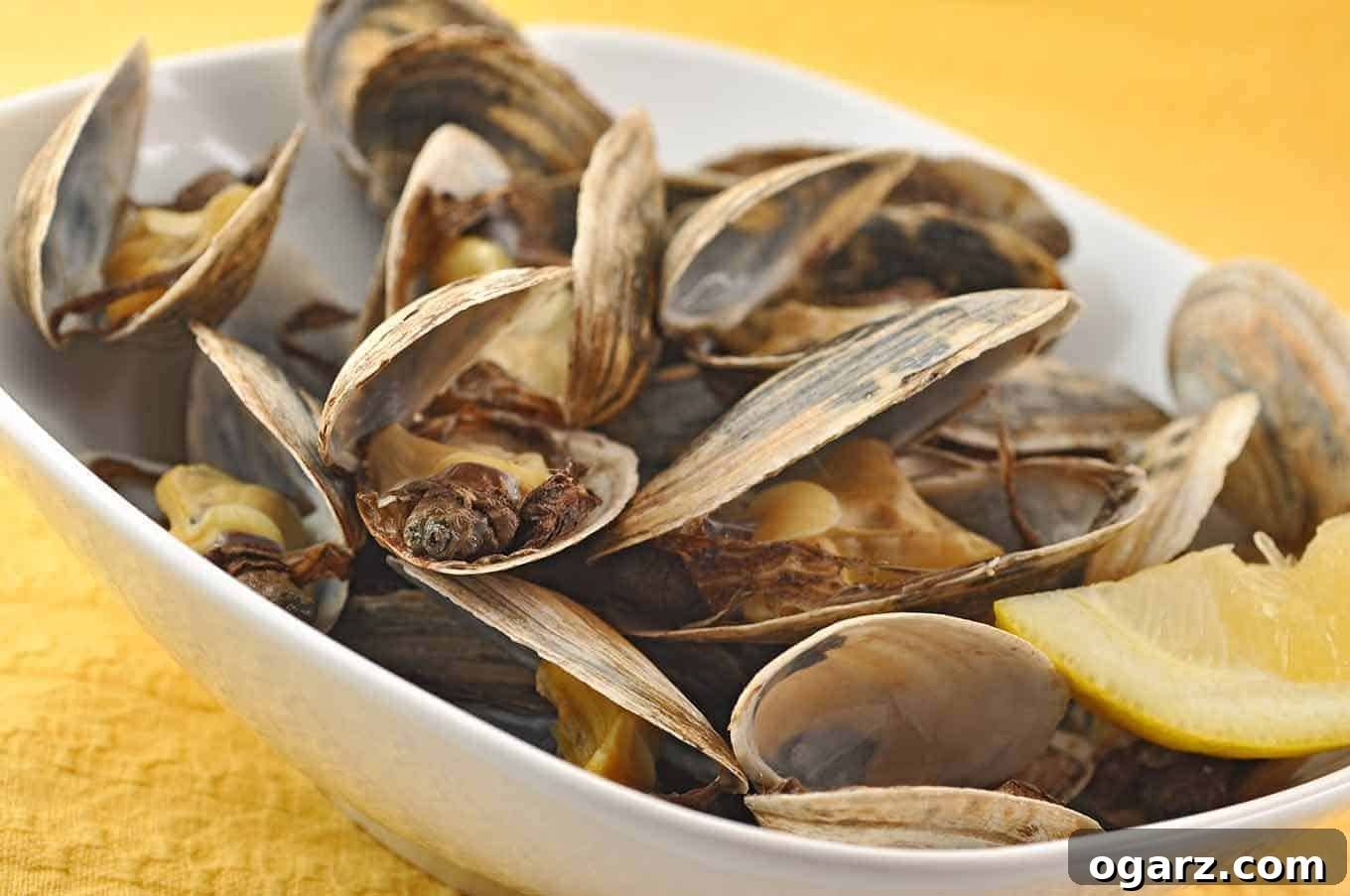
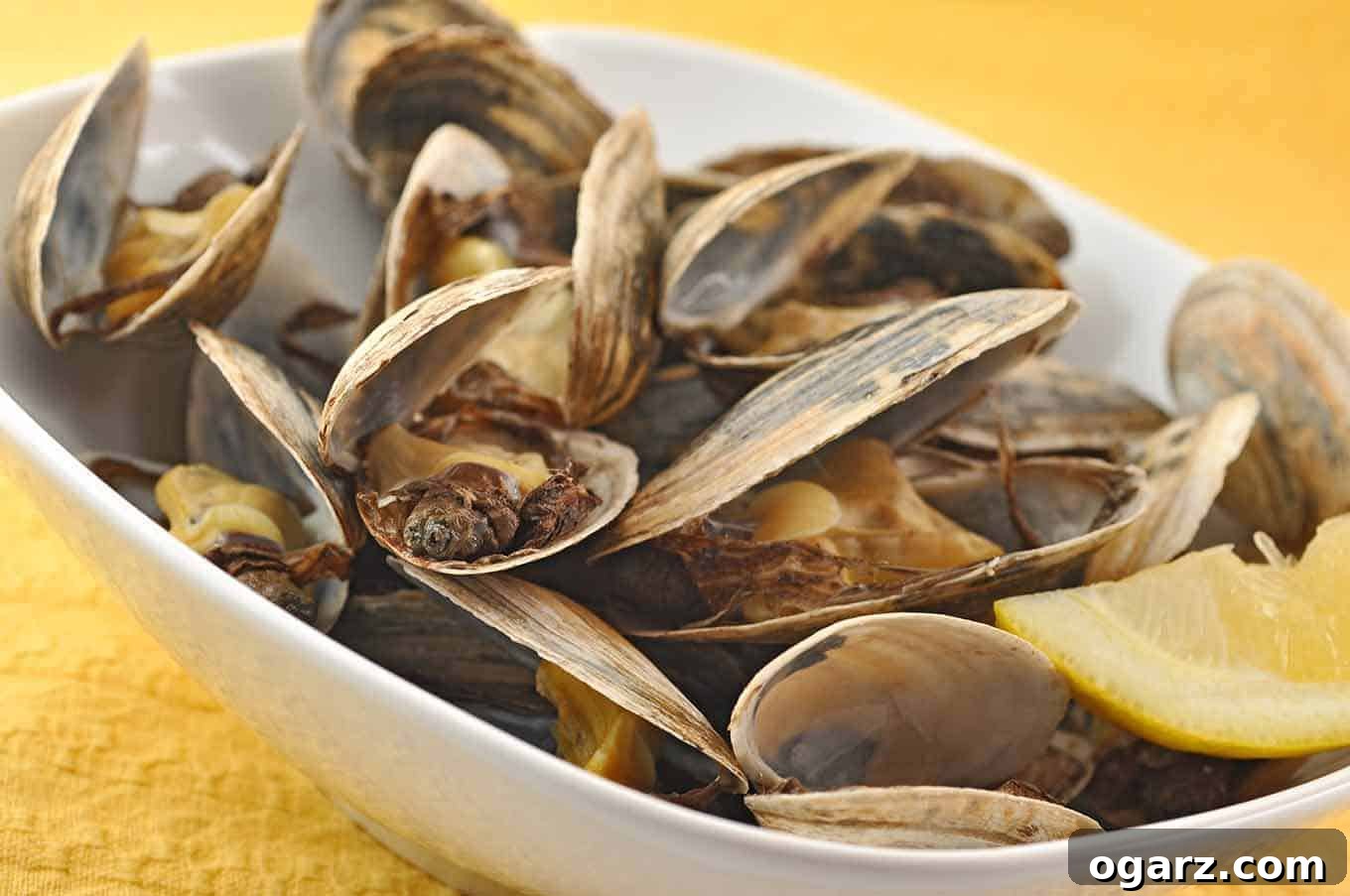
Steamer Clams: A New England Delight – Your Guide to Cooking and Enjoying Soft-Shell Clams
There’s an undeniable charm and deliciousness that comes with a steaming bowl of fresh clams, especially the variety affectionately known as “steamers” or soft-shell Atlantic clams. These succulent bivalves are a beloved staple of New England cuisine, renowned for their sweet, tender meat and a delightful briny essence that transports you straight to the coast with every bite. Easily identified by the distinctive siphon protruding from one side of their delicate shell, they’ve earned the playful moniker “long-necks” from generations of seafood lovers.
Unlike their hard-shelled cousins such as quahogs, littlenecks, and cherrystones, steamer clams possess a remarkably thinner, more fragile shell. This characteristic is precisely why they are so ideal for steaming, allowing them to open readily and release their exquisite flavors into a savory broth. Preparing them in the traditional New England style is not only incredibly simple but also yields a perfect appetizer or a light, satisfying meal that truly celebrates the ocean’s bounty.
Discovering the Unique Allure of Soft-Shell Clams
Steamer clams (Mya arenaria) are more than just a dish; they represent a culinary tradition deeply embedded in the coastal culture of the northeastern United States. Their appeal lies in a unique combination of texture and taste that sets them apart. The meat is exceptionally tender, almost melt-in-your-mouth, with a subtle sweetness that is beautifully balanced by a distinct oceanic brininess. This delicate flavor profile is why they are often served simply, allowing their natural taste to shine through.
Their shells, while not truly soft, are indeed far more pliable than other clam species. This isn’t a flaw but a defining feature that contributes to their distinctive character and ease of preparation. The prominent siphon, or “neck,” is the clam’s breathing tube, which extends into the water to filter feed. When cooked, this part is traditionally peeled and then enjoyed, contributing to the unique “long-neck” experience.
Choosing and Storing the Freshest Steamer Clams
The secret to truly exceptional steamed clams begins with selecting the freshest possible specimens. When purchasing steamer clams, always look for those that are lively and smell distinctly of the ocean – fresh and clean, not fishy. Their shells should be intact, and while soft-shells don’t close as tightly as hard-shells, they should still feel heavy and substantial for their size. If you tap them gently, they might retract their siphon slightly, indicating vitality.
Once you bring your clams home, proper storage is crucial to maintain their freshness. Never store live clams in a sealed container or submerged in fresh water, as this will suffocate them. Instead, place them in a single layer in a bowl, covered with a damp cloth or paper towel, and store them in the coldest part of your refrigerator (usually the bottom shelf) for up to one or two days. This method allows them to breathe while keeping them moist and cool.
Essential Tips for Preparing Steamer Clams: The Art of Purging Sand
Because soft-shell clams cannot completely close their shells, they are more prone to retaining a bit of sand or grit from their natural habitat. A crucial step before cooking is to properly “purge” them, ensuring a clean and enjoyable eating experience. This process is simple but vital.
- Prepare the Salted Water: In a large bowl or bucket, combine one tablespoon of sea salt (or approximately 2¾ teaspoons of table salt) per quart of cold water. Stir thoroughly until the salt is completely dissolved. The salt concentration should mimic their natural ocean environment, encouraging the clams to expel sand.
- Soak the Clams: Gently place your steamer clams into the salted water, ensuring they are fully submerged. Allow them to soak for a minimum of two to three hours, or even longer if you have the time, up to overnight in the refrigerator. During this time, the clams will filter the clean, salty water, naturally pushing out any sand or impurities from within their shells. You might even see tiny puffs of sand expelled if you observe closely.
- Drain and Rinse: After the soaking period, carefully drain the clams from the bowl. Avoid disturbing the settled sand at the bottom of the bowl. Give the clams a light rinse under cold running water just before cooking. This final rinse helps remove any surface grit without exposing them to too much fresh water.
- Handle Gently After Cooking: Once your steamer clams are cooked, their shells become even more delicate. Handle them with care as the tender clam meat can easily fall out of its shell if you’re not gentle.
Steamer Clams, New England Style: The Classic Recipe
Embrace the simplicity and deliciousness of perfectly steamed soft-shell clams with this traditional New England recipe. It’s a testament to the idea that sometimes, the best dishes require the fewest ingredients, allowing the natural flavors to truly shine.
Steamer Clams, New England Style
Lynne Webb
5 minutes
15 minutes
20 minutes
4
servings
See Nutrition
Print Recipe
Ingredients
-
4
lbs
steamer clams -
1/4
lb
unsalted butter -
1
lemon
Instructions
-
Soak the clams according to the directions listed in the “Tips for Preparing Steamer Clams” section above to purge any sand.
-
Add about 1-inch of water to the bottom of a large pot with a tight-fitting lid. Bring the water to a gentle simmer over medium-high heat. Once simmering, carefully add the cleaned clams to the pot. Cover the pot tightly and steam until all of the shells have opened wide, which typically takes about 10 to 12 minutes. Discard any clams that do not open after steaming.
-
While the clams are steaming, prepare your dipping butter. Melt the unsalted butter in a small saucepan or microwave-safe dish. Once melted, stir in the juice from half of the lemon. Pour the melted butter into small, individual serving dishes and set them aside. Cut the remaining half of the lemon into four wedges for garnish and extra squeezing.
-
Once all the clams have opened fully, carefully scoop them out of the pot using a slotted spoon and transfer them into a large serving bowl. The broth in the pot is incredibly flavorful. Carefully pour this broth into individual serving dishes for dipping.
-
Note: For an even cleaner broth, you may want to strain it through a fine-mesh sieve lined with cheesecloth. This will catch any remaining tiny bits of sand or sediment that might have accumulated at the bottom of the pot.
-
To eat, remove a clam from its shell. You will see the siphon, or “neck,” protruding from the clam meat. Gently strip the skin off the neck – it should come off easily. Then, dip the clam first into the flavorful broth from the pot, followed by a dip into the melted lemon butter. Enjoy immediately!
Notes
For an extra touch of flavor, consider adding a crushed garlic clove or a sprig of fresh thyme to the steaming water. You can also infuse the melted butter with a pinch of red pepper flakes for a subtle kick.
Nutrition
Calories:
881
,
Total Fat:
32
g
,
Cholesterol:
365
mg
,
Sodium:
5456
mg
,
Carbohydrates:
25
g
,
Fiber:
1
g
,
Sugar:
1
g
,
Protein:
116
g
Nutrition information is automatically calculated, so should only be used as an approximation.
Why Steamer Clams are a Must-Try Culinary Experience
Beyond their delightful taste and simple preparation, steamer clams offer a unique culinary experience. The act of extracting the tender meat, peeling the siphon, and dipping it first in the briny broth and then in the rich, lemony butter is a ritual in itself. It’s an interactive and satisfying way to enjoy seafood that brings people together around the table.
Moreover, steamer clams are not just delicious; they are also a healthy choice. They are an excellent source of lean protein, essential minerals like iron, zinc, and selenium, and vitamins. Incorporating them into your diet can be a flavorful way to boost your nutritional intake.
Perfect Pairings and Serving Suggestions
Steamed clams, especially prepared New England style, pair beautifully with a variety of beverages and side dishes. For wine lovers, a crisp, dry white wine like a Sauvignon Blanc, Pinot Grigio, or even a Albariño complements the briny sweetness of the clams perfectly. If you prefer beer, a light lager, pilsner, or a classic New England IPA can be a refreshing accompaniment.
To round out your meal, consider serving your steamer clams with a crusty loaf of bread to soak up the delectable broth and butter. A simple side salad, corn on the cob, or boiled potatoes can also enhance the experience without overshadowing the star of the show. Many enjoy them as a prelude to a larger seafood dinner, perhaps followed by lobster or grilled fish.
Common Mistakes to Avoid for Perfect Steamers
While preparing steamer clams is straightforward, a few common pitfalls can diminish the experience:
- Skipping the Purge: As emphasized, thorough cleaning is paramount. Sandy clams can ruin an otherwise perfect dish.
- Overcooking: Clams cook quickly. Overcooked clams become tough and rubbery. As soon as the shells open wide, they are done.
- Ignoring Unopened Clams: Any clams that do not open after steaming should be discarded. These may have been dead before cooking and are not safe to eat.
- Storing Improperly: Keeping live clams in sealed bags or fresh water will kill them. Always store them correctly in the refrigerator with a damp cloth.
Beyond the Classic: Other Clam Recipes to Explore
While the New England style steamed clam is iconic, the versatility of clams extends to many other delightful dishes. Once you’ve mastered the basic preparation, you might be inspired to explore different culinary avenues:
- Linguine with Red Clam Sauce: A hearty and flavorful pasta dish that showcases clams in a rich tomato-based sauce.
- Clams Casino: A baked appetizer featuring clams on the half shell, topped with a savory mixture of breadcrumbs, bacon, and peppers.
- Clam Chowder: A comforting classic, especially New England Clam Chowder, thick with cream, potatoes, and plenty of tender clams.
- Grilled Clams: For a smoky flavor, try grilling clams directly over hot coals until they pop open.
Embrace the Flavor of the Coast
Steamer clams offer a simple yet profound taste of the ocean, bringing the essence of New England coastal dining right to your table. With minimal effort, you can transform these humble bivalves into a memorable appetizer or a delightful light meal. The process of cleaning, steaming, and ultimately savoring each briny, butter-dipped morsel is a truly rewarding culinary journey.
Don’t hesitate to dive into the world of soft-shell clams. Follow this guide, pay attention to the details of cleaning and cooking, and you’ll be well on your way to enjoying perfectly prepared steamer clams that will undoubtedly become a favorite. Happy steaming!
Enjoyed this recipe and guide? We’d love to hear your thoughts!
Share your experience or ask questions in the comments below.