
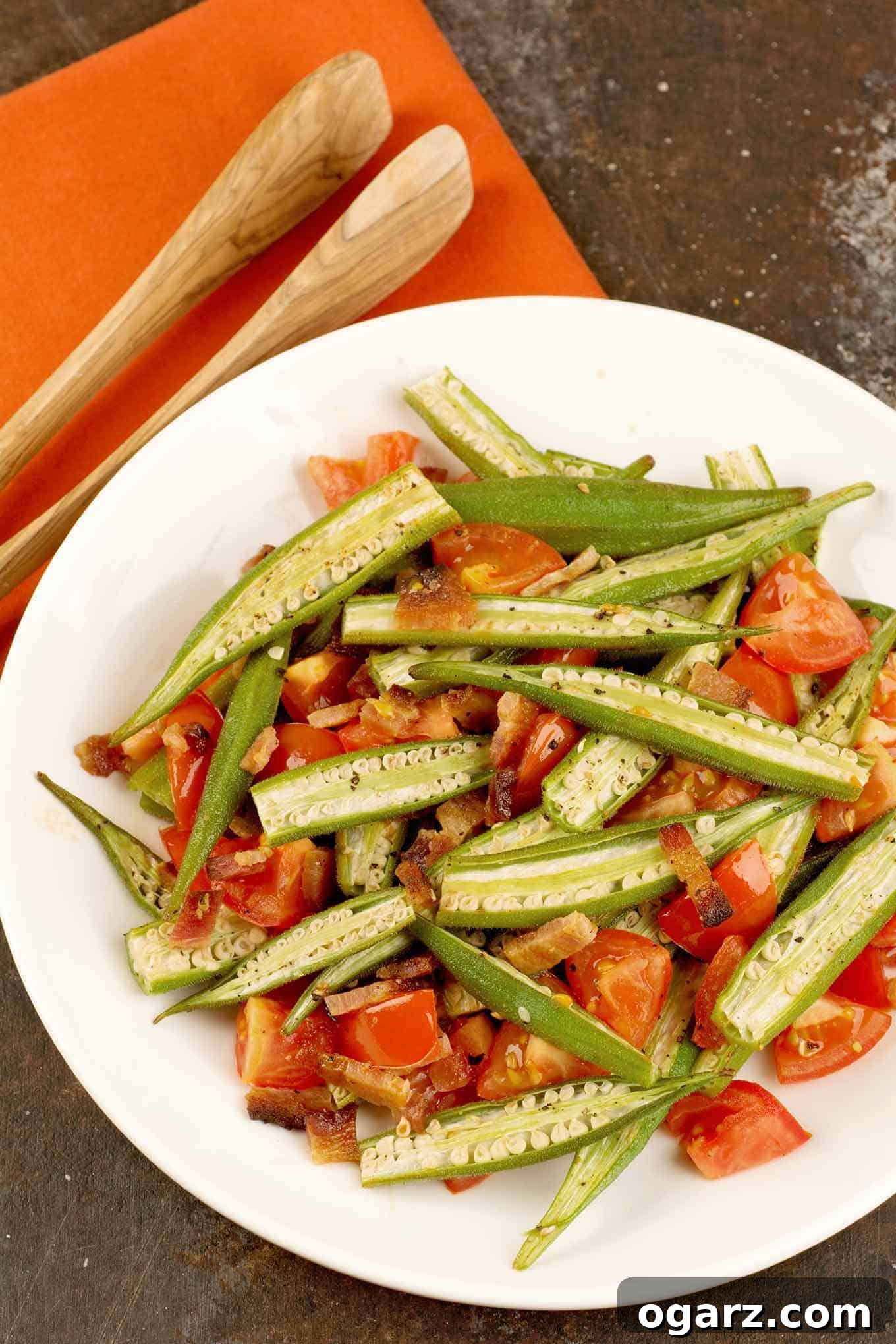
The Secret to Perfect Okra: Oven-Roasted with Bacon and Tomatoes
For anyone who has shied away from okra due to its reputation for sliminess, prepare to have your culinary world transformed. Oven-roasting is not just the simplest method for cooking okra; it is, without a doubt, the best way to unlock its optimal flavor and achieve a firm, beautifully non-slimy texture. This technique crisps the exterior and tenderizes the interior, making it an irresistible addition to any meal.
Okra, a versatile and nutritious edible seed pod, boasts a rich history spanning continents and centuries. Native to Africa, this distinctive vegetable was brought to the American South by enslaved people, where it became an indispensable ingredient in traditional Southern cuisine, flourishing in the warm climate. While it’s grown year-round in the Southern states, its peak season across much of the country typically runs from May through October, offering the freshest and most flavorful pods for your kitchen. Its journey from ancient Africa to the heart of Southern cooking is a testament to its enduring appeal and adaptability.
When you’re at the market seeking out fresh okra, aim for pods that are bright green, firm to the touch, and free from any blemishes or soft spots. The ideal length is under four inches; larger pods tend to be tougher and more fibrous. Once you’ve selected your perfect batch, store the okra unwashed in a plastic bag in the refrigerator, where it can maintain its quality for up to three days. However, for the absolute best flavor and texture, we highly recommend preparing and enjoying it as quickly as possible after purchase.
This recipe celebrates the humble okra by oven-roasting it to perfection and then elevating it with the savory crunch of crisp bacon and the sweet, tangy burst of fresh plum tomatoes. The result is a quick, easy, and undeniably delicious side dish that captures the heartwarming essence of homestyle Southern cooking, making it an ideal companion for a wide array of entrees.
Roasted Okra with Bacon and Tomatoes

This simple recipe masterfully combines the earthy notes of oven-roasted okra with the irresistible texture of fresh tomatoes and the salty, smoky crunch of bacon, creating a truly versatile side dish that complements a wide variety of main courses.
By Lynne Webb
Prep Time: 10 mins
Cook Time: 15 mins
Total Time: 25 mins
Servings: 4 servings
Pin Recipe
Print Recipe
Ingredients
- 1-1/2 lbs fresh okra
- 3 medium plum tomatoes
- 3 slices thick-cut bacon, cooked and diced
- Salt and freshly ground black pepper to taste
Instructions
- Preheat your oven to 425°F (220°C). Lightly coat a large, shallow baking pan with a nonstick cooking spray or line it with parchment paper for easy cleanup. This high heat is crucial for achieving that desirable crisp texture and preventing sliminess.
- Prepare the okra: Carefully trim the stem ends from each okra pod, being careful not to cut into the pod itself, which can release its natural mucilage. Cut each pod in half lengthwise. Arrange the halved okra in a single layer on the prepared baking pan, ensuring they have enough space and are not overcrowded. Overcrowding can steam the okra instead of roasting it, leading to a less desirable texture. Season lightly with salt and freshly ground black pepper. Roast in the preheated oven until the okra is tender-crisp and slightly browned, typically 8 to 10 minutes.
- While the okra is roasting, prepare your other ingredients. If your bacon isn’t already cooked, cook it until crisp, then dice it into 1/4-inch pieces. Set the bacon aside. Quarter the plum tomatoes lengthwise, then cut each quarter crosswise into 3 or 4 pieces, depending on their size. Season the diced tomatoes lightly with salt and pepper to enhance their natural sweetness.
- Once the okra is tender from its initial roasting, remove the baking pan from the oven. Evenly scatter the diced tomatoes and crisp bacon bits over the roasted okra. Return the pan to the oven and continue roasting for an additional 3 to 4 minutes. This brief second roast allows the tomatoes to soften slightly and warm through, while the bacon’s flavors meld beautifully with the okra.
- Serve this delectable side dish immediately, enjoying the perfect harmony of textures and flavors. It pairs wonderfully with grilled chicken, fish, or any Southern-inspired main course.
The Undeniable Charm of Oven-Roasted Okra: Say Goodbye to Slime
Okra often gets a bad rap, largely due to its characteristic mucilaginous texture, often referred to as “slime.” However, the secret to enjoying okra to its fullest lies in the cooking method. Oven-roasting, unlike boiling or stewing, minimizes this mucilage by exposing the okra to dry, high heat. The rapid evaporation of moisture, combined with the caramelization that occurs, creates a firm, almost crunchy exterior and a tender, flavorful interior, completely transforming the vegetable into a culinary delight that even skeptics will appreciate. This method not only tackles the sliminess issue but also brings out the okra’s subtle, earthy flavor, making it a truly enjoyable vegetable.
A Journey Through Time: Okra’s Rich History and Cultural Impact
The story of okra is as rich and fascinating as its flavor. Originating in Ethiopia and the high eastern regions of Africa, okra pods have been a staple crop for thousands of years. Its journey across continents began centuries ago, reaching North Africa, the Middle East, and India, becoming an integral part of various cuisines. It arrived in the Americas, specifically the Caribbean and the American South, through the transatlantic slave trade in the 17th and 18th centuries. Enslaved Africans brought not just their labor but also their culinary traditions and crops, including okra, to a new land.
In the American South, okra found fertile ground and quickly became a cornerstone of regional cooking. It’s a key ingredient in iconic dishes like gumbo, where its natural thickening properties are highly valued, and in classic fried okra. Beyond its culinary uses, okra also carries significant cultural weight, representing a tangible link to African heritage and resilience in the face of immense hardship. Today, okra is celebrated worldwide, from Indian curries to Japanese tempura, showcasing its incredible versatility and global appeal.
Mastering Your Okra Selection and Storage for Peak Freshness
The success of any okra dish begins with selecting the freshest pods. As mentioned, look for small, firm, and brightly colored green pods without any visible bruising, soft spots, or black blemishes. A good test for freshness is to snap the tip of a pod; if it snaps cleanly, it’s fresh. Avoid any pods that feel rubbery or appear dull in color, as these are signs of older, tougher okra. While some recipes call for larger pods, generally, smaller pods (under 4 inches) are more tender and have a milder flavor.
Proper storage is also key to maintaining okra’s quality. After purchasing, resist the urge to wash the pods until you are ready to use them, as moisture can accelerate spoilage. Store them loosely in a paper bag or a breathable container within a plastic bag in the coolest part of your refrigerator, typically the crisper drawer. This method helps to minimize moisture accumulation and extends their freshness. While they can last up to three days, the sooner you use them, the better. Freshness directly impacts the texture and flavor of your cooked okra, making this step crucial for a delightful culinary experience.
Beyond the Recipe: Tips for Perfect Roasted Okra Every Time
Achieving perfectly roasted okra is simple, but a few tips can make all the difference. First and foremost, ensure your okra is thoroughly dry before tossing it with oil and seasoning. Any residual moisture will steam the okra rather than roast it, hindering that crisp exterior. Pat the washed and trimmed pods dry with a kitchen towel.
Secondly, avoid overcrowding the baking pan. Okra needs space to roast evenly. If the pan is too full, the vegetables will steam in their own moisture, leading to a softer, potentially slimy result. Use two pans if necessary, or roast in batches. A single layer is paramount. Thirdly, a high oven temperature, like the 425°F specified in this recipe, is essential. This high heat encourages rapid browning and caramelization, enhancing the flavor and texture.
Serving Suggestions and Delicious Variations
This Roasted Okra with Bacon and Tomatoes is incredibly versatile and can be paired with a wide range of main dishes. It’s a natural fit alongside classic Southern comfort foods such as fried chicken, barbecued ribs, or pulled pork. For a lighter meal, serve it with grilled fish, pan-seared scallops, or a simple steak. It also makes a fantastic addition to a brunch spread alongside eggs and grits.
Feeling adventurous? Here are a few variations to try:
- Spicy Kick: Add a pinch of red pepper flakes or a dash of cayenne pepper to the okra before roasting for a fiery twist.
- Herbaceous Twist: Fresh herbs like thyme, oregano, or a sprinkle of chopped parsley after roasting can add a wonderful aromatic dimension.
- Vegan Option: Omit the bacon and instead toss the okra with smoked paprika or liquid smoke for a similar savory depth. Nutritional yeast can also add a cheesy, umami flavor. Consider adding toasted nuts or seeds for crunch.
- Mediterranean Flair: Replace bacon with crumbled feta cheese and add a squeeze of lemon juice after roasting for a bright, tangy flavor profile. Olives and cherry tomatoes can also be added.
- Garlic Lover’s Dream: Mince a couple of cloves of garlic and toss them with the okra and oil before roasting for an extra layer of savory aroma and taste.
Conclusion: A New Favorite Side Dish Awaits
This Roasted Okra with Bacon and Tomatoes recipe offers a fresh perspective on a classic Southern vegetable, promising a delightful culinary experience free from any unwanted sliminess. By embracing the simple yet effective technique of oven-roasting, you’ll discover okra’s true potential – a flavorful, tender-crisp side dish that perfectly balances the smoky richness of bacon with the bright acidity of fresh tomatoes. Whether you’re a lifelong okra enthusiast or a curious newcomer, this recipe is sure to become a cherished addition to your recipe collection, bringing a taste of comfort and tradition to your table. Give it a try, and let this vibrant dish surprise and delight your taste buds!
Like this recipe? We encourage you to try it and share your culinary adventures!