

Heidesand are cherished German shortbread cookies distinguished by their rich browned butter flavor. These classic Christmas cookies promise a delightfully tender texture and an intensely buttery taste, making them a festive staple.

Heidesand: Traditional German Brown Butter Shortbread Cookies
While many are familiar with famous German Christmas cookies like Vanillekipferl, Zimtsterne, or the elaborate Lebkuchen, the humble Heidesand offers a unique and equally enchanting experience. These traditional German shortbread cookies, though perhaps less globally renowned than their counterparts, hold a special place in German holiday baking traditions, particularly in the northern regions. Distinguished by the deep, complex flavor of browned butter and a delicate roll in sugar, Heidesand cookies boast an irresistibly tender, melt-in-your-mouth texture. Each bite unveils a symphony of flavors – the sweet, nutty, and slightly caramelized notes from the browned butter perfectly complementing their buttery richness.
The name “Heidesand” itself is evocative, translating literally to moor sand or heath sand. These delightful cookies draw their name from their geographical origin: the picturesque Lüneburger Heide (Lüneburg Heath) in northern Germany. This vast landscape is celebrated for being Central Europe’s largest agglomeration of heathlands, characterized by its sandy soil and purple heather blooms. The cookies’ appearance, with their pale, sandy color and slightly crumbly texture, is said to mirror the very landscape from which they hail, offering a delightful culinary nod to their heritage.
Why You’ll Adore This Heidesand Recipe
Discover the compelling reasons why these authentic German shortbread cookies deserve a prime spot in your holiday baking repertoire:
- An Authentic German Classic: Dive into a beloved German Christmas tradition with these cookies, offering a taste of European festive charm.
- Effortless “Slice-and-Bake” Convenience: This recipe simplifies holiday baking, allowing you to prepare the dough in advance and bake fresh cookies whenever a craving strikes.
- Unforgettable Browned Butter Flavor: The star ingredient, browned butter, infuses these simple cookies with an unparalleled depth of flavor – rich, nutty, and subtly caramel-like.
- Make-Ahead Mastery: The dough is perfect for preparing days in advance, allowing you to spread out your baking tasks during the busy holiday season. Store it in the fridge, and you’re always just minutes away from fresh, homemade cookies.
- Exceptional Shelf-Life: Once baked, these durable cookies maintain their exquisite taste and tender texture for weeks when stored correctly, making them ideal for gifting or enjoying throughout the holidays.
Essential Ingredients for Perfect Heidesand
Crafting these exquisite cookies begins with a careful selection of ingredients. Here’s a closer look at what you’ll need and why each component is vital for achieving that authentic Heidesand perfection. For precise quantities, please refer to the recipe card at the bottom of this article.
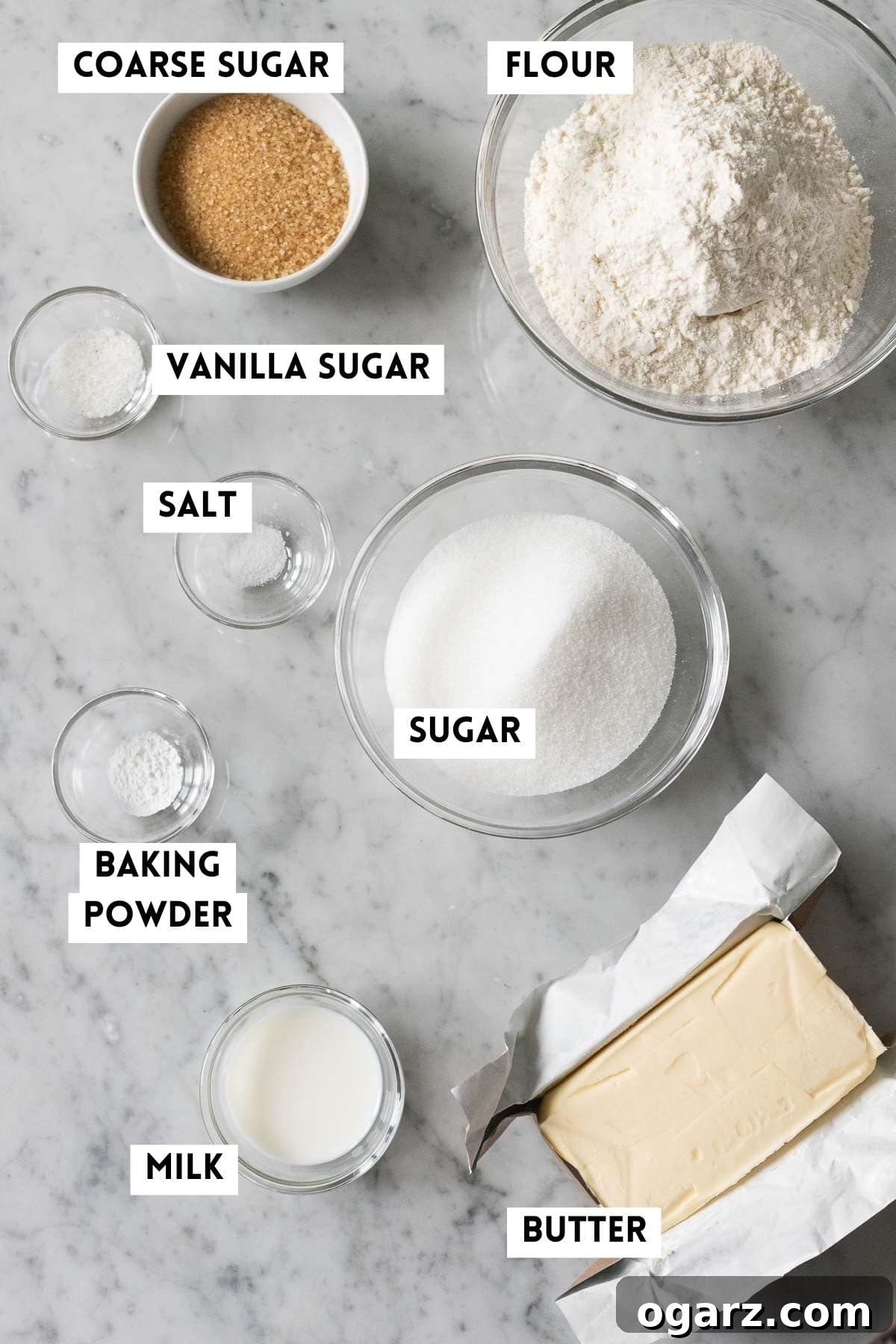
- Unsalted Butter: The foundation of any great shortbread, butter here is elevated to new heights through browning. Opt for high-quality unsalted butter, ideally European butter like Kerrygold, known for its higher fat content. This contributes to a richer flavor and a more tender, melt-in-your-mouth texture in your final cookies.
- Granulated Sugar: Used within the dough to provide sweetness and structure, ensuring the cookies are perfectly balanced.
- A Pinch of Salt: A crucial ingredient that enhances all the other flavors, particularly the browned butter, preventing the cookies from tasting flat.
- Vanilla Sugar (or Extract/Paste): Traditionally, Heidesand cookies feature vanilla sugar for a subtle yet distinct vanilla aroma. If vanilla sugar is unavailable, a good quality vanilla extract or paste can be used as a substitute, though homemade vanilla sugar offers an authentic touch.
- Milk: A small amount of milk helps to bind the dough, especially if it appears too crumbly, ensuring it comes together smoothly without compromising the tender texture.
- All-Purpose Flour: The primary structural component. Always use all-purpose flour and avoid self-rising flour, which contains leavening agents that can alter the desired shortbread texture. Accurate measurement is key; too much flour can lead to a dry, overly crumbly dough that’s difficult to work with.
- Baking Powder: Just a touch of baking powder gives the cookies a delicate lightness without making them cakey.
- Coarse Sugar for Rolling: Before baking, the cookie logs are rolled in coarse sugar. This creates a beautiful sparkling crust and adds a delightful textural contrast. Turbinado sugar or pearl sugar are excellent choices for their larger crystals and golden hue, but regular white granulated sugar or even light brown sugar can also be used for a slightly different finish.
Crafting Your Heidesand: A Step-by-Step Guide
Follow these detailed instructions to create tender, flavorful German browned butter shortbread cookies that will become an instant holiday favorite. You’ll find precise measurements and a printable recipe card at the conclusion of this guide.
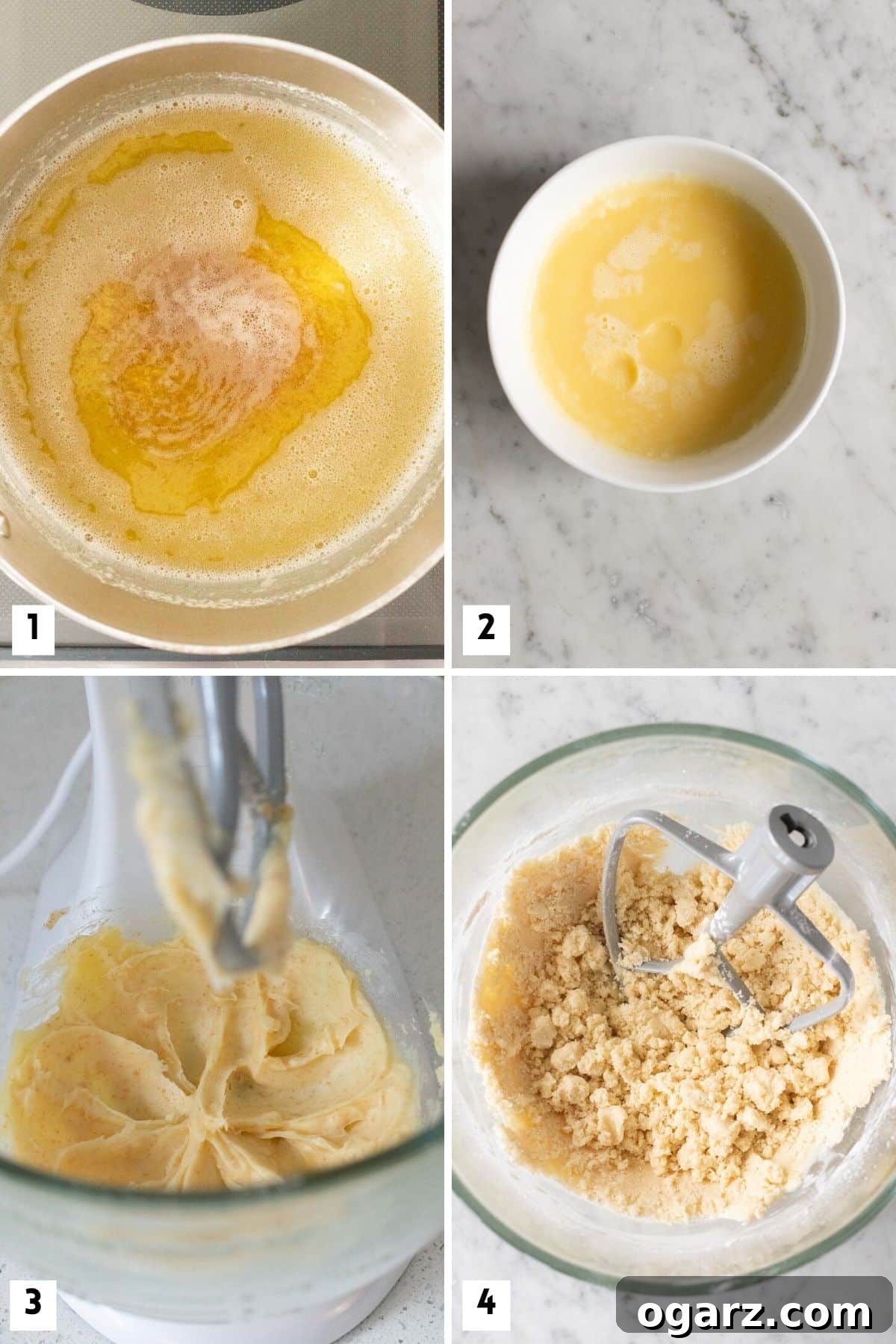
Phase 1: The Magic of Browned Butter
- Begin with Brown Butter: In a small, light-colored saucepan (a lighter bottom helps you see the color change), melt the unsalted butter over medium heat. Once melted, continue to cook, stirring occasionally, allowing it to gently simmer. The butter will foam, then the milk solids at the bottom will start to turn golden, then amber, and finally a rich brown. Watch for small, fragrant brown specks to appear at the bottom of the pan, and a distinct nutty aroma will fill your kitchen. This process usually takes about 5-8 minutes. Be attentive, as butter can burn quickly once it reaches this stage.
- Cool the Browned Butter: Immediately transfer the hot browned butter to a heatproof porcelain or stainless steel bowl. This halts the cooking process and prevents it from burning. Allow the butter to cool completely at room temperature for approximately 45 minutes to 1 hour, or until it has solidified back to a soft, spreadable consistency, similar to room temperature butter. This cooled, solidified browned butter is what imparts the incredible depth of flavor to your Heidesand.
Phase 2: Preparing the Dough
- Cream the Butter Mixture: In the bowl of a stand mixer fitted with the paddle attachment, or using a hand mixer, beat the cooled, solidified browned butter until it is smooth and light. This aerates the butter, contributing to the cookie’s tender texture.
- Add Wet and Sweet Ingredients: Next, add the granulated sugar, salt, vanilla sugar (or extract/paste), and milk to the beaten butter. Mix on medium speed until the mixture is smooth and well combined, scraping down the sides of the bowl as needed.
- Incorporate Dry Ingredients: In a separate small bowl, whisk together the all-purpose flour and baking powder. Gradually add this dry mixture to the butter mixture in the stand mixer, running on low speed. Mix only until just combined. The dough will appear somewhat crumbly at this stage.
- Adjust Dough Consistency (if needed): Test the dough by pressing a small amount between your fingers. If it holds together easily, it’s perfect. If it feels excessively dry or crumbly and doesn’t cohere, add one or two additional tablespoons of milk, mixing briefly until just combined. Be careful not to overmix.
Phase 3: Shaping and Chilling
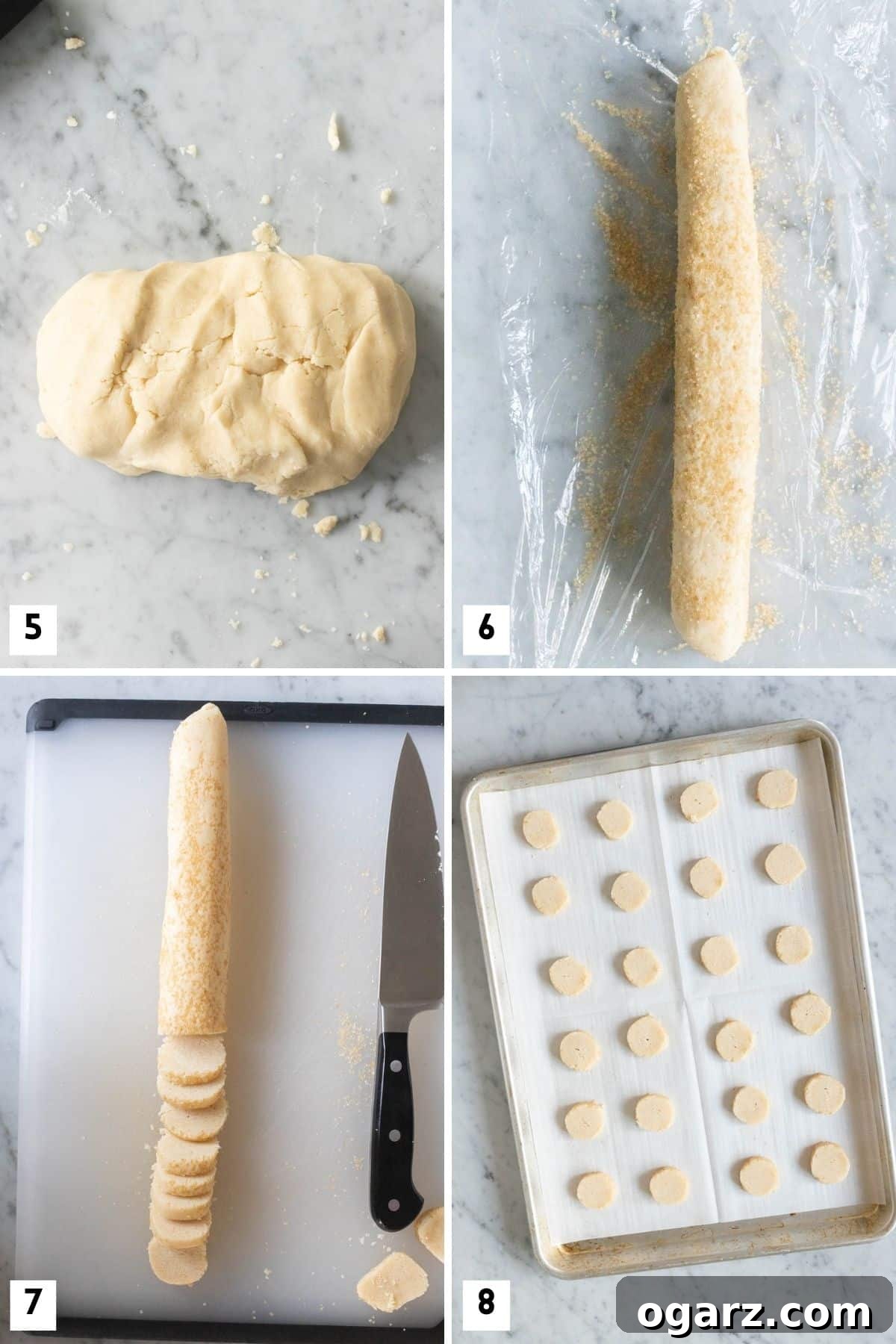
- Knead and Shape the Dough: Turn the slightly crumbly dough out onto a lightly floured work surface. Gently knead it by hand for a minute or two until it comes together into a smooth, cohesive ball. Divide the dough into three equal portions.
- Form Logs and Roll in Sugar: Take each portion of dough and gently shape it into a uniform log, approximately 1.5 inches (3.8 cm) in diameter. For ease and precision, you can wrap the dough in plastic wrap and use a ruler or a straight edge to help form a perfect cylindrical log. Once shaped, roll each log thoroughly in coarse sugar, ensuring an even coating all around. This sugared exterior will caramelize beautifully during baking.
- Chill the Dough: Wrap each sugar-coated log tightly in plastic wrap. Transfer them to the refrigerator and chill for at least 1 to 2 hours, or preferably longer (up to 2-3 days). Chilling is a crucial step for shortbread cookies; it allows the butter to firm up, preventing the cookies from spreading excessively in the oven and ensuring they maintain their shape and delicate, tender crumb.
Phase 4: Baking and Cooling
- Prepare for Baking: When you’re ready to bake, preheat your oven to 350°F (180°C). Line a baking sheet with parchment paper to prevent sticking and ensure even baking.
- Slice the Cookies: Retrieve the chilled dough logs from the refrigerator. Using a sharp knife, carefully cut the logs into uniform 1/4-inch (about 0.6 cm) thick slices. For perfectly round cookies, you can gently reshape any slightly flattened edges with your fingers after slicing.
- Bake to Golden Perfection: Arrange the sliced cookies on the prepared baking sheet, leaving a little space between each. Bake in the middle of the preheated oven for 13-15 minutes, or until the edges are just lightly browned and the centers appear set. The goal is a pale, sandy color with golden edges, reflecting their “Heidesand” name.
- Cool Completely: Once baked, remove the cookies from the oven and let them cool on the baking sheet for a few minutes before carefully transferring them to a wire rack to cool completely. They will firm up as they cool, achieving their signature tender-crisp texture.
Expert Tips for Heidesand Success
Achieve bakery-quality German shortbread cookies with these insider tips and tricks:
- Addressing Crumbly Dough: If your dough feels too dry and crumbly to form logs, resist the urge to add more butter or flour. Instead, incorporate a very small amount of milk (1-2 tablespoons at a time) and knead gently until the dough just comes together. The goal is just enough moisture to bind without making it sticky or tough.
- Mastering Browned Butter: While simple, browning butter requires your full attention. Use a light-colored saucepan to easily monitor the color changes of the milk solids. Keep the heat at medium, allowing the butter to simmer gently rather than boil vigorously. The moment you see those amber speckles and smell a nutty aroma, remove it from the heat and transfer it to a cool bowl to stop the cooking. This prevents it from burning and becoming bitter.
- Precision in Measurement: German baking, particularly for shortbread, thrives on precision. For the most consistent results, especially with flour, I highly recommend using a digital kitchen scale to measure ingredients by weight. This eliminates inconsistencies that can arise from volumetric measuring (cups), which can lead to variations in dough texture.
- Achieving Uniform Slices: A very sharp knife is ideal for cutting clean, even slices from the chilled dough logs. For an even more uniform cut, some bakers swear by unflavored dental floss! Simply wrap the floss around the log at your desired thickness and pull to slice through. After slicing, a quick, gentle roll between your palms can help perfect any slightly misshapen cookies.
- Aiding Dough Shaping: To effortlessly shape the dough into perfect logs, try wrapping the dough loosely in plastic wrap before rolling. This helps compact the dough evenly and allows you to create a smooth, consistent cylinder.
- Creative Rolling Alternatives: While coarse sugar is traditional and delicious, don’t hesitate to experiment! For an elegant twist, roll the logs in finely chopped pistachios or almonds before chilling. You can also vary the timing: roll the entire log in sugar as instructed, or for a more defined sugary edge, slice the cookies first and then roll each individual cookie’s edge in sugar before baking.
- The Egg Debate: Some Heidesand recipes call for an egg to make the dough more pliable. However, traditional Heidesand often omits eggs to achieve that distinctively tender, crumbly shortbread texture. Adding an egg will result in a firmer, more cake-like cookie, altering the authentic Heidesand experience. For true tenderness, stick to the egg-free recipe.
Recipe FAQs for Heidesand
Shortbread is a beloved type of biscuit or cookie, particularly popular in European culinary traditions. It is characterized by its rich, buttery taste, subtle sweetness, and dense yet wonderfully crumbly texture. Traditionally, shortbread is made with just three core ingredients: butter, sugar, and flour, with no leavening agents or eggs (though some modern variations might include a small amount of baking powder or cornstarch for added tenderness). The high butter content gives shortbread its signature crispness and delicate, melt-away quality.
Making brown butter (also known as beurre noisette) is a simple yet transformative process that adds incredible depth to your baking. To start, melt your butter in a light-colored saucepan over medium-low heat. Continue cooking, stirring or whisking occasionally, as the butter melts, foams, and then the milk solids at the bottom begin to toast. You’ll notice the butter change from pale yellow to golden, then amber, and finally a rich, nutty brown, with small brown specks appearing. A distinct nutty aroma, reminiscent of toasted hazelnuts, will emerge. This typically takes about 5 to 8 minutes. The key is to watch it carefully, as butter can go from perfectly browned to burnt very quickly. Once it reaches the desired amber color with fragrant brown specks, immediately remove it from the heat and transfer it to a cool bowl to stop the cooking process.

Serving Suggestions for Your Heidesand
These exquisite German brown butter shortbread cookies are versatile and perfect for any occasion, but they truly shine during the holiday season. They make a splendid addition to any festive cookie platter, offering a sophisticated counterpoint to other holiday treats. Pair them beautifully with a warm glass of traditional mulled wine (Glühwein) for adults, or a comforting mug of Kinderpunsch (German non-alcoholic Christmas punch) for a family-friendly celebration. Beyond beverages, Heidesand can also be served alongside a scoop of vanilla ice cream, as a delightful accompaniment to your morning coffee, or simply enjoyed on their own as a perfect little indulgence.
Make-Ahead and Storage Guidance
One of the many benefits of baking Heidesand cookies is their excellent make-ahead potential and impressive shelf-life, making them ideal for holiday preparations or meal planning.
- Dough Preparation: The prepared Heidesand dough logs can be made in advance and stored tightly wrapped in plastic wrap in the refrigerator for up to 2-3 days. This flexibility allows you to bake fresh cookies on demand, whenever you desire. Before slicing and baking, allow the chilled logs to sit at room temperature for 20-30 minutes to soften slightly; this makes them easier to cut without crumbling.
- Baked Cookie Storage: Once baked and completely cooled, store your Heidesand cookies in an airtight container or a traditional metal cookie tin. Keep them in a cool, dark place (like a pantry). In my experience, properly stored Heidesand cookies will retain their fresh taste and tender texture for at least 3 weeks, often longer. This makes them perfect for preparing in advance for holiday gatherings, as gifts, or simply to enjoy over an extended period.

Explore More German Christmas Recipes
If you’ve fallen in love with the charm of Heidesand, you’ll surely enjoy exploring other traditional German holiday treats. These recipes capture the festive spirit and delicious flavors of German Christmas baking.
German Recipes
Marzipankartoffeln (Marzipan Potatoes)
Cookies, Brownies & Bars
Meringue Cookies
Cookies, Brownies & Bars
Nut Corners (German Nussecken)
German Recipes
German Stollen Recipe
Never Miss A Recipe! Subscribe to our newsletter and follow along on Facebook, Instagram, and Pinterest for more great recipes and all of the latest updates.

Heidesand (German Brown Butter Shortbread Cookies)
Ingredients
- 1 cup unsalted butter
- 1 1/4 cup granulated sugar
- 1 pinch salt
- 1 1/2 tsp vanilla sugar, or vanilla extract
- 3 Tbsp milk
- 2 1/2 cups all-purpose flour
- 1/4 tsp baking powder
- Coarse sugar for rolling
Instructions
-
In a small, light-colored saucepan over medium heat, melt the butter. Let it simmer, whisking constantly, until brown specks appear at the bottom and the butter has a rich amber color and nutty aroma (approx. 5-8 minutes). Transfer the browned butter to a bowl and let it cool completely until it solidifies to a soft, spreadable consistency, about 30-45 minutes.
-
In the bowl of a stand mixer fitted with the paddle attachment (or using a hand mixer), beat the cooled, solidified browned butter until smooth. Add granulated sugar, salt, vanilla sugar (or extract), and milk. Mix until smooth and well combined.
-
In a separate bowl, combine the all-purpose flour and baking powder. Gradually add this dry mixture to the butter mixture with the mixer running on low speed. Mix until just combined. The dough will look slightly crumbly but should hold together when pressed. If too dry, add 1-2 tablespoons of milk.
-
Turn the dough out onto a lightly floured work surface. Knead by hand until it comes together and is smooth. Divide the dough into three equal portions and shape each portion into a log with a 1.5-inch diameter.
-
Roll each dough log thoroughly in coarse sugar and then wrap tightly in plastic wrap. Refrigerate for at least 1 hour, or up to 2-3 days, to allow the dough to firm up.
-
When ready to bake, preheat your oven to 350°F (180°C). Line a baking sheet with parchment paper.
-
Remove the chilled dough logs from the fridge (let sit 20-30 min at room temp if very hard). Using a sharp knife, cut the logs into 1/4-inch thick slices and transfer the cookies onto the prepared baking sheet.
-
Bake cookies for 13-15 minutes in the middle of the oven, or until the edges are just lightly browned. The cookies should remain pale in the center. Remove from the oven and let cool completely on a wire rack.
Notes
- Crumbly dough: If the dough is too crumbly to form logs, add 1-2 tablespoons of milk and knead gently until it comes together.
- Browned butter: Use a light-bottomed saucepan to easily see the browning milk solids. Watch carefully as butter burns quickly; remove from heat as soon as it’s amber with brown flecks.
- Measuring: For precise results, especially with flour, use a kitchen scale to measure by weight.
- Slicing: Use a very sharp knife or unflavored dental floss for clean, uniform slices. Gently reshape cookies after slicing if needed.
- Shaping: Wrap the dough in plastic wrap while shaping into logs for easier and more uniform cylinders.
- Rolling: Besides sugar, you can roll the logs in finely chopped pistachios or almonds for a different flavor and texture.
- Egg: Traditional Heidesand is egg-free to maintain its tender, crumbly texture. Adding an egg will result in a firmer cookie.