
Table of Contents
- Introduction to Juicy Roasted Turkey Breast
- Why Choose Turkey Breast for Your Gathering?
- The Secret to Succulent Turkey: Citrus Herb Compound Butter
- Selecting the Perfect Turkey Breast
- Key Ingredients Explored
- How to Make a Roasted Turkey Breast with Citrus and Herbs
- Mastering the Art of Pan Gravy
- Common Roasting Questions & Troubleshooting
- What to Serve with Roasted Turkey Breast
- Storage and Creative Leftover Ideas
- Roasted Turkey Breast with Citrus and Herbs (Printable Recipe)
Introduction to Juicy Roasted Turkey Breast
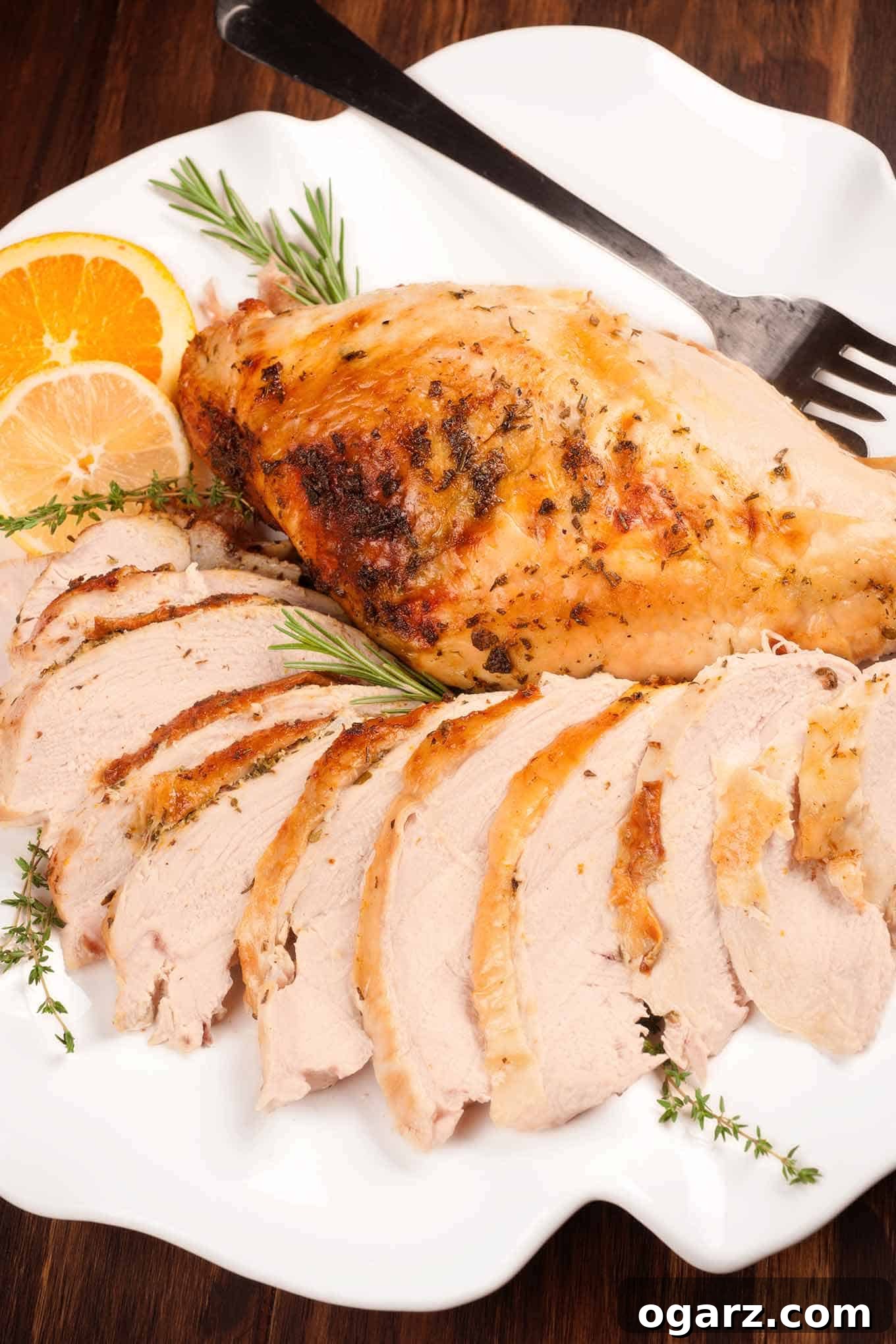
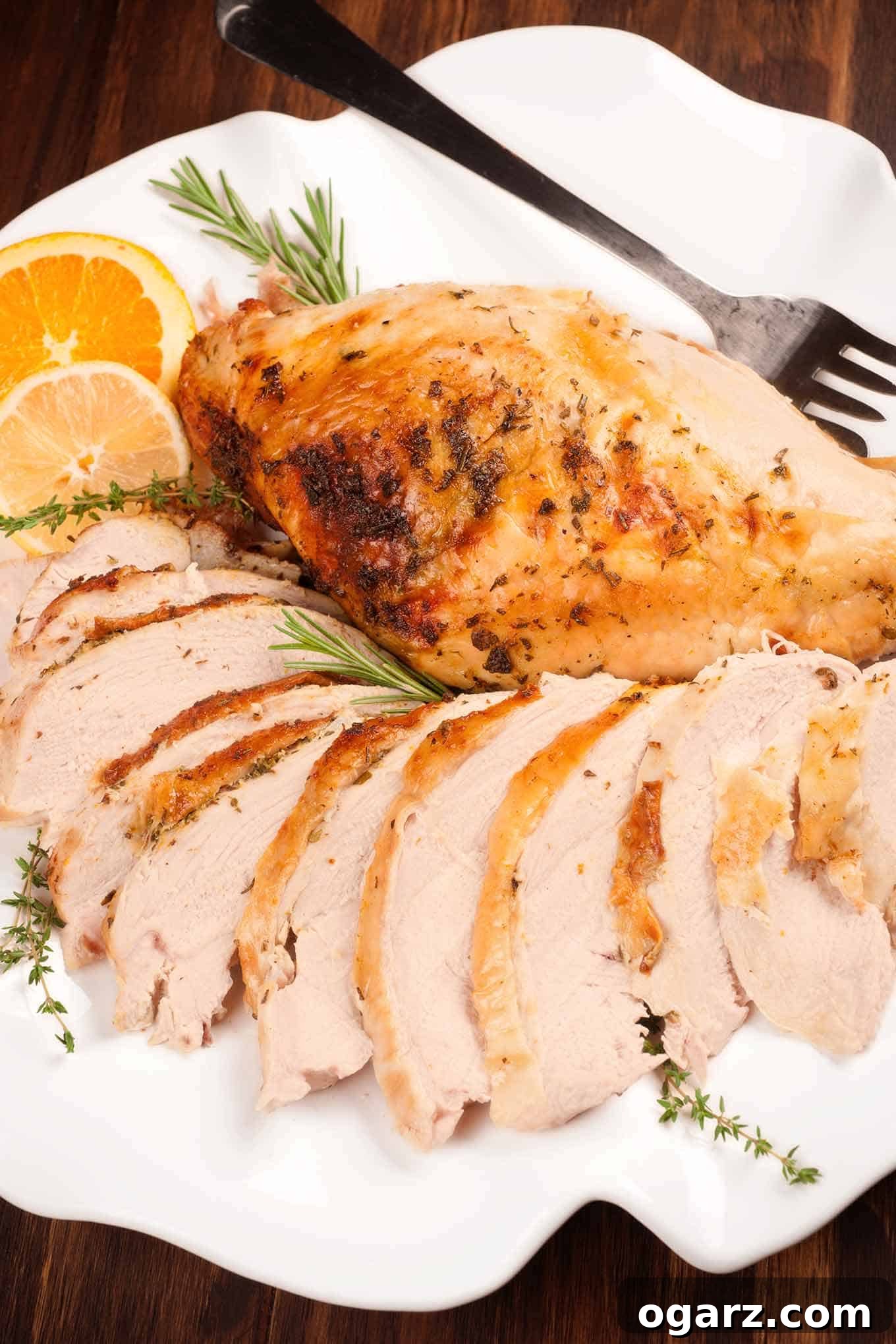
Transform your holiday dinner or weeknight meal into an extraordinary culinary experience with this perfectly roasted turkey breast. Forget dry, bland turkey; our method guarantees a remarkably juicy texture and an explosion of fabulous flavor, all thanks to a simple yet incredibly effective technique: a homemade citrus herb compound butter. This aromatic butter, brimming with fresh ingredients like thyme, sage, rosemary, marjoram, vibrant orange zest, and tangy lemon zest, is spread delicately under the turkey skin before roasting. As the turkey cooks, the butter melts, infusing the meat with moisture and rich, herbaceous notes, resulting in a tender, succulent breast with a beautifully crisp, golden-brown skin. This recipe simplifies the often daunting task of preparing turkey, making it accessible for home cooks of all skill levels, and ensures a memorable meal every time.
Why Choose Turkey Breast for Your Gathering?
For many, Thanksgiving or other festive gatherings conjure images of a grand, whole roasted turkey. However, for smaller families or more intimate celebrations, a whole bird can often lead to excessive leftovers and unnecessary waste. This is where a perfectly roasted turkey breast shines as an ideal solution. It offers all the traditional flavors and festive appeal of a full turkey without the overwhelming size. Beyond special occasions, a turkey breast is also a fantastic choice for a luxurious Sunday dinner or a special weeknight meal, providing a lean, flavorful protein that pairs wonderfully with a variety of side dishes. We’ve dedicated ourselves to perfecting turkey breast recipes, including a zesty cider-brined turkey breast and a savory boneless turkey breast rolled and stuffed with apple and cranberry. This citrus herb version, however, stands out for its straightforward elegance and unparalleled succulence.
The Secret to Succulent Turkey: Citrus Herb Compound Butter
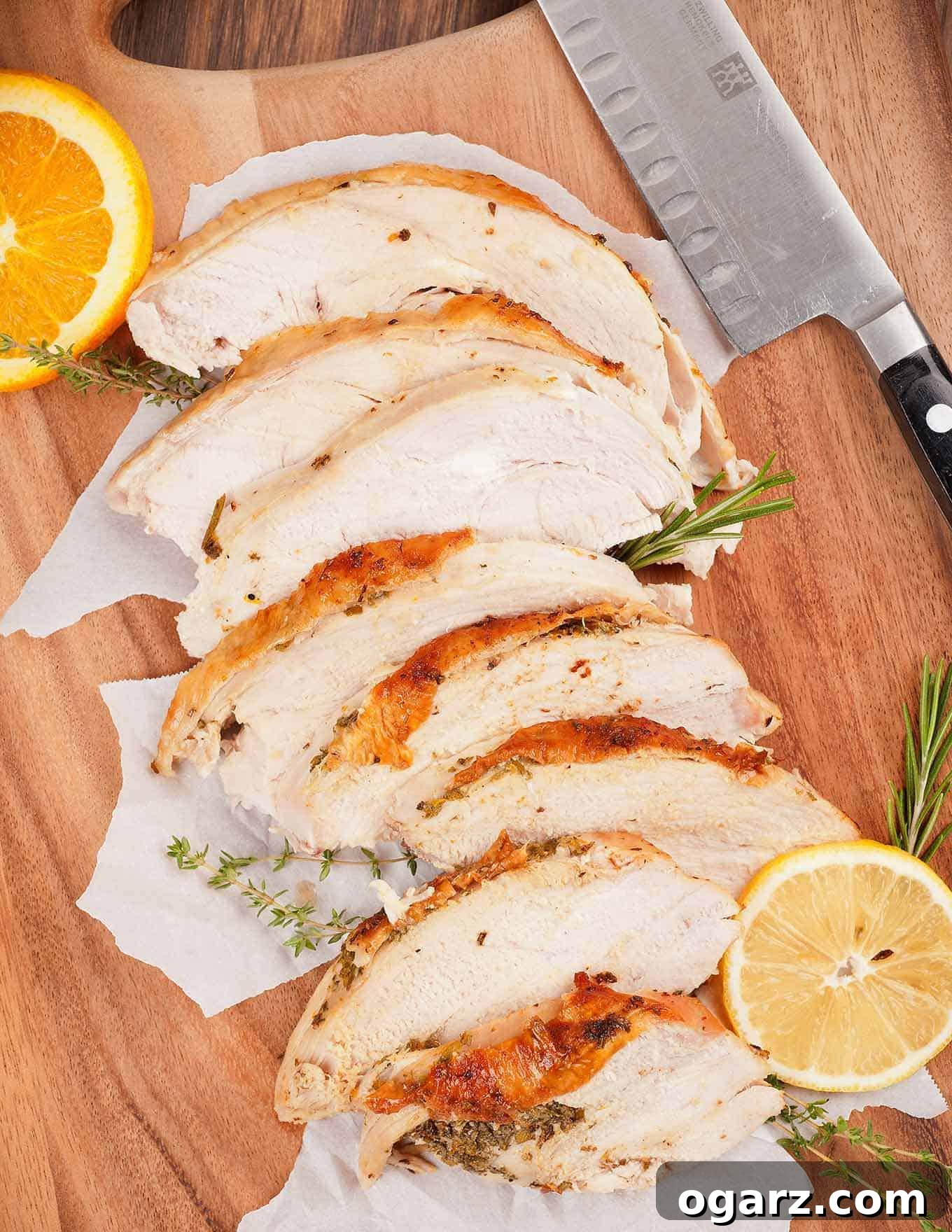
The hallmark of this recipe lies in its ingenious use of compound butter, a simple yet powerful technique that transforms an ordinary turkey breast into a culinary masterpiece. Compound butter is essentially butter blended with other flavorful ingredients – in this case, a vibrant mix of fresh herbs and citrus zests. When this seasoned butter is gently spread under the skin of the turkey breast, it works wonders. First, the butter acts as a natural basting agent from the inside out. As it melts during roasting, it slowly renders into the meat, ensuring unparalleled moisture and tenderness. This internal basting is far more effective than external basting alone, which primarily keeps the skin moist.
Secondly, the fresh herbs (thyme, sage, rosemary, marjoram) release their aromatic oils directly into the turkey meat, infusing every fiber with a profound, earthy flavor. The addition of lemon and orange zest introduces a bright, fresh acidity that cuts through the richness of the butter and turkey, adding a delightful tang and enhancing the overall flavor profile. Dijon mustard also plays a subtle but important role, adding a touch of umami and depth without overpowering the delicate herb and citrus notes. This method not only keeps the meat incredibly juicy but also contributes to achieving that coveted crispy, golden-brown skin, making for a truly impressive and delicious centerpiece.
Selecting the Perfect Turkey Breast
Choosing the right turkey breast is the first step towards a successful roast. When you’re at the grocery store or butcher, consider the following:
- Size: Turkey breasts typically range from 4 to 9 pounds, with 5 to 7 pounds being the most common. For a holiday meal with traditional sides like stuffing and mashed potatoes, allow for approximately ¾ to 1 pound of turkey per person. This generous estimate should ensure everyone gets enough and leave you with some delicious leftovers.
- Bone-in vs. Boneless: This recipe calls for a bone-in turkey breast. The bone helps to insulate the meat, promoting more even cooking and often resulting in a juicier final product. It also contributes to richer pan drippings for your gravy. While boneless turkey breasts are quicker to cook, they can dry out more easily.
- Fresh vs. Frozen: Fresh turkey breasts are ideal as they require less prep time. If using a frozen turkey breast, ensure it is thoroughly thawed in the refrigerator before beginning. This can take several days depending on the size (allow 24 hours for every 4-5 pounds). Never thaw at room temperature.
- Look and Feel: Opt for a turkey breast that looks plump and has a healthy, pinkish color. Avoid any with discolored spots or a strong odor.
Key Ingredients Explored
Understanding the role of each ingredient is essential for achieving the best flavor and texture. The complete list, including precise quantities, is available in the printable recipe card below.
- TURKEY BREAST: As discussed, a 4.5 to 7-pound bone-in turkey breast is perfect for this recipe. The bone-in aspect helps maintain moisture and adds flavor to the drippings.
- BUTTER (UNSALTED): Always opt for unsalted butter. This gives you complete control over the seasoning of your dish. Different brands of salted butter can vary widely in their salt content, which can lead to an overly salty result. Softened butter is crucial for easy blending with herbs and for spreading evenly under the skin.
- FRESH HERBS: This recipe features a classic poultry blend: fresh thyme, sage, rosemary, and marjoram. These herbs complement turkey beautifully, offering earthy, slightly peppery, and piney notes. Fresh herbs are paramount here; their vibrant oils release far more flavor than dried. While fresh marjoram can sometimes be elusive, you can substitute about ½ teaspoon of dried marjoram or simply omit it if unavailable, though it adds a lovely subtle sweetness.
- CITRUS ZEST (LEMON & ORANGE): The zest, which is the colored outer layer of the citrus fruit, contains concentrated essential oils that deliver bright, aromatic flavors. We recommend using organic lemons and oranges if possible, especially since you’ll be using the peel directly. The combination of lemon and orange provides a perfect balance of tartness and subtle sweetness that invigorates the turkey.
- DIJON MUSTARD: A touch of Dijon mustard adds a sophisticated tangy flavor and helps to emulsify the compound butter, giving it an extra creamy consistency. Its subtle spice enhances the savory notes of the turkey without being overpowering. It’s important to use Dijon-style mustard specifically; other mustards like yellow mustard or grainy mustards have different flavor profiles and textures, so it’s best to omit Dijon if you don’t have it rather than substitute.
- CHICKEN BROTH (LOW-SODIUM): Pouring low-sodium chicken broth into the roasting pan serves multiple critical functions. Firstly, it creates a moist environment in the oven, helping to prevent the turkey from drying out and promoting even cooking. Secondly, it prevents the precious pan drippings from burning, ensuring they remain flavorful and ready to form the base of your rich, homemade gravy. Using low-sodium broth allows you to control the final saltiness of both the turkey and the gravy.
- SALT & FRESHLY GROUND BLACK PEPPER: Generous seasoning is key. Salt penetrates the meat, enhancing its natural flavors and aiding in moisture retention. Freshly ground black pepper adds a pungent, aromatic kick that complements the herbs.
How to Make A Roasted Turkey Breast with Citrus and Herbs
Ready to create this spectacular dish? Here’s a detailed guide to each step. For precise measurements and a checklist, refer to the printable recipe card below.
1. Preheat and Prepare the Turkey
Preheat your oven to a high 425°F (220°C). This initial high heat is crucial for achieving a beautiful, crispy skin on your turkey breast. Meanwhile, unwrap your turkey breast and carefully drain any excess liquid. Using paper towels, thoroughly pat the turkey breast dry, both inside and out. A dry surface is essential for achieving crispy skin. Season the entire turkey breast liberally with salt and freshly ground black pepper. Set it aside while you prepare the compound butter.
2. Create the Citrus Herb Compound Butter
In a small mixing bowl, combine the softened unsalted butter with the finely chopped fresh thyme, sage, rosemary, marjoram, freshly grated lemon zest, orange zest, and Dijon mustard. Use a fork or a spoon to blend these ingredients together until they are uniformly incorporated and you have a fragrant, herbaceous butter mixture. The butter should be soft enough to spread easily, but not melted.
3. Apply the Compound Butter for Maximum Flavor
This step is key to a juicy and flavorful turkey. Gently work your fingers under the skin of the turkey breast, starting from the neck cavity opening and moving towards the drumstick end, taking care not to tear or completely detach the skin. The goal is to create a pocket between the skin and the meat. Once loosened, rub approximately two-thirds of the prepared compound butter mixture directly onto the meat, underneath the skin, distributing it as evenly as possible. Gently smooth the skin back into place over the buttered meat. Finally, take the remaining one-third of the compound butter and rub it generously over the outside of the turkey skin. This will help crisp the skin and add even more flavor.
4. Roast the Turkey to Perfection
Place the buttered turkey breast on a sturdy rack set inside a roasting pan. Pour 2 cups of low-sodium chicken broth into the bottom of the roasting pan. This broth will create steam in the oven, keeping the turkey moist, and prevent the pan drippings from burning, which are vital for your gravy. Transfer the roasting pan to the preheated 425°F oven and roast for an initial 20 minutes. This high heat blast helps to crisp the skin quickly. After 20 minutes, rotate the roasting pan 180 degrees in the oven to ensure even browning. Immediately reduce the oven temperature to 325°F (160°C).
Continue roasting for an additional 40 minutes to 1 hour and 15 minutes, depending on the weight of your turkey breast. Baste the turkey with the pan juices every 20 minutes to keep the skin moist and encourage even browning. The turkey is done when an instant-read thermometer inserted into the thickest part of the breast (without touching the bone) registers 160°F (71°C). Remember that the temperature will continue to rise during resting.
5. Rest the Turkey for Optimal Juiciness
Once the turkey reaches 160°F, carefully remove it from the oven. Transfer the turkey breast to a clean cutting board and loosely tent it with aluminum foil. This resting period is crucial; allow the turkey to rest for a full 20 minutes before carving. Resting allows the juices, which have migrated to the center of the meat during cooking, to redistribute throughout the breast. If you carve too soon, these juices will simply run out, resulting in a dry turkey. For food safety, check the internal temperature again after resting; it should have risen to 165°F (74°C).
Mastering the Art of Pan Gravy
No roasted turkey breast is complete without a rich, homemade pan gravy. While your turkey is resting, put those flavorful pan drippings to good use:
- Prepare Drippings: Carefully pour the pan drippings from the roasting pan into a 4-cup measuring cup or a fat separator. Allow the fat to separate and rise to the top. Skim off any excess fat from the surface, leaving behind the concentrated, flavorful juices.
- Measure Liquid: Add enough extra low-sodium chicken broth to the defatted pan juices to achieve a total of 3 cups of liquid. This ensures you have a good volume of gravy.
- Simmer and Thicken: Transfer the liquid mixture to a medium saucepan. Bring it to a gentle simmer over medium heat. In a small separate bowl, whisk together ¼ cup of cornstarch with ⅓ cup of cold water until completely smooth to create a slurry.
- Whisk and Finish: Slowly pour the cornstarch slurry into the simmering broth, whisking continuously. Continue to whisk gently until the gravy thickens to your desired consistency – it should be smooth and pourable. Season the gravy generously to taste with salt and freshly ground black pepper.
- Serve: Pour the hot, luscious gravy into a gravy boat or serving bowl and present it alongside your carved turkey and side dishes.
Common Roasting Questions & Troubleshooting
Even with a perfect recipe, questions and minor challenges can arise. Here are some common ones and how to address them:
- Why is my turkey breast dry? The most common culprit is overcooking. Always use an instant-read thermometer and remove the turkey once it reaches 160°F, allowing it to rest to reach 165°F. Insufficient basting or not using the under-the-skin butter method can also contribute.
- My skin isn’t crispy. What went wrong? Ensuring the turkey breast is thoroughly patted dry before applying butter is crucial. The initial high heat blast (425°F for 20 minutes) also helps crisp the skin. If it’s still not browning, you can increase the oven temperature slightly for the last 10-15 minutes, watching it closely.
- How do I prevent uneven browning? Rotating the roasting pan halfway through the cooking process helps expose all sides of the turkey to even heat. If one side is browning too quickly, you can loosely tent it with foil.
- My gravy is too thin/thick. If your gravy is too thin, create a small slurry with a teaspoon of cornstarch and a tablespoon of cold water, then whisk it into the simmering gravy until thickened. If it’s too thick, simply whisk in a little more chicken broth or water until it reaches the desired consistency.
- Can I use dried herbs instead of fresh? While fresh herbs provide the best flavor, you can substitute with dried herbs. Use about one-third the amount of dried herbs compared to fresh, as dried herbs are more concentrated. For example, if the recipe calls for 2 teaspoons of fresh thyme, use about ¾ teaspoon of dried thyme.
What to Serve with Roasted Turkey Breast
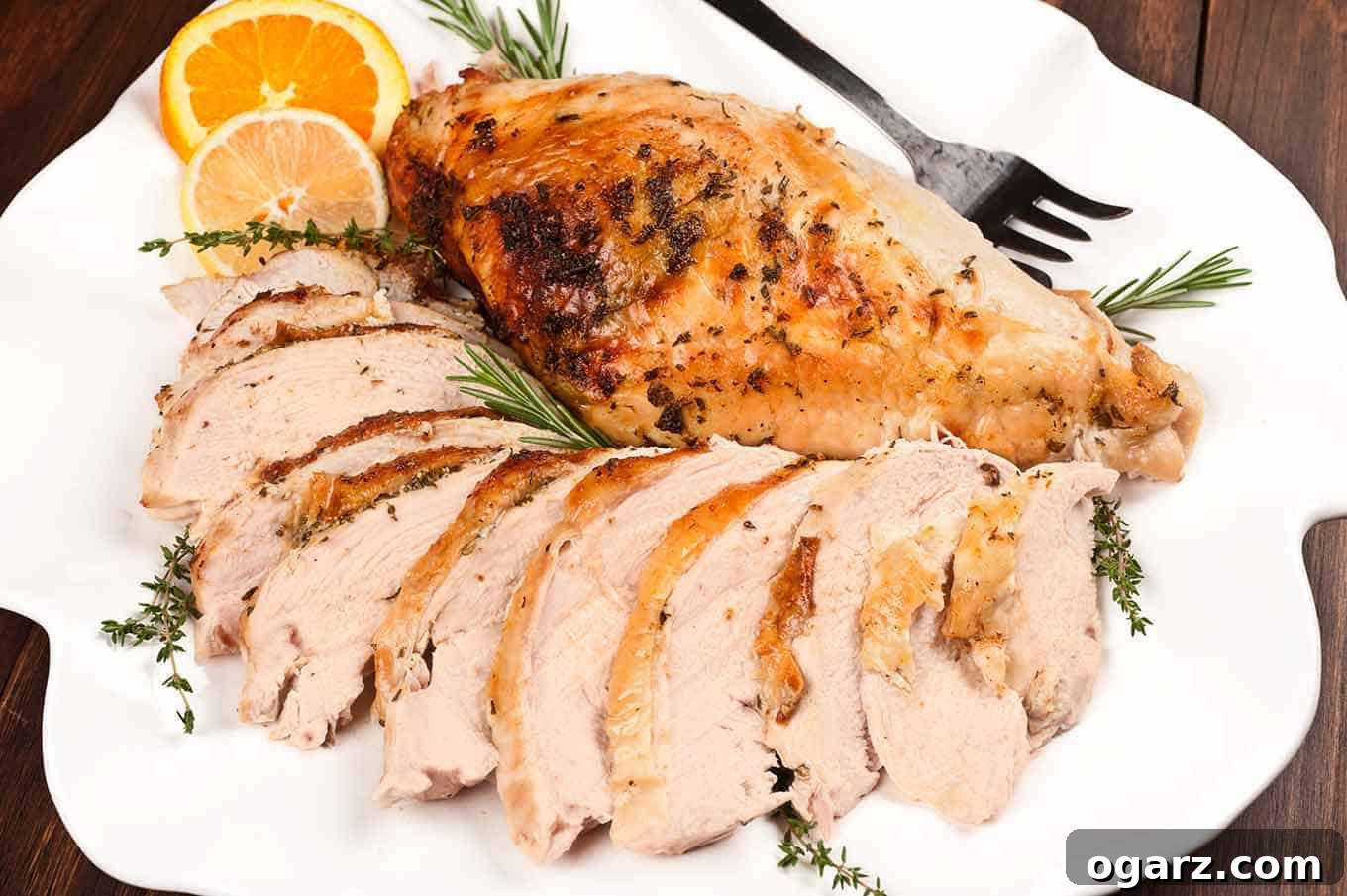
This magnificent roasted turkey breast, with its vibrant citrus and herb flavors, is versatile enough for any occasion. For a truly classic and comforting holiday dinner for a group of four to six guests, we highly recommend pairing it with these timeless side dishes:
- Baked Orange Sweet Potatoes: Light, fluffy, and with a delightful soufflé-like quality, these sweet potatoes offer a lovely balance to the savory turkey. Their natural sweetness and citrusy notes complement the turkey’s flavors perfectly.
- Old Fashioned Bread Stuffing: An essential holiday companion. This stuffing is incredibly easy to make, beautifully moist, and richly flavored with savory herbs, making it an indispensable part of your festive spread.
- Green Beans with Toasted Walnuts and Shallots: For a fresh and elegant vegetable side, this dish offers a crisp-tender texture and nutty crunch that is a delightful, lighter alternative to traditional green bean casserole.
- Cranberry Sauce: Whether homemade or store-bought, the tartness of cranberry sauce provides a fantastic counterpoint to the rich turkey.
- Creamy Mashed Potatoes: A comforting classic that soaks up gravy beautifully and offers a smooth texture contrast.
- Dinner Rolls: Perfect for wiping up every last drop of gravy.
Storage and Creative Leftover Ideas
One of the joys of cooking a turkey breast, even for a smaller group, is the potential for delicious leftovers! Proper storage is key to enjoying your turkey for days:
- Storage: Allow any leftover turkey to cool completely, then carve it off the bone (if applicable) and store it in an airtight container in the refrigerator for up to 3-4 days. For longer storage, freeze carved turkey in freezer-safe bags or containers for up to 2-3 months. Thaw in the refrigerator before reheating.
- Reheating: To reheat, slice the turkey thinly and warm gently in a pan with a splash of chicken broth or gravy to prevent it from drying out. You can also cover it and reheat in the microwave or oven at a low temperature.
Creative Leftover Turkey Ideas:
- Turkey Sandwiches: The quintessential leftover. Layer slices of turkey with cranberry sauce, stuffing, and a bit of mayonnaise on your favorite bread.
- Turkey & Wild Rice Soup: Use leftover turkey bones to make a quick broth, then add diced turkey, wild rice, carrots, celery, and herbs for a hearty soup.
- Turkey Pot Pie: Combine diced turkey with leftover gravy, vegetables, and a creamy sauce, then top with a flaky pie crust for a comforting meal.
- Turkey Salad: Shred or dice cold turkey and mix with mayonnaise, celery, grapes, and a hint of fresh herbs for a light lunch.
- Turkey Tacos or Quesadillas: Shredded turkey works wonderfully in tacos with your favorite toppings or pressed into a cheesy quesadilla.
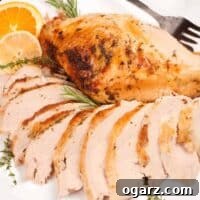
Roasted Turkey Breast with Citrus and Herbs
Lynne Webb
15 mins
1 hr 40 mins
1 hr 55 mins
6 servings
Ingredients
- 4-1/2 to 7 lb turkey breast (bone-in recommended)
- Salt and freshly ground black pepper (to taste)
- 6 tablespoons softened, unsalted butter
- 2 teaspoons fresh thyme, finely chopped
- 2 teaspoons fresh sage, finely chopped
- 2 teaspoons fresh rosemary, finely chopped
- 2 teaspoons fresh marjoram, finely chopped (or 1/2 tsp dried, or omit)
- 2 teaspoons freshly grated lemon zest
- 2 teaspoons freshly grated orange zest
- 2 teaspoons Dijon mustard
- 2 cups low-sodium chicken broth, plus more for gravy
- 1/4 cup cornstarch (for gravy)
- 1/3 cup cold water (for cornstarch slurry)
Instructions
- Preheat oven to 425°F (220°C).
- Drain any excess juices from the turkey breast and thoroughly pat dry with paper towels. Season liberally with salt and pepper and set aside.
- Combine the softened butter, chopped fresh thyme, sage, rosemary, marjoram, lemon zest, orange zest, and Dijon mustard in a small bowl until well blended.
- Being careful not to tear or detach it completely, work your fingers under the skin of the turkey breast to loosen it from the meat.
- Rub about 2/3 of the butter mixture between the skin and the meat as evenly as possible, then smooth the skin back in place. Rub the remaining butter mixture on the outside of the skin.
- Place the turkey breast on a rack in a roasting pan and pour 2 cups of chicken broth into the bottom of the pan.
- Place the turkey in the oven and roast for 20 minutes at 425°F (220°C). Then, rotate the roasting pan and reduce the oven temperature to 325°F (160°C).
- Continue roasting for 40 minutes to 1-1/4 hours (depending on weight), basting with the pan juices every 20 minutes. The turkey is done when an instant-read thermometer inserted into the thickest part of the breast registers 160°F (71°C).
- Remove the turkey breast from the oven, reserving the pan juices for gravy. Tent loosely with foil and allow it to rest for 20 minutes before carving. For safety, check to be sure the temperature rose to 165°F (74°C) during resting.
To Make Pan Gravy:
- While the turkey is resting, skim any excess fat from the reserved pan juices and transfer them to a 4-cup measure. Add enough extra chicken broth to equal 3 cups of liquid total.
- Pour the broth mixture into a saucepan and bring to a simmer over medium heat. In a small bowl, whisk together the 1/4 cup cornstarch with 1/3 cup cold water to form a smooth slurry.
- Add the cornstarch slurry to the simmering broth, whisking continuously just until thickened and smooth.
- Season the gravy to taste with salt and freshly ground black pepper.
- Transfer to a bowl or gravy boat for serving.
Notes
Enjoy this delicious recipe! Share your experience and leave a comment below.