
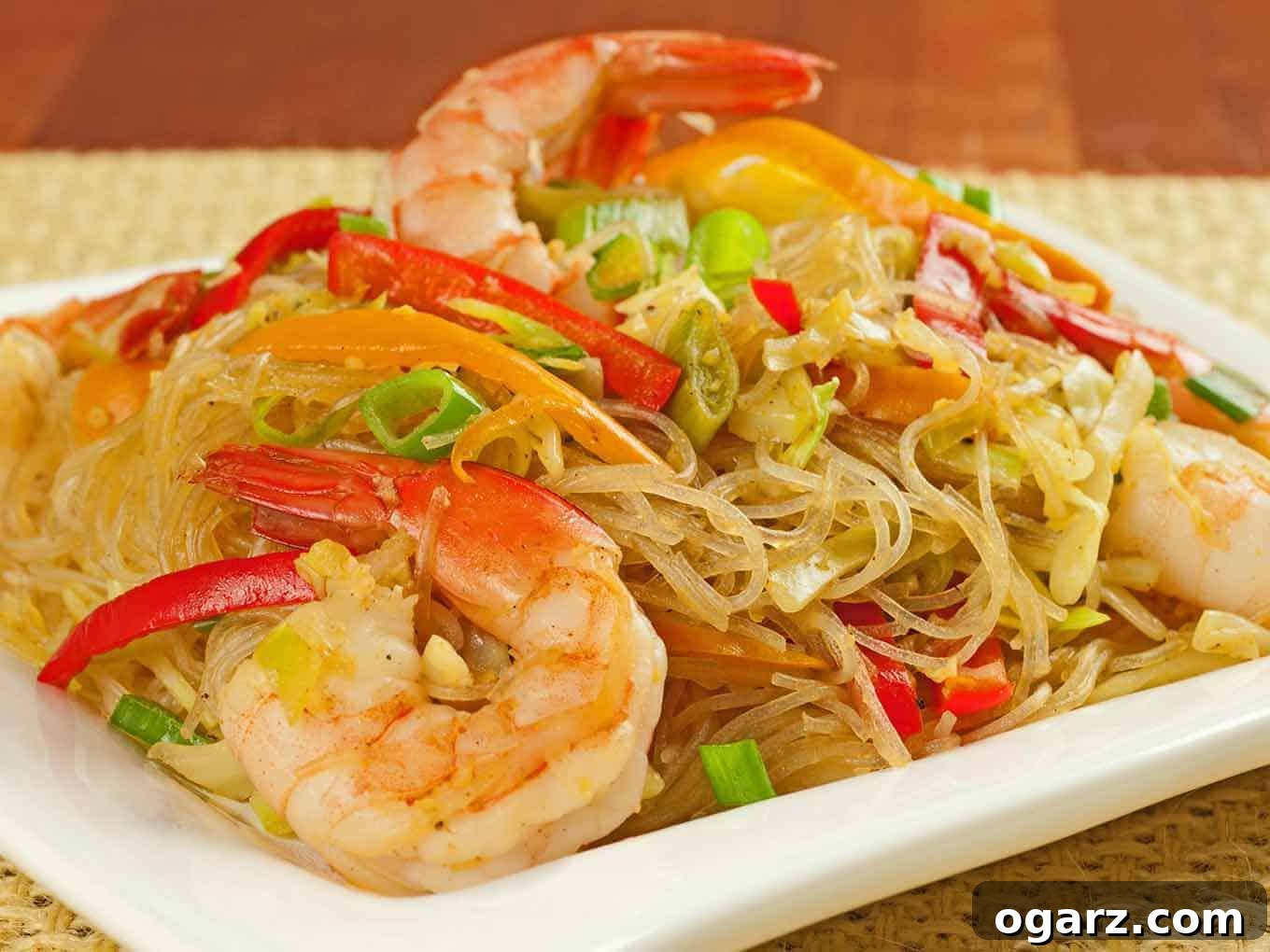

Experience the Taste of Asia: Singapore-Style Noodles with Shrimp
Embark on a culinary journey to the vibrant streets of Singapore with this exquisite Singapore-Style Noodles with Shrimp recipe. This dish, renowned for its delicate balance of sweet, savory, and spicy flavors, offers a delightful and incredibly fast stir-fry experience. Featuring tender cellophane noodles, succulent shrimp, crisp vegetables like cabbage and sweet bell peppers, and an aromatic blend of fresh ginger, garlic, and yellow curry powder, this recipe is a testament to how quickly you can create an authentic and restaurant-quality meal right in your own kitchen.
Perfect for a busy weeknight yet impressive enough for entertaining, these noodles deliver a burst of flavor in every bite. The translucent cellophane noodles absorb the rich, complex sauce, while the shrimp cooks to perfection in minutes. The addition of crunchy cabbage and vibrant bell peppers ensures a textural contrast that makes this dish truly satisfying. Get ready to transform simple ingredients into an extraordinary Asian-inspired masterpiece that will become a new family favorite!
Why You’ll Love This Singapore Noodles Recipe
Our rendition of Singapore-style noodles is more than just a meal; it’s an experience. Here’s why this recipe deserves a spot in your weekly rotation:
- Lightning-Fast Preparation: From prep to plate in just 35 minutes, it’s an ideal choice for busy weeknights when you crave something wholesome and flavorful without spending hours in the kitchen.
- Explosion of Flavors: The unique combination of fragrant yellow curry powder, pungent garlic, spicy sriracha, and sweet honey creates a complex yet harmonious taste profile that tantalizes the taste buds and leaves you wanting more.
- Healthy and Wholesome: Packed with lean protein from shrimp and an abundance of fresh, colorful vegetables, this dish is not only delicious but also incredibly nutritious. It’s a great way to incorporate more seafood and greens into your diet.
- Customizable to Your Liking: Easily adapt the recipe to your preferences by swapping out proteins, adding more of your favorite vegetables, or adjusting the spice level to suit mild or fiery palates.
- Simple Ingredients, Impressive Results: Using readily available ingredients found in most grocery stores, you can achieve a dish that looks and tastes like it came straight from a gourmet Asian restaurant.
- Perfect for Any Occasion: Whether it’s a quick family dinner, a casual get-together with friends, or a vibrant contribution to a potluck, these Singapore-style noodles are always a hit.
The Allure of Singapore Noodles: A Culinary Dive
Despite its evocative name, Singapore noodles (also known as Singapore-style vermicelli or “xingzhou mixian” in Chinese) did not actually originate in Singapore. This delicious dish is, in fact, a celebrated staple of Cantonese cuisine, particularly popular in the bustling eateries and hawker centers of Hong Kong. It’s a classic example of culinary fusion, where thin rice vermicelli noodles are expertly stir-fried with a distinctive yellow curry powder, various meats (traditionally char siu pork, chicken, and shrimp), and an assortment of fresh vegetables.
The dish is celebrated for its distinctive golden hue, primarily imparted by the curry powder, and its wonderfully fragrant aroma. The slight sweetness and savory notes, combined with a hint of spice, create a truly captivating flavor profile. Our shrimp-focused version keeps the essence of this beloved dish, highlighting the delicate seafood and crisp vegetables, while streamlining the ingredients and preparation for an incredibly fast and satisfying home-cooking experience. It brings the vibrant flavors of a classic Asian stir-fry directly to your dinner table with minimal effort.
5 out of 5 stars (based on 1 vote)
Singapore-Style Noodles with Shrimp
Lynne Webb
15 mins
20 mins
35 mins
4 servings
View Instructions
Pin Recipe
Rate Recipe
Print Recipe
Ingredients
- 6 ounces cellophane (mung bean) noodles
- 2 tablespoons chicken broth
- 3 tablespoons soy sauce
- 2 teaspoons honey or agave nectar
- 1/4 to 1/2 teaspoon sriracha, more or less to taste
- 2 tablespoons vegetable oil
- 3/4 lb large shrimp, peeled and deveined (tails left on)
- 4 cloves garlic, very finely chopped
- 1 tablespoon fresh ginger, very finely chopped
- 2 teaspoons curry powder
- 1/2 red bell pepper, sliced into very thin strips
- 1/2 yellow bell pepper, sliced into very thin strips
- 4 cups cabbage, thinly sliced
- 4 scallions, sliced
- Freshly ground black pepper, to taste
Instructions
- Bring a large pot of water to a simmer, remove from the heat, and add the cellophane noodles. Soak until the noodles are tender, about 7 to 12 minutes. Check them frequently to ensure they don’t get mushy. Drain thoroughly and set aside.
- In a small bowl, whisk together the chicken broth, soy sauce, honey (or agave nectar), and sriracha. Set this flavorful sauce aside.
- Heat the vegetable oil in a wok or a large skillet over high heat until shimmering. Add the shrimp and stir-fry quickly until they turn pink and opaque, which typically takes about 1-1/2 to 2 minutes. Using a slotted spatula, transfer the cooked shrimp to a clean plate and set aside.
- Into the same pan, add the finely chopped garlic, fresh ginger, and curry powder. Stir-fry for about 30 seconds until the mixture becomes wonderfully fragrant, being careful not to burn the garlic.
- Add the thinly sliced red and yellow bell peppers to the pan and stir-fry for 1 minute. Follow with the thinly sliced cabbage and continue to stir-fry for an additional 1-1/2 minutes, or until the cabbage is crisp-tender but still has a slight bite.
- Return the cooked shrimp to the pan. Add the sliced scallions and the reserved soy sauce mixture. Begin adding the soaked cellophane noodles to the pan, a handful at a time. Toss continuously to thoroughly combine each addition of noodles with the vibrant vegetables and aromatic sauce. Ensure everything is evenly coated.
- Season the entire dish generously with freshly ground black pepper according to your preference. Transfer the Singapore-style noodles to individual plates or a large serving platter and serve immediately while hot. Enjoy!
Essential Ingredients for Success
Crafting perfect Singapore-Style Noodles relies on a few key ingredients. Understanding their role can elevate your dish from good to unforgettable:
- Cellophane Noodles (Mung Bean Vermicelli): These thin, translucent noodles are made from mung bean starch. They are incredibly easy to prepare, absorbing flavors beautifully, and possess a slightly chewy yet delicate texture. Unlike many other noodle types, they typically don’t require boiling; simply soaking them in hot water is enough, making them a fantastic choice for quick stir-fries.
- Shrimp: Fresh, large shrimp are an excellent choice for this recipe. Peeled and deveined, with tails often left on for presentation, they cook quickly and add a sweet, briny flavor that complements the curry and other spices perfectly. If fresh shrimp aren’t readily available, high-quality frozen shrimp, thawed properly, will work just as well.
- Sweet Bell Peppers & Cabbage: The vibrant red and yellow bell peppers not only add beautiful color to the dish but also a subtle sweetness and a pleasant crunch. Cabbage, thinly sliced, provides body and another layer of crisp texture that holds up well in a stir-fry. These vegetables are stir-fried just enough to be tender-crisp, ensuring they retain their freshness and nutritional value.
- Aromatic Base: Garlic & Ginger: Freshly chopped garlic and ginger are indispensable in almost any Asian stir-fry. They form the aromatic foundation, infusing the dish with warmth, depth, and a pungent zest that awakens the palate. Always use fresh ingredients for the best flavor.
- Curry Powder: This is the defining flavor of Singapore noodles. Yellow curry powder brings an earthy, slightly spicy, and wonderfully fragrant note that gives the dish its characteristic golden color and iconic taste. Choose a good quality curry powder for maximum impact.
- The Flavorful Sauce: Soy Sauce, Chicken Broth, Honey, Sriracha: This balanced sauce provides the essential umami, sweetness, and heat. Soy sauce delivers saltiness and depth, chicken broth adds moisture and a savory base, honey (or agave nectar) balances the savory notes with a touch of sweetness, and sriracha introduces a customizable kick, allowing you to tailor the spice level to your preference.
Tips for Mastering Your Stir-Fry
Stir-frying is a quick cooking method that benefits from a few expert techniques. Follow these tips to ensure a perfectly executed Singapore-Style Noodle dish every time:
- Master the “Mise en Place”: The most crucial rule for stir-frying is to have all your ingredients prepped and ready before you start cooking. Chop all vegetables, peel shrimp, mix the sauce, and soak the noodles. Stir-frying happens fast, so you won’t have time to chop mid-cook.
- High Heat is Key: Use a wok or a large, heavy-bottomed skillet and get it screaming hot before adding oil. This intense heat creates a non-stick surface and helps achieve that signature “wok hei” (the “breath of the wok”) flavor, which adds a smoky, charred aroma.
- Don’t Crowd the Pan: Overcrowding the wok or skillet will lower its temperature significantly, causing ingredients to steam rather than stir-fry. This can result in soggy vegetables and rubbery shrimp. Cook the shrimp in a single layer, and if your pan isn’t large enough for all the vegetables at once, cook them in two batches.
- Perfect Noodle Texture: Cellophane noodles are delicate. Soak them just until they are tender and pliable, then drain them exceptionally well. Over-soaking will make them mushy and difficult to incorporate into the stir-fry. Adding them to the wok gradually ensures even distribution with the sauce and vegetables.
- Adjust Spice to Your Liking: The sriracha provides the primary source of heat in this dish. Start with the recommended smaller amount (1/4 teaspoon) and taste before adding more. You can always add a dash more at the very end if you prefer a spicier kick.
- Keep Stirring: As the name suggests, constant stirring is essential in stir-frying. This ensures even cooking, prevents sticking, and helps all the flavors meld beautifully.
Variations and Customizations for Every Palate
One of the best aspects of Singapore-style noodles is its incredible versatility. Don’t hesitate to experiment and make this recipe your own!
- Protein Power-Ups:
- Chicken: Thinly sliced chicken breast or thigh can be used instead of, or in addition to, shrimp. Marinate it briefly in a touch of soy sauce and a pinch of cornstarch for extra tenderness and flavor.
- Pork: Strips of lean pork, thinly sliced, or even leftover char siu (Chinese BBQ pork) would add a delicious traditional touch.
- Beef: Thinly sliced sirloin or flank steak can also be a fantastic addition. Ensure it’s sliced against the grain for tenderness.
- Tofu/Tempeh: For a vegetarian or vegan version, pan-fry pressed tofu cubes or tempeh until golden and add them in place of or alongside the shrimp.
- Expand Your Vegetable Medley:
- Add vibrant vegetables like snow peas, julienned carrots, broccoli florets, fresh bean sprouts, sliced mushrooms (shiitake or cremini), or even water chestnuts for added crunch.
- For an extra zing and depth of flavor, throw in some thinly sliced red onion or a handful of baby spinach at the very end.
- Spice Level Adjustments:
- For more heat, don’t just stop at sriracha. Consider adding a pinch of red pepper flakes, a finely diced bird’s eye chili, or a dash of chili oil during the final toss.
- For a milder version, simply reduce or entirely omit the sriracha. The curry powder still provides plenty of flavor without overwhelming heat.
- Noodle Alternatives:
- While cellophane noodles are traditional and recommended for their texture, you can substitute with thin rice vermicelli (also known as mei fun) if preferred. Be sure to adjust cooking and soaking times as needed, as rice vermicelli may require slightly different preparation.
Serving Suggestions for a Complete Meal
Singapore-Style Noodles with Shrimp is a deliciously complete meal on its own, offering a perfect balance of protein, carbohydrates, and vegetables. However, it can also be part of a larger Asian-inspired feast, or simply enhanced with a few thoughtful additions:
- As a Main Course: Serve immediately, piping hot, perhaps garnished with extra fresh chopped scallions, a sprinkle of toasted sesame seeds, or a drizzle of sesame oil for an added aromatic layer.
- With a Side Salad: A simple, refreshing cucumber salad with a light rice vinegar dressing, or a crisp Asian slaw, can offer a wonderful cool contrast to the warm, spicy noodles.
- Appetizer Pairings: Complement the main dish with classic Asian appetizers such as crispy vegetable spring rolls, savory egg rolls, or delicate steamed dumplings.
- Complementary Soup: A light, clear broth soup, like a traditional hot and sour soup or a comforting egg drop soup, can be a delightful accompaniment, especially on cooler evenings.
- Citrus Freshness: A squeeze of fresh lime or lemon juice over the finished dish just before serving can brighten all the flavors.
Frequently Asked Questions (FAQs) About Singapore-Style Noodles
- What are cellophane noodles?
- Cellophane noodles, also known as mung bean vermicelli, glass noodles, or bean thread noodles, are thin, transparent noodles made from mung bean starch. When cooked, they become almost invisible, hence the name “glass” noodles. They are prized for their delicate texture and ability to absorb flavors beautifully. They are also naturally gluten-free.
- Can I make this recipe gluten-free?
- Absolutely! Cellophane noodles are inherently gluten-free. To ensure your entire dish is gluten-free, simply make sure to use a certified gluten-free soy sauce (such as tamari). Additionally, double-check that your chicken broth and curry powder brands do not contain any hidden gluten ingredients. Most sriracha brands are naturally gluten-free, but always read the label to be safe.
- Can I prepare this dish ahead of time?
- Stir-fries, including Singapore-style noodles, are generally best enjoyed immediately after cooking for optimal texture and flavor, as the noodles can become softer upon sitting. However, leftovers can be stored in an airtight container in the refrigerator for up to 2-3 days. When reheating, gently warm them in a skillet over medium heat or in the microwave, adding a splash of chicken broth or water if needed to loosen the noodles and prevent them from sticking.
- What’s the best way to chop ginger and garlic for a stir-fry?
- For stir-fries, finely mincing or grating ginger and garlic is preferred. This ensures that their potent flavors are evenly dispersed throughout the dish and cook quickly without overpowering other ingredients. A microplane grater is an excellent tool for achieving very fine ginger, while a garlic press or a sharp knife can be used for mincing garlic.
- Is a wok essential for stir-frying?
- While a wok is the traditional and ideal vessel for stir-frying due to its high heat retention, even heat distribution, and sloped sides that make tossing ingredients easy, it is not strictly essential. A large, heavy-bottomed skillet or a cast-iron pan will also work effectively. The key is to ensure the pan is large enough to prevent overcrowding and allows for proper heat management.
- What if I don’t have honey or agave nectar?
- If you don’t have honey or agave nectar, you can substitute with an equal amount of brown sugar, maple syrup, or even a tiny pinch of white sugar dissolved in the broth. The goal is to add a touch of sweetness to balance the savory and spicy elements of the sauce.
Loved this recipe? Share your thoughts below!