

Step into a world of enchanting holiday aromas and flavors with authentic Pfeffernusse cookies! These traditional German iced gingerbread delights, celebrated for their unique blend of white pepper and warm spices like cinnamon, cloves, and allspice, are an indispensable treat for the festive season. If you’re compiling your holiday baking list and yearning for a recipe that captures the true spirit of Christmas, look no further than these charming German peppernuts.
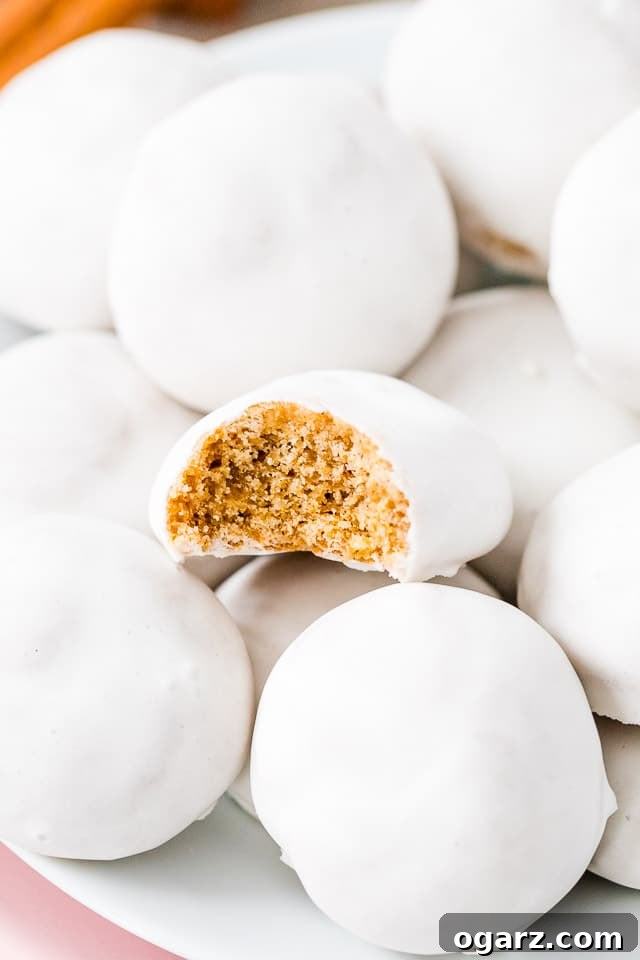
Pfeffernusse are more than just cookies; they are a bite-sized piece of culinary history, carrying traditions through generations. Their distinct, crisp glaze, which hardens to a delicate white coating upon drying, provides a beautiful contrast to the chewy, spiced interior and adds a perfect touch of sweetness. While often compared to their German cousin, Lebkuchen, Pfeffernusse are typically smaller, offering a delightful pop of flavor in every bite.
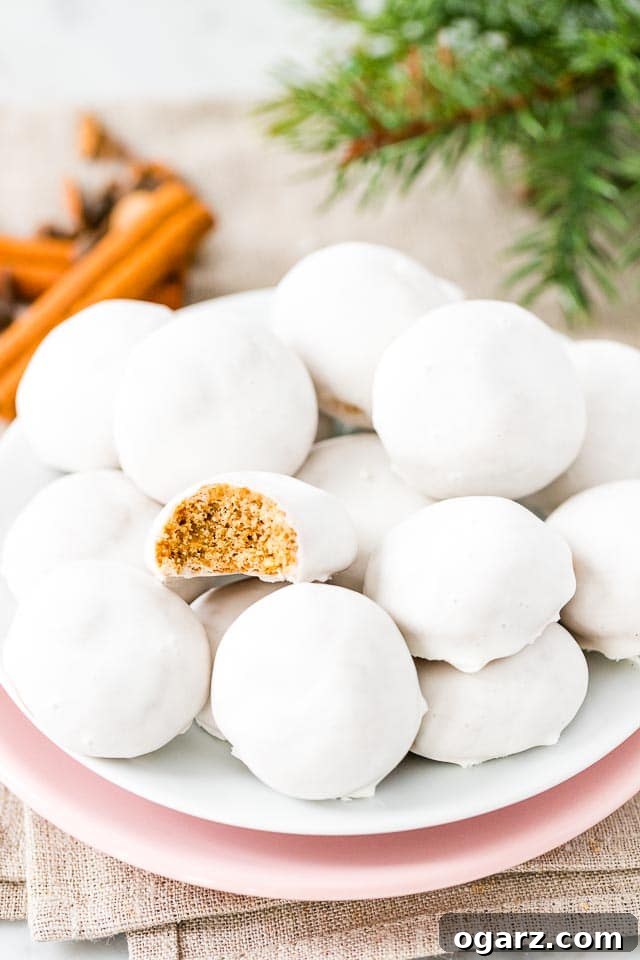
This recipe aims for peak authenticity, carefully adapting traditional methods for the modern home baker. While classic German recipes often call for specialized leavening agents like Pottasche (potash) and Hirschhornsalz (ammonium carbonate) – ingredients challenging to source outside Germany – we utilize readily available baking soda to achieve a similar light and airy texture. Similarly, where German bakers might use Zuckerruebensyrup (beet syrup), a molasses-like sweetener, our recipe substitutes it with honey, providing a familiar and equally delicious flavor profile that’s both sweet and rich.
What are Pfeffernusse Cookies? The Story Behind the Spiced Delights
Pfeffernusse, often translated as “peppernuts,” are beloved small, round iced gingerbread cookies that grace holiday tables across Germany, Denmark, and the Netherlands. Each bite delivers a harmonious blend of warm spices, including aromatic cinnamon, pungent white pepper, fragrant allspice, and earthy cloves. What truly sets them apart is their signature post-baking treatment: a simple yet elegant egg white-based glaze that forms a crisp, sweet shell, locking in their exquisite flavors.
The “pepper” in Pfeffernusse refers not just to a hint of black pepper (though some recipes include it), but more traditionally to the white pepper, which provides a subtle warmth and unique depth of flavor that distinguishes them from other gingerbread varieties. The “nuts” part of the name is often debated; some theories suggest it refers to their small, nut-like size and shape, while others propose that early versions may have included finely ground nuts in the dough. Regardless, their diminutive size makes them perfect for snacking, sharing, and adorning holiday cookie platters.
A Journey Through Their Origins: Where Pfeffernusse Call Home
The tradition of Pfeffernusse is deeply rooted in Northern European holiday celebrations, particularly in Germany, Denmark, and the Netherlands. While the exact historical origins are somewhat obscure, spiced cookies have been a part of European winter festivities for centuries, often associated with monastic baking and the use of exotic spices brought from the East.
- In Germany, they are known as Pfeffernüsse (pronounced ‘pfef-fer-noo-seh’), a staple of the Weihnachtsbäckerei (Christmas baking) tradition.
- Across the border in the Netherlands, you’ll find similar, often slightly spicier, cookies called Pepernoten (pronounced ‘peh-per-noh-ten’), which are particularly popular during Sinterklaas (St. Nicholas) celebrations in early December.
- Danish holiday tables feature Pebernødder (pronounced ‘peh-ber-nod-der’), tiny, hard, spiced cookies, often enjoyed with coffee or gløgg (mulled wine).
Each country boasts its own subtle variations in spice blend, texture, and shape, but the core essence of a small, spiced holiday cookie remains consistent, binding these cultures through a shared love for these festive treats.
Mastering the Pronunciation of Pfeffernusse
Don’t let the unique spelling intimidate you! Many find themselves doing a double-take when encountering “Pfeffernusse” for the first time. Breaking it down makes it much easier:
- The first part, “Pfeffer,” translates to “pepper.”
- The second part, “Nüsse” (note the umlaut, which changes ‘u’ to ‘ue’), means “nuts.”
The most common pronunciation in English, aiming for accuracy, is approximately ˈpfɛfə(ɹ)nuːsə. Think of it as “PFEH-fer-noo-suh,” with a soft ‘f’ sound at the beginning and the ‘oo’ as in “moon.” Practicing it a few times will have you sounding like a seasoned German baker in no time!
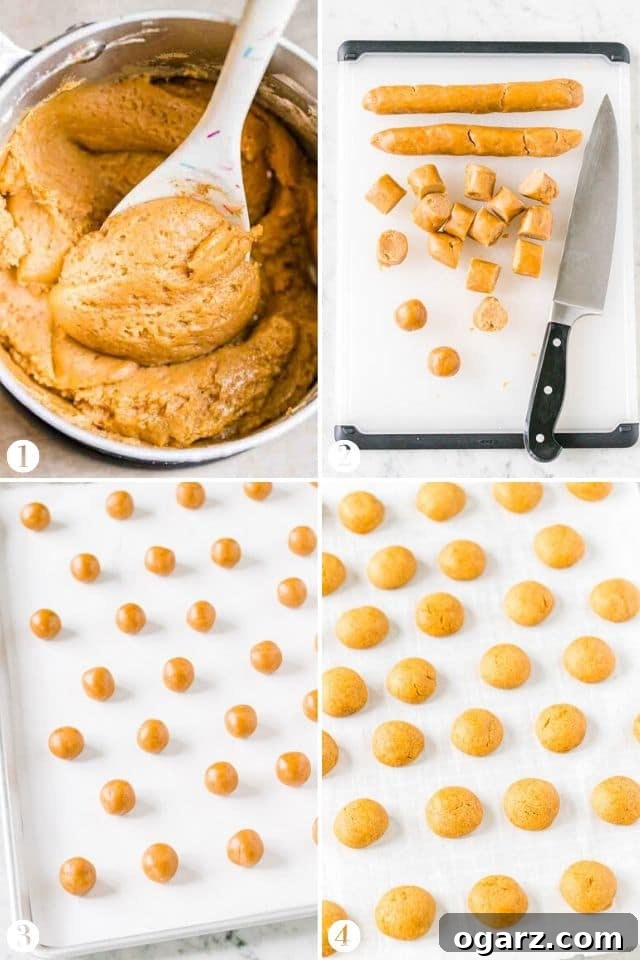
How to Craft Perfect Pfeffernusse: A Detailed Guide
Creating these delightful German Christmas cookies is a rewarding experience that fills your home with irresistible holiday aromas. While the detailed measurements and precise instructions can be found in the recipe card below, here’s an expanded overview of the process to ensure your baking success.
Making the Flavorful Dough
- Prepare Dry Ingredients: Begin by combining your all-purpose flour and baking soda in a medium mixing bowl or a measuring jug. Whisk them together thoroughly to ensure the leavening agent is evenly distributed. Set this aside.
- Simmer the Wet Ingredients and Spices: In a sturdy saucepan, combine the unsalted butter, rich honey, brown sugar, fragrant cloves, warm allspice, sweet cinnamon, and the essential finely ground white pepper. Place the saucepan over medium heat and bring the mixture to a gentle boil. This step is crucial for dissolving the sugar, melting the butter, and infusing the liquids with the wonderful spice flavors.
- Incorporate Flour Mixture: Once the mixture reaches a boil, immediately remove the saucepan from the heat. Promptly add the prepared flour and baking soda mixture into the warm liquid. Stir vigorously with a wooden spoon or heat-resistant spatula until a cohesive dough forms. It might appear crumbly at first, but keep mixing; it will come together. (If it remains excessively crumbly after a minute of mixing, refer to the notes section in the recipe card for troubleshooting tips, usually involving a touch of heavy cream.)
- Cool and Rest the Dough: Allow the dough to cool to room temperature. This is important for handling. Once cool, shape the dough into a ball and wrap it tightly in plastic wrap. Unlike some traditional recipes that require an overnight rest, this modernized version using baking soda benefits from a shorter refrigeration period. Chill the dough in the refrigerator for about 20-30 minutes. This helps solidify the butter, making the dough easier to handle and preventing excessive spreading during baking.
Shaping the Charming Peppernuts
- Preheat Oven: While the dough chills, preheat your oven to 350°F (175°C). Line a baking sheet with parchment paper to prevent sticking and ensure easy cleanup.
- Divide and Roll: Take the chilled dough and divide it into four equal portions. Working with one portion at a time (keeping the others chilled), roll it into a log approximately 1/2-inch thick. Aim for an even thickness to ensure consistent baking.
- Cut and Form Balls: Cut each log into about 8 small pieces. Each piece should be roughly the size of a small marble. Roll each piece between your palms to form neat, round balls. Their small, nut-like shape is a hallmark of Pfeffernusse.
- Arrange on Baking Sheet: Place the shaped dough balls onto the prepared parchment paper-lined baking sheet, leaving a little space between each cookie to allow for slight expansion during baking.
Baking to Perfection
- Bake Evenly: Transfer the baking sheet to the lower half of your preheated oven. Bake for approximately 10-12 minutes. Keep a close eye on them; the cookies should be lightly golden brown at the edges but still slightly soft in the center when removed from the oven. Overbaking can lead to a dry, hard cookie.
- Cool Completely: As soon as you remove the baking sheet from the oven, gently transfer the hot cookies to a wire cooling rack. Allow them to cool completely to room temperature. This is a critical step, as the glaze will not adhere properly if the cookies are warm.
Applying the Signature White Glaze
- Prepare the Glaze: In a medium bowl, combine the egg white with one tablespoon of honey. Whisk these together until they are well combined and slightly frothy. Gradually sift in the powdered sugar, mixing continuously until you achieve a smooth, pourable, yet thick glaze. The consistency should be thick enough to coat a spoon but thin enough to drip off slowly. Add a tiny bit more powdered sugar if too thin, or a drop of water if too thick.
- Dip and Dry: Once the cookies are entirely cool, dip each one individually into the prepared glaze, ensuring it’s fully coated. Lift the cookie and let any excess glaze drip off before placing it back onto the wire cooling rack. For best results, place the cooling rack over a baking sheet or wax paper to catch drips. Allow the glazed cookies to sit undisturbed for several hours, or preferably overnight, until the white coating has completely hardened. This creates the characteristic crisp shell of authentic Pfeffernusse.
Essential Tips for Pfeffernusse Success
Achieving bakery-quality Pfeffernusse at home is easier with a few insider tips:
- Accurate Flour Measurement: Flour is the foundation of your cookie. For the most consistent results, weigh your flour using a kitchen scale. If you’re using measuring cups, employ the “spoon and level” method: spoon flour into the measuring cup until overflowing, then level it off with a straight edge. Never scoop directly from the bag, as this compacts the flour and can lead to too much flour, resulting in a dry, dense dough.
- Don’t Over-Boil the Mixture: When combining butter, honey, sugar, and spices, bring the mixture to a boil just long enough to dissolve the sugar and meld the flavors. Extended boiling will cause too much moisture to evaporate, potentially making your dough too stiff or dry when the flour is added. Remove it from the heat as soon as it reaches a rolling boil.
- Adjusting Crumbly Dough: If, after incorporating the flour, your dough appears excessively crumbly and won’t come together, don’t despair! This is often due to variations in flour absorption or minor measurement discrepancies. Add a tablespoon of heavy cream at a time, kneading it into the dough, until it becomes shiny, pliable, and easy to work with. Be careful not to add too much; you want a cohesive dough, not a sticky one.
- Resting Time Matters: While traditional Pfeffernusse made with *Hirschhornsalz* often benefits from an overnight rest, this recipe, which uses baking soda for leavening, does not require such a long period. In fact, a shorter chill (20-30 minutes) is preferable, as baking soda can lose its effectiveness over prolonged periods. The short chill helps firm up the dough for easier handling and prevents spreading.
- Glaze Consistency: The perfect glaze should be smooth, thick enough to coat the cookies evenly, but thin enough to self-level and dry quickly. If your glaze is too thick, add a tiny amount (1/4 teaspoon) of water or milk until the desired consistency is reached. If too thin, sift in more powdered sugar.
- Proper Drying: Patience is key for the glaze! Allow the cookies ample time to dry completely on a wire rack. This could take several hours, especially in humid conditions. A fully hardened glaze protects the cookie and contributes to its shelf stability.
Serving and Storing Your Holiday Treats
Pfeffernusse are incredibly versatile and delightful. They are perfect for holiday parties, cookie exchanges, or simply enjoying with a warm cup of coffee, tea, or even a glass of milk. Their robust spice profile also pairs wonderfully with festive beverages like mulled wine or hot chocolate.
How Long Do Pfeffernusse Stay Fresh?
One of the best qualities of Pfeffernusse, like many gingerbread cookies, is their excellent keeping quality. Once the glaze has fully hardened, these cookies will remain fresh and delicious for several weeks. Store them in an airtight container or a traditional metal cookie tin in a cool, dry place. The flavors tend to meld and deepen over time, making them an ideal cookie to bake ahead for the holidays.
Can You Freeze Pfeffernusse Cookies?
Absolutely! Pfeffernusse cookies freeze beautifully, making them an excellent choice for meal prep or extending your holiday treat supply. Once fully cooled and glazed, arrange them in a single layer in an airtight freezer-safe container. You can place parchment paper between layers to prevent sticking. They can be frozen for up to 3 months. When ready to enjoy, simply transfer them to the refrigerator overnight or allow them to thaw at room temperature for a few hours. The texture and flavor will be nearly as perfect as freshly baked!
Where Can I Buy Pfeffernusse?
If time is short, or you simply want to enjoy these delicious cookies without baking, you can often find commercially produced Pfeffernusse during the Christmas season. Many German or European specialty stores will carry them, and in some regions, larger grocery chains like ALDI frequently stock them as part of their seasonal offerings. While store-bought versions can be tasty, nothing quite compares to the warmth, flavor, and satisfaction of homemade Pfeffernusse.
Explore More German Christmas Cookie Recipes:
The world of German Christmas baking is vast and wonderful! If you’ve enjoyed making Pfeffernusse, consider adding these other traditional delights to your holiday repertoire:
- Linzer Cookies: These charming sandwich cookies, typically filled with vibrant jam and dusted with powdered sugar, are as delightful to look at as they are to eat.
- Zimtsterne (Cinnamon Stars): A festive blend between a meringue and a macaroon, these star-shaped cookies made with ground almonds and cinnamon are light, chewy, and irresistibly aromatic.
- Vanillekipferl (Almond Crescent Cookies): Tender, delicate, and melt-in-your-mouth, these crescent-shaped cookies are rich with vanilla and ground almonds, often compared to Mexican wedding cookies.
- Nut Corners (Nussecken): A popular German bakery treat, these buttery shortbread bars are topped with a delectable nutty caramel layer and often dipped in chocolate – a true indulgence.
- Marzipan: While not a cookie itself, homemade marzipan is perfect as a filling for other baked goods or simply rolled into festive balls and enjoyed on its own.
- Meringue Cookies: Light, airy, and delicately crisp, meringue cookies offer a different texture and are a beautiful addition to any holiday cookie assortment. Learn tips and tricks for making the best meringue.
- Cornflake Cookies: For a quick and easy option, these no-bake cookies offer a satisfying crunch and can be whipped up in no time, perfect for last-minute additions to your spread.
Rating: 4.78 out of 5 stars based on 9 votes.
Authentic Pfeffernusse Cookies
Experience the magic of the holidays with these authentic German Pfeffernusse. These traditional iced gingerbread cookies, spiced with white pepper and cinnamon, are a classic festive indulgence that brings joy to any Christmas celebration.
Ingredients
For the Cookies:
- 2 cups all-purpose flour
- 1/2 tsp baking soda
- 6 Tbsp unsalted butter
- 1/4 cup honey
- 1/2 cup brown sugar
- 1/2 tsp ground cloves
- 1/2 tsp ground allspice
- 2 tsp ground cinnamon
- 1/2 tsp finely ground white pepper
For the Glaze:
- 1 egg white
- 1 Tbsp honey
- 1 cup powdered sugar
Instructions
-
In a measuring jug or medium bowl, combine the all-purpose flour and baking soda. Whisk together until well mixed, then set aside.
-
In a saucepan, combine the unsalted butter, honey, brown sugar, ground cloves, ground allspice, ground cinnamon, and finely ground white pepper. Bring the mixture to a boil over medium heat, stirring occasionally. As soon as it boils, remove it from the heat. Quickly stir the reserved flour mixture into the hot liquids until a dough forms. (See notes below if the dough appears crumbly.)
-
Allow the dough to cool to room temperature. Once cool, shape it into a ball, wrap it tightly with plastic wrap, and refrigerate for 20-30 minutes to firm up.
-
Preheat your oven to 350°F (175°C). Line a baking sheet with parchment paper. Divide the chilled dough into four equal parts. Roll each part into a log approximately 1/2-inch thick. Cut each log into about 8 pieces, then roll each piece into a small, uniform ball. Place these dough balls onto the prepared baking sheet, spacing them slightly apart.
-
Bake the cookies in the lower half of the oven for 10-12 minutes, or until the edges are lightly golden and the centers are just set. Do not overbake. Immediately remove the baking sheet from the oven and transfer the hot cookies to a wire cooling rack. Allow the cookies to cool completely to room temperature before glazing.
-
To prepare the glaze: In a medium bowl, beat the egg white with 1 tablespoon of honey until well combined. Gradually sift in the 1 cup of powdered sugar, mixing thoroughly until the glaze is smooth and has a thick, flowing consistency. Dip each cooled cookie into the glaze, ensuring it’s fully coated. Let any excess glaze drip off, then place the glazed cookies back onto the wire rack (set over a baking sheet to catch drips). Allow the glaze to harden completely, which may take several hours.
Notes
- For accurate measurements, especially for flour, it is highly recommended to weigh your flour using a kitchen scale. If using measuring cups, use the “spoon and level” method to avoid over-measuring.
- It is crucial to remove the butter-honey-sugar mixture from the heat immediately after it comes to a boil. Prolonged boiling will evaporate too much moisture, potentially leading to a dry and crumbly dough.
- If, after mixing in the flour, your dough is excessively crumbly and won’t form a cohesive ball, add a few tablespoons of heavy cream, one at a time. Mix until the dough becomes shiny, moist, and pliable.
- Traditionally, Pfeffernusse dough made with Hirschhornsalz (ammonium carbonate) requires an overnight rest. However, this recipe uses baking soda, which is most effective when used relatively quickly. Therefore, a short 20-30 minute refrigeration period is sufficient for this recipe.
Nutrition
Calories: 86 kcal | Carbohydrates: 16g | Protein: 1g | Fat: 2g | Saturated Fat: 1g | Cholesterol: 6mg | Sodium: 20mg | Potassium: 16mg | Fiber: 1g | Sugar: 10g | Vitamin A: 67IU | Vitamin C: 1mg | Calcium: 6mg | Iron: 1mg
We hope you thoroughly enjoy baking and sharing these delightful Pfeffernusse cookies. They are a timeless representation of German holiday cheer, and a truly special addition to your festive celebrations. Rate this recipe and leave a comment below to share your baking experience!