
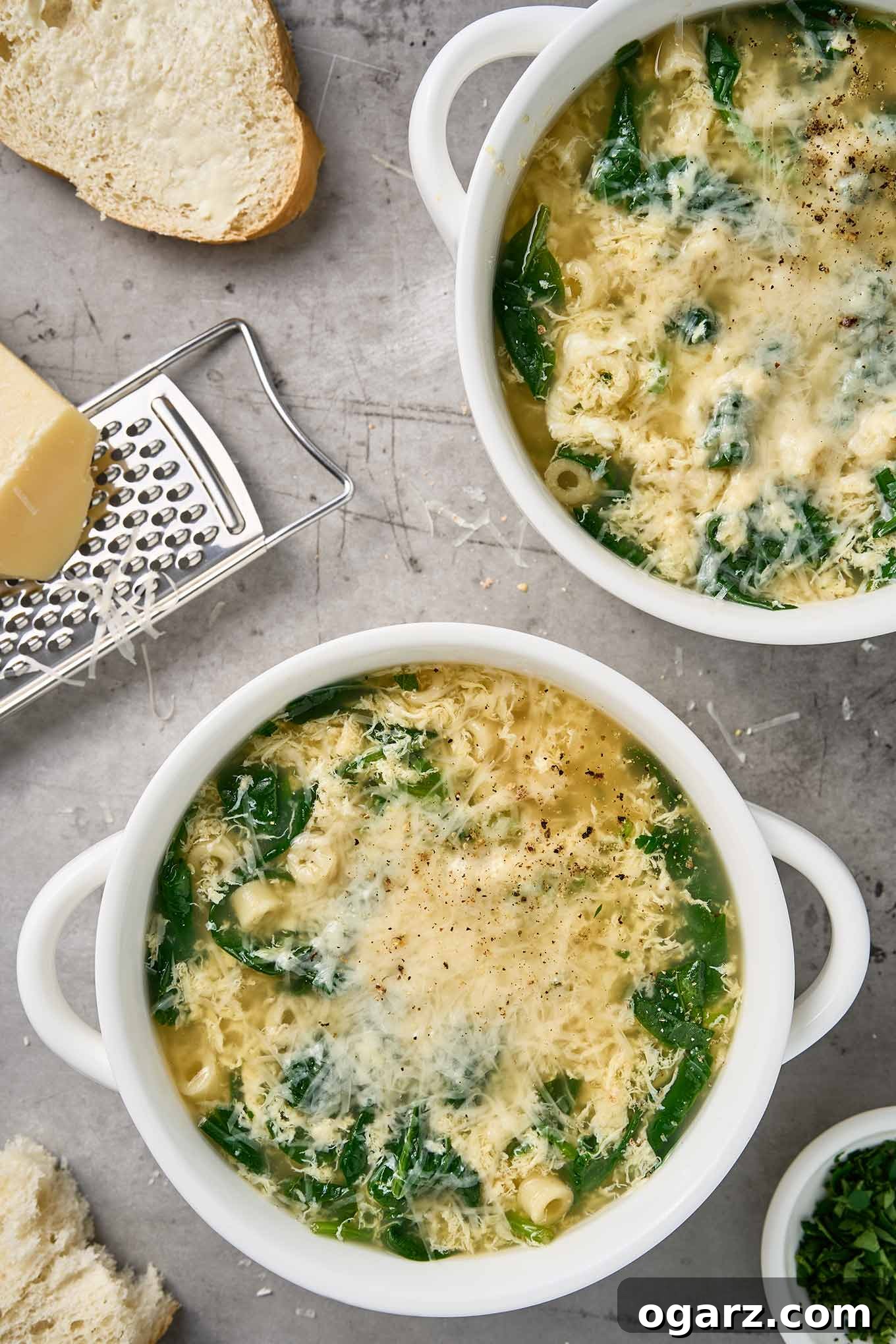
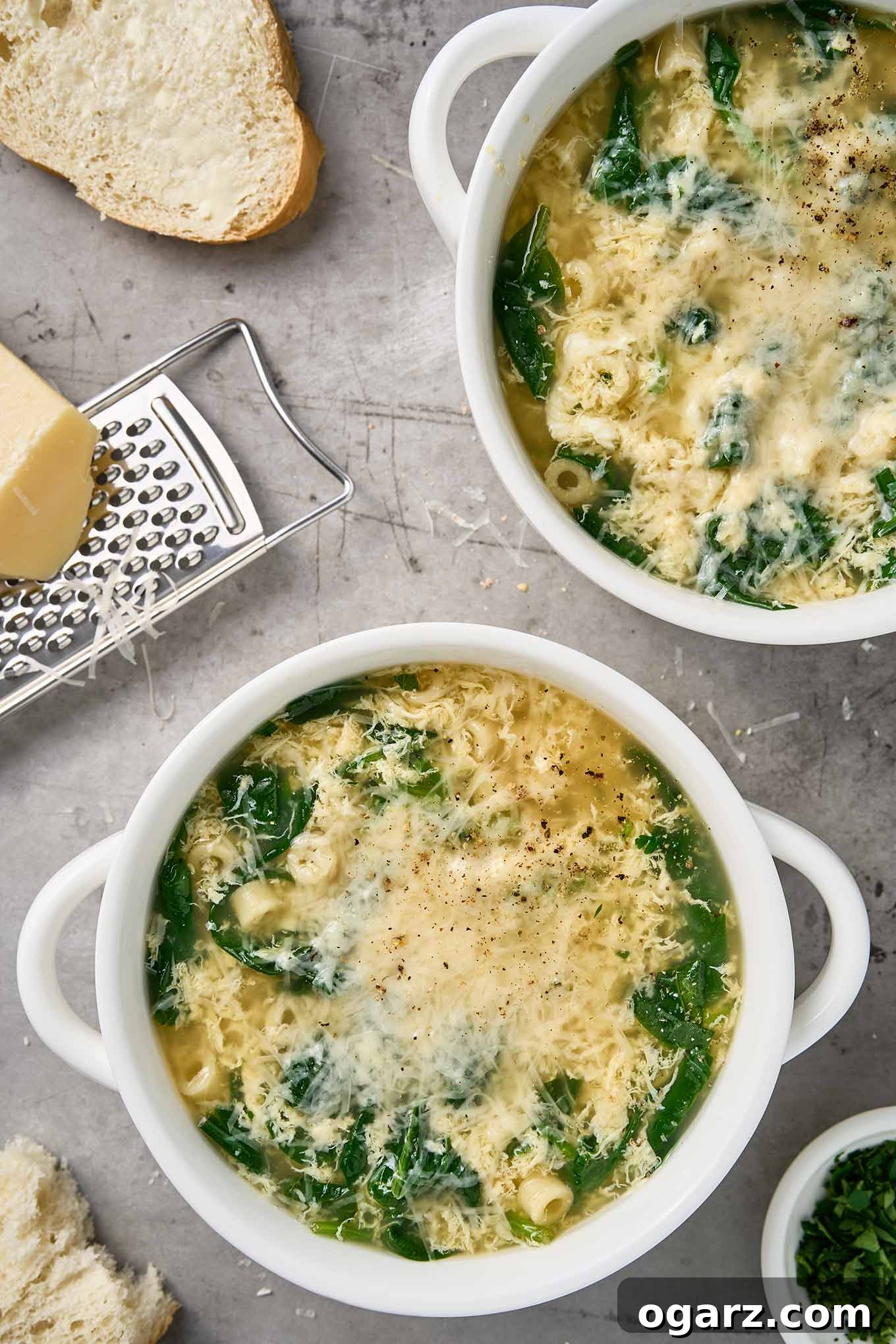
Elevated Stracciatella: A Hearty Italian Egg Drop Soup with Spinach and Pasta
Stracciatella soup, often celebrated as Italy’s elegant answer to egg drop soup, is a beloved culinary classic renowned for its delicate egg ribbons swirling in a savory broth. Its name, derived from the Italian word “stracciare,” meaning “to tear” or “to shred,” perfectly describes the signature texture created when beaten eggs are slowly streamed into hot liquid. While traditionally light and simple, our unique rendition transforms this comforting starter into a more substantial, satisfying meal by incorporating tender baby spinach and small, delightful soup pasta. This thoughtful adaptation enhances both the nutritional value and the overall heartiness of the dish, all while maintaining the quick and straightforward preparation that makes stracciatella so appealing.
This upgraded stracciatella soup strikes a perfect balance between tradition and innovation. It honors the classic technique of forming fine egg strands, yet it introduces layers of flavor and substance that make it feel exceptionally nourishing without being heavy. The vibrant freshness of baby spinach adds a gentle sweetness and a pop of color, while the ditalini pasta provides a pleasant chew and transforms the soup into a more complete dining experience. A subtle pinch of freshly grated nutmeg infuses a warm, aromatic note, perfectly complementing the richness of the eggs. Just before serving, a generous shower of Parmigiano-Reggiano melts into the steaming broth, contributing a deep, salty umami that truly elevates every spoonful. This harmonious blend of textures and tastes ensures a deeply comforting bowl that’s ready to enjoy in under 30 minutes, making it an ideal choice for a busy weeknight or a light weekend lunch.
Essential Ingredients & Smart Substitutions for Perfect Stracciatella
Crafting an exceptional stracciatella soup begins with selecting the right ingredients. Here’s an in-depth look at the key components of this recipe, along with useful tips and substitution ideas. The comprehensive list, including precise quantities, is conveniently located in the printable recipe card below.
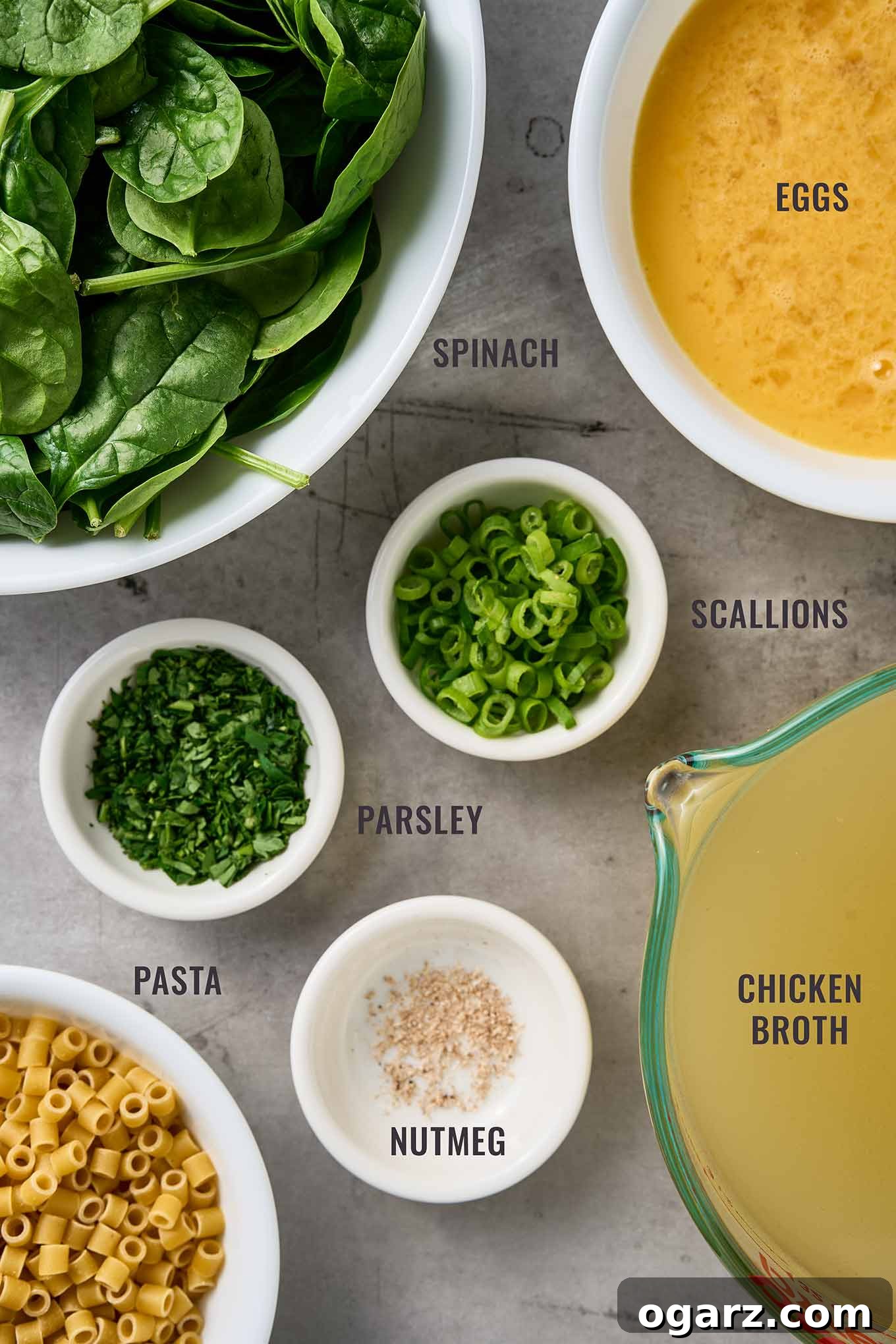
CHICKEN STOCK: The Foundation of Flavor
The quality of your chicken stock is paramount, as it forms the very essence and backbone of this light yet flavorful soup. For the richest, most authentic taste, homemade chicken stock is always recommended. Its depth of flavor and natural gelatin contribute significantly to a superior broth. If using store-bought stock, opt for a high-quality, low-sodium variety. This allows you complete control over the final seasoning, preventing the soup from becoming overly salty. You can always add more salt, but you can’t take it away! Bone broth is another excellent alternative, offering even more richness and nutritional benefits. For a vegetarian version, a good vegetable broth can be used, though it will alter the classic flavor profile slightly.
SOUP PASTA: Choosing the Perfect Bite
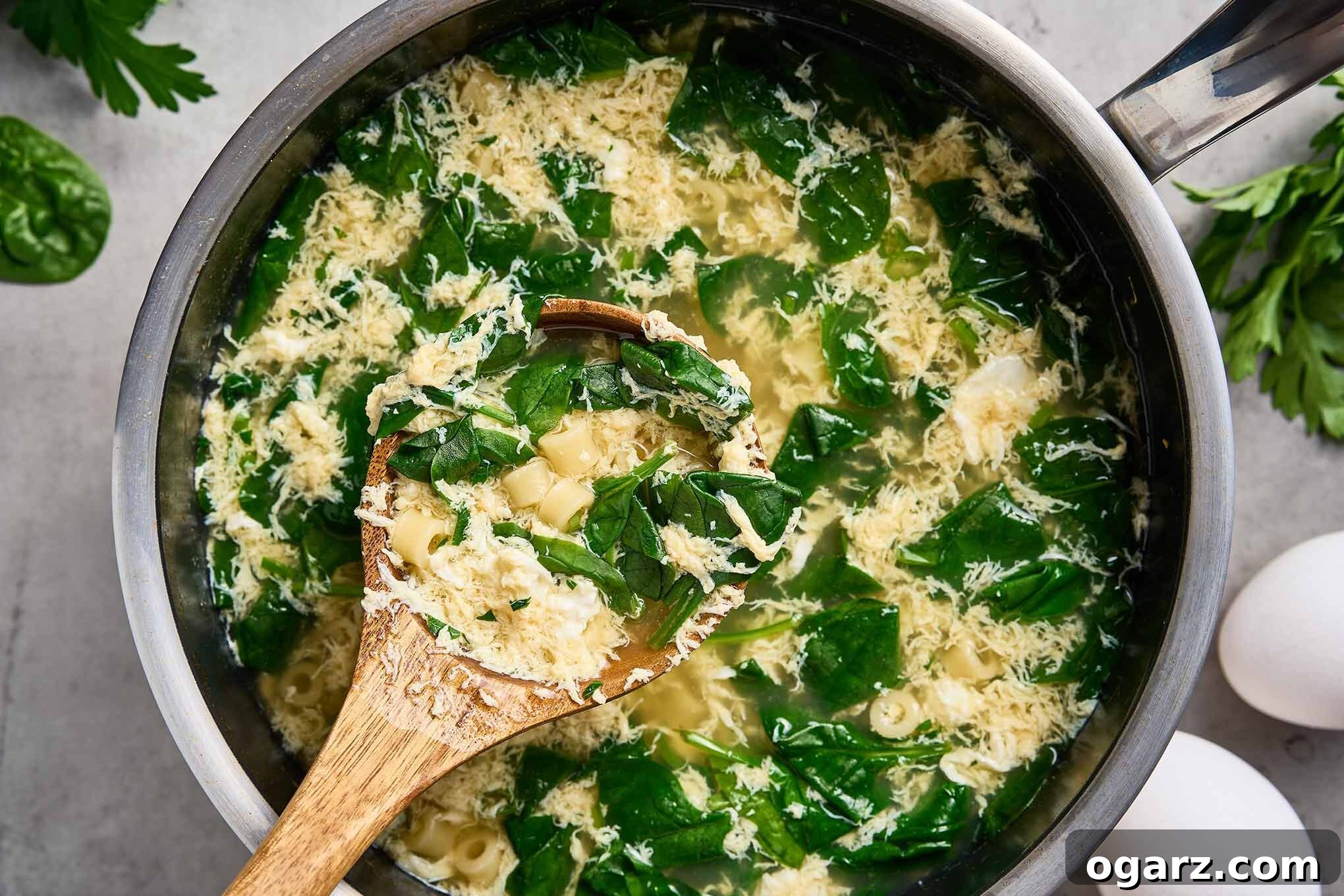
We specifically recommend ditalini for this stracciatella soup. Its small, tubular shape cooks quickly and retains a delightful al dente texture, adding substance without overpowering the delicate broth and egg ribbons. Other excellent choices for small pasta cuts include acini di pepe (tiny beads), stelline (little stars), or small shells (conchigliette). These shapes integrate beautifully into the soup, ensuring a balanced bite. It’s best to avoid larger pasta shapes or those with more surface starch, such as orzo, as they can absorb too much liquid and release excess starch, potentially thickening the broth excessively and altering its desired consistency. The goal is a clear, flavorful broth, not a stew-like texture.
FRESH HERBS: Parsley and Scallions for Brightness
The addition of fresh parsley and scallions just before serving is crucial for introducing a burst of vibrant, herbaceous flavor that perfectly cuts through the richness of the eggs and cheese. Fresh flat-leaf parsley offers a clean, slightly peppery note, while the green tops of scallions provide a mild oniony bite without being harsh. It’s important to use only the green parts of the scallions; the white ends have a much stronger, more pungent flavor that can overwhelm the delicate balance of the soup. These herbs are added at the very end to preserve their bright color, fresh aroma, and crisp texture, ensuring maximum impact in every bowl.
NUTMEG: A Whisper of Warmth
A small, almost imperceptible pinch of freshly grated nutmeg is a traditional element in many Italian egg and cheese dishes, and stracciatella is no exception. It’s an optional ingredient, but highly recommended, as it adds a subtle, warm, and comforting aroma that enhances the eggy richness without being overtly spicy or dominant. Think of it as a secret ingredient that elevates the overall flavor profile, adding a layer of sophisticated complexity. Ensure you use freshly grated nutmeg for the best results, as pre-ground nutmeg can lose its potency quickly.
PARMIGIANO-REGGIANO: The Finishing Touch
No Italian soup is complete without the luxurious addition of Parmigiano-Reggiano. Freshly grated Parmigiano-Reggiano is indispensable here; its distinct salty, nutty, and savory notes melt beautifully into the hot soup, adding an unparalleled depth of flavor. Avoid pre-grated cheeses, which often contain anti-caking agents and lack the nuanced taste of a fresh block. If true Parmigiano-Reggiano is unavailable, Pecorino Romano or Grana Padano are acceptable substitutes, offering similar salty and savory profiles, though with their own unique characteristics. A generous sprinkle transforms the soup, adding richness and an irresistible aroma.
Prep Overview
Crafting Your Stracciatella Soup: A Detailed Guide
Embarking on this culinary journey? Here’s a streamlined overview of the process to prepare this exquisite stracciatella soup. For comprehensive, step-by-step instructions and ingredient precise measurements, please refer to the printable recipe card located further down.
Making stracciatella soup is remarkably quick and straightforward, a true testament to Italian home cooking. The key to its success lies in efficient preparation, often referred to as “mise en place,” meaning “everything in its place.” Before you even turn on the stove, ensure all your ingredients are prepped, measured, and ready to go. This includes whisking your eggs until perfectly smooth – a crucial step for achieving those delicate, silky ribbons – and having your spinach, herbs, and cheese at hand. Once your high-quality chicken stock reaches a rolling boil, the ditalini pasta cooks directly in the pot. This ingenious method not only saves time but also allows the pasta to release a small amount of starch, lending a beautiful, subtle body to the broth, enhancing its richness and mouthfeel.
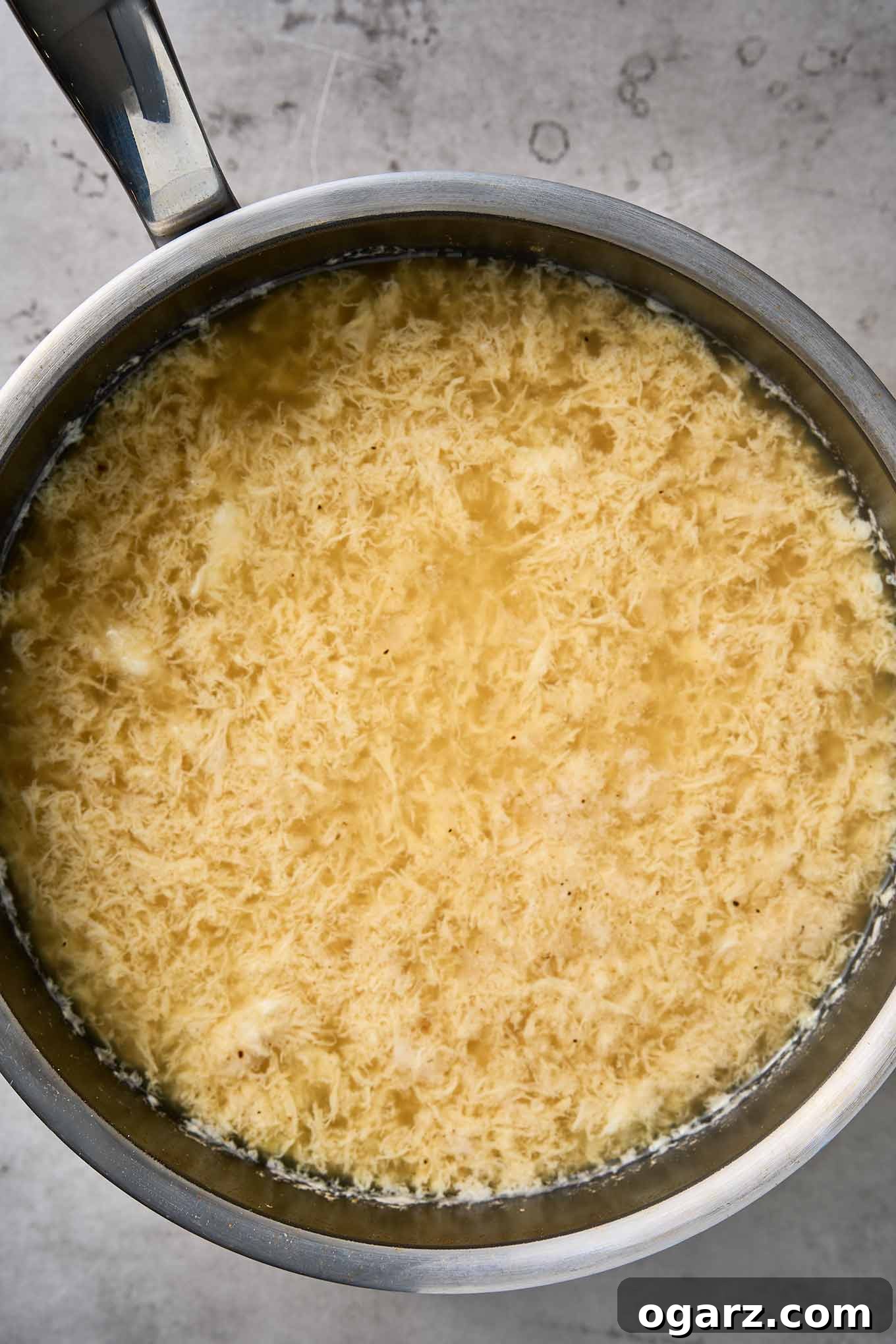
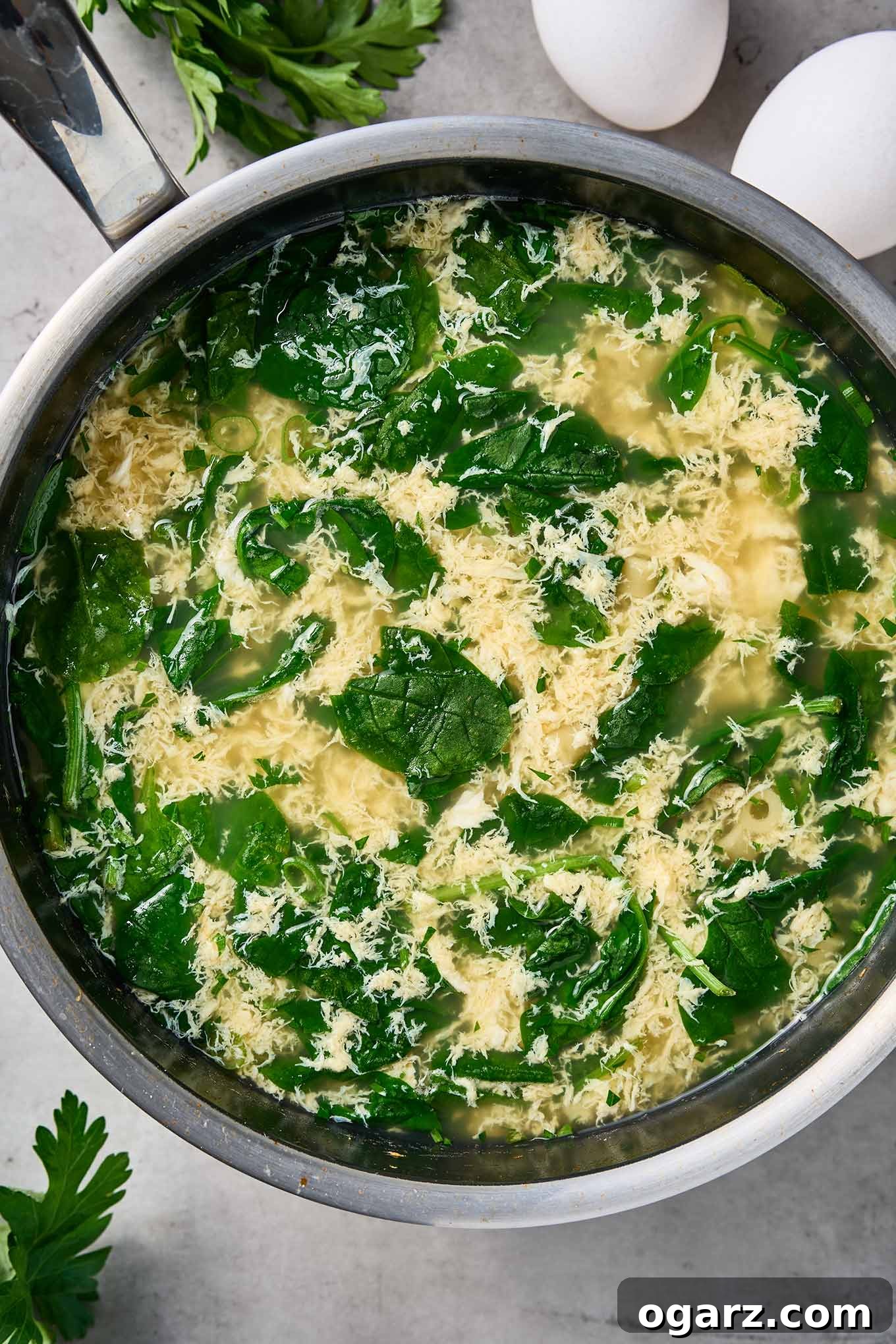
As the ditalini approaches its perfect al dente stage – tender yet still with a slight bite – reduce the heat to a gentle simmer. This controlled temperature is vital for the next step: creating those iconic egg ribbons. With a steady hand, slowly drizzle the smooth, beaten eggs into the simmering broth in a thin, continuous stream. Simultaneously, stir the broth continuously in a circular motion. This synchronized action is the secret to preventing the eggs from clumping, instead coaxing them into delicate, wispy strands that give stracciatella its distinctive, beautiful texture. The moment the egg ribbons set, which happens almost instantly, fold in the fresh baby spinach, chopped parsley, and thinly sliced scallion greens. The heat of the soup will rapidly wilt the spinach, transforming it into tender, nutrient-rich greens within a minute or two, while the fresh herbs retain their vibrant color and aromatic punch. A final taste test for seasoning, followed by a generous sprinkling of freshly grated Parmigiano-Reggiano, completes this exquisite soup just before it’s whisked away to the table for immediate enjoyment.
Expert Tips for a Flawless Stracciatella Experience
Achieving stracciatella perfection is simpler than you might think, especially with a few insider tips:
SEASON IN LAYERS: The Art of Balanced Flavor
The saltiness of chicken stock can vary significantly between brands and whether it’s homemade or store-bought. Therefore, it’s crucial to season your soup carefully and in stages. Begin by tasting your stock before adding any salt. Add a light seasoning after the pasta has cooked, as the pasta will absorb some of the broth’s flavor. Taste again after incorporating the eggs and once more after the spinach has wilted. This iterative approach allows you to adjust the seasoning precisely, ensuring a perfectly balanced and flavorful soup that is neither under-salted nor overpoweringly salty. Remember, you can always add more salt, but you cannot easily remove it.
SERVE IMMEDIATELY: Preserve Freshness and Texture
Stracciatella soup is designed for quick enjoyment. Once the delicate egg ribbons are formed and the spinach is wilted, the soup is ready to be savored within minutes. Serving it immediately is paramount for two key reasons: first, the pasta will continue to absorb liquid and soften if left to sit, potentially becoming mushy and depleting the broth; second, the eggs can become tough and rubbery if overcooked or kept hot for too long. Embrace the rapid cooking nature of this dish and serve it fresh off the stove to appreciate its exquisite textures and vibrant flavors at their peak.
PERFECT EGG RIBBONS: The Whisking Technique
The secret to beautifully delicate egg ribbons lies in thoroughly whisking your eggs. Beat the eggs vigorously with a fork or whisk until they are completely smooth and slightly frothy, with no visible streaks of yolk or white. This ensures an even consistency, allowing the eggs to cook into fine, uniform strands when drizzled into the broth. Also, ensure your broth is at a gentle simmer, not a rolling boil, when adding the eggs. Too high a heat can cause the eggs to cook too quickly and clump, rather than form elegant ribbons.
DON’T OVERCROWD THE POT: Maintain Broth Temperature
While stracciatella cooks quickly, it’s important not to overcrowd your pot, especially if scaling up the recipe. Maintaining a consistent gentle simmer is critical for the delicate egg-dropping process. If the pot is too full or the heat drops too much, the eggs might not set properly into ribbons. Use a wide pot to allow for ample surface area and even heat distribution.
Explore More Hearty Italian Soup Creations
If the comforting embrace of this stracciatella soup has captured your palate, you’re in for a treat with our other exceptional Italian soup recipes. We highly recommend our Italian Chicken Soup, a deeply satisfying medley featuring tender chicken thighs, wholesome greens, sweet tomatoes, and ditalini pasta, perfect for a hearty family meal. For a lighter take on a beloved classic, try our Easy Italian Wedding Soup, a flavorful version made with light turkey meatballs. And for those craving a robust, vegetable-forward experience, our Minestrone Soup is a must-try, packed with a rich blend of vegetables, savory sausage, pancetta, and a hint of red wine for unparalleled depth. These recipes showcase the diverse and delicious world of Italian comfort food, promising warmth and flavor in every bowl.

Stracciatella Soup with Spinach and Pasta
Rate Recipe
Print Recipe
Ingredients
- 8 cups chicken stock or broth, see notes for quality and substitutions
- 1 cup uncooked ditalini pasta, or another small pasta shape like acini di pepe or stelline
- 5 large eggs, thoroughly beaten until smooth
- 5 ounces fresh baby spinach leaves
- 1 tablespoon freshly chopped parsley
- 4 scallions, green tops only, thinly sliced for garnish and flavor
- Pinch of freshly grated nutmeg, optional but highly recommended for warmth
- Salt and freshly ground black pepper, to taste, seasoned in layers
- Parmigiano-Reggiano, freshly grated, for serving and extra depth of flavor
Instructions
-
In a large, heavy-bottomed pot, bring the chicken stock to a rapid boil. Add the ditalini pasta and cook according to package directions until it reaches an al dente consistency, typically about 8–10 minutes. Once the pasta is cooked, reduce the heat immediately to maintain a gentle simmer, ensuring the broth doesn’t boil aggressively.
-
While continuously stirring the simmering stock in a steady, circular motion, slowly drizzle the thoroughly beaten eggs into the pot in a thin, constant stream. This technique is crucial for forming the delicate, fine egg ribbons characteristic of stracciatella. After the eggs have been added, stir in the pinch of nutmeg and lightly season the soup with salt and freshly ground black pepper to taste.
-
Carefully fold in the fresh baby spinach, chopped parsley, and thinly sliced green scallion tops. Stir gently for 1–2 minutes, or just until the spinach has completely wilted and softened. Taste the soup and adjust the seasoning one final time, adding more salt or pepper if necessary, to achieve your desired flavor balance.
-
Ladle the steaming stracciatella soup into individual bowls. Finish each serving with a generous topping of freshly grated Parmigiano-Reggiano and a few additional grinds of black pepper for an aromatic flourish. Serve the soup immediately to enjoy its optimal texture and flavor.
Notes
SERVING: For the best culinary experience, stracciatella soup should be enjoyed immediately after preparation. This prevents the pasta from becoming overcooked and absorbing too much broth, which can alter the soup’s intended delicate consistency.
Nutrition
Nutrition information is automatically calculated, so should only be used as an approximation.