
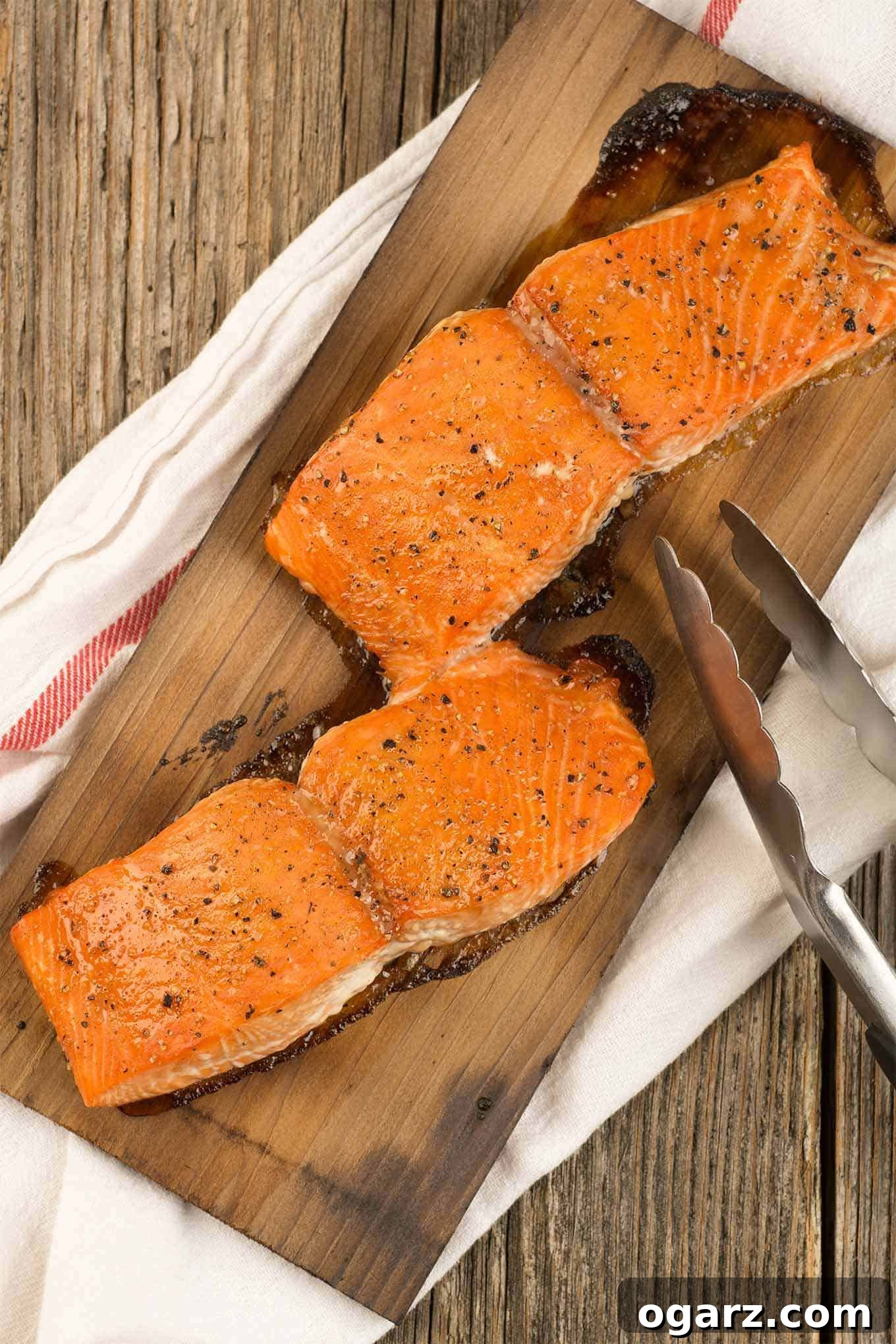
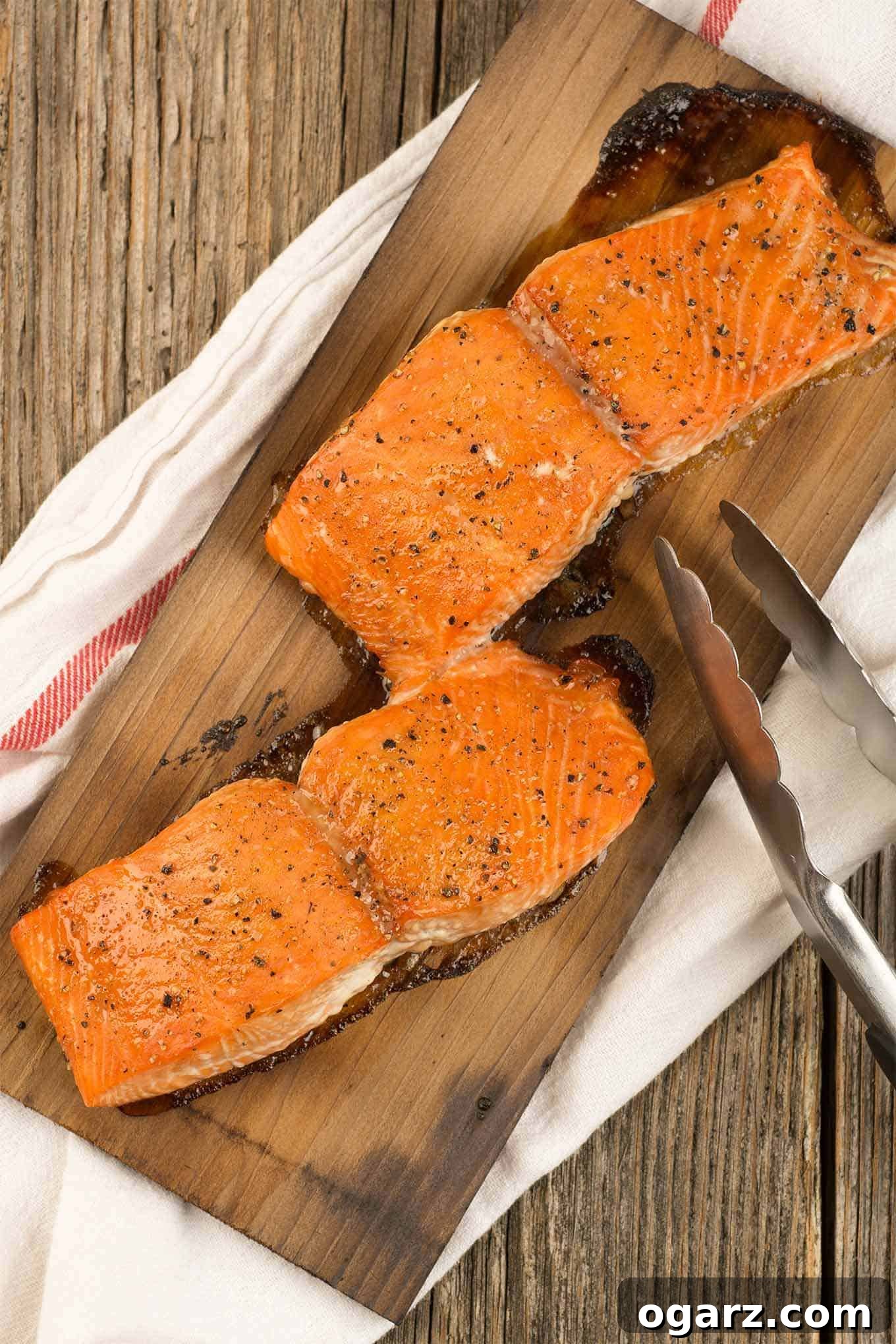
Unlock a world of exquisite flavor and unmatched tenderness with cedar plank salmon, a grilling technique that consistently delivers succulent, melt-in-your-mouth fish infused with a delicate smoky essence. Whether you’re a seasoned grill master or a novice looking to impress, mastering the art of cedar plank grilling is surprisingly simple. With just a few key guidelines and a vibrant brown sugar rub, you can transform ordinary salmon fillets into an extraordinary culinary experience that tantalizes the taste buds and elevates any meal.
Mastering the Art of Cedar Plank Grilling
Grilling on a cedar plank is more than just cooking; it’s an experience that imparts a unique, aromatic flavor while ensuring your fish remains incredibly moist. This method creates a gentle steaming effect, protecting the delicate salmon from the harsh direct heat of the grill. Follow these comprehensive steps for flawlessly grilled cedar plank salmon every time:
- Select the Right Plank: Choose a clean, untreated hardwood plank. Cedar is the most popular choice for its mild, sweet aroma, but other woods like alder or maple can also be used. Ensure the plank is large enough to comfortably hold your food, leaving a small margin around the edges for even cooking and smoke infusion. Avoid planks treated with chemicals or paints, as these can release harmful toxins when heated.
- Thoroughly Soak the Plank: This is a critical step. Submerge your cedar plank in water for a minimum of one hour prior to grilling. Longer soaking times, up to two hours, can enhance the steaming effect and prevent the plank from catching fire. You can use a roasting pan, a clean cooler, or even a large sink. For added flavor, consider soaking the plank in wine, beer, or apple juice.
- Preheat Your Grill to Medium Heat: Prepare your gas or charcoal grill for cooking over medium heat, aiming for a temperature range of 350 to 400°F (175 to 200°C). Consistency in grill temperature is key to ensuring the plank smokes properly without burning too quickly, and the salmon cooks evenly.
- Pre-Char the Plank for Enhanced Flavor: Before placing your food, position the empty, soaked plank directly on the preheated grill grates. Allow it to heat for about 3-5 minutes, or until it begins to smoke lightly and the side facing the flame starts to char. This initial charring helps activate the plank’s natural oils, intensifying the smoky flavor imparted to your food.
- Grill to Perfection, No Flipping Required: Once the plank is smoking, flip it over and carefully place your seasoned salmon fillets on the charred side. Close the grill lid and cook until the fish reaches your desired doneness. The beauty of plank grilling is that there’s no need to turn the fish, allowing it to cook gently and evenly while absorbing all the wonderful cedar aroma. Monitor the internal temperature for best results; salmon is typically done at 145°F (63°C) for medium.
Why Cedar Planks Are Perfect for Salmon
The combination of cedar and salmon is a match made in culinary heaven. Cedar planks offer several advantages that elevate salmon grilling to an art form:
- Unmatched Moisture Retention: The soaked plank acts as a protective barrier, shielding the delicate salmon from direct high heat. As the plank heats up, it releases steam, creating a moist environment around the fish. This steam prevents the salmon from drying out, resulting in incredibly juicy and tender fillets every time.
- Subtle Smoke Infusion: Cedar wood imparts a distinct, yet mild and slightly sweet, smoky flavor that beautifully complements the rich taste of salmon. Unlike heavy smoking methods, cedar plank grilling provides a nuanced aroma that enhances, rather than overwhelms, the fish’s natural flavors.
- Even Cooking: The plank helps to distribute heat evenly across the entire surface of the salmon, ensuring uniform cooking from edge to edge. This reduces the risk of overcooked or undercooked spots, delivering consistently perfect results.
- Impressive Presentation: Serving the salmon directly on the cedar plank makes for a stunning visual presentation. It adds a rustic elegance to your table, sure to impress guests and elevate your dining experience.
- Reduced Cleanup: Cooking on a plank minimizes direct contact between the fish and the grill grates, which means less sticking and easier cleanup of your grill. The plank takes the brunt of the cooking, simplifying post-meal chores.
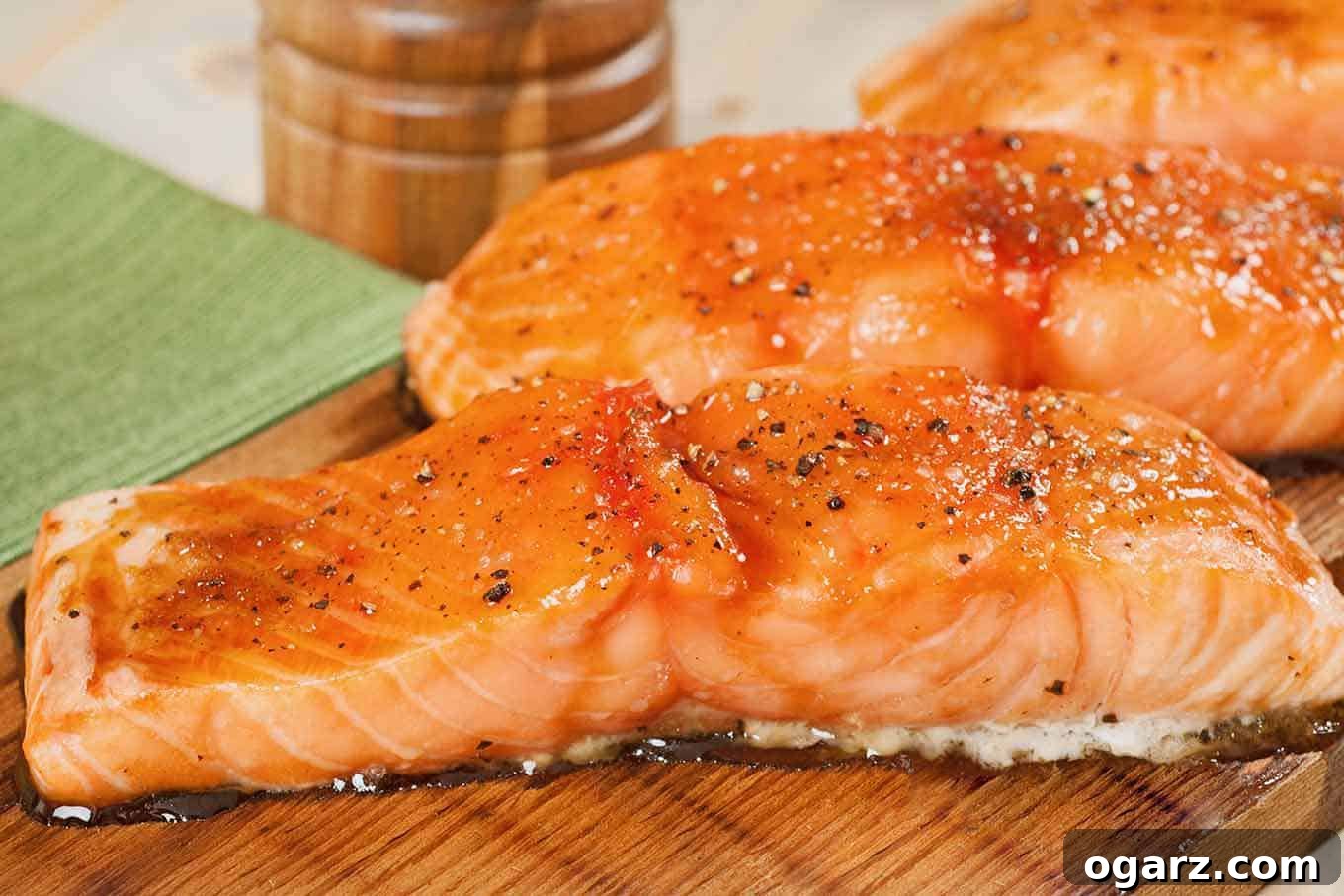
Selecting the Best Grilling Planks
The growing popularity of plank grilling means these essential tools are now widely available. You can typically find grilling planks near the fish and meat counters in most well-stocked grocery stores, particularly during grilling seasons. Alternatively, a quick online search will reveal a vast selection from various retailers.
Grilling planks come in a variety of shapes and sizes to accommodate different foods. For salmon fillets, you’ll commonly find them in convenient 2-packs with approximate dimensions of 11 x 5 inches. This size is ideal for individual portions or two smaller fillets. When purchasing, always check that the planks are labeled as “untreated” or “food-safe” to ensure they haven’t been exposed to harmful chemicals.
While cedar is the most popular choice for fish due to its mild and sweet aromatic smoke, the world of grilling planks extends beyond just one wood type. You can explore other varieties like oak, hickory, and maple, each offering a distinct flavor profile:
- Cedar: Best for fish and poultry. It provides a light, sweet, and aromatic smoke that enhances delicate flavors without overpowering them.
- Alder: Similar to cedar but even milder, making it excellent for white fish, vegetables, and chicken.
- Maple: Offers a subtle, sweet, and slightly smoky flavor. Ideal for pork, poultry, vegetables, and lighter fish.
- Oak: Provides a medium smoky flavor that pairs well with beef, lamb, and hearty fish like swordfish or tuna.
- Hickory: Delivers a strong, bacon-like smoky flavor, making it a favorite for red meats, pork, and game.
We believe the mild flavor imparted by cedar is perfectly suited for salmon, creating a harmonious blend of tastes. However, don’t hesitate to experiment with different wood types if you decide to try this fantastic technique with other meats or even vegetables. Each wood type will bring a unique character to your grilled dishes.
The Essential Art of Soaking Grilling Planks
Properly soaking your grilling planks is paramount to both safety and flavor. This step prevents the plank from igniting directly on the grill and allows it to release steam, which is crucial for infusing flavor and keeping your food moist.
Any vessel large enough to fully submerge your plank will work. Roasting pans, large baking dishes, or even plastic coolers are excellent choices for soaking. The key is to ensure the plank remains completely submerged throughout the soaking process. Cedar planks are buoyant, so you’ll need to find something to weigh them down. Heavy cans, a bowl filled with water, or a brick wrapped in foil can do the trick. It’s also a good practice to turn the plank over midway through the soaking time to ensure both sides absorb water evenly.
We recommend a minimum of one full hour for soaking, with two hours being ideal for thicker planks or if you prefer a more pronounced smoky flavor and increased moisture. This extended soaking not only helps prevent unwelcome flare-ups on the grill but also ensures the plank generates plenty of steam. This steam is what gently cooks the fish, keeping it tender, and what carries those delightful, aromatic wood-smoked notes directly into your salmon. A well-soaked plank ensures a controlled, flavorful grilling experience.
While soaking is beneficial, avoid soaking for excessive periods (e.g., overnight or several days), as this can cause the wood to break down or develop an undesirable smell. Stick to the recommended 1-2 hour window for optimal results.

Rated 5 out of 5 stars by 2 users.
Cedar Planked Salmon
Lynne Webb
5
20
25
4
servings
Rate Recipe
Print Recipe
Ingredients
- 4 5 to 6 ounce salmon fillets, skin removed
- 3 tablespoons brown sugar
- Salt and freshly ground black pepper
- Olive oil
- 1 cedar grilling plank large enough to hold your fillets
Instructions
-
Soak your grilling plank in cool water for a minimum of 1 hour (refer to the “How To Soak Your Grilling Planks” section above for detailed guidance).
-
Preheat a gas or charcoal grill to medium heat, aiming for a consistent temperature of 350 to 400°F (175 to 200°C).
-
In a small bowl, combine the brown sugar with 1 teaspoon of salt and a few generous grinds of fresh black pepper. Arrange the salmon fillets with the side where the skin was removed facing up on a clean surface.
-
Lightly rub a bit of olive oil over the top surface of the salmon. Then, sprinkle half of the brown sugar mixture evenly over this oiled surface. Use the back of a spoon or your fingertips to gently rub the mixture into the salmon, ensuring it adheres well.
-
Flip the salmon fillets over and season the other side with the remaining brown sugar mixture. There’s no need to oil this side.
-
Carefully drain the soaked cedar plank and blot it dry with a paper towel. Place the plank directly on the preheated grill grates and heat until you begin to smell a distinct cedar smoke and the side facing the flame has started to char slightly (approximately 3-5 minutes).
-
Using long-handled tongs, flip the charred plank over. Immediately place the seasoned salmon fillets, oiled side down, onto the charred surface of the plank.
-
Close the grill lid and cook for 8 to 12 minutes, or until the fish is cooked to your preference. We recommend cooking to a medium-rare doneness (internal temperature of 125°F / 52°C) for the most tender results. There is no need to turn the fillets during this cooking process.
-
Once cooked, remove the plank with the salmon from the grill. Allow the salmon to rest on the plank for 5 minutes before serving. This allows the juices to redistribute, ensuring maximum flavor and moisture.
Notes
For best results, use a reliable instant-read thermometer to check the internal temperature of your salmon. The USDA recommends cooking fish to 145°F (63°C), but many chefs prefer a slightly lower temperature (125-135°F / 52-57°C) for a flakier, moister texture, especially with salmon. Always use a clean plank for each use. Planks are generally single-use for best flavor and safety.
Nutrition
Calories:
412
,
Total Fat:
24
g
,
Cholesterol:
107
mg
,
Sodium:
180
mg
,
Carbohydrates:
8
g
,
Sugar:
8
g
,
Protein:
38
g
Nutrition information is automatically calculated, so should only be used as an approximation.
Enjoyed this recipe? Share your thoughts and rate it below!