


Table of Contents
- Mastering Oven Roasted Pulled Pork at Home
- Why Choose Oven-Roasted Pulled Pork?
- The Science of Low and Slow Cooking
- Essential Ingredients for Tender Pulled Pork
- Step-by-Step: How to Make Pulled Pork in the Oven
- Expert Tips for Pulled Pork Perfection
- Creative Ways to Serve Your Homemade Pulled Pork
- Oven Roasted Pulled Pork (Printable Recipe)
Pulled pork stands as a quintessential barbecue classic, cherished for its succulent texture and rich, smoky flavor. While traditionally associated with outdoor smokers and grills, achieving incredibly tender, fall-apart pulled pork at home is entirely possible without specialized equipment. This easy-to-follow recipe harnesses the power of your oven, employing a low and slow cooking method that transforms a humble pork shoulder into a masterpiece brimming with sweet, savory, and subtly smoky notes. With minimal hands-on preparation, your oven does the heavy lifting, making it the perfect solution for barbecue enthusiasts seeking a deeply satisfying homemade pulled pork without the fuss or lengthy outdoor commitment. Get ready to impress your family and friends with this foolproof guide to the ultimate oven-roasted pulled pork.
Mastering Oven Roasted Pulled Pork at Home
For many, the thought of authentic pulled pork conjures images of complex smokers, wood chips, and hours spent monitoring temperatures outdoors. However, this oven-roasted pulled pork recipe redefines convenience without compromising on flavor. We’ve perfected a method that allows you to achieve that melt-in-your-mouth tenderness and rich barbecue taste right in your kitchen. This approach is ideal for busy weeknights, inclement weather, or simply for those who prefer the simplicity of indoor cooking.
The beauty of oven roasting lies in its consistent, controlled heat, which is crucial for breaking down the tough connective tissues in a pork shoulder, resulting in exceptionally tender meat. Our recipe focuses on developing deep flavors through a well-balanced spice rub and a finish of delicious barbecue sauce, ensuring every bite is packed with savory goodness. If you’re a slow cooker devotee, fret not – we also provide clear instructions for adapting this recipe to your crockpot, giving you even more flexibility to enjoy this barbecue favorite.
Why Choose Oven-Roasted Pulled Pork?
Discover the compelling advantages of preparing this barbecue staple right in your kitchen oven.
- Effortless Preparation: Unlike traditional smoking, which demands constant attention, oven roasting requires minimal hands-on time. Simply prep, season, and let your oven do the hard work.
- Consistent Results: The controlled environment of an oven ensures a stable temperature, leading to predictable and consistently tender results every time. No more worrying about temperature fluctuations affecting your cook.
- Accessible for Everyone: You don’t need expensive equipment like smokers or grills. A standard oven and a Dutch oven (or a heavy-bottomed roasting pan with a lid) are all you need to create fantastic pulled pork.
- Year-Round Enjoyment: Enjoy the comforting flavors of barbecue no matter the season or weather. Rain, snow, or shine, your oven is ready to deliver delicious pulled pork.
- Rich Flavor Development: The long, slow cooking process in a covered Dutch oven allows the pork to braise in its own juices and added liquids, infusing it with incredible depth of flavor that rivals outdoor methods.
The Science of Low and Slow Cooking
Understanding why a low oven temperature and extended cooking time are crucial for perfectly tender pulled pork.
The secret to unbelievably tender pulled pork lies in a cooking technique known as “low and slow.” This method specifically targets the connective tissues found abundantly in cuts like pork shoulder, which can make meat tough if cooked too quickly at high temperatures. Here’s how it works:
- Collagen Breakdown: Pork shoulder is rich in collagen, a tough protein that provides structure to muscle tissue. When subjected to low heat (around 225-275°F or 107-135°C) for an extended period, this collagen slowly breaks down and melts into gelatin.
- Moisture Retention: Cooking at a lower temperature prevents the meat from drying out prematurely. When cooked covered in a Dutch oven, moisture is trapped, creating a steamy environment that further aids in the breakdown of connective tissues and keeps the meat incredibly juicy.
- Flavor Development: The prolonged cooking time allows the flavors from the spice rub and any added liquids (like apple juice or cider) to deeply penetrate the meat. This slow infusion results in a complex, well-rounded taste profile that can’t be rushed.
- Fork-Tender Perfection: The transformation of collagen into gelatin is what gives pulled pork its signature “fall-apart” texture. When the internal temperature reaches approximately 200-205°F (93-96°C), the meat is ready to be easily shredded with a fork, signaling that the connective tissues have fully rendered.
Essential Ingredients for Tender Pulled Pork
Here’s what you need to know about selecting the best ingredients to ensure your oven-roasted pulled pork is a culinary success. The complete list, including precise quantities, can be found in the printable recipe card below.
- PORK BOSTON BUTT ROAST (BONELESS): This cut, despite its misleading name, actually comes from the upper part of a pig’s shoulder. It’s the ideal choice for pulled pork due to its excellent marbling (intramuscular fat) and abundant connective tissue. The fat melts during slow cooking, basting the meat from within and contributing immensely to its moisture and flavor, while the connective tissue renders into gelatin, creating that desirable fall-apart texture. We highly recommend a boneless Boston butt for easier handling, uniform seasoning, and simpler shredding after cooking. If you can only find a bone-in cut, it will still work beautifully; just be sure to account for the bone when calculating the amount of meat.
- PORK RUB: A robust spice rub is fundamental for building the foundational flavors of your pulled pork. Our signature 8-ingredient homemade BBQ rub offers a perfect balance of smoky, sweet, and savory notes, enhancing the pork’s natural taste. This versatile rub is also fantastic on grilled pork chops and other cuts. However, a high-quality store-bought pork rub is a perfectly acceptable and convenient alternative if you’re short on time. Look for blends with ingredients like paprika, brown sugar, garlic powder, onion powder, and a touch of cayenne for a subtle kick.
- BARBECUE SAUCE: The finishing touch that brings everything together, a good barbecue sauce adds moisture, tang, and a final layer of delicious flavor. Our homemade Bourbon BBQ Sauce offers a sophisticated, rich profile that complements the tender pork beautifully. Feel free to use your favorite bottled brand – whether it’s a smoky, sweet, tangy, or spicy variety – to customize the flavor to your preference. Remember, the sauce is often added after the pork is shredded, allowing for even coating and maximum impact.
- APPLE JUICE OR CIDER: A crucial liquid for braising, apple juice or cider adds moisture to the cooking environment and infuses the pork with a subtle sweetness and fruity undertone that pairs wonderfully with pork. It helps keep the meat from drying out during its long roast and contributes to a flavorful braising liquid.
- OLIVE OIL: While optional, a small amount of olive oil can be used to lightly coat the pork before applying the rub, helping the spices adhere better and potentially aiding in a subtle crust development if searing briefly beforehand (though not strictly necessary for this oven method).
Prep Overview
Step-by-Step: How to Make Pulled Pork in the Oven
Planning to make this incredible recipe? Here’s a quick overview of the process, ensuring you achieve perfectly tender, flavorful pulled pork. For detailed, step-by-step instructions with exact measurements, please refer to the printable recipe card below.
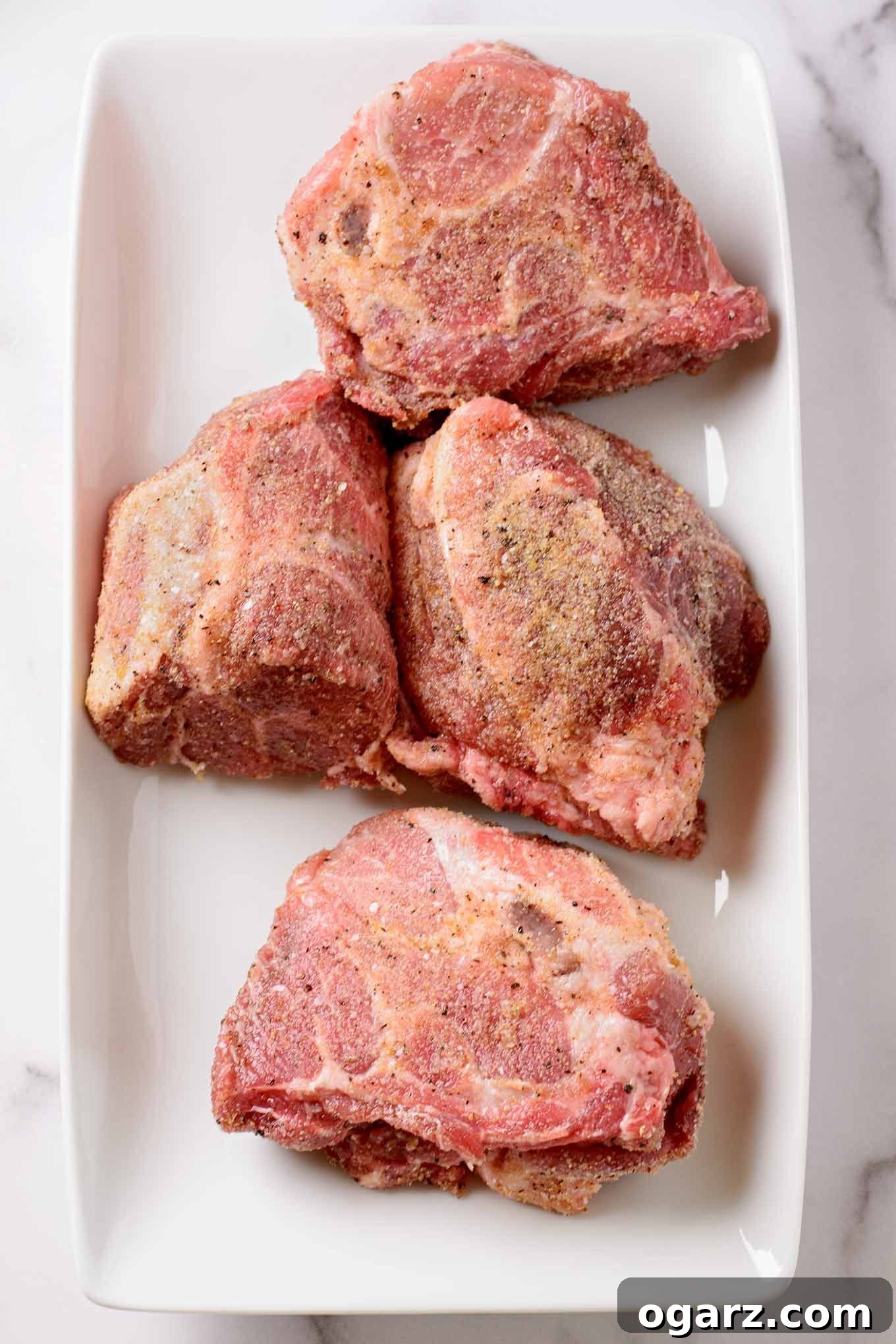
PREPARE THE PORK BUTT: Begin by carefully trimming any large, excessive pieces of hard fat from the exterior of your pork roast. While some fat is beneficial for moisture and flavor, too much exterior fat won’t render properly and can result in greasy pulled pork. Next, cut the entire roast into 3 or 4 more evenly-sized pieces. This crucial step ensures that the pork cooks more uniformly and creates more surface area for the spice rub to adhere, maximizing flavor penetration. Generously coat each piece of pork with your chosen spice rub, ensuring every side is thoroughly covered. Then, place these seasoned pieces into a heavy-bottomed Dutch oven, adding a cup of apple juice or cider to the pot. This liquid will create a moist braising environment.
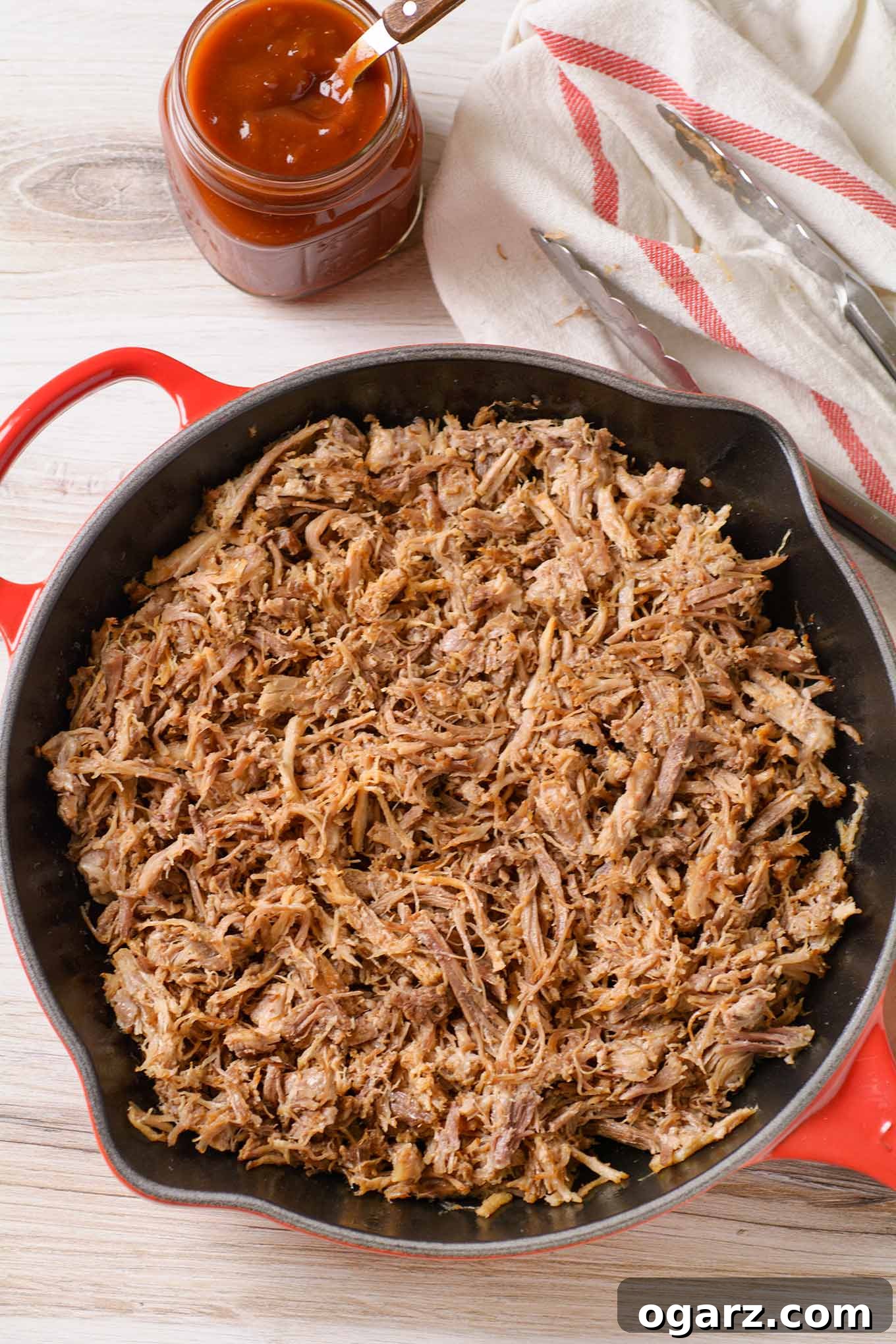
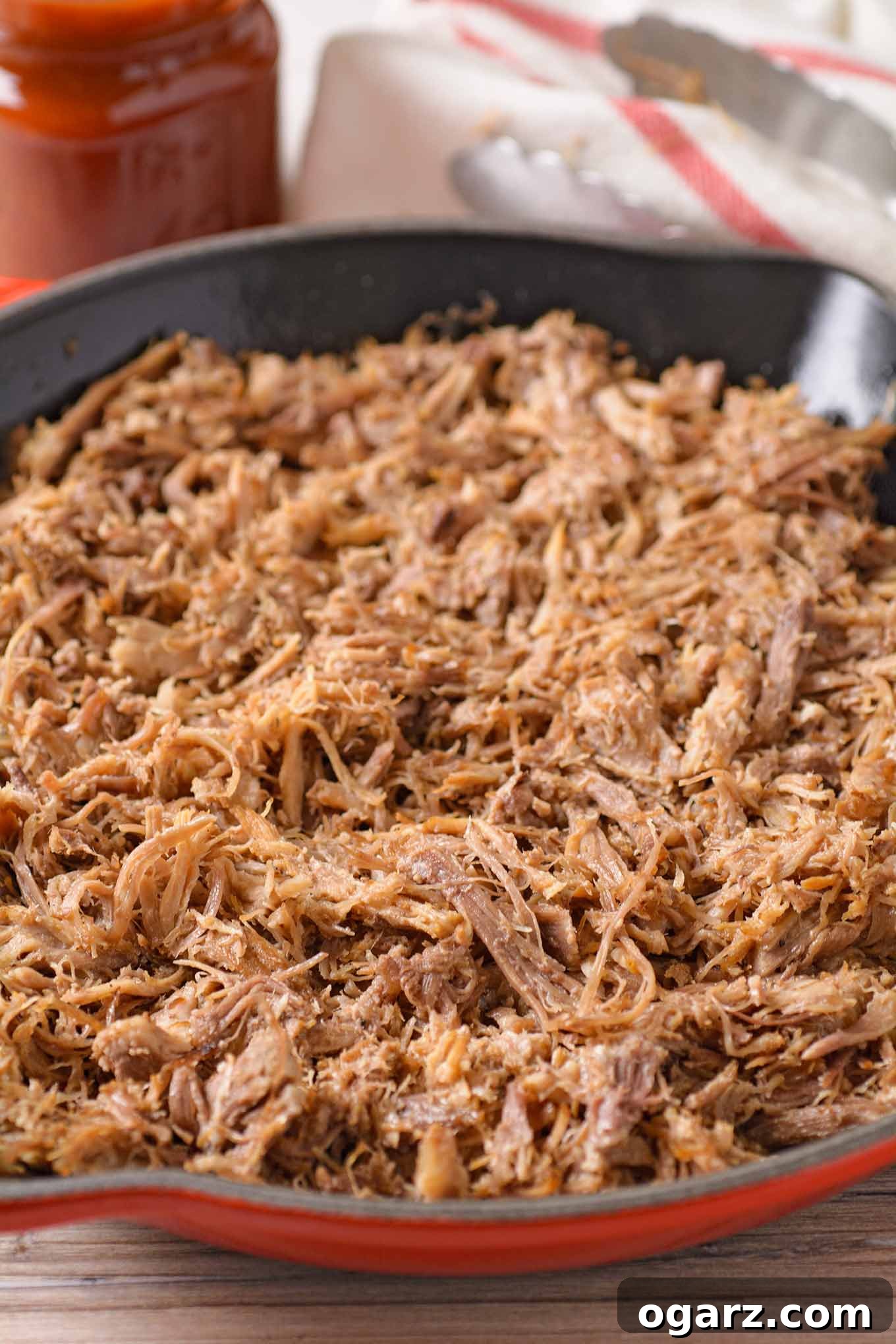
SLOW ROAST THE PORK TO PERFECTION: Cover your Dutch oven with a tight-fitting lid – or use heavy-duty aluminum foil to create a secure seal – and place it in a preheated oven. The initial phase involves a long, slow roast for approximately four hours. This covered period allows the meat to braise gently in its own juices and the apple juice, tenderizing it profoundly. After this initial stage, remove the lid (or foil) and continue cooking the pork uncovered. The goal here is to allow any excess moisture to evaporate slightly and to develop a richer crust on the exterior of the meat. Continue roasting until the pork is absolutely fork-tender, meaning it can be easily pulled apart with minimal resistance. This typically takes another 60 to 90 minutes, or until the internal temperature reaches the ideal range for shredding.
SHRED AND SAUCE FOR FLAVOR: Once your pork has reached peak tenderness, carefully remove it from the oven and transfer the pieces to a large cutting board or a sturdy baking dish. It’s crucial to let the pork rest, tented loosely with foil, for at least 30 minutes. This resting period allows the muscle fibers to relax and reabsorb the flavorful juices, ensuring your pulled pork remains incredibly moist. After resting, use two dinner forks to shred the meat into bite-sized pieces, discarding any large pieces of unrendered fat or connective tissue you encounter. Finally, transfer the freshly pulled pork to a large bowl, pour in your favorite barbecue sauce, and toss thoroughly to coat. Serve immediately and enjoy the fruits of your labor!
Expert Tips for Pulled Pork Perfection
Achieving truly exceptional pulled pork is simple when you follow a few key guidelines. Here are some important tips to ensure your homemade version is nothing short of perfect:
- ACHIEVE THE PROPER INTERNAL TEMPERATURE: This is arguably the most critical factor for tender pulled pork. While many meats are considered “done” at lower temperatures, pork shoulder for shredding needs to reach an internal temperature of at least 200°F (93°C), ideally between 200-205°F (93-96°C). At this temperature, the collagen and other tough connective tissues have fully broken down into gelatin, allowing the meat to easily fall apart. Use a reliable meat thermometer inserted into the thickest part of the meat (avoiding bone) to monitor progress. Don’t rush this step!
- THE ESSENTIAL RESTING PERIOD: Once your pork is cooked to perfection, resist the urge to shred it immediately. Transfer the cooked pork to a large cutting board, tent it loosely with aluminum foil, and let it rest for a minimum of 30 minutes, or even up to an hour for larger roasts. This resting time is vital because it allows the muscle fibers to relax and redistribute their internal juices evenly throughout the meat. Skipping this step can result in dry, less flavorful pulled pork, as the juices would simply run out onto your cutting board.
- MASTERING LEFTOVER STORAGE: Proper storage is key to enjoying your pulled pork for days to come. Always allow leftover pulled pork to cool completely to room temperature before transferring it to an airtight container. It will keep beautifully in the refrigerator for 3 to 4 days. For longer storage, pulled pork freezes exceptionally well for up to 3 months. To maintain moisture during freezing and reheating, consider reserving a small amount of the cooking liquid (if you didn’t use it all for sauce) or a little extra barbecue sauce to add to the pork before freezing.
- GENTLE REHEATING TECHNIQUES: When it’s time to enjoy your leftovers, proper reheating prevents dry, tough meat. If frozen, thaw the pulled pork overnight in the refrigerator. To reheat, the best method is to warm it gently on the stovetop over medium-low heat. You can also use a microwave in short bursts, stirring frequently, or even reheat it in a covered baking dish in a low oven (around 250°F / 120°C) until heated through. Add a splash of broth, water, or extra barbecue sauce during reheating to prevent it from drying out.
- DON’T BE AFRAID OF THE FAT: While you’ll trim excess fat at the beginning and discard large pieces during shredding, don’t over-trim initially. The intramuscular fat in a Boston butt is what melts and bastes the meat from the inside out, providing incredible moisture and flavor during the long cooking process.

Creative Ways To Serve Oven Roasted Pulled Pork
Once your oven-roasted pulled pork is perfectly shredded and coated in delicious barbecue sauce, the culinary possibilities are endless! It’s an incredibly versatile dish that can be transformed into a variety of mouth-watering meals. Here are some creative and classic ideas to inspire your next serving:
CLASSIC PULLED PORK SANDWICHES: The quintessential way to enjoy pulled pork! Serve generous piles of the saucy meat on soft, toasted hamburger-style buns. Elevate the experience with a dollop of extra BBQ sauce and a refreshing spoonful of homemade coleslaw for a delightful crunch and tangy contrast. Accompany with dill pickles and a side of crispy fries or potato chips for the ultimate comfort meal.
HEARTY PULLED PORK PLATTER: For a more substantial and traditional barbecue plate, arrange a generous serving of pulled pork alongside classic southern side dishes. Pair it with warm, crumbly cornbread, a refreshing scoop of coleslaw, and your choice of baked beans, corn on the cob, or even macaroni and cheese. This platter creates a wholesome and satisfying meal.
PULLED PORK NACHOS: Transform your pulled pork into an irresistible appetizer or a fun main course. Layer crispy tortilla chips with diced fresh tomatoes, finely chopped cilantro, a generous drizzle of warm queso cheese, and, of course, a hearty helping of pulled pork. For the grand finale, top with a creamy dollop of guacamole and a swirl of sour cream. These nachos are perfect for game day or a casual get-together.
DELICIOUS PULLED PORK TACOS: Give your pulled pork a Mexican-inspired twist. Fill warm, crispy corn tortillas with the tender pulled pork, then add vibrant toppings like tangy pickled red onions, a drizzle of Mexican crema or sour cream, and a sprinkle of fresh cilantro. You can also add avocado, cotija cheese, or a squeeze of lime for extra zest.
PULLED PORK QUESADILLAS: Layer pulled pork and shredded cheese between two tortillas and cook until golden brown and the cheese is melted. Serve with salsa and sour cream.
PULLED PORK PIZZA: Use pulled pork as a topping for homemade pizza, perhaps with a smoky BBQ sauce base, red onions, and cilantro.
Do you have some incredible ideas for serving pulled pork? We’d love to hear them! Leave a comment below and share your favorite ways to enjoy this versatile dish!

Oven Roasted Pulled Pork
Lynne Webb
15 minutes
6 hours
6 hours
15 minutes
8
servings
Rate Recipe
Print Recipe
Ingredients
- 4 to 5 lb Boston butt pork shoulder roast
- 6 tablespoons BBQ Spice Rub, (or store-bought)
- 2 tablespoons olive oil
- 1 cup apple juice or cider
- 2 cups Bourbon BBQ Sauce, (or store-bought)
Instructions
-
Preheat your oven to 225°F (107°C). Carefully trim any large, excess pieces of fat from the exterior of the pork roast. Then, cut the roast into 3 or 4 evenly-sized pieces to ensure more uniform cooking and better seasoning penetration.
-
Generously pat the BBQ spice rub onto all sides of each pork piece, making sure it’s thoroughly coated. Place the seasoned pork pieces into a large Dutch oven or a heavy-bottomed roasting pan with a lid. Pour the apple juice or cider into the pot. Cover the Dutch oven tightly with its lid or heavy-duty aluminum foil to create a sealed environment.
-
Roast the pork in the preheated oven for 4 hours. After this initial covered period, carefully remove the pot from the oven and use tongs to gently turn the meat in the accumulated juices. Return the pot to the oven uncovered, and continue roasting until the internal temperature of the pork reaches 200°F (93°C). This final stage typically takes an additional 60 to 90 minutes.
-
To check for ideal tenderness, use two forks to attempt to pull one of the pork pieces apart in the center. If it separates very easily with minimal resistance, it’s done. If you feel some resistance, return the pan to the oven and check again after another 20 to 30 minutes until it shreds effortlessly.
-
Once the pork is done and fork-tender, carefully transfer it to a large cutting board. Tent it loosely with foil and allow it to cool and rest for approximately 30 minutes. This resting period helps redistribute the juices, ensuring maximum moisture. After resting, use two dinner forks to shred the meat into bite-sized pieces, discarding any large chunks of unrendered fat or tough connective tissue you encounter.
-
Transfer the shredded (pulled) pork to a large serving bowl. Pour in your chosen barbecue sauce and toss thoroughly until all the pork is evenly coated. Serve immediately as desired, whether in sandwiches, on platters, or as part of other creative dishes.
Notes
Slow Cooker Instructions
You can certainly cook this delicious pulled pork in a slow cooker if preferred. Simply add a layer of thinly sliced onion (optional, for extra flavor) to the bottom of your slow cooker. Place the rub-coated pork pieces on top, and add the apple juice or water. Cover and cook on low heat for 8 to 10 hours, or until the pork is exceptionally tender and pulls apart easily with a fork. Cooking time may vary depending on the size of your roast and the specific slow cooker.
Pulled Pork Storage
Properly stored, leftover pulled pork is wonderful for quick meals. Allow the pork to cool completely to room temperature before transferring it to airtight containers. It will keep well in the refrigerator for 3 to 4 days. For extended storage, you can freeze the leftover pork in airtight freezer-safe containers or heavy-duty freezer bags for up to 3 months. To help retain moisture when reheating from frozen, consider adding a little extra cooking liquid or barbecue sauce to the container before freezing. Thaw overnight in the refrigerator before reheating.
Nutrition
Calories:
390
,
Total Fat:
17
g
,
Cholesterol:
111
mg
,
Sodium:
518
mg
,
Carbohydrates:
22
g
,
Sugar:
16
g
,
Protein:
30
g
Nutrition information is automatically calculated, so should only be used as an approximation.
Like this recipe? Rate and comment below!