
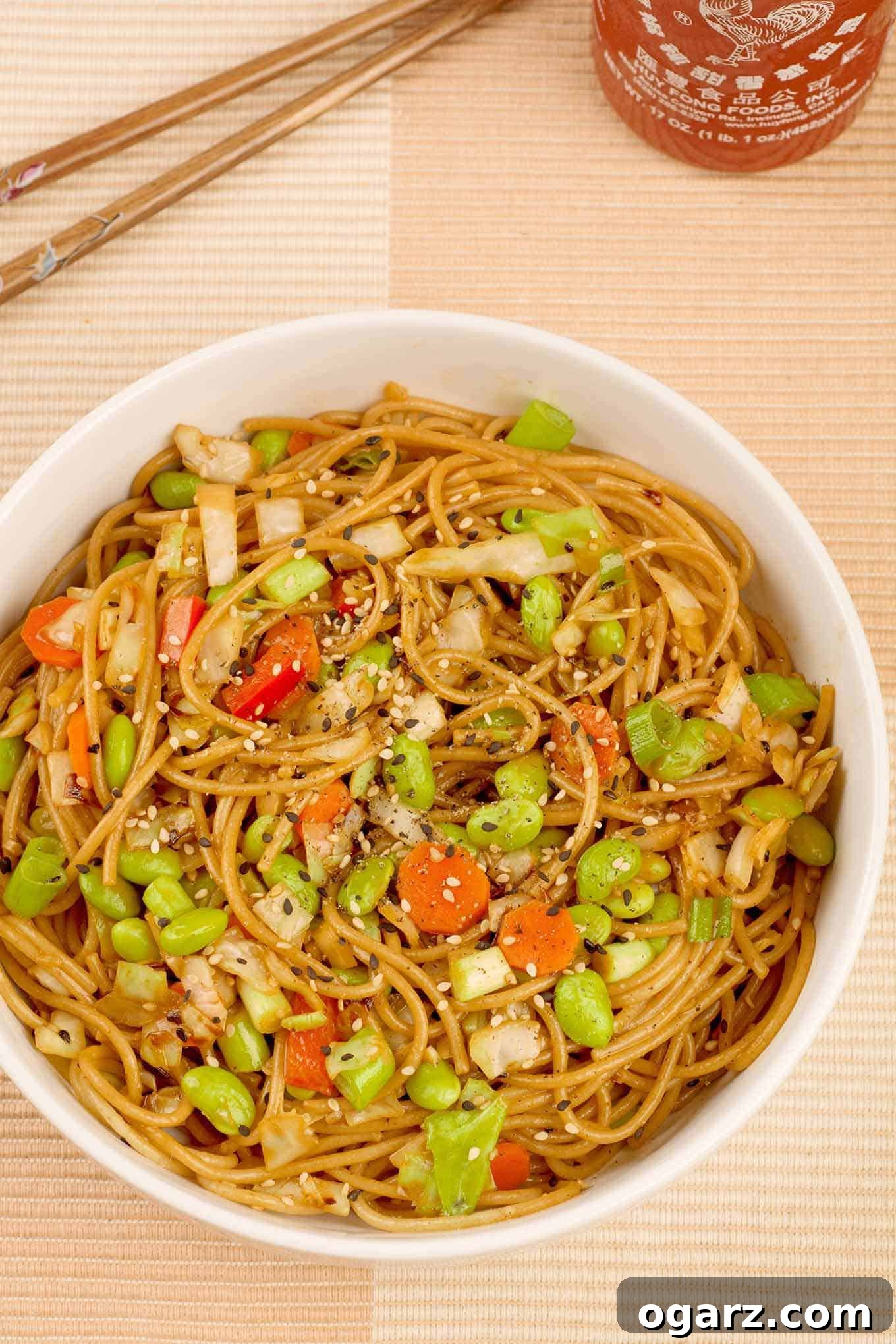
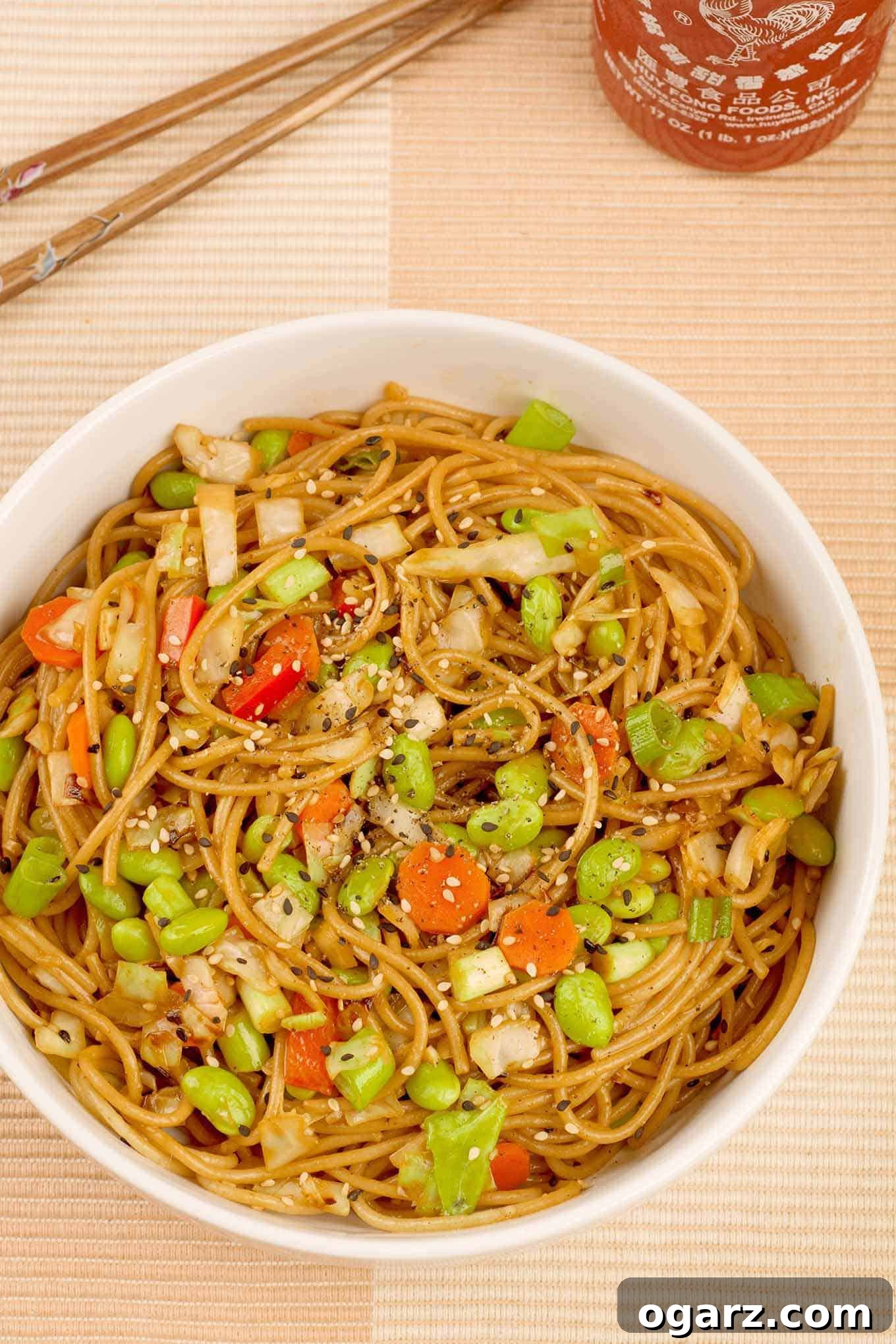
Quick & Easy Whole Wheat Sesame Noodles with Edamame and Peanut Sauce
Craving a delightful, healthy, and satisfying meal that comes together in a flash? Look no further than these incredible Whole Wheat Sesame Noodles with Edamame. This recipe transforms simple ingredients into an Asian-inspired culinary masterpiece, perfect for a quick weeknight dinner or a vibrant lunch. Combining the nutty goodness of whole wheat spaghetti, the tender bite of edamame, and a symphony of crisp, stir-fried vegetables, all coated in a rich yet light peanut sauce, this dish is a true crowd-pleaser. It’s not only incredibly flavorful but also packed with plant-based protein and fiber, making it an ideal meatless meal option for anyone seeking a nutritious and delicious alternative.
Forget bland, boring dinners. Our sesame noodles offer a harmonious blend of sweet, savory, and spicy notes, ensuring every forkful is an adventure for your taste buds. The interplay of textures – from the chewy pasta and firm edamame to the crunchy cabbage and bell pepper – adds an exciting dimension to this vibrant dish. Ready in just over half an hour, it’s a testament to how quick and easy healthy eating can be without compromising on taste.
Sesame Noodles with Edamame
Lynne Webb
10 mins
25 mins
35 mins
4 servings
Ingredients
- 1-1/2 cups frozen shelled edamame
- 10 ounces whole wheat spaghetti (or your preferred pasta)
- 2 tablespoons vegetable oil (such as canola, grapeseed, or sunflower oil, for stir-frying)
- 1/4 medium head of cabbage, finely chopped (about 2-3 cups)
- 2 medium carrots, thinly sliced into rounds or julienned for quicker cooking
- 1/2 red bell pepper, cored, seeded and diced into small, uniform pieces
- 2 cloves garlic, minced (freshly minced garlic offers the best flavor)
- 4 scallions, sliced, white and green parts separated
- 2 teaspoons toasted sesame oil (for finishing the dish, adds a deep, nutty aroma)
- 2 tablespoons sesame seeds, we used a combo of both white & black for visual appeal and nutty flavor
For the Creamy Peanut Sauce:
- 3 tablespoons soy sauce (low-sodium preferred, or use tamari for a gluten-free option)
- 2 tablespoons rice vinegar (unseasoned is best to control sweetness)
- 2 tablespoons toasted sesame oil (essential for authentic flavor in the sauce)
- 2 tablespoons peanut butter (creamy, natural peanut butter works best; avoid hydrogenated oils if possible)
- 2 teaspoons sugar (or maple syrup/honey for a refined sugar-free alternative)
- 1 teaspoon sriracha, or more to taste for an extra kick
Instructions
-
Prepare the Edamame: Bring a large pot of generously salted water to a rolling boil. Carefully add the frozen shelled edamame and cook until tender and bright green, which usually takes about 3 to 4 minutes. Using a slotted spoon or spider strainer, transfer the cooked edamame to a bowl and set aside. Keep the boiling water in the pot for the spaghetti.
-
Cook the Spaghetti: Return the pot of water to a vigorous boil. Add the whole wheat spaghetti and cook according to the package directions until al dente. While the spaghetti cooks, you can begin preparing your sauce and vegetables to save time. Once cooked, drain the spaghetti thoroughly and return both the drained noodles and the cooked edamame to the large pot. Set aside, keeping it warm if possible.
-
Whisk the Peanut Sauce: In a small bowl, combine the soy sauce, rice vinegar, toasted sesame oil, peanut butter, sugar, and sriracha. Whisk vigorously until the sauce is completely smooth and emulsified. If your peanut butter is stiff, a helpful tip is to microwave it for 15 to 20 seconds on 80% power before mixing; this makes it much easier to incorporate into the sauce. Pour this flavorful sauce over the noodles and edamame in the pot and toss gently but thoroughly to ensure everything is evenly coated. Set this aside while you prepare the vegetables.
-
Stir-Fry the Vegetables: Heat the vegetable oil in a large wok or a spacious frying pan over high heat. Once the oil is shimmering, add the finely chopped cabbage. Stir-fry constantly for 3 to 4 minutes until the cabbage is tender-crisp and lightly golden at the edges. The high heat helps achieve that desired stir-fried texture without overcooking.
-
Add Remaining Vegetables: To the pan with the cabbage, add the thinly sliced carrots, diced red bell pepper, and minced garlic. Continue cooking and stirring constantly for an additional 2 minutes. The vegetables should still retain some crunch, and the garlic should be fragrant but not browned.
-
Finish the Stir-Fry: Add the sliced scallions (reserving a few for garnish if desired), the remaining 2 teaspoons of toasted sesame oil, and 2 tablespoons of sesame seeds to the pan. Cook for just 30 seconds more, stirring to combine and allow the sesame oil to infuse its aroma. This final burst of flavor is key.
-
Combine and Serve: Transfer the entire stir-fried vegetable mixture from the pan directly into the pot with the sauced noodles and edamame. Toss everything together thoroughly until the vegetables are well integrated with the noodles and coated in the peanut sauce. Plate individual servings immediately, garnishing with extra fresh scallions or sesame seeds if desired. Offer additional sriracha at the table for those who enjoy an extra layer of heat and spice.
Nutrition Information
Total Fat: 26g,
Sodium: 861mg,
Carbohydrates: 73g,
Fiber: 7g,
Sugar: 8g,
Protein: 22g
Nutrition information is an approximation calculated automatically and should be used as a general guide.
Why You’ll Fall in Love with These Sesame Noodles
This recipe for Whole Wheat Sesame Noodles with Edamame isn’t just another meal; it’s a testament to simple, flavorful, and healthy cooking. Here’s why it’s destined to become a staple in your kitchen:
- Effortlessly Delicious: The peanut sauce is the star, delivering a perfect balance of savory, sweet, and umami with just a hint of spice. It’s incredibly easy to make yet tastes like it came from your favorite takeout spot.
- Lightning Fast: From prep to plate, you’ll have a wholesome meal ready in approximately 35 minutes. This makes it an ideal choice for busy weeknights when you want something satisfying without spending hours in the kitchen.
- Nutrient-Packed Powerhouse: Whole wheat spaghetti provides complex carbohydrates and fiber, while edamame offers a significant boost of plant-based protein. The array of fresh vegetables adds vitamins, minerals, and antioxidants, making this a truly well-rounded dish.
- Meatless & Satisfying: Whether you’re a vegetarian, vegan, or simply looking to incorporate more plant-based meals into your diet, this recipe delivers. The protein from edamame and peanut butter ensures you’ll feel full and satisfied, without needing any meat.
- Customizable Comfort: This recipe is a fantastic base for customization. Add extra protein like tofu or chicken, throw in more of your favorite vegetables, or adjust the spice level to your preference. It’s versatile enough to cater to any palate.
- Budget-Friendly: Made with accessible and affordable ingredients, this dish proves that eating well doesn’t have to break the bank.
Key Ingredients Spotlight: Crafting the Perfect Balance
Each component in this sesame noodle dish plays a crucial role in its overall flavor and nutritional profile. Understanding these ingredients can help you appreciate the depth of this simple recipe.
Whole Wheat Spaghetti: The Wholesome Base
Choosing whole wheat spaghetti over traditional refined pasta significantly boosts the fiber content, aiding digestion and promoting satiety. Its slightly chewier texture and nutty flavor perfectly complement the robust peanut sauce. Don’t be afraid to experiment with other whole grain pastas like brown rice noodles or soba noodles if you prefer, especially if you’re looking for a gluten-free option. The key is to cook it al dente for the best texture when tossed with the sauce and vegetables.
Edamame: Protein-Packed Power
Edamame, or young soybeans, are a nutritional powerhouse. They are an excellent source of plant-based protein, dietary fiber, and essential vitamins and minerals. Their slightly sweet, subtly grassy flavor and firm texture add a wonderful contrast to the soft noodles and crunchy vegetables. Frozen shelled edamame is incredibly convenient and cooks in minutes, making it a perfect addition for a quick meal.
The Vibrant Vegetable Medley: Color, Crunch & Nutrients
- Cabbage: When stir-fried, cabbage develops a delicate sweetness and a tender-crisp texture. It adds bulk and a subtle earthy flavor to the dish.
- Carrots: Sliced thin, carrots offer a touch of sweetness and a vibrant orange hue, along with beta-carotene, an important antioxidant.
- Red Bell Pepper: These provide a fresh, sweet crunch and a beautiful pop of color, loaded with Vitamin C.
- Scallions & Garlic: Essential aromatics that lay the foundation for the Asian-inspired flavors, offering a pungent, savory depth.
The Irresistible Peanut Sauce: Heart of the Dish
The peanut sauce is what brings everything together. It’s a harmonious blend of:
- Soy Sauce: Provides the fundamental umami and saltiness. Opt for low-sodium to control the overall salt content.
- Rice Vinegar: Adds a bright, tangy acidity that cuts through the richness of the peanut butter, balancing the flavors.
- Toasted Sesame Oil: This is a secret weapon in Asian cuisine. Its intensely nutty and aromatic profile is irreplaceable. Ensure it’s “toasted” for that deep flavor.
- Peanut Butter: The creamy base, offering richness, body, and a comforting nutty taste. Natural, unsweetened peanut butter is recommended.
- Sugar: Balances the saltiness and acidity, enhancing the overall deliciousness. Adjust to your sweetness preference.
- Sriracha: For that delightful spicy kick. Feel free to adjust the amount to suit your heat tolerance, or omit for a milder version.
Achieving Perfect Sesame Noodles Every Time: Expert Tips
While this recipe is straightforward, a few key tips can elevate your sesame noodles from good to absolutely outstanding:
- Don’t Overcook the Pasta: Al dente is key! Whole wheat spaghetti should be cooked until it has a slight bite, as it will continue to soften slightly when tossed with the warm sauce. Overcooked, mushy noodles will diminish the dish’s appeal.
- Prep Your Ingredients (Mise en Place): Asian stir-fries move quickly. Having all your vegetables chopped, edamame boiled, and sauce whisked before you even turn on the stove will make the cooking process seamless and prevent anything from burning.
- High Heat for Stir-Frying: A wok or large frying pan needs to be very hot when you add the vegetables. This ensures they stir-fry quickly, developing a slight char and retaining their crispness, rather than steaming.
- Microwave the Peanut Butter: If your peanut butter is stiff, a quick 15-20 second zap in the microwave will make it much easier to whisk into a smooth, lump-free sauce. This prevents a gritty texture.
- Taste and Adjust the Sauce: Before pouring the sauce over the noodles, taste it! This is your chance to adjust the seasoning. Need more heat? Add extra sriracha. Too tangy? A pinch more sugar. Not salty enough? A splash more soy sauce.
- Even Coating: When combining the noodles, edamame, and stir-fried vegetables with the sauce, take your time to toss thoroughly. You want every strand of spaghetti and every piece of vegetable to be coated in that delicious peanut sauce.
- Fresh Garlic & Scallions: While garlic powder can work in a pinch, fresh minced garlic and sliced scallions bring an unparalleled freshness and aromatic depth that truly makes a difference in this dish.
Creative Variations & Perfect Serving Suggestions
This sesame noodle recipe is fantastic as is, but it’s also incredibly versatile. Feel free to make it your own!
Customization Ideas:
- Add Protein: For an even heartier meal, consider adding pan-fried tofu, tempeh, chicken, shrimp, or even thinly sliced beef to the stir-fry. Add cooked protein at the very end when combining with the noodles.
- Extra Veggies: Broccoli florets, snow peas, mushrooms, baby corn, or spinach would all be delicious additions to the stir-fry. Adjust cooking times as needed for different vegetables.
- Spice It Up (or Down): Increase the sriracha for more heat, or add a pinch of red pepper flakes to the stir-fry. For a milder version, reduce or omit the sriracha. A dash of chili garlic sauce could also add complexity.
- Nut Butter Alternatives: If you have a peanut allergy, almond butter or sunflower seed butter can be used as a substitute for the peanut butter in the sauce. The flavor profile will shift, but it will still be delicious!
- Garnish Galore: Beyond sesame seeds and scallions, try a sprinkle of chopped cilantro or crushed peanuts for added texture and flavor.
- Citrus Brightness: A squeeze of fresh lime juice over the finished dish can add a wonderful bright, zesty note.
Serving Suggestions:
These sesame noodles are a complete meal on their own, especially given the protein from the edamame and peanut butter, plus all the fiber and vegetables. However, they also pair wonderfully with:
- A simple side salad with a ginger-sesame dressing.
- Crispy spring rolls or egg rolls.
- Steamed dumplings or potstickers.
- A light miso soup.
- Grilled or baked salmon for a pescatarian option.
Storage & Meal Prep Made Easy
This dish is excellent for meal prepping and enjoying throughout the week!
- Refrigeration: Store any leftover sesame noodles in an airtight container in the refrigerator for up to 3-4 days. The flavors often deepen overnight, making it even more delicious the next day.
- Reheating: To reheat, you can microwave individual portions until just warm. If the noodles seem a little dry, add a tiny splash of water or vegetable broth before reheating to loosen the sauce.
- Serving Cold: These noodles are also fantastic served cold or at room temperature, making them perfect for packed lunches or a quick grab-and-go meal.