
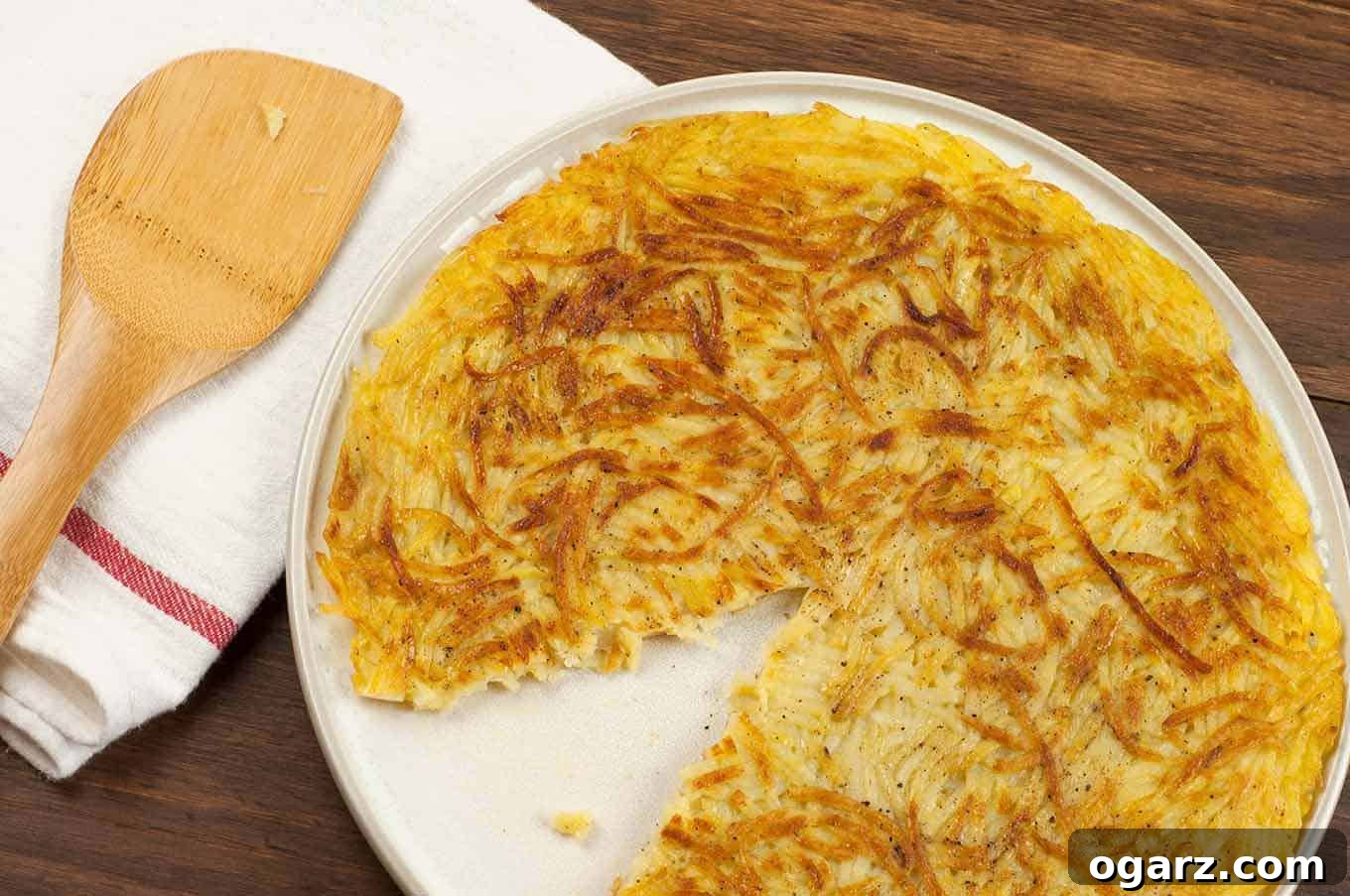
This article was originally penned to commemorate what would have been the 100th birthday of the legendary Julia Child on August 15th, 2012. More than a decade later, her indelible influence on the culinary world and home kitchens continues to inspire generations. To honor her enduring legacy, we revisit and celebrate one of her most deceptively simple yet utterly magnificent recipes: the Giant Straw Potato Galette. This dish perfectly embodies Julia’s philosophy that exceptional food doesn’t always require an extensive list of ingredients, but rather a thoughtful approach and precise technique.
Julia Child’s Enduring Culinary Legacy
Julia Child’s contribution to the culinary education of countless home cooks is nothing short of extraordinary. Through her groundbreaking cookbook, “Mastering the Art of French Cooking,” and her beloved television series, “The French Chef,” she demystified complex French cuisine, making it accessible and enjoyable for a broader audience. Julia taught us not only how to cook, but how to appreciate the process, to embrace quality ingredients, and to find joy in the kitchen. Her infectious enthusiasm and practical wisdom transformed the way America viewed and prepared food. This potato galette, a seemingly humble side dish, stands as a testament to her genius – taking just a few basic components and elevating them into a dish that is undeniably fabulous, full of flavor, and satisfyingly crispy.
Unveiling the “Paillasson”: The Story Behind the Straw Potato Galette
The term “galette” often refers to a flat, round cake, but in the context of this potato dish, it’s a magnificent, golden-brown creation of shredded potatoes. Julia Child introduces us to this specific preparation as a “paillasson,” or straw mat, a name inspired by the renowned French chef Fernand Point. Point, known for his legendary restaurant, La Pyramide, in southern France, coined this evocative description because the finished galette resembled a bird’s nest or a finely woven straw mat. This evocative name captures the rustic elegance and textural beauty of the dish.
The brilliance of this recipe lies in its minimalist approach. With only two primary ingredients—potatoes and clarified butter—complemented by salt and pepper, it showcases how superior ingredients and meticulous technique can produce a profound culinary experience. The natural starch from the potatoes acts as the binder, creating a cohesive yet incredibly crispy cake without the need for flour or eggs. It’s a prime example of how French culinary tradition celebrates the essence of ingredients, allowing their natural flavors and textures to shine through.
“A paillasson, or straw mat, is what the birds’ nest looked like to Fernand Point when he used to serve the straw potato galette at his legendary restaurant, La Pyramide, in southern France. According to Point’s former apprentice, chef Joe E. Hyde, in his engaging cookbook “Love, Time, and Butter” (New York: Richard W. Baron, 1971), Point’s version was cooked first on the stove, and then the frying pan was moved to the oven. But that was before the blessed advent of nonstick cooking utensils.”
Julia’s delightful anecdote about Fernand Point and his “straw mat” potatoes highlights the historical evolution of cooking methods. Point’s original technique involved starting the galette on the stovetop and finishing it in the oven. However, as Julia astutely noted, the advent of nonstick cooking utensils revolutionized this process, making it possible to achieve perfection entirely on the stovetop. This adaptation simplifies the technique for the modern home cook without compromising on the authentic taste and texture that makes this dish so extraordinary. It underscores Julia’s pragmatic approach to cooking, always seeking efficiency without sacrificing quality.
A Complete French Dining Experience: The “UFOs in Wine” Menu
This exquisite potato galette was conceived as a central component of a larger, elegant menu Julia Child dubbed “UFOs in Wine,” featured in her cookbook “Julia Child and More Company.” This thoughtfully curated dinner menu was designed to impress, yet remain approachable for the ambitious home cook. The full meal commenced with an appetizer of Steamed Mussels served with crusty Hot French Bread, setting a sophisticated tone. The main course consisted of Rock Cornish Hens Broil-roasted with Garlic, Cheese, and Wine – the “UFO” referring to the versatility of using any kind of game bird you prefer, not solely Cornish hens. Alongside these savory delights, Cherry Tomatoes Tossed with Butter and Herbs provided a fresh, vibrant contrast. The meal concluded with a delightful Fresh Orange Blueberry Bowl for dessert, offering a light and refreshing finish. Julia’s suggestion to try the entire menu if you have the opportunity speaks to the harmonious balance of flavors and textures she achieved in her meal planning, creating a truly memorable dining experience.
Recipe Variation: Exploring the Oven-Roasted Potato Galette
While the stovetop method, particularly with the benefit of nonstick cookware, is a cornerstone of Julia Child’s preparation, there are other excellent ways to achieve a delicious potato galette. We’ve previously featured an oven-roasted version of this recipe on our site, which also relies on the natural starch of the potatoes to hold the galette together, creating a beautiful, cohesive form. This alternative offers a hands-off approach for those who prefer oven cooking or are preparing multiple dishes simultaneously. The oven-roasted technique typically yields a slightly different texture, often more uniformly crispy throughout. You can explore this delightful variation and find the recipe here: Oven-Roasted Potato Galette.
No ratings yet
Giant Straw Potato Galette
Lynne Webb
15 minutes
20 minutes
35 minutes
6 servings
Save Recipe
Pin Recipe
Rate Recipe
Print Recipe
Ingredients
- 6 medium “starchy” potatoes, Idaho or Russet varieties are ideal for their starch content, which helps bind the galette.
- 5 tablespoons clarified butter, or more if needed to ensure crispiness and prevent sticking.
- Salt and freshly ground black pepper to taste.
Instructions
-
Prepare the Potatoes: Peel the potatoes meticulously. Using the large shredding disk of a food processor, the julienne blade of a mandoline, or the large holes of a box grater, cut them into uniform matchstick-sized pieces. This consistency is crucial for even cooking and a beautiful “straw” appearance. After shredding, spread the potatoes on a clean kitchen towel and blot away any excess moisture. This step is vital for achieving a truly crispy galette, as moisture inhibits browning.
-
Begin Cooking: Film the bottom of an 11 or 12-inch nonstick skillet with about half of the clarified butter. Heat the skillet over a medium-high burner for several minutes until the butter is shimmering and hot. Add approximately half of the prepared potatoes to the hot skillet, spreading them evenly. Season generously with salt and freshly ground black pepper. Then, add the remaining potatoes on top and season them once more.
-
Form and Compress: Using a large, sturdy spatula, firmly press down on the potatoes to compress them into a solid, even pancake as they cook. This constant pressure is key to binding the galette, as the natural starch from the potatoes will release and adhere them together. Continue to press frequently as the potatoes begin to brown, and occasionally shake the pan to ensure the galette isn’t sticking to the bottom. This process develops the crucial crispy crust.
-
Cook Through: Once the first side of the galette achieves a beautiful golden-brown color (this typically takes about 3 minutes over medium-high heat), reduce the heat to medium. Cover the pan with a lid. Continue cooking for another 6 to 7 minutes, or until the potatoes on the top layer are tender when tested. The cover helps to steam the potatoes, ensuring they are cooked through without burning the bottom.
-
The Famous Flip: Now comes the moment to flip the galette. A simple and effective method is to carefully slide the galette onto a baking sheet or a large, flat plate. Then, invert your skillet upside down on top of the galette on the baking sheet. Holding both the skillet and the baking sheet firmly together, quickly and confidently flip them over so the uncooked side of the galette is now in the skillet. This method minimizes breakage.
-
Final Crisp and Serve: Raise the heat back to medium-high. Add a little more clarified butter around the edges if needed to promote browning. Cook the second side until it is also gloriously golden brown and crispy, which should take approximately 2 to 3 minutes longer. The galette can be kept warm in a low oven (around 200°F/95°C) for a short period, but Julia Child, ever the perfectionist, always recommends serving it immediately to experience its optimal crispiness and flavor.