
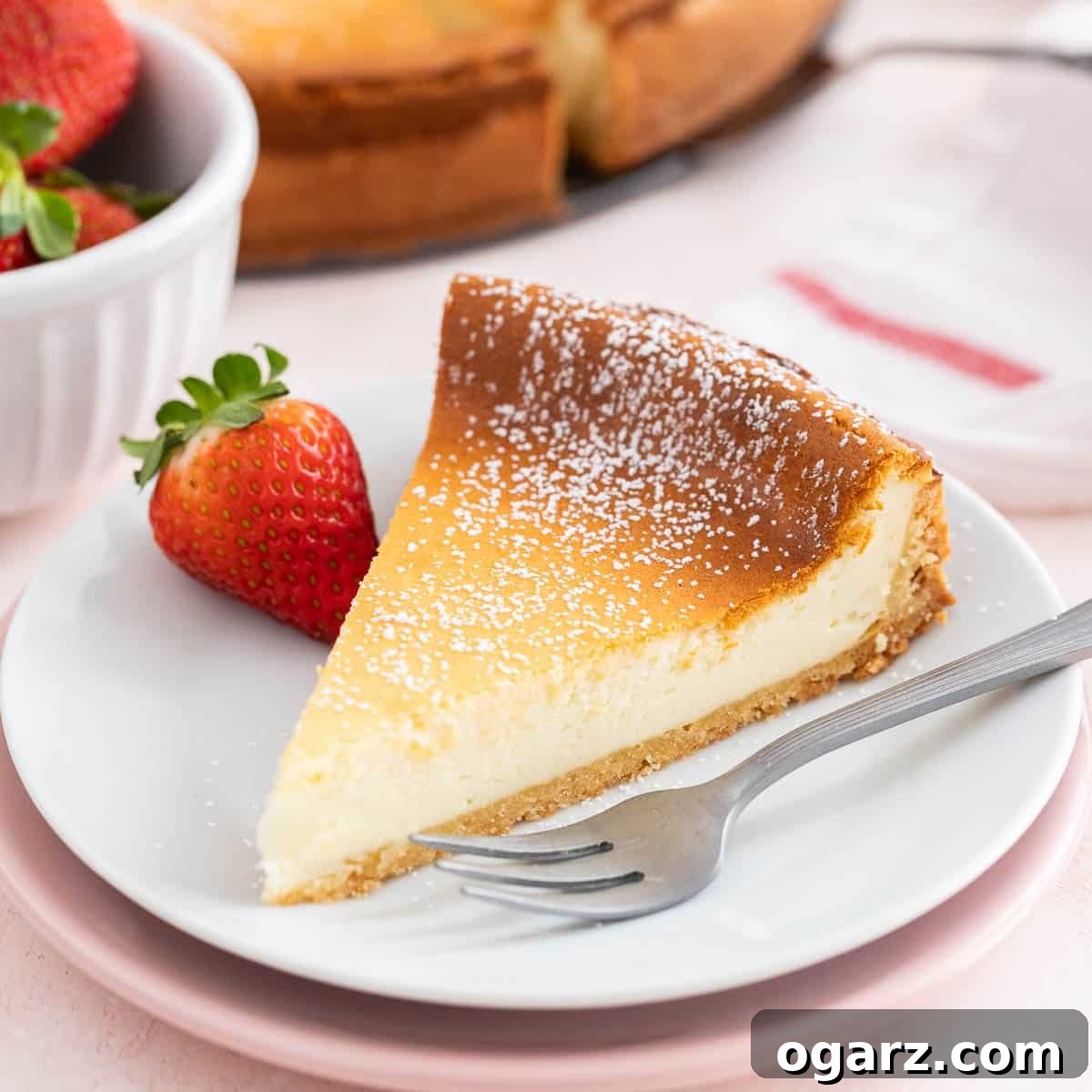
Indulge in the light, creamy, and distinctively tangy delight of German Cheesecake, known affectionately as “Käsekuchen” throughout Germany. Unlike its denser American counterpart, this traditional European dessert offers a wonderfully fluffy texture and a unique flavor profile, primarily owing to its star ingredient: quark.
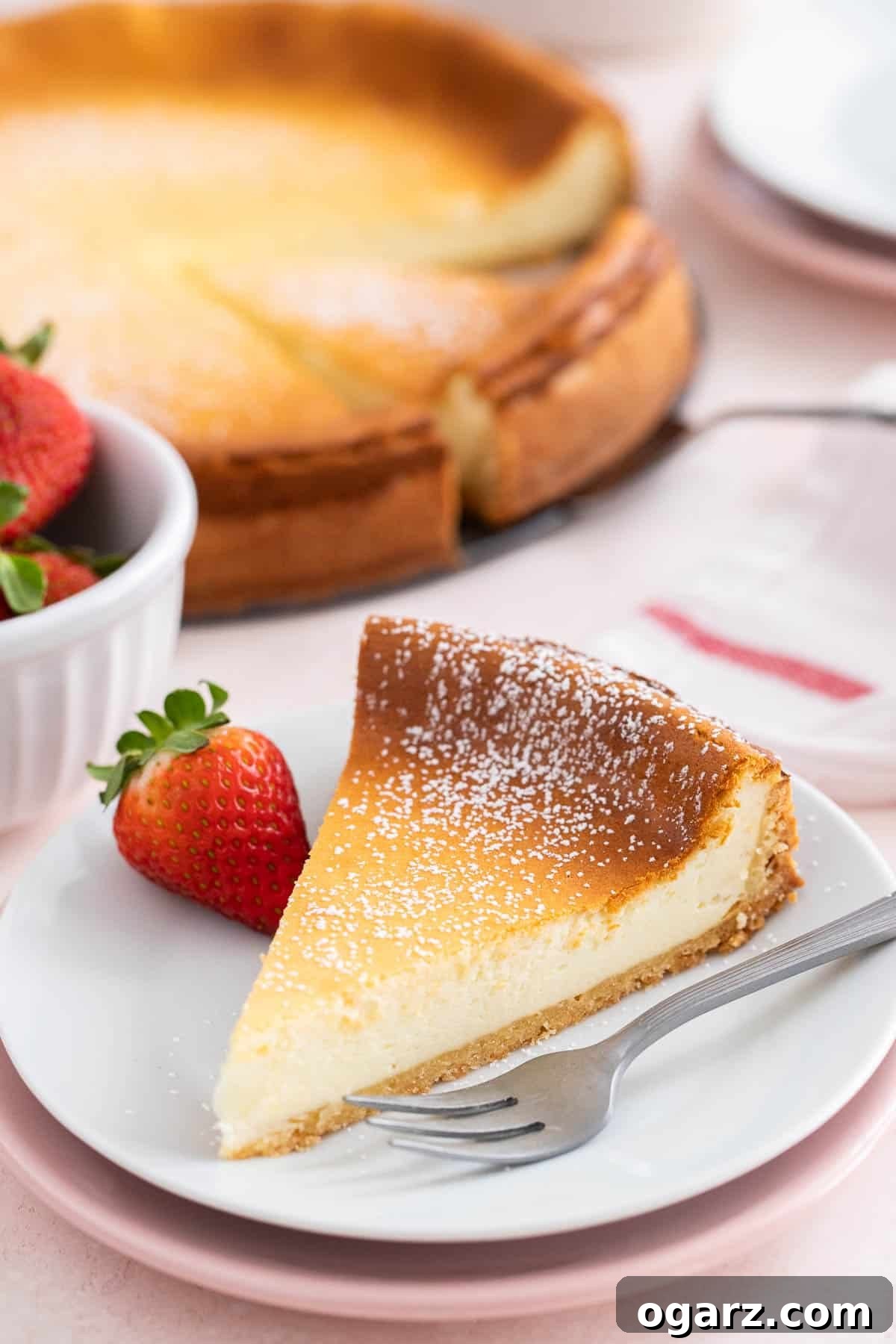
For many, including myself, Käsekuchen evokes cherished memories of family gatherings, festive celebrations, and cozy afternoon coffee breaks. It wasn’t just a dessert; it was a centerpiece, a staple that brought smiles and satisfaction. This beloved German cake is celebrated for its incredibly fluffy and light texture, making it surprisingly easy to master even for novice bakers. The secret lies in its primary ingredient: quark, a thick, soft, fresh cheese renowned for its yogurt-like tang, low-fat content, and high protein. This unique dairy product imparts a distinct flavor and texture that sets German cheesecake apart from the rich, cream cheese-based American version.
Understanding that authentic quark can be a rare find outside of Europe, I’ve dedicated considerable effort to extensively test this recipe. My goal was to ensure you can achieve a truly perfect German cheesecake, with or without traditional quark. Through meticulous experimentation, I’ve discovered that strained Greek yogurt makes an exceptional alternative, provided you follow a few simple tips that I’ll share throughout this guide. Forget the hunt for obscure ingredients like German vanilla pudding powder; this recipe relies on readily available items. The result? A stunning cheesecake that is perfectly smooth, free of cracks, and doesn’t demand an agonizingly long cooling period in the refrigerator before you can slice into its creamy goodness. Prepare to impress with an authentic German dessert that’s as delightful to make as it is to eat.
German Cheesecake is traditionally served simply, with a delicate dusting of powdered sugar. However, its versatility allows for a myriad of delightful accompaniments. A vibrant fruit compote, especially made from berries or tart cherries, provides a lovely contrast to its creamy sweetness. Alternatively, a dollop of freshly whipped cream complements its airy texture beautifully. Whether it’s a casual weeknight treat or a special occasion dessert, Käsekuchen is a perfect cake for any setting, standing proudly alongside other German classics such as our Black Forest Cake, German Apple Cake, German Strawberry Cake, or a warm, flaky Apple Strudel. Each bite promises a taste of German culinary heritage, crafted with simplicity and love.
Why You’ll Fall in Love with This Authentic German Cheesecake Recipe
This Käsekuchen recipe isn’t just another dessert; it’s an experience. Here’s why this particular German cheesecake will quickly become a cherished favorite in your baking repertoire:
- An Unforgettable Flavor and Texture Experience: Prepare your palate for something truly special. This German dessert offers a delicious and refreshing alternative to the often-dense and overtly sweet American cheesecake. Its unique base provides a subtle tang that balances the sweetness perfectly, while the texture is remarkably light, airy, and wonderfully fluffy – a stark contrast to the typically smooth and heavy cream cheese varieties. It’s less sweet, allowing the nuanced flavors to truly shine.
- Surprisingly Easy and Quick to Master: Don’t let the elegance of German cheesecake intimidate you. This recipe is designed to be straightforward and accessible for bakers of all skill levels. With my carefully developed tips and tricks, you’ll learn how to achieve a perfectly smooth top without the dreaded cracks that plague many cheesecakes. Plus, unlike some recipes that demand hours of chilling, this Käsekuchen requires less wait time, allowing you to enjoy your delicious creation sooner!
- Simple, Accessible Ingredients: You won’t need to embark on a scavenger hunt for exotic items to make this authentic treat. While traditionally made with quark, I’ve ensured this recipe works beautifully with widely available ingredients. You’ll find that common pantry staples and easily sourced dairy products, especially if you opt for the Greek yogurt substitute, are all you need. No more searching for specialized German vanilla pudding powder or even traditional quark if it’s not available in your local store. I’ll guide you on how to make simple substitutions without compromising flavor or texture.
- A Versatile Dessert for Any Occasion: From a casual family dessert to an elegant centerpiece for a holiday gathering, this German cheesecake fits every bill. Its comforting yet sophisticated profile makes it a crowd-pleaser that’s bound to gather compliments.
- A Taste of German Heritage: Beyond the delightful taste, baking Käsekuchen offers a connection to German culinary traditions. It’s a chance to explore a different facet of cheesecake, one that many have enjoyed for generations.
Essential Ingredients for Your Käsekuchen: A Closer Look
Crafting the perfect German cheesecake begins with understanding the role of each ingredient. Below is a detailed overview of what you’ll need, along with important tips for selection and substitution. For precise quantities, please refer to the comprehensive recipe card at the bottom of this page.
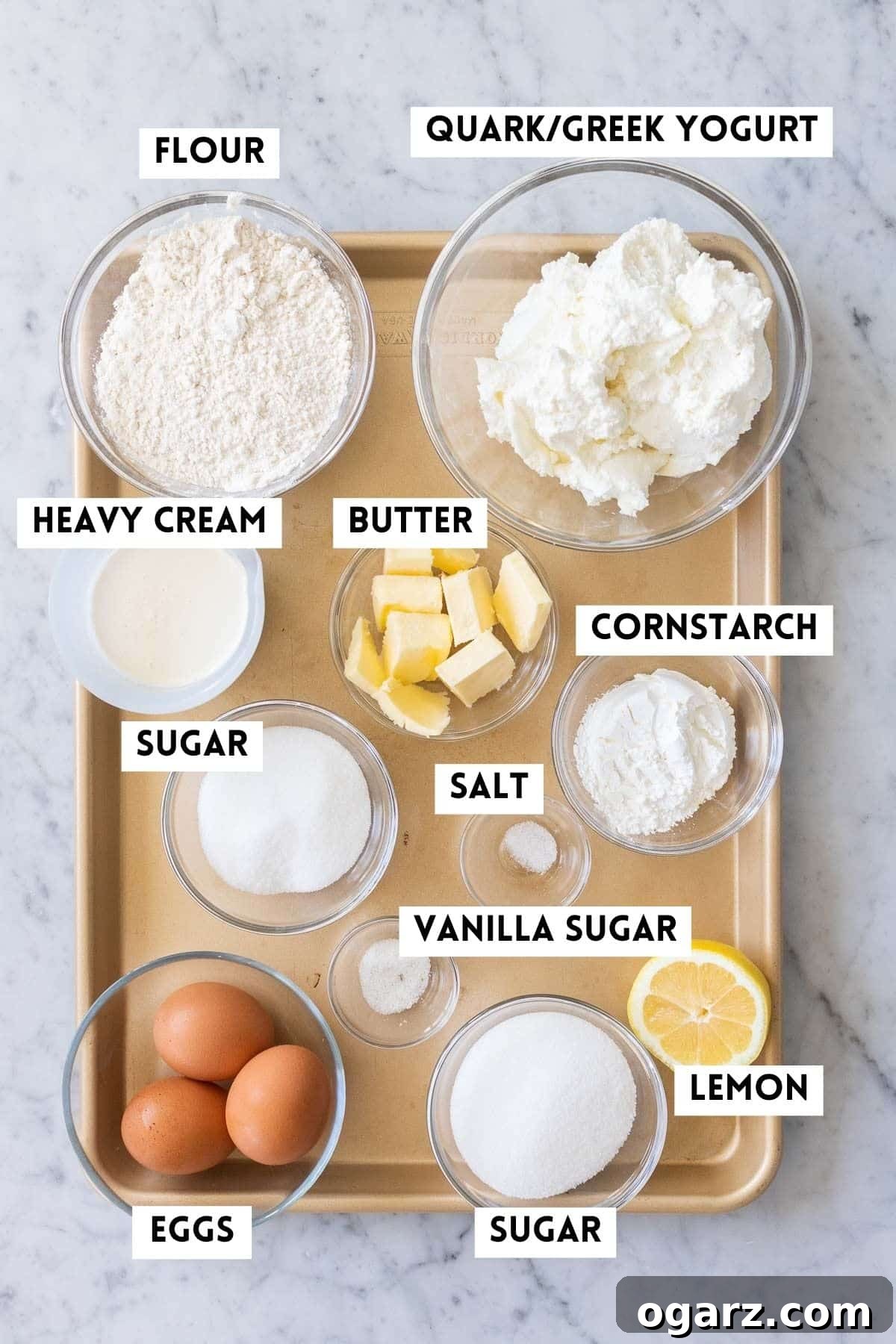
- Quark: The Heart of German Cheesecake – Traditionally, German cheesecake derives its signature flavor and texture from quark. This fresh dairy product is similar to a very thick, strained yogurt or a smoother ricotta, but with a distinct tangy, creamy profile. In Germany, look for “Magerstufe” quark, which is very low in fat. However, finding authentic quark in North America can be challenging and often expensive. The good news is, strained Greek yogurt makes an excellent substitute, closely mimicking quark’s consistency and tang when prepared correctly. I strongly advise against using ricotta, as it tends to yield a grainy, less desirable texture in cheesecake.
- Butter: The Foundation of Flavor – For the crust, unsalted butter is preferred. Ensure your butter is softened to room temperature, but not melted, for optimal dough consistency. If you only have salted butter on hand, simply omit the additional salt specified in the crust recipe. This helps maintain control over the overall flavor balance.
- All-Purpose Flour: The Crust’s Structure – You’ll need standard all-purpose flour for creating the delicate shortbread-like crust. It’s crucial not to use self-rising flour, as the leavening agents it contains would alter the desired texture of the crust.
- Eggs: Binders and Leaveners – This recipe calls for large eggs. One egg is used for the crust, contributing to its richness and binding properties. For the filling, you’ll need two eggs, carefully separated into yolks and whites. When separating the eggs for the filling, absolute care must be taken to ensure no egg yolk contaminates the egg whites. Even a trace amount of yolk fat can prevent the egg whites from whipping up into soft, stable peaks, which are essential for the cheesecake’s characteristic light and fluffy texture.
- Vanilla: A Hint of Aromatic Sweetness – In Germany, Vanilla sugar is commonly used, providing a subtle, sweet vanilla note. If vanilla sugar isn’t available, a good quality vanilla extract will work perfectly. The vanilla adds a comforting warmth and depth to the cheesecake’s flavor profile.
- Lemon: Brightness and Balance – A tablespoon of freshly squeezed lemon juice is a vital ingredient. It’s not just for flavor; the lemon’s acidity brightens the cheesecake, cutting through the richness and enhancing the tang of the quark or Greek yogurt. A hint of lemon flavor is a hallmark of many traditional German baking recipes, adding a refreshing zest.
- Heavy Cream: The Ultimate Creaminess – Incorporating whipped heavy cream into the filling is a game-changer. It contributes significantly to the cheesecake’s luxurious creaminess and further enhances its signature light, airy texture, making each bite melt in your mouth.
- Cornstarch: The Thickening Secret – Cornstarch plays a crucial role in providing structure and stability to the cheesecake filling. It acts as a gentle thickener, ensuring the filling sets beautifully without becoming overly dense or rubbery. This helps prevent cracks and ensures a smooth, uniform consistency.
Crafting Your Authentic German Cheesecake: Step-by-Step Guide
Embark on the journey to bake a perfect Käsekuchen with these detailed instructions. Remember, precision and a little patience are key to achieving that signature fluffy texture and crack-free finish. For exact measurements and a printable recipe card, please scroll to the very end of this page.
- Prepare Your Pan and Oven: Begin by preheating your oven to 400 degrees F (200 degrees C). This initial higher temperature is crucial for the crust. Lightly grease the bottom of a 9-inch springform pan. To ensure easy release and prevent sticking, line the bottom of the pan with a circle of parchment paper.
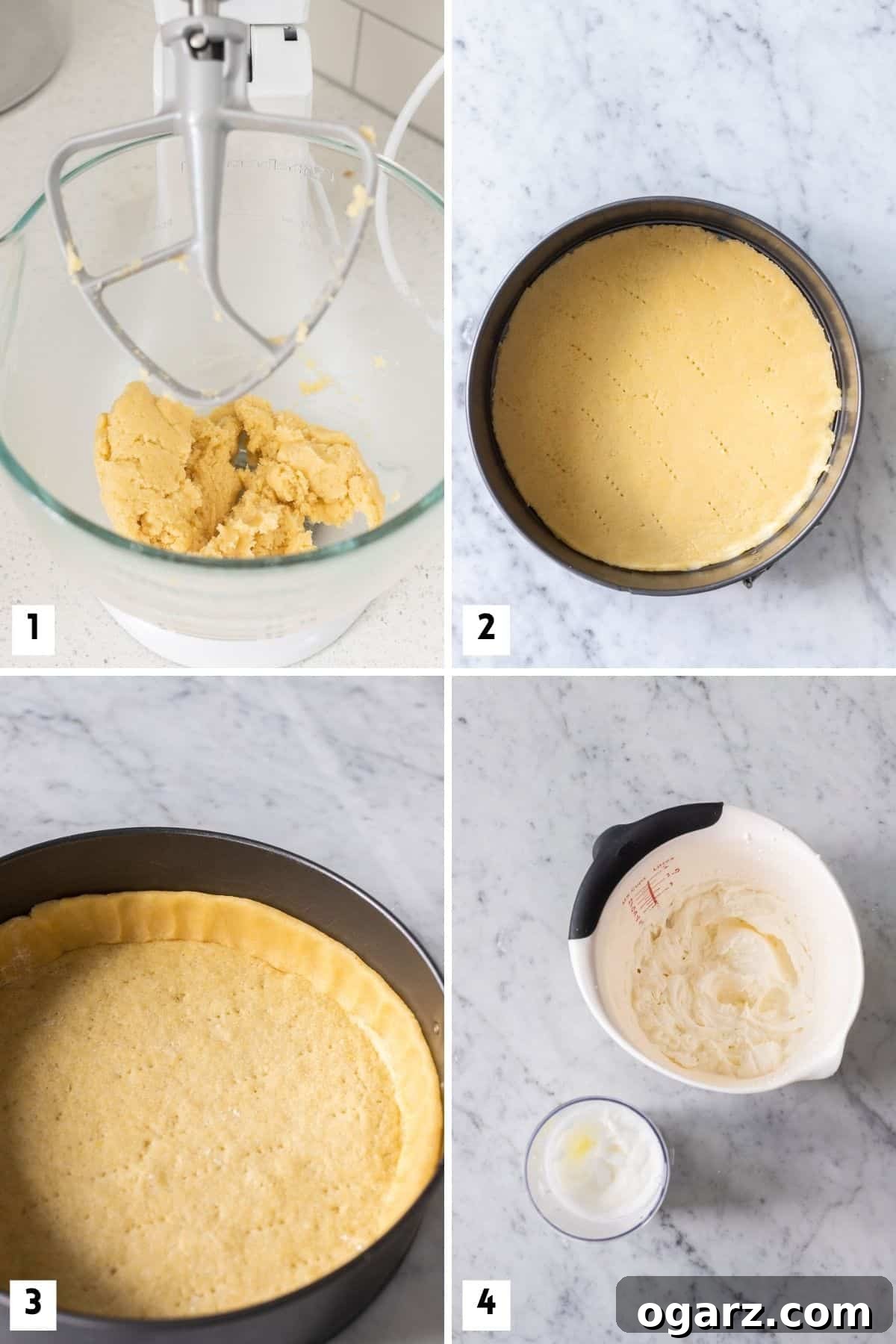
- Craft the Crumbly Crust: In the bowl of your stand mixer, fitted with the paddle attachment, combine all the ingredients designated for the crust. Mix on medium-high speed until the ingredients come together to form a cohesive dough. This shortbread-like dough will form the base and sides of your cheesecake.
- Form and Pre-bake the Bottom Crust: On a piece of plastic wrap or a lightly floured surface, roll out approximately two-thirds of the prepared dough. Aim for a circle slightly larger than the base of your springform pan, about 1/4 inch thick. Carefully transfer this rolled-out dough to the bottom of your prepared springform pan. Use a fork to prick the bottom dough multiple times; this prevents it from puffing up excessively during baking. Place the springform ring around the bottom crust, ensuring it’s securely latched. Bake the bottom crust for 10 minutes in the lower third of your preheated oven.
- Cool and Adjust Oven Temperature: Once the bottom crust is lightly golden, carefully remove the springform pan from the oven. Place it on a wire cooling rack to cool down while you prepare the sides and filling. At this point, reduce your oven temperature to 320 degrees F (160 degrees F); the cheesecake will bake at this lower temperature to prevent cracking.
- Add the Crust Sides: While the bottom crust cools, take the remaining one-third of the dough. Roll it into a long, even “sausage” shape. Carefully place this dough rope around the inside perimeter of the springform pan. Gently press the dough about 1 inch up the sides of the pan, forming an even border. Adding the sides after pre-baking the bottom crust is a crucial tip that prevents the crust from sliding down during the initial bake, ensuring a beautiful, uniform edge.
- Prepare the Filling Components: This is where the magic of the fluffy filling begins! In a thoroughly clean bowl of a stand mixer, fitted with the whisk attachment, whip the egg whites until they form soft, ethereal peaks. This usually takes about 3-4 minutes. Immediately transfer the whipped egg whites to a separate bowl and set them aside. Without cleaning the bowl (or using another clean bowl), whip the heavy whipping cream until it also forms soft peaks. Set this aside as well.
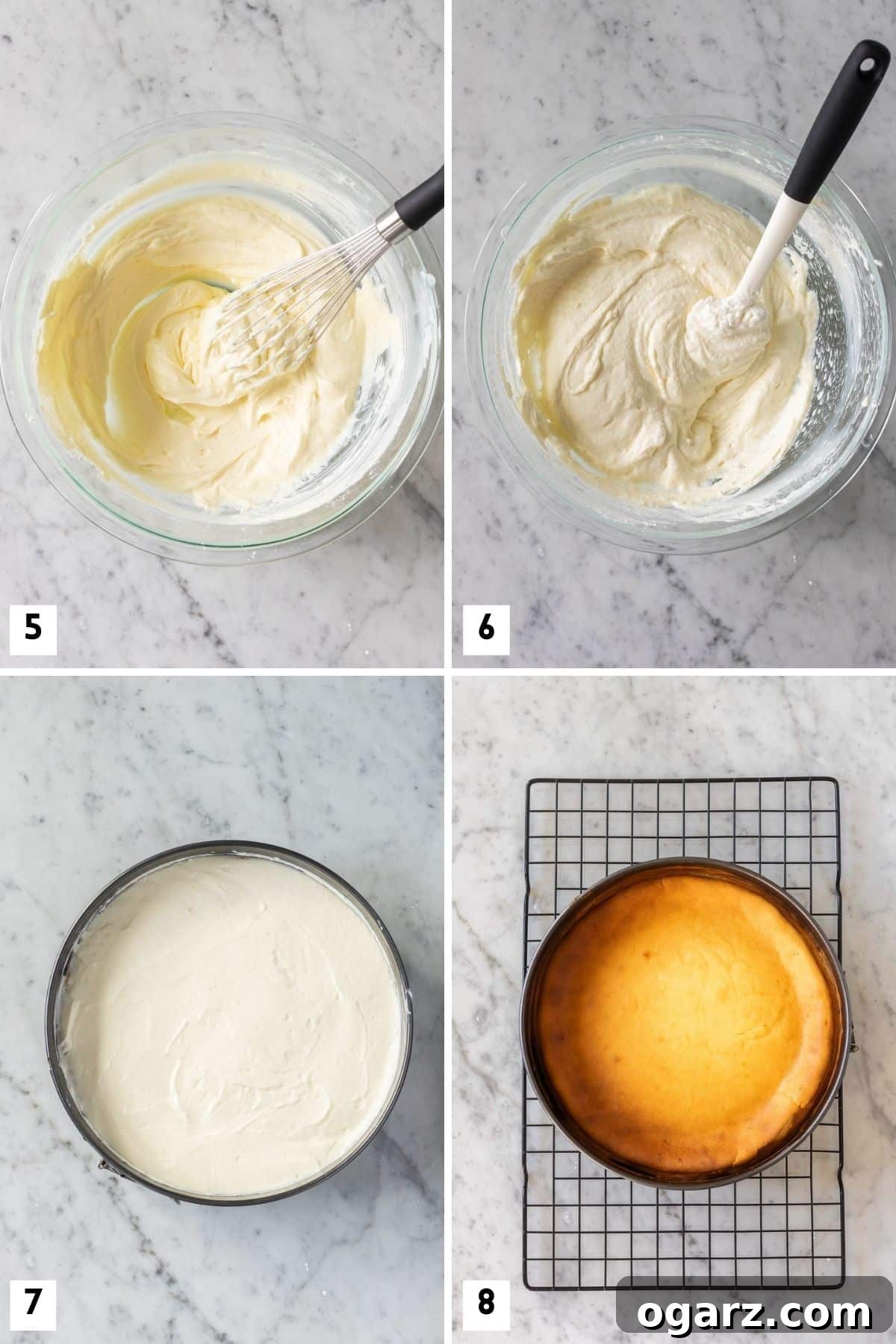
- Assemble the Creamy Filling: In a large, separate mixing bowl, combine the quark (or strained Greek yogurt), granulated sugar, fresh lemon juice, cornstarch, and the reserved egg yolks. Using a whisk, gently mix these ingredients until they are just smooth and thoroughly combined. Be careful not to overmix the filling at this stage; overmixing can incorporate too much air, which can contribute to cracking later.
- Gently Fold in Whipped Components: This step is vital for the cheesecake’s light texture. Using a spatula, carefully and gently fold the whipped egg whites into the quark mixture. Follow this by gently folding in the whipped heavy cream. The goal is to incorporate these airy components without deflating them, creating a light and voluminous batter.
- Fill the Pan and Smooth: Carefully transfer the prepared quark mixture into the crust-lined springform pan. Use your spatula to gently smooth the top surface of the filling, ensuring it is even.
- Bake to Perfection: Place the springform pan in the lower third of your oven (now at 320 degrees F / 160 degrees F) and bake for approximately 70 minutes. The cheesecake is done when the edges are set and lightly golden, but the center still has a slight wobble when gently shaken.
- Slow Cooling for a Crack-Free Finish: This is another critical step to prevent cracks. Once the baking time is complete, turn off your oven. Prop the oven door slightly ajar (a wooden spoon works perfectly to keep it open). Allow the cheesecake to remain in the cooling oven for an additional 15 minutes. This gradual temperature reduction helps prevent a sudden contraction of the cake, which is a common cause of cracks.
- Final Cool Down and Release: After the 15 minutes in the oven, carefully transfer the cheesecake in its pan to a wire cooling rack. Before it cools completely, gently slide a thin knife around the very top edge where the crust meets the springform ring. This helps prevent the crust from sticking to the ring as it cools and shrinks. Allow the cheesecake to cool completely at room temperature in the pan. Resist the urge to remove the springform ring prematurely.
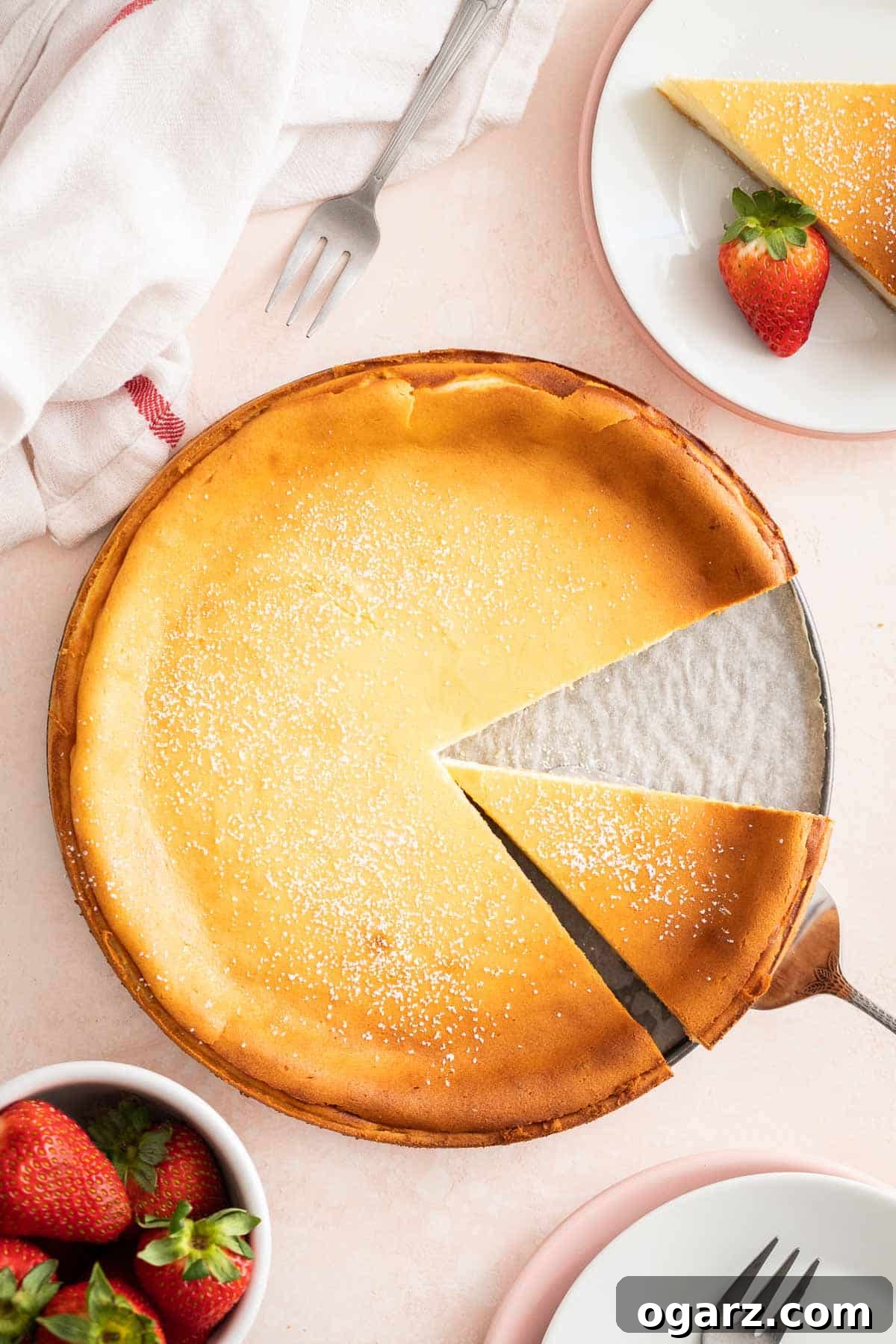
- Serve and Enjoy: Your authentic German cheesecake is ready to be enjoyed when it has reached a temperature close to room temperature. If you have diligently followed all the tips, it is perfectly safe and delicious to cut into it even if it’s still slightly warm, though many prefer it completely cooled.
Mastering Your Käsekuchen: Expert Tips for a Flawless German Cheesecake
Achieving a perfect German cheesecake, with its characteristic light texture and smooth, crack-free surface, is entirely within reach with these expert tips. These insights are designed to elevate your baking and ensure consistent success.
- Understanding Quark and Its Best Substitutes: German cheesecake is truly defined by quark. If you can find it, embrace its unique tang and texture. For those in regions where quark is elusive, strained Greek yogurt is your best friend. Look for full-fat Greek yogurt if possible, as it yields a richer flavor. I cannot emphasize enough: ricotta is generally not a good substitute. Its granular texture and different moisture content often result in a cheesecake that is coarse and not nearly as smooth or fluffy as desired.
- The Art of Straining Greek Yogurt: To mimic quark’s thick consistency, straining Greek yogurt is essential. Greek yogurt often contains excess liquid (whey), which needs to be removed. Line a fine-mesh sieve with several layers of cheesecloth or a clean coffee filter. Spoon a 32 oz container of Greek yogurt into the lined sieve and place it over a bowl to catch the whey. Refrigerate and let it strain for at least 4-6 hours, or ideally, overnight. A 32 oz container should yield approximately 20-23 oz of beautifully thickened, strained yogurt, which translates to about 2 heaping cups for this recipe. This step is critical for achieving the right filling consistency.
- Gentle Mixing is Paramount: When preparing the cheesecake filling, resist the urge to vigorously mix. Use a whisk or your stand mixer on the lowest speed possible. Overmixing incorporates too much air into the batter, which can cause the cheesecake to puff up excessively during baking and then dramatically collapse, leading to unsightly cracks down the middle. Aim for just-combined ingredients before folding in the whipped egg whites and cream.
- The Importance of Room Temperature Ingredients: Always ensure your quark (or strained Greek yogurt) and eggs are at room temperature before you begin. Room temperature ingredients emulsify more effectively, creating a smoother, more uniform batter. This consistency is crucial for the cheesecake’s texture and also helps prevent uneven baking.
- Perfecting the Crust Placement: When pressing the dough for the crust up the sides of the springform pan, only go about halfway up, approximately 1 inch. This strategic placement allows the cheesecake filling to rise slightly higher than the crust during baking. This creates a beautifully rounded top and helps to contain the filling without the crust interfering with the cake’s expansion.
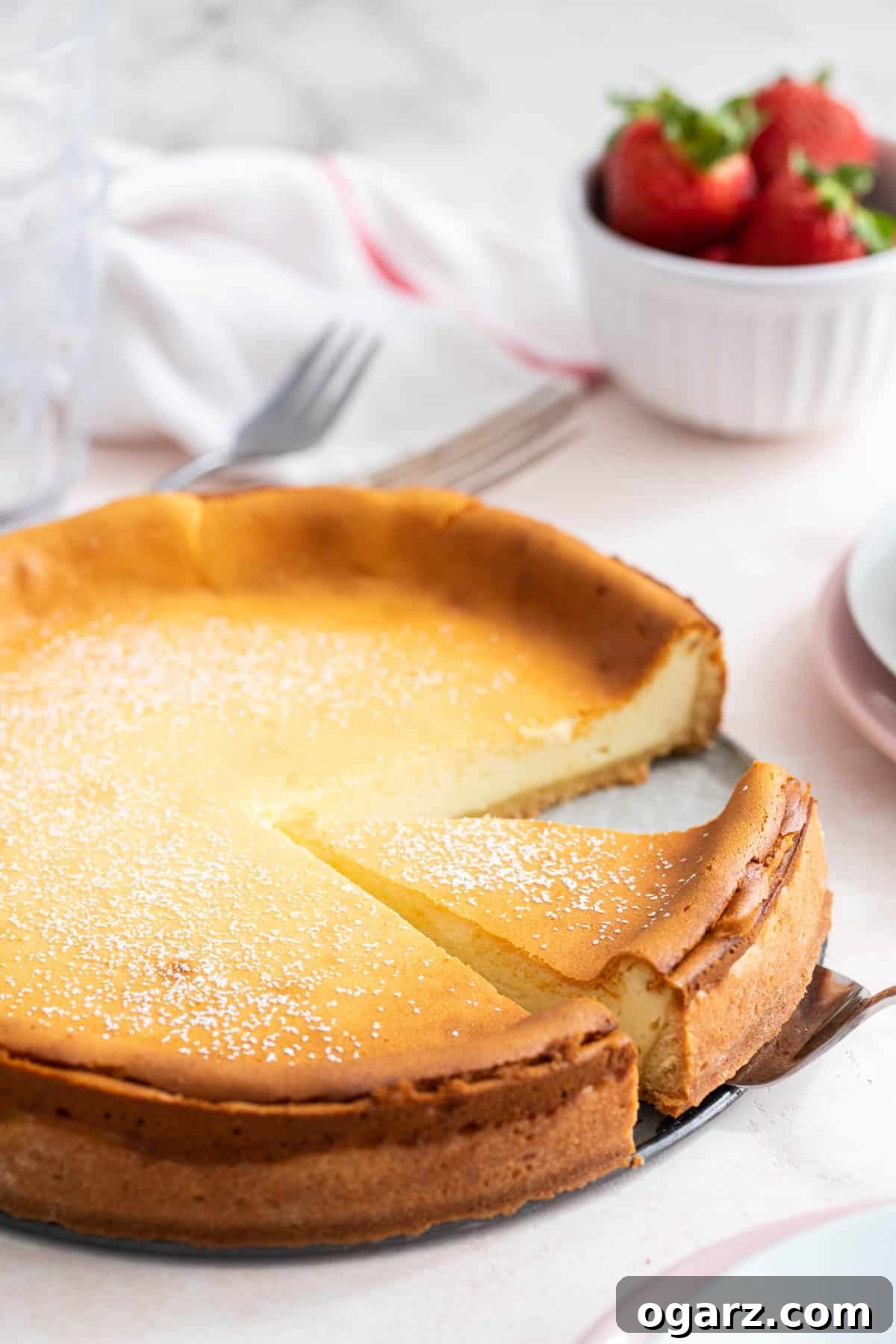
- Slow and Steady Cooling Prevents Cracks: The cooling process is as vital as the baking itself for a crack-free cheesecake. Do not rush it. Allowing the cheesecake to gradually cool in the turned-off oven with the door slightly ajar for 15 minutes prevents a sudden temperature shock. After this, let it cool completely at room temperature, still in the pan, before attempting to remove the springform ring. While many cheesecakes require refrigeration before slicing, this particular German recipe is designed to be sliceable and delicious once it’s cooled to room temperature, without the need for additional chilling.
Frequently Asked Questions About German Cheesecake (Käsekuchen)
The core difference lies in the main dairy ingredient and subsequent texture. German cheesecake, or Käsekuchen, is traditionally made with quark, resulting in a lighter, more fluffy, and less sweet texture. Its flavor is typically tangy and fresh. The crust is often a simple shortbread dough, contributing a buttery snap. In contrast, American cheesecake uses cream cheese, which yields a much smoother, denser, and richer consistency, and is generally sweeter. American cheesecakes commonly feature a graham cracker crust.
Quark is a versatile, fresh dairy product popular across many European countries, including Germany. Its consistency can range from a thick yogurt to a smooth ricotta-like cheese, and it possesses a distinctive tangy flavor. Often referred to as a thick, soft cheese with a yogurt-like taste, quark is celebrated for being naturally low in fat and high in protein. It’s a staple in German cooking, not just for desserts like Käsekuchen, but also in savory dishes and as a spread.
Cracks are a common concern for cheesecake bakers, but there are several effective strategies to prevent them. A primary factor is the cheesecake’s height and the composition of its filling. Taller cheesecakes are often more prone to cracking, as are fillings that are excessively wet or airy. To combat this, I highly recommend straining your Greek yogurt thoroughly if using it as a quark substitute; this makes its consistency much closer to traditional quark. Additionally, whipping the heavy cream separately before folding it into the batter adds volume without excess moisture. Baking the cake at a lower temperature (320°F / 160°C) and, crucially, allowing it to cool slowly in the turned-off oven with the door slightly ajar, significantly minimizes temperature shock, a leading cause of cracking. Rapid temperature changes cause the cake to contract too quickly. Should a crack still appear, fret not! A simple dusting of powdered sugar or a topping of fresh fruit can beautifully disguise any imperfections, leaving your delicious Käsekuchen looking perfect.
Absolutely! German cheesecake is an excellent make-ahead dessert. Its flavors tend to meld and deepen over time, often tasting even better the day after it’s baked. Simply bake, cool completely, and then cover it well before refrigerating. This makes it a perfect choice for entertaining or busy schedules.
While this specific recipe uses all-purpose flour for the crust, many bakers have successfully adapted Käsekuchen to be gluten-free. You would need to substitute the all-purpose flour in the crust with a gluten-free all-purpose baking blend (ensure it’s a 1:1 substitute blend that includes xanthan gum). The filling itself is naturally gluten-free.
Popular Add-ins and Exciting Variations for Your Käsekuchen
While the classic German cheesecake is undeniably delicious on its own, it also serves as a fantastic canvas for various additions and creative twists. Here are some popular ways to customize your Käsekuchen and impress your guests:
- Raisins or Sultanas: A Classic Addition: For a touch of traditional sweetness and chewiness, sprinkle about 1/3 cup of plump raisins or golden sultanas evenly over the pre-baked crust just before adding the cheesecake filling. The fruit will soften and become wonderfully tender as the cake bakes.
- Crunchy Streusel Topping (Streuselkuchen): Elevate your cheesecake with a delightful streusel topping, turning it into a “Käse-Streuselkuchen.” This adds a wonderful textural contrast and a hint of extra sweetness. To make streusel, combine 100g (approximately 3/4 cup) all-purpose flour, 75g (approximately 1/3 cup) granulated sugar, 1 teaspoon of vanilla sugar (or vanilla extract), and 75g (approximately 5 tablespoons) softened unsalted butter. Mix with a hand mixer or in a stand mixer fitted with the paddle attachment until crumbly. Sprinkle these golden crumbs generously over the top of the cheesecake filling before baking.
- Canned Mandarin Oranges, Cherries, or Other Fruits: For a burst of fruity flavor within the filling, carefully fold in about 1/2 cup of well-drained canned mandarin oranges, pitted cherries (fresh or canned), or other soft berries. Ensure the fruit is thoroughly drained to prevent adding excess moisture to the filling, which could affect its setting.
- Fresh Fruit Topping: A Vibrant Finish: A beautiful and refreshing way to serve Käsekuchen is with a topping of fresh fruit after it has cooled. Sliced strawberries, raspberries, blueberries, or a mix of seasonal berries are particularly popular in Germany, similar to how they adorn our German Strawberry Cake. The bright, natural sweetness and slight tartness of fresh fruit perfectly complement the creamy tang of the cheesecake.
- Chocolate Drizzle: For the Chocoholics: A simple drizzle of melted dark or milk chocolate over the cooled cheesecake adds a decadent touch for those who love chocolate.
If you’re catering to a larger crowd or simply prefer a different format, consider exploring my Cheesecake Bars recipe. This popular variation of German cheesecake is baked on a baking sheet, making it ideal for cutting into individual servings and perfect for potlucks or parties.
Serving Suggestions: Enhancing Your German Cheesecake Experience
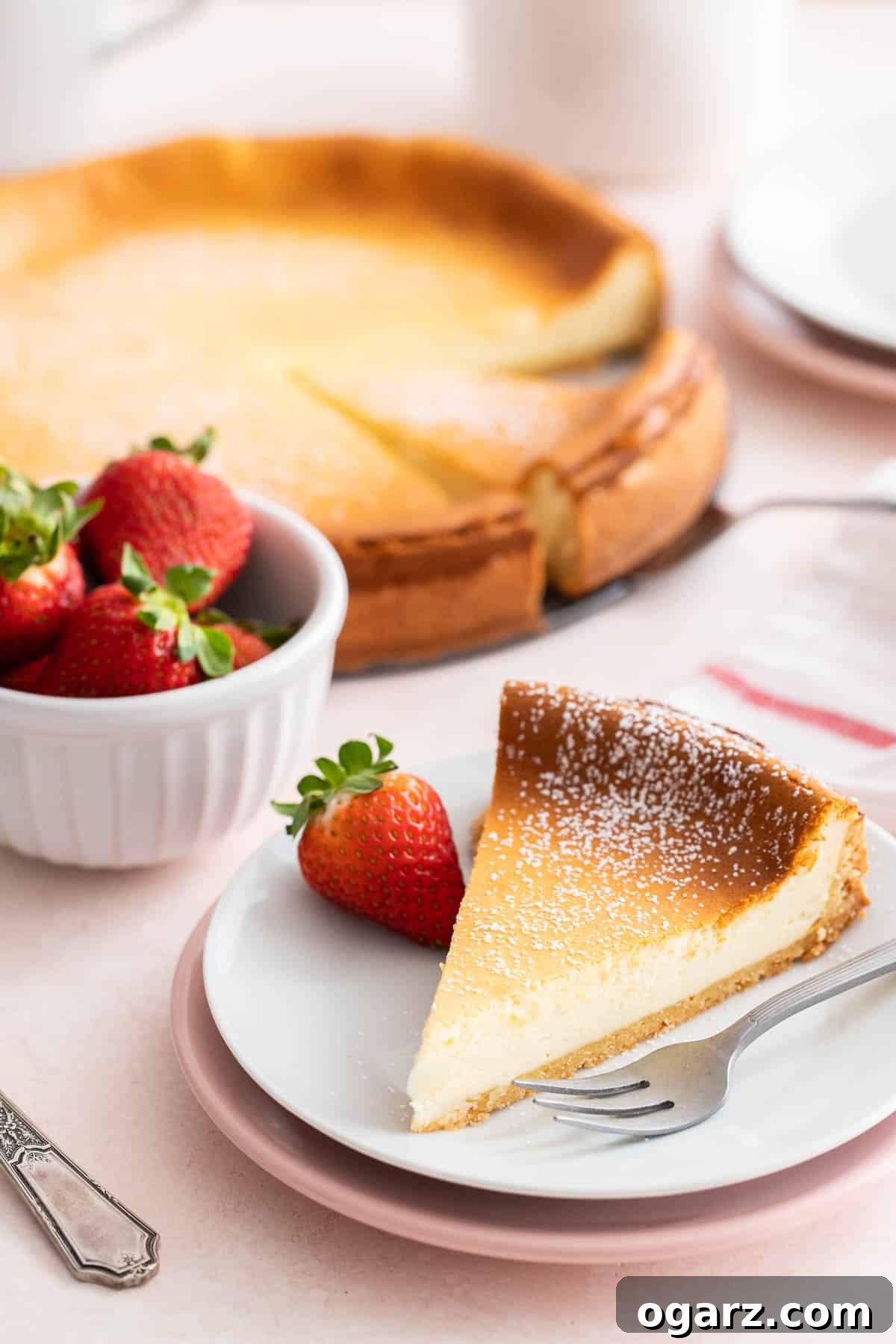
The beauty of German cheesecake lies in its versatility. While it’s perfectly delightful on its own, a few simple additions can elevate your dessert experience. I typically present my Käsekuchen with nothing more than a delicate dusting of powdered sugar, allowing its natural flavor and inviting golden crust to take center stage. However, for those who appreciate a little extra indulgence, a side of homemade whipped cream is always a welcome option. The light, airy texture of the cream harmonizes beautifully with the cheesecake’s fluffy filling.
This cake also shines when paired with fresh berries. Juicy strawberries, tart raspberries, or sweet blueberries, either scattered over the top or served alongside each slice, provide a wonderful contrast in flavor and texture. Other seasonal fruits like sliced peaches or a warm cherry compote also make fantastic accompaniments, adding a burst of freshness and color to your plate. A steaming cup of coffee or a comforting mug of tea completes the classic German “Kaffee und Kuchen” experience, making any afternoon feel special.
Storage Instructions for Your Käsekuchen
To keep your delicious Käsekuchen fresh and flavorful, proper storage is key. German cheesecake typically retains its quality for 2-3 days when stored in the refrigerator. It’s essential to cover it well with plastic wrap or, even better, use a cake dome to prevent it from drying out or absorbing other odors from the fridge. For the best taste and texture, allow the cake to come to room temperature for about 30 minutes before serving.
I generally do not recommend freezing this cake. While technically possible, freezing can significantly alter the delicate texture of the cheesecake filling. Upon thawing, it often becomes grainy or watery, losing its signature light and fluffy consistency. It’s always best to enjoy Käsekuchen fresh within a few days of baking.
Explore More Authentic German Recipes
If you’ve enjoyed the delightful experience of baking and tasting this traditional German cheesecake, you’re in for a treat with these other beloved German culinary creations. Each recipe offers a unique taste of Germany’s rich baking heritage:
Cakes
German Plum Cake (Zwetschgenkuchen)
Cakes
Covered German Apple Cake Recipe (Gedeckter Apfelkuchen)
German Recipes
Kaiserschmarrn (Shredded Pancake)
Cookies, Brownies & Bars
Nut Corners (German Nussecken)
Never Miss A Recipe! Subscribe to my newsletter and follow along on Facebook, Instagram, and Pinterest for more great recipes and all of the latest updates.
Authentic German Cheesecake (Käsekuchen)
Equipment
- 9-inch springform pan
- Stand mixer with paddle and whisk attachments
- Large mixing bowls
- Spatula
- Wire cooling rack
Ingredients
For the crust:
- 1 ¼ cup all-purpose flour
- ⅓ cup sugar
- 1 tsp vanilla sugar, or vanilla extract
- ¼ tsp salt
- 1 large egg
- 5 Tbsp unsalted butter, softened
For the cheesecake filling:
- 2 large eggs, separated
- ¾ cup whipping cream
- 17.6 oz quark, or strained Greek yogurt (see note on straining)
- ½ cup sugar
- 1 Tbsp lemon juice, freshly squeezed
- ¼ cup cornstarch
Instructions
- Preheat the oven to 400 degrees F (200 degrees C). Grease the bottom of a 9-inch springform pan and line it with parchment paper.
- Make the crust: In the bowl of a stand mixer fitted with the paddle attachment, combine all the ingredients for the crust and mix on medium-high speed until a dough forms.
- Roll out 2/3 of the dough into a circle to line the bottom of the pan. Prick the bottom multiple times with a fork.
- Bake the bottom crust (with the sides of the springform attached) for 10 minutes in the lower third of the oven.
- Remove the pan from the oven and let it cool down on a cooling rack. Lower the oven temperature to 320 degrees F (160 degrees F).
- Roll the remaining dough into a long sausage shape and place it around the inside perimeter of the pan. Press the dough about 1 inch up the sides of the pan, forming the crust sides.
- Make the cheesecake filling: In a clean bowl, whip the egg whites until soft peaks form. Set aside.
- In a separate clean bowl, whip the heavy whipping cream until soft peaks form. Set aside.
- In a large bowl, combine the quark (or strained Greek yogurt), sugar, lemon juice, cornstarch, and egg yolks with a whisk until smooth. Do not overmix.
- Gently fold in the whipped egg whites and then the whipped cream into the quark mixture using a spatula.
- Transfer the cheesecake filling to the prepared springform pan and gently smooth the top with a spatula.
- Bake in the lower third of the oven for about 70 minutes, or until the edges are set and the center has a slight wobble.
- When the cheesecake is done, turn off the oven. Let it sit for 15 minutes in the turned-off oven with the door slightly ajar (use a wooden spoon to prop it open).
- Carefully transfer the cheesecake in its pan to a cooling rack. Gently run a knife around the top edge of the crust to prevent sticking. Let it cool completely in the pan at room temperature.
- Serve the cake once it is close to room temperature. It is safe to cut and enjoy even if slightly warm, especially if all tips were followed.
Notes
- Quark substitutes: German cheesecake is traditionally made with quark. If quark is not available, you can substitute it with well-strained Greek yogurt. Ricotta is generally not recommended as it can make the cheesecake grainy.
- Straining Greek Yogurt: For the best results when using Greek yogurt, it’s highly recommended to strain it first. Place the Greek yogurt in a sieve lined with cheesecloth or a coffee filter over a bowl, and let it drain for a few hours or overnight in the refrigerator. A 32 oz container of Greek yogurt typically yields about 20-23 oz of strained yogurt, which is roughly 2 heaping cups for this recipe.
- Mixing: To prevent cracks, mix the cheesecake batter with a whisk or on low speed to avoid incorporating excessive air. Overmixing can cause the cheesecake to rise too much and then collapse, leading to cracks.
- Room Temperature Ingredients: Ensure that your quark (or strained Greek yogurt) and eggs are at room temperature before using them. This helps create a smoother, more consistent batter and contributes to the best final texture.
- Crust Preparation: When forming the crust, press the dough only about 1 inch up the sides of the pan. This allows the filling to rise slightly higher than the crust, creating a classic German cheesecake appearance and preventing issues during baking.
- Slow Cooling: The gradual cooling process is crucial for preventing cracks. After baking, allow the cheesecake to cool slowly by letting it rest in the turned-off oven with the door slightly open for 15 minutes. Then, remove it and let it cool completely at room temperature in the pan before attempting to remove the springform ring. No refrigeration is needed before slicing.
Nutrition Information (per serving)
Calories: 249kcal | Carbohydrates: 29g | Protein: 8g | Fat: 11g | Saturated Fat: 7g | Polyunsaturated Fat: 1g | Monounsaturated Fat: 3g | Trans Fat: 0.2g | Cholesterol: 70mg | Sodium: 111mg | Potassium: 46mg | Fiber: 0.4g | Sugar: 16g | Vitamin A: 424IU | Vitamin C: 1mg | Calcium: 20mg | Iron: 1mg