
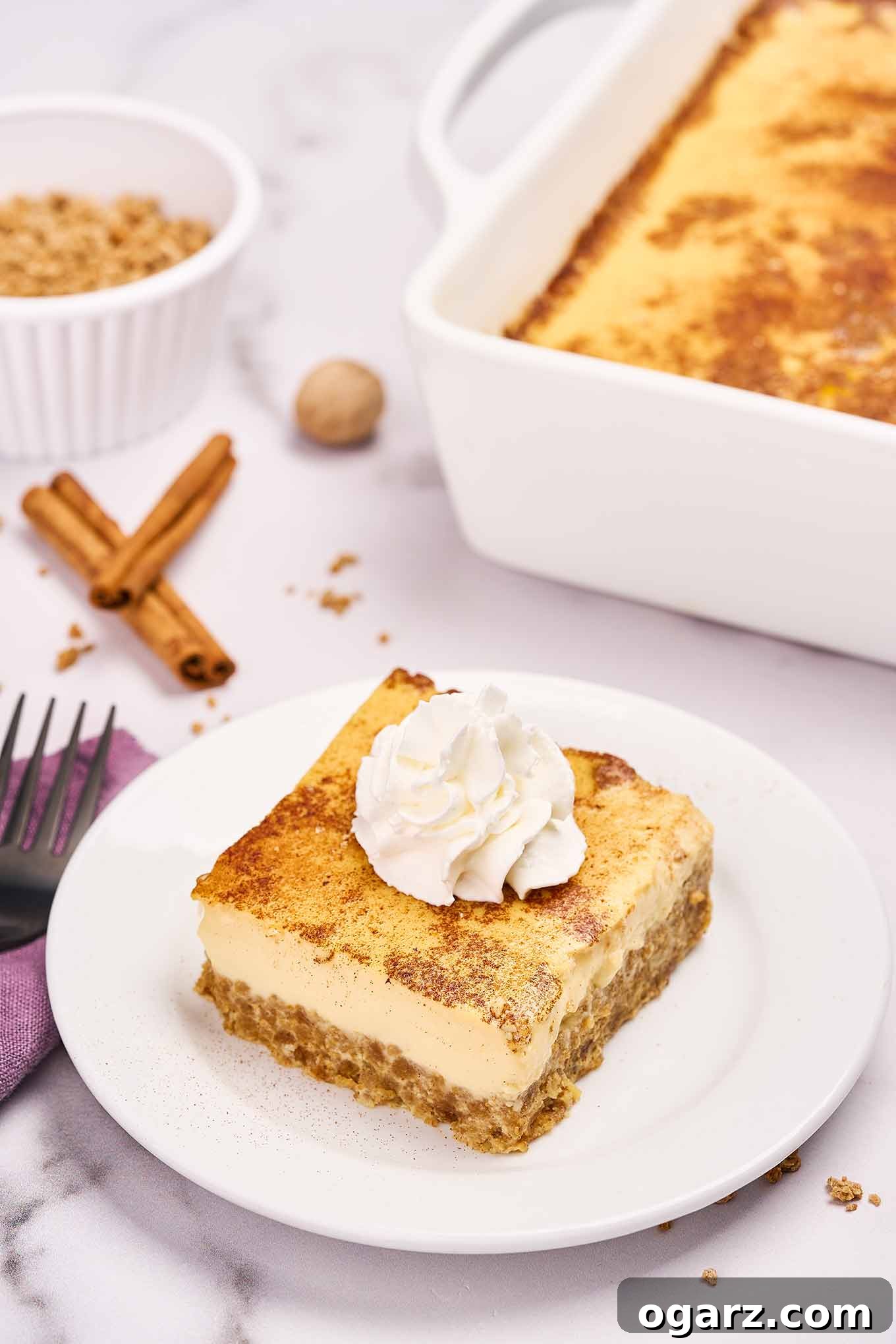

Classic New England Grape-Nut Custard Pudding: A Timeless Dessert Recipe
Delight in the heartwarming taste of New England with this classic Grape-Nut Custard Pudding recipe. Hailing from the charming kitchens of the Northeastern United States, this beloved dessert features an incredibly smooth, creamy egg custard perfectly complemented by a distinct bottom layer of softened Grape Nuts cereal. Each spoonful offers a comforting blend of sweet vanilla, warm cinnamon, and spicy nutmeg, creating a dessert that feels both nostalgic and utterly delicious.
While the mention of a water bath (or bain-marie) might sound intimidating to some home bakers, rest assured that this Grape-Nut pudding recipe is remarkably easy to master. This gentle baking technique is key to achieving its signature silky texture, preventing curdling and ensuring a consistently cooked custard. Prepare to impress your family and friends with a dessert that’s guaranteed to be devoured quickly!
A Taste of History: The Enduring Charm of Grape-Nut Pudding
Grape-Nut custard pudding has held a cherished place in New England cuisine for well over a century, enchanting palates since the early 1900s. Its popularity soared, particularly evident in the 1970s when it graced the dessert menus of countless casual restaurants across states like Rhode Island, where many, including myself, first discovered its unique appeal. This pudding isn’t just a dessert; it’s a culinary artifact, a sweet tradition passed down through generations, evoking a sense of comfort and home.
If you’re new to this New England gem, imagine a dessert that shares a subtle kinship with rice pudding, yet possesses its own distinct character. It’s lightly sweetened – a quality we particularly adore, allowing the natural flavors of the ingredients to shine through – and perfumed with the inviting aromas of cinnamon, nutmeg, and a hint of rich vanilla. The custard’s texture is a revelation: smooth, silky, and melt-in-your-mouth tender, offering a delightful contrast to the slightly chewy, softened Grape Nuts layer below. This harmonious blend of textures and gentle, comforting flavors is precisely why Grape-Nut pudding has cemented its status as a timeless classic.
Essential Ingredients for Perfect Grape-Nut Pudding
To create this delightful New England classic, understanding the role of each key ingredient is crucial. Below is a detailed look at what makes this pudding so special. The complete list of quantities can be found in the recipe section below.

- POST GRAPE NUTS CEREAL: The star ingredient, Grape Nuts breakfast cereal, was innovated by C.W. Post back in 1897. Despite its misleading name, it contains neither grapes nor nuts. Instead, it’s crafted from a blend of wheat and barley, baked into intensely crunchy, golden nuggets. For our pudding, these robust nuggets undergo a magical transformation, softening beautifully in scalded milk to create a unique, slightly chewy, and wholesome base that contrasts wonderfully with the smooth custard. This softening process is crucial for the pudding’s characteristic texture, making the cereal an integral part of its charm.
- WHOLE MILK: When it comes to making a truly luscious custard, whole milk is non-negotiable. Its higher fat content is paramount, lending a rich body and velvety texture that simply cannot be replicated with reduced-fat or skim milk. The fat in whole milk contributes to the emulsion and helps create a stable, smooth custard that melts in your mouth. Opting for low-fat alternatives often results in a thinner, less satisfying, and potentially runny consistency.
- EGGS: Eggs are the structural backbone of any good custard. They act as both an emulsifier and a thickening agent, binding the ingredients together and giving the pudding its firm yet tender set. However, working with eggs in custard requires precision. The specific protein structures in eggs are delicate and demand gentle, even heat. This is precisely why a bain-marie (water bath) is employed in this recipe; it ensures the eggs cook slowly and uniformly. Too high a temperature, and the eggs can curdle, resulting in a grainy texture. Too low, and the custard may never properly set, leaving you with a liquidy mess. Using large eggs at room temperature is ideal for better emulsification.
- CINNAMON AND NUTMEG: These warming spices are indispensable, infusing the pudding with its signature cozy aroma and flavor. Ground cinnamon typically takes center stage, offering a sweet, earthy, and mildly pungent note that is instantly comforting. This is beautifully complemented by the warm, slightly peppery, and subtly sweet undertones of freshly ground nutmeg. While both Ceylon and Cassia cinnamon varieties work well, Ceylon offers a more delicate, nuanced, and almost floral profile, whereas Cassia delivers a spicier, more robust intensity. For the best flavor, consider freshly grating whole nutmeg; its aromatic compounds are far more potent than pre-ground versions.
- VANILLA EXTRACT: A touch of quality vanilla extract elevates the overall flavor profile, adding a sweet, creamy depth that rounds out the spices beautifully. Choose a good quality pure vanilla extract for the best results, avoiding imitation vanilla if possible.
- GRANULATED SUGAR: Provides the perfect level of sweetness, ensuring the pudding is lightly sweetened, allowing other flavors to shine without being overly cloying.
- SALT: A small pinch of salt is vital; it enhances all the other flavors, balancing the sweetness and making the spices pop.
Prep Overview
Crafting Your Homemade Grape-Nut Pudding: A Simple Guide
Embark on the journey of making this delightful New England classic with this quick overview. Detailed, step-by-step instructions are provided in the comprehensive recipe card below.
The process begins by preparing your baking environment: preheating your oven to the ideal temperature, heating water for the essential bain-marie, and generously buttering your chosen baking dish. This ensures the pudding cooks evenly and releases easily.
Next, scald your whole milk, setting aside a small portion. The larger amount is then poured over the Grape Nuts cereal, allowing it to soften gently and develop its unique texture that is so characteristic of this pudding.
While the cereal soaks, focus on the creamy custard base. Whisk together your eggs, vanilla, sugar, salt, and cinnamon until the sugar fully dissolves and the mixture becomes light and slightly frothy. This is crucial for a smooth custard.

A vital step follows: temper your eggs by slowly incorporating the reserved warm milk, a tablespoon at a time. This gradual addition prevents the eggs from scrambling and ensures a perfectly smooth custard when combined with the cereal mixture. Once tempered, gently fold the egg mixture into the softened cereal and milk.
Finally, pour this comforting mixture into your buttered baking dish. A final sprinkle of cinnamon and freshly ground nutmeg over the top adds an inviting aroma and a beautiful finish. Place this dish into a larger roasting pan, pour hot water around it to create the water bath, and carefully transfer it to the oven to bake until the custard is beautifully set. Patience is key for the last step: allow the pudding to cool completely, as it firms and develops its full flavor and texture as it chills.

Mastering the Bain-Marie: The Secret to Silky Custards
The bain-marie, or water bath, is a time-honored baking technique essential for delicate dishes like custards, cheesecakes, and pâtés. Its purpose is to create a gentle, even cooking environment, preventing the edges from overcooking, cracking, or the delicate egg proteins from curdling. By surrounding the baking dish with hot water, the food cooks slowly and uniformly, resulting in a smooth, creamy, and flawless texture.
Here’s how to effectively set up and use this technique for your Grape-Nut pudding:
- Choose the Right Outer Container: Select a roasting pan or a larger baking dish that is deep enough to hold water reaching approximately 1/2 to 2/3 of the way up the sides of your inner baking dish (e.g., ramekins, an 8×8 or 9×9-inch glass or ceramic dish, or a souffle dish). Ensure there’s ample space – at least 1 inch – between the inner dish and the outer container, and about 1/2 inch between individual ramekins if you’re baking in smaller portions. This spacing allows for even heat distribution.
- Optional Lining for Stability: To prevent your inner baking dish from sliding around within the larger pan during transfer or baking, you can place a kitchen towel or a silicone mat on the bottom of the outer container. This adds stability and also helps to insulate the bottom of the inner dish, promoting even cooking.
- Careful Water Addition: Position the dish containing your pudding mixture securely within the chosen bain-marie container. Carefully pour boiling or very hot water (just below boiling) into the outer pan. Add enough water to reach approximately halfway up the sides of your inner baking dish. Be mindful not to splash water into your pudding.
- Gentle Transfer to the Oven: With great care, move the entire assembly – the outer pan with the water bath and the inner pudding dish – to the preheated oven. Position it on the center rack for optimal heat circulation. Bake your recipe according to the instructions, keeping an eye on the water level during longer baking times; you may need to add more hot water if it evaporates too quickly.
- Prompt Removal for Perfect Texture: As soon as your pudding is done (when a knife inserted comes out clean, and the edges are slightly set), it’s crucial to remove the inner dish from the hot water bath immediately. If left in the hot water, the pudding will continue to cook from residual heat, potentially leading to overbaking or a less desirable texture. Carefully lift the pudding dish out and place it on a wire rack to cool completely.
Beyond Pudding: Explore More Beloved New England Recipes
New England boasts a rich and diverse culinary heritage, with many dishes deeply rooted in the region’s abundant natural resources, particularly its vast coastal waters. While we may have moved beyond its borders, our appreciation for authentic New England flavors remains strong. We proudly continue to honor our roots by preparing iconic regional dishes that capture the essence of this unique cuisine.
From the succulent sweetness of New England lobster rolls, bursting with fresh lobster meat, to the simple pleasure of steaming steamer clams dipped in drawn butter, and the savory delight of baked stuffed shrimp, each recipe tells a story of the region’s bounty. Don’t forget the flaky goodness of baked stuffed cod and the communal joy of a stovetop clambake, bringing the flavors of the shore to your kitchen.
For those eager to delve deeper into the gastronomic traditions of this historic region, Yankee Magazine/NewEngland.com offers an extensive list of classic New England foods, providing inspiration for countless culinary adventures.
Grape-Nut Custard Pudding
Ingredients
- 1 cup Post Grape-Nuts cereal
- 4 cups whole milk
- 5 large eggs
- 2 to 3 teaspoons vanilla extract
- 1/2 cup sugar
- 1/4 teaspoon salt
- 1/2 teaspoon cinnamon, plus more for dusting over the top of the pudding
- Freshly ground nutmeg, for dusting over the top of the pudding
Instructions
-
Preheat your oven to 350°F (175°C). Begin heating a kettle of water to just below boiling point for your water bath. Generously butter the bottom and sides of a 9 x 9-inch (23×23 cm) glass or ceramic baking dish (refer to notes for alternative dish sizes).
-
Place the Grape Nuts cereal in a large, heat-proof bowl. Scald the whole milk by heating it gently in the microwave or a saucepan until small bubbles appear around the edges, but do not boil. Reserve 1/2 cup of the scalded milk for tempering the eggs later, then pour the remaining scalded milk over the cereal. Let it sit for 5 minutes to soften the Grape Nuts.
-
While the cereal is softening, in a separate medium bowl, whisk together the large eggs, vanilla extract, granulated sugar, salt, and 1/2 teaspoon of cinnamon. Continue whisking until the sugar is completely dissolved and the mixture appears slightly frothy and well combined.
-
To temper the eggs (preventing them from scrambling), slowly drizzle the reserved 1/2 cup of warm milk into the egg mixture, one tablespoon at a time, continuously whisking. This gradually raises the temperature of the eggs. Once all the reserved milk is incorporated, add this tempered egg mixture to the bowl containing the softened cereal and milk, stirring gently to combine thoroughly.
-
Carefully pour the entire pudding mixture into your prepared buttered baking dish. Evenly sprinkle a dusting of freshly ground nutmeg and a little extra cinnamon over the top for an aromatic finish.
-
Place the baking dish containing the pudding into the center of a larger roasting pan. Carefully pour the hot water (from your kettle) into the outer pan, creating a depth of about 1 inch around the pudding dish. This forms your bain-marie (water bath).
-
Carefully transfer the roasting pan with the water bath and pudding into the preheated oven. Bake for 45 to 55 minutes, or until the pudding’s edges appear set and slightly pulled away from the dish, and a butter knife inserted into the center comes out clean. The center should have a slight jiggle.
-
Once baked, carefully remove the pudding dish from its water-filled outer container. Place the pudding dish on a wire rack to cool completely at room temperature. This cooling period is essential for the custard to firm up and fully set.
-
To serve, cut the cooled pudding into individual squares. For an extra touch of indulgence, top with a dollop of whipped cream, a scoop of vanilla ice cream, or a drizzle of maple syrup if desired. Enjoy this timeless New England treat!
Tips for Pudding Perfection
- CHOOSE YOUR BAKING DISH WISELY: The size of your baking dish significantly impacts the pudding’s final appearance and texture. For this recipe, we used a 9 x 9 x 2.5-inch (23x23x6.5 cm) baking dish, which yielded two distinct layers: a creamy custard on top and a delightful layer of softened Grape Nuts at the bottom. If you prefer the cereal to be mixed throughout the custard rather than forming a separate layer, opt for a larger (e.g., 13 x 9 x 2-inch or 33x23x5 cm) baking dish. The pudding will be thinner, but the Grape Nuts will be more evenly dispersed throughout the custard.
- THE CRITICAL STEP OF TEMPERING EGGS: Tempering is paramount for a smooth, silky custard. Adding the scalded milk gradually, one tablespoon at a time, to the beaten eggs slowly raises their temperature. This gentle acclimatization prevents the eggs from scrambling when combined with the hot milk and cereal mixture. Do not rush this step; patience here ensures a flawless, lump-free custard.
- LEVERAGE THE POWER OF A WATER BATH (BAIN-MARIE): As detailed earlier, a bain-marie is your best friend when baking delicate egg-based dishes like custards and cheesecakes. It provides a consistent, gentle heat that prevents curdling, cracking, and overcooking the edges. Remember this golden rule: remove the pudding from the water bath immediately once it’s done. Leaving it in the hot water will allow it to continue cooking, potentially leading to an overbaked or rubbery texture as the water slowly cools.
- ALLOW COMPLETE COOLING: Custard undergoes a crucial transformation as it cools. Its proteins firm up and stabilize, leading to the desired set and texture. It is absolutely essential to let your Grape-Nut pudding cool completely to room temperature, and ideally chill it further in the refrigerator, before slicing and serving. Attempting to cut or serve it warm may result in a softer, less cohesive texture.
- STORAGE AND MAKE-AHEAD: Grape-Nut pudding makes an excellent make-ahead dessert. Once completely cooled, cover the baking dish tightly with plastic wrap or transfer individual servings to airtight containers. It can be stored in the refrigerator for up to two days. For optimal flavor and texture, you might want to bring it back to room temperature before serving, or enjoy it chilled directly from the fridge.
- FREEZING LEFTOVER CEREAL: If you find yourself with extra Grape-Nuts cereal after preparing this recipe, don’t let it go to waste! Leftover Grape-Nuts can be frozen in a tightly sealed, freezer-safe container or bag for up to 6 months. This ensures you always have some on hand for your next pudding craving.
- FLAVOR VARIATIONS: Get creative with your pudding! A pinch of ground ginger or cardamom can add an interesting depth to the spice profile. Consider adding a handful of golden raisins or dried cranberries to the cereal mixture for bursts of fruity flavor. A teaspoon of orange zest or a few drops of rum extract can also introduce delightful new notes.
Nutrition Information (per serving, approx.)
Calories: 192
Total Fat: 6g
Cholesterol: 104mg
Sodium: 201mg
Carbohydrates: 27g
Fiber: 2g
Sugar: 18g
Protein: 8g
Nutrition information is automatically calculated, so should only be used as an approximation.