
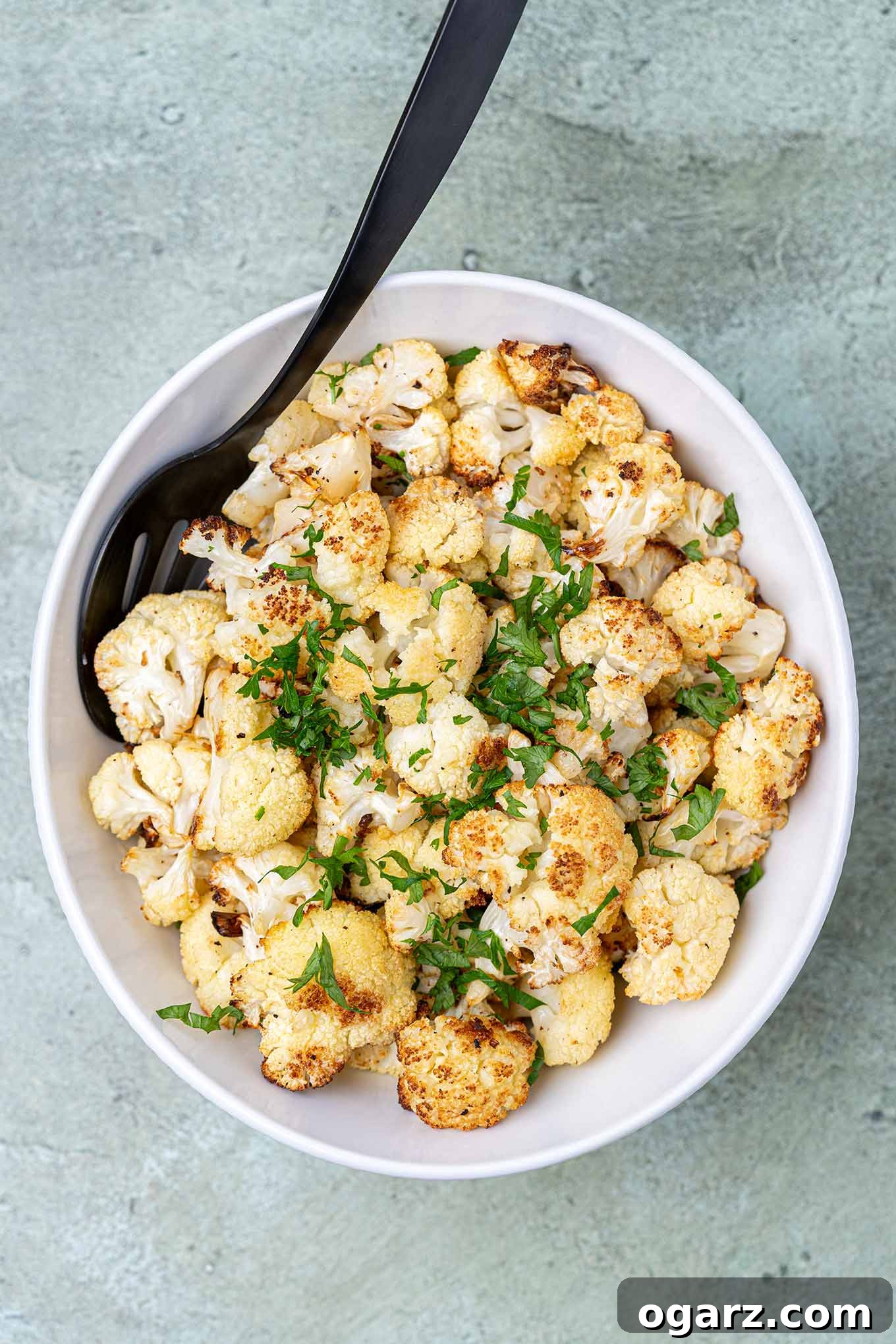
Perfectly Roasted Cauliflower: A Flavorful & Versatile Side Dish
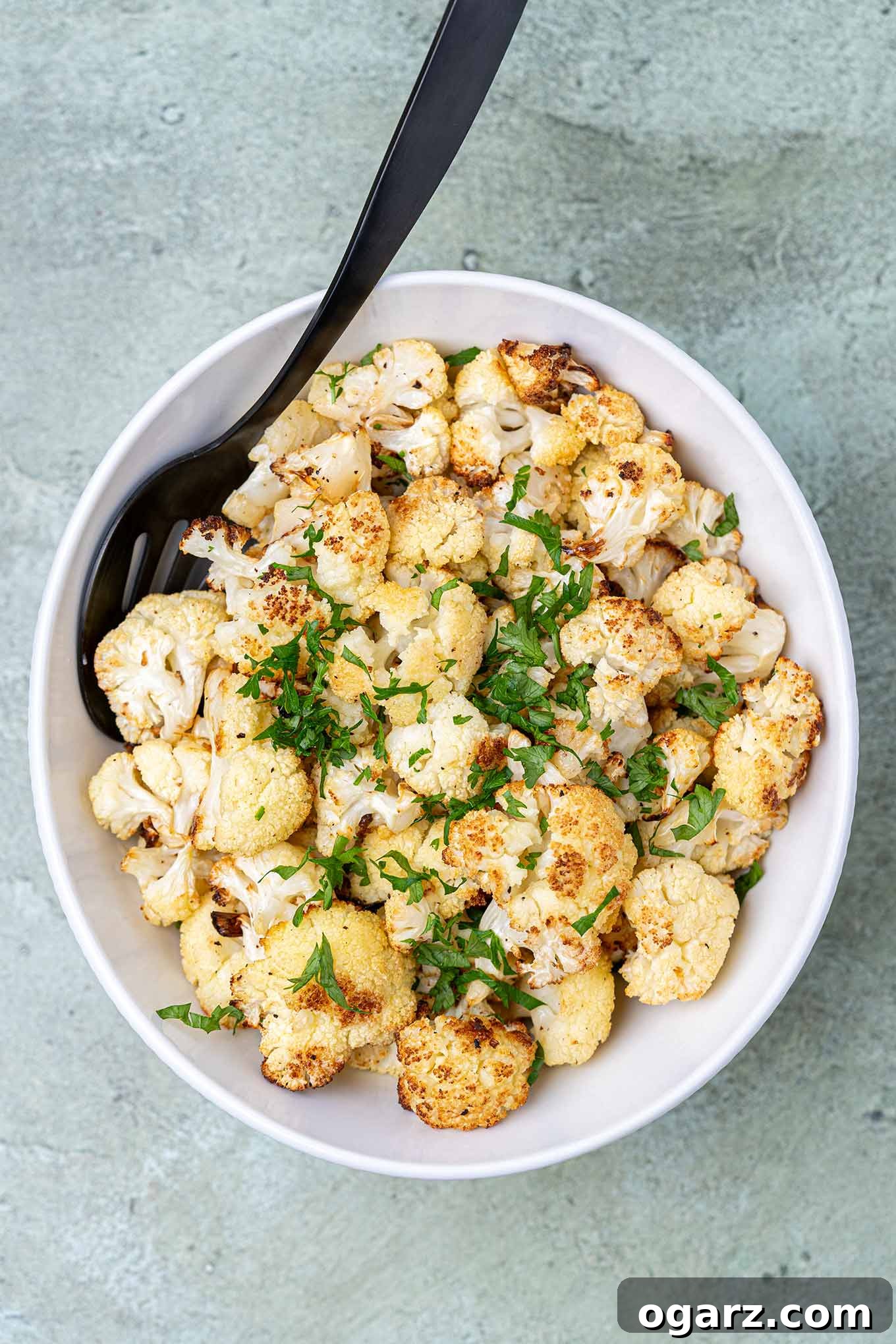
Table of Contents
- Why Roast Cauliflower? The Secret to Incredible Flavor
- Key Ingredients and Smart Substitutions
- Mastering Oven-Roasted Cauliflower: A Step-by-Step Guide
- Make-Ahead and Storage Tips for Convenience
- The Health Benefits of Roasted Cauliflower
- Roasted Cauliflower FAQs
- Creative Ways to Season Your Roasted Cauliflower
- Recipe Variation: Elevate Your Dish with Crumb-Topped Roasted Cauliflower
- What to Serve with Oven-Roasted Cauliflower
- Printable Recipe Card
Oven-roasted cauliflower is truly a culinary chameleon – an incredibly versatile vegetable that can transform from a humble side dish into a starring role in pasta, salads, or even a main course. It’s not only one of the easiest ways to prepare this nutritious vegetable, but it’s also arguably the most delicious. Forget bland, watery boiled or steamed cauliflower; the magic happens in the oven. The dry, intense heat of roasting coaxes out the cauliflower’s natural sugars, initiating a process called caramelization and the Maillard reaction. This chemical transformation deepens the flavor, turning the florets golden-brown and creating a delightful sweet, nutty, and slightly smoky profile that pairs beautifully with an endless array of ingredients and seasonings. Once you experience the rich taste and tender-crisp texture of oven-roasted cauliflower, you’ll wonder why you ever prepared it any other way.
Why Roast Cauliflower? The Secret to Incredible Flavor
The secret behind truly exceptional roasted cauliflower lies in the power of the oven’s high heat. Unlike boiling or steaming, which can leach out nutrients and leave cauliflower with a somewhat watery taste and soft texture, roasting enhances its inherent qualities. As the cauliflower florets bake at a high temperature, their natural sugars caramelize, creating a sweet and subtly nutty flavor. Simultaneously, the Maillard reaction occurs, responsible for the savory “browning” on the surface, contributing to a complex umami taste. This combination results in florets that are wonderfully tender on the inside with deliciously crisp, slightly charred edges – a texture and flavor profile far superior to other cooking methods. This simple technique elevates cauliflower from a plain vegetable to an irresistible culinary delight that even picky eaters will enjoy.
Key Ingredients and Smart Substitutions
Here’s a breakdown of the essential ingredients for this recipe and how you can adapt them. The full list with precise quantities can be found in the detailed recipe card below.
- FRESH CAULIFLOWER: The star of our dish! An average head of fresh cauliflower typically weighs between 1.5 to 2 pounds, yielding approximately 5 cups of florets once prepped. When selecting cauliflower at the grocery store, look for heads that are firm, compact, and heavy for their size, with vibrant green leaves that show no signs of wilting or discoloration. Fresh cauliflower stored in a perforated plastic bag in the refrigerator can last up to five days. While fresh offers the best flavor and texture, you can absolutely use frozen cauliflower. There’s no need to defrost it first; just add a little extra roasting time (usually 5-10 minutes) as the moisture content is higher. Spread it in a single layer to ensure proper caramelization.
- OLIVE OIL: A crucial component for achieving that coveted golden-brown caramelization. Olive oil provides a beautiful coating that helps the florets crisp up and prevents them from sticking to the pan. A good quality, light all-purpose olive oil is ideal for its flavor and high smoke point. However, if you prefer, you can substitute other cooking oils like canola oil, avocado oil, grapeseed oil, or even melted butter or ghee for a richer flavor. You’ll generally only need one to two tablespoons to lightly coat a whole head of cauliflower. The key is to use just enough to coat, not drench.
- SEASONING: For a versatile roasted cauliflower that can be incorporated into other dishes, a simple seasoning of salt and freshly ground black pepper is often sufficient. If you plan to serve it as a stand-alone side dish, this is where you can truly let your creativity shine! We’ve provided a comprehensive list of creative seasoning ideas further down the page, ranging from Italian and French to Mexican and spicy options. Don’t be afraid to experiment and find your favorite flavor combinations.
Mastering Oven-Roasted Cauliflower: A Step-by-Step Guide
Ready to make this delicious side dish? Here’s a concise overview of the process. For detailed, step-by-step instructions and precise measurements, please refer to the complete printable recipe card below.

Prepping the Cauliflower for Optimal Roasting
The first step to perfectly roasted cauliflower begins with proper preparation. Start by preheating your oven to 425°F (220°C) – a high temperature is key for achieving that desirable crispiness and caramelization. Line a large rimmed baking sheet with parchment paper; this simple trick ensures easy cleanup and prevents sticking. Next, prepare your cauliflower: remove all the outer green leaves, then trim the stem so it’s flush with the bottom of the head. Place the cauliflower upright on your cutting board and carefully cut it downwards into four equal wedges. From each wedge, trim away the tough core. Now, break the cauliflower into individual florets. Aim for pieces that are roughly uniform in size, about 1 to 1.5 inches. This is crucial for even cooking; smaller pieces might burn while larger ones remain undercooked. Transfer the prepared florets to a large mixing bowl, drizzle with 1 to 2 tablespoons of olive oil, and toss thoroughly until every floret is lightly coated. Season generously with salt and freshly ground black pepper. Feel free to add any additional desired seasonings at this stage (see our creative seasoning ideas below) and toss again to distribute evenly.
Roasting to Golden Perfection
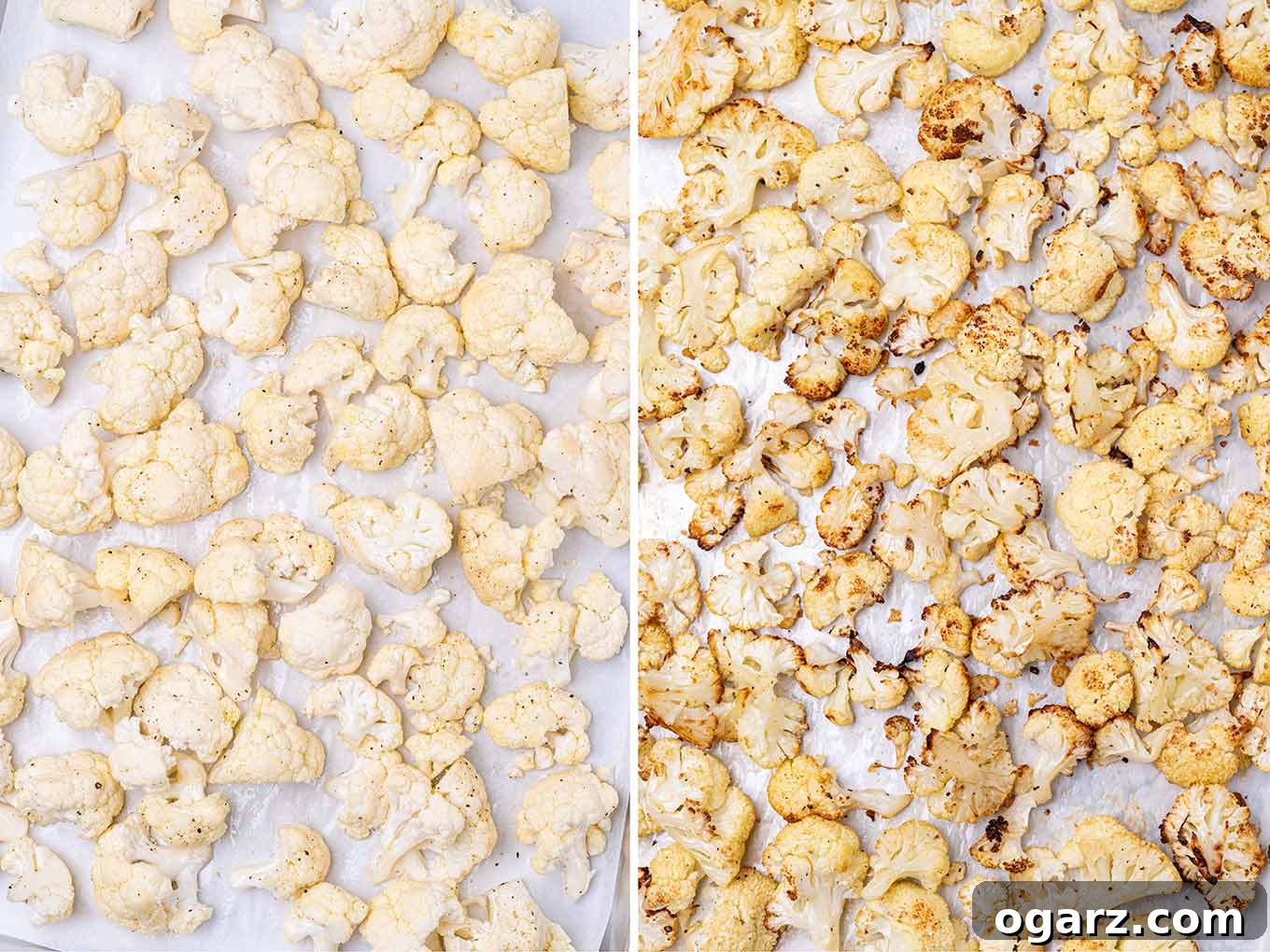
Once seasoned, spread the cauliflower florets in a single, even layer on your parchment-lined baking sheet. Avoid overcrowding the pan; if the florets are too close together, they will steam instead of roast, resulting in a less crispy texture. If necessary, use two baking sheets. Place the baking sheet in the preheated oven and roast for 15 minutes. After this initial roasting time, carefully remove the pan from the oven. Using a spatula, turn the florets over to ensure even browning, and rotate the baking sheet 180 degrees for uniform heat exposure. Return the pan to the oven and continue roasting for another 10 to 15 minutes, or until the florets are beautifully caramelized, deep golden-brown at the edges, and tender when pierced with a knife. The total roasting time will vary slightly depending on your oven and the size of your florets. Once cooked to perfection, transfer the roasted cauliflower to a serving bowl. For an extra touch of freshness and color, garnish with a sprinkle of chopped fresh parsley, if desired. Serve immediately and enjoy the irresistible taste!
Make-Ahead and Storage Tips for Convenience
Roasted cauliflower is an excellent candidate for meal prepping and can be made ahead of time, making healthy eating easier throughout the week. To store properly, ensure the cooked cauliflower has cooled completely to room temperature before refrigerating. This crucial step prevents condensation and sogginess. Once cooled, transfer the cauliflower to an airtight container or wrap it tightly in aluminum foil (you can spray the foil with nonstick spray to prevent sticking). Store in the refrigerator for up to 3-4 days.
To reheat: For best results, preheat your oven to 350°F (175°C). Spread the chilled roasted cauliflower in a single layer on a baking sheet. Reheat for 8 to 12 minutes, or until heated through and slightly re-crisped. Avoid microwaving, as this can make the cauliflower soft and mushy, losing its desirable roasted texture. If you have extra, roasted cauliflower can also be frozen for longer storage. Simply spread cooled florets on a baking sheet and freeze until solid, then transfer to a freezer-safe bag or container. It will keep for up to 3 months. Reheat from frozen on a baking sheet at 400°F (200°C) for 15-20 minutes, turning halfway through.
The Health Benefits of Roasted Cauliflower
Beyond its delicious taste and incredible versatility, roasted cauliflower is a nutritional powerhouse that offers numerous health benefits, making it an excellent addition to any diet. Cauliflower is a cruciferous vegetable, part of the same family as broccoli, kale, and Brussels sprouts, all renowned for their health-promoting properties. It is exceptionally rich in vitamins and minerals, particularly Vitamin C, Vitamin K, and folate, which are vital for immune function, blood clotting, and cell growth. Cauliflower is also an excellent source of dietary fiber, promoting digestive health, aiding in satiety, and helping to regulate blood sugar levels. Furthermore, it contains a unique array of antioxidants and phytonutrients, including sulforaphane, which have been studied for their potential anti-inflammatory and cancer-fighting effects. Being low in calories and carbohydrates, roasted cauliflower is a fantastic choice for those following ketogenic, low-carb, or weight-management diets. Its mild flavor also makes it an easy way to sneak more vegetables into your family’s meals, proving that healthy eating can be both simple and incredibly satisfying.
Roasted Cauliflower FAQs
We highly recommend roasting cauliflower at a high temperature, specifically 425°F (220°C). This intense heat is crucial for achieving that desirable caramelization and tender-crisp texture. Roasting at a lower temperature might result in softer, less browned cauliflower. Remember to remove the cauliflower from the oven after about 15 minutes to flip the florets and rotate the pan, ensuring even cooking and browning.
A light, all-purpose olive oil is an excellent choice for roasting cauliflower. It imparts a subtle flavor and contributes significantly to achieving beautiful caramelization. Its relatively high smoke point also makes it suitable for the high temperatures required for roasting. Other great alternatives include avocado oil, canola oil, or grapeseed oil. Depending on the desired flavor profile and other seasonings, you could also opt for melted butter or ghee for a richer, more decadent taste.
Yes, absolutely! Frozen cauliflower can be roasted successfully and is a convenient option. There’s no need to defrost it first, which saves time. While it will generally have a superior texture and flavor compared to steamed or boiled frozen cauliflower, it might not caramelize quite as intensely as fresh cauliflower due to its higher moisture content. To roast frozen cauliflower, spread the florets in a single layer on a parchment-lined rimmed baking sheet, ensuring some space between them. Drizzle with olive oil and season as desired. Roast at 425°F (220°C) for 25 to 35 minutes, turning the florets and rotating the pan halfway through cooking, until tender and lightly browned.
Several factors contribute to mushy cauliflower. First, avoid overcrowding the baking sheet; if florets are too close, they steam instead of roast. Use two sheets if necessary. Second, ensure your oven is at a high temperature (400-425°F or 200-220°C) for quick cooking and browning. Third, don’t over-oil; a light coating is all you need. Lastly, don’t overcook; roast until tender-crisp, not soft.
Certainly! Roasted cauliflower pairs wonderfully with other hardy vegetables. Great options include broccoli, Brussels sprouts, carrots, potatoes, and bell peppers. Just ensure they are cut into similar-sized pieces for even cooking, or choose vegetables with similar cooking times. If adding denser vegetables like potatoes, you might want to start them a bit earlier or cut them smaller.
Creative Ways to Season Your Roasted Cauliflower
The naturally subtle, sweet, and nutty flavor of oven-roasted cauliflower makes it an incredibly adaptable canvas for a wide array of seasonings. This versatility allows you to effortlessly transform it into the perfect side dish for virtually any main course, complementing various cuisines and flavor preferences. We’ve compiled some of our favorite creative seasoning ideas below to inspire you. If you have unique combinations you love, please share them in the comments – we’d love to hear your culinary discoveries!
Unless explicitly stated otherwise, all seasonings should be applied to the cauliflower florets after they have been drizzled and tossed with olive oil, but before roasting.
- Basic “Goes-With-Anything” Seasoning: For a universally loved and effortlessly delicious option, simply sprinkle your cauliflower with a blend of garlic powder, onion powder, paprika, salt, and black pepper. This balanced seasoning profile is incredibly versatile and serves as an excellent accompaniment to baked chicken, savory roast pork, tender beef, classic meatloaf, and countless other dishes.
- Italian Style: Transport your taste buds to the Mediterranean! Before seasoning, brush the cauliflower florets with a 50/50 mixture of olive oil and balsamic vinegar. Then, generously season with garlic powder, salt, pepper, and a fragrant sprinkling of dried oregano. A pinch of red pepper flakes can add a subtle kick. This Italian-inspired cauliflower is a fantastic side for your favorite pasta dishes, savory roasted Italian sausage, or grilled fish.
- French Style: Embrace elegant French flavors by replacing olive oil with 2 to 3 tablespoons of rich melted butter. Once coated, season the cauliflower with a generous pinch of salt, freshly ground black pepper, and a spoonful of aromatic Herbes de Provence. This delicate seasoning is perfect when served alongside pan-seared fish, succulent roasted chicken, or a light vegetable quiche.
- Mexican Style: For a vibrant and zesty kick, season your cauliflower with garlic powder, ground cumin, ground coriander, and a pinch of dried oregano, in addition to salt and pepper. A squeeze of fresh lime juice after roasting elevates the flavors further. This makes an exciting side dish for grilled chicken, sizzling steaks, flavorful tacos, or hearty enchiladas.
- Spicy Sriracha-Lime: For those who love a bit of heat, toss the cauliflower with olive oil, then generously sprinkle with chili powder, a dash of cayenne pepper, salt, and pepper. After roasting, drizzle with a mixture of sriracha and fresh lime juice for a fiery and tangy finish.
- Barbecue: Infuse your roasted cauliflower with smoky, sweet, and tangy barbecue notes. Season the florets initially with salt and pepper and begin roasting as usual. About midway through the cooking time (after 15 minutes), remove the pan from the oven and brush each floret generously with your favorite barbecue sauce. Return to the oven and continue roasting until caramelized, tender, and the sauce is slightly sticky.
- Old Bay: A fantastic choice for seafood lovers! Drizzle the cauliflower with fresh lemon juice before brushing it with melted butter (instead of olive oil). Then, sprinkle generously with classic Old Bay seasoning. For an extra pop of color and freshness, consider adding some finely chopped fresh parsley about halfway through the cooking time. This pairs perfectly with grilled salmon, baked cod, shrimp scampi, or any of your favorite fish and seafood dishes.
- Curry Delight: For an aromatic and warming flavor, toss cauliflower with olive oil, then coat with curry powder, turmeric, ginger powder, salt, and pepper. A squeeze of fresh lemon juice or a dollop of yogurt can be a delightful addition after roasting.
Recipe Variation: Elevate Your Dish with Crumb-Topped Roasted Cauliflower
Adding a crispy, buttery breadcrumb topping is one of the simplest yet most effective ways to transform plain roasted cauliflower into an extraordinary and special side dish. The added crunch and savory flavor from the crumbs provide a delightful contrast to the tender, sweet cauliflower. Here’s how to create this irresistible variation:
- Begin by combining 1/2 cup of dry breadcrumbs (you can use plain or pre-seasoned breadcrumbs for extra flavor) with 4 tablespoons of rich melted butter in a small bowl. Toss until the breadcrumbs are evenly coated and moist.
- Follow our primary recipe for oven-roasted cauliflower, roasting it until it’s beautifully caramelized and tender.
- Once the cauliflower is cooked, remove the pan from the oven. Evenly sprinkle the buttered breadcrumbs over the roasted florets, ensuring good coverage.
- Return the pan to the oven for an additional 4 to 5 minutes, or until the breadcrumbs are lightly golden-brown and delightfully toasted. Keep a close eye on them to prevent burning.
- Transfer the crumb-topped florets and any loose, crispy crumbs to a large serving bowl. Gently toss everything together to ensure an even distribution of the delicious topping. Serve immediately to enjoy the maximum crunch and flavor.
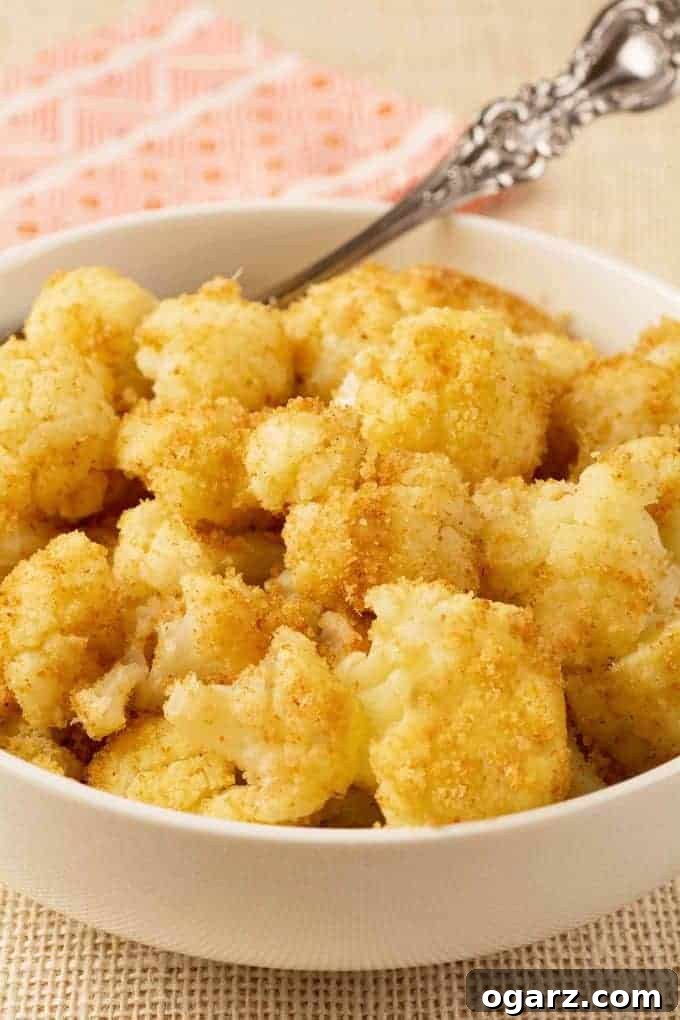
Pro Tip: To further enhance the flavor of your crumb topping, consider adding 2 tablespoons of finely grated Parmesan cheese and a pinch of garlic powder to the butter and crumb mixture before sprinkling it over the cauliflower. This adds an extra layer of savory, cheesy goodness!
What to Serve with Oven-Roasted Cauliflower
Oven-roasted cauliflower’s incredible versatility makes it a perfect pairing for a vast array of main courses, from hearty meats to lighter seafood and vegetarian options. Its tender texture and caramelized flavor complement almost anything. It’s truly our go-to choice as a side dish, especially when serving succulent pork chops – whether they are juicy grilled pork chops, crispy oven-fried Parmesan pork chops, or expertly pan-seared rib chops. It also creates a harmonious balance when paired with perfectly grilled chicken breasts, flavorful oven-roasted chicken thighs, or classic comfort food like old-fashioned meatloaf.
Beyond being a simple side, roasted cauliflower is remarkably easy to incorporate into more complex dishes. It can be a delicious addition to a creamy, cheesy gratin, adding depth and texture. Or, toss it with your favorite pasta, a light sauce, and perhaps some sun-dried tomatoes or capers for a quick, satisfying, and flavorful meatless dinner. It’s also fantastic cold in salads, adding a robust element, or as part of a vibrant grain bowl. Don’t be afraid to get creative and make this versatile vegetable a staple in your meal planning!

Oven Roasted Cauliflower
Oven-roasted cauliflower is an easy-to-make dish that makes a great addition to just about any meal. This versatile vegetable can be seasoned to complement a variety of entrées, paired with other veggies, or tossed together with pasta for a delicious meatless dinner.
Rate Recipe
Print Recipe
Ingredients
- 1 head cauliflower, 1-1/2 to 2 lbs
- 1 to 2 tablespoons olive oil
- Salt and pepper, to taste
- 1 tablespoon chopped fresh parsley (for garnish, optional)
Instructions
- Preheat your oven to 425°F (220°C) and line a large baking sheet with parchment paper for easy cleanup.
- Prepare the cauliflower: Remove all green leaves and trim the stem flush with the bottom of the head. Stand the cauliflower upright on a cutting board and cut downwards into 4 wedges. Trim out the tough core from each wedge.
- Break the cauliflower into individual florets, cutting larger pieces as needed to ensure they are all relatively evenly sized (about 1 to 1.5 inches). This promotes even cooking.
- Transfer the cauliflower florets to a large mixing bowl. Drizzle with 1 to 2 tablespoons of olive oil and toss thoroughly to ensure every floret is lightly coated. Season generously with salt and freshly ground black pepper. Add any other desired seasonings at this stage (refer to our “Creative Ways to Season” section for ideas), and toss again to distribute evenly.
- Spread the seasoned cauliflower florets on the parchment-lined baking sheet in a single, even layer. Avoid overcrowding the pan; if necessary, use two baking sheets to ensure the florets roast and don’t steam.
- Roast for 15 minutes. Carefully remove the pan from the oven, use a spatula to turn the florets, and rotate the pan 180 degrees.
- Continue roasting for another 10 to 15 minutes, or until the cauliflower florets are nicely caramelized (golden brown at the edges) and tender when pierced with a knife.
- Transfer the perfectly roasted cauliflower to a serving bowl. Garnish with chopped fresh parsley, if desired, for a pop of color and freshness. Serve immediately and enjoy!
Notes
Roasted Cauliflower Seasoning Ideas:
Topping your roasted cauliflower with buttery breadcrumbs is one of the easiest ways to turn this easy veggie into a special side dish.
- Basic “Goes-With-Anything” Seasoning: Sprinkle the cauliflower with garlic powder, onion powder, paprika, and salt and pepper. Serve with baked chicken, roast pork, beef, meatloaf, and more.
- Italian Style: Brush the cauliflower with a 50/50 mixture of olive oil and balsamic vinegar, then season with garlic powder, salt, pepper, and a sprinkling of dried oregano. Serve as a side with your favorite pasta dish or roasted Italian sausage.
- French Style: Instead of olive oil, brush the cauliflower with melted butter (2 to 3 tablespoons), then season with salt, pepper, and Herbes de Provence. Serve with fish or chicken.
- Mexican Style: In addition to salt and pepper, lightly season the cauliflower with garlic powder, ground cumin, ground coriander, and a pinch of dried oregano. Serve with grilled chicken, steaks, and more.
- Barbecue: Season the cauliflower with salt and pepper and begin roasting. Remove it from the oven and brush it with your favorite barbecue sauce midway through the cooking time. Return to the oven until caramelized and tender.
- Old Bay: Drizzle the cauliflower with lemon juice, then brush on melted butter instead of olive oil. Sprinkle with Old Bay seasoning. Add some finely chopped fresh parsley about halfway through the cooking time if desired. Serve alongside your favorite fish and seafood dishes.
Recipe Variation: Crumb-Topped Roasted Cauliflower
- Combine 1/2 cup of dry breadcrumbs (plain or seasoned) with 4 tablespoons of melted butter.
- Once the cauliflower is caramelized and tender (as per the main instructions), sprinkle the buttered crumbs evenly over the florets and return the pan to the oven for 4 to 5 minutes or until the crumbs are lightly toasted.
- Transfer the florets and any loose crumbs to a large serving bowl. Toss to combine and serve immediately.
Flavor tip: Level up the flavor even more by adding 2 tablespoons of finely grated Parmesan cheese and a pinch of garlic powder to the butter and crumb mixture before topping.
Nutrition Information (Approximate)
Calories: 67, Total Fat: 4g, Sodium: 334mg, Carbohydrates: 7g, Fiber: 3g, Sugar: 3g, Protein: 3g
Nutrition information is automatically calculated and should be used only as an approximation, as values can vary based on specific ingredients and preparation.
Like this delicious and easy recipe? We’d love to hear from you! Please take a moment to rate and comment on it below.