
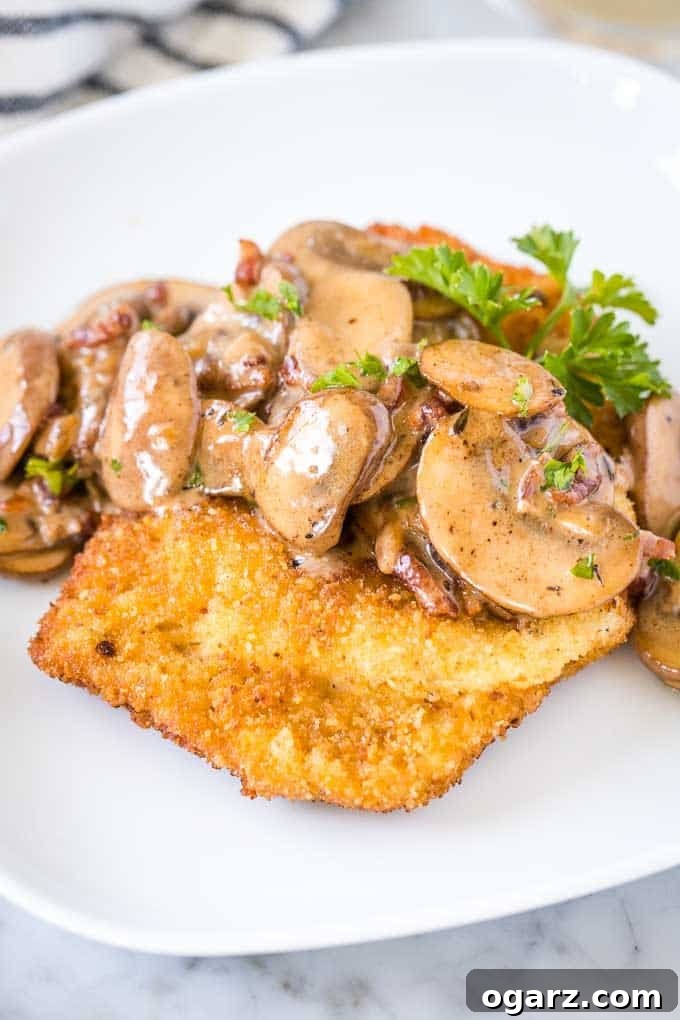
Jägerschnitzel, a beloved German classic, offers the ultimate comfort food experience with its crispy breaded cutlets generously topped with a rich, creamy mushroom and bacon gravy. This exquisite dish, translating to “Hunter’s Schnitzel,” brings the hearty flavors of the German forest right to your dining table. If you appreciate traditional German cuisine like Spaetzle, Pork Hock, Hungarian Goulash, or even the sweet delight of Apple Strudel, then preparing this authentic Jägerschnitzel recipe at home is an absolute must.
Far beyond a simple meal, Jägerschnitzel is a celebration of rustic German flavors, combining the satisfying crunch of a perfectly fried schnitzel with a deeply savory, umami-rich gravy that coats every bite. This comprehensive guide will walk you through each step, ensuring you master the art of both the golden-brown schnitzel and its iconic accompanying sauce.
Discovering Jägerschnitzel: A Classic German Delight
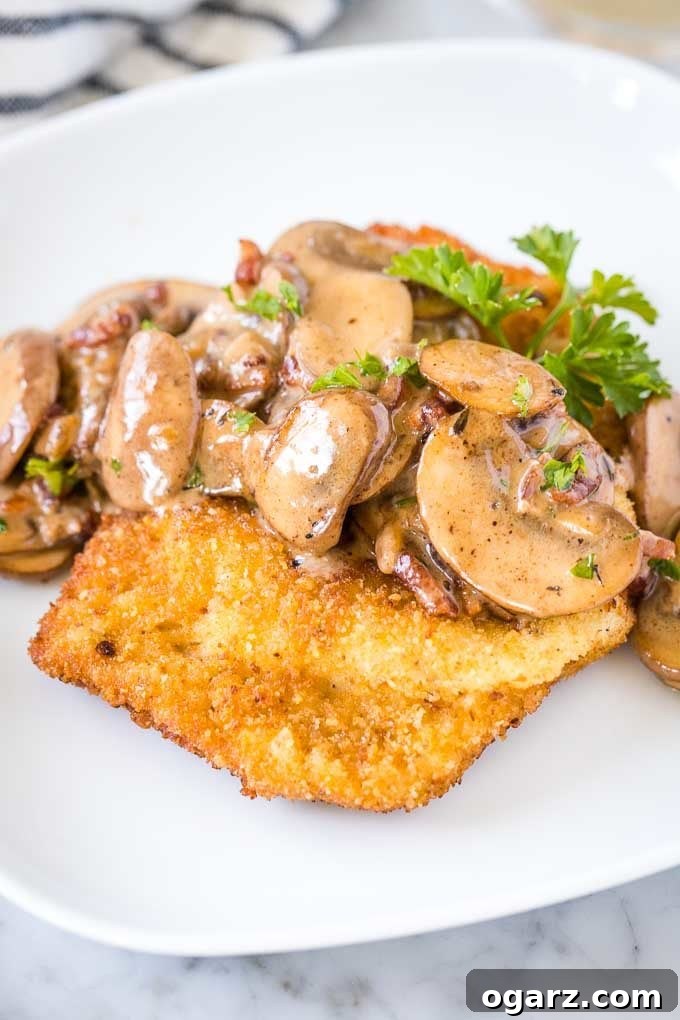
Jägerschnitzel is more than just a dish; it’s a culinary institution in Germany, found on nearly every traditional restaurant menu across the country. While its cousin, Wiener Schnitzel, is known for its pure, unadorned crispiness, Jägerschnitzel takes a delightful detour by embracing a robust, creamy gravy. The name itself, “Hunter’s Schnitzel,” evokes images of woodland foraging and hearty, satisfying meals enjoyed after a long day in the forest, fitting perfectly with the mushroom-centric sauce.
This classic German meal typically features tenderized pork or veal cutlets, breaded and pan-fried to golden perfection, then generously smothered in a homemade mushroom gravy. It’s a dish that perfectly balances textures and flavors: the delicate crispness of the schnitzel against the rich, velvety sauce, often enhanced with smoky bacon. While traditional Jägerschnitzel calls for a breaded cutlet, some regional variations might use a non-breaded pork chop or incorporate additional ingredients into the gravy, such as a splash of white or red wine for added complexity, a dollop of crème fraîche for extra richness, or a hint of tomato paste for a deeper color and subtle tang.
Learning to make Jägerschnitzel at home allows you to control the quality of ingredients and tailor the flavors to your preference, creating a truly unforgettable dining experience that embodies the heart of German comfort food.

Crafting the Perfect Schnitzel Base
The foundation of an excellent Jägerschnitzel lies in a perfectly prepared schnitzel. While the gravy is undoubtedly the star, a tender, crispy cutlet provides the ideal canvas. Typically made from thinly pounded pork loin or tenderloin, the schnitzel is traditionally breaded for that signature crunch. Here’s how to ensure your schnitzel is flawless:
- Choosing the Meat: Pork loin or veal cutlets are the most common choices. Opt for lean cuts that can be easily pounded thin.
- Pounding for Tenderness: Place the meat between two sheets of plastic wrap and pound it evenly to about 1/4 inch thickness. This tenderizes the meat and ensures even cooking.
- The Breading Process: Create a standard breading station with three shallow dishes: one for all-purpose flour (seasoned with salt and pepper), one for beaten eggs, and one for fine breadcrumbs (Panko breadcrumbs offer an extra crispy texture). Dredge each cutlet first in flour, shaking off excess, then dip in egg, allowing any extra to drip off, and finally coat thoroughly in breadcrumbs, pressing gently to adhere.
- Frying for Golden Perfection: Heat a generous amount of oil or clarified butter (Ghee) in a large skillet over medium-high heat. Fry the breaded schnitzels for 2-3 minutes per side, or until they are beautifully golden brown and crispy. Ensure not to overcrowd the pan, frying in batches if necessary, to maintain a consistent oil temperature and prevent steaming. Once cooked, transfer the schnitzels to a wire rack set over a baking sheet to drain any excess oil and keep them crispy while you prepare the gravy.
For more detailed instructions on achieving the ultimate crispy schnitzel, you can refer to dedicated German Schnitzel recipes, which provide comprehensive tips and tricks for breading and frying.
Creating the Rich Mushroom-Bacon Gravy
The creamy mushroom and bacon gravy is what truly transforms a simple schnitzel into a delightful Jägerschnitzel. This savory sauce is surprisingly easy to make and builds layers of flavor, making it the perfect accompaniment. Here’s a detailed guide to crafting this exquisite gravy:
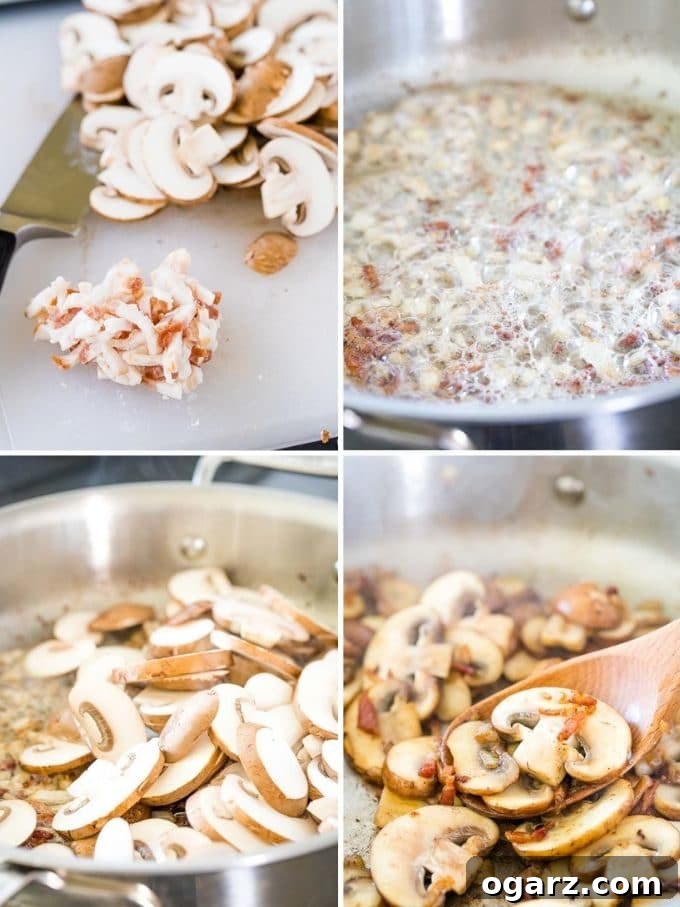
- Sautéing Aromatics and Bacon: Begin by heating 2 tablespoons of butter in a large frying pan over medium heat. Add chopped bacon and diced onion, frying them together until the bacon is crispy and the onion turns golden brown and translucent. The bacon renders its fat, infusing the pan with a smoky flavor that forms the foundation of the gravy.
- Building the Mushroom Base: Add the sliced mushrooms to the pan. Sauté for about 2 minutes, stirring constantly, until they begin to release their liquid. This step helps intensify their earthy flavor. Then, add the remaining 1 tablespoon of butter and stir until it’s completely melted, coating the mushrooms evenly.
- Creating the Roux: Sprinkle the all-purpose flour over the mushrooms and stir vigorously to combine. Cook for 1-2 minutes, stirring continuously, allowing the flour to cook out its raw taste and form a roux with the butter and bacon fat. This roux will act as the thickening agent for your gravy.
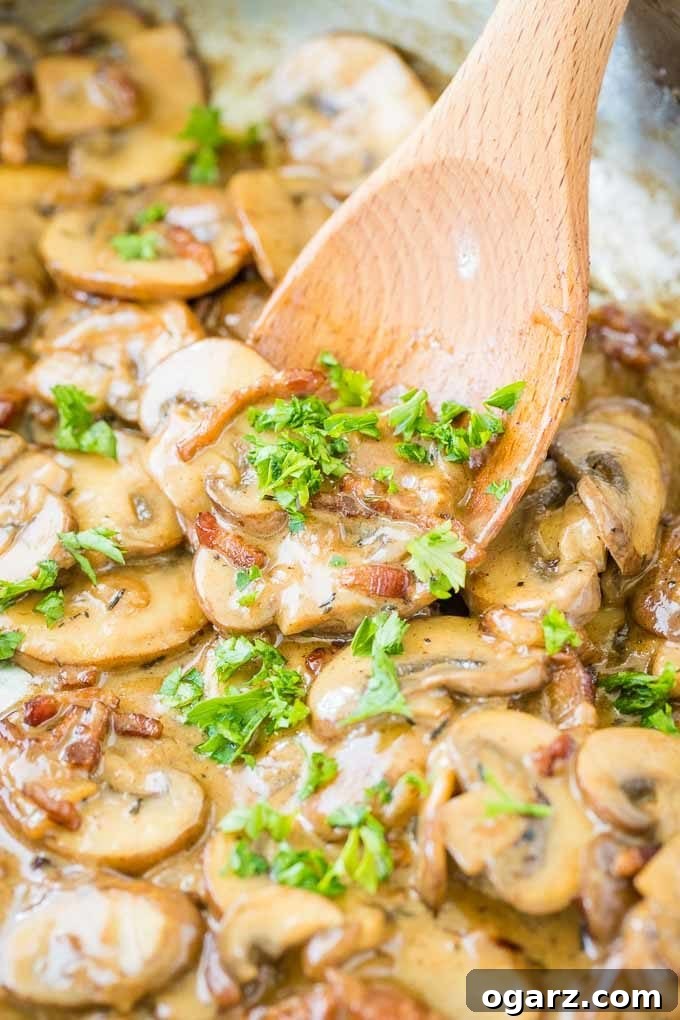
- Adding Liquids and Seasoning: Gradually pour in the beef broth and heavy cream, whisking constantly to prevent lumps. The sauce will begin to thicken as it comes to a boil. Season the mixture generously with salt, black pepper, and dried thyme. Thyme adds a wonderful herbaceous note that complements the mushrooms beautifully.
- Simmering to Perfection: Reduce the heat to low and let the sauce gently simmer for 10-15 minutes, or until it reaches your desired thickness. Stir occasionally to prevent sticking. The slow simmer allows the flavors to meld and deepen.
- Finishing Touches: If the gravy becomes too thick, you can thin it out with 1-2 tablespoons of milk. Just before serving, remove the pan from the heat and stir in 1 tablespoon of fresh chopped parsley. Taste and adjust seasoning as needed, adding more salt or pepper if desired. The fresh parsley adds a vibrant color and a burst of fresh flavor.
Selecting the Best Mushrooms for Gravy
For an authentic and flavorful Jägerschnitzel gravy, the choice of mushrooms is key. White button mushrooms and Cremini mushrooms (also known as baby bellas) are excellent choices. Cremini mushrooms, with their slightly more mature profile, offer a deeper, earthier flavor compared to their milder white button counterparts. Both varieties are readily available and hold their shape well during cooking, contributing both texture and robust flavor to the gravy.
Expert Tips for Jägerschnitzel Success
Achieving the perfect Jägerschnitzel involves a few key techniques and considerations. Follow these expert tips to elevate your homemade dish to restaurant-quality status:
- Thin is In: Ensure your schnitzel cutlets are pounded uniformly thin (about 1/4 inch). This guarantees quick, even cooking and maximum tenderness. Uneven thickness can lead to dry spots or undercooked areas.
- The Art of Breading: For the crispiest schnitzel, ensure each cutlet is thoroughly coated in flour, then egg, then breadcrumbs. Press the breadcrumbs gently but firmly onto the meat. For an extra light and airy crust, use Panko breadcrumbs.
- Optimal Frying Temperature: Maintain a consistent oil temperature of around 350-375°F (175-190°C) when frying schnitzels. If the oil is too cold, the breading will absorb too much fat and become greasy; if it’s too hot, the breading will burn before the meat is cooked through.
- Simultaneous Preparation: To serve everything hot and fresh, fry the schnitzel cutlets while the mushroom gravy is simmering. This timing ensures both components are ready at the same time.
- Enhance Gravy Flavor: For an even more complex and savory gravy, consider adding about 1/4 cup of dry white wine (like a Pinot Grigio or Sauvignon Blanc) to the pan after sautéing the mushrooms and before adding the broth and cream. Let it simmer for a minute or two to deglaze the pan and cook off the alcohol.
- Adjusting Gravy Consistency: If your gravy turns out too thick after simmering, gradually whisk in a tablespoon or two of milk until it reaches your desired consistency. For a significantly thicker sauce, create a slurry by combining 1 tablespoon of cornstarch with 3 tablespoons of cold water, then slowly stir it into the simmering gravy until it thickens.
- Preserving Schnitzel Crispness: A common dilemma with Jägerschnitzel is how to keep the schnitzel crispy under the gravy. To ensure maximum crispness, avoid drowning the schnitzel in sauce. You can serve the gravy on the side, allowing diners to add as much as they like, or place the schnitzel on the plate first and lightly spoon gravy over only a portion of it.
- Garnish for Freshness: A sprinkle of fresh chopped parsley over the plated dish not only adds a beautiful pop of color but also provides a fresh, herbaceous counterpoint to the rich gravy.
Traditional and Modern Serving Suggestions
Jägerschnitzel is a versatile dish that pairs wonderfully with a variety of side dishes. Traditionally, it’s served with classic German accompaniments, but it can also be enjoyed with more contemporary options:
- Spaetzle: These soft, eggy German noodles are a quintessential pairing. Their delicate texture is perfect for soaking up the rich mushroom gravy.
- Potato Dumplings (Kartoffelklöße): Fluffy and satisfying, potato dumplings are another traditional choice that provides a comforting base for the schnitzel and gravy.
- Fried Potatoes (Bratkartoffeln): Crispy pan-fried potatoes, often with onions and bacon, offer a delightful texture contrast and complement the hearty flavors.
- French Fries or Tater Tots: For a less traditional but equally delicious option, crispy French fries or tater tots are always a hit, especially with children or those who prefer a familiar side.
- Green Salad: A simple, crisp green salad with a light vinaigrette can provide a refreshing contrast to the richness of the schnitzel and gravy, balancing the meal.
- Steamed Vegetables: Green beans, asparagus, or broccoli make a great, lighter side that still absorbs some of the delicious sauce.
Frequently Asked Questions About Jägerschnitzel
- Can I use chicken instead of pork or veal? Absolutely! While traditional Jägerschnitzel uses pork or veal, chicken breast or thigh can be thinly pounded and breaded for a lighter alternative. The mushroom gravy pairs beautifully with chicken.
- What kind of cut of pork is best for schnitzel? Pork loin or pork tenderloin are excellent choices as they are lean and tenderize well when pounded thin.
- Can I make the gravy ahead of time? Yes, the mushroom-bacon gravy can be made a day or two in advance and stored in the refrigerator. Reheat gently on the stovetop, adding a splash of broth or milk if it’s too thick.
- How do I store leftover Jägerschnitzel? Store leftover schnitzel and gravy separately if possible to maintain the schnitzel’s crispness. Place them in airtight containers in the refrigerator for up to 3 days.
- How do I reheat Jägerschnitzel? Reheat schnitzel in an oven or air fryer to restore some crispness. Gently reheat the gravy on the stovetop. Combine just before serving.
Tools and Ingredients for Your Culinary Journey
To ensure a smooth cooking experience, having the right tools and quality ingredients is essential:
Chef’s Knife: A sharp, well-balanced chef’s knife is indispensable for preparing ingredients, from chopping onions and bacon to slicing mushrooms. Investing in a good knife will make your kitchen tasks much more efficient and enjoyable.
Cutting Board: A sturdy and easy-to-clean cutting board is crucial for safe and hygienic food preparation. Look for one that doesn’t slip and is gentle on your knife blades.
Other essential tools include a large frying pan or skillet, a meat mallet for pounding schnitzels, and shallow dishes for the breading station.
With these guidelines and tips, you’re well-equipped to prepare a truly authentic and delicious Jägerschnitzel that will impress family and friends alike. Enjoy the process of bringing this German culinary tradition to life in your own kitchen!
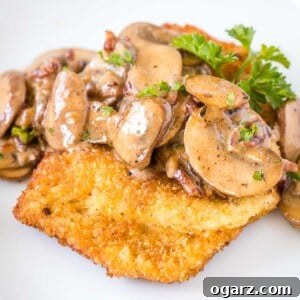
Jägerschnitzel
Ingredients
- 3 Tbsp butter, divided
- 2 slices bacon, chopped
- 1 small onion, chopped
- 1 lb cremini or white mushrooms, sliced
- 2 Tbsp all-purpose flour
- 3/4 cup beef broth, or vegetable broth
- 3/4 cup heavy cream
- 1/2 tsp dried thyme
- 2 Tbsp chopped fresh parsley, divided (1 Tbsp for sauce, 1 Tbsp for garnish)
- 2 Tbsp milk, optional (for thinning gravy)
- 1/2 tsp salt
- Pepper, to taste
- 4 Breaded Schnitzel
Instructions
- In a large frying pan, heat 2 Tbsp butter over medium heat. Add chopped bacon and onion, frying until the bacon is cooked and the onion is golden brown.
- Add the sliced mushrooms and sauté for 2 minutes until they start to release some liquid, stirring constantly. Add the remaining 1 Tbsp butter and stir until melted. Sprinkle flour over mushrooms and stir to combine, cooking for 1-2 minutes to form a roux.
- Pour beef broth and heavy cream into the pan, whisking constantly to prevent lumps. Season with salt, pepper, and dried thyme. Bring to a boil, then reduce heat and let the sauce simmer for 10-15 minutes, or until thickened to your desired consistency.
- If the sauce is too thick, add 1-2 Tbsp of milk. Remove from heat and stir in 1 Tbsp of chopped fresh parsley. Season to taste with additional salt and pepper if needed.
- Place a cooked schnitzel on each plate and pour the mushroom-bacon gravy over it, or serve the sauce on the side to maintain the schnitzel’s crispness. Garnish with the remaining chopped parsley.
Nutrition
Carbohydrates: 11g |
Protein: 7g |
Fat: 30g |
Saturated Fat: 17g |
Cholesterol: 92mg |
Sodium: 635mg |
Potassium: 501mg |
Fiber: 2g |
Sugar: 4g |
Vitamin A: 1082IU |
Vitamin C: 7mg |
Calcium: 55mg |
Iron: 1mg
Like this recipe? Rate and comment below!